After-5-years-our-family-gave-up-full-time-travel-and.jpeg

After 5 years, our family gave up full-time travel and YouTube success. I worry we’ve messed up the kids.

After we stopped traveling full-time, our 11-year-old daughter, Brooklyn, became obsessed with her bedroom.

She wanted to repaint it. Rearrange it. Add shelves, plants, posters, and end tables to organize her art supplies. She asked for candles and incense (and permission to burn them).

She pushed back when my wife and I asked her to keep her clothes picked up — not out of laziness, she explained, but because the artist in her liked how it felt to leave things wherever they landed.

At first, this “new normal” bugged me. The requests and pushback felt endless, even erratic, as if we were chasing some moving target of comfort that she would never reach.

Then one night, I walked past her room and was drawn by the scent of vanilla drifting through the crack in the door. Curled up on her bed under a throw, a small reading light on and the warm glow of candlelight around her, she sat reading a hardcover copy of “The Count of Monte Cristo.”

And it finally clicked: After years spent in airports, hotels, and temporary spaces, this was the first place within her control that she could count on staying the same.

At first, a life of travel made sense for our family

My wife and I began traveling the world with our three kids in 2020, at a time when structure had already fallen apart for most families.

School was remote. Routines were fractured. The future felt unpredictable. Travel, oddly enough, felt grounding.

If our kids were going to spend their days on screens anyway, why not replace textbooks with real places? Why not let geography, culture, and shared experience do some of the teaching?


Child on camel in desert

A snapshot of our family’s travels to Abu Dhabi.

Phil Lockwood


Almost immediately, we began documenting our journey on a new YouTube channel. It was a new direction for the entire family, and the excitement was universal. Our kids even started their own channels and began producing their own episodes.

We juggled the challenges of highlighting the far-flung places we were visiting, the mistakes we were making, and the logistics of pulling off long-term travel as a family of five. Friends and family started watching.

Then strangers, too. Our audience grew into the thousands somewhat slowly, then into the hundreds of thousands surprisingly fast. Soon, we’d reached over half a million YouTube subscribers.

Sharing everything online felt natural at the time. It gave structure to our travels and, through ad revenue and brand sponsorships, helped offset the high costs. And it felt useful—like we were showing other families what was possible if they were willing to step outside the usual script.


Family in Antarctica

Our family in Antarctica.

Phil Lockwood


In those early years, it felt like so many high-profile family YouTube channels were presented as success stories — adventurous, tight-knit, and inspirational. I didn’t see as much public skepticism, and some darker stories of family vloggers (like Ruby Franke’s) that would later dominate headlines hadn’t yet come to light.

So, at the time, we didn’t see ourselves as taking a risk — we saw ourselves as joining a small but growing group of households who were filming and sharing their lives publicly before the downsides were so widely discussed, documented, and understood.

For a while, it worked. Or, at least it appeared to. The kids were curious. We were together. We saw parts of the world that most families only talk about. And all five of us were enjoying building something meaningful together.

There were real benefits: closeness, adaptability, and perspective. Our kids learned how to navigate unfamiliar places and unfamiliar people. We learned to function as a family without the usual scaffolding of schedules and routines.

What we didn’t yet understand was what those benefits might be trading against.

As time went on, the cracks began to show — and coming home didn’t repair them all

Not all of our kids experienced the lifestyle the same way.

As our youngest and most adventurous, Colt thrived on the endless variety. Reagan, my oldest from a previous marriage, enjoyed the journey, but eventually chose to return to in-person school, and we adjusted our travel around her schedule with her mom. Brooklyn, though, gradually stopped enjoying it altogether.

There wasn’t a dramatic breaking point. It was a slow accumulation: long-haul flights at odd hours, constant activity, museums and cultural experiences designed for adults, not kids. Plenty of stimulation, but very little continuity.


Child with bird on arm

A moment from our time in Abu Dhabi.

Phil Lockwood


What I didn’t fully appreciate was how much childhood depends on repetition — seeing the same faces, returning to the same places, building friendships that deepen rather than reset with new people every few weeks.

Other nomadic families we met reassured us that this was normal. They told us our kids would grow more worldly, more mature, even more interesting than their peers. That any awkwardness later would be a sign of depth, not loss.

And I wanted to believe that. But as Brooklyn pulled further away from the lifestyle — showing little enthusiasm for new destinations, frustration with red-eye flights, and no desire to highlight her experiences in our episodes — it became harder to ignore the possibility that what we thought was enriching had become simply exhausting for her.

The hardest part wasn’t wondering what she wanted: She was clear that she’d rather be back home, back in school, and back to occasional family vacations. The hardest part was realizing that submitting to her desires would require dismantling a life we had just spent years reorganizing everything around.

Eventually, though — and after five full years of constant travel —we made the decision to stop. We returned to the house that we’d kept in Denver. Reagan graduated and headed to college. Brooklyn enrolled in in-person high school, while Colt chose to continue online for the flexibility. Our pace slowed, and the constant motion ended.

And yes —things got easier. The kids seem more independent than ever. Life feels calmer. There’s a structure where there used to be constant negotiation.


Family of four smiling in front of temple-like buildings

Our family posing in India.

Phil Lockwood


Still, the relief I feel is mixed with doubt.

Brooklyn still carries some resentment about not settling down sooner. She’s now trying to build friendships in a neighborhood where other kids grew up side by side for years. She missed that stretch of middle school — the inside jokes, shared routines, and the quiet accumulation of belonging. I sometimes wonder whether the introversion I see now is simply adolescence, or whether years without steady peer relationships reshaped her in ways we can’t fully undo.

Did the benefits of those experiences outweigh the costs? Did we assume that anything lost along the way would simply return? Or are we just seeing a normal adjustment after an unusual childhood?

I don’t have clean answers. I’ve only accepted that good intentions don’t guarantee harmless outcomes — and that parenting decisions made confidently at the time can look very different in hindsight.

I don’t regret our choice — just parts of the execution

I’m glad we traveled. I’m glad our kids have seen the world. I’m also glad we stopped. I don’t regret the journey my wife and I took our children on, but I no longer assume it was unquestionably right.

If I could do it again? I’d prioritize putting down roots earlier — fewer destinations, more seasons in one place, more chances for the kids to build friendships that weren’t constantly interrupted.

And I’d question whether sharing our adventures online was necessary at all.


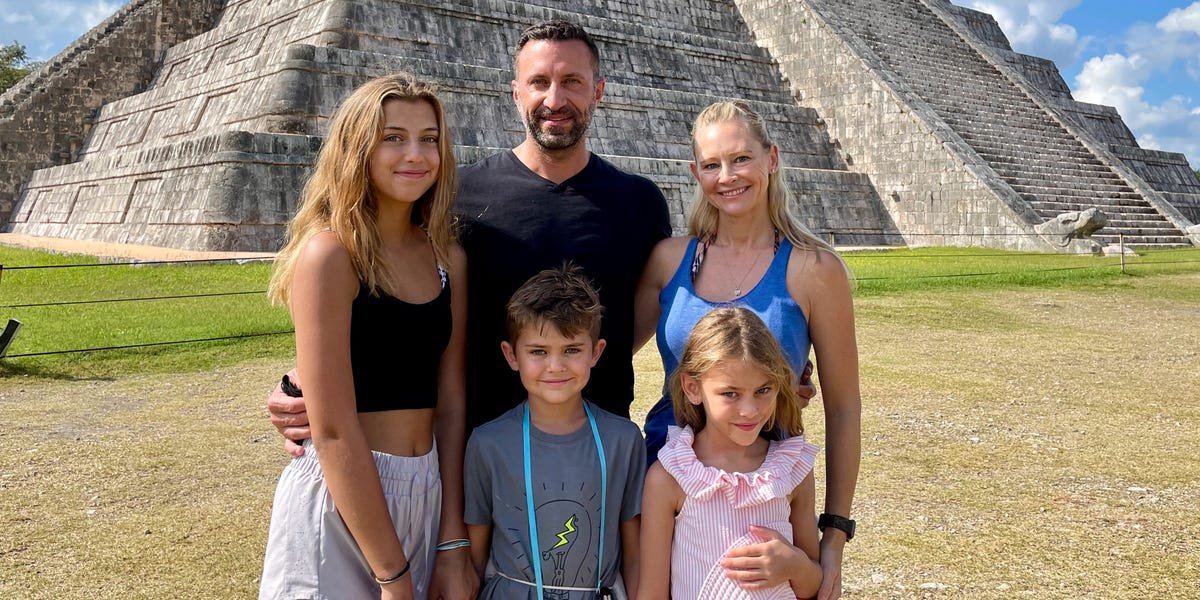
Family of four posing with elephants

We visited Chiang Rai, Thailand.

Phil Lockwood


There’s a difference between traveling with kids and building a childhood around constant motion — especially when that motion is public.

We still travel, but only a few times a year, mostly around school breaks. Colt still loves going. Brooklyn hasn’t joined a trip since we settled back down; my sisters stay with her when we leave.

Recently, though, she’s started talking about ancient Greece and asking what it would take to see the ruins in person — but we’re careful not to read too much into that since interest isn’t always the same as readiness.

And if there’s one thing I’ve learned, it’s this: parenting decisions don’t come with clean verdicts. They come with trade-offs.

Sometimes the most honest stories aren’t about success or failure — they’re about realizing, long after the decision has been made, that you’re still not entirely sure where the line really was.


Source link

I-moved-13-times-over-15-years-to-advance-my.jpeg

I moved 13 times over 15 years to advance my career. I would never wish this on anyone.

Figure skating has long been a big part of my life. At 15, I convinced my school district to override attendance so I could pursue my then-competitive figure skating career. I then scheduled college classes around training.

Three undergraduate apartments and two graduate dorms later, I found a great place to live in New York City on Bleecker and Thompson for three years. I worked as a private figure skating coach at the Wollman and Chelsea Piers ice rinks. At 25, I enrolled at UCLA as a postdoctoral fellow and snagged a place in the Venice Canals. I loved it for two years. I then completed another postdoc for 1 year in San Diegothen returned to the East Coast for my first faculty position. Philadelphia turned me into a professor in developmental psychology.

I moved back to New York City for my 10th move to the West Village, but I wasn’t there long. I moved again to be closer to the train hall, and by then, entering my 30s and my third year of tenure-track, I just wanted to be home.

Happy but out of fuel, my 12th move was back to Southern California, and it was also my fourth across the coast.

With every move, packing felt heavier, and hiring movers didn’t lighten the load. The sight of boxes became demoralizing.

Moving so frequently lost its excitement

Every new city, I’d think: new cafés, new restaurants, and new yoga studios! But once I actually settled in, I only started to miss the spots and familiar faces I’d left behind.

Every time I’d, again, go out frolicking, eating, meeting, and socializing, a cloud of impermanence would steam from the back of my head.

I became confused about how much to invest in new relationships. I wondered if I should connect deeply with new people, if it was likely I’d be moving again sometime soon.

Sometimes, my location kept me far from my family

In the middle of grad school, I remember standing on a street corner and receiving an unexpected phone call: My father had died. I was far from home at that moment.

Even though I was often on the East Coast, my family frequently visited, especially my uncle and auntie.


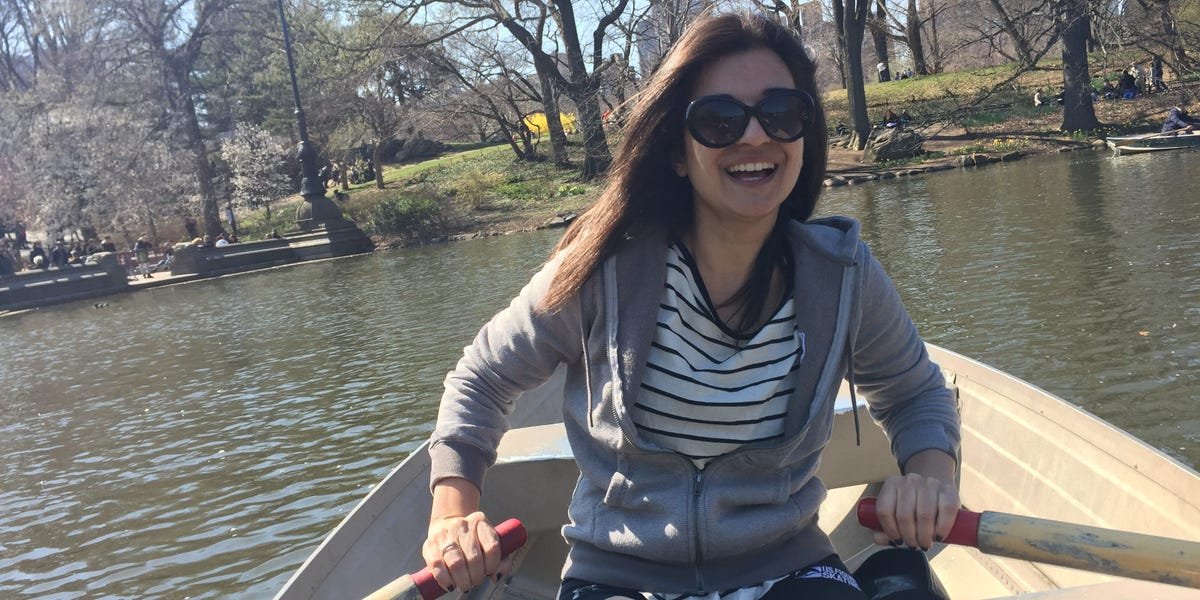
Anahid S. Modrek's moving truck filled with boxes

The author had to pack up her life several times.

Courtesy of Anahid S. Modrek


When I moved back to California this most recent round, my uncle started to battle ALS and stopped visiting because of the staircase up to my space. After about a year, I received a phone call that my uncle was headed to the ICU; his fight with ALS was over. I’ll never live somewhere that isn’t wheelchair accessible again.

My final, most recent move (No. 13) was deliberate: downtown Culver City, behind the Museum of Jurassic Technology, where my grandfather Hagop Sandaldjian’s standing exhibition is. He died after I was born, and it was a way of connecting with him.

Moving was worth it for my career

This all started with decisions made when I was 15. I’m 35 now.

I did what I had to do in academia to maintain momentum. I don’t have regrets, per se. I wanted to experience it all.

Academia was an intellectual pursuit and an adventure that came with losses I didn’t expect. Ice eventually melts, and soil soaks up the water. That’s how roots grow.

Academia brought me back home, but it was a drive to maintain momentum developed as an athlete that kept me moving until my feet landed right where I wanted. Now up for early tenure, I feel like I’m just getting started.


Source link

My-mom-has-been-collecting-miniatures-for-50-years-They.jpeg

My mom has been collecting miniatures for 50 years. They have taken over our 1000-square-foot basement.

This as-told-to essay is based on a conversation with Celina Myers. It has been edited for length and clarity.

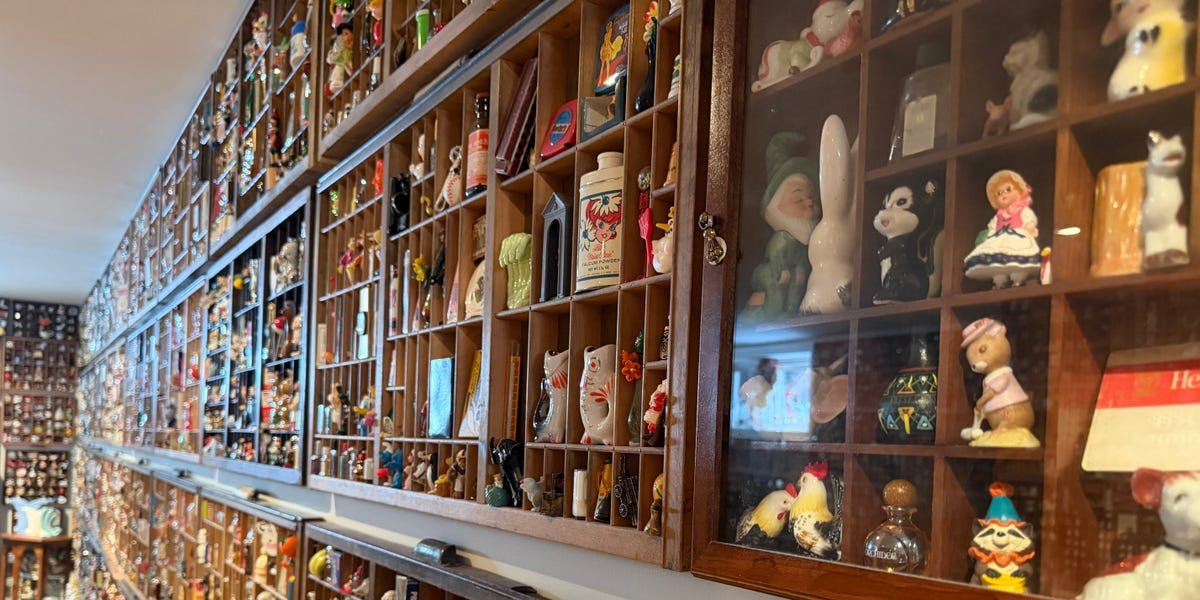
When I was a little girl, I remember having birthday parties at my house and taking my friends down to our basement to see my mom’s huge collection of tiny figures, neatly organised in typeset trays hanging all over the walls. Our entire 1000-square-foot basement had been turned into a sort of antique warehouse.

It all started when my mom was 14, in the early 70s. Her friend had been given a typeset tray and put little items in it. My mom wanted to do the same, so she went to a garage sale and found a tray like the one her friend had.


Photo of woman on cork

Celina Myers’s mom started buying miniatures with the $2 her aunt would give her for her birthday.

Courtesy of Celina Myers


Each birthday, her aunts would gift her $2 to buy a charm for her charm bracelet, but instead of buying a charm, Mom would buy a miniature for her tray.

One after another, typeset trays filled. And this is still happening even today.

My friends love to see the collection

As a kid, my friends loved coming to our house because they wanted to see the collection in the basement. They all jumped from hole to hole to see what new miniature she had added most recently.

My personal favorites were the Spice Girls dolls, crazy bones, and old playing cards. I loved the nostalgic ones most, the ones I remember buying with mom.

Although mom never stopped us from looking at her special finds, she always said that we had to look with our eyes and not touch with our fingers.


Miniature collection

Celina Myers’ mom collected miniatures for 50 years.

Courtesy of Celina Myers


It never occurred to me that her collection was weird. In fact, I thought she was this really cool mom who everyone loved.

Every Saturday, my mom, grandma, and I would head out to the garage sales to find new additions. We called ourselves the Three Musketeers. We’d scan all the knickknacks to see what we liked, what we didn’t have, and what would fit in the typeset box compartments.

Mom also went to antique shops, and I’d add my own Happy Meal items.

It was a family adventure.

This is collecting, not hoarding

We never got rid of anything, but I wouldn’t call this hoarding. I’d call it collecting, because she displayed everything beautifully, always making sure the miniatures were dusted.

When I think about the future of clearing out this space when she’s no longer with us, I sometimes feel intimidated. But she finds so much joy in her collection, and I wouldn’t ever want to ask her to downsize what she has on display.


Miniature collection

Celina Myers says her mom still feels joy looking at her collection.

Courtesy Celina Myers


I’ve told her that one day, I want to open a museum or a breakfast restaurant with her collection behind Plexiglas. I’d call it Joanne’s. Everyone can enjoy it then — that’s what she wants.

Each miniature is a piece of my mom that means so much to her.

She still finds joy in her collection

In the last few years, she’s become severely disabled, and one of her greatest joys throughout has been describing exactly where and when she found a particular miniature, and the story behind it.

Since she can’t get out easily to garage sales and antique stores to find miniatures now that she is in a wheelchair, she loves using Facebook Marketplace and Craigslist. She’ll find something she wants online, and Dad will pack up the wheelchair, and off they go to collect the knickknack.


Miniature collection

Celina Myers is thinking about setting up a P.O. Box so people can send miniatures to her mom.

Courtesy of Celina Myers


After I posted a video of her collection on Instagram, there were 12,000 comments, and mom wanted to read each one. She loved it.

I’m planning to open a PO Box and then post a YouTube video asking people to send her collectibles, along with a note explaining the item and its story.

I know she’ll sit for hours, looking at what’s been sent to her and enjoying the letters that accompany it. It will light her up, make her so happy.


Source link

Ive-lived-in-the-Boston-area-for-14-years-Here.jpeg

I’ve lived in the Boston area for 14 years. Here are 5 things that live up to the hype and 2 I tell first-timers to skip.

  • After living in the Boston area for 14 years, I’ve thoroughly explored the city and its suburbs.
  • I always recommend tourists visit the Isabella Stewart Gardner Museum and Chinatown.
  • When I see itineraries with chain-filled food halls, I suggest swapping them for local restaurants.

When I moved to the Boston area from Denver 14 years ago, I felt like I’d walked into the pages of a storybook.

Venturing outside of my Cambridge apartment, I was surrounded by centuries-old trees, red-brick buildings, and cobblestone streets.

As I’ve spent more time in Boston neighborhoods, I’ve found that each one has its own unique character and cultural richness. Even after more than a decade living here, I’m still amazed by the city’s world-class museums, diverse cuisines, and vibrant arts and music scenes.

When out-of-towners seeking a uniquely Boston experience ask for recommendations, these are the five things I tell them to do and the two I advise skipping.

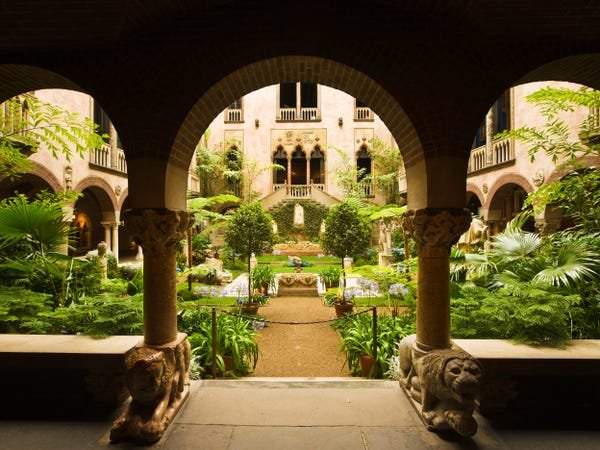
The Isabella Stewart Gardner Museum houses a world-renowned private art collection.

The Isabella Stewart Gardner Museum is one of my favorite places in the city.

Atlantide Phototravel/Getty Images

Entering the Isabella Stewart Gardner Museum feels like stepping into a Venetian palace, complete with a central courtyard and authentic Italian architectural fragments.

Opened in 1903, the museum houses Isabella Stewart Gardner’s personal art collection of over 18,000 pieces. It was also the site of the biggest art heist in US history, which happened in 1990.

The museum uses a timed-entry system, and tickets sometimes sell out, particularly on weekends and holidays. If you want guaranteed entry at a specific time, I suggest booking tickets in advance.

The Isabella Stewart Gardner Museum is one of my personal favorites, but Boston is full of unbelievable museums, from the Museum of Fine Arts to the Larz Anderson Auto Museum. I always encourage visitors to seek out ones that align with their interests.

For a bit of fresh air, head to the Boston Public Garden and Boston Common.


The Swan Boats in Boston Public Garden

Visitors can ride on the Swan Boats in the summer months.

APCortizasJr/Getty Images

The first public botanical garden in the US, Boston’s Public Garden has winding paths, manicured flowerbeds, and shady benches that are perfect for people-watching.

It’s a wonderful, calm spot to rest or have a picnic, and when the weather warms between April and September, I love to watch the iconic Swan Boats sail across the lagoon.

The Public Garden also connects directly to the Boston Common, making it easy to build a leisurely stroll into an itinerary.

Boston’s Chinatown neighborhood is vibrant and unique.


Boston Chinatown gate

Boston’s Chinatown neighborhood is located downtown.

ROC

Dating back to the 1870s, Boston’s Chinatown is one of the oldest in the US and the only one remaining in New England.

I love to walk through the traditional paifang archway onto the main street, which is located directly downtown and packed with restaurants, bakeries, and tea shops.

Beyond the food, the neighborhood reflects immigrants’ history in Boston and the community activism that’s helped preserve it amid downtown development.

My family has a tradition of going to Chinatown for a Christmas meal, and we always find it packed. Three of my favorite restaurants to recommend are Q Restaurant, Shabu-Zen, and Jade Garden.

Shopping on Newbury Street is hard to beat.


Newbury street Boston

On certain summertime days, cars are blocked off from Newbury Street.

CHUYN/Getty Images

Whether someone is a big shopper or not, I always recommend a stroll down Newbury Street. It’s a beautiful walk among the 19th-century brownstones, and the eight-block stretch is filled with luxury shops, independent boutiques, cafés, and art galleries.

Although you should always check opening hours, most shops are open between 10 a.m. and 8 p.m.

In the summer, Newbury Street is closed to traffic on certain Sundays, so the entire road is filled with pedestrians and live music.

The Boston Public Library in Copley Square is a must-visit for all tourists, bookish or not.


Boston Public Library Reading Room

The Boston Public Library is free to enter and open to the public.

Tracee Herbaugh

I’m admittedly a book nerd, but even those who aren’t will enjoy the Boston Public Library, which dates back to 1848. There are technically 25 branches throughout the city, but the central building in Copley Square is the one worth visiting.

The building is beautiful, with grand murals and fascinating exhibitions. McKim Courtyard, situated right in the middle, is a perfect place to take a peaceful moment to relax before or after you stroll through the stacks.

The best part? The library is free and open to the public.

However, I recommend picking and choosing your stops on the Freedom Trail.


The Old State House building in downtown Boston

The Old State House is one of the stops on the Freedom Trail.

APCortizasJr/Getty Images

Many visitors’ first stop in Boston is the Freedom Trail, a 2½ -mile walking path that connects 16 sites related to the American Revolution. Although it details important history, the path can get crowded and noisy.

Without a knowledgeable tour guide or resources to provide the necessary historical context, it can be challenging to understand each stop.

Plus, Boston can get extremely hot in the summer and freezing cold in the winter, so it might not be ideal to stand outside for such a long time.

Instead of diving into the path from start to finish, I recommend selecting some of the individual sites and focusing on them instead.

For those set on doing the whole walking path, I’d read up on the history first and tackle the Freedom Trail on the day with the best weather forecast.

Swap Faneuil Hall Marketplace’s Quincy Market for a spot with more local options.


Second floor of the Quincy Market building's rotunda with its common seating area.

I usually tell visitors to skip the Quincy Market.

c. 1824-26

Faneuil Hall Marketplace’s Quincy Market is a popular spot that I tell folks to avoid. I find the eateries inside to be overpriced, and the shops outside are chains that exist in other US cities.

With so much good food in Boston, don’t waste time on dishes you can get elsewhere.

Those interested in visiting a market should head to the Boston Public Market, which has a host of yummy food from local vendors, and the High Street Place Food Hall, which is perfect for groups or travelers who can’t decide on one type of food.

These market-type establishments offer local favorites such as a lobster roll, oysters on the half shell, and cannolis.


Source link

Ive-lived-in-the-UAE-for-17-years-I-ran.jpeg

I’ve lived in the UAE for 17 years. I ran to the basement as missiles flew overhead — and I still feel safe.

On Saturday, I was standing on the beach below my home on Dubai’s Palm Crescent when I noticed thick plumes of black smoke rising from the Fairmont Hotel across the water on the trunk of the Palm Jumeirah.

I watched the dark fumes with dread as they rapidly grew thicker at sunset. The sight recalled the same images I saw from explosions in Beirut and Gaza during my own reporting in the region over the past few years.

I live in a beachfront apartment on the East Crescent, the outer arc that curves around Palm Jumeirah and shields it from the open sea.


Smoke from a building in Dubai, United Arab Emirates.

She saw smoke when standing outside her home on Dubai’s Palm Crescent.

Provided by Rebecca Anne Proctor


I had just gotten back from visiting a friend from graduate school and her family at a beach club at the base of The Palm Jumeirah. An afternoon meant to be spent enjoying the beach and the cool waters during one of the Gulf’s best times of year, quickly turned into one of spotting numerous missiles in the sky as they were being intercepted by the United Arab Emirates’ defense system.

The US strikes on Iran, which we had anticipated for weeks, had begun, and as many in the Gulf had feared, they have led to hundreds of missile and drone attacks on Gulf soil.

After an intense few hours filled with worry, I had gone down to the beach at my home to watch the sunset and try to find a moment of calm. Others had done the same. A fisherman stood with his line in the water. Couples walked by the water’s edge as the evening light shimmered on the waves. Others lounged by the pool.

For a moment, it looked like any other Saturday.


The sky near The Palm in Dubai, United Arab Emirates.

Looking up at the sky in Dubai.

Provided by Rebecca Anne Proctor


But the smoke still spiraled into the sky, an eerie reminder that it wasn’t. People stood quietly, watching.

Then, without warning, a fast-moving ball of fire flew over our heads and our building. Instinct took over. We ran for the basement, breathless, confused, scared, and frustrated. A woman rushed in after us, crying. She said she’d just driven past The Fairmont and seen it in flames.

I’ve lived in the United Arab Emirates since 2009. I never would have imagined that the sights of bombings I have reported on in other Arab nations would be seen and experienced here, a Gulf nation considered to be one of the safest in the world.

This is a place where my friends from Lebanon, Palestine, Syria, and even Iran and parts of Africa have come to for a safer life and better work opportunities.

They did not escape war to come to experience another war.

We knew it was coming

Since mid-January, there had been growing talk of a possible military strike on Iran. For weeks, people across the Gulf — residents and visitors alike — had been bracing for it. At conferences, art fairs, dinners with friends, and even casual work meetings, the subject would come up.

People would whisper about it, sometimes even joke.

“Let’s see if it happens next week or next weekend,” someone would say.

“Let’s have lunch while we still can,” a friend in Downtown Dubai told me recently. “We may all be living in the basement soon,” they added with a laugh.

But the moment never came.

We’re now in the second week of Ramadan — a time meant for reflection, charity, community, and peace. Dubai had been full of festive iftars and suhoors, the celebratory meals where Muslims break their fast after sunset.

Until this week, the city felt joyful, as it always does during this month.


Screenshot of emergency alert from United Arab Emirates.

She has received texts warning her to stay away from windows and falling debris.

Provided by Rebecca Anne Proctor


Life is carrying on

The last few days have brought real fear and confusion. At times I’ve felt completely on edge. But I also feel safe. I feel grateful.

As I write this on the evening of March 3, flights across the Gulf are still suspended. The UAE says it has intercepted 186 ballistic missiles and more than 800 drones. I can hear the fighter jets roaring overhead. And yet, outside, children are playing again. Birds are chirping.

Businesses are open, even if many people are working from home. Life is going on, and I do feel safe. I’ve gone through several nights of fitful sleep, waking up to emergency texts from the government on my phone warning us to stay away from windows and falling debris.

The noise and uncertainty have been scary. But seeing how the UAE has been handling the situation — confidently and with resilience — has given me strength.

Don’t get me wrong, this isn’t easy. I have also seen commentary and reports online that have used this moment to criticize the nation, dismissing it as “glitzy,” as if it isn’t a real place where real people live. But for those of us who call it home, it’s very real.

Over the 17 years I’ve been here, I have lived through two recessions, the COVID pandemic, and several floods. During each catastrophe, the UAE has surprised its skeptics and bounced back.

I don’t know how or when this will end. I am still undecided as to when or if I will leave. I’m still nervous going to sleep at night. It’s only been a few days, and I’m still jumping at loud noises. But each hour and day that passes, I do feel calmer. We will get through this. The UAE will get through this.


Source link

Americas-average-gas-price-saw-its-largest-single-day-jump-in.jpeg

America’s average gas price saw its largest single-day jump in 4 years

The drive to and from the office just got more expensive.

Prices at the gas pump jumped an average of 11 cents across the US on Tuesday morning, according to AAA. The national price for a gallon of regular gas climbed from $3.00 on Monday to $3.11 on Tuesday, while premium fuel rose from $3.86 to $3.98.

That’s the largest single-day price rise at the pump since March 2022, AAA told Business Insider. Every state except Hawaii experienced Tuesday’s price jump.

It’s also the first time the national average for regular gas has topped $3 a gallon in 2026.

The spike comes as Iran expands attacks in response to bombings by the US and Israel. In recent days, Iran has launched missiles and drones at Israel and at US bases in Bahrain, Iraq, the United Arab Emirates, and Qatar.

Those attacks have rattled oil markets and raised fears of supply disruptions.

On Monday, QatarEnergy throttled production of liquefied natural gas after drone attacks damaged one of its facilities.

Iran has also threatened ships traveling through the 21-mile Strait of Hormuz, where about 20% of the world’s crude oil supply passes through, Patrick De Haan, the head of petroleum analysis at GasBuddy, wrote in a note.

In response, Brent crude oil, the benchmark for global oil pricing, hovered above $80 a barrel on mid-day trading. That’s up about 4% from Monday.

There’s another pressure point for consumers: The summer driving season is about to start.

“Spring weather may be weeks away in much of the country, but the seasonal rise in gas prices is underway,” AAA wrote last Thursday. “Gas demand is also expected to increase next month as spring break season kicks off and more drivers take road trips.”

Higher demand, combined with fears of supply disruptions, is a historic recipe for rising prices.


Source link

Ive-worked-at-Costco-for-20-years-Here-are-7.jpeg

I’ve worked at Costco for 20 years. Here are 7 of the best things I’m seeing on shelves right now.

  • As a longtime Costco employee, I love seeing the new items that come into the warehouse each month.
  • The Shark Stainforce system and BBQ Daddy scrubber are great for spring cleaning.
  • I saw lots of great food items, like Lesser Evil Moonions and The Only Bean roasted edamame.

I’ve worked at Costco for 20 years, and one of my favorite parts of the job is getting a front-row seat to the great new items that come into the warehouse.

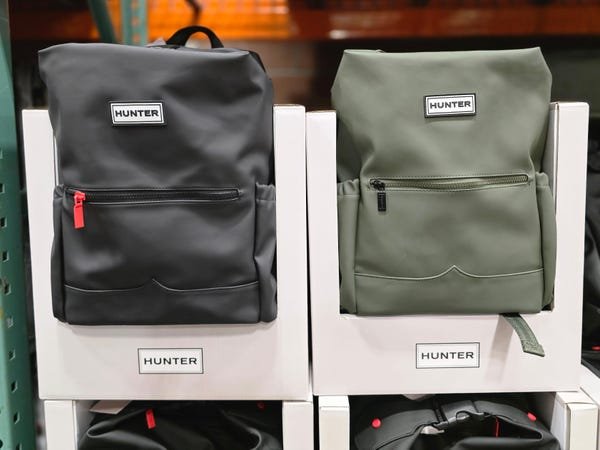
From Hunter backpacks to the Shark Stainforce system, here are seven of the best products I’m seeing on shelves this month.

These stylish Hunter backpacks caught my eye.

The Hunter backpacks come in black and green.

Veronica Thatcher

If you’re looking for a durable, water-resistant backpack that can safely carry your belongings for school, work, or travel, I recommend checking out these options from Hunter.

These stylish bags, which come in green and black, have adjustable straps and are great for everyday use.

Turn your home into a locker room with this unique Suncast storage solution.


A Suncast sports locker in a box at Costco.

It’s easy to connect multiple Suncast sports lockers together.

Veronica Thatcher

The Suncast sports locker is a unique way to keep sporting equipment organized.

The spacious middle section is large enough to hang jackets, jerseys, or hats, and can hold anything from a golf bag to tennis rackets. There’s also a liftable seat that makes putting on shoes easy.

You can even connect multiple lockers together, making it the perfect storage solution for sporty families.

The Shark Stainforce system is great for homes with pets or kids.


Boxes of Shark Stainforce stain-removal machines in boxes at Costco.

The Shark Stainforce stain-removal system is cordless and easy to carry around.

Veronica Thatcher

The cordless Shark Stainforce stain-removal system makes it easy to clean everything from couches to car seats.

All you have to do is spray the included stain-fighting solution and use the machine to scrub and extract the mess. I love that it comes with a portable caddy, which makes cleaning the entire house easy.

Plus, Costco members get access to extra pieces like a magnetic charger and replacement filters.

The Lesser Evil Moonions look delicious.


A hand holding a bag of Lesser Evil Moonios onion snacks.

Lesser Evil Moonions are coated in onion and garlic seasoning.

Veronica Thatcher

For a savory snack made with organic ingredients, I suggest picking up the Lesser Evil Moonions.

Each ring is coated in onion and garlic seasoning, and is made with avocado oil.

Get your grill ready for warmer weather with the BBQ Daddy.


Boxes of BBQ Daddy scrubbers on display at Costco.

The BBQ Daddy steam-cleaning grill scrubber doesn’t have wire bristles.

Veronica Thatcher

The BBQ Daddy steam-cleaning grill scrubber is a great way to maintain your barbecue grill without harsh wire bristles.

It uses Scrub Daddy’s signature water-activated foam to firm up with cool water and gradually soften using steam from the hot grill. Each box comes with one BBQ Daddy system and one scrubbing-head refill.

Egmont Honey makes a great natural sweetener.


Boxes of Egmont honey on display at Costco.

Egmont Honey is harvested from New Zealand.

Veronica Thatcher

This month, I came across jars of Egmont Honey, which is harvested from New Zealand.

This Mānuka honey is known for its rich and creamy flavor, and tastes great when drizzled on yogurt, stirred into tea, or eaten by the spoonful.

The Only Bean roasted edamame is a great snack.


Bags of The Only Bean roasted edamame snacks.

The Only Bean roasted edamame has 14 grams of protein per serving.

Veronica Thatcher

The Only Bean roasted edamame is a great high-protein grab-and-go snack. Loaded with 6 grams of fiber and 14 grams of protein per serving, it’s a treat I can feel good about reaching for.

Costco was not involved in the sourcing or writing of this story. The views contained within represent the author’s personal views.


Source link

I-got-the-perfect-job-in-my-field-after-graduating.jpeg

I got the ‘perfect job’ in my field after graduating. Two years later, I left it all behind and moved to Tokyo.

After four years of coursework, practicums, and part-time jobs, graduating felt like a huge accomplishment. I finally had room to breathe. Then fall approached, and it was time to get a “real job”.

I earned my bachelor’s degree in social work, picked up ESL teaching certifications along the way, and assumed I would either go straight into the field or head to teacher’s college.

It felt like the responsible choice — one that made sense to my family, to my need for stability, and to the unspoken expectation that, after graduation, you pick a path and stay on it.

That summer, I came across a college instructor position I was technically qualified for, so I applied, interviewed, and overcame some serious impostor syndrome. By September, I was teaching my first college-level courses from home.

At first, I felt great. The hours were good, my students were kind, and my family was proud of me. I was even teaching future community-service workers.

On paper, it was a dream job. It felt grown-up, fit my background, and seemed like the right thing to do. Over time, though, that feeling faded.

I wasn’t ready to settle down, and I could feel it


Womam smiling with flowers, diploma

After graduating, I got a job in my field as I felt I was supposed to.

Alessa Hickman


Between life changes, teaching burnout, and a growing disconnect from my passions, I felt stuck.

I’ve always been creatively inclined, whether that meant writing, making videos, cooking, or creating digital resources in my free time.

Instead, many of my nights were spent prepping lessons, grading assignments, and reading essays, leaving little room for the hobbies that filled me up.

Gradually, the work took a toll on me, but the expectation that a “good” job is one you stick with for years made leaving seem like breaking the rules.

In my early 20s, I felt boxed into this pipeline that didn’t suit me, and I didn’t want to follow a version of success that didn’t feel sustainable.

I’m entrepreneurial by nature, constantly chasing new ideas, certifications, and ways to apply them. So when I started exploring what else I could do with my skill set, freelance writing made the most sense.

With my husband’s support, I decided to leave teaching and pursue freelancing full-time — a move that raised quite a few eyebrows.

My craving for something radically different pushed me to leave my job and my country


Woman smiling with drum arcade games

I fell in love with Japan when I first visited.

Alessa Hickman


Around the time my teaching chapter closed, I learned about Japan’s Working Holiday Visa program. My husband and I first visited Japan in early 2024 and instantly fell in love with the country.

Back in Ontario, that feeling was hard to ignore. We were renting an apartment with a lease ending in October, and after spending my entire life in my hometown, staying felt more limiting than comfortable.

Between the rising cost of living and a sense that I had outgrown my routines, I wanted to explore something new.


Aerial view of city in Japan during daytime

I’ve enjoyed building a life in Tokyo.

Alessa Hickman


We applied for the visa, were approved, and sold most of our belongings as our move-out date approached. In December 2025, we flew to Tokyo and rang in the new year halfway across the world.

Living here has been incredible. Learning Japanese, navigating a new culture, and building a life in Tokyo have been exactly what I needed. And yes — the food’s been amazing, too.

Moving abroad and changing paths didn’t mean abandoning my education or values. Instead, it meant reframing them.

Read more stories about moving somewhere new

My definition of success looks different now


Woman smiling near koi pond

I’ve learned that life after college doesn’t have to be linear.

Alessa Hickman


I’m no longer in a classroom, but my background in social work and teaching continues to shape the work I do.

I create and edit content that’s rooted in helping others, and I’m lucky enough to write about my life and experiences abroad.

When I told people I was quitting teaching, and later that I was moving to Japan, it was seen as somewhat unconventional. My husband even left his stable job to come here.

However, the move opened many more doors than it closed. Living in Tokyo has brought new experiences, stories, and opportunities I would’ve never had otherwise.

I’ve learned that postgrad life doesn’t have to be linear — and maybe it shouldn’t be. For some people, stability is the right choice. But for others, taking a detour can lead to growth you’d never find by staying put.

For me, choosing uncertainty meant choosing myself.

I don’t know what my life will look like in two or five years from now, but I do know that I’m building it on my own terms. That feels like a pretty good place to start.


Source link

Im-a-native-Floridian-who-left-after-60-years-The.jpeg

I’m a native Floridian who left after 60 years. The high prices, traffic, and bad weather made it unlivable.

This as-told-to essay is based on a conversation with Kimberly Jones, a 60-year-old native Floridian who moved to North Carolina in 2025. The conversation has been edited for length and clarity.

I was born and raised in Miami and spent my entire life living in South Florida. But last year, my husband and I moved to North Carolina, and it wasn’t an easy decision.

Our reasons for moving were multifaceted. A major factor was affordability; the cost of living in Florida had gotten out of control. Prices increased for everything — homeowners’ and auto insurance, and even for everyday expenses like groceries and eating out. Those costs felt particularly high in South Florida compared with other parts of the state.

Another reason was that South Florida feels overly developed. If there’s a corner available, they’ll build a high-rise on it. It’s turned into a congested, expensive city. I used to spend 2.5 hours a day commuting to and from work.

Beyond affordability and congestion, my husband and I were also looking forward to a slower pace of life.

My children are still in Florida, along with the rest of my family, my friends, and the life I’d always known. For us to leave, it was a big deal.

I hardly recognize Florida anymore


A sunset over buildings in Miami, Florida, with cranes over new high-rise buildings under construction.

New high-rise buildings under construction in Miami.

Bilanol/Getty Images


South Florida is nothing like what it used to be.

When I passed another cluster of cranes and new buildings going up, I would always think: who’s living in all of these places, especially at these prices? It’s not the people who actually keep the city running. Not the teachers, the grocery store workers, or the hospitality workers.

These days, even young adults with a college degree and a decent job are having a hard time affording to live here unless they have a partner to help pay half the bills.

My kids are single and already out of college. My daughter works two jobs to keep up with expenses, and my son also has a secondary income.

My daughter managed to buy a condo a few years ago, when prices were lower, and interest rates were still low. But my son has little chance of buying anytime soon; he’ll be renting for the near future, like most of his friends — most of my friends talk about the same thing with their kids.


Construction workers building a mansion on Miami Beach.

Construction workers building a mansion on Miami Beach.

Miami Herald/TNS


I grew up in Florida, so seeing what’s happened is surreal. It’s just sad to watch that kind of change. Buildings just keep going up and up; they’re even trying to push farther into the Everglades. It feels like they’re displacing wildlife and disrupting the ecosystem.

And then there’s the question of infrastructure — what are they doing to support all of this growth?

My quality of life has improved since moving to North Carolina

In January and February, there’s no better place to be than South Florida. But the other months of the year, the heat and the humidity were just brutal. You couldn’t leave your house, and your AC never shut off.

We wanted better weather, but my husband and I didn’t want to go somewhere far, like the Northeast. Many Floridian transplants are moving to Southern states like North Carolina, South Carolina, Georgia, and Tennessee.

We chose to move to North Carolina.


A woman holds a dog as she sits on a boat.

Jones and her dogs in the family boat on their lake, next to their house.

Courtesy of Kimberly Jones


My husband retired a few years ago, and I was able to transition to remote work. We live in a small rural town about an hour from Charlotte. We love its slower pace of life and the fact that people are very nice up here.

My husband and I custom-built a lakefront home on 1.5 acres of land we bought in the town 20 years ago. There’s no way we could have afforded this quality of a home in Florida.


A woman and a man pose in front of a backdrop at a concert.

Jones and her husband at a concert in North Carolina.

Courtest of Kimebrly Jones


Living in North Carolina does have its give-and-takes. For one, there’s a state income tax, which Florida doesn’t have. Still, sales tax is pretty much the same in both states, and overall, the cost of everything else here is much lower than in Florida. We’ve been saving money on home insurance. Even grocery stores and restaurants are more affordable.

My quality of life — my stress level, everything — has improved tremendously just from being out of what felt like a rat race.

A lot of my friends have already left Florida, and the ones who haven’t want to, but they’re stuck for different reasons, like owning a business. I think my husband and I are really lucky our timing worked out.


Source link

I-graduated-from-college-6-years-ago-and-have-already.jpeg

I graduated from college 6 years ago and have already moved 10 times. I never thought my post-grad life would be this unstable.

Growing up with limited money, I always viewed college as a safety net, an investment that would set me up for immediate success. I started saving for tuition in high school, worked full-time in college to avoid student loans, earned straight A’s, and did all I could think of to guarantee financial success.

I felt financially secure for a short time, but everything changed when I graduated. The stability I once felt walking around my safe college town vanished almost overnight, and I was completely unprepared.

Since graduating over six years ago, I’ve moved 10 times while navigating rent increases, job changes, and the financial realities of being a young adult.

I thought life after college would be stable, but I was wrong

It took 10 months to find a job after graduating. When I finally did, I moved out of my childhood bedroom only to live temporarily with friends, and then back with my parents, recovering from the embarrassment of not being able to afford housing on my entry-level salary.

After a few months and a decent raise, I tried again. I moved into an apartment with my boyfriend (now husband) and got a dog. Since then, we’ve lived in four different apartments, moving back in with family between each one.

I’ve changed addresses so many times that my GPS has given up on me. Rising rent, post-pandemic inflation, pay cuts, unexpected debt, and even a lost tax payment forced us back home multiple times. We were fortunate to have family to fall back on, but the repeated setbacks never felt easy.


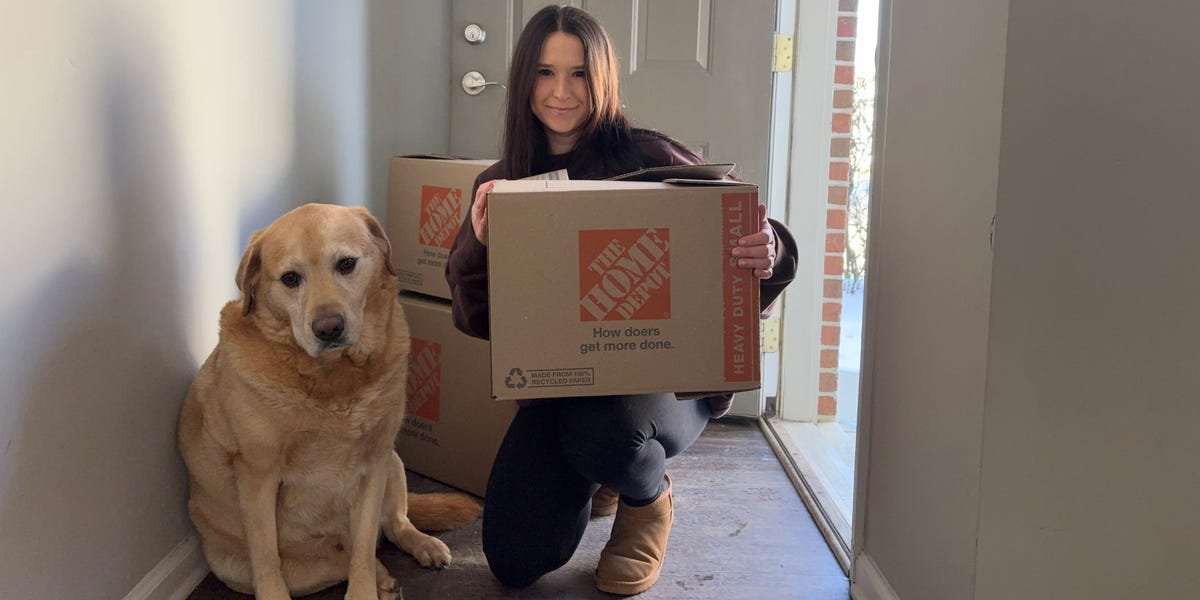
Erin Wetten and her dog unpacking moving boxes

The author has faced many financial struggles since college.

Courtesy of Erin Wetten


Over six years later, I’m still not “settled” in the way I imagined. Each move taught me to handle setbacks with a little more confidence, yet, as someone who was so used to being prepared, I still felt like I was losing my sense of self.

I began to understand the emotional toll of feeling like a failure

I’ve spent my whole life measuring my self-worth in numbers — my SAT score, GPA, and items on my résumé. I planned my entire future in spreadsheets, bit my nails until they bled, and spent nights before big tests throwing up, even after weeks of studying.

That was me: an anxious, overachieving mess who crumbled at the thought of even a small failure.

Postgrad life quickly humbled me, teaching me that no amount of spreadsheets or A’s could protect me from the real world.

Every time I moved into a new apartment, I told myself, “This is it. I’ll save up, and the next move will be into a house of my own.” But it still hasn’t worked out that way. I’ve been forced to decide: Do I let that feeling drag me down, or accept that instability is a part of life and choose to enjoy the journey?

I had to find a ‘home’ within myself.

In my 20s, I’ve learned that life rarely unfolds the way we imagine, no matter how meticulously we plan. When I crossed the stage in cap and gown six years ago, I pictured a steady job, a white picket fence, and a stress-free existence waiting for me on the other side. I thought fulfillment would come from checking the right boxes in the right order, as I had always done.

Instead, I’ve never felt more fulfilled than I do now that I’ve thrown out the checklist altogether and stopped viewing life like a syllabus.

Over time, the weight of starting over lightened, and I learned to feel at home within myself, even as my physical space kept changing. Rather than feeling sorry for myself, I sought opportunity in each new set of blank walls, finding comfort and purpose from within.

My life hasn’t followed the simple, straightforward path I once expected, and I’ve come to believe that is for a reason. As someone with a Type A personality who was once consumed by anxiety over the smallest things, more rules and timelines weren’t what I needed. I needed freedom from my own expectations, and in my case, that meant getting knocked down enough times to finally loosen my grip on perfection.

No matter how many times I have to move or start over, I know I’ll be OK. I’m no longer chasing a timeline or striving for a perfect grade in life. I’m building a life that feels like mine, and letting its ups and downs shape me for the better.


Source link