I became a Pilates instructor 13 years ago after reformer classes helped me recover from a severe back injury.
Nowadays, I teach 20 group equipment classes weekly and see about 100 clients over seven days. With that many students, it’s no surprise I see new clients make the same mistakes over and over.
Here are the five most common mistakes I see students make during their first few Pilates classes.
Not arriving early for class
I recommend new clients arrive at the studio at least 10 minutes before class so that I have time to fit them into the equipment.
For example, the Reformer carriage must be adjusted to fit their unique body type, height, and overall proportions. I also ensure the straps are even and at the correct length for the client.
Every time Daniela publishes a story, you’ll get an alert straight to your inbox!
Stay connected to Daniela and get more of their work as it publishes.
Arriving ahead of schedule allows students to get settled and stay focused during class.
Ignoring the instructor’s cues
It’s important to listen to the instructor’s directions during class.
ilbusca/Getty Images
Pilates classes involve verbal cueing, which means most teachers will describe the exercises instead of demonstrating them. However, following oral instructions can be particularly challenging for non-auditory learners.
For example, when doing reformer Pilates classes, the springs can be adjusted to increase or decrease resistance. Many first-timers attend Pilates classes with a gym mindset, assuming heavier loads produce the best results.
However, when taking a class, you should never ignore the instructor’s directions on how much resistance to use. Following directions is essential for staying safe and seeing results.
Not breathing correctly during class
Pilates uses a technique known as lateral breathing to stabilize the trunk (chest, abdomen, pelvis, and back) while you move. This helps prevent unwanted pelvis movement or an arched back.
Good form during exercise allows for proper muscle recruitment and helps prevent injuries, which is why I always remind my students to be mindful of their breath.
However, it’s important to remember that engaging your core and developing breathing techniques takes time. When in doubt, stick to your usual breathing pattern.
Not wearing grip socks and proper clothing
Most studios require students to wear socks with grips on the bottom.
Raul Valcarcel/Getty Images
Most studios require clients to wear socks with proper grips on the bottom for safety and hygiene purposes.
Your feet may get slippery during movements requiring extra stability, so I recommend wearing them even if the studio doesn’t mandate it.
It’s also important to avoid wearing loose-fitting clothing so the instructor can see your body and help you make the proper adjustments.
Additionally, it’s best to keep long hair in a bun so it doesn’t get caught in the springs or other parts of the equipment.
Not eating before class — or eating too much
Taking a Pilates class on an empty stomach is a big no-no. However, you also don’t want to feel too full before class since Pilates is a core-centered workout.
I recommend eating something light an hour before class. A protein shake or a rice cake with peanut butter are good options if you’re taking an early class.
For those who prefer to exercise on their lunch break, a small salad with light protein will do the trick. The most important thing, however, is to listen to your body and find what works for you.
This story was originally published on August 28, 2024, and most recently updated on January 5, 2025.
This story is available exclusively to Business Insider
subscribers. Become an Insider
and start reading now. Have an account? .
US presidents have redecorated the Oval Office in different ways since it was first built in 1909.
Most presidents have sat at the Resolute Desk, but others brought in their own personal furniture.
President Donald Trump has added numerous gold embellishments to the Oval Office.
It’s been nearly 100 years since the Oval Office was first built under President William Howard Taft. Throughout that time, US presidents have each made different design choices to redecorate the formal workspace.
Some presidents, like President George H.W. Bush, have brought in their own furniture to replace the Resolute Desk. Others, like President Donald Trump, have reinstated vintage Oval Office pieces while adding their own personal flair.
Take a look at how the Oval Office has changed through the years.
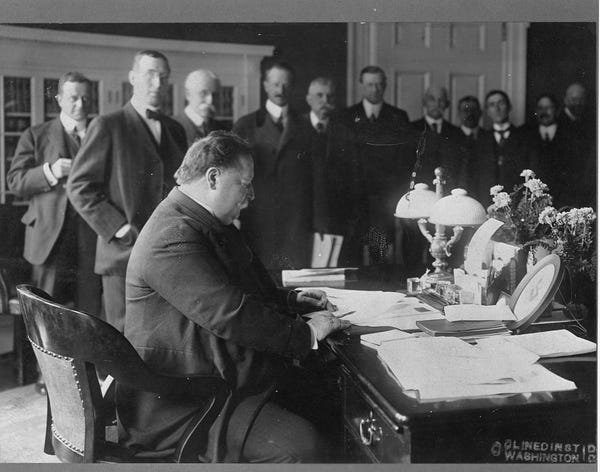
The first iteration of the Oval Office was built under President William Howard Taft in 1909 as part of an expansion of the West Wing.
President William Howard Taft in the Oval Office. B.M. Clinedinst/Library of Congress/Corbis/VCG via Getty Images
Inspired by the White House’s oval-shaped Blue Room, the president’s formal workspace was designed by architect Nathan C. Wyeth.
Taft’s Oval Office featured an olive-green color scheme.
President Franklin D. Roosevelt redesigned and moved the Oval Office as part of another West Wing expansion in 1934.
President Franklin D. Roosevelt in the Oval Office. History Archive/Universal Images Group via Getty Images
The Oval Office was moved to the southeast corner of the White House.
Roosevelt kept a variety of items on his desk, including photos of his sons, ceramic animal figurines, and an appointments easel with his daily schedule, according to the Franklin D. Roosevelt Presidential Library and Museum.
President Harry Truman’s Oval Office was the first to feature a rug with the presidential seal.
President Harry Truman with staff in the Oval Office. FPG/Archive Photos/Getty Images
Truman decorated the Oval Office with the turquoise rug and matching curtains. The walls were painted a lighter seafoam green.
President John F. Kennedy was the first president to use the Resolute Desk in the Oval Office.
The Resolute Desk in the Oval Office. Cecil W. Stoughton/White House Photo
The Resolute Desk, made of wood from the British ship H.M.S. Resolute, was gifted to President Rutherford B. Hayes by Queen Victoria in 1880. Previous presidents kept the desk in the second-floor office of the White House Residence and the Broadcast Room, according to the White House Historical Association.
President Lyndon Johnson replaced the Resolute Desk with his own desk, which he’d used as a US senator and vice president.
President Lyndon Johnson in the Oval Office. Corbis via Getty Images
He also redecorated the Oval Office with white drapes with red trim, evoking the American flag.
President Richard Nixon chose bold hues of blue and yellow to decorate the Oval Office.
President Richard Nixon’s Oval Office. Bettmann Archive/Getty Images
Nixon’s Oval Office rug, in the same blue color as the American flag, was designed by first lady Pat Nixon.
President Gerald Ford changed the color scheme of the upholstery to burnt orange and khaki.
President Gerald Ford in the Oval Office. Historical/Corbis via Getty Images
Ford’s decor included the wheel from the SS Mayaguez, an American container ship that was seized by Cambodian forces in 1975 and rescued at Ford’s direction.
Ford also added a mahogany Seymour tall case clock in 1975.
The Oval Office in 1975. Bettmann Archive/Getty Images
The clock, built between 1795 and 1805, has remained in the Oval Office under every subsequent president since 1975.
President Jimmy Carter brought the Resolute Desk back to the Oval Office.
President Jimmy Carter in the White House’s Oval Office. Corbis via Getty Images
Otherwise, he left most of Ford’s decor.
President Ronald Reagan redecorated the Oval Office during his second term with a rug designed by first lady Nancy Reagan.
Ronald Reagan in the Oval Office. HUM Images/HUM Images/Universal Images Group via Getty Images
The rug featured the presidential seal in the center with sunbeams emerging from the middle, surrounded by a border of olive branches.
President George H.W. Bush redid the Oval Office in shades of blue and gold and brought in the C&O desk that he used as vice president.
President George H.W. Bush’s Oval Office. Susan Biddle/White House via CNP/Getty Images
The Resolute Desk was moved to the Residence Office.
President Bill Clinton chose Arkansas-based interior designer Kaki Hockersmith to give the Oval Office a new look.
President Bill Clinton’s Oval Office. BILL O’LEARY/The Washington Post via Getty Images
Hockersmith designed the yellow curtains and the blue rug with the presidential seal. Clinton also chose to bring the Resolute Desk back to the Oval Office.
First lady Laura Bush designed a new rug for President George W. Bush’s Oval Office.
President George W. Bush in the Oval Office. Greg Mathieson/Mai/Getty Images
The rug featured a sunbeam design with the presidential seal at its center, reminiscent of Reagan’s rug, and a lone star in a nod to Bush’s home state of Texas.
President Barack Obama added striped wallpaper and a new rug with a quote from Martin Luther King Jr.
President Barack Obama in the Oval Office. HUM Images/Universal Images Group via Getty Images
The quote on the border of the rug read, “The arc of the moral universe is long, but it bends toward justice.”
During his first term, President Donald Trump reinstalled Reagan’s rug and added a portrait of President Andrew Jackson.
President Donald Trump in the Oval Office during his first term. Official White House Photo by Joyce N. Boghosian
He also brought back Clinton’s gold curtains and chose a new off-white wallpaper.
President Joe Biden brought back Clinton’s Oval Office rug and added new portraits.
President Joe Biden’s Oval Office. Bill O’Leary/The Washington Post via Getty Images
Biden hung portraits of Franklin D. Roosevelt, Thomas Jefferson, and Alexander Hamilton.
In his second non-consecutive term, Trump has made significant changes to the Oval Office, adding numerous gold embellishments.
President Donald Trump in the Oval Office. Demetrius Freeman/The Washington Post via Getty Images
Many of the gold decor pieces in Trump’s Oval Office came from the White House collection, but Trump also imported some statuettes from his Mar-a-Lago estate in Palm Beach, Florida.
Trump also added flags representing different branches of the US military and additional presidential portraits, with President George Washington in the prominent center spot above the fireplace mantle.
Twenty-one years ago, I faced the difficult decision to move from Spain to the United States with my 3-year-old daughter and 4-month-old baby to follow my then-husband, who had lost his job, in pursuit of a new position in Florida.
I was being asked to leave behind my family, friends, and an established writing career. I was to start over at 41, with no connections, no guarantees, and an already shaky marriage.
My family thought it was a terrible idea, yet my husband’s family felt it was a great opportunity. So, after some soul-searching and many promises of a better life in Florida, I decided to uproot my kids and take the chance.
As I boarded the plane to meet my children’s father (he had come to the US ahead of us), I had mixed feelings: I could feel the excitement of my eldest to see her dad again, but I also feared the unknown. I kept asking myself whether it was really possible that we could fix our marriage and thrive in a different country.
My worst fear came true
Going from living in a penthouse in the old part of Sevilla, where I could walk to just about everywhere, to being cooped up in a tiny apartment in a gated community in suburban Florida, where I needed a car to go anywhere, was brutal to my nervous system.
Every time Lorraine C. Ladish publishes a story, you’ll get an alert straight to your inbox!
Stay connected to Lorraine C. Ladish and get more of their work as it publishes.
I felt trapped in suburbia without my own car. And with a history of major depressive disorder, I started having panic attacks and depressive episodes. One day, while driving my children to find a preschool for my eldest, I had to pull over to sob.
A few months later, my husband lost the job we had moved to Florida for. And so began one of the most difficult periods of our lives.
In four years, we moved several times within Florida, always because of his new jobs. I found work freelancing for newspapers and magazines and wrote more books for publishers in Spain. But our relationship was always floundering.
As our marriage crumbled, we took a time-out under the same roof. We went to marriage counseling, enrolled in self-improvement seminars, and so on. Trust, respect, and admiration had been completely lost, and in 2008, when the Great Recession hit, we had no money, no savings, and no jobs.
I walked away from my husband with my laptop, my books, joint custody of our children, and the huge regret of having moved so far away from my family and friends. But I stayed in Florida, because I didn’t want my children to be far from their father. From one day to the next, I found myself a single mother on food stamps.
I met the love of my life
Nearly a year after separating, 16 years ago, I met the love of my life. We had many similarities: we were both newly single, bilingual and bicultural, and had children of a similar age. We were writers focused on creating a better life for our kids and ourselves. The best part was that neither of us had given up on love despite the tough times we’d lived through.
The author fell in love again in Florida.
Courtesy of the author
For nearly two years, we dated long-distance, spending only weekends and holidays together. One of us would drive two hours to meet the other, sometimes with the children, and when the kids were with our respective former spouses, we met alone.
We were both trying to rebuild ourselves personally and professionally, and together we made a great team. I once again moved for love, but this time with no regrets. Four years later, we married at sunset on the beach, surrounded by our children and close family.
Our kids are all in their 20s now, and we’ve been through the highest highs as well as some pretty rough times. But our relationship was never in question. We’ve cheered each other on and thrived together.
Whenever I think of past regrets and how I shouldn’t have moved to the US 21 years ago with my ex, I realize I would have missed out on finding true love. And I would never have built the stable and dependable family I always wanted.
As the crowd cheered among the explosive crackle of fireworks, upbeat dance music, and cries of “Feliz Ano Novo,” a surge of gratitude coursed through my body.
It was New Year’s Eve 2024, and I was hugging and cheering with new friends I had met just hours before.
Earlier that year, I’d spent two months gallivanting around London, Berlin, Amsterdam, Rome, Florence, and Prague solo. Although I loved returning home to San Francisco, it didn’t take long for my wanderlust to set in again.
I knew my thirst for adventure could only be quenched by revisiting Europe. I missed the walkable cities, the slower lifestyle, and the abundance of fresh food.
I decided I’d spend mid-December to mid-January abroad. After doing tons of research on the best cities for solo travelers, I settled upon Lisbon as my monthlong home base.
To avoid the holiday rush and the inevitable spike in prices and crowds, I left San Francisco on December 7 and made plans to head home about a week after New Year’s Day.
Lisbon was the perfect early holiday destination — and I got to connect with other solo travelers
I connected with other solo travelers who became my companions for New Year’s Eve.
Chelsia Durkee
The first two weeks of my trip were a dream come true.
I loved spending my afternoons checking out bookstores (Livraria Bertrand is worth it), getting lost in the alleyways, taking in the vibrant art scene, and even trekking up a grueling hill to get to my local market.
Since I arrived early in the month before peak tourist season, I felt like I was experiencing Christmas markets and festivities alongside locals.
As December 31 approached, I began to crave some more companionship. So, I logged onto Facebook and searched for Girl Gone International’s Lisbon group.
An online community for women traveling solo, Girl Gone International had resources I’d utilized in the past. This was my first time scrolling through one of its Facebook groups in search of friends, though.
To my surprise, I stumbled upon tons of posts from other solo travelers, all hoping to find New Year’s companions. One in particular caught my attention: a post that said “I’m getting the girls together for a New Year’s celebration” with a link to a WhatsApp group.
She had a dog in her profile photo. What could go wrong?
That’s how I found myself eating steak and sipping Douro Valley wine at a table with eight strangers.
We all came from different countries and backgrounds: the Netherlands, Serbia, and South Africa, to name a few. We quickly bonded over our shared love of travel and the palpable energy of the night.
After dinner, a few other travelers from the Facebook group joined us. We squeezed our way into the crowds to the Praça do Comércio, the main square in Lisbon. The square was packed like sardines, and we held hands so we wouldn’t lose each other.
One of them held up a sign to make sure stragglers could see us. Amid the excitement, I witnessed the most spectacular fireworks display of my life.
My solo New Year’s celebration helped me connect with my values
Celebrating the New Year in Portugal was a once-in-a-lifetime experience.
Chelsia Durkee
After that epic night, the real magic of serendipitous connection took place.
I stayed in touch with two solo travelers and one local for the remainder of my trip. We met several other times to explore restaurants, visit parks, and even take a day trip to see castles in Sintra.
I believe that starting the year in a new country — and with new friends — softened my approach to achieving my goals. In the past, I felt pressured to set certain resolutions: Become fit, work harder, or be a certain way.
Instead of focusing on external validation or achieving rigid goals, though, I started the year with a focus on what actually brings me joy: adventure, global community, and authenticity.
I made new friends, too. Our short-lived connections empowered us to become vulnerable quickly, and I opened up in a refreshing way.
Ironically, it took leaving my country to remember that I am never truly alone.
Though this year’s New Year’s Eve will look a little different — I plan to spend the night locally with friends and family — I would happily ring in the New Year again with strangers in a foreign country.
No matter where I find myself in the world, I’m excited to continue bridging the gap between stranger and friend.
The energy in the room couldn’t have been more tense. Some women were yelling, telling their new friends to stand up and leave. Others were glued to their seats, crying in red-carpet-worthy gowns. Contestant Andromeda Peters was in the middle of it all.
A licensed therapist since 2017, Peters felt compelled to help. She instructed the women to close their eyes and feel their backs against the chairs, to feel their feet planted firmly to the ground, some in their 6-inch stilettos. Then she began to lead the group through a breathwork exercise: Breathe in for four seconds, hold for four seconds, she said, and now exhale.
It was the very first day of Miss Universe.
“We were all distraught,” Peters, who was Miss Ghana 2025, told Business Insider about her fellow contestants. “I was going to walk out, but then I realized, there’s a girl crying next to me and she’s holding my hand. There’s a girl behind me crying. So I helped my sisters ground themselves.”
Chaos had erupted among the pageant queens after Miss Universe director Nawat Itsaragrisil yelled at Miss Mexico Fátima Bosch. Their confrontation was captured on livestream, kicking off what would become one of the messiest competitions in the pageant’s 74-year history. When Bosch was ultimately named the new Miss Universe on November 21, many contestants wondered if they had ever really stood a chance at the crown.
Over the weeks that followed, contestants that Business Insider spoke with would accuse the organization of grueling conditions, favoritism, inconsistent rules, and an ever-changing judging process. Interviews with more than a dozen contestants reveal how a pageant marketed as a women’s empowerment platform had fallen apart as the world watched.
Now, some believe that only a dramatic leadership change can fix Miss Universe.
“I could give you the pageant answer, or I could just be real: Everyone has to go, absolutely everyone,” Miss Haiti Melissa Sapini said.
The Miss Universe Organization did not respond to multiple requests for comment.
Drama from the start
Contestants at the 2025 Miss Universe competition.
Courtesy of Miss Universe
As November neared, 120 women packed their bags and began the journey to Thailand, where they’d spend a month attending events across Bangkok, Phuket, and Pattaya.
For many contestants, walking the Miss Universe stage was a childhood dream finally coming true. Some were seasoned pageant queens with multiple crowns and sashes glittering on their shelves. Others were first-timers. Miss Bonaire Nicole Peiliker-Visser was inspired to compete after her daughter won Mini Miss Universe, while Miss Hungary Kincső Dezsény was searching for a purpose beyond modeling.
“If you get beauty from … God, you need to use it for good,” Dezsény told Business Insider.
Whatever their motivation, the women thought they knew what to expect. The three-week competition would kick off with sponsorship events and media opportunities as they traveled throughout Thailand. Then, contestants would return to the capital to compete in the evening gown, swimsuit, national costume, and interview competitions. A panel of judges would determine the results, though one woman would be able to earn a spot in the top 30 by winning the “People’s Choice” category in Miss Universe’s official fan-voting app.
Meanwhile, trouble was already brewing within the pageant’s leadership.
This year’s event was organized by Itsaragrisil, a controversial figure in the pageant world known as “Papa Nawat.” The Thai businessman, who took over the Miss Thailand pageant in February, has repeatedly come under fire for shaming beauty queens at Miss Grand International, a separate competition he founded in 2013. The flashy and over-the-top production is built around Itsaragrisil’s “4B Framework:” beauty, body, brains, and business.
To kick off the Miss Universe pageant, the Miss Thailand Organization announced it would host a “special dinner and talk show” with Itsaragrisil, Miss Universe 2024 Victoria Kjær Theilvig, and a select group of 2025 contestants. This exclusive dinner, which had been a fixture of Miss Grand International, had never been done at Miss Universe. Fan voting would determine the 10 contestants who would be allowed to attend.
Though some Miss Universe contestants promoted the dinner, they weren’t all on board. Some women worried that scoring a seat at the table could influence final judging during the actual pageant. Miss Canada Jaime VandenBerg told Business Insider that she didn’t “condone what feels like women being auctioned off for dinner with a man.”
The dinner was eventually canceled after Miss Universe called it an “unauthorized activity.” The organization’s president, Raul Rocha, reiterated in a November 3 letter that only the four traditional categories of competition would be considered in the judging.
Miss Thailand director Nawat Itsaragrisil with Miss Universe 2025 contestants.
Courtesy of Miss Universe
A spokesperson for Itsaragrisil told Business Insider that the dinner had been “a sponsor campaign designed to help contestants express their personalities.” Following Rocha’s letter, the spokesperson said many contestants believed all other activities were optional, and more than 30 contestants refused to participate in sponsorship events.
“Sponsor-related activities are a necessary and standard component of any international pageant production,” the spokesperson added. “Sponsors rightfully expect visibility and engagement in return for their contributions.”
The rising tensions came to a head on November 4, the first official day of the pageant, during the confrontation between Itsaragrisil and Bosch. All the pageant queens had been gathered to receive their official Miss Universe sashes, a tradition one contestant compared to the opening ceremony at the Olympics, but the event didn’t begin as planned.
“We’re going in excited for this big moment that everyone lives for,” Peters said. “This was supposed to be our moment to shine at Miss Universe, and then we’re all being yelled at.”
Contestants told Business Insider that Itsaragrisil said he had a list of 20 countries refusing to do sponsorship posts on social media and repeatedly asked the women to “own up to it” before he started calling out specific countries.
“It got to the point where no one even moved because you felt like if you flinched, he would just call you up,” Sapini said. “All I’m thinking is, ‘Oh my God, please don’t say Haiti.'”
When Itsaragrisil turned his attention to Bosch, a heated back-and-forth began. She told the director, “You are not respecting me as a woman,” and he called for security to remove her from the room. Bosch walked out instead, with dozens of contestants following behind her.
“She was shaking,” VandenBerg said of Bosch. “She had tears in her eyes. Victoria popped in and said, ‘Girls, you don’t have to put up with this,’ and I was one of the first to walk out.”
“I was so shocked and angered by the lack of respect that I just did not want to be in that room anymore,” said Miss Armenia Peggy Garabekian, who was among the first to leave. “Then a few of my delegate sisters messaged me and said, ‘Peggy, he’s not letting us out.'”
The women had been seated in alphabetical order for the sashing ceremony, so contestants at the back of the room didn’t have a chance to leave before the Miss Universe staff shut the doors.
“You’re at a loss because you’re uncertain and trying to stay calm,” Miss Malaysia Chloe Lim, who was unable to exit the room, said. “At that moment, we were wondering, ‘Is the competition still going to happen?'”
“It got me really anxious about the legitimacy of the whole event,” Miss Hong Kong Lizzie Li said.
There was a dark cloud hovering over the set the whole time. I didn’t think it could get worse. Then it got worse than worse.Steve Byrne, Miss Universe’s onstage host
Itsaragrisil’s spokesperson said staff temporarily closed the door because “a large number of press and media were gathered directly outside the room, creating a volatile environment.”
The online backlash was swift, but it wasn’t just directed at Itsaragrisil. Some contestants who didn’t leave the room were “being bullied really badly” by fans on social media, Peters said.
“I feel like nobody in the organization did enough; they didn’t care about our mental state and what everyone went through,” Peiliker-Visser, who said she faced online harassment, told Business Insider.
On the day of the confrontation, Rocha said Itsaragrisil’s participation would be limited or eliminated entirely. Yet contestants said he only missed a few events, and Itsaragrisil was quickly and quietly reintroduced.
Itsaragrisil’s spokesperson told Business Insider that Rocha’s promise to limit the director’s presence was never “operationally realistic.” The spokesperson added, “Nawat continued attending activities because he was the only individual with the authority and understanding to ensure the pageant could continue.”
Itsaragrisil tearfully apologized the day after the incident, telling reporters, “I am human. I didn’t want to do anything like that.”
A grueling environment
Contestants onstage at the Miss Universe 2025 competition.
Mohan Raj/Getty Images
Turn on a Miss Universe competition, and you’ll see the three-hour culmination of a weekslong whirlwind experience. While the sea of shimmering sashes and sparkling gowns may look glamorous, there’s a lot of sacrifice off-screen.
For many women, the pressure of the competition was sky-high. After all, these pageant queens weren’t just representing themselves — they were each representing an entire nation. Some women came from countries that had sent them abroad to train with top runway coaches or create couture costumes with the most in-demand designers. Contestants from smaller countries, which typically don’t have many sponsors, had paid thousands of dollars out of pocket for their gowns alone.
Once they arrived in Thailand, contestants had to travel to multiple events each day, sometimes taking flights in the middle of the night before they were expected to participate in various activities, fulfill a daily checklist of social media sponsorship posts, and fight off crowds of passionate bloggers and fans — all while looking picture-perfect.
Contestants said they were forbidden from using hairstylists and makeup artists to help them prepare for each day’s events, so they would regularly wake up at 3 a.m. to get competition-ready. Some simply slept with their makeup on.
When food poisoning or an illness hit, as it frequently did throughout the weeks of competition, many women had to decide whether to rest or miss an important rehearsal. Sometimes, they didn’t have a choice. Dezsényi said her bout with food poisoning was so bad that she spent four days in the hospital — but still made it to the final show.
Contestants take a break during a sponsorship event at Miss Universe 2025.
Courtesy of Miss Universe
After these long days, the women were greeted at the hotel lobby by hordes of fans or pageant bloggers seeking an interview. Contestants told Business Insider that, unlike past Miss Universe competitions, they hadn’t been given chaperones to help manage the crowds.
“They said, ‘We’re not going to have chaperones because you’re grown women,’ but at the same time, you’re putting us in the public spotlight,” VandenBerg said. “To not have security, to me, is kind of crazy.”
Steve Byrne, the onstage host of this year’s competition, told Business Insider that he was shocked by how the Miss Universe Organization treated the women.
“These girls are cooped up for almost 30 days,” he said. “Every day, they have to go to a sponsored dinner. They have to go to this resort and pretend they’re having fun at the pool. To me, it seemed everyone was losing sight of what’s important here. Is anybody thinking about these women? That’s what bothered me.”
Some contestants enjoyed the action-packed itinerary, which included everything from Muay Thai lessons to gala dinners. Miss India Manika Vishwakarma said she appreciated the “incredible focus on fan interactions.”
Others were dismayed by the daily sponsorship events and noticed a lack of philanthropy in the line-up. Miss Universe’s former president, Paula Shugart, told Business Insider that contestants previously participated in an average of three philanthropy events. This year had none.
“I’m a representative of my country, and you’re telling me, ‘Hey, hold this dietary protein powder or take photos with this luggage,'” Garabekian said. “Throughout the month, we could have been taken to a hospital, orphanage, school, anywhere where we could have helped people in need.”
Itsaragrisil’s spokesperson said the Miss Universe Organization did not request any philanthropy events in Thailand, instead focusing on its digital advocacy platform, “Beyond the Crown,” which required contestants to film a video explaining how they used their title to uplift social causes.
Favoritism takes hold
Miss Universe 2025 contestants pose during a sponsorship photo shoot.
Courtesy of Miss Universe
“Sash factor” is a well-known term in the pageant community, bestowed upon the countries that treat Miss Universe like their own Super Bowl. These fan bases dissect the contestants’ every move with the rigor of a fantasy line-up. Their national queen, the star quarterback, is typically rewarded with millions of social media followers.
Miss Universe is designed to be a fair competition, but even the contestants recognize that the playing field isn’t exactly equal. Countries with significant “sash factor” tend to have more sponsors to cover the costs of the gowns and training, and typically receive far more fan attention outside their country. Contestants said that favoritism was also apparent among this year’s official sponsors for the pageant, who were selecting queens from “sash factor” countries for more photo shoots and media appearances.
“They really are looking for women who are popular and have lots of followers,” said Peiliker-Visser. “And if you don’t, you just don’t count.”
Appealing to sponsors has always been necessary to help fund the pageant, but Shugart said in years past it typically wasn’t the main focus of the contestants’ activities. This year, though, multiple women said they were brought into a room and asked to explain any missing sponsorship posts for each brand that had partnered with Miss Universe during the competition.
“I found this extremely unusual and uncomfortable,” Garabekian said. “It made me feel more like a tool for sponsorship obligations, rather than someone there to contribute meaningfully.”
Itsaragrisil’s spokesperson said the sponsor checklist was a “standard operational requirement, not an unusual demand,” and no contestant was “forced or penalized” for a lack of posts.
“It is important to emphasize: MUO is not a charitable organization,” the spokesperson added.
Miss Universe 2025 contestants pose at a sponsorship event.
Courtesy of Miss Universe
As the competition progressed, multiple contestants said it became apparent that some women were secretly using makeup artists and hairstylists to get them competition-ready every morning. This hurt morale, particularly among the pageant queens from smaller countries.
“They scared us so much about the hairstylists and makeup artists, we didn’t even try to think about it,” said Peiliker-Visser. “But these girls were allowed. I said, ‘Oh, they must be special because they’re allowed everything.'”
After several contestants complained, a staff member from Miss Universe held a meeting.
“They said, ‘Girls, we understand there’s a lot of favoritism, and maybe you’re feeling down about it. We just want you to know that it’s the sponsors and has nothing to do with the results of Miss Universe. We’re looking for small countries with big hearts, too,'” Sapini said.
Contestants said the organization promised to take disciplinary action against those who brought makeup artists and stylists, but women continued to break the rules and still placed in the top 30 or better.
A confusing voting app
The 2025 contestants had a jam-packed itinerary with daily sponsorship events.
Courtesy of Miss Universe
While contestants attended events, fans were logging into the Miss Universe app to vote — after watching ads or purchasing votes in bundles — in categories ranging from best skin and evening gown to “Aura of the Day” and “People’s Choice.”
The “People’s Choice” winner would automatically earn a spot in the top 30 — a prize that has become popular across various pageant systems in recent years — but contestants told Business Insider they were unsure whether fan votes would impact anything else.
Conflicting messages made it worse. Rocha’s November 3 statement said contestants were judged only in the four traditional categories — evening, swimsuit, national costume, and interview. Yet the app said votes contributed “10% to the final score of the top 30 placement.”
A screengrab from the Miss Universe app detailing how the fan voting would work.
Courtesy of Zetrix
Peiliker-Viser said the Miss Universe Organization told her national director before the competition that fan votes wouldn’t count. “My director was really concerned because we’re a population of 26,000 people,” she added. “How are they going to measure a small island like Bonaire with other countries?”
For Sapini, it was upsetting to watch people in Haiti work hard to vote for her when there was so much ambiguity around their worth.
“Haiti is a poverty-stricken country, and people in these villages collected their money to send to the Miss Universe Organization because they held onto hope that this would be something good for our country,” she said. “But the voting system was all over the place. It made no sense.”
Can the real judge please stand up?
Miss Universe hurtled toward its final days just as it began — with more confusion.
Speculation surrounding who was judging this year’s competition began circulating online as judges started dropping out. Behind the scenes, contestants said they were just as unsure about who was deciding their fate.
Three days before the November 21 final, composer Omar Harfouch dropped out as a judge, accusing the Miss Universe Organization of carrying out a “secret vote” to select the top 30 without the official judging panel. Former soccer star Claude Makélélé exited the same day due to “unforeseen personal reasons.”
Harfouch also said Princess Camilla di Borbone delle Due Sicilie resigned that week, but VandenBerg said her exit had been misconstrued and that “she dropped out so far in advance.” The princess never publicly explained why.
In a statement, Miss Universe said Harfouch was confused by its announcement of an eight-person selection committee for the pageant’s new “Beyond the Crown” program, which they said operated “entirely independently” to select a winner that had no bearing on the final results. Contestants told Business Insider it was unclear what the winner of the “Beyond the Crown” title would receive.
That statement added more fuel to the rumors, as pageant fans said on social media that James Irvin Healy, one of the “Beyond the Crown” judges, was in a relationship with Miss Paraguay, Yanina Gómez, and began circulating pictures of them together.
Gómez, who went on to win “Beyond the Crown” and “People’s Choice,” never publicly addressed the allegations that she was in a relationship with one of the judges, which fans considered a significant conflict of interest. Meanwhile, the Miss Universe Organization removed Healy’s picture from its November 17 Instagram post announcing the eight-person panel.
Gómez and Healy didn’t respond to requests for comment.
To maintain transparency, Miss Universe previously relied on a separate preliminary selection committee, which it’d announce on Instagram, to decide which contestants advanced to the top 30 ahead of the televised finals. No such distinction or announcement was made this year.
I’m so glad I saw what it’s like because this world is insane.Miss Bonaire Nicole Peiliker-Visser
Some contestants said they were surprised when they walked into their closed-door interview and saw an eight-person panel that included Theilvig, then-Miss Universe CEO Mario Búcaro — who stepped down on December 12, less than two months after taking over the role — a past Miss Thailand, and some Miss Universe staff members.
“I’ve never done a pageant where the staff was judging you,” said Peters, who has competed since 2014. “You typically want a panel of judges with different experiences, backgrounds, and opinions.”
As confusion swirled around the judges, a terrible accident occurred during the preliminary evening gown competition. Contestants were devastated after Miss Jamaica Gabrielle Henry fell off the stage. She remains hospitalized with serious injuries.
“I’ll be honest, there was a dark cloud hovering over the set the whole time,” said Byrne, the onstage host. “I didn’t think it could get worse. Then it got worse than worse.”
A winner is finally crowned
Miss Thailand Praveenar Singh and Miss Mexico Fátima Bosch await to hear the results.
Arnun Chonmahatrakool/Thai News Pix/LightRocket via Getty Images
The Miss Universe final began at 8 a.m. local time so that it could air live during the US primetime. Contestants arrived at 1 a.m. for their call time. “We were making jokes with each other backstage, trying to keep our energy up,” Peters said. “It literally felt like we were in survivor mode.”
The final two came down to Bosch and Miss Thailand Praveenar Singh. When the host called Miss Mexico’s name, he said the stadium filled with boos. It could’ve been locals rooting for Miss Thailand, passionate supporters of fan favorite Miss Côte d’Ivoire Olivia Yacé — who placed fourth runner-up — or the shock of Bosch winning after her dramatic start to the pageant. Whatever the reason, Byrne said he knew it would be bad for Bosch.
“I thought, ‘Boy, this woman is going to be put through the wringer,” he said.
As fans started to doubt the legitimacy of the results online, Miss Universe 2005 Natalie Glebova — who joined the judging panel after Harfouch resigned — posted a picture of Singh, the runner-up, on Instagram with the caption “My winner!”
Glebova also noted that, unlike past Miss Universe competitions, there had been no accounting firm to audit the results. “Until then, I don’t think I will be participating as a judge again,” she added.
In the hours following the announcement of the winner, questions about the integrity of the judging process intensified. Harfouch said on Instagram that the organization’s president, Rocha, had told him to vote for Bosch before he resigned as a judge. Fans also alleged that Bosch’s father had done business with one of Rocha’s companies, a claim the pageant queen denied.
Rocha said one of his companies had a 2023 contract with Pemex, where Bosch’s father works, but it was “impossible” that there was any connection between that and Bosch’s win. Her father added in a November 25 statement that his role at Pemex had nothing to do with awarding contracts and that he’d only met Rocha for the first time at the Miss Mexico 2025 pageant in September.
A contestant fixes Bosch’s crown after she wins Miss Universe 2025.
Mohan Raj/Getty Images
In a separate statement, the president told pageant fans that there were “countless situations” during the three weeks of Miss Universe that went into deciding the winner, appearing to contradict his previous statement that only the four categories of competition would be used during the judging process.
During a November 24 interview on Mexican journalist Adela Micha’s news show, Rocha seemed to indicate that one of those factors was the strength of a contestant’s passport. He told Micha that a Côte d’Ivoire passport, which requires visas for 175 countries, would have made it difficult for Yacé to travel as Miss Universe if she had won the crown.
“She’s going to be the Miss Universe who spent a whole year in an apartment because of the cost of visa processes, of lawyers,” he said.
That same day, Yacé announced that she was resigning as Miss Universe Africa and Oceania — a title she received after placing fourth runner-up — because her values no longer aligned with the organization.
Contestants defended Yacé and questioned whether women from smaller countries ever stood a chance. In fact, multiple contestants that Business Insider spoke with said similar comments were made about their own passports during the competition.
“We need to be valued by our work and what we did onstage, not on the strength of our passport,” Miss Turks and Caicos Bereniece Dickenson said.
A leadership in crisis
Miss Universe’s leadership has weathered several controversies since it changed hands in October 2022. During his interview with Micha, Rocha said he was “fed up” with owning Miss Universe and was looking to sell his 50% stake. What he didn’t mention was the organization’s growing list of legal issues.
The other half of the organization is owned by JKN Global Group, whose founder, former Miss Universe CEO Anne Jakrajutatip, stepped down in June after the Thai Securities and Exchange Commission alleged that she had included false or misleading information in the financial statements. On November 26, the Associated Press reported that a Bangkok court had issued an arrest warrant for Jakrajutatip in an ongoing fraud case. Jakrajutatip hasn’t commented.
That same day, news broke that an arrest warrant had also been issued for Rocha in an investigation involving alleged weapons and drugs trafficking, fuel theft, and organized criminal activity. A Mexican official later said that there was no evidence of organized crime money within Miss Universe. By December 5, Mexico’s Financial Intelligence Unit had frozen Rocha’s bank accounts.
There are arrest warrants for both Anne Jakrajutatip and Raul Rocha.
Adrián Monroy/Medios y Media/Getty Images
Amid the flurry of legal action, Miss Universe addressed rumors that a Thailand-based cryptocurrency company, TCG Social Media Group, had purchased the pageant. In a December 3 statement, the organization said it was aware of TCG’s interest but was not in the midst of any sale or negotiation. TCG Social Media Group could not be reached for comment.
Some contestants believe that new leadership would help Miss Universe regain its sparkle.
“I genuinely hope the Miss Universe Organization focuses on transparency,” Miss Bulgaria Gaby Guha said. “Clearer rules, consistent communication, and a visible decision-making process all help build trust, not just for contestants, but for fans who invest their passion into the competition.”
“No matter who wins or who owns the pageant, the power is in the dream and what you do with it,” VandenBerg said. “You can still believe in the dream, the sisterhood, and the impact Miss Universe has made over decades.”
For others, though, the drama at this year’s pageant is too much to overcome.
“This is just despicable behavior to me,” Sapini, who also competed at Miss USA in 2024, told Business Insider. “I can’t preach to the next generation of girls that this should be your dream.”
“I’m so glad I saw what it’s like because this world is insane,” Peiliker-Visser said. “It’s my daughter’s dream to go to Miss Universe, but my kids are not doing this.”
Walking by the holiday decorations, I see the lights. It’s hard to miss them since they’re everywhere — blinking from plastic trees and dangling from the ceiling. It’s undoubtedly a well-lit wonderland, but I don’t stop to look. That is, I can’t stop.
The colored lights are an instant reminder of my dad. Memories of him carefully placing his favorite strings of blue lights on our tree bring a jagged emptiness. It’s been three years since my father died unexpectedly, and the holidays continue to deliver quite the gut punch.
I’m learning what to do with my holiday grief
Holiday grief is something I didn’t anticipate unwrapping every year. When my father passed away from a sudden heart attack, my family fell into a kind of shock. He was in good health and only a few months before, had a routine checkup with no abnormalities. His passing didn’t make sense.
In the weeks after he left us, we did all the things you do, helping my mom as best we could, but we weren’t prepared. Now, I’m a statistic fitting in with the 76% of adults who’ve lost a parent before age 59, and the 36% who don’t want to celebrate the holidays due to feelings of grief. I am 100% certain that I haven’t figured out how to do the holidays without him.
It’s the seemingly insignificant things that sneak up and trigger my grief: My first Christmas without him, I walked past the kitchen counter and, without thinking, looked for my great-grandmother’s cookie cutter. My dad used it to shape Oma’s cookies, and while he was cutting the dough, I’d hear him ask with a grin, “Did I ever tell you the story about when I was in high school, and Oma made me a secret plate of cookies?” Yes, every Christmas.
Every time Tonilyn publishes a story, you’ll get an alert straight to your inbox!
Stay connected to Tonilyn and get more of their work as it publishes.
Then there were the batteries. As my dad tells it, when I was around 8, and my younger sister was 4, “Santa” forgot to buy batteries for our electronic presents. Batteries were definitely not included, and my dad drove to all the gas stations and grocery stores within a 30-mile radius only to find them closed, because, well, it was Christmas morning. “And that’s why I always have extra batteries,” Dad would explain as he slid open the stuffed-full (but well-organized) battery drawer.
These memories of cookies, batteries, and family stories all play on repeat in my head. The emptiness follows suit, and then the sadness takes its place. I can’t untangle my dad’s memories from any of our holiday rituals. So, how do I celebrate without him?
By telling family stories, I’m staying connected to my dad
Last year, my 11-year-old and I were enjoying the stillness by the Christmas tree when it occurred to me to ask: “Did you know Papa’s favorite colored lights were blue?” I told him how I grew up with all blue lights because Papa loved them so much. “And he had a system for stringing them closer to the trunk because Papa said, ‘It made the tree glow.'”
We sat together for a breath staring at the lights, and out of nowhere, my son flung his arms around my neck and gave me a surprise hug. “I like Papa’s stories,” he whispered. And just like that, a new tradition was born. My dad told the stories that meant the most to him, and now I have ones to add — all about my father. Family stories keep us connected, and it’s this ritual that helps me through the holidays. So, I’ll keep going.
“Did you hear the one about the time Oma made a secret plate of cookies for your Papa,” I asked. When my son looked up, the glow of the blue lights reflected in his eyes, and for an instant, I felt like maybe Papa wasn’t as far away as I thought.
This story is available exclusively to Business Insider
subscribers. Become an Insider
and start reading now. Have an account? .
I work in a research lab and enjoy giving my kids toys that make them think a bit.
STEM-based toys like cookbooks, building kits, and circuit sets foster learning and fun at home.
These are the six toys my kids, 3 and 6, keep going back to play with again and again.
It’s exciting to shop for kids, especially around the holidays, but it can be overwhelming with all the options available. I’m a mom to a 3-year-old and a 6-year-old, and I work in a scientific research lab, so I gravitate toward toys that can be both educational and fun.
Over the years, my kids have tried out a lot of STEM-based toys. These are the ones that they return to again and again, and they also happen to be ones that I know are challenging their brains in all the right ways.
“The Ultimate Science Cookbook for Kids” incorporates STEM concepts into edible creations
The author’s son follows a recipe from a STEM-based cookbook for kids. Courtesy of Anne James
I bought this Highlights cookbook for my son last Easter, and have since purchased a handful more to gift to friends and relatives. My 6-year-old frequently requests to make recipes from this cookbook, which covers a wide range of scientific topics.
Each recipe has a scientific description alongside it, and the recipes range from easy (building a pyramid with cheese cubes and grapes, teaching basic engineering skills) to multiple-step (think along the lines of chocolate chip cookies — an opportunity to talk about chemical reactions and how baking soda leavens the cookies), so there’s something for everyone (even if you’re not prepared!).
STEM building kits spark interest in engineering and energy use
The author says her younger kids are able to enjoy these wooden building kits intended for children 8 and older with adult supervision. Courtesy of Anne James.
My parents have gifted a few Poraxy and Yutin STEM wood building kits — vehicles, more vehicles, and lanterns — to my kids. While geared more toward ages 8 and up, my younger kids enjoy making these kits with help from an adult.
Many of the kits run on batteries, but there’s also a solar-charged helicopter and car that you can use to discuss the differences in power, as well as the building concepts.
The Ferris wheel model uses slow gears and a fast motor, introducing gear speed reduction. The kits involve attaching wires (positive and negative) to battery power, teaching simple polarity (which end of the battery is positive or negative?). My kids enjoy playing with the vehicles, and the lanterns are often used at bedtime.
Snap Circuit kits teach how electronics work
The author said her children ask to borrow these circuit-based kits from their library several times a year. Courtesy of Anne James
My kids often love to grab a Snap Circuit kit, labeled for ages 8 to 108, when we visit our local library. Our branch has the kit in a large plastic carrying case, available to check out upon request. I like to borrow the kit a few times a year as a special activity during school breaks or when the weather is poor, and my kids are always excited to bring it home.
My son and daughter are able to work on the circuit board with a little help from me. The kit has a variety of build setups, some reminiscent of physics labs I did in school, but you can also create your own setups.
This toy teaches how practical objects, such as an alarm, a switch, or a lightbulb, work. Beyond the basics of electricity, physics, and engineering, this kit also encourages critical thinking.
The World of Eric Carle’s gears book appeals to toddlers
The author said she often gifts this book to toddlers. Courtesy of Anne James
“Turn, Crank, Zoom!” is a book that I have repeatedly bought as a gift for toddlers. The text encourages young readers to turn the gears in certain directions or ways to see what happens. The book focuses on colors and motor skills, evoking a sense of curiosity, while being illustrated in the Eric Carle style that kids gravitate toward.
For more expansive gear play, Kaleido gears allow more free play
The author said this toy allows for even more gear play. Courtesy of Anne James
Recommended for ages 3 and up, Quercetti Kaleido Gears give kids the freedom to explore. The gears and axles attach to a board, which kids can connect to a crank to see simple mechanical reactions as the gears move.
These gears could make a great gift to accompany the Eric Carle book. There is also a boxed set aimed toward ages 5 to 12, which includes chains and other components that require finer motor skills. The kits are interchangeable, so both of my kids can play with the gears together.
Marble Run is a classic toy that never goes out of style
The author said her kids are big fans of marble run toys, and especially enjoy this version made for bathtime. Courtesy of Anne James
Marble run toys have been created in all sorts of designs, and my kids have access to multiple versions.
My son enjoys playing with a bath marble run set, which features pieces with suction cups that attach to the wall. The bath set requires more structural design planning than traditional marble runs, as the pieces must fit flat against the wall.
Our friends own one of the more advanced GraviTrax marble run systems — those can be quite the puzzle, even as an adult! The junior GraviTrax set will be wrapped under our Christmas tree this year.
Elon Musk appears to be feeling upbeat about the future of his AI company.
At a companywide meeting at xAI’s San Francisco headquarters last week, Musk told staff that if the company could survive the next two to three years, xAI would triumph over its competitors, several sources with knowledge of the meeting said.
The xAI CEO said that the company’s ability to rapidly scale its power and data capacity would be a key ingredient in the race to achieve superintelligence — which surpasses human intelligence — and become the most powerful AI company.
Musk said that xAI could achieve artificial general intelligence, which matches or exceeds human intelligence, in the next few years, even as soon as 2026, sources said.
Musk said in November that xAI had a 10% likelihood of achieving AGI with its Grok 5 model, which he has said the company plans to release early next year.
Every time Grace publishes a story, you’ll get an alert straight to your inbox!
Stay connected to Grace and get more of their work as it publishes.
The CEO also told staff that xAI would have an advantage over other AI companies because it would have access to around $20 billion to $30 billion in funding per year, and it could benefit from its proximity to his other companies, sources said. Tesla integrated Grok into its vehicles earlier this year.
Overall, workers said Musk appeared happy with the company’s progress. One insider described the meeting as “peppy.”
Musk also theorized about building data centers in space and his plans to colonize Mars, the sources said. He said that Tesla’s Optimus humanoid robot could eventually man such extraterrestrial data centers, the people said.
Musk has previously said that Optimus could provide support for SpaceX missions as soon as next year. Google CEO Sundar Pichai and OpenAI CEO Sam Altman have publicly talked about the possibility of building data centers in space, though Pichai acknowledged that it is a “moonshot.”
In response to Business Insider’s request for a comment, the company responded with an automated message: “Legacy Media Lies.”
Over the past year, xAI has rapidly expanded the footprint of its data centers, a project it has named Colossus. Earlier this year, the company said it had around 200,000 GPUs, and Musk has said it plans to expand to 1 million GPUs.
xAI is one of many companies racing to build AGI and justify valuations worth hundreds of billions of dollars. Despite Musk’s outsize profile, xAI is still a relatively new player in a race dominated by giants like OpenAI and Google.
The AI race shows no signs of slowing down. Earlier this month, OpenAI entered a state of emergency as it raced to push out its latest model, according to reports. Google released a new Gemini model in November, and xAI has pushed new versions of Grok in rapid succession.
During the all-hands, xAI leads demonstrated several updates to existing products, such as Grok Voice, the company’s app for Tesla owners, and its agents, sources said. Some of the updates included improvements to Grok’s ability to predict outcomes, better listening functions for Grok voice, and video editing, the people said.
Do you work at xAI or have a tip? Contact this reporter via email at gkay@businessinsider.com or Signal at 248-894-6012. Use a personal email address, a nonwork device, and nonwork WiFi; here’s our guide to sharing information securely.
I have not spent Christmas with my mother in more than a decade. We have spent our Christmases apart simply because of geography. We’ve been living on opposite sides of the country: a five-hour flight or a 26-hour car ride through unpredictable weather.
So, she’s kept to herself for the holidays, and I’ve become the keeper of Christmas for my immediate family. Even as my sons grew up and moved away, taking on their own roles to make our holidays special, I’m still the list-maker, the “don’t forget” reminder, and the decider in all things.
My four sons, all between 25 and 31 years old, have helped lighten my load over the years, especially as their partners have come onto the scene. Christmas was just starting to take on a new, easier shape.
But this year, my mother lost her husband of nearly 40 years, so she’s coming to visit, and I’m realizing how far I will need to stretch my budget.
I have to be my mother’s Santa this year
At first, I didn’t really think about how my mother’s arrival might change my own role for the holidays. I just thought about my mom, exhausted and heartbroken and unmoored by the loss of the husband she has lived with for more than half her life.
But as she gets ready to fly to me for Christmas, I’m realizing she’s going to need me to be her Santa.
My mom needs a Santa. She has suffered this year in a way I cannot even imagine. She needs soothing; she needs to be reintroduced to a big family Christmas. She needs a stocking filled with fun, thoughtful trinkets. She needs me to make this year extra magical, and honestly, I’m worried I’m not up to the task.
I’m struggling to keep up with everything this Christmas
I’m finding this Christmas overwhelming because everyone in the family needs me for different reasons. My kids need me to bring them together, to cook for them and bake for them, and organize a big rental space for the group of us.
The author and her four sons usually spend Christmas together.
Courtesy of Jennifer McGuire
I’m also paying attention to everyone’s finances, thinking about who is doing well and who is not. I’m thinking about who might need a bit more and how I can give a bit more without playing favorites. How can I afford a bit more?
This is, perhaps, the crux of Christmas this year. The weight of giving to my children and my mother when they all need more. Whether it’s holiday gifts, time, or food, everyone needs me to be their person this year.
Even though everyone in the house will be a grown-up, I’m left feeling, for all intents and purposes, like the only grown-up for the holidays.
I’m struggling financially
I’m worried that I simply cannot afford to be Santa for everyone — not this year. Like many others, I have lost job after job in 2025. I am swimming just below the surface of losing everything, and I can’t seem to come up for air.
I know that no one in my family expects a lot for Christmas, but even a little something to make the day special for each person who so deeply deserves it will be a struggle. There are 10 people in our family, and $100 each means $1,000. We all know that $100 each is next to no budget at all.
And so this year, I’m getting creative. I’m buying secondhand gifts. I’m trying to become a crafty person to create something meaningful for all of my loved ones. I’m wishing I had helpful elves to take on some of my Santa tasks. I’m actively choosing to leave the stress of trying to find work at the door until after the holiday. I’m trying, I’m trying, I’m trying.
I’m focusing on giving my mother support
My mother’s first Christmas as a widow can’t be consumed by my own stress. She needs comfort. She needs family. She needs joy. Luckily, all of that is free.
She needs me to be the grown-up in the house. She needs me to be Santa. They all do, and I refuse to buckle under the weight of it.
Instead, I’m going to choose to feel grateful that I have all of this love in my life.
A humanoid robotics startup in Silicon Valley appears to have an acceptance rate lower than any Ivy League university.
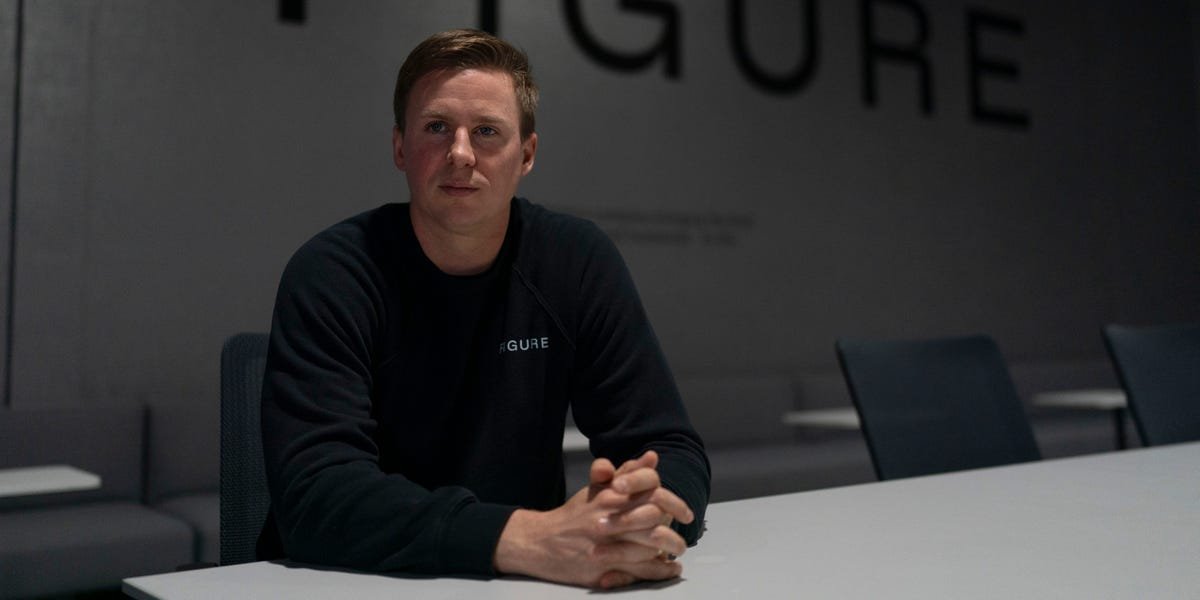
Figure AI has been flooded with résumés since its founding in 2022, according to the startup’s founder and CEO, Brett Adcock.
“Just checked, 176,000 job applications at Figure the last 3 years,” he wrote in an X post on Saturday. “We’ve hired ~425 people.”
That amounts to a hiring rate of about .24% within the three years. Adcock wrote that most of the submissions were “slop.”
The spread of the 176,000 applications over the three years is unclear. Adcock did not immediately respond to a request for comment.
Even if the number of applications were divided equally among the years Figure AI was operating — just under 59,000 applications a year — the acceptance rate would still be lower than that of the hardest university to get into. Caltech had the lowest acceptance rate of 3%, according to US News & World Report’s rankings list.
Adcock wrote in the comments of his X post that the review process has been a slog.
“We go through these one by one like a monkey — it’s incredibly time consuming,” he wrote.
According to the CEO, the “ATS” or applicant tracking system — a software employers use to sift through résumés — can’t save a lot of time if a company is being barraged with hundreds of thousands of applications.
“In the ATS it takes at least 20 seconds of button clicks per submission even if it’s garbage,” he wrote.
Adcock did not immediately respond to a request for comment.
A company like Figure AI sits right in the intersection of two trends within the job market.
Today’s job candidates aren’t applying to just a handful of roles. Business Insider’s chief correspondent Aki Ito reported that the average job opening saw 242 applications, citing data from Greenhouse, a leading ATS platform.
“Applying to a job in 2025 really is the statistical equivalent of hurling your résumé into a black hole,” Ito wrote.
On the other hand, Figure AI operates in one of the hottest spaces of the tech industry, that is, robotics and artificial intelligence.
Top tech firms like Meta and OpenAI are in the midst of an AI talent war, offering up to seven- to nine-figure pay packages just to poach superstar AI researchers.
Even tech startups are scrapping for AI talent, floating higher equity packages and other perks that may not come as easily at a big company, such as a co-founding title or more time for research.
Figure AI happens to be one of the leading names in the humanoid robotics space.
The company recently raised more than $1 billion in its Series C funding round — with backing from Parkway Venture Capital, Brookfield Asset Management, and Nvidia, among others — for a $39 billion valuation.
Adcock said on X that he may need to find another way to sift through résumés.
“Need a model to do this for us better, maybe I’ll work on one,” he wrote.