
Why-Berkshire-Hathaways-New-York-Times-bet-is-a-fitting.jpeg

Why Berkshire Hathaway’s New York Times bet is a fitting end to the Warren Buffett era

Warren Buffett’s Berkshire Hathaway bought one new stock in his last quarter as CEO: The New York Times Company. It’s a fitting final bet for the Buffett era.

The famed investor’s conglomerate scooped up around 5.1 million shares of the newspaper publisher, securing a stake worth $352 million at December’s close, a Tuesday filing revealed.

The position’s small size points to one of Buffett’s two investment managers at the time — Ted Weschler and the since-departed Todd Combs — making the purchase.

Read all about it

Buffett is a lifelong lover of newspapers. He delivered 500,000 papers as a teenager running multiple routes, and for years, he challenged shareholders to best him at newspaper tossing during Berkshire’s annual meetings.

He went from throwing newspapers to owning dozens of publishers, including The Buffalo News and The Omaha World-Herald. He was close friends with the late publisher of The Washington Post, Katharine Graham, and one of the paper’s biggest financial backers.

By 2010, the billionaire stock picker was openly worried about declining circulation and advertising revenues for newspapers.

During Berkshire’s 2010 meeting, he recalled looking at the circulation of major titles such as the San Francisco Chronicle, and said it “blows your mind how fast people are dropping it.”

“The world has really changed, in terms of the essential nature of newspapers,” he said.

In 1965 or 1970, there was “probably nothing looked more bulletproof than a daily newspaper where the competition had melted away,” he continued. “But it’s a form of distributing information and entertainment that has lost its immediacy in many cases.”

Buffett pointed out that people no longer rely on papers to find out how their stocks were performing, or whether their sports team won. The resulting decline in circulation made newspapers less attractive to advertisers, he noted.

“And so you get this chicken and egg thing that the newspaper becomes less valuable as the advertisers float away, and the advertisers float away as the subscribers diminish,” he said.


Warren Buffett newspaper toss

Warren Buffett made the newspaper toss a fixture at Berkshire Hathaway’s shareholder meetings.


Rick Wilking/Reuters


Despite his concerns, he acquired 28 daily papers in the early 2010s.

“Charlie and I believe that papers delivering comprehensive and reliable information to tightly-bound communities and having a sensible Internet strategy will remain viable for a long time,” Buffett wrote in his 2012 letter to shareholders. “Charlie” referred to his late business partner, Charlie Munger.

“Newspapers continue to reign supreme … in the delivery of local news,” he added.

Buffett struck a far more bearish tone in 2019, telling Yahoo Finance that he expected only a few national titles, such as The New York Times, to survive, while the rest would “disappear.” He also bemoaned the demise of the newspaper ad business.

“It went from monopoly to franchise to competitive to … toast,” he said.

Berkshire’s surprise return

Buffett offloaded Berkshire’s newspapers to publisher Lee Enterprises in 2020. Given his long history in the newspaper business and eventual exit from it, it’s striking to see Berkshire return with its recent stock purchase.

One reason was undoubtedly The New York Times’ recovery in recent years. It grew revenues by 9% to $2.8 billion and its net income by 17% to $344 million last year, as subscription revenues rose 9% and advertising revenues jumped 12%.

A key driver was the paper’s addition of 1.4 million digital-only subscribers, which lifted its total subscriber count to 12.78 million as of December 31.

The publisher’s stock price has already seen some of the benefits. After collapsing from over $50 in mid-2002 to below $5 in early 2009, it has surged roughly 15-fold — including 50% in the past year — to trade at a record high of $74 at Tuesday’s close.

The shares gained another 3% in Wednesday’s premarket, perhaps marking one of the final cases of the “Buffett Effect,” where other investors mimic his buys and sells, moving markets.

The publisher’s comeback might explain why Buffett and his team decided to revisit one of his favorite industries so soon after turning the page.


Source link

6-of-the-best-and-5-of-the-worst-looks.jpeg

6 of the best and 5 of the worst looks at New York Fashion Week 2026

  • New York Fashion Week runs from February 11 to February 16 this year.
  • Celebrities including Anne Hathaway, Pamela Anderson, and Elle Fanning have attended so far.
  • The best looks have sparkled and stood out, while some of the worst were mismatched and understated.

The best of fall and winter fashion is officially on display in the Big Apple.

The first New York Fashion Week of 2026 kicked off on February 11 and will continue through February 16.

Designers like Ralph Lauren and Coach have showcased their new styles, while celebrities, including Anne Hathaway, have made fashionable appearances at runway shows.

Here’s a look at the best and worst A-list looks we’ve seen.

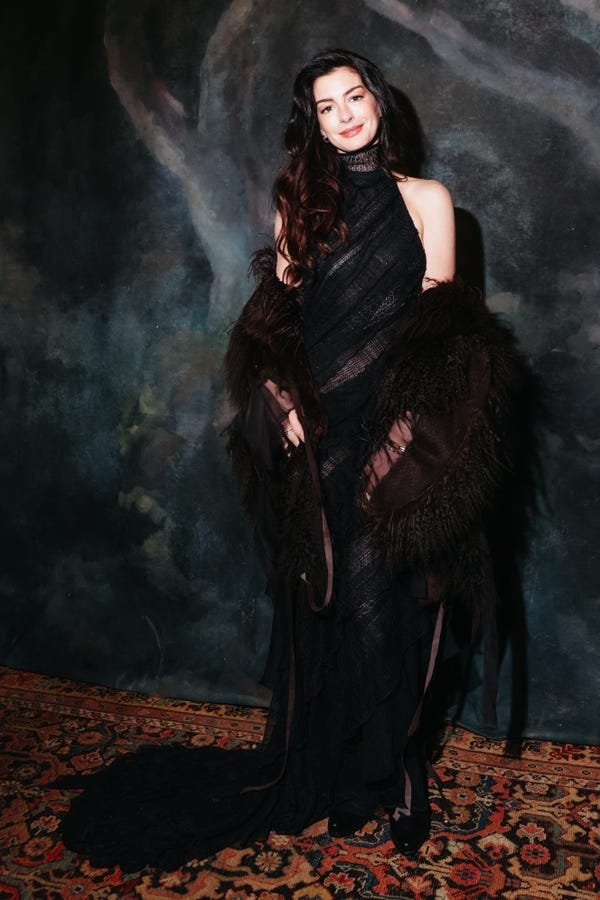
Anne Hathaway was stunning in a black Ralph Lauren gown.

Anne Hathaway at the Ralph Lauren fall runway show during New York Fashion Week.

Lexie Moreland/Getty Images

She attended the designer’s fall runway show wearing a high-neck halter gown made from gauze-like fabric.

It wrapped around her body, creating a subtle see-through effect, and its skirt extended into a short train.

She wore it with a fuzzy jacket that she carried around her waist.

Pamela Anderson’s black-and-white outfit missed the mark.


Pamela Anderson at the Tory Burch fall/winter runway show during New York Fashion Week.

Pamela Anderson at the Tory Burch fall/winter runway show during New York Fashion Week.

Dimitrios Kambouris/Getty Images

She made an appearance at the Tory Burch fall/winter runway show wearing a preppy look from the brand. It comprised a white pleated skirt with a black, button-up blouse tucked in.

Unfortunately, the two pieces sat loosely on Anderson and appeared too formal.

Her leather belt, sheer tights, pointed heels, and black purse added some fun to the look, but the base layers were ultimately too simple for them to work.

Lili Reinhart was chic in a statement skirt.


Lili Reinhart at the Ralph Lauren fall runway show during New York Fashion Week.

Lili Reinhart at the Ralph Lauren fall runway show during New York Fashion Week.

The Hapa Blonde/Getty Images

While entering the Ralph Lauren show, Reinhart was photographed wearing a brown tweed blazer as a top with a thick brown belt holding it closed at the waist.

She also wore a long black skirt covered in leather fringe, which added texture and contrast to the ensemble.

High black boots and a small brown purse completed the fun, fashion-forward look.

Ana Amelia Batlle Cabral had a sharp fashion moment, but Marcello Hernández’s look needed one tweak.


Ana Amelia Batlle Cabral and Marcello Hernández at the Tory Burch fall/winter runway show during New York Fashion Week.

Ana Amelia Batlle Cabral and Marcello Hernández at the Tory Burch fall/winter runway show during New York Fashion Week.

Dimitrios Kambouris/Getty Images

The couple attended the Tory Burch show together in contrasting outfits.

Cabral, an architect, wore a blue pleated skirt atop a darker, unbuttoned blazer, and brown Tory Burch heels with silver embellishments. The look was stylish and sharp.

Then there was Hernández, the “Saturday Night Live” comedian, who opted for khaki pants, suede sneakers, and a two-toned sweater.

Though the latter two pieces looked great on him, his trousers could have benefited from a bit of steaming and tailoring.

Amanda Seyfried’s mixed metals worked for her.


Amanda Seyfried at the Tory Burch fall/winter runway show during New York Fashion Week.

Amanda Seyfried at the Tory Burch fall/winter runway show during New York Fashion Week.

The Hapa Blonde/Getty Images

Also at the Tory Burch show, Seyfried wore a golden, long-sleeved blouse atop a blue midi skirt with silver stripes. She also wore white heels with silver adornments and carried a blue purse.

The mix of two metallic shades with blue tones created a unique, fun color combination that complemented her hair and skin tone.

Suni Lee’s multicolored look overwhelmed her.


Sunisa Lee at the Tory Burch fall/winter runway show during New York Fashion Week.

Sunisa Lee at the Tory Burch fall/winter runway show during New York Fashion Week.

The Hapa Blonde/Getty Images

Outside the Tory Burch runway show, the Olympic gymnast was photographed wearing an oversize blue jacket with a form-fitting wrap skirt in a vibrant red shade.

The two pieces were drastically different in style, and they overwhelmed her petite frame. They also didn’t match the lime-green top she wore or her black accessories.

Caleb McLaughlin was cool and casual at the Coach show.


Caleb McLaughlin at the Coach fall runway show during New York Fashion Week.

Caleb McLaughlin at the Coach fall runway show during New York Fashion Week.

Gilbert Flores/Getty Images

The “Stranger Things” actor attended the show in blue jeans, a button-up top, and a leather jacket that matched his sneakers and Coach purse.

The latter piece was especially fun. It featured a prominent pocket reminiscent of a coin purse and two keychains that looked like miniature books.

McLaughlin has been one of the best-dressed men at New York Fashion Week so far.

Elle Fanning’s outfit had potential, but it needed a change.


Elle Fanning at the Coach fall runway show during New York Fashion Week.

Elle Fanning at the Coach fall runway show during New York Fashion Week.

The Hapa Blonde/Getty Images

Fanning entered the Coach show in a white gown with a mesh, star-print overlay. It was fun, feminine, and the perfect piece to pair with her cropped leather jacket and brown purse.

That said, she also wore thick white boots with the outfit. A simple pair of heels or flats would have been more in line with the look.

Kelsey Merritt stood out at the Carolina Herrera show.


Kelsey Merritt at the Carolina Herrera fall runway show during New York Fashion Week.

Kelsey Merritt at the Carolina Herrera fall runway show during New York Fashion Week.

Gilbert Flores/Getty Images

The model sat in the stands wearing skinny black pants with a billowing blouse. The semi-sheer white garment had a high neckline, balloon sleeves, and extra fabric at the waist that extended into a train.

The top piece was dramatic and memorable, while her pants were perfectly tailored to highlight her dramatically pointed heels.

Ben Platt needed more color variety in his New York Fashion Week look.


Ben Platt at the Michael Kors fall/winter runway show during New York Fashion Week.

Ben Platt at the Michael Kors fall/winter runway show during New York Fashion Week.

TheStewartofNY/Getty Images

For the Michael Kors runway show, the actor wore an all-white ensemble that included trousers, a loose-fitting blouse, sneakers, and a trench coat.

The outfit would have worked for him if it featured more than one color. Because the entire ensemble was stark white, each piece blended into the others, creating the illusion that he was wearing a baggy jumpsuit.


Source link

New-York-City-homeowners-can-apply-to-build-a-backyard.jpeg

New York City homeowners can apply to build a backyard tiny home

It’s open season for some New York City homeowners interested in building a tiny home in their backyard.

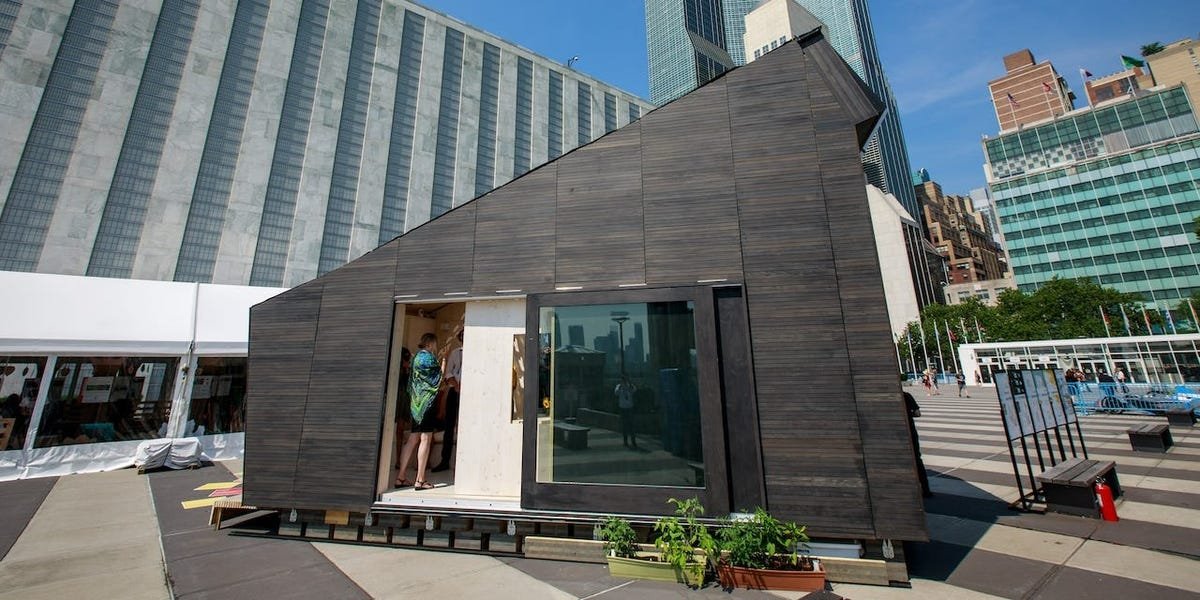
Under a sweeping zoning reform Mayor Eric Adams signed into law late last year, the city made it legal for certain one- and two-family homeowners to add an additional home, also known as an “ancillary dwelling unit” or ADU, to their property.

On September 30, 2025, the city finalized its rules for backyard and attic ADUs and began accepting applications from homeowners, although the government is still working on the rules for basement units. The city estimates that the reform — part of its City of Yes for Housing Opportunity package — will help create about 25,000 new homes in backyard cottages and converted garages, attics, and basements over the next 15 years. But the success of the reform will depend in large part on homeowners navigating high construction costs and regulations.

Wil Fisher has spent the last year preparing for this. The former city government employee founded a Queens-based firm, Unit Two Development, that helps homeowners determine whether their property is eligible for an ADU and connects them with contractors and others who can help them build one. Fisher said he and his team have identified well over 100,000 eligible individual properties, and they’ve talked with more than 100 of these homeowners, who largely live in Queens and Staten Island.

“The rules of the road are now written,” Fisher said. “It was a long process, but for the most part we’re off to the races.”

Most of the people Fisher has talked with are interested in adding an ADU to house a family member, including an aging parent or a relative with disabilities who needs care, or an adult child.

Maggie Ornstein is one of these homeowners. Ornstein, 47, lives with her mother in a house in western Queens that has been home to five generations of her family since the 1800s. She hopes to build an ADU for her mother, who’s undergoing treatment for cancer and is having difficulty navigating the stairs in their two-and-a-half-story home.

Ornstein, a public health geographer, has consulted with Fisher and determined that she could legally convert her garage into a home.

“My dream for an ADU on my property would be something that would be accessible, but might also have a second floor where a family member could potentially stay if they wanted to visit, or if I wanted to be with my mom in the ADU,” she said.

After months of planning and big picture discussions with potential clients, Fisher is starting to nail down the specifics of what his clients could build and what it might cost.

“Now is sort of the pivot from the conceptual to here’s exactly what it will take, and here are the cost implications of that,” he said.

Are you a New Yorker interested in building an ADU? Reach out to this reporter to share your experience at erelman@businessinsider.com.

Dealing with costs and regulations

One inevitable obstacle homeowners face is the steep price of building in the city. Fisher estimates that adding a backyard unit or converting a garage will start between $300,000 and $400,000, depending on the project’s size. That’s compared to the city’s median home price of $800,000.

The construction cost is out of reach for many homeowners who’d benefit most from adding an ADU to their property, said Thomas Yu, executive director of Asian Americans for Equality, an advocacy organization and affordable housing provider. Yu said there needs to be a much clearer and more affordable path to adding an ADU before the regulatory reform will unleash construction in lower and middle-income neighborhoods. He suggested tax abatements or grants for homeowners with more modest means.

Many of the New Yorkers Yu and his team work with live in overcrowded homes with multiple generations of their family. They could benefit from having a home for an older relative or an adult child who couldn’t otherwise afford to stay in the city.

“The ability for that generation to achieve independent homeownership is zero, particularly in New York City,” Yu said of younger New Yorkers. “So ADUs are the next half-step that’s needed for that.”

Ornstein said she’s been discouraged by the price tag on her potential project. She’s also turned off by how extensive and involved the construction would likely be, especially given her work schedule and caregiving responsibilities. She’s hoping to find some government funding to help pay for the project.

“It’s so much more expensive than I would have anticipated,” she said. “On the one hand, you wouldn’t be able to buy an apartment in New York City for what an ADU would cost to build. But on the other, it’s really a lot of upfront cost.”

The expense and hassle of adding an ADU might not make sense for homeowners who are just looking for rental income, Fisher said. But he expects the units will be easily rentable for those who want a tenant either immediately or in the future. Adding an ADU also tends to hike the property’s resale value.

“As far as I’m seeing, construction costs are a little too high for them to be a slam dunk rental investment from day one,” Fisher said. “But for folks who have a relative or an immediate need that exists within their own family or social network, these are going to be good investments in the long term.”

ADU construction is also limited by a slew of regulations. The units can’t be bigger than 800 square feet or take up more than a third of a homeowner’s backyard. The law also restricts basement ADUs in areas prone to flooding and prohibits them in attached homes, like townhouses.

The Regional Plan Association, a pro-housing nonprofit focused on the tri-state area, found that just 68,000 lots — 12% of the city’s one- and two-family properties — are eligible to add an ADU.

The city says it’s creating a “one-stop shop” full of information for homeowners interested in building an additional unit. The site will include a set of public, pre-approved backyard ADU designs submitted by architects, designers, and builders that homeowners can use to lower design costs and speed up the construction process.

“Efficiencies that can be built in are really going to be make or break for this market,” Fisher said.


Source link