
I-left-Florida-to-retire-in-New-York-City-at.jpeg

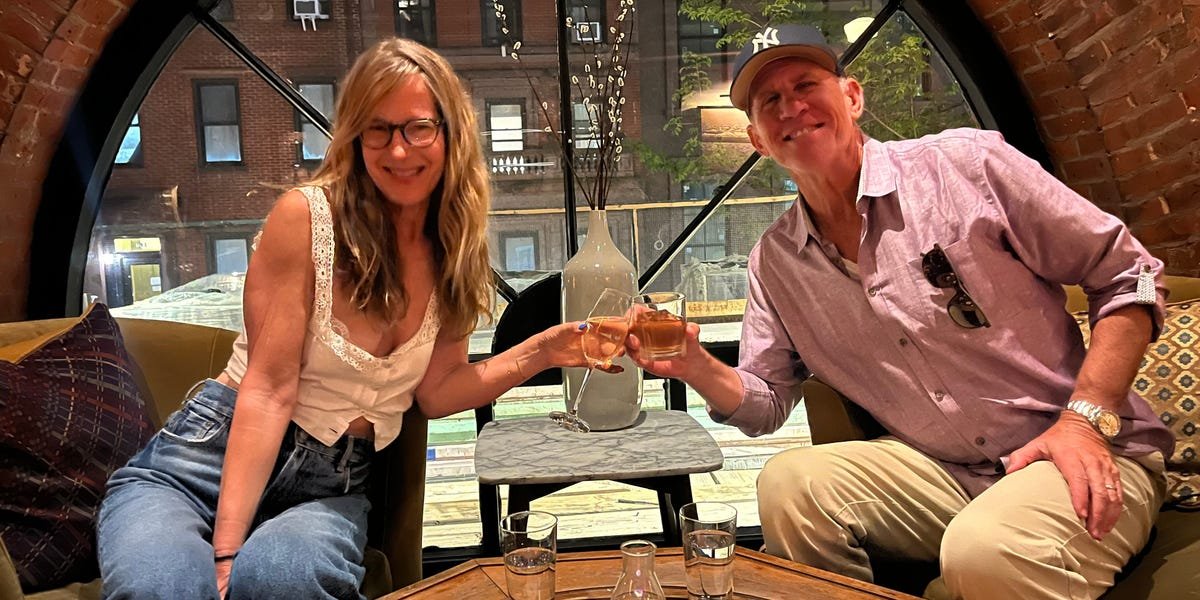
I left Florida to retire in New York City at 62. Living in a bustling city keeps me feeling young.

This as-told-to essay is based on a conversation with Karen Meadows, a 62-year-old Floridian who moved to New York in 2024. The conversation has been edited for length and clarity.

My husband and I have been married for 34 years, and we spent 17 of those years living in Panama City Beach, Florida. It’s where I raised both of my kids and where I started my running coaching business and a 10K charity race.

Panama City Beach was a gorgeous place to live, with beautiful skies every day, clear blue water, and pure white sand. While it was a touristy area, when we first moved there, it was still pretty sleepy during the off-season. That’s actually why I got into the racing business — I was really bored, and there wasn’t that much to do.

However, over the time we lived there, it became more popular.


A family of four - mom, dad, son, and daughter - holds a pumpkin and smiles at the camera.

Meadows, her husband, son, and daughter. 

Courtesy of Karen Meadows


Many people move to Florida to retire because it’s quiet and has a slower pace of life. But for me, I wanted to move somewhere with more energy.

In 2024, my husband and I moved to New York. It’s funny because the first thing everybody says about our move is, “Oh my God, you did the opposite.” And they’re right.

To be honest, at first, I was afraid to live in New York. And I’ll tell you, most days I’m still a little bit afraid. But I’m a huge believer in the idea that your brain is your central governor; it rules everything, and that the second you start restricting yourself because of fear, or thinking you should slow down, you will.

In New York, there are so many people to see and things to do. I’m more active, and living here is keeping me positive about aging.

We moved to be closer to our children

Moving to New York was definitely driven by our children. In 2020, my son was accepted to Columbia University. My daughter also attended Boston University and now lives in New Jersey. My husband and I really wanted to be closer to them.

We did have some issues selling our house in Florida. It was a really pretty home, but it also had a lot of quirky touches. On top of that, there was so much new construction that we were facing a lot of competition.

I took the first decent offer we received. By that point, I didn’t care about trying to squeeze out more money — I felt like my mental health was worth more than that. We made enough from the sale to put some money in the bank and feel like we could downsize comfortably.


An aerial view of Williamsburg, Brooklyn.

East River and Brooklyn Bridge. 

Nisian Hughes/Getty Images


There’s such a big contrast between New York and Florida. It made it pretty stressful trying to figure out where to live. But my son introduced me to Williamsburg in Brooklyn, and I liked that it had plenty to do while feeling a little less hectic than Manhattan.

When we first moved to Williamsburg, we lived in an old converted loft building. When our lease was up there, we moved to Three Williamsburg Wharf in 2025. We live in a two-bedroom, two-bath unit and pay around $8,700 a month. Our corner unit has a view of the Brooklyn skyline and overlooks the Brooklyn Navy Yard, which I love because you can see so much going on.


Two side-by-side images of the interior of a condo in a NYC apartment. First photo is a living room with white furniture overlooking the city. The second photo is a bedroom with a large white bed and an open window with the Brooklyn skyline in the background.

A model home at Three Williamsburg Wharf. 

Courtesy of Naftali Group


Coming from a big house, a two-bedroom apartment is a huge downsize. And while I thought I wouldn’t like renting, I’ve never been happier. There’s a lot less to worry about; there are no property taxes, and everything gets done for you. I also love the sense of community here, from wine tastings and Super Bowl parties to the people I’ve met in the building.

Moving to New York was a risk, but I’ve found a new community

I’ve always been a bit of a risk-taker, and I think it’s important to challenge yourself.

That’s part of why I’m such a dedicated runner — I regularly train for marathons, and I’ve run the New York City Marathon and the Boston Marathon many times.

Still, moving to a new place comes with plenty to worry about.


Karen Meadows has two peace signs in the air as she completes a marathon.

Karen Meadows competing in a marathon. 

Courtesy of Karen Meadows


Some of the fears I’ve had to overcome in New York included learning to use the subway — my son showed me how to use maps, which made it much less intimidating — and getting comfortable driving in a busy city.

The way I got over that fear was by driving more. I also started volunteering with North Brooklyn Angels, a nonprofit food delivery service. Doing that community work has also helped me become more social.

In addition to volunteering with North Brooklyn Angels, I’ve joined the North Brooklyn Runners Club, started a book club, and recently begun volunteering with City Harvest, a food rescue organization. These groups have been especially important to me because I left behind my whole life and many of my friends in Florida. I also love helping people in need.

I know I probably could have moved somewhere more laid-back, warmer, and with lower taxes, but I love New York. I’m almost 63, and I feel better and more alive than ever. Life feels freer, I’m more engaged, and there’s still so much to explore.


Source link

Alice Tecotzky

A Goldman Sachs partner in technology shares the skills young job seekers need in the AI workplace

Bracha Cohen has a front row seat to Wall Street’s AI revolution — and to how young people can compete in it.

“I would tell the new generation of graduates, in this world where AI is so transformational, to build judgment and not just skills,” Cohen, a partner within asset and wealth management engineering, said. “AI may automate execution, but it can’t fully replace decision-making, systems thinking, and ethical reasoning.”

Cohen joined Goldman as a programmer in 1994, long before anyone had to prove AI fluency on their applications. She said that serving in various roles across business lines helped her ascend to partner, the firm’s top leaders.

Today, her engineering team in asset management focuses on automating operations to help the business scale, including through AI. As of now, the booming business — which holds a record $3.6 trillion in assets — uses AI for routine work, like analyzing and summarizing data, Cohen said.

As white-collar hiring slows and anxiety about AI in junior roles grows, Cohen said young engineers should focus less on simply completing tasks and more on how systems function. Mastering engineering fundamentals is key, she said, since AI should serve “as leverage, but not as a crutch.”


Bracha Cohen

Bracha Cohen is a partner and engineer at Goldman Sachs.

Goldman Sachs


She added that computer science majors should practice evaluating risk and crafting good questions, both for other people and AI models. Two other Goldman partners also previously said that interpersonal skills and communication are becoming increasingly crucial in the AI workplace.

And engineers who want to work on AI in particular have their own set of criteria. Dan Popescu, a newly promoted managing director and Goldman’s head of AI engineering for asset management, previously told Business Insider that the most competitive hires need a suite of skills: knowledge in AI engineering, finance, and traditional software engineering.

Goldman spent $6 billion on technology last year and has rolled out internal AI tools, including an assistant and a limited banker copilot. In an October memo, the firm laid out the latest phase of its OneGS initiative, which it says will drive efficiency, slow hiring, and create a “limited reduction” in roles.

CEO David Solomon is one of several big bank leaders who have said that, in the long run, AI won’t reduce head count, and that the firm needs to focus on attracting more high-quality talent.


Source link

Figma-CEO-Dylan-Field-says-he-has-a-bias-for.jpeg

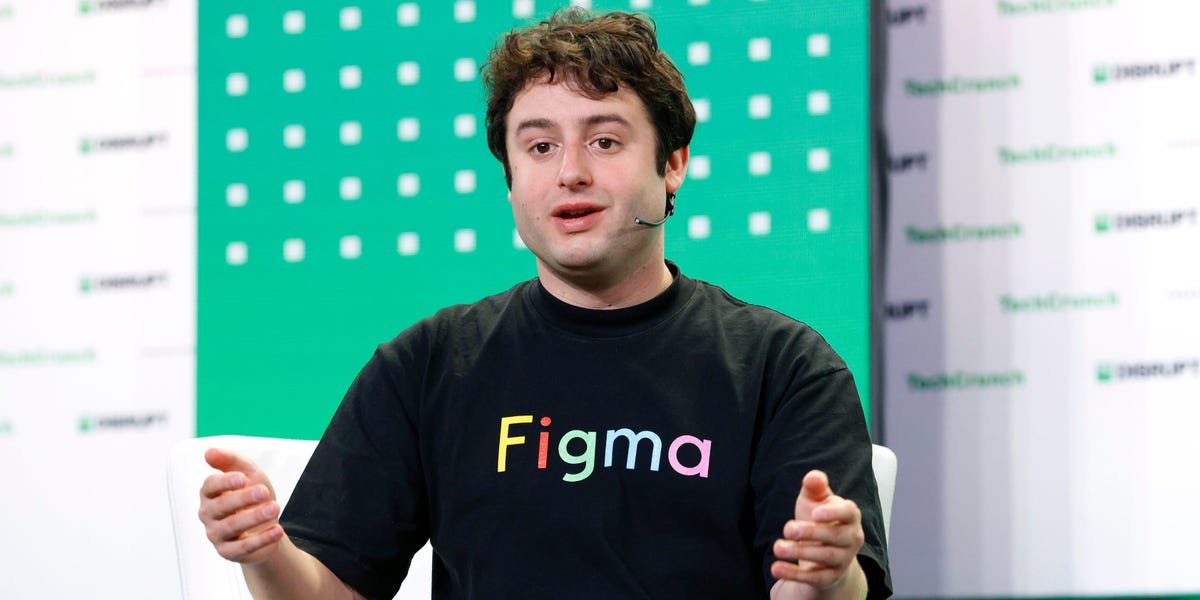
Figma CEO Dylan Field says he has a ‘bias’ for hiring young workers because they’re likely AI natives

Many young people are worried that AI is muscling in on the entry-level job market.

Dylan Field, the 34-year-old billionaire CEO of Figma, however, says AI gives young people an advantage in the hiring process.

During a recent appearance on the “In Good Company” podcast, produced by Norges Bank Investment Management, Field said the effect of AI on hiring is a “critical” debate happening now in the software industry.

“Does AI mean that you should hire senior people or middle-level, or junior, or are all the jobs going to go away because AI will replace them all?” Field asked. “I’ve heard that last one a bunch of times, and it hasn’t come true yet. All the people have said that. They continue to hire.”

Field said that, in his opinion, young professionals have an advantage because they tend to have a better understanding of AI, an increasingly important skill.

“My bias actually is a lot more toward the junior folks, and I think people that are younger are AI native in a way that folks that are older have to learn,” Field said.

He said Figma, which offers design products and services and competes directly with Adobe, has always hired a mix of ages, but that an understanding and passion for AI is a must going forward.

“I think that it is important that people come in, first of all, knowing that we’re pushing full steam ahead into the AI era,” Field said. “So, if you have a bias against AI, that’s a great dinner-table conversation between us, but we’re very focused on making sure that we build for this AI age.”

Young professionals are navigating a labor market bogged down in unemployment and uneven job growth. The Bureau of Labor Statistics in December published its final 2025 jobs report, which showed that the job market has remained stagnant, economists said.

The rise of AI has only added to that instability. Many companies these days are betting that AI will be able to do many of the tasks of entry-level workers, and economists say that could lead them to pause hiring young professionals.

Field, however, doesn’t share that outlook.

During an October 2025 appearance on “Lenny’s Podcast,” Field said he doesn’t think AI will take human jobs at all.


Source link

Im-a-14-year-old-founder-whose-YC-application-went-viral-There.jpeg

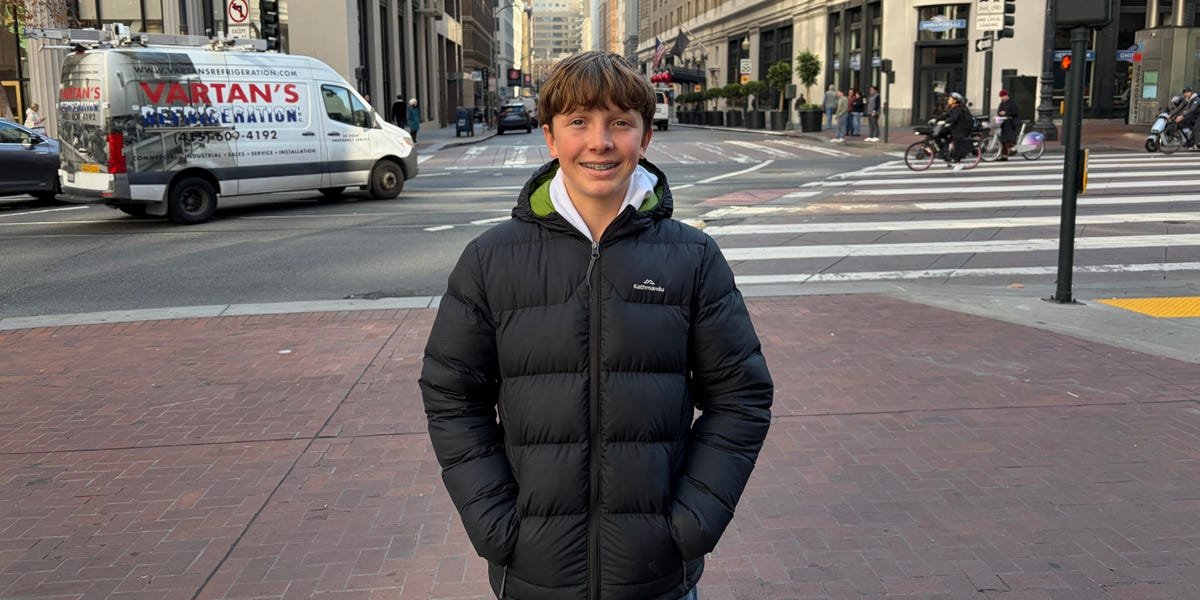
I’m a 14-year-old founder whose YC application went viral. There are pros and cons to starting a company young.

This as-told-to essay is based on a conversation with Alby Churven, the 14-year-old founder of Clovr, who lives in Wollongong, Australia. It’s been edited for length and clarity.

When I was younger, I started an e-commerce grip socks brand called Alpha Grips. It failed, but that’s what got me interested in business. I was 12.

A lot of kids’ first businesses is always something to do with e-commerce, like drop-shipping or clothing brands. Social media does saturate you with that “get rich quick” idea with drop-shipping or crypto. Although 90% of the time it’s a scam, it still ignites an interest.

Then I came up with the idea of Finkel, the startup I applied to Y Combinator with. I sent a cold email to Frank Greeff who’s a pretty big founder here. He recommended I started building in public on social media, so I started doing that. X is full of startups.

Social media played a big role, seeing other people building brands and businesses. That’s what got me into it. I used to do code camps when I was younger, so I’ve always been interested in tech and entrepreneurship.

I applied to YC. Apparently I wasn’t supposed to do this big video with all the editing. It’s supposed to be, you sit down and turn on the webcam and talk. I didn’t actually read the instructions when I did it, but I guess that’s what made it pretty viral.

There’s a new social media ban in Australia for people under 16. All these great things have happened for me with it, but the social media ban is taking that away. I don’t agree with it, but it is what it is.

I’m young. I think my advantage being a teenage entrepreneur is I’ve got time. My goal right now is to build as many things as possible, learn as much as possible, and see where it goes.

You decide you want to do maybe when you’re 18 or 16. But I know what I want to do. I want to be in startups and tech.

The benefits of starting young is that you don’t have as much pressure on you financially, so you can just build things.

In the future, I’ll have had experience. It’s about learning. I have time on my hands, and I enjoy it.

The younger generation thinks a bit differently. Some older people may not even know how to use AI.

I’m in the US right now, and I’ve been meeting with a lot of really cool people. When you’re young, you can utilize your age to make a lot of connections. It’s more rare. It’s crazy you’re doing it this young.

My age is a wow factor, but it also limits legitimacy.

It also can be a negative. People might not take you seriously if you’re really trying to pursue something. All the things I’m building are bootstrapped, because it’s impossible to raise funding when you’re young.

I’m getting to stages in my projects where I do need some money. I’ve applied to these accelerators. I had a very low expectation for Y Combinator. I got an interview about my other startup, Clovr, but then I got rejected.

I’ve heard you have to get in the system early, so when I’m older and I apply, I’ll already be in the system and have experience with how the process works.

I do think grants are a really good opportunity. You won’t raise nearly as much, but you’re not giving away any equity. I think giving away equity young is not a good decision. It gives pressure to perform and deliver, and when you’re young, you want to build stuff.


Source link