
We-gave-my-grandma-an-iPhone-when-she-was-80.jpeg

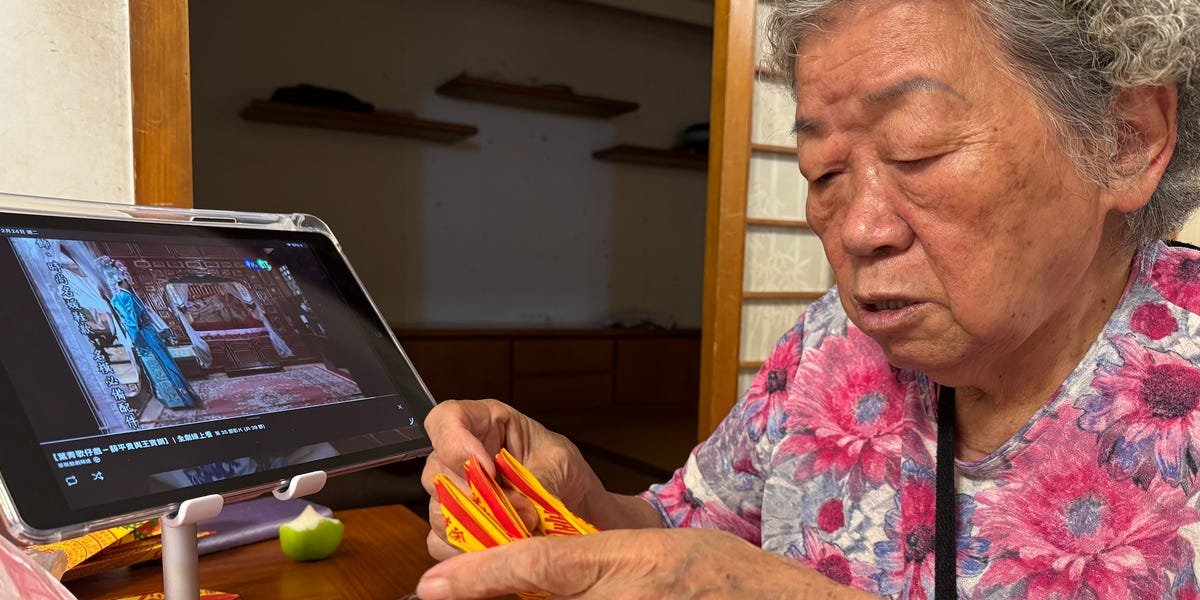
We gave my grandma an iPhone when she was 80. I learned a lot about her from what she started watching on YouTube.

On the day my Taiwanese grandma A-Ma turned 80, she complained about a lingering dizziness.

When she got up from the floor mat, she fainted. Though the blackout lasted only two seconds and the doctor ruled the trigger to be temporary low blood pressure, my aunt was worried enough to dust off an old iPhone in case of an emergency.

Being illiterate, it took my grandma a full week to master punching in the four-digit passcode. I was worried during my entire visit home in Taiwan.

My cousin helped her figure out her phone

Everything changed when my 6-year-old cousin came home from kindergarten with a new obsession with Minecraft videos. Not having a phone to his name, A-ma became my cousin’s easy target. He downloaded YouTube onto her phone. A thread of over-the-top romance videos popped up on my grandma’s feed. She clicked on one after another.


Grandma and little boy

The author’s grandma learned about YouTube through the author’s cousin. 

Courtesy of TING WANG


Turns out, my grandma’s taste in entertainment was 30-second dramatic YouTube Shorts with ridiculous premises filmed on a low production budget: a housekeeper starved by her boss, who eventually fell in love with her. A college senior slept with dad’s best friend, who has a BDSM lair. A high school girl endured bullying, then revealed she is an heir to a kingdom. Everything that made me cringe made her giggle.

Then the effects of her phone permeated into real life. The family store she started with my grandpa in 1975 began seeing her less. Instead of stocking the shelves with my aunt in the morning, she opted for a long breakfast: two boiled eggs dipped in soy sauce with an endless side of YouTube Shorts.

The situation briefly looked up when A-ma’s friend, who ran a sticky rice shop, stopped by the store with some fresh gossip. The friend brought hot-off-the-press news about a local’s son and daughter. My grandma played the attentive listener, given that she did not have the skills to scour the market for scandals. Yet, not even 20 minutes in, I noticed A-ma started glancing at her phone. No longer a top-tier audience, the friend retreated to the sticky rice shop, defeated.

I noticed she was paying less attention

As a writer in New York who used my phone sparingly, I flew back to Taipei every three months to see family. Each time, I noticed her attention span suffered more than the last.

Her dining table was once the place I brought her behind-the-scenes anecdotes of working in a New York City ad agency, but not anymore. Last time we ate together, her eyes were glued to her screen. I sighed and threw my finished plates into the sink. She glanced at me, then back to her original program, completely mesmerized by the content.

Instead of being angry, I caught a glimpse of A-ma blushing from the corner of my eye. Like a girl reading a coming-of-age story, her cheeks flushed pink. Then she turned the screen toward me, relaying the plot of a cringey romance. Her smile stretched up to her eyes.

I finally understood her

That was when I realized it was not YouTube Shorts with horrible storylines she was watching. It was a window into what young adulthood could’ve been like if she were given the chance to be a normal girl.

As my mother told me, A-ma grew up in a war-torn time in Taiwan, where her childhood consisted of running into bunkers during air-raid drills. By 15, she was at the fishing port helping her family haul fresh catches into the local market. Years later, her parents arranged for her to marry the neighborhood boy. Then, together, they had six kids. They took a leap of faith, left the village, and set up shop in Taipei City, selling handmade beef jerky and pork floss.

Never having the chance to go to school, dress up for a party, or sneak out at night to steal a kiss from a cute boy — she didn’t get to live, not like a young girl. Before anyone or herself knew, she became an adult.

I realized, 65 years later, after a brief health scare, A-ma got this iPhone that served as a portal into a world she never had access to. Filling a void she didn’t know existed.

Last time I visited, I showed her how dictation works. With her callused thumb, she hit the microphone button and uttered: “Young. Stories.”

However, her accent, thick with a dialect, was too much for Siri to understand. For the first time, I felt like I did.


Source link

After-5-years-our-family-gave-up-full-time-travel-and.jpeg

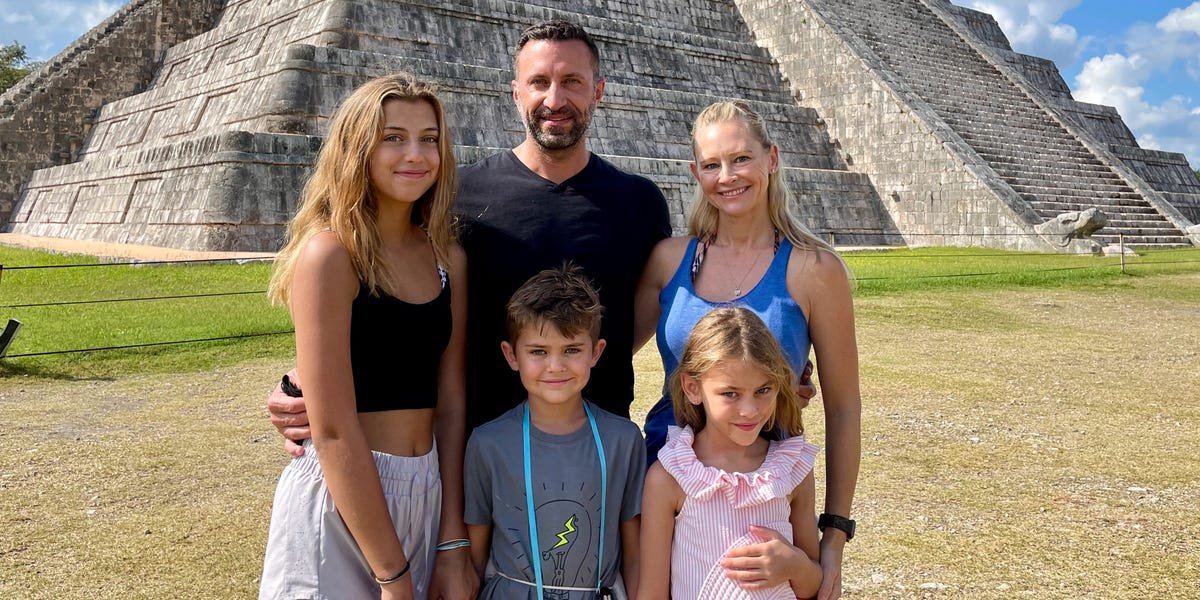
After 5 years, our family gave up full-time travel and YouTube success. I worry we’ve messed up the kids.

After we stopped traveling full-time, our 11-year-old daughter, Brooklyn, became obsessed with her bedroom.

She wanted to repaint it. Rearrange it. Add shelves, plants, posters, and end tables to organize her art supplies. She asked for candles and incense (and permission to burn them).

She pushed back when my wife and I asked her to keep her clothes picked up — not out of laziness, she explained, but because the artist in her liked how it felt to leave things wherever they landed.

At first, this “new normal” bugged me. The requests and pushback felt endless, even erratic, as if we were chasing some moving target of comfort that she would never reach.

Then one night, I walked past her room and was drawn by the scent of vanilla drifting through the crack in the door. Curled up on her bed under a throw, a small reading light on and the warm glow of candlelight around her, she sat reading a hardcover copy of “The Count of Monte Cristo.”

And it finally clicked: After years spent in airports, hotels, and temporary spaces, this was the first place within her control that she could count on staying the same.

At first, a life of travel made sense for our family

My wife and I began traveling the world with our three kids in 2020, at a time when structure had already fallen apart for most families.

School was remote. Routines were fractured. The future felt unpredictable. Travel, oddly enough, felt grounding.

If our kids were going to spend their days on screens anyway, why not replace textbooks with real places? Why not let geography, culture, and shared experience do some of the teaching?


Child on camel in desert

A snapshot of our family’s travels to Abu Dhabi.

Phil Lockwood


Almost immediately, we began documenting our journey on a new YouTube channel. It was a new direction for the entire family, and the excitement was universal. Our kids even started their own channels and began producing their own episodes.

We juggled the challenges of highlighting the far-flung places we were visiting, the mistakes we were making, and the logistics of pulling off long-term travel as a family of five. Friends and family started watching.

Then strangers, too. Our audience grew into the thousands somewhat slowly, then into the hundreds of thousands surprisingly fast. Soon, we’d reached over half a million YouTube subscribers.

Sharing everything online felt natural at the time. It gave structure to our travels and, through ad revenue and brand sponsorships, helped offset the high costs. And it felt useful—like we were showing other families what was possible if they were willing to step outside the usual script.


Family in Antarctica

Our family in Antarctica.

Phil Lockwood


In those early years, it felt like so many high-profile family YouTube channels were presented as success stories — adventurous, tight-knit, and inspirational. I didn’t see as much public skepticism, and some darker stories of family vloggers (like Ruby Franke’s) that would later dominate headlines hadn’t yet come to light.

So, at the time, we didn’t see ourselves as taking a risk — we saw ourselves as joining a small but growing group of households who were filming and sharing their lives publicly before the downsides were so widely discussed, documented, and understood.

For a while, it worked. Or, at least it appeared to. The kids were curious. We were together. We saw parts of the world that most families only talk about. And all five of us were enjoying building something meaningful together.

There were real benefits: closeness, adaptability, and perspective. Our kids learned how to navigate unfamiliar places and unfamiliar people. We learned to function as a family without the usual scaffolding of schedules and routines.

What we didn’t yet understand was what those benefits might be trading against.

As time went on, the cracks began to show — and coming home didn’t repair them all

Not all of our kids experienced the lifestyle the same way.

As our youngest and most adventurous, Colt thrived on the endless variety. Reagan, my oldest from a previous marriage, enjoyed the journey, but eventually chose to return to in-person school, and we adjusted our travel around her schedule with her mom. Brooklyn, though, gradually stopped enjoying it altogether.

There wasn’t a dramatic breaking point. It was a slow accumulation: long-haul flights at odd hours, constant activity, museums and cultural experiences designed for adults, not kids. Plenty of stimulation, but very little continuity.


Child with bird on arm

A moment from our time in Abu Dhabi.

Phil Lockwood


What I didn’t fully appreciate was how much childhood depends on repetition — seeing the same faces, returning to the same places, building friendships that deepen rather than reset with new people every few weeks.

Other nomadic families we met reassured us that this was normal. They told us our kids would grow more worldly, more mature, even more interesting than their peers. That any awkwardness later would be a sign of depth, not loss.

And I wanted to believe that. But as Brooklyn pulled further away from the lifestyle — showing little enthusiasm for new destinations, frustration with red-eye flights, and no desire to highlight her experiences in our episodes — it became harder to ignore the possibility that what we thought was enriching had become simply exhausting for her.

The hardest part wasn’t wondering what she wanted: She was clear that she’d rather be back home, back in school, and back to occasional family vacations. The hardest part was realizing that submitting to her desires would require dismantling a life we had just spent years reorganizing everything around.

Eventually, though — and after five full years of constant travel —we made the decision to stop. We returned to the house that we’d kept in Denver. Reagan graduated and headed to college. Brooklyn enrolled in in-person high school, while Colt chose to continue online for the flexibility. Our pace slowed, and the constant motion ended.

And yes —things got easier. The kids seem more independent than ever. Life feels calmer. There’s a structure where there used to be constant negotiation.


Family of four smiling in front of temple-like buildings

Our family posing in India.

Phil Lockwood


Still, the relief I feel is mixed with doubt.

Brooklyn still carries some resentment about not settling down sooner. She’s now trying to build friendships in a neighborhood where other kids grew up side by side for years. She missed that stretch of middle school — the inside jokes, shared routines, and the quiet accumulation of belonging. I sometimes wonder whether the introversion I see now is simply adolescence, or whether years without steady peer relationships reshaped her in ways we can’t fully undo.

Did the benefits of those experiences outweigh the costs? Did we assume that anything lost along the way would simply return? Or are we just seeing a normal adjustment after an unusual childhood?

I don’t have clean answers. I’ve only accepted that good intentions don’t guarantee harmless outcomes — and that parenting decisions made confidently at the time can look very different in hindsight.

I don’t regret our choice — just parts of the execution

I’m glad we traveled. I’m glad our kids have seen the world. I’m also glad we stopped. I don’t regret the journey my wife and I took our children on, but I no longer assume it was unquestionably right.

If I could do it again? I’d prioritize putting down roots earlier — fewer destinations, more seasons in one place, more chances for the kids to build friendships that weren’t constantly interrupted.

And I’d question whether sharing our adventures online was necessary at all.


Family of four posing with elephants

We visited Chiang Rai, Thailand.

Phil Lockwood


There’s a difference between traveling with kids and building a childhood around constant motion — especially when that motion is public.

We still travel, but only a few times a year, mostly around school breaks. Colt still loves going. Brooklyn hasn’t joined a trip since we settled back down; my sisters stay with her when we leave.

Recently, though, she’s started talking about ancient Greece and asking what it would take to see the ruins in person — but we’re careful not to read too much into that since interest isn’t always the same as readiness.

And if there’s one thing I’ve learned, it’s this: parenting decisions don’t come with clean verdicts. They come with trade-offs.

Sometimes the most honest stories aren’t about success or failure — they’re about realizing, long after the decision has been made, that you’re still not entirely sure where the line really was.


Source link

Top-Anthropic-executive-limits-his-childs-YouTube-algorithm-access-It.jpeg

Top Anthropic executive limits his child’s YouTube algorithm access: ‘It freaks me out’

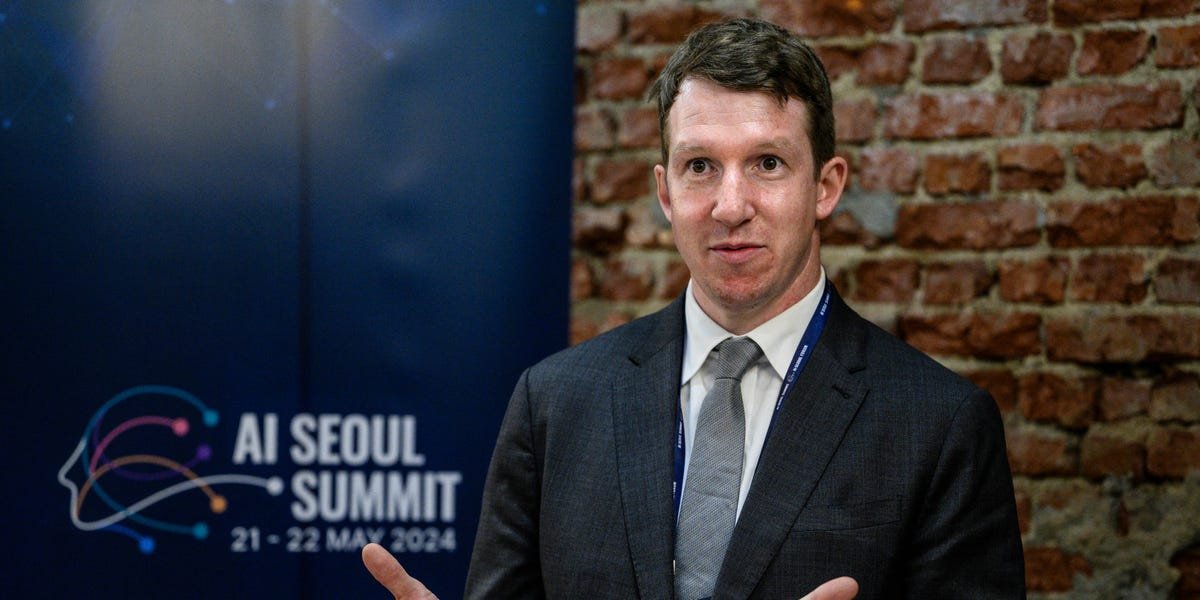
Jack Clark, Anthropic’s head of policy, says he spends his days thinking about AI guardrails.

At home, he says he’s building guardrails, too — for his own kids.

During an interview with “The Ezra Klein Show,” Clark said he limits how much technology his toddler uses and is uneasy about algorithmic exposure for his children.

“I have the classic Californian technology executive view of not having that much technology around for children,” Clark, who recently returned from parental leave and has a newborn at home, said. “I think finding a way to budget your child’s time with technology has always been the work of parents and will continue to be.”

He said technology is becoming more “ubiquitous,” making it “hard to escape” for parents.

At home, Clark said his toddler can watch “Bluey” and a few other shows on their smart TV, but he hasn’t allowed “unfettered access to the YouTube algorithm.”

“It freaks me out,” he added.

Clark’s approach echoes other tech leaders who limit their kids’ screen time.

In 2025, Miranda Kerr said she and her husband, Snap CEO Evan Spiegel, didn’t allow her then-14-year-old son to have phones or computers in his bedroom after 9:30 pm. In 2024, PayPal cofounder Peter Thiel said he limits his children’s screen time to 90 minutes a week. Apple’s cofounder Steve Jobs famously told the New York Times in 2010 that his kids hadn’t used an iPad.

“We limit how much technology our kids use at home,” Jobs said.

Clark says his parenting model is partially based on how he grew up. His father, who had a computer at his office, would let Clark use the machine — but would step in when screen time got excessive.

“My dad would let me play on the computer, and at some point he’d say: Jack, you’ve had enough computers today. You’re getting weird,” he said.

AI systems will need stronger parental controls, Clark said. Those guardrails, he said, will take on increased importance in the AI race — especially as children try to access systems intended for adults.

“So we’re going to need to build pretty heavy parental controls into this system,” he said. “We serve ages 18 and up today, but obviously, kids are smart, and they’re going to try to get onto this stuff.”

Clark and Anthropic didn’t immediately respond to a request for comment from Business Insider. When reached for comment, a YouTube spokesperson pointed Business Insider to a guide on the platform’s website about age-appropriate experiences and parental controls.


Source link

Headshot of Ben Shimkus

‘The Late Show’ host Stephen Colbert says CBS pulled his interview with a Democratic lawmaker — so he turned to YouTube

Stephen Colbert said CBS pulled a Democratic lawmaker’s interview from “The Late Show” over concerns about federal regulations. So, he posted it on YouTube instead.

The dispute marks the latest flash point in a growing tension between late-night hosts, broadcast networks, and the Federal Communications Commission.

James Talarico, a Democratic Texas state representative running for a highly competitive US Senate seat, was scheduled to appear on “The Late Show” on Monday night.

Colbert told viewers during his monologue that network lawyers intervened.

“He was supposed to be here,” Colbert said Monday night. “But we were told in no uncertain terms by our network’s lawyers, who called us directly, that we could not have him on the broadcast.”

Colbert said he was also told not to acknowledge the decision on air.

“Then I was told, in some uncertain terms, that not only could I not have him on, I could not mention me not having him on,” he said. “And because my network clearly doesn’t want us to talk about this, let’s talk about this.”

CBS said in a statement that it did not prohibit “The Late Show” from broadcasting the interview. It said it gave the show legal guidance.

While CBS didn’t air the interview on TV, the show uploaded it overnight to its YouTube page. By midday Tuesday, the video had racked up more than 2 million views — significantly more than other recent guest interviews, which had largely drawn between about 75,000 and 510,000 views on YouTube.

The last guest to surpass 1 million views was Bad Bunny, who appeared on “The Late Show” ahead of his Super Bowl halftime performance.

A spotlight on the FCC’s ‘equal time’ rule


Jimmy Kimmel is standing on stage in a black suit with a black tie. He is in front of a navy blue drape.

Jimmy Kimmel was briefly suspended after FCC chair Brendan Carr called out the comedian’s political jokes.

: Todd Owyoung/NBC/NBCU Photo Bank via Getty Images


Colbert said the network’s concerns stemmed from the FCC’s so-called “equal time” rule, which requires broadcast stations to provide equivalent opportunities to legally qualified political candidates.

“It’s the FCC’s most time-honored rule, right after ‘No nipples at the Super Bowl,'” Colbert said on Monday night’s television-aired monologue.

The rule applies to over-the-air television and radio broadcasters, but not to cable channels or online platforms — meaning CBS’s broadcast would fall under its purview, while YouTube would not.

He said most late-night talk shows — including his own — typically qualify for what’s known as the “bona fide news exemption.”

That carve-out is designed to give news and public affairs programs flexibility to respond to events without having to book opposing candidates for balance.

Colbert has hosted several Democratic and independent lawmakers this year, including Pennsylvania Gov. Josh Shapiro, Virginia Gov. Abigail Spanberger, and Sen. Bernie Sanders of Vermont.

In recent months, the FCC has stepped up scrutiny of broadcast networks.

On January 21, the FCC’s Media Bureau published a letter that said it had “not been presented with any evidence” that any current late-night or daytime talk show qualifies for the “bona fide news exemption.”

Colbert said that the letter is part of what worried CBS’s lawyers.

CBS said in its statement that, “The show was provided legal guidance that the broadcast could trigger the FCC equal-time rule for two other candidates, including Rep. Jasmine Crockett, and presented options for how the equal time for other candidates could be fulfilled.” It said the show decided to publish the interview through its YouTube channel instead.

Last week, the FCC opened a probe into Disney-owned ABC after “The View” hosted Talarico.

In the YouTube interview, Talarico said the regulatory scrutiny was politically motivated.

“I think that Donald Trump is worried that we’re about to flip Texas,” Talarico told Colbert. “This is the party that ran against cancel culture, and now they’re trying to control what we watch, what we say, what we read.”

Talarico is locked in a competitive Democratic primary for the Senate seat against Rep. Jasmine Crockett. The winner is expected to face a Republican nominee that could include incumbent Sen. John Cornyn, former Texas Attorney General Ken Paxton, or Rep. Wesley Hunt.

The open Senate seat is set to be decided during this year’s mid-term elections.

A broader strain between CBS and its staff

Monday’s standoff adds to an already complicated period for Colbert and his network.

In July, CBS said “The Late Show” would be canceled in May 2026, a move that was “purely a financial decision against a challenging backdrop in late night.”

It came after Colbert criticized CBS’s decision to settle a $16 million class-action lawsuit filed by President Donald Trump over its editing of a “60 Minutes” interview with his then-presidential opponent, Kamala Harris.

Some lawmakers raised concerns about CBS’s decision, questioning whether it was political.

CBS is owned by Paramount, which was acquired in August by David Ellison’s Skydance Media.

The network has faced other turbulence in recent months. Recently installed CBS News editor in chief Bari Weiss was criticized for her December decision to delay a “60 Minutes” segment on the Trump administration’s use of jails in El Salvador. And, on Monday night, Anderson Cooper said he would be leaving “60 Minutes” after 20 years on the show.

The FCC and representatives for Colbert did not immediately respond to requests for comment from Business Insider.


Source link

YouTube-billionaire-MrBeast-says-hes-actually-cash-poor-I-have.jpeg

YouTube billionaire MrBeast says he’s actually cash poor: ‘I have negative money’

If you’re reading this, you probably have more money on hand than YouTube billionaire MrBeast.

The world’s biggest YouTuber, whose real name is Jimmy Donaldson, has said he owns more than half of his business, which was valued at $5 billion in its latest funding round. But a hefty net worth doesn’t always translate to cash.

“I have negative money right now,” Donaldson said in a Wall Street Journal video interview published in early January. “I’m borrowing money right now — that’s how little money I have.”

Donaldson also said that “technically, everyone watching this video has more money than me,” though the self-made billionaire suspected that some people wouldn’t believe him.

“It’s funny talking about my personal finances, because no one ever believes anything I say,” Donaldson said.

MrBeast made a similar point last summer when he said he had to borrow money from his mom for his wedding, adding that he had “very little money” since he tries to “reinvest everything.”

“I’m so busy working, I don’t really think about my personal bank account,” Donaldson told the WSJ.

Donaldson’s lack of dollars may come as a surprise to fans who have watched him hand out wads of cash to strangers and stand on a pyramid of money. However, MrBeast’s company, Beast Industries, is still a startup, and cash flow can be a problem for executives at young companies that aren’t publicly traded and have fewer lanes to liquidate their stock.

A lack of cash on hand hasn’t stopped Donaldson from splurging occasionally. The YouTuber said he once rented a private jet for about $150,000 to visit his then-girlfriend (now-fiancée), Thea Booysen, in the United Kingdom.

Donaldson is known to drop millions of dollars on YouTube videos, too, which former staffers said he would sometimes kill entirely if they didn’t meet his quality standards. The YouTuber said that despite Amazon paying him for his Prime Video show, “Beast Games,” he overspent and ended up losing tens of millions of dollars on the first season.

His company, Beast Industries, has made a push over the last year to reduce unnecessary spending, following a loss of over $100 million in its media division in 2024.

Donaldson has made personal finance a growing portion of his brand.

He’s looking to start Beast Financial, a banking and financial advisory venture. The YouTuber also said he wants to launch a YouTube channel featuring personal finance videos to help educate his viewers on how to handle money.

Financial content “just feels like a nice fit for us because we do so much with money,” Donaldson told creator Jon Youshaei.


Source link

YouTube-TV-is-planning-to-launch-a-cheaper-skinny-sports.jpeg

YouTube TV is planning to launch a cheaper ‘skinny’ sports bundle following its battle with Disney

YouTube TV will unveil new prices soon. But this time, it will be good news for sports fans.

YouTube is launching a set of cheaper, slimmed-down versions of its popular live TV service in 2026, which it’s calling “YouTube TV Plans,” the video giant announced on Wednesday. One of the new plans will be a sports bundle that provides access to ESPN Unlimited, FS1, and NBC Sports Network.

While YouTube TV isn’t yet revealing pricing for these 10 or so genre-specific packages, they’ll cost less than the Google-owned service’s typical rate, which is $83 a month.

“Our goal is to let you tailor your subscription with more options,” said Christian Oestlien, YouTube’s head of subscriptions, in a statement. “Whether you stick with our main YouTube TV plan with 100+ channels, focus on sports, combine sports and news, or select a plan centered on family or entertainment content, subscribers will be able to easily choose the plan that works best for them.”

YouTube TV secured the rights to form these so-called “skinny bundles” after hard-fought negotiations with Disney, Comcast’s NBC, and Fox. YouTube TV’s battle with Disney was especially intense, as it left subscribers without ESPN and ABC for 15 days.

Justin Connolly, YouTube’s global head of media and sports, said at a media event on Tuesday night that YouTube worked with its partners on “ingesting the entirety of the sports programming” in its service, so that YouTube TV can be a one-stop shop for sports fans. Besides aggregating live games, Connolly said YouTube is being fan-friendly by aiming to “meet the consumer where they are” on price.

YouTube TV’s price has steadily increased since it launched in 2017 at $35, though it’s also added more channels. Last December, YouTube TV’s monthly price rose by $10.

Other TV providers have launched sports-focused skinny bundles, with some tradeoffs.

Fubo’s $55.99 a month Sports + News bundle includes all of ESPN and Fox’s channels, plus CBS and the NFL Network, but it doesn’t have NBC or Warner Bros. Discovery’s networks like TNT or TruTV. It also doesn’t have the news networks CNN and MS Now (formerly MSNBC), though it has Fox News.

Sling TV’s Orange & Blue bundle goes for $60.99 and has ESPN, Fox with cable sidekick FS1, WBD’s channels like TNT and CNN, and the NFL Network. It also carries local channels like NBC and ABC in certain markets. But Sling doesn’t have a deal with CBS, plus its main bundle doesn’t include specialty sports networks like the SEC Network, the Big Ten Network, or NBA TV. Sling offers a Sports Extra add-on for $15 a month on its main plan, bringing the total to $76.

DirecTV’s MySports package costs $69.99 but is more comprehensive, with the full suites of ESPN, Fox, and WBD, plus all four major local broadcast networks: ABC, CBS, NBC, and Fox (with possible exceptions in certain markets). It also carries the flagship networks for four major US sports: the NFL, NBA, MLB, and NHL.

Sports fans could complement those skinny bundles by buying a digital antenna or by using streaming services like Peacock or Paramount+ that give access to NBC and CBS, respectively.

ESPN also offers a subscription to its entire suite for $29.99 a month, or a bundle with competing streamer Fox One for $39.99 a month.

YouTube said its new sports plan will have ESPN’s full suite of programming plus sports channels from Fox and NBC, with the option to add on NFL Sunday Ticket and RedZone for more money. Otherwise, it’s unclear exactly which channels this bundle will have.

As YouTube TV’s sports bundle enters the market, sports fans have more choices than ever. The challenge for them now is finding the right plan.


Source link