
Musk-pitched-Zuckerberg-on-his-unsolicited-bid-for-OpenAIs-IP.jpeg

Musk pitched Zuckerberg on his unsolicited bid for OpenAI’s IP, newly unsealed court documents show

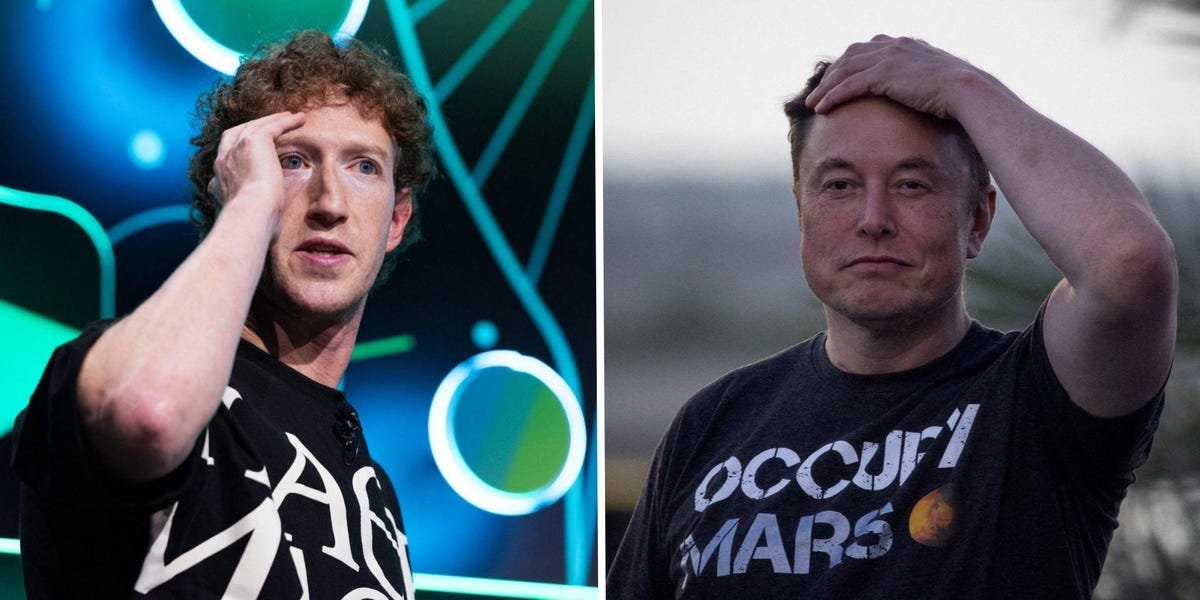
Elon Musk asked Mark Zuckerberg if he would consider joining him in bidding for OpenAI’s intellectual property before the Tesla CEO made an unsolicited offer for the ChatGPT maker in February 2025, according to newly released court documents.

The newly unredacted documents are part of Musk’s ongoing lawsuit against OpenAI and its CEO, Sam Altman.

The documents provide a glimpse into the communication between Musk and the Meta CEO, who have had a roller coaster relationship, including challenges to MMA fights.

In one unsealed exhibit, Zuckerberg texted Musk at 10:04 p.m. PT on February 3, 2025, to say that it seemed like the White House DOGE office, for which Musk was the de facto leader, was “making progress.” He also added that his “teams” would be “on alert to take down content doxxing or threatening” people who work with Musk at DOGE, according to the documents.

“Let me know if there is anything else I can do to help,” Zuckerberg added.

Less than half an hour later, Musk reacted to Zuckerberg’s message with a heart emoji and followed up with a question about OpenAI.

“Are you open to the idea of bidding on the OpenAI IP with me and some others?” Musk said, referring to the common term for intellectual property.

“Want to discuss live?” Zuckerberg responded.

Musk liked Zuckerberg’s message and texted back that he would “call in the morning,” according to the documents.

It’s unclear if the planned call actually took place. A Meta spokesperson told Business Insider that the company has no comment.

Based on a court briefing OpenAI filed on August 21, 2025, Musk “identified” Zuckerberg as a person he communicated with regarding a letter of intent about “potential financing arrangements or investments” in OpenAI.

“Neither Zuckerberg nor Meta signed the LOI,” OpenAI added in the briefing.

OpenAI, Elon Musk, and a senior legal counsel for Tesla did not immediately respond to requests for comment.

On February 10, 2025, a consortium of investors, including xAI, led by Musk, submitted an unsolicited $97.4 billion bid to acquire the then-nonprofit organization that controls OpenAI. The bid, submitted by Musk’s attorney Marc Toberoff, was aimed at blocking OpenAI’s transition into a for-profit entity.

OpenAI CEO Sam Altman promptly responded to the bid on X and said, “no thank you but we will buy twitter for $9.74 billion if you want.”

In August 2024, Musk sued Altman and others on the OpenAI board, alleging that he was deceived into investing and that the founders originally approached him to fund a nonprofit focused on developing AI to benefit humanity, but that it was now focused on generating profit. Musk contributed around $38 million to OpenAI in its initial years but is now seeking up to $134 billion in damages in the most recent version of the lawsuit.

In a separate conversation between Zuckerberg and Musk on December 13, 2024, Zuckerberg told Musk that someone had “leaked” Meta’s letter to the California Attorney General in support of Musk’s lawsuit against OpenAI.

“Wanted to make sure you heard this from me,” Zuckerberg added.

OpenAI officially completed its conversion from a nonprofit to a for-profit company in October 2025, although it still maintains a nonprofit wing.

Musk’s lawsuit against Altman and OpenAI will begin jury selection on April 27 in Oakland, California.


Source link

Parents-showed-up-to-face-Mark-Zuckerberg-as-he-took.jpeg

Parents showed up to face Mark Zuckerberg as he took the stand in a social media addiction trial

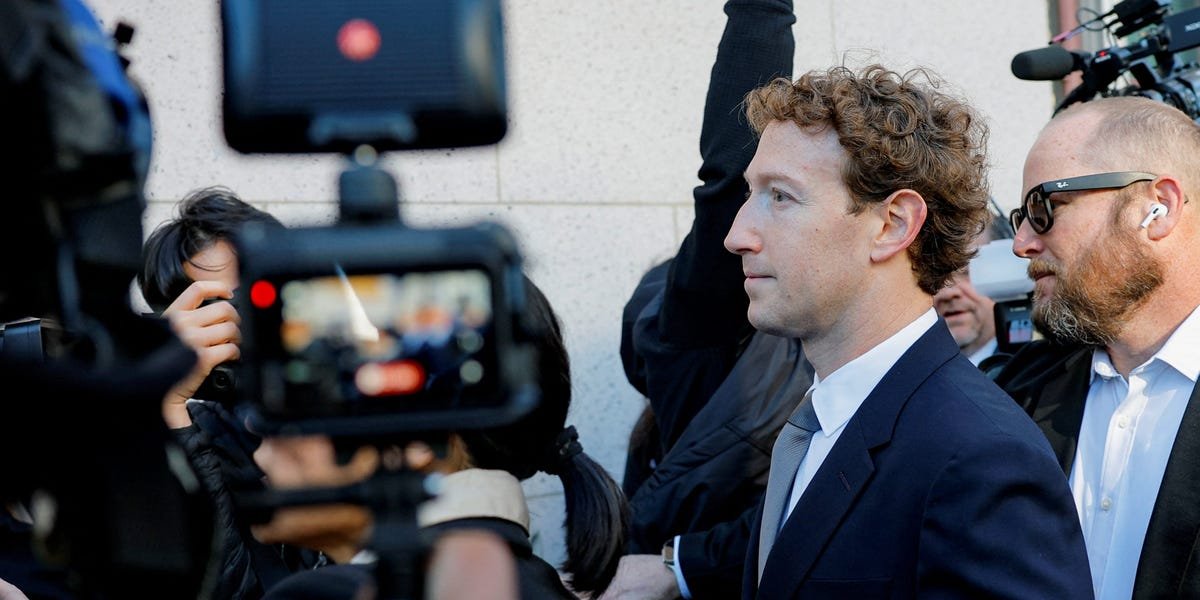
Lori Schott, a mother from rural Colorado, said she stared down Meta CEO Mark Zuckerberg as he walked into court in Los Angeles on Wednesday to testify in a landmark trial regarding social media addiction.

Schott lost her 18-year-old daughter, Annalee, to suicide in 2020. She believes the content Annalee saw on social media platforms “destroyed” her mental health.

“I made eye contact with him for quite a long time,” Schott said of Zuckerberg. “I was not backing down.”

Schott is not a plaintiff in the case where Zuckerberg testified on Wednesday, but is among more than 2,000 individuals who have similar personal injury lawsuits pending regarding social media addiction and harm.

The case underway in Los Angeles centers on a 20-year-old woman, identified by the initials KGM, who says her use of social media throughout her childhood negatively affected her mental health, contributing to depression and suicidal thoughts. It is considered a bellwether trial that could indicate how other similar lawsuits related to social media harm, like Schott’s, could play out.


LOS ANGELES, CALIFORNIA - FEBRUARY 18: Lori Schott , holds a picture of her daughter Annalee who died by suicide after consuming social media content on depression, anxiety and suicide, stands outside the Los Angeles Superior Court at United States Court House on February 18, 2026 in Los Angeles, California. A 20-year-old California woman sued Meta and YouTube accusing them of building addictive platforms causing harm to children. Schmitt is not part of this case but has a separate social media case and came to advocate and raise awareness. (Photo by Jill Connelly/Getty Images)

Lori Schott, a mother from rural Colorado, lost her 18-year-old daughter, Annalee, to suicide in 2020.

Jill Connelly/Getty Images


Meta, which owns Instagram and Facebook, was named as a defendant alongside Google-owned YouTube, TikTok, and Snapchat. TikTok and Snapchat both settled the lawsuit out of court.

Last month, Meta warned investors that its mounting legal battles over youth safety could “significantly impact” its 2026 financial results. Attorneys for more than 100,000 individual arbitration claimants have “sent mass arbitration demands relating to ‘social media addiction'” since late 2024, the company said in a 2026 10-K, which warned that potential damages in certain cases could reach into the “high tens of billions of dollars.”

In a statement, Stephanie Otway, a Meta spokesperson, said: “We strongly disagree with these allegations and are confident the evidence will show our longstanding commitment to supporting young people.” Otway highlighted changes the company has made over the past decade, including Teen Accounts, which give parents tools to manage their teens’ accounts.

Google declined to comment. TikTok did not respond to a request for comment. A Snapchat spokesperson said in a statement: “The Parties are pleased to have been able to resolve this matter in an amicable manner.”

On Wednesday, parents showed up hours before the courthouse opened in hopes of getting a seat inside. Many of them had personal stories about how they believed social media use harmed their children.


Parents and family members, including some plaintiffs in the case, hold hands as they pose together before entering the Los Angeles Superior Court for the social media trial tasked to determine whether social media giants deliberately designed their platforms to be addictive to children, in Los Angeles, on February 18, 2026. Meta CEO and Chairman Mark Zuckerberg is scheduled to testify Wednesday. (Photo by Frederic J. Brown / AFP via Getty Images)

Parents gathered outside the Los Angeles Superior Court on Wednesday.

Frederic J. Brown / AFP via Getty Images


“We face a lot of stigma from people telling us we’re bad parents,” said Amy Neville, another parent who attended to show her support. She said that once the evidence comes out in the trial, she believes “the tide will turn, and the general public will be on board with us.”

“It is by design that social media is tearing their family apart,” Neville said.

On the stand, Zuckerberg said that teens represent less than 1% of Meta’s ad revenue and that most teens don’t have disposable income, so it’s not especially valuable to advertisers to reach them.

Zuckerberg said it’s in Meta’s best interest to create a platform that inspires people and makes them want to stick around for the long term.

“If people aren’t happy with a service, eventually over time they’ll stop using it and use something better,” he said.

Sarah Gardner said that regardless of the outcome of the trial, she hopes it raises awareness about how the social media companies, and specifically Zuckerberg, have been operating. Gardner is the CEO of the Heat Initiative, an advocacy group that pressures Big Tech companies to make their platforms safer for kids. She was at the courthouse with the parents who believe they have been affected.

Gardner said she’s hopeful the trial will empower more people to say, “I don’t want to be on Instagram anymore.”


Source link

Henry Chandonnet is pictured

Sam Altman included a subtle dig at Mark Zuckerberg in his message to employees

Don’t expect to see Sam Altman lamenting the absence of “masculine energy” in corporate America to Joe Rogan anytime soon.

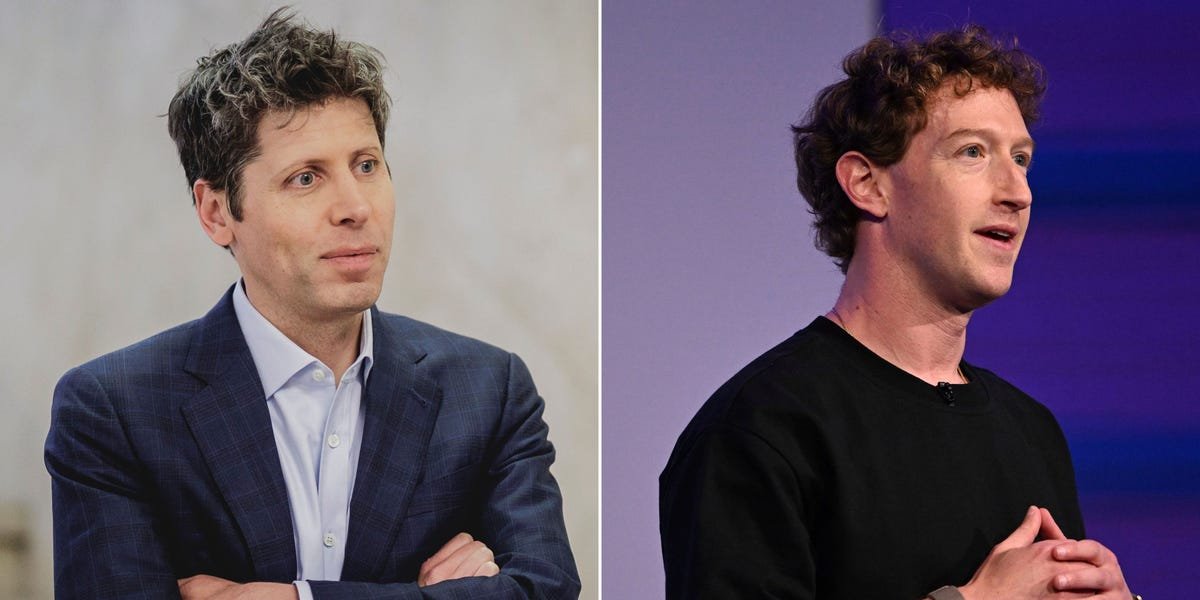
The OpenAI CEO sent employees a message on Slack criticizing Immigration and Customs Enforcement — and appears to have taken the opportunity to also take a subtle jab at his rival, Mark Zuckerberg.

The reference can be found where Altman wrote that OpenAI aims to “not get blown around by changing fashions.”

“We didn’t start talking about masculine corporate energy when that was popular,” Altman told employees.

Last year, Zuckerberg championed a return to masculinity at Meta on “The Joe Rogan Experience.”

“The masculine energy, I think, is good,” Zuckerberg said in the January podcast episode. “Society has plenty of that, but I think corporate culture was trying to get away from it.”

Zuckerberg described the merits of a corporate culture that “celebrates the aggression” of business.

The Meta CEO said that the intent of corporate culture’s shift away from masculinity was good. Women likely feel that companies are “too masculine,” he told Rogan, and that things are “biased” against them. But the shift had gone too far, the Facebook cofounder said.

“It’s one thing to say we want to be welcoming and make a good environment for everyone,” Zuckerberg said. “It’s another to basically say that masculinity is bad.”

Altman also wrote in his memo that OpenAI didn’t “become super woke when that was popular.”

Meta didn’t respond to Business Insider’s request for comment on Altman’s remark.

The latest in an AI rivalry

Altman and Zuckerberg are currently engaged in a talent war for top AI researchers and engineers.

Zuckerberg has attempted to poach OpenAI employees with eye-popping compensation packages, which Altman in June said included $100 million signing bonuses.

While Altman at the time said that he was happy that “at least so far, none of our best people have decided to take them up on that,” Zuckerberg successfully hired away some prominent OpenAI talent.

The Meta CEO, who even hand-delivered soup to an OpenAI employee he was attempting to poach, hired away ChatGPT co-creator Shengjia Zhao and three researchers who helped build OpenAI’s Zurich office.


Source link

OpenAIs-chief-researcher-says-Mark-Zuckerberg-hand-delivered-soup-to-an.jpeg

OpenAI’s chief researcher says Mark Zuckerberg ‘hand-delivered soup’ to an employee in a recruiting effort

It’s been said that the way to one’s heart is through their stomach. It sounds like Meta CEO Mark Zuckerberg wanted to see if the AI talent war, or at least one skirmish, could be won the same way.

Mark Chen, chief research officer at OpenAI, recently said that Zuckerberg personally delivered homemade soup to an OpenAI employee as part of a campaign to recruit the unnamed worker to Meta.

“It’s been kind of interesting and fun to see it escalate over time. You know, some interesting stories here are Zuck actually went and hand-delivered soup to people that he was trying to recruit from us,” Chen told Ashlee Vance on the author’s “Core Memory” podcast.

Chen said Zuckerberg’s move was “shocking to me at the time” but since then, he said he’s returned the favor.

“I’ve also delivered soup to people we’ve been recruiting from Meta,” Chen said, laughing.

The poaching efforts focused on OpenAI’s researchers and engineers underscores the company’s position in the AI race, Chen said.

“We’re always under attack,” Chen told Vance. “This is how I know we’re in the lead, right? Any company starts, where do they try to recruit from? It’s OpenAI. They want the expertise, they want our vision, our philosophy of the world. And we’ve made so many star researchers, right? I think OpenAI, more than anywhere else, has been a place that makes names in AI today.”

Arguably, no other rival tech company has been as aggressive in the so-called AI talent wars against OpenAI as Zuckerberg’s Meta.

In June, OpenAI CEO Sam Altman said that Meta tried to lure some of his engineers with $100 million signing bonuses. The CEO said at the time that none of his top talent was poached, but ChatGPT co-creator Shengjia Zhao later joined Meta’s Superintelligence Lab.

Chen said that Meta tried to recruit “half” of Chen’s direct reports unsuccessfully, but that OpenAI has been “fairly good” at retaining top talent. A Meta spokesperson declined to comment.

Top AI researchers have become a hot commodity in the AI race, as it’s generally believed that there is a relatively small number of researchers and engineers capable of achieving breakthroughs or building new LLMs from the ground up.

“It’s like looking for LeBron James,” Databricks’ vice president of AI, Naveen Rao, told The Verge’s Command Line newsletter last year. “There are just not very many humans who are capable of that.”


Source link