Guilty-on-all-counts-Jury-convicts-Netflix-director-Carl-Rinsch.jpeg

Guilty on all counts: Jury convicts Netflix director Carl Rinsch in $11 million fraud case

A Manhattan federal jury on Thursday found Carl Rinsch guilty on charges that he scammed Netflix out of $11 million in a lavish spending spree.

After less than five hours of deliberation, the jury said it found Rinsh guilty on all seven counts, including fraud, money laundering, and illegal money transmission. He faces up to 90 years in prison, but is expected to be sentenced to far less.

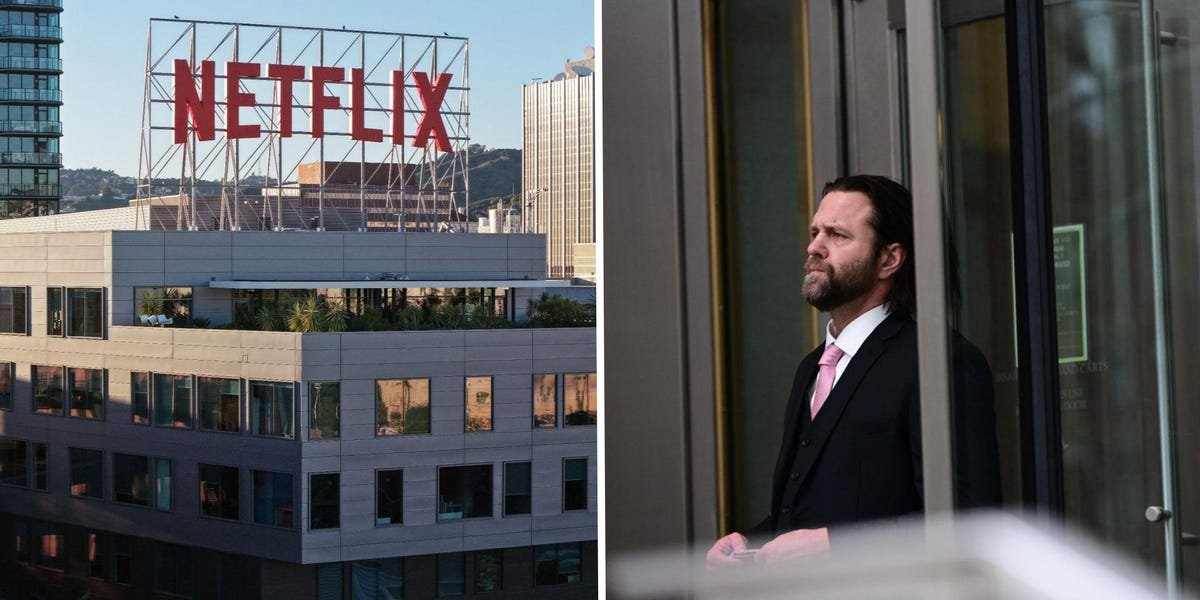
Rinsch, wearing a purple-plaid tie and matching pocket square, looked straight at the judge as the jury foreman read the verdict.

The case centered on the millions of dollars Netflix paid Rinsch to film “White Horse,” a sci-fi epic about a world where clone-like beings, after a schism with humankind, create their own society walled off from the rest of the world. Rinsch testified in his own defense earlier this week.

Rinsch — a Ridley Scott protege who previously directed the Keanu Reeves-starring “47 Ronin” — shot footage for “White Horse” on two continents. But by the fall of 2019, he exceeded the $44 million Netflix budgeted for the project and asked for more money.

Through the end of 2019 and early 2020, Rinsch negotiated with Netflix to figure out how to move “White Horse” forward and realize his ambitions. He envisioned a franchise like “Star Wars” and “Game of Thrones,” complete with an elaborate fantasy world, that could become part of Netflix’s catalogue.

In March of 2020, the streaming service agreed to give Rinsch’s production company another $11 million.

Then, everything went wrong.

On the witness stand in Manhattan federal court, he said he believed the bulk of the $11 million was meant to reimburse him for keeping the production of “White Horse” afloat the previous fall, when it had gone over-budget. According to him, Netflix expected him to conduct only “soft pre-production” on a potential second season.

Netflix balked. Former executives testified in the trial that the $11 million was meant to go toward finishing a first season that Rinsch never delivered. According to prosecutors, the entire negotiation for the $11 million was a sham, and Rinsch meant to defraud the company all along.

At closing arguments on Wednesday, Assistant US Attorney David Markewitz presented the jury with a Buzzfeed-style list of “10 Ways You Know Carl Rinsch is Guilty.” In a slideshow, he walked them through what he said were Rinsch’s contradictory claims — on the witness stand, in emails and text messages, and in prior statements in a civil legal dispute with Netflix — that he said demonstrated Rinsch wasn’t telling the truth.

He argued it was absurd to think Rinsch’s lavish purchases — like a $439,000 handmade Hastens mattress — could not have possibly been meant for the production of “White Horse.” And Rinch’s 2021 purchases of Rolls-Royces were insured in his own name, rather than insured by Netflix.

“In a TV show, a mattress is going to be covered by sheets and a blanket,” Markewitz told the jury. “No one watching ‘White Horse’ from home is going to have any idea what is under those linens.”

Daniel McGuinness, an attorney representing Rinsch, told the jury that Rinsch never had the “intent” required to find him guilty.

He showed them emails and texts leading up to the March 2020 agreement that he said demonstrated Rinsch’s negotiating posture had always been that Netflix owed him about $11 million for reimbursement. Rinsch never said he would spend all the money on additional production for “White Horse,” McGuinness said.

In reality, according to McGuinness, the situation was a “contract dispute” based on misunderstandings between Rinsch and Netflix.

“They were talking past each other, and the government has turned it into a nefarious fraud conspiracy,” McGuinness said.

This is a breaking story. Please check back for updates.



Source link

I-invented-a-new-type-of-landline-for-kids-and.jpeg

I invented a new type of landline for kids, and my daughter’s friends tested it out. This year, we’ve raised $3.5 million in funding.

This as-told-to essay is based on a conversation with Chet Kittleson, founder of Tin Can. It has been edited for length and clarity.

About three years ago, I was picking my daughter up from school and started chatting with parents about how arduous it is to run the kids’ social lives. One mom said that she felt like an executive assistant for her daughter. There was a lot of frustration and angst toward the kids, and as a dad of three, I understood it.

But that day, I played devil’s advocate. What else are the kids supposed to do, I asked. My first social network was the landline, but my kids didn’t have that. Most of the parents I knew were delaying cellphones, but that left the kids reliant on us for coordinating meet-ups.

I got to thinking: wouldn’t it be cool if there was a landline my kids — who are now 10, 8, and 5 — could use to organize their own social dates?

The phone led to my daughter walking to school with friends

I had been working at the tech and real estate company Redfin, which I loved because the company environment allowed me to be a rising executive and an active dad. Still, I had this itch to build a company of my own. I left to start another real estate-related company, but ultimately, we didn’t have a product-market fit, and had to call it quits after about two years.


Kids on the phone

The cofounder’s daughter started walking to school with friends thanks to her landline.

Courtesy of Tin Can


The same week I wrapped up that venture, I brought my co-founders over to talk about making my landline idea a reality. We spent a week at my kitchen table, making prototypes. By the end of the week, we had five phones.

Two of the prototypes went to my daughter’s friends. Right away, we started noticing the kids organizing more playdates and sleepovers. My favorite moment came when the phone rang at about 8:15 in the morning. My daughter’s friend was inviting her to walk to school for the first time.

I want to use tech to build better in-person connections

Right away, I started getting texts from other local parents, asking if they could get a phone. I made about 50 prototypes and installed them myself. I asked customers what they liked about the phone and what they were worried about when it comes to kids and tech, which helped me refine the product.

We officially started selling Tin Cans in April of this year. For parents, the phone is a symbol of a simpler time. For kids who have often never experienced independent communication, it delivers a new superpower they didn’t know they wanted.


Tin Cans

The company has raised $3.5 million in funding.

Courtesy of Tin Can


Today, we have Tin Cans in every state and Canada. We’ve raised $3.5 million. I’m excited to build a different type of technology company: one that uses tech to build connections and healthy relationships.

We’re trying to foster independent kids

Personally, that’s extremely meaningful to me because I’ve always struggled with anxiety and had my own challenges with screen addiction. I stopped using social media a few years ago after noticing that it was distracting me from moments with my kids.

Today, my family has two Tin Cans: one in a shared area of the home and another in my oldest’s room. These days, my kids frequently get calls from friends asking them to walk to school. They have more sleepovers or just chat with their grandparents.

There are also more subtle changes. When we pick up takeout, my kids are often the ones to go in and claim the order. That confidence is a symbol of the strong, autonomous children my wife and I are trying to raise.

One mother told us that Tin Can helped her daughter find her voice — literally. The girl started off talking quietly and timidly, but within weeks, was louder. That confidence translates to the real world, and the Tin Can lifestyle we’re hoping to foster.


Source link

Special-delivery-A-woman-gave-birth-in-a-Waymo-robotaxi.jpeg

Special delivery: A woman gave birth in a Waymo robotaxi in San Francisco

  • A woman gave birth in a robotaxi in San Francisco earlier this week, Waymo confirmed.
  • Waymo told local media that the robotaxi safely delivered its passengers to the hospital.
  • It’s not the first birth recorded in a Waymo, and with the company expanding rapidly, it may not be the last.

One San Francisco robotaxi arrived at its destination with an unexpected extra passenger on Monday.

A woman in labor gave birth in the back seat of a Waymo robotaxi while traveling to the hospital, the company confirmed in a blog post on Wednesday.

“Some people just can’t wait for their first Waymo ride,” the company said.

A spokesperson for the Google-backed robotaxi firm told The San Francisco Standard, which first reported the news, that Waymo’s remote monitoring team detected “unusual activity” in the backseat of the driverless vehicle.

Employees called 911 once they realised what was happening. But the robotaxi delivered its passengers to the hospital without needing assistance, and was subsequently removed from Waymo’s fleet for cleaning.

Apparently, it’s not the first time someone has given birth in a Waymo, with the company confirming to The San Francisco Standard that a similar incident previously occurred in Phoenix.

Waymo is growing up fast

Waymo has had a big year, with the company’s robotaxis becoming a regular sight on San Francisco’s streets, alongside expansions into new markets in Austin and Atlanta.

On Wednesday, Waymo said it had served over 14 million trips so far this year, and expected to hit 1 million rides a week by the end of 2025.

It hasn’t all been smooth sailing. Last month, Waymo issued a software update to 3,067 robotaxis after reports that its vehicles were driving past stopped school buses, according to a regulatory report filed on Thursday.

Waymo is planning a major expansion next year as it faces competition from Tesla’s nascent robotaxi service, which launched in Austin in June.

The robotaxi company plans to open its driverless ride-hailing service to the public in a host of new cities in 2026, including Miami and Washington, DC.


Source link

Legal-tech-is-too-big-for-one-winner-says-Harveys.jpeg

Legal tech is too big for one winner, says Harvey’s CEO

The legal tech market is only just beginning, and it’s huge, says Harvey’s CEO.

Winston Weinberg said during a Reddit “Ask Me Anything” session on Wednesday that the opportunity ahead for the legal tech industry is so massive that no single company — including his — could own it.

“I don’t think a single player is going to capture all of the pretty enormous amount of value that will be created in the next 10 years in this space,” said the CEO of the $8 billion legal tech startup.

Harvey announced last week that it raised $160 million in a round led by a16z, pushing the startup’s valuation to $8 billion.

Despite being one of the most closely watched startups in the sector, Weinberg said Harvey is barely scratching the surface of who AI tools can reach.

“There are around 10 million global legal professionals, and Harvey serves just single-digit percentage points of them,” he said.

He also said the legal tech sector represents only a tiny slice of the overall legal economy. The global legal market is worth an estimated $1 trillion, but only about $30 billion of that is spent on technology today, Weinberg said.

“Long term, it seems clear that technology penetration in the legal market will grow significantly,” he said.

“If we build a great product, we hopefully capture some of that very large upside,” Weinberg said, adding that there is “clearly” room for other legal AI startups.

Weinberg said the startup needs to “earn that valuation every day.”

The share of monthly users who return daily is up 81% since the company launched in 2023, and lawyers using multiple features show engagement patterns “similar to Slack or email,” said Weinberg.

“We have a long way to go with building out a full platform of use cases for lawyers,” he added.

AI is coming for law firms

Weinberg said many legal tasks will be absorbed by technology.

“That doesn’t mean the entire job of a lawyer gets consumed; it’ll evolve,” he added.

Weinberg told Business Insider in September that AI is already reshaping the industry, creating new practice areas while reducing the size of some in-house teams.

Some law firms are rethinking their staffing models entirely, flattening their traditional pyramid structures by relying more on associates and fewer partners, he said in an interview on the sidelines of TechLaw Fest in Singapore.

Younger lawyers who grew up using AI tools may gain an edge over senior partners when it comes to fluency, speed, and adaptability, he added.

AI has become an unavoidable part of lawyers’ work. Five of the 10 largest US law firms by revenue told Business Insider in July they were already embedding AI into their workflows — including document review, legal research, and spotting compliance risks.

Investor enthusiasm has also surged alongside the transformation. Legal-tech funding reached $3.2 billion this year, according to Business Insider’s December analysis of Crunchbase data and recent deals.


Source link

Ukrainian-Droid-lay-in-wait-on-a-road-at-night.jpeg

Ukrainian ‘Droid’ lay in wait on a road at night and ambushed Russians with an M2 Browning

A Ukrainian brigade has released footage of one of its uncrewed ground vehicles opening fire on a Russian armored personnel carrier, offering a rare glimpse at the emerging technology in action.

The 5th Separate Assault Brigade said on Wednesday that it deployed a Droid TW 12.7 — a remotely operated tracked system developed by a Ukrainian defense tech company — on a road deemed likely to be a route for advancing Russian troops.

The brigade said that the ground-based drone later encountered a Russian MT-LB, a lightly armored fighting vehicle often used to transport infantry.

Thermal footage filmed at night from the uncrewed ground vehicle, or UGV, shows it opening fire on the vehicle, its operator swerving a targeting reticle across the MT-LB’s front.

Business Insider could neither independently verify when nor where the footage was filmed.

The Droid TW 12.7 is equipped with an M2 Browning machine gun that fires .50 caliber rounds, which would typically pierce an MT-LB’s armor.

The 5th Brigade said it used armor-piercing incendiary rounds for the mission.

Sparks fly from the armored vehicle’s chassis as it slows to a crawl and drifts in front of the UGV, which continues firing point-blank.

“The 12.7 mm bullets punch through the MT-LB’s side, striking the crew and onboard systems,” a narrator said in the 5th Brigade’s video, referring to the metric measurement for .50 caliber bullets.

The MT-LB appears to be aimlessly crawling past the drone, indicating that its driver is incapacitated or its controls are damaged.

The UGV then pivots and begins firing on the rear of the MT-LB, “killing the infantry in the troop compartment,” the narrator said.

The 5th Brigade said that it found in the morning that the MT-LB crew and their passengers were “completely wiped out,” publishing short clips of the aftermath shot by a first-person-view aerial drone.

Wednesday’s published footage provides insight into how UGVs are increasingly used on the battlefield in Ukraine, where troops on both sides are experimenting with ground drones to perform missions that human soldiers must otherwise conduct.

While official statistics show that uncrewed aerial vehicles still dominated the drone warfare space last month, the spread of UGVs offers a possible future where Kyiv can rely on remotely operated systems for ground operations instead of risking its troops.

This year, Ukraine said that it aims to manufacture and deploy at least 15,000 UGVs across the battlefield.

Ukrainian and Russian teams have developed hundreds of such systems, ranging from buggies that can ferry provisions near the front lines to trucks outfitted with remotely operated machine guns.

The 5th brigade and DevDroid, the company that makes the Droid TW 12.7, did not respond to requests for comment sent outside regular business hours by Business Insider.


Source link

Oracle-investors-have-questions-about-its-spending.jpeg

Oracle investors have questions about its spending

Oracle investors have questions about its spending.

The software giant posted quarterly results that fell short of Wall Street’s revenue expectations on Wednesday, and shares slid more than 11% in after-hours trading.

“Capex & financing needs have been the biggest investor question over the last two months, weighing on the stock,” wrote Derrick Wood, an analyst at TD Cowen, ahead of the earnings call.

During the call with investors on Wednesday, Clay Magouyrk, co-CEO of Oracle, reassured analysts that the company’s debt remains in “investment-grade” and that the company is in unique business areas that justify the optimism.

“We’ve been reading a lot of analyst reports, and we’ve read quite a few that show an expectation of upward of a $100 billion for Oracle to go out and kind of complete these build-outs,” said Magouyrk.”And based on what we see right now, we expect we will need less, if not substantially less, money raised than that amount to go and fund this build out.”

Toward the end of the call, an analyst with Guggenheim Securities asked why Oracle is so optimistic that its growth will accelerate when most software service companies are seeing slowing growth, and Magouyrk responded that Oracle is the “only applications company in the world that’s selling complete application suites,” with added AI.

Despite the revenue miss, Oracle still saw 14% year-over-year revenue growth in the quarter ending November 30. Earnings per share also beat estimates at $2.26 versus the expected $1.64. Net income jumped to $6.14 billion, up sharply from $3.15 billion a year earlier.

The results drop as Oracle leans heavily into the AI frenzy, betting big on massive data center expansion to win more business.

In its September earnings report, Oracle stunned Wall Street with a surge in cloud bookings tied to AI workloads, a boom that sent the stock to a record high. But the rally didn’t last. Shares have since tumbled roughly a third as investors grow skittish about the enormous capital required to keep building data centers and whether Oracle’s biggest customer, OpenAI, can actually deliver on the multibillion-dollar cloud commitments it’s making.


Source link

The-memes-are-flying-about-the-Netflix-and-Paramount-bidding.jpeg

The memes are flying about the Netflix and Paramount bidding battle for Warner Bros. Discovery

The Hollywood bidding war between Paramount Skydance and Netflix has created a meme frenzy.

The two media giants are in an all-out battle for Warner Bros. Discovery after it accepted Netflix’s offer to acquire its studio and streaming businesses for an equity value of $72 billion. David Ellison’s Paramount launched a hostile $30-per-share bid for all of WBD on Monday.

Warner Bros. Discovery owns the Warner Bros. film studio, HBO, the HBO Max streaming service, and TV networks such as CNN, TNT, and TruTV. It confirmed receipt of Paramount’s unsolicited offer on Monday.

Both entities have made their cases on why they’d be the best owner for WBD. Although internet comedians don’t have a say in where the deals land, it hasn’t stopped them from weighing in with viral jokes about the dueling companies and their quest to acquire WBD.

Some social media users are poking fun at the back-and-forth with memes about how far each company is willing to go to gain WBD’s favor. One post compared the battle for the best offer to a scene from the HBO business drama “Succession,” a title Netflix would own if the deal goes through.

The Instagram meme account Litquidity used parody images that appeared to be AI-created of two business leaders speaking at the DealBook Summit to mock how each company is trying to prove its offer is better.

Some people seem to be using humor to cope with the idea of more consolidation in Hollywood. They are pushing back on both offers with memes about stopping the looming acquisition completely.

“I’m putting together a team to fight the Netflix Warner Bros merger,” one X user captioned a compilation video of various actors and famous filmmakers.

Others speculated on what the movie-watching experience could be like under Warner Bros. Discovery’s new ownership. One TikTok video showed a man sitting down to watch a movie, only for the intros to include a confusing mix of studios, backers such as Saudi Arabia’s Public Investment Fund, and even a DJ, being played before the movie began.

In the midst of all the jokes, Netflix argues that its offer would be better for consumers and creators, while Ellison says Paramount is more likely to win regulatory approval and offers Hollywood more certainty.

What all of this means in the long run is unclear so far. It could lead to job cuts in the entertainment industry as the giants consolidate their power. The trends of streaming services getting pricier and fewer movies hitting theaters could also continue, as companies release less content, Business Insider previously reported.

Either way — as with many serious big business deals — consumers and industry insiders are finding ways to laugh through it.


Source link

YouTube-TV-is-planning-to-launch-a-cheaper-skinny-sports.jpeg

YouTube TV is planning to launch a cheaper ‘skinny’ sports bundle following its battle with Disney

YouTube TV will unveil new prices soon. But this time, it will be good news for sports fans.

YouTube is launching a set of cheaper, slimmed-down versions of its popular live TV service in 2026, which it’s calling “YouTube TV Plans,” the video giant announced on Wednesday. One of the new plans will be a sports bundle that provides access to ESPN Unlimited, FS1, and NBC Sports Network.

While YouTube TV isn’t yet revealing pricing for these 10 or so genre-specific packages, they’ll cost less than the Google-owned service’s typical rate, which is $83 a month.

“Our goal is to let you tailor your subscription with more options,” said Christian Oestlien, YouTube’s head of subscriptions, in a statement. “Whether you stick with our main YouTube TV plan with 100+ channels, focus on sports, combine sports and news, or select a plan centered on family or entertainment content, subscribers will be able to easily choose the plan that works best for them.”

YouTube TV secured the rights to form these so-called “skinny bundles” after hard-fought negotiations with Disney, Comcast’s NBC, and Fox. YouTube TV’s battle with Disney was especially intense, as it left subscribers without ESPN and ABC for 15 days.

Justin Connolly, YouTube’s global head of media and sports, said at a media event on Tuesday night that YouTube worked with its partners on “ingesting the entirety of the sports programming” in its service, so that YouTube TV can be a one-stop shop for sports fans. Besides aggregating live games, Connolly said YouTube is being fan-friendly by aiming to “meet the consumer where they are” on price.

YouTube TV’s price has steadily increased since it launched in 2017 at $35, though it’s also added more channels. Last December, YouTube TV’s monthly price rose by $10.

Other TV providers have launched sports-focused skinny bundles, with some tradeoffs.

Fubo’s $55.99 a month Sports + News bundle includes all of ESPN and Fox’s channels, plus CBS and the NFL Network, but it doesn’t have NBC or Warner Bros. Discovery’s networks like TNT or TruTV. It also doesn’t have the news networks CNN and MS Now (formerly MSNBC), though it has Fox News.

Sling TV’s Orange & Blue bundle goes for $60.99 and has ESPN, Fox with cable sidekick FS1, WBD’s channels like TNT and CNN, and the NFL Network. It also carries local channels like NBC and ABC in certain markets. But Sling doesn’t have a deal with CBS, plus its main bundle doesn’t include specialty sports networks like the SEC Network, the Big Ten Network, or NBA TV. Sling offers a Sports Extra add-on for $15 a month on its main plan, bringing the total to $76.

DirecTV’s MySports package costs $69.99 but is more comprehensive, with the full suites of ESPN, Fox, and WBD, plus all four major local broadcast networks: ABC, CBS, NBC, and Fox (with possible exceptions in certain markets). It also carries the flagship networks for four major US sports: the NFL, NBA, MLB, and NHL.

Sports fans could complement those skinny bundles by buying a digital antenna or by using streaming services like Peacock or Paramount+ that give access to NBC and CBS, respectively.

ESPN also offers a subscription to its entire suite for $29.99 a month, or a bundle with competing streamer Fox One for $39.99 a month.

YouTube said its new sports plan will have ESPN’s full suite of programming plus sports channels from Fox and NBC, with the option to add on NFL Sunday Ticket and RedZone for more money. Otherwise, it’s unclear exactly which channels this bundle will have.

As YouTube TV’s sports bundle enters the market, sports fans have more choices than ever. The challenge for them now is finding the right plan.


Source link

Im-a-dietitian-and-mom-of-2-I-swear-by.jpeg

I’m a dietitian and mom of 2. I swear by these 7 Costco buys to make nutritious meals for my family in under 30 minutes.

  • I’m a dietitian and mom who relies on Costco staples to make healthy meals for my family of four.
  • Taylor Farms salad kits and raw veggies help me prep dinner in under 30 minutes.
  • I also use Amylu meatballs and proteins from Kevin’s Natural Foods to make easy weeknight meals.

Even though I’m a registered dietitian, the question “What’s for dinner?” always weighs heavily on my mind.

Getting a decent dinner on the table quickly can be a challenge, particularly when I factor in late work meetings and my two kids’ after-school activities.

No matter how busy I get, though, I always try to prepare a balanced, nutritious dinner with a high-quality protein and at least one vegetable for my family.

Here are seven products I get at Costco to prep flavorful weeknight dinners I feel good about serving my kids.

I rely on Amylu chicken meatballs for quick meals.

Amylu chicken meatballs are versatile enough to eat with a variety of cuisines.

Ana Reisdorf

Amylu chicken meatballs are a versatile option for a weeknight meal, packing about 3 ½ grams of protein per meatball.

I can prepare them on their own or pair them with sides like brown rice and veggies. I’ve also served them over pasta, zoodles, or crusty bread for a filling weeknight dinner.

These meatballs reheat well and don’t require any time-intensive chopping or prep. They’re also great for nights when my kids need something quick and satiating before rushing out the door.

I keep at least one pack in the freezer for backup dinners. They’re reliable, kid-friendly, and take all the pressure off when I need something quick.

Rao’s Homemade marinara sauce is a staple in my house.


Rao's Marinara sauce

Rao’s marinara tastes better than any jarred alternatives I’ve tried from grocery stores.

Ana Reisdorf

A good jar of marinara sauce can actually taste homemade, and Rao’s version is proof. I can’t beat its quality for the price, so I stock up on it whenever I see it at Costco.

I like that it has no added sugar (unlike many jarred marinara sauces). The flavor is also rich enough that I can use it without adding any spices or seasonings.

I often pair this marinara with the Amylu chicken meatballs and spaghetti, but I can also use it in my baked chicken recipe or as a quick pizza sauce.

It’s one of the few items in my pantry that consistently saves me time while still tasting fresh and flavorful.

Heat-and-serve entrées, like Kevin’s Natural Foods’ roasted-garlic chicken, require barely any effort.


Kevin's Roasted Garlic Chicken

The packaging around the roasted-garlic chicken keeps the meat fresh for longer than I expected.

Ana Reisdorf

Costco offers a wide range of heat-and-serve protein options. Kevin’s Natural Foods’ roasted-garlic chicken is always a staple in our fridge, serving up 21 grams of protein per 5-ounce serving.

I find that each package lasts a long time, so I always keep one on hand for a quick weeknight meal. It’s easy to pair with my veggies and other sides of choice.

Cuisine Solutions’ sliced grass-fed beef sirloin makes steak nights a breeze.


Sliced Grass Fed Beef Sirloin from Costco

Cuisine Solutions’ sliced grass-fed beef sirloin comes cooked perfectly.

Ana Reisdorf

My husband loves beef, but I sometimes have trouble preparing it just the way he likes.

Thankfully, Cuisine Solutions’ sliced grass-fed beef sirloin comes fully cooked and feels impossible to mess up.

It has 19 grams of protein per 3-ounce serving, and is versatile enough to add to dishes like tacos, salads, or soups.

Getting my greens in is easy thanks to Taylor Farms salad kits.


Taylor Farms Salad Kit at Costco

Taylor Farms salad kits taste delicious and keep me from having to waste time chopping.

Ana Reisdorf

To get a quick meal on the table, I throw a protein over a Taylor Farms salad kit, which comes with everything I need to make a tasty salad in less than five minutes.

The Costco near me carries a wide variety of kits in the produce section, so I get different ones each week to mix up the flavors and ingredients.

Raw vegetables, such as tomatoes and cucumbers, come together to make delicious side salads.


Cucumber package from Costco

I snag the three-pack of cucumbers from Costco every time I shop at the store.

Ana Reisdorf

My kids prefer their vegetables raw rather than cooked, so a cucumber and tomato salad is a staple side dish on weeknights. Every time I put a batch on the table, my family finishes it.

A three-pack of cucumbers from Costco lasts me the whole week, and I feel good about serving them to my family since they’re a source of fiber and vitamin K, which supports bone health.

The store also tends to sell a wide variety of tomatoes, which I use to add a dose of immunity-boosting vitamin C to the salad.

My tomato and cucumber salad is so easy to throw together. Just chop some cucumbers and halve the tomatoes. Then, mix them with a drizzle of olive oil, salt, and vinegar.

I heat up Kirkland Signature’s chicken-tortilla soup on the busiest nights.


Kirkland Chicken Tortilla Soup

The chicken-tortilla soup has white meat and vegetables inside.

Ana Reisdorf

If the week is especially busy, everyone is ravenous, and I have to get dinner on the table in less than 10 minutes, I have premade soups, like the Kirkland Signature chicken-tortilla soup, on standby.

Admittedly, some soups have more sodium than I prefer, but at least the Kirkland Signature chicken-tortilla soup also contains tomatoes, corn, and peppers — and 12 grams of protein per cup.

It’s a nourishing, cozy meal that keeps everyone’s bellies full.


Source link

Fed-meeting-updates-Federal-Reserve-to-decide-on-interest-rate.jpeg

Fed meeting updates: Federal Reserve to decide on interest rate cut at final 2025 meeting

Fed leaders have kept monetary policy moderately restrictive in recent months, holding rates steady until September before introducing two quarter-point cuts.

Chair Jerome Powell said in the last meeting that a rate change in December is “not a foregone conclusion, far from it” and “policy is not on a preset course,” though on Wednesday morning, CME FedWatch is showing a roughly 90% chance of another quarter-point reduction.

Fed leaders have kept monetary policy moderately restrictive in recent months, holding rates steady until September before introducing two quarter-point cuts.

Chair Jerome Powell said in the last meeting that a rate change in December is “not a foregone conclusion, far from it” and “policy is not on a preset course,” though on Wednesday morning, CME FedWatch is showing a roughly 90% chance of another quarter-point reduction.

Investors and consumers are hopeful for more cuts. Americans could see more affordable mortgage, auto, and credit card rates in the new year, and businesses would be able to borrow money more easily — a move that could juice the sluggish job market.


Source link