President Donald Trump said Netflix and Paramount Skydance have called him about their fight over Warner Bros. Discovery — but he says he’s staying out of it.
“I’ve been called by both sides,” Trump told “NBC Nightly News.” “It’s the two sides, but I’ve decided I shouldn’t be involved. The Justice Department will handle it.”
This is a shift from what Trump said in December of last year.
“They have a very big market share, and when they have Warner Bros., you know, that share goes up a lot so, I don’t know,” Trump said after Netflix made its bid for Warner Bros. Discover. “I’ll be involved in that decision, too. But they have a very big market share.”
The fight for Warner Bros. Discovery, and its well-known IP, has been contentious.
In November of last year, formal bids for the media behemoth were submitted, including those from Netflix and Paramount Skydance — which previously signaled interest in buying Warner Bros. Discovery.
Netflix announced in early December that it would acquire parts of WBD — the studio and streaming — for an equity value of $72 billion ($27.75 per share).
“The seismic cash-and-stock deal, which has a total enterprise value of $82.7 billion, will bring together Netflix’s streaming platform with Warner Bros.’ century-old studio, HBO, HBO Max, and some of the most iconic franchises in film and television,” Business Insider reported when the deal was announced.
Paramount Skydance came in days later with a hostile, all-cash offer of $30 per share for all of WBD, including its cable assets, making its appeal directly to shareholders.
The battle has continued with Netflix revising its deal with an all-cash offer at the same price per share, Paramount Skydance saying Oracle billionaire Larry Ellison was backing its offer, and WBD telling its shareholders to reject the Paramount deal.
No matter how the saga ends, the bids will need to clear regulatory hurdles for the merger — and for now Trump said he’ll leave that to the DOJ.
They are brutal for the paper’s readers, who lose crucial coverage like sports and international reporting. And they are brutal for hundreds of Post employees, including lots of people whose work I pay to read with my Post subscription.
The Post’s cuts have also led lots of people to point out the obvious — that Post owner Jeff Bezos, who is currently the world’s fourth-richest man, worth an estimated $261 billion, could easily fund the paper’s losses … forever, without ever noticing the tab.
Jeff Bezos wealth in 2024: $194 billion
Jeff Bezos wealth in 2025: $215 billion
Jeff Bezos wealth today: $249.4 billion
Net increase in Bezos wealth since 2024: $55.4 billion
For the record: I also wish that Bezos would take his loose change and spend it on journalism.
Note that I didn’t say “journalism instead of” because when you are talking about Bezos-level wealth, you don’t have to choose: You can pay for journalism androcketsandsuperyachtsand Venetian weddings and parties in St. Barts. (And yes, I realize that Bezos’ Amazon expenditures on things like the “Melania” doc are different from Bezos’ personal spending. The point is, he can afford it. In the same way that I can afford to buy a fancy coffee now and then.)
Every time Peter publishes a story, you’ll get an alert straight to your inbox!
Stay connected to Peter and get more of their work as it publishes.
I’m also not weighing in on how much of the Post’s problems are the same problems facing every news organization, versus ones Bezos exacerbated by pivoting toward Trump. Or whether the new Post plan — focus on a handful of topics it thinks will resonate with a national audience, like politics and wellness — makes sense or is simply a too-late move already made by many Post competitors.
But the focus on Bezos underscores the problem the Post has been facing for years: It was a money-losing operation that relied on a billionaire’s goodwill. First, to buy it from its previous owners, who let it go for the price of a Joe Rogan podcast deal, and then to fund its losses for years.
Maybe Bezos really is sick of paying for the Post’s losses. Maybe funding the Post no longer syncs with a turns out, Donald Trump is actually good now,worldview. The point is that the Post has been in the can’t-win position of hoping Jeff Bezos would continue to fund those losses for years. Now he doesn’t want to. (Bezos has yet to comment publicly on the cuts; Matt Murray, the Post’s top editor, told his staff that the cuts are meant to help “reinvent The Washington Post for this new era. This work is difficult, but is essential.”)
Which, again, points out how precarious a position just about every news organization in the US is in right now.
There are a handful of really excellent publications, which are controlled by billionaires or very wealthy families — The New York Times, The Wall Street Journal, and Bloomberg News — that are aimed at an upscale, national audience, and they are doing well. There are some thriving startups and niche publications that tend to focus on topics that rich people — or their employers — will pay to learn more about. (Several of them, it turns out, are focused on power and Washington, DC — a sector the Post should have owned.) And there are various forms of aggregators that make a living by repackaging news other people generate, like newsletter publisher 1440.
Faced with this grim reality, it’s natural to look at Bezos and think: Just pay for it. And again — I wish he would. But relying on billionaire goodwill is a hope, not a plan.
Journalism — no matter how much we right-size, automate, and innovate — is expensive. And up until the internet, journalism usually existed in the US in spite of those costs because it was bundled with other things people (subscribers, advertisers) were willing to pay for.
Now that bundle has been torn apart, so we need both new models that support what we have today — and ownership structures that will be satisfied with self-sustaining businesses, not ones with huge profit expectations. If I knew how to do that, I’d be doing it. I just know that hoping a billionaire will fix it isn’t the answer.
Money is pouring in for workers impacted by Wednesday’s layoffs at The Washington Post.
As of writing, over 1,000 supporters had donated more than $130,000 combined to a GoFundMe page set up for let-go journalists.
The fundraising push, launched just a few hours after company executives began cutting workers, was set up by Post reporter Rachel Siegel and the newsroom’s union. Its top donor, tech journalist and former Post employee Kara Swisher, gave $10,000.
Swisher, who recently made a push to buy the Post from its billionaire owner, Amazon founder Jeff Bezos, wrote on Threads that she had the means to “donate a decent chunk of dough to these hardworking employees,” and urged others to follow.
Other top donors appeared to be former Washington Post staffers, such as Eugene Robinson and Fred Barbash.
The Post’s haul, and the speed at which it drew in six figures, make it an outlier among media layoff fundraisers. Laid-off staffers at Vox Media pulled in about $7,000 in their January GoFundMe, while Teen Vogue got about $41,000 after November layoffs.
“Post Guild members have come together to support their colleagues with this GoFundMe,” said a spokesperson for the Washington Baltimore News Guild, which represents the paper’s union. The spokesperson blamed “inexcusable business decisions of top Post leadership” for the cuts.
“The Washington Post is taking a number of difficult but decisive actions today for our future, in what amounts to a significant restructuring across the company,” a Post spokesperson said in a statement on the layoffs. “These steps are designed to strengthen our footing and sharpen our focus on delivering the distinctive journalism that sets The Post apart and, most importantly, engages our customers.”
The Post’s layoffs, which its newsroom union said impacted hundreds of workers, were designed to trim costs and refocus its efforts around a smaller set of coverage areas, executive editor Matt Murray told employees over Zoom on Wednesday morning.
The company is shutting down its podcast, “Post Reports,” and letting go of journalists focused on sports, books, and foreign affairs. It’s restructuring its D.C. metro coverage, and investing in areas like politics and national security that “demonstrate authority, distinctiveness, and impact,” Murray wrote in a memo to staff, viewed by Business Insider.
“Today is about positioning ourselves to become more essential to people’s lives in what has become a more crowded, competitive, and complicated media landscape,” Murray told staffers during the call. “For too long, we’ve operated with a structure that’s too rooted in the days when we were a quasi-monopoly local newspaper.”
This story is available exclusively to Business Insider
subscribers. Become an Insider
and start reading now. Have an account? .
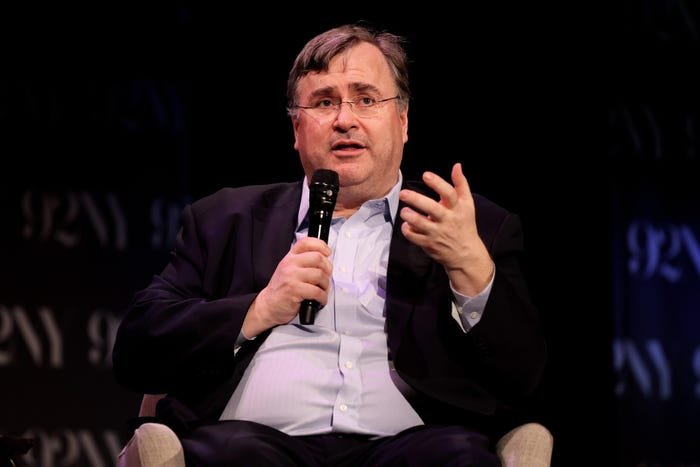
LinkedIn cofounder Reid Hoffman said he met with Jeffrey Epstein for fundraising purposes.
Hoffman previously said his last meeting with Epstein was in 2015.
Now he says there were six more meetings, from 2016 to 2018.
Reid Hoffman says he had more meetings with Jeffrey Epstein than he originally thought.
The billionaire LinkedIn cofounder previously maintained that the last time he met with Epstein was in 2015, and that he only knew Epstein via fundraising efforts for the MIT Media Lab.
This week, as the latest tranche of Epstein-related documents from the Justice Department continues to make headlines, Hoffman revised his accounting.
“I was mistaken, as according to calendar entries I have become aware there were additional fundraising meetings in 2016 and 2018,” Hoffman wrote in a post on X on Tuesday night.
Hoffman listed six additional meetings, including various Skype calls and in-person meetings in Cambridge and Palo Alto. The most recent meeting Hoffman listed was a Skype call in March 2018.
I only knew Jeffrey Epstein because of a fundraising relationship with MIT, which I very much regret. In 2019 I told Axios the last meeting I had with him was in 2015 but I was mistaken, as according to calendar entries I have become aware there were additional fundraising…
“I have done multiple calendar searches, and if I find any other meetings, I will continue to share them,” Hoffman wrote. “The victims of Epstein’s abhorrent and vile actions deserve all the information they are seeking, and I continue to call on President Trump to deliver that for them.”
Hoffman said that those meetings had also been scheduled as part of his fundraising relationship with the MIT Media Lab.
Hoffman has also said he visited Epstein’s private island, Little Saint James, in the US Virgin Islands. In December, he told a podcast host that he stayed on the island for one night on a trip connected to fundraising activities.
“Note to self: Google before going,” Hoffman said on the podcast.
Hoffman’s appearance in the Epstein files has helped reignite the billionaire’s feud with Elon Musk.
Uber Eats might end up playing a key role in its parent company’s robotaxi business, Uber CEO Dara Khosrowshahi said.
The ride-hailing app is working with multiple companies, such as Alphabet-backed Waymo, to make self-driving cars available through its app. Waymo’s robotaxis have already proven more efficient than most human Uber drivers in cities such as Atlanta and Austin, Uber has said.
One big question hanging over robotaxis, though, is what happens to the vehicles during times of the day when demand for rides is low, Khosrowshahi said on Uber’s fourth-quarter earnings call on Wednesday.
He pointed to one solution: Have them drive orders to customers through Uber’s food delivery and freight businesses.
Some delivery services, such as DoorDash, are also experimenting with robotaxis for food deliveries. Uber offers both ride-hailing and delivery, meaning robotaxis on its network could shift between the two as demand for each changes, Khosrowshahi said on Wednesday.
Every time Alex publishes a story, you’ll get an alert straight to your inbox!
Stay connected to Alex and get more of their work as it publishes.
“Having delivery and freight as part of our logistics ecosystem gives us an opportunity to actually use these vehicles at a structurally higher utilization than anyone else,” Khosrowshahi said.
While ride-hailing accounted for over half of Uber’s revenue in the fourth quarter, its delivery business grew by 29%, a faster clip than the 18% growth rate its ride-hailing segment posted in the same period.
How efficiently companies use the autonomous vehicles that they put on the streets is one of the challenges hanging over the technology.
Safety is another. Last month, a Waymo car injured a child near a school in Santa Monica, California, the latest in a series of accidents involving self-driving cars. Waymo said it is cooperating with a federal probe into the accident.
While it doesn’t operate self-driving cars directly, Uber is experimenting with ways to train the AI behind robotaxis using data it collects from human drivers, Khosrowshahi said. Uber has a partnership with Nvidia to collect that data, for instance. Last month, Uber said it would launch AV Labs, an arm focused on similar training efforts.
Khosrowshahi said the goal is to make self-driving cars more reliable and avoid situations such as last year’s Waymo blackout in San Francisco, when a power outage prompted the company to suspend services. “The real world can create unexpected circumstances,” he said.
Robotaxis also require infrastructure to store, charge, and repair. Some companies, such as startup Voltera, are building depots for those purposes in anticipation of a robotaxi boom in the coming years.
Have a tip? Contact this reporter at abitter@businessinsider.com or via encrypted messaging app Signal at 808-854-4501. Use a personal email address, a nonwork WiFi network, and a nonwork device;here’s our guide to sharing information securely.
The New York Giants were founded in 1925 by Tim Mara and have been part of the Mara family ever since.
Team ownership was passed to Tim’s sons, Jack and Wellington Mara, in 1959, and now the team is run by principal owner, CEO, and president John Mara, who took over in 2005 after his father, Wellington’s, death. John Mara had been with the organization since 1991.
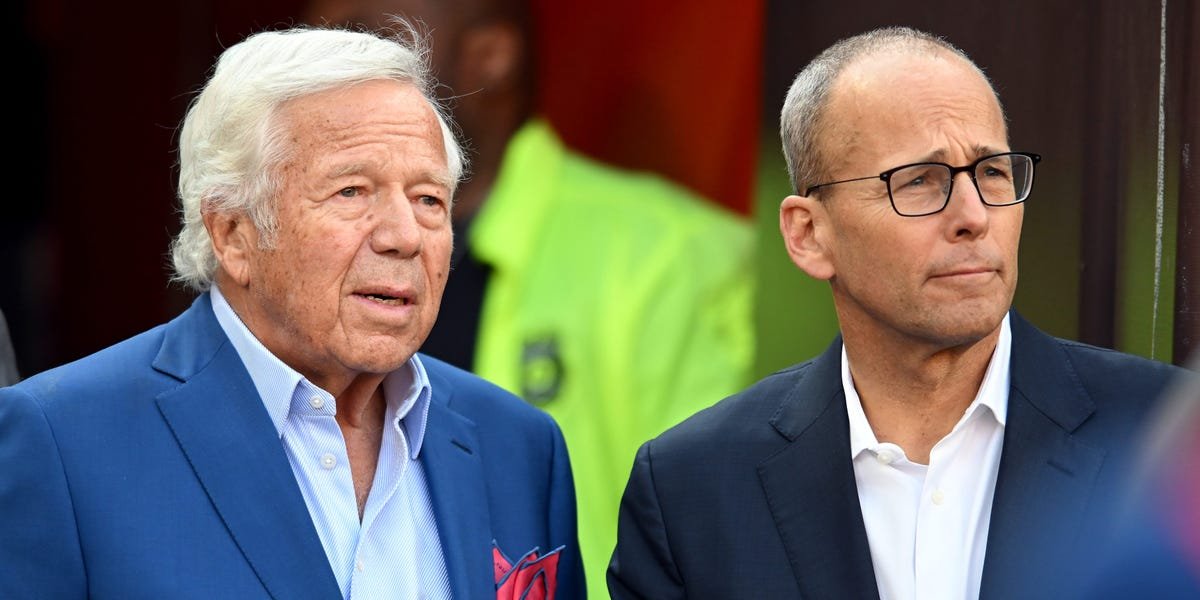
However, while John Mara is listed as the team’s principal owner, he’s actually shared ownership with Steve Tisch since 2005.
Steve Tisch’s father, Preston Robert Tisch, purchased a 50% stake in the Giants in 1991, and after his death, Steve became chairman and executive vice president.
Together, Mara and Tisch helped plan and build MetLife Stadium, and the team has won two Super Bowls (2008 and 2012) under their leadership. However, the team has struggled in recent years, winning just four games last season.
Still, the Giants are the fourth most valuable team in sports, worth $10.1 billion. Tisch has an estimated net worth of $1.6 billion, Forbes reported, while Mara reportedly has an estimated net worth of $500 million.
Tisch was not named in the 2025 report card; Mara was given a C+ ownership ranking by the NFLPA.
This story is available exclusively to Business Insider
subscribers. Become an Insider
and start reading now. Have an account? .
I spent 11 hours in a shared cabin on an overnight train from Vienna to Venice, Italy.
For less than $100, I got a bunk in a room of six beds with three other people.
I’ve traveled overnight on Amtrak, but in private rooms. I didn’t adjust well to the shared space.
My ride from Vienna to Venice, Italy, in October 2022 was bumpy, cramped, and awkward.
During a two-week trip through four European countries, I spent 11 hours bunking with three strangers in an overnight sleeper train.
While it was my first time traveling in a sleeper car in Europe, I’d spent 60 hours on overnight Amtrak trains in the 20-square-foot roomette and 45-square-foot bedroom accommodations, where I had private rooms.
I thought an overnight train would be the best way to travel through Europe so that I could explore more during the day. But the rough ride made sleeping hard, and I didn’t feel rested when I got to Venice.
I booked my ride with the Austrian Federal Railway’s OBB Nightjet.
The OBB Nightjet train as it arrives in Venice in 2022. Joey Hadden/Business Insider
OBB Nightjet — a rail line that operates overnight routes between Austria, Italy, France, and the Netherlands — can go as fast as 143 miles per hour.
Nightjet trains have regular assigned seats, couchette cars (seats that fold out into couches in shared cabins), and sleeper cars with bunks of four or six, which is what I booked. Some routes have private cabins, but mine didn’t.
This overnight leg of my European train trip, which came with breakfast, cost $44 with a Eurail pass. Without the pass, the ticket would have been about $84.
The reporter’s Eurail pass on a European train. Joey Hadden/Business Insider
To travel by train, I bought a Eurail pass for $477, which gives access to most European trains for a set number of days. Some trains require only a Eurail pass, while others, including overnight trains, incur an additional discounted fare.
My journey began in Austria’s Wien Meidling train station.
Inside the Wien Meidling train station in Austria. Joey Hadden/Business Insider
I arrived about an hour and a half before my 9:35 p.m. train so I’d have plenty of time to find the platform.
The departure screens said my train was going to Zurich. At the information desk, I learned that, unlike Amtrak, the train’s cars detach at various stations to go to different locations.
Train car number two on the Nightjet. Joey Hadden/Business Insider
I’d need to board my assigned train car; each has a number.
I paid $10 to wait for my train in OBB’s lounge.
Inside the OBB Nightjet lounge at Wien Meidling train station. Joey Hadden/Business Insider
The lounge is free for OBB first-class passengers traveling during the day and costs about $10 for all other OBB passengers. Since I didn’t see any empty seats in the rest of the station, I paid for it.
I was surprised to find I was the only one inside the lounge since the rest of the station was full of people. There were plenty of tables and chairs available.
The lounge served complimentary refreshments and snacks, from coffee to nuts and seeds.
Refreshments in the OBB Nightjet lounge at Wien Meidling train station. Joey Hadden/Business Insider
It was a smaller selection than I’ve seen at Amtrak’s Metropolitan Lounge, which I’ve visited in New York, but I wasn’t hungry, so I just got a water bottle.
I went to the platform about 20 minutes before my train’s 9:35 p.m. departure.
The train platform the reporter used at Wien Meidling train station. Joey Hadden/Business Insider
When the train arrived, I didn’t have time to check the car number before boarding. I just went to the closest car and asked an attendant for help.
Inside the sleeper cars, I saw narrow, dimly lit corridors full of small cabins with bunk beds.
A corridor inside an OBB Nightjet sleeper car. Joey Hadden/Business Insider
An attendant led the way to my shared cabin.
My room had six bunks and a large window with a curtain. During my leg of the journey, one traveler was already there when I boarded, and two others arrived within an hour.
The reporter gets settled inside her shared cabin. Joey Hadden/Business Insider
Two got off around 5 a.m., and the other stayed past my stop.
At 74 square feet, it felt like a tight space — especially with everyone’s luggage around. There was space for bags above the beds, but not enough for everyone.
I couldn’t imagine six people squeezing in there.
While my cabin was assigned, the beds were first-come, first-served.
A view of the top bunks from the reporter’s bottom bunk. Joey Hadden/Business Insider
Since I’ve experienced more bumps on higher bunks on Amtrak trains, I chose a bottom bunk.
The train provided bed sheets and a pillow.
Sheets for the beds inside the cabin. Joey Hadden/Business Insider
Although they weren’t as soft and cozy as the sheets on Amtrak trains, they were better than nothing.
Temperature and shared lighting controls were above the curtained door to enter the room.
The door to the cabin with dials to control temperature and lighting above. Joey Hadden/Business Insider
My fellow passengers and I agreed to turn off the lights once everyone was settled into bed.
There was an outlet and a tiny nightstand on the side of each bunk, as well as night lights above the bed. Without curtains around each bunk, I thought I had no privacy.
Lights and outlets in the Nightjet cabin. Joey Hadden/Business Insider
I longed for a way to close off my bunk for more personal space.
Other passengers in the room said hello to one another upon arrival, but otherwise, the room was quiet.
Inside the shared cabin. Joey Hadden/Business Insider
Some of us watched our devices, while others went right to sleep.
Before bed, I used one of the two bathrooms for everyone in my sleeper car. I thought it was a typical train bathroom with a toilet and a sink.
A bathroom inside the sleeper car. Joey Hadden/Business Insider
According to Nightjet’s website, only private sleeper cabins come with a shower.
When I was ready for bed, I watched TV before going to sleep. The bed was stiff and uncomfortable, in my opinion.
The reporter’s view from her bed in the evening. Joey Hadden/Business Insider
I woke up several times during the night to other travelers entering and exiting the room, or due to the bumpiness of the train.
An attendant woke me up with breakfast at 8 a.m., about 20 minutes before my stop in Venice. I got two rolls of bread with butter, jam, and coffee to eat in my bunk.
The reporter’s view with her breakfast in the morning. Joey Hadden/Business Insider
There was no café car or common area on board for passengers.
When I got off the train in Venice, I was exhausted from the lack of sleep. I thought it made my first day in the city less enjoyable.
The OBB Nightjet arrives in Venice. Joey Hadden/Business Insider
“Offering our passengers a high level of travel comfort is an important concern for us,” a representative for OBB Nightjet told Business Insider. “We are constantly working on improvements to our product and also take into account the requirements of our customers.”
While sometimes it’s about the journey, not the destination, in this case, I’d rather arrive feeling refreshed so I can enjoy where I’m going. So, a year later, I booked a Nightjet private cabin to get from Venice to Vienna. That ride was far more comfortable, and I slept easily with no strangers in my cabin.
Ex-Microsoft exec Craig Mundie has heard this question again and again — parents asking him a version of the same worry: Their kids are heading toward college, artificial intelligence is advancing fast, and jobs feel uncertain. What, exactly, should their kids be studying?
That question — what education will matter most in five years — reflects a deeper uncertainty about the future.
Mundie, who spent 22 years at Microsoft helping steer the company’s vision toward AI and retired as the company’s chief research and strategy officer in 2014, says that parents are simply asking the wrong question.
It’s not only the students who have to change to fit the new AI era — it’s the education system itself, said Mundie, who now advises other executives on AI and public policy.
Rather than chasing down the right job, Mundie urges families to prepare kids for a world where learning itself becomes continuous, personalized, and done in partnership with intelligent machines.
AI is altering the human experience
During an interview with Business Insider’s Reem Makhoul in June, Mundie said artificial intelligence and robotics are poised to reshape work more deeply than past technologies. See the edited cut of his interview below:
That shift, Mundie said, forces a bigger question than which job skills will survive. It challenges how societies define human value. This is something Mundie’s been pondering for over a decade.
In his 2015 book “Genesis,” Mundie, with co-authors Eric Schmidt and Henry Kissinger, examined how AI could alter the human experience. “What we say is we have to think differently about how we value ourselves and what we do.”
For much of history, he said, dignity has been tied to work because people had to work to survive. AI could loosen that link by automating more tasks across both physical and intellectual labor.
Meanwhile, humans will need to learn how to work alongside intelligent machines, and the traditional higher-education system doesn’t offer a clear path toward that, right now.
He described today’s education system as sharply divided between STEM and the humanities. The liberal arts emphasize reasoning, but at the expense of special technical skills you learn in STEM fields, Mundie said.
Students will need both skills moving forward. “If I could create a new curriculum in college, it would be a liberal education in technology,” and STEM, he said.
The classroom model itself is reaching its limits
Mundie says the future of education will be driven by individuals’ motivation to learn and not standardized curricula.
Hispanolistic/Getty Images
Mundie went further, questioning whether the classroom model that dominates education today still makes sense.
He traced that structure back to the printing press, which created a surge in written information and a need for mass literacy. Schools, he said, became an efficient “machine for teaching” because societies lacked enough individual tutors.
AI changes that constraint.
We can have scalable, polymathic teachers, Mundie said. “We can have as many teachers as we want now because the AI will be the teacher.”
He said this opens the door to a more personalized, Socratic model of learning, where students can interact continuously with an intelligent system that adapts to their curiosity, pace, and interests. Progress would be limited less by standardized curricula and more by a student’s motivation and capacity.
Schools and universities have been slow to embrace this shift. Early reactions often involved banning AI tools outright. “They’ve now given up on that,” Mundie said.
That resistance, he added, is typical of incumbent systems. “The natural tendency of the incumbent is to preserve the incumbent system,” or make only incremental changes, he added. But “when you get something as powerful as these AIs, most incumbent systems are not going to be preserved.”
He also pointed to early experiments on the right track, like versions of Khan Academy, an online non-profit educational platform founded in 2008 and headquartered in California. It uses an AI tutor, named Khanmigo, designed to guide students rather than simply give answers. In those systems, he said, the AI nudges students toward better questions and deeper understanding.
“So that’s the difference between sort of a broad chat about anything interface and an AI application that was specifically oriented around teaching,” he said, adding, “That’s just one tiny example of how people will build more and more apps on these common artificial intelligence platforms.”
“We will move beyond the specific generic interface to a world of millions of applications that are really customized in some clever way to guide people to solutions in the areas they care about,” he said. These agents may, in fact, do much of the work autonomously by interacting with others, he added.
Mundie said parents and older generations may have difficulty imagining this model, while children are likely to adapt quickly. The harder question, in his view, is whether educational institutions are willing to change.
This story is available exclusively to Business Insider
subscribers. Become an Insider
and start reading now. Have an account? .
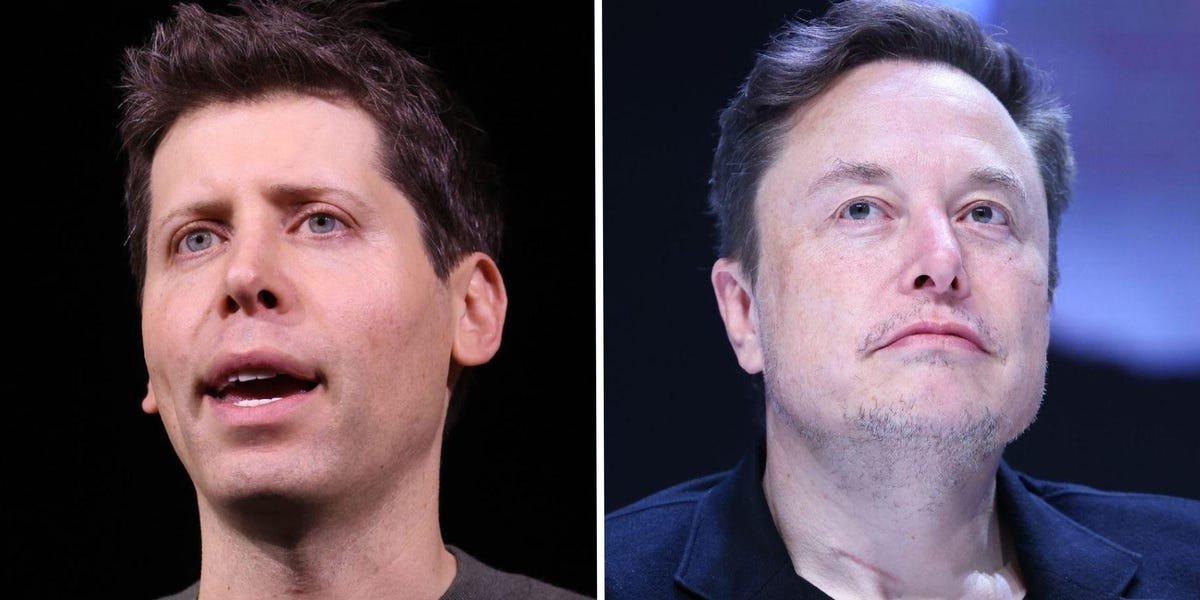
Sam Altman said he’s “really excited” to get Elon Musk under oath.
Their case will go to trial in April, a California judge said in January.
Musk has accused OpenAI and Altman of misleading him into thinking it would remain a nonprofit.
Sam Altman is pumped to take on Elon Musk in court.
“Really excited to get Elon under oath in a few months, Christmas in April!” the OpenAI CEO said in a Tuesday evening X post.
He also reposted his chief security officer Jason Kwon’s X post, with the caption “concerning.”
The post contained screenshots of a court filing from OpenAI’s attorneys, which said that Musk preferred using messaging apps like Signal or XChat with message retention settings of a week or less.
Altman and Musk took their yearslong public feud to the next level in 2024. Musk, who is Tesla and SpaceX’s CEO, launched a lawsuit against OpenAI and Altman in February 2024, accusing Altman of jeopardizing its nonprofit mission.
Musk said that he contributed $38 million to OpenAI, thinking it would remain a nonprofit. He was one of the company’s founders, along with Altman, PayPal cofounder Peter Thiel, and others.
Despite OpenAI’s attorneys’ attempts to have the case thrown out, a California judge said in a January hearing that there was enough evidence to go to trial, which is set for April.
The billionaire duo have been trading barbs on social media. Musk attacked OpenAI’s ChatGPT on January 20, writing “Don’t let your loved ones use ChatGPT.” He was responding to an X post alleging that the chatbot has been linked to multiple deaths since 2022.
Altman responded to Musk’s post, slamming Tesla’s Autopilot system as unsafe, and questioning xAI’s Grok chatbot. Grok has faced criticism from governments in several countries after reports of Grok users uploading pictures of women and minors and asking the chatbot to undress them.
Representatives for Musk and Altman did not respond to requests for comment from Business Insider.
Jensen Huang says Nvidia would love to invest in a future OpenAI IPO.
Huang said in an interview on CNBC’s “Mad Money” on Tuesday that there was “no drama” between Nvidia and OpenAI CEO Sam Altman, pushing back against recent chatter of tension in the relationship between the two companies.
“The first deal is on,” the Nvidia CEO said, referring to the company’s September deal with OpenAI, under which the company said it planned to invest up to $100 billion in the AI startup.
“And then there’s, of course, an IPO in the future,” he added. “We love to be participating in that as well,” he added.
Huang also described OpenAI as a “once in a generation company” and said Nvidia is “delighted to invest in it.”
Every time Lee Chong Ming publishes a story, you’ll get an alert straight to your inbox!
Stay connected to Lee Chong Ming and get more of their work as it publishes.
His comments come amid reports suggesting internal unease around the deal.
The Wall Street Journal reported on Saturday that the investment had sparked internal concerns at Nvidia, with some executives questioning the deal, according to people familiar with the matter.
Separately, Reuters reported on Tuesday that OpenAI had been unhappy with certain newer Nvidia chips and had looked at alternatives since last year, citing people familiar with the matter.
Huang told reporters in Taipei on Saturday that speculation of any dissatisfaction with OpenAI was “nonsense.”
“We will invest a great deal of money, probably the largest investment we’ve ever made,” he added.
Altman has also pushed back on rumors of tension.
“We love working with NVIDIA and they make the best AI chips in the world,” wrote Altman in a post on X on Tuesday.
“We hope to be a gigantic customer for a very long time. I don’t get where all this insanity is coming from,” he added.
OpenAI is one of the world’s most valuable private AI companies and a major customer for Nvidia’s chips, which power the training and deployment of large language models.
The startup has not announced plans for an IPO, but its fundraising and computing needs have fueled speculation about how it will finance future growth.
“Big Short” investor Michael Burry said in a Substack exchange in January that he was surprised that ChatGPT “kicked off a multi-trillion-dollar infrastructure race.”
“It’s like someone built a prototype robot and every business in the world started investing for a robot future,” he wrote.