I remember arriving in Leavenworth, a town of about 3,000 people, and immediately feeling like we had stepped into an entirely new country, despite being just a short three-hour day trip from Seattle.
The drive itself revealed just how varied Washington’s landscape can be, moving from familiar surroundings into farmland and alpine scenery.
Despite visiting in early April, right before wildflower season, the setting still felt storybook-like, with open fields nearby and snow-capped peaks in the distance.
Downtown Leavenworth leaned fully into its Bavarian theme, from German restaurants and beer gardens to a quirky nutcracker museum. Even the exteriors of everyday places, such as grocery stores and coffee shops, matched the town’s aesthetic, completing the immersion.
We stayed at Abendblume Inn, a small bed-and-breakfast with a distinctly European feel that overlooks the Cascade Mountains. It famously serves up breakfast aebleskiver, Danish pancake puffs often dusted with powdered sugar or served with jam, to make the Euro experience feel complete.
Perhaps my favorite find was the local reindeer farm, where we could pet and feed the animals. Although Leavenworth is known for its Christmas festivities, visiting out of season revealed a quieter version of the town that felt just as intentional.
Nvidia moved quickly to calm investor nerves during its earnings call on Wednesday.
The chipmaker delivered another blowout earnings report that underscored how little momentum the AI boom has lost. As the world’s most valuable company by market capitalization, Nvidia topped Wall Street expectations across the board in its fiscal fourth quarter and issued a forecast that sailed past analyst estimates.
The upbeat results arrive at a delicate moment for AI-linked stocks, which have recently shown signs of fatigue.
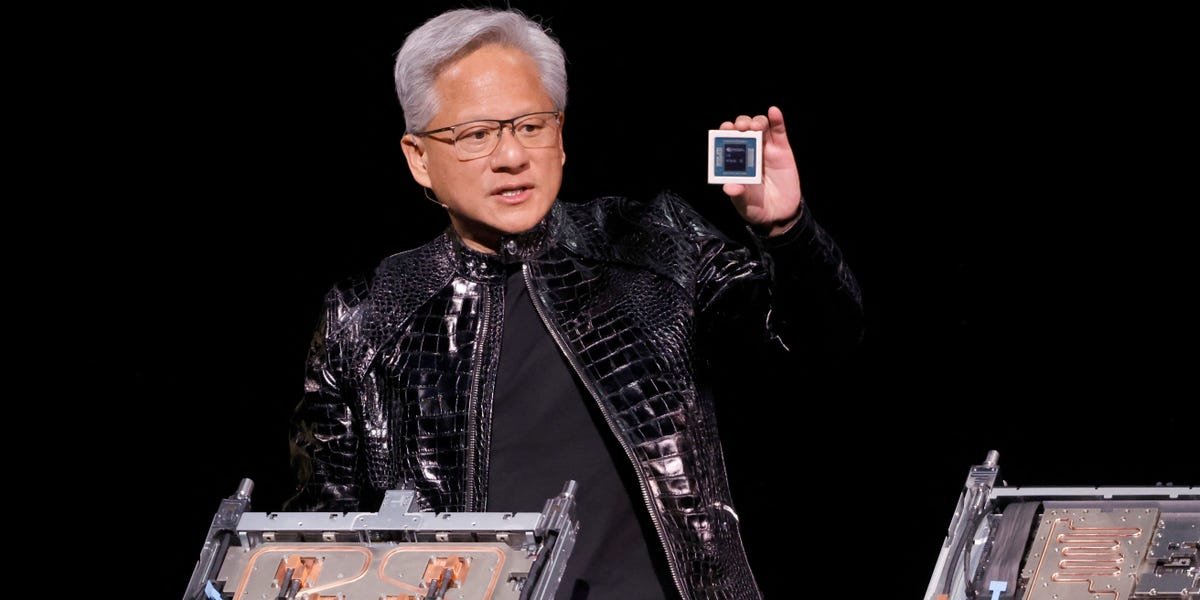
From incorporating Groq into Nvidia systems to an update on the new Vera Rubin chips, here are the biggest takeaways from Nvidia’s fourth-quarter earnings call.
1. Nvidia is becoming the backbone of Big AI
Over the course of the call, CEO Jensen Huang repeatedly positioned Nvidia at the center of the AI industry’s biggest players.
OpenAI’s latest Codex model is trained and runs on Nvidia’s Blackwell systems, and the companies are close to reaching a multibillion-dollar partnership, he said.
Meta is deploying Nvidia GPUs in its push toward superintelligence, and Nvidia also announced an up to $10 billion investment in Anthropic.
Huang said his goal is to ensure that every form of AI — from large language models to robotics — is built on its platform.
“We want to take the great opportunity that we have as we’re in the beginning of this new computing era, this new computing platform shift, to put everybody on Nvidia,” he said.
2. Huang teases Groq integration as AI shifts to inference
When asked about Nvidia’s future road map and whether it plans to build customized chips for specific workloads, Huang said the company prefers to keep as much as possible within a single design.
That said, he teased a potentially significant move involving Groq, saying more details would come at Nvidia’s GTC conference in March.
Late last year, Nvidia struck a non-exclusive licensing agreement with Groq for its low-latency AI inference technology — a deal that also brought Groq’s founder and other top engineers on board.
“What we’ll do is we’ll extend our architecture with Groq as an accelerator in very much the ways that we extended Nvidia’s architecture with Mellanox,” Huang said, referring to the networking company Nvidia acquired in 2020.
As AI workloads shift from training large models to running them, the move suggests Nvidia isn’t going to abandon its core platform but rather fold specialized inference capabilities in.
3. Samples of the Vera Rubin chips have been shipped
Nvidia has begun shipping early samples of its next-generation Vera Rubin chips to customers.
Chief Financial Officer Colette Kress said during the earnings call that the company delivered “our first Vera Rubin samples” earlier this week and expects broader shipments of the new chips to begin in the second half of 2026.
“We expect every cloud model builder to deploy Vera Rubin,” Kress said.
Huang previously said at the Consumer Electronics Show in January that compared to the Blackwell model, Rubin has more than triple the speed, could run inference five times faster, and can deliver significantly more inference compute per watt of energy.
4. Addressing future risks
Nvidia appears concerned about whether there will be enough resources to sustain the demand for data centers.
In its latest 10-K report filed with the Securities and Exchange Commission, Nvidia listed the availability of data centers, energy, and capital to support the data center buildout as a risk factor, writing that “any shortage of these and other necessary resources could impact our future revenue and financial performance.”
“Expanding energy capacity to meet demand is a complex, multi-year process involving significant regulatory, technical, and construction challenges,” wrote Nvidia.
“In addition, access to capital can be particularly constrained for less-capitalized companies, which may face difficulties securing financing for large-scale infrastructure projects,” Nvidia added.
5. An OpenAI deal may finally be ‘close’
Huang addressed the company’s growing slate of strategic investments, including a deal with OpenAI, as questions mount over whether Nvidia’s strategy creates circular relationships with its own customers.
Speaking about Nvidia’s investments in AI companies such as Anthropic and OpenAI, Huang said the strategy is centered on strengthening the broader AI ecosystem and ensuring the next generation of software and hardware is built on Nvidia’s platform, from large language models to robotics.
“We want to take the great opportunity that we have, as we’re in the beginning of this new computing era,” Huang said.
Huang confirmed that Nvidia is “close” to finalizing a deal with OpenAI. The partnership was first outlined in 2025 as part of a massive AI infrastructure initiative that could reach $100 billion.
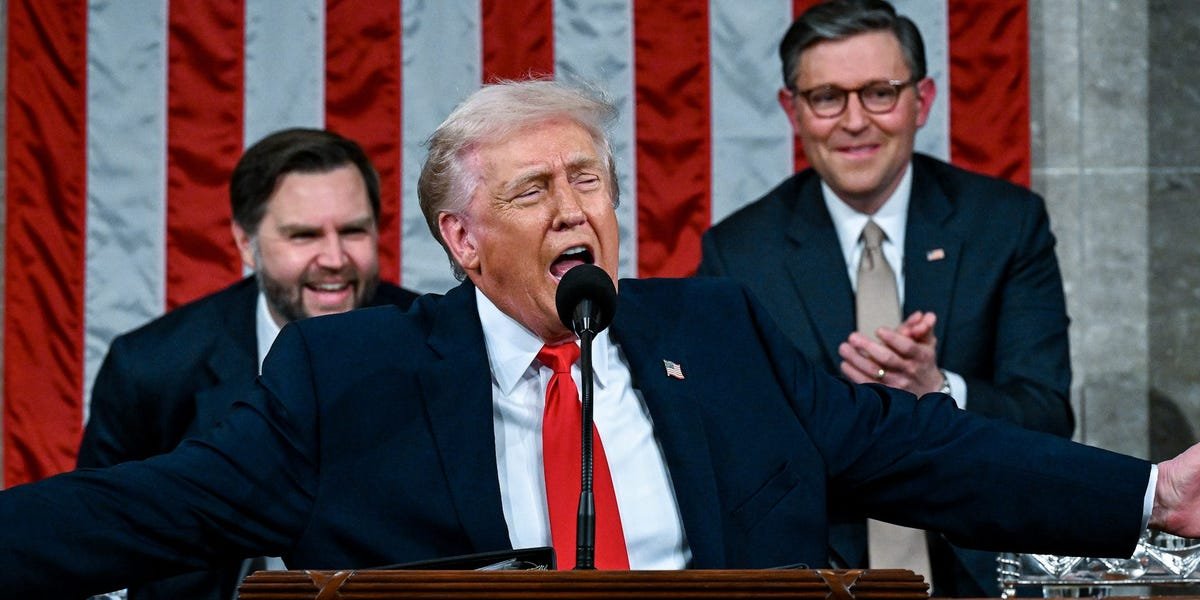
In a record-long State of the Union, President Donald Trump highlighted tax cuts, immigration policy, and tariffs, while sharply criticizing Democrats.
The battle for the future of Warner Bros. Discovery has become Wall Street’s defining deal of the year.
As Netflix and Paramount fight for control of the media giant, eight of 2025’s top 20 investment bankers are advising one side or the other — an unusually high concentration of firepower around a single, still-unsettled transaction. After a sluggish stretch for M&A that’s recently turned around, the impact this one megalithic deal could have on the coffers of the banks involved shouldn’t be taken lightly.
For the seventh consecutive year, Business Insider has partnered with MergerLinks, a UK-based deal-tracking organization, to rank the top bankers in North America for the prior year, evaluating them by overall transaction value.
This year’s list is filled with new names and faces. Nine are on the list for the first time. Two are from Wells Fargo, a feat for the retail-first lender that has only recently made competitive inroads in investment banking, and is primed for growth after the government last year lifted a strict asset cap tied to Wells’ fake-accounts scandals.
The firm clinched a major 2025 win when it became Netflix’s primary advisor on its proposed takeover of Warner Bros. Discovery. The competing offer, from Paramount, is represented by another dealmaker on this list: RedBird’s Gerry Cardinale.
Sam Britton and Timothy Ingrassia, Goldman Sachs’ chairman of global TMT banking and co-chair of mergers and acquisitions, respectively, helped the Wall Street giant fend off competition to retain its No. 1 position on the year’s M&A league table, according to data from LSEG, another industry tracker. Ingrassia’s enviable list of mandates included Kenvue’s nearly $50 billion sale to Kimberly-Clark. And Anu Aiyengar, last year’s top rainmaker and the famed head of global advisory and M&A at JPMorgan Chase, returns to the list after helping steer the firm to more than $1.2 trillion in overall deal value, per LSEG.
Overall, these dealmakers accounted for a significant share of last year’s $4.6 trillion in worldwide M&A, a staggering 50% surge from the year prior, LSEG found. Large, strategic tie-ups were at the center of the rebound.
To find out which bankers helped their firms benefit from last year’s boom, MergerLinks tracks publicly announced deals and calculates deal values on a net basis, including both equity and debt. To make the individual league table, a banker must have been the lead advisor to one of the transaction parties. Transaction values are converted from British pounds to US dollars at the average 2025 exchange rate. Some deal prices announced in dollars throughout the year may not match up.
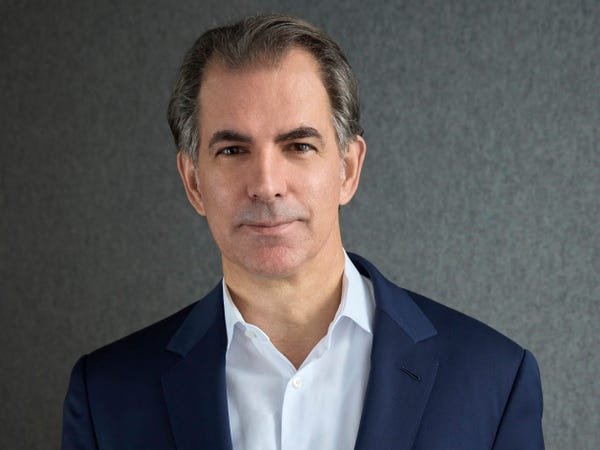
Wells Fargo’s Jeff Hogan. Courtesy of Wells Fargo.
Title: Head of global mergers and acquisitions
Number of deals: 5
Total deal value: $153.4 billion
Hogan joined Wells Fargo in May 2023 after a 27-year career at Morgan Stanley, where he served as the star technology banker and co-head of global technology M&A. Since his arrival, he has been a primary architect of the bank’s meteoric rise in the advisory rankings, helping Wells Fargo jump from 17th place in 2024 to 9th place in 2025, according to LSEG’s league table for global M&A. This year marks Hogan’s inaugural appearance as a rainmaker.
His 2025 deals included:
Advised Netflix on its more than $80 billion contested blockbuster merger with Warner Bros. Discovery.
Advised Cox Enterprises on its roughly $35 billion strategic consolidation and merger with Charter Communications.
Advised FuboTV on its business combination with Disney’s Hulu + Live TV.
No. 2: Gary Posternack, Barclays
Barclays
Title: Chairman of global M&A
Number of deals: 7
Total deal value: $149.2 billion
After a decade as global head of M&A at Barclays, Posternack became the practice’s chairman in 2024. Spending more time advising top clients has paid off, as Posternack is on the Rainmakers list for the second year running, adding nearly $200 billion in deal value in a career and ranking No. 2 overall this year. Posternack’s decorated career spans nearly four decades. After getting his start at Dillon, Read & Co. in the 1980s, he joined Lehman Brothers in 1995; Barclays acquired Lehman in 2008 during the financial crisis.
His 2025 deals included:
Advised the special committee of Paramount’s board of directors on its bid for Warner Bros. Discovery, in competition against rival bidder Netflix.
Advised DigitalBridge, an asset manager focused on digital infrastructure like data centers, cell towers, fiber networks, on its sale to SoftBank for $4 billion.
Advised Waters, a manufacturer of chemistry software and instruments, on its merger with medical tech company BD’s biosciences and diagnostic solutions business in a nearly $18 billion deal.
Advised Global Payments on its acquisition of Worldpay from GTCR and FIS for $24 billion.
No. 3: Steven Baronoff, Bank of America
Bank of America’s Steven Baronoff. Courtesy of Bank of America
Title: Chairman of global M&A
Number of deals: 9
Total deal value: $124 billion
Baronoff has been chairman of global M&A at Merrill Lynch since 2000, overseeing the business. He originally joined Merrill Lynch in 1986 and has held various leadership roles, including head of retail and consumer M&A. His 2025 performance was marked by high-volume advisory roles in the transportation, consumer goods, and infrastructure sectors. This is Baronoff’s second appearance on the Rainmakers list.
His 2025 deals included:
Advised Norfolk Southern in its roughly $85 billion acquisition by Union Pacific, a massive consolidation in the North American railroad industry.
Advised JDE Peet’s in its approximately $18 billion acquisition by Keurig Dr Pepper.
Advised Sempra Infrastructure Partners on the $10 billion sale of a 45% non-controlling stake to KKR.
No. 4: Sam Britton, Goldman Sachs
Goldman Sachs’ Sam Britton. Courtesy of Goldman Sachs
Title: Co-head of technology, media, and telecommunications investment banking
Number of deals: 11
Total deal value: 122.8 billion
Britton serves as the co-head of TMT investment banking at Goldman Sachs, where he has led the firm’s coverage of the red-hot tech sector for over two decades. Based in San Francisco, his 2025 activity encompassed transactions in the gaming, enterprise software, and artificial intelligence sectors. Notably, Britton acted as a key advisor during OpenAI’s transition to a public benefit corporation. This marks Britton’s fourth appearance on the Rainmakers list.
His 2025 deals included:
Advised Electronic Arts as financial advisor in its $55 billion all-cash take-private transaction by a consortium led by the Public Investment Fund (PIF) and Silver Lake.
Advised OpenAI as financial advisor on its recapitalization and the subsequent $40 billion sale of a stake to an investor group led by SoftBank Group Corp.
Advised Permira and Warburg Pincus as financial advisor in the $8 billion take-private acquisition they led of Clearwater Analytics.
Advised Niantic on the approximately $4 billion sale of its game business to Scopely.
No. 5: Daniel Mendelow, Evercore
Evercore
Title: Co-head of US investment banking
Number of deals: 3
Total deal value: $116.5 billion
Mendelow joined Evercore in 2001 and has risen through the ranks over the past 25 years, advising on a slew of communications, media, and technology deals. Along with Naveen Nataraj (No. 15), he was promoted to co-lead US investment banking in 2020 and sits on the management committee. This is his first year on the Rainmakers list.
His 2025 deals included:
Advised Warner Bros. Discovery on its contested sale to Netflix.
Advised Cox Communications, the cable TV giant, on its $35 billion sale to telecom conglomerate Charter.
Advised Astound Broadband on its $400 million investment from PE firm Stonepeak.
No. 6: Chris Ventresca, JPMorgan
Chris Ventresca Courtesy of JPMorgan Chase
Title: Global chairman of investment banking and M&A
Number of deals: 9
Total deal value: $113.5 billion
Ventresca has spent more than three-and-a-half decades at JPMorgan and has served as global chair of JPMorgan’s investment banking business since 2020, according to LinkedIn. A third-time rainmaker, Ventresca has advised on deals across a range of industries, from industrials to consumer retail.
His 2025 deals included:
Advised on Warner Bros. Discovery’s contested sale to Netflix for more than $80 billion.
Advised on the $12 billion merger of paint producer Akzo Nobel and coatings company Axalta.
Advised Amphenol, a global electronics manufacturer, on its nearly $11 billion acquisition of network infrastructure provider CommScope’s connectivity and cable solutions business.
No. 7: Blair Effron, Centerview Partners
Centerview’s Blair Effron. Emilio Madrid
Title: Cofounder and partner
Number of deals: 7
Total deal value: $113.3 billion
Effron co-founded Centerview Partners in 2006, establishing the firm as a prominent independent advisor to the world’s elite corporations, offering big-bank power within the boutique banking landscape.
Over a career spanning four decades, he has advised on complex strategic mergers and high-profile activism defenses across the media, consumer, and industrial sectors. His 2025 activity included leading roles in major media-sector consolidations and significant industrial-technology acquisitions. This marks Effron’s fourth appearance on the Rainmakers list.
His 2025 deals included:
Advised Paramount as the lead financial advisor in its more than $80 billion transaction involving Warner Bros. Discovery.
Advised Emerson in its $17 billion acquisition of the remaining stake in the industrial software company Aspen Technology.
Advised Baker Hughes as joint lead financial advisor in its $14 billion acquisition of energy technology provider Chart Industries.
No. 8: Anu Aiyengar, JPMorgan
JPMorgan’s Anu Aiyengar JPMorgan
Title: Global head of advisory and M&A
Number of deals: 13
Total deal value: $105.2 billion
Aiyengar has been at JPMorgan for decades and became the head of advisory and M&A in 2024. She’s advised on more than a trillion dollars’ worth of deals — from ones involving investment bank Morgan Stanley to ones involving luxury giant LVMH — and topped last year’s Rainmakers list.
In addition to being involved in initiatives to mentor women at JPMorgan, Aiyengar is considered one of the financial services industry’s most influential female leaders.
Her 2025 deals included:
Advised Kimberly-Clark in its $49 billion acquisition of Kenvue, a consumer health company.
Advised a group of investors, including Apollo and Brookfield Asset Management, on their $28 billion acquisition of Air Lease, an American aircraft leasing company.
Advised on the $9 billion sale of Skechers to private equity firm 3G Capital.
No. 9: David DeNunzio, Wells Fargo
Wells Fargo’s David DeNunzio. Courtesy of Wells Fargo
Title: Chairman of Global M&A, Corporate & Investment Banking
Number of deals: 2
Total deal value: $97.1 billion
David DeNunzio has been at Wells Fargo since 2016. Before coming to Wells Fargo, he spent decades at Credit Suisse and years at Kidder, Peabody in the 1980s. This is DeNunzio’s first year on the Rainmakers list.
His 2025 deals included:
Advised Union Pacific on its about $85 billion acquisition of Norfolk Southern, a landmark consolidation of the North American railroad industry
Advised Chart Industries, an energy technology provider, on its $14 billion sale to Baker Hughes.
No. 10: Navid Mahmoodzadegan, Moelis & Co.
Moelis
Title: CEO and cofounder
Number of deals: 10
Total deal value: $94.7 billion
Mahmoodzadegan helped founder Ken Moelis launch Moelis & Company in 2007 and has been central to building the boutique into a heavyweight advisor on marquee deals. A former attorney, he moved into investment banking at Donaldson, Lufkin & Jenrette in 1995 and joined UBS in 2001, rising to global head of media investment banking. The longtime co-president took the helm as CEO in October 2025, as Moelis shifted to executive chairman under a planned leadership transition. This is his first time on the Rainmakers list.
His 2025 deals included:
Advised Netflix on its contested acquisition of Warner Bros. Discovery for more than $80 billion.
Advised the investor group led by billionaire investorWilliam Chisolm on its $6 billion acquisition of the Boston Celtics NBA franchise.
Advised PrizePicks, a sports gaming platform, on the sale of a majority stake to lottery operator Allwyn in a $3 billion deal.
No. 11: Timothy Ingrassia, Goldman Sachs
Goldman Sachs’ Timothy Ingrassia. Courtesy of Goldman Sachs
Title: Co-chairman, global mergers and acquisitions
Number of deals: 12
Total transaction value: $87.5 billion
Ingrassia is a 40-year veteran of Goldman Sachs, currently serving as the co-chairman of global M&A. He previously held leadership roles as the head of Americas M&A and the consumer retail group. His 2025 activity was defined by high-value transactions in the consumer health and retail sectors, as well as notable advisory roles in professional sports and media. This is Ingrassia’s sixth appearance on the Rainmakers list.
His 2025 deals included:
Advised Kenvue (formerly Johnson & Johnson Consumer Health) as lead financial advisor in its about $49 billion acquisition by Kimberly-Clark.
Advised Sycamore Partners in its $24 billion acquisition of Walgreens Boots Alliance.
Advised the buyer group led by billionaire investor William Chisholm in its nearly $6 billion purchase of the Boston Celtics.
Advised WK Kellogg in its $3 billion sale to Ferrero International.
No. 12: Nelson Walsh, Morgan Stanley
Morgan Stanley’s Nelson Walsh Morgan Stanley
Title: Vice chairman, investment banking
Number of deals: 1
Total deal value: More than $80 billion
Nelson Walsh has spent nearly four decades at Morgan Stanley, where he’s now the vice chairman of investment banking. This is Walsh’s first time on the Rainmakers list.
His 2025 deals included:
Advised Union Pacific on its roughly $85 billion acquisition of Norfolk Southern, a landmark consolidation of the North American railroad industry.
No. 13: Gerald J. Cardinale, RedBird Advisors
RedBird’s Gerald Cardinale. Claudio Villa/AC Milan via Getty Images
Title: Founder and managing partner
Number of deals: 3
Total value of deals: $82.5 billion
Cardinale founded RedBird in 2014 after 20 years at Goldman Sachs, where he was a partner in the merchant banking division. The sports, media, and financial services investor has since made several high-profile investments, including David Ellison’s Skydance Media, and completed transactions, including the acquisition of Italian soccer club AC Milan. Under Cardinale’s leadership, RedBird has grown to manage about $14 billion in assets for major global institutions and family offices. This year marks Cardinale’s first time on the Rainmakers list.
His 2025 deals included:
Advised Skydance and Paramount on the more than $80 billion proposed merger with Warner Bros. Discovery.
Advised RedBird on its sale of a strategic stake in the professional cricket team Rajasthan Royals to investment firm Siguler Guff.
Advised B5 Studios on its launch and initial R&D partnership with Meta. Terms were undisclosed.
No. 14: Michael Klein, M. Klein & Co.
Brendan Smialowski/Getty Images
Title: CEO
Number of deals: 1
Total deal value: $81.8 billion
Klein now runs his own boutique advisory firm, but he was once one of the most prominent big bank M&A chiefs. He joined Salomon Brothers in the 1980s, which became part of Citigroup in the late 1990s. At Citi, he held top roles in the investment bank and was viewed as a contender for CEO before his departure in 2008. He went on to launch M. Klein & Co., advising on high-profile transactions, and has also launched several special purpose acquisition companies, so-called “blank check” companies.
This is Klein’s first year on the Rainmakers list, thanks to his advisory role on the year’s most contentious megadeal:
Advised Paramount on its more than $80 billion bid for Warner Bros. Discovery, in competition against rival bidder Netflix.
No. 15: Naveen Nataraj, Evercore
Evercore
Title: Co-head of US investment banking
Number of deals: 9
Total deal value: $75.6 billion
This is Nataraj’s third year on the Rainmakers list. The technology, media, and telecommunications banker joined Evercore in 2002 and, like Daniel Mendelow (No. 5), was promoted to lead US investment banking in 2020 and is a member of the firm’s management committee.
His 2025 deals included:
Advised Calpine, a power company, on its sale from investment firm Energy Capital Partners to energy conglomerate Constellation for $27 billion.
Advised Dayforce, an HR and workforce management software firm, on its $12 billion sale to tech investor Thoma Bravo.
Advised CommScope on the nearly $11 billion sale of its connectivity and cable solutions business to Amphenol, an electronic and fiber optic connectors manufacturer.
No. 16: Xavier Loriferne, JPMorgan
JPMorgan’s Xavier Loriferne JPMorgan
Title: Head of financial institutions group M&A, Co-Head of media & communications M&A
Number of deals: 19
Total deal value: $72 billion
Loriferne has been at JPMorgan since 2006 and made the Rainmakers list for the first time last year, when he advised on deals involving BlackRock and Nippon Life.
His 2025 deals included:
Advised Rithm Capital on its $17 billion acquisition of Crestline, an alternative investment manager.
Advised on the $14 billion sale of Mr. Cooper, a mortgage servicer, to Rocket Companies, a fintech platform.
Advised EQT and communications infrastructure provider Zayo on their nearly $10 billion acquisition of Crown Castle’s fiber and small cell business.
No. 17: E. Eric Tokat, Centerview Partners
Centerview’s E. Eric Tokat. Courtesy of Centerview
Title: Partner and co-president of investment banking
Number of deals: 21
Total value of deals: $71.2 billion
Centerview’s Tokat had one of the most active healthcare M&A years on Wall Street. Advising exclusively on the sell side, he worked across biotech, pharmaceuticals, and specialty therapeutics transactions, helping companies secure premium exits in a market that rewarded innovation and strategic consolidation. This year marks Tokat’s second appearance.
His 2025 deals included:
Advised Exact Sciences in its $21 billion sale to Abbott Laboratories.
Advised Verona Pharma in its roughly $10 billion sale to Merck.
Advised Blueprint Medicines in its approximately $9 billion sale to Sanofi, including additional contingent value rights.
Advised Amicus Therapeutics in its $5 billion sale to BioMarin.
No. 18: Robert Pruzan, Centerview Partners
Centerview’s Robert Pruzan. Courtesy of Centerview
Title: Cofounder and partner
Number of deals: 4
Total value of deals: $68.5 billion
In 2025, Pruzan’s performance was anchored by leading complex advisory projects across multiple industries simultaneously. Most notably, he led the year’s largest consumer healthcare divestiture: the $49 billion acquisition of Kenvue, formerly Johnson & Johnson’s consumer health division, by Kimberly-Clark. He has advised on more than $1 trillion worth of transactions over his career, Centerview says. This year marks Pruzan’s first entry on the list.
His 2025 deals included:
Advised Kenvue on its $49 billion acquisition by Kimberly-Clark.
Advised Mediobanca on Italian lender Banca Monte dei Paschi di Siena’s complex multi-billion euro tender and exchange offer for about $17 billion.
Advised Simple Mills in the natural snack brand’s roughly $800 million sale to Flowers Foods.
Advised Thirty Madison in its $500 million sale in late 2025 to Remedy Meds.
No. 19: Lily Mahdavi, Morgan Stanley
Morgan Stanley’s Lily Mahdavi Morgan Stanley
Title: Co-head of M&A, Americas
Number of deals: 10
Total deal value: $66.8 billion
Mahdavi joined Morgan Stanley in 2012, after previous stints at Deutsche Bank and Citi. She’s spent her whole career working in mergers and acquisitions, and was promoted to co-lead Morgan Stanley’s M&A business in the Americas at the beginning of last year. This year marks her second as a rainmaker.
Her 2025 deals included:
Advised NOVA Chemicals, a petrochemical company, on its $13 billion sale to Borouge Group International, a joint-venture polyolefins producer.
Advised Global Payments, a company that provides payment technology and software, on its $24 billion acquisition of payment processing company Worldpay from GTCR and FIS.
Advised Pinnacle Financial Partners, a bank holding company, on its nearly $9 billion merger with the financial services company Synovus.
No. 20: Ben Frost, Goldman Sachs
Goldman Sachs’ Ben Frost. Courtesy of Goldman Sachs
Title: Chairman of investment banking
Number of deals: 10
Total value of deals: $61 billion
Frost’s elevation to chairman of investment banking in January followed his leadership on several of the consumer sector’s most significant recent transactions. Over the past year, he guided Goldman Sachs in completing the two largest deals in the consumer retail space, including the transformational nearly $49 billion Kenvue acquisition. This year marks Frost’s first appearance on the Rainmakers list.
Advised Kenvue on its $49 billion acquisition by Kimberly-Clark.
Advised Sycamore Partners on its roughly $24 billion acquisition of Walgreens.
Advised Lowe’s on its nearly $9 billion acquisition of Foundation Building Materials.
Spoilers ahead for “A Knight of the Seven Kingdoms” season one, episode six, “The Morrow,” and the book “The World of Ice & Fire.”
HBO’s “A Knight of the Seven Kingdoms” stuck the landing on Sunday after a highly praised first season.
The prequel show, which was meticulously adapted from George R. R. Martin’s “Tales of Dunk and Egg” series, managed to toe the line between faithfully bringing Martin’s characters to the screen and adding a few new twists.
That was especially true of the season one finale, “The Morrow,” which features several key scenes that don’t exist in Martin’s original novella “The Hedge Knight” — two of which have major implications for the show’s plucky duo and their many adventures to come.
Dunk’s flashback scene implies that he’s lying about his knighthood
Peter Claffey as Dunk and Danny Webb as Ser Arlan in “A Knight of the Seven Kingdoms.”
Steffan Hill/HBO
“The Morrow” includes a flashback to Dunk’s recent past, when he was a squire for Ser Arlan of Pennytree.
As Arlan is propped against a tree, pale and babbling and apparently dying, Dunk asks, “Why did you never knight me? Did you think I’d leave you? I wouldn’t have. Or was it something else?” He doesn’t get an answer.
The scene is filmed in the same place as the season opener — on the hillside where Dunk buries Arlan’s body.
Book readers have long suspected that Dunk is lying about his knighthood. He tells people that Arlan knighted him just before he died, with “only a robin, up in a thorn tree” to bear witness. When Dunk tries to enter the jousting tournament at Ashford Meadow, he’s told to find a lord or another knight to vouch for him, but no one can verify his claim. Hardly anyone even remembers that Arlan existed.
Privately, Dunk struggles with his identity and how he presents himself to the world. In “The Hedge Knight,” after it’s revealed that Egg is a Targaryen prince in disguise, Dunk is shocked and embarrassed for having been deceived, but he also feels a twinge of compassion and solidarity: “He knew what it was like to want something so badly that you would tell a monstrous lie just to get near it.”
“A Knight of the Seven Kingdoms” showrunner Ira Parker told Business Insider that he wanted the scene to be up for interpretation.
“A lot of the exposition around whether or not Dunk was knighted is internal thoughts in his head. And we get pretty, pretty close to him coming out and just saying it. It’s just like, what else could he be thinking of? What else could he mean by this?” Parker explained. “But it’s not said in black and white.”
Peter Claffey as Dunk in “A Knight of the Seven Kingdoms.”
Steffan Hill/HBO
Throughout season one, “A Knight of the Seven Kingdoms” drops subtle hints that Dunk was only ever a squire — that he’s lying to give himself a fighting chance at a better future. When he meets Egg in the premiere, the boy tells him plainly, “You don’t look to be a knight.” In episode four, Dunk hesitates when Raymun Fossoway asks to be knighted so he can fight in Dunk’s Trial of Seven.
“Go on, Ser Duncan,” Lyonel Baratheon urges. “Any knight can make a knight.”
Still, Dunk doesn’t draw his sword to fulfill the request. Is that because he doesn’t want his friend to die in a dangerous trial by combat? Or because he doesn’t know the words to recite if he never heard them himself? (“In the name of the warrior, I charge you to be brave. In the name of the father, I charge you to be just,” etc.) It’s also possible that Dunk doesn’t want to risk Raymun’s honor with a knighting ceremony by a fake knight.
During his loaded pause, Lyonel gives Dunk a searching look, but these questions remain unasked.
Parker said he made sure to preserve the ambiguity surrounding Dunk’s knighthood, which is “100% the way George would like it.”
In the finale’s flashback scene, just when it seems like Arlan is gone forever, he startles awake. We never actually watch the old man die, so it’s still possible that he knighted Dunk offscreen.
“It is just as wide open as it ever was,” Parker said. “So that was very important to maintain, but also — it’s just fun. And I know fans of the book are going to be thinking about that question, so we’re just trying to enjoy ourselves as much as possible with it. And it’s a little bit of a tease.”
The irony, of course, is that Dunk is a truer knight than most, even if he never took the sacred vows. He’s brave and just, and he risks his own life to protect the innocent — quite unlike the dishonesty and bloodthirst of his Trial of Seven opponents. These characters ask us to consider what real honor looks like in a place like Westeros, and to question the substance of titles like “ser,” “lord,” and even “prince.”
In turn, Egg lies about getting his father’s blessing to travel with Dunk
Dexter Sol Ansell as Egg in “A Knight of the Seven Kingdoms.”
Steffan Hill/HBO
After the Trial of Seven is over, Egg’s father, Maekar, asks Dunk to pledge himself to House Targaryen and return with their family to Summerhall. He says that Egg has grown fond of Dunk and wishes to serve as his squire.
Dunk offers instead to bring Egg on his travels. He believes that growing up among smallfolk rather than servants will help Egg learn compassion and humility.
Naturally, Maekar says no. He’s not about to let his youngest son, the latest in a long line of royal Aegons, wander around Westeros with only a hedge knight to protect him. “Princes are not made for sleeping in ditches and eating hard salt beef,” he tells Dunk in the book.
Dunk counters that Egg’s older brothers, who are known as Daeron the Drunken and Aerion the Monstrous, never slept beneath the stars or ate less-than-perfect food. Maekar leaves without saying another word.
Then, as Dunk is readying his horses to leave Ashford, Egg suddenly reappears.
“My lord father says I am to serve you,” Egg says, and they ride off together, heading south toward Dorne.
Why and when does Maekar have a change of heart? In the book, it remains a mystery, but the show offers a plainer explanation: He didn’t.
Sam Spruell as Maekar and Peter Claffey as Dunk in “A Knight of the Seven Kingdoms.”
Steffan Hill/HBO
The final scene of the episode shows Maekar riding away from Ashford with the rest of the Targaryens. When he realizes Egg is nowhere to be seen, he begins panicking and shouting for his son.
Parker said he created the scene because it makes sense for the character of Egg. “[The story] started by him sneaking off and getting into trouble. And of course, he just goes and he does the same thing, because we all make the same mistakes over and over and over again, and then we die.”
As for Maekar, the added scene reflects his stubbornness as a father and his pride as a Targaryen.
“He’s just a curmudgeon, and probably a shitty father, but I actually do think he really does love his children. I do think he cares about them, even though he’s not able to raise them well, he still wants to,” Parker said of Maekar. “The idea of letting Egg go off with someone else just felt like too much for me. It felt like he could reasonably say no in this moment, even though he knows it would be better for Egg.”
Although the show’s version of events doesn’t directly contradict the book, it does add a troubling wrinkle to Egg’s family lore. Maekar eventually becomes king of Westeros, and he may not take kindly to Dunk’s absconding with his heir. He may even misinterpret the event as a treasonous kidnapping.
“We’ll never be in Maekar’s POV, but this will rear its head at some point,” Parker hinted for future seasons. “Many ways were discussed about how to deal with this. Hopefully, people like the way we’ve chosen.”
The second season of “A Knight of the Seven Kingdoms,” adapted from Martin’s “The Sworn Sword,” is slated for a 2027 release.
This as-told-to essay is based on a conversation with Yilin Zhang, an AI product manager at AI startup Kuse who worked at Meituan for more than three years. It has been edited for length and clarity. Business Insider has verified his employment and academic history.
I graduated from Tsinghua University with a master’s degree in computer science in 2021 and then joined Meituan — one of China’s biggest tech firms — as a product manager.
At Meituan, China’s platform for local services, especially known for food delivery, I worked on two AI projects. One was a consumer-facing AI assistant that helps users complete various tasks, including ordering food. The other was a merchant-facing AI agent designed to help businesses manage their daily operations, including handling reservations, managing orders, and supporting routine operational tasks.
The main difference between how products are built in China and in the US comes down to the market.
Why Chinese tech companies are so cost-efficient
Across most large Chinese tech companies, AI product development accelerated more aggressively around 2025.
Every time Lee Chong Ming publishes a story, you’ll get an alert straight to your inbox!
Stay connected to Lee Chong Ming and get more of their work as it publishes.
The AI initiatives I worked on at Meituan started around April or May of that year. It coincided with the surge of interest around DeepSeek, when attention around AI agents took off.
Large companies began racing to build AI projects, and almost every business unit launched its AI initiative.
For a long time, especially before 2021 or 2022, Chinese tech companies were primarily focused on domestic competition rather than overseas expansion. Because competition in China is intense, tech companies were forced to become extremely efficient. Their execution methods have been sharpened to an almost frightening degree.
Constraints have also pushed Chinese AI companies to pursue different paths, with a strong focus on open-source models and cost efficiency. These limitations forced exploration in new directions, and those paths have proven valuable in their own way.
DeepSeek is a good example. Because of international restrictions, it couldn’t access large numbers of GPUs and was forced to innovate around efficiency instead.
Why Chinese AI products differ from the West
Chinese and overseas markets are fundamentally different, leading to distinct user bases, expectations, and product designs.
Chinese users have a much lower willingness to pay for software; hence, many mass-market AI products, such as Doubao, tend to be free. The core objective is often to scale active usage.
Many capabilities are packaged into a single prompt you can ask, essentially a chatbox interface with a low barrier to entry.
International AI products target users doing high-value tasks. They are more often designed for desktops than for mobile devices, with interfaces better suited to work contexts. These products explore how AI and humans can collaborate and intersect across different work scenarios, helping users complete tasks more effectively and efficiently.
In China, that user group is relatively small. That makes it harder for its mainstream AI products to move beyond chat-based forms into more advanced products.
China’s internet success over the past decade has also largely come from consumer-facing apps. That environment forces product managers to obsess over user feedback and relentlessly polish even the smallest features.
Teams may spend enormous effort refining a tiny feature just to win over a small group of users. In markets with less competition, that level of detail isn’t always necessary.
The AI startup scene is growing in China
After three to four years at Meituan, I felt I had learned most of what I could from that environment. I left to join the AI startup Kuse in October.
AI is evolving extremely fast. In large companies, iteration speed can be slower. Many of my friends across different Big Tech companies share this same frustration. Smaller, more agile companies can adapt faster.
In the past, top graduates had basically two paths: becoming a civil servant or joining a Big Tech company.
That’s changing. Especially over the past year, many AI startups have emerged, and more young people are choosing entrepreneurship. AI has created a new path outside Big Tech.
By 2025, not being involved in AI at all will feel like staying in the PC internet era of 2010 instead of joining the mobile internet wave.
Do you have a story to share about working in a Chinese tech company? Contact this reporter at cmlee@insider.com.
The two-hour primetime special was full of stunning revelations.
Markle told Winfrey that Kate Middleton made her cry the week of her wedding over a flower girl dress and not the other way around, as had been reported in tabloids. She also said members of the royal family had “concerns and conversations” about how dark Archie’s skin would be before he was born, and The Firm told them that Archie wouldn’t receive a title or security, breaking from protocol.
She also opened up about having suicidal thoughts amid constant tabloid criticism and racism, and said a senior member of the royal institution wouldn’t let her seek help.
Harry revealed that his family cut him off financially in the first quarter of 2020, and that Charles stopped taking his phone calls before they announced they were stepping back from the royal family. He also said that it hurts that the royal family never acknowledged tabloids’ racist treatment of Markle, and that none of the royal family members have reached out to apologize for the reasons he felt he had to leave.
Following the interview, Buckingham Palace released a statement on behalf of the Queen.
“The whole family is saddened to learn the full extent of how challenging the last few years have been for Harry and Meghan,” the statement read.
“The issues raised, particularly that of race, are concerning. Whilst some recollections may vary, they are taken very seriously and will be addressed by the family privately.
“Harry, Meghan, and Archie will always be much loved family members.”
Google CEO Sundar Pichai said the world must not let the digital divide “become an AI divide.” He said expanding access to compute infrastructure, connectivity, and training is essential as AI reshapes economies.
Pichai said AI represents “the biggest platform shift of our lifetimes” and could drive “hyper progress” across science, healthcare, and economic development. But its benefits are neither “guaranteed nor automatic.”
“We must be equally bold in tackling problems in regions that have lacked access to technology,” Pichai said. “We cannot allow the digital divide to become an AI divide. That means investing in compute infrastructure and connectivity.”
Governments must act both as regulators and innovators to ensure AI improves public services and broadens opportunity, he added.
Anthropic CEO Dario Amodei said that while AI capabilities are advancing rapidly, there’s a gap between those capabilities and real-world impact.
“There is this duality between the fundamental capabilities of the technology and the time that it takes for those capabilities to diffuse into the world,” he said.
“There are just frictions to adopt things through enterprises, and I think even more so in the developing world,” he added.
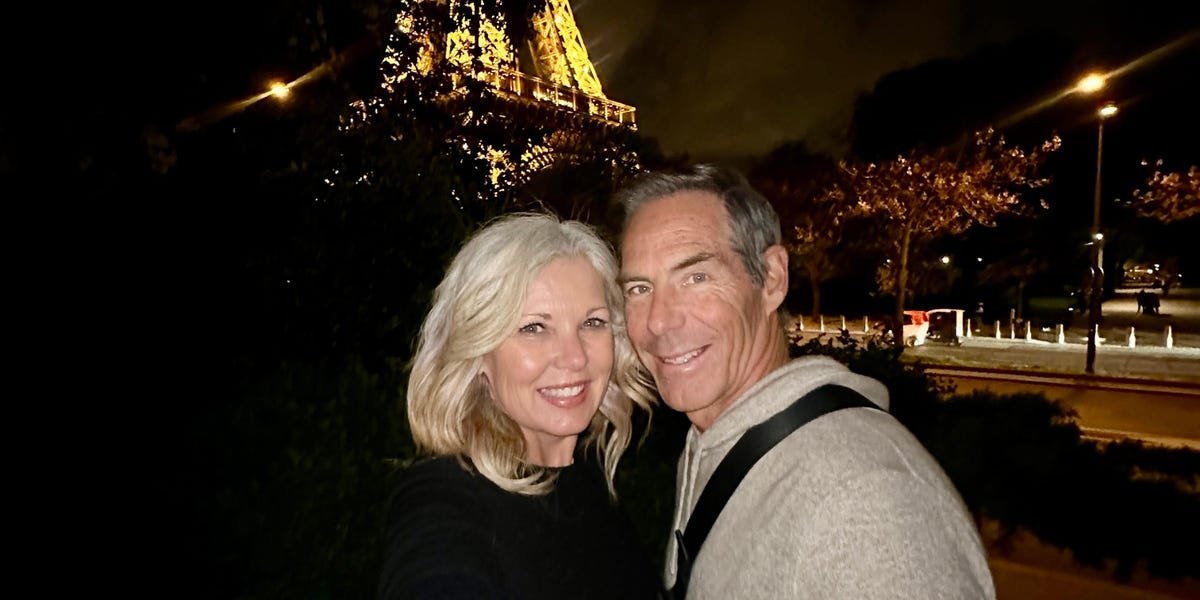
When my husband Shayne and I sold nearly everything we owned to travel the world full-time, we thought we were ready for anything. We had spreadsheets, backup plans, a carefully managed budget, and, as two adults in our 50s, decades of experience behind us.
What could go wrong? Turns out, plenty.
Over the past two and a half years, we’ve lived in more than a dozen countries and traveled thousands of miles. We’ve hiked to waterfalls in Bali, wandered the streets of Barcelona, and eaten our way through Thailand.
But we’ve also made mistakes that cost us time, money, and more than a little peace of mind. Some were honest slip-ups, while others came from overconfidence, but they all taught us lessons we’ll never forget. Here are five of the biggest mistakes we’ve made.
Overplanning made us feel burned out
We’ve learned to leave room for spontaneity when traveling.
Shelly Peterson
At first, we packed every destination with nonstop activities. Sunrise temples, food tours, museums, waterfalls, cultural shows — we didn’t want to miss anything.
Every time Shelly publishes a story, you’ll get an alert straight to your inbox!
Stay connected to Shelly and get more of their work as it publishes.
But within a few months, we were running on fumes. The pace was unsustainable, and on some days, it felt like we weren’t even enjoying ourselves.
These days, we travel more slowly. We leave room for naps, long walks, and spontaneous days with no agenda.
Some of our best memories now come from lazy mornings and quiet moments, not the things we planned, but the ones we stumbled into.
We underestimated how hard it is to build a real community
We assumed full-time travel would mean constantly meeting fascinating people and forming deep connections around the globe.
Although we’ve met plenty of kind and interesting travelers, most friendships are fleeting, shared over a meal or a few days before everyone moves on. We didn’t expect how lonely it can feel to always be “the new people.”
Now, we intentionally choose places with digital nomad scenes, coworking spaces, and expat meetups. In Vietnam, for example, we love that locals and expats gather for weekly street-food tours and surf lessons.
It takes effort, but building community on the road is possible. We just had to actively seek it out.
One time, we misread our visa and had to change plans at the last minute
We’ve learned to always double-check visa rules.
Shelly Peterson
When traveling to Vietnam, we completely misunderstood how our visa worked and accidentally arrived in the country on the day it expired.
Immigration let us in, but warned us we had to leave almost immediately and apply for a new visa. We scrambled to book a last-minute flight to Cambodia and ended up paying a fine.
It was stressful, chaotic, and expensive. Oddly enough, though, our visit to Cambodia became one of our favorite unexpected adventures. But now, we double and triple-check visa rules and requirements ahead of time.
We’ve also let our guard down
Travelers should always be aware and alert to their surroundings.
Shelly Peterson
In Paris, Shayne had his crossbody bag slung around his back while boarding a crowded metro train. Seemingly within seconds, his phone was gone.
It was a rookie mistake, and we knew better, but sometimes travel lulls you into a false sense of security.
That one slip-up cost us days of frustration replacing his device and updating accounts, not to mention a chunk of money.
Even seasoned travelers need to stay alert, especially in busy cities and transit hubs.
Choosing accommodations with zero walkability made exploring more difficult
When we started traveling full-time, our first stop was Bali. We booked a picture-perfect villa with sweeping ocean views and dreamy Instagram potential. What we didn’t realize, though, was that it was over an hour away from the nearest town.
It was beautiful, but it made everyday activities like walking to cafés, exploring neighborhoods, or talking with locals nearly impossible.
Now, we prioritize location over aesthetics. Being able to walk out the door and explore a neighborhood, find a local market, or grab lunch at a street stall makes us feel like we’re actually living somewhere, not just passing through.
Despite the bumps in the road, traveling full-time has been incredibly rewarding
The mistakes we’ve made haven’t just taught us how to travel smarter. They’ve reminded us to stay humble, adaptable, and patient with ourselves.
We’ve learned to slow down, embrace the unexpected, and let go of the need for every day to be perfect, because no matter how experienced you are, travel always has something new to teach you.
And often, the detours become the best parts of the journey.
The women’s artistic gymnastics floor exercise final was full of drama. Team USA gymnast Jordan Chiles was initially awarded a score of 13.666, placing fifth.
Her coach, Cecile Landi, appealed the score based on the routine’s difficulty, and officials re-evaluated it, awarding Chiles a 13.766, bumping her from fifth to third place and allowing her to receive the bronze medal instead of Romania’s Ana Bărbosu.
After the competition, Team Romania filed an inquiry about Team USA’s request to review Chiles’ score, arguing that the challenge wasn’t submitted within the 60-second limit.
On August 10, the Court of Arbitration ruled that Team USA’s appeal was four seconds late and reinstated her original score of 13.666, putting Bărbosu back in third place.
The IOC agreed with the court and released a statement that it is “in touch with the NOC of Romania to discuss the reallocation ceremony and with USOPC regarding the return of the bronze medal.”
USA Gymnastics and the US Olympic & Paralympic Committee released a joint statement defending Chiles and Landi’s original inquiry, writing, “The inquiry into the Difficulty Value of Jordan Chiles’ floor exercise routine was filed in good faith and, we believed, in accordance with FIG rules to ensure accurate scoring.”
USA Gymnastics released an additional statement on X that Landi requested to file the inquiry 47 seconds after the publishing of Chiles’ score, writing, “The time-stamped video evidence submitted by USA Gymnastics Sunday evening shows Landi stated her request to file an inquiry at the inquiry table 47 seconds after the score is posted, followed by a second statement 55 scores after the score was originally posted.”
In January 2026, Switzerland’s federal court said the case would be returned to the Court of Arbitration for further review, in light of new video evidence.