Asias-biggest-aviation-event-shows-how-the-counter-drone-craze-is.jpeg

Asia’s biggest aviation event shows how the counter-drone craze is taking hold

This year’s Singapore Airshow was a true display of how the world has come to both love drones and fear them.

Fighter jets danced in the sky and a slew of commercial airliners sat on the baking tarmac for military officials, students, and eager interns to gawk at.

But inside the main hall, you’d be hard-pressed to look anywhere and not see “drone” or “UAS” plastered on a placard or wall.

Roughly 550 organizations were listed as exhibitors at the event, which hosted a mix of civil aviation companies, defense contractors, and air forces. A third were in the uncrewed aerial system business.

Around every corner, it seemed as though there was a system to fight drones: Big drones, small drones, drones with bombs strapped to them, drones that spy on you from miles away, drones that spy on you from 300 feet in the sky — and increasingly, drones that fly at you in swarms.

Recent conflicts, especially the Ukraine war, has brought to the fore the fear of an unknown $600 device flying into a military base or a football stadium to deal untold damage or take lives.

The implications go beyond war. Last fall, repeated unidentified drone sightings forced European countries to disrupt hundreds of passenger flights.

The solutions on offer at the airshow covered almost everything one imaginable for preventing those scenarios. There were the usual radio frequency area jammers, designed to cut off any nearby drone from its link to the operator. These came in anything from handheld devices to boxes that you have to mount on flatbed trucks.

Skylock, an Israeli company, brought along a 13-pound, two-handed jamming gun called Skybeam, which is supposed to mess with electronics that you point the device toward.


The Skybeam sits on display.

The Israeli Skybeam is a hefty, two-handed gun for fighting smaller drones.

Matthew Loh for Business Insider


There were actual guns, such as Saab’s new “Loke” system that features a truck-mounted, software-assisted machine gun to knock out drones in a “one shot, one kill” fashion. The company hopes to add airburst rounds soon.

There were, of course, drones to kill other drones, easily denoted by their aerodynamic design of a missile-like body, tear-shaped tail, and four propellers.

French manufacturing giant Thales was promoting the “ThunderShield,” a remotely operated dome-like device that targets small, Class 1 drones with an invisible electromagnetic beam that spreads out in a cone.

The company said the device has already been deployed at a major public event in France two years ago, though it wouldn’t say which (the biggest one that year was the Olympic Games.)

One standout was the CROSSBOW, a device developed by laser company IPG Photonics’ brand new defense division, IPG Defense.

Tucked away on the side of the exhibition hall, the Massachussetts-based company’s showcased an invention that fires lasers to destroy drones via thermal damage.


The IPG Defense CROSSBOW system on display.

The CROSSBOW system uses IPG’s commercial laser technology to destroy drones.

Matthew Loh for Business Insider


An accompanying radar helps the CROSSBOW identify drones from other flying objects, such as unsuspecting bald eagles, and an Xbox controller allows the operator to choose whether to engage the target.

Still, as one anti-drone tech salesman noted to me, many of the world’s counter-UAS inventions run on tech that isn’t necessarily novel. Like the idea of a hobbyist drone strapped with a grenade, most of these companies have simply merged older concepts that no one thought of combining before.

Some will say they merge that tech better than others, but it’s still no F-35 or F-47.

It’s another sign of how accessible air warfare is becoming, with quadcopters sitting alongside multimillion-dollar fighter jets and hulking Rolls Royce engines in the main hall.

The airshow, which is running its 11th edition of the biennial event, said that it’s seen the largest involvement so far from small and medium-sized companies this year.



Source link

Elon-Musk-says-Europes-biggest-airline-will-lose-customers-without.jpeg

Elon Musk says Europe’s biggest airline will lose customers without Starlink

The CEO of Europe’s biggest airline is in an escalating war of words with Elon Musk over Starlink.

Ryanair CEO Michael O’Leary isn’t convinced by Starlink, Musk’s satellite internet provider, which is becoming more popular among airlines.

For example, Lufthansa — the German flag carrier which runs the continent’s second-largest airline group — announced on Tuesday that it would introduce the service. The following day, Scandinavian Airlines operated its first flight with Starlink.

However, as a budget airline, Ryanair is known for its no-frills offering.

“We don’t think ‍our ⁠passengers are willing to pay for WiFi for an average ⁠one-hour flight,” O’Leary told Reuters on Wednesday.

His comments sparked a debate on X. Musk said in a post: “They [Ryanair] will lose customers to airlines that do have internet.”

In a subsequent interview on Irish radio on Thursday, the outspoken Ryanair boss said adding Starlink would cost the airline between $200 million and $250 million a year.

“In other words, about an extra dollar for every passenger we fly, and the reality for us is we can’t afford those costs,” he told Newstalk.

“Passengers won’t pay for internet usage; if it’s free, they’ll use it — but they won’t pay one euro each to use the internet.”

He then hit back at Musk, saying people should “pay no attention whatsoever to Elon Musk.”

“He’s an idiot. Very wealthy, but he’s still an idiot,” O’Leary added.

Ryanair and its subsidiaries operate a fleet of 643 airplanes, which handled 206 million passengers last year. 2024’s statistics showed that it was the world’s third-largest airline group, behind American Airlines and Delta Air Lines.

The Irish airline’s low-cost business model allows it to offer tickets as low as 15 euros, or about $17.40. It focuses on quick turnarounds between flights, charging for add-ons like sitting next to your friends, and on-board sales, including scratchcards and duty-free cigarettes.

Every airline that’s announced Starlink deals so far has included free in-flight internet for everyone on board. So, even if O’Leary changed his mind, it seems unlikely that Musk’s company would let him charge Ryanair passengers to use Starlink.

SpaceX executives also took umbrage at what they said was incorrect information about the fuel costs incurred by installing Starlink.

“You need to put [an] antenna on [the] fuselage — it comes with a 2% fuel ⁠penalty because of ​the weight and ​drag,” O’Leary told Reuters.

Michael Nicolls, the VP of Starlink engineering, said in an X post that Starlink terminals have a more fuel-efficient profile than other airplane internet providers. He added that SpaceX’s analysis showed a Starlink terminal instead increased fuel costs by 0.3% on a Boeing 737-800, the model that makes up the bulk of Ryanair’s fleet.

“Hmm, must be a way to get that down under 0.1%,” Musk replied to him.

Ryanair declined to comment on Musk’s and Nicolls’ remarks when contacted by Business Insider. SpaceX did not immediately respond to a request for comment.

While US budget airlines have recently pivoted to offer more premium options under intense financial pressures, Ryanair has little reason to do so. Adding an amenity like Starlink would be at odds with its business model, especially if it were free for passengers.

Post-pandemic, more American travellers have been paying extra for more luxurious flights. Budget airlines have also struggled to compete on price with legacy carriers.

But on the other side of the Atlantic, Ryanair has managed to balance a spartan approach with financial success.

In its latest quarterly earnings, Ryanair posted after-tax profits of 1.72 billion euros, about $2 billion — a 20% increase from a year earlier. Southwest Airlines’ latest quarterly earnings were down nearly 20% year-over-year to $54 million.


Source link

Ive-lived-in-Switzerland-for-5-years-Here-are-the.jpeg

I’ve lived in Switzerland for 5 years. Here are the 6 biggest mistakes I see first-time visitors make over and over.

  • After living in Switzerland for five years, I’ve watched tourists make a lot of the same mistakes.
  • Don’t try to see too many places in one trip, and try visiting some smaller mountain villages.
  • Become at least a little familiar with the local languages and book your train tickets in advance.

Though I’m a US citizen, I’ve spent the past five years living in Switzerland.

As a semi-recent transplant, I know there’s much more to this amazing country than what visitors typically come to see. It’s one best experienced thoughtfully and authentically — not by mindlessly racing through “Top 10 ” lists.

In terms of mistakes tourists make, here are a few things I suggest you know — and avoid — before visiting Switzerland for the first time.

You’ll probably regret only visiting the Instagram-popularized spots.

Lucerne is incredible, but it’s not the only great place to visit in Switzerland.

Peter Shaw/Getty Images

Zermatt, Lauterbrunnen, Interlaken, and Lucerne are popular, jaw-dropping locations, but they’re not the only spots worth visiting in Switzerland.

Instead of only seeing the few places on every tourist’s list, consider branching out to smaller, lesser-visited ones for at least a day trip. Fortunately, many are easily accessible by public transportation out of some of the area’s main hubs.

For example, close to Interlaken are the mountain villages of Frutigen, Kandersteg, and Adelboden, which offer gorgeous alpine views combined with fewer crowds and more authentic experiences.

Don’t assume the dining-out culture and prices will be what you’re used to back home.


Vegetables on plate

Eating out in Switzerland can be expensive, but I’ve found the prices to be justified.

Ashley Franzen

In Switzerland, dining out can seem expensive — in part because the cost of production, labor, and relevant service charges are typically already included in the price of the meal.

Personally, I find the prices easier to stomach when I remember you’re often paying for high-quality, regional fare, and restaurant staff here are typically earning a fair wage.

And although tipping servers 15% to 20% of a bill is standard practice in places like the US, it’s not the norm here. If you enjoyed the meal and the service, it’s customary to round up a few francs or leave a tip between 5% and 10%.

Make your train reservations in advance.


Train tour sign in Switzerland

Not making reservations in advance could mean missing out on some special experiences.

Ashley Franzen

Switzerland is a popular travel destination throughout the year, and its major attractions can fill up quickly — especially seats on our world-famous scenic routes.

If you plan on riding the Glacier Express or Bernina Express, book your train tickets as far in advance as possible.

However, don’t fret if you realize it’s too late to book a seat on a scenic route. You’ll be just fine on our “regular” trains, which tend to run faster, not book up as quickly, and still offer beautiful views.

Speaking of trains, don’t get fined for sitting in the wrong class.


First-class train car in Switzerland

Make sure you follow your ticket.

Ashley Franzen

When traveling by train, it’s important to double-check your ticket class and location. (And, if you have a paper ticket, get it validated.)

Signage indicating first or second class can be found both outside and inside each car. Oftentimes, the class is also noted on the headrests of the seats themselves.

Ticketing agents on board will not hesitate to issue an on-the-spot fine for tourists seated in the wrong class. In addition to a fine of about 100 francs, you’ll also have to pay the difference in price for the ticket.

Also, pay attention to where your seats are before entering each car so you won’t have to lug an oversized suitcase through the entire train.

Switzerland is small, but I don’t advise trying to cram everything into a short trip.


Snowy mountain views on way to St Moritz

While in Switzerland, take your time to experience the culture and stunning views.

Ashley Franzen

Switzerland is one of the smallest countries in Europe, at about 16,000 square miles. However, I’ve seen tourists mistakenly assume they can just zip through and see everything it has to offer in just three or four days.

For example, Zurich may seem close to Geneva on a map, but they are actually about three hours apart by train. Sure, you could also opt for a one-hour flight — but my point is that trying to see so many cities in a short period won’t allow you to truly get a feel for each.

Travel is about experiencing a place, not just visiting to check it off a bucket list. If you’ve only got a week in Switzerland, I suggest you limit yourself to exploring two or three cities instead of trying to cram six or seven single-night stays in new places into your itinerary.

Become at least a little familiar with the local languages and commonly used symbols.


Recycling bins in Switzerland

The Swiss take recycling seriously.

Ashley Franzen

Switzerland is composed of 26 cantons, and each of these administrative regions has its own distinct culture, government, and history. They also don’t all speak the same languages.

Although you’ll find English speakers throughout the country — especially in popular tourist areas — Switzerland actually has four official languages: German, French, Italian, and Romansh.

It’s helpful to learn a few basic greetings in those major languages and ensure you use them in the appropriate region.

Also, it’s handy to become familiar with some of the commonly used symbols — especially when it comes to trash cans.

The Swiss are conscientious recyclers, so take a beat to look up the symbols printed on the bins before tossing something in them if you are confused. Your mindfulness will be appreciated


Source link

Taylor-Swifts-The-Fate-of-Ophelia-is-her-biggest-No.jpeg

Taylor Swift’s ‘The Fate of Ophelia’ is her biggest No. 1 hit ever. Here are all 13 of her songs that topped the chart.

  • Taylor Swift’s single “The Fate of Ophelia” debuted at No. 1 on the Billboard Hot 100.
  • The song has charted at No. 1 for nine weeks, surpassing “Anti-Hero” as her longest-leading hit.
  • The list also includes hits like “Shake It Off,” “Blank Space,” “Cruel Summer,” and “Fortnight.”

Since releasing her first No. 1 album in 2008, Taylor Swift has enjoyed a historic run on the charts, topping the Billboard 200 and Billboard Hot 100 over a dozen times each.

Swift’s collection of No. 1 hits includes both radio-friendly pop singles and understated gems pushed to the top of the chart by passionate fans.

Most recently, “The Fate of Ophelia” joined the ranks while breaking a record for the most streams in a single week on Spotify. Swift is now tied with Michael Jackson and Drake for the fifth-most No. 1 hits in history.

All 13 are listed below in chronological order of their peak dates.

1. “We Are Never Ever Getting Back Together”

“We Are Never Ever Getting Back Together” hit No. 1 on the chart dated September 1, 2012.


Taylor Swift/YouTube


Weeks at No. 1: Three

Despite writing ubiquitous hits like “You Belong With Me” and “Love Story” earlier in her career (which peaked at No. 2 and No. 4, respectively), “We Are Never Ever Getting Back Together” was Swift’s first-ever song to top the Hot 100.

The country-pop crossover smash was released as the lead single from Swift’s fourth album, “Red.” It rose from No. 72 to No. 1 in its second week of tracking and remained atop the chart for two more weeks.

2. “Shake It Off”


taylor swift shake it off music video

“Shake It Off” hit No. 1 on the chart dated September 6, 2014.


Taylor Swift/YouTube


Weeks at No. 1: Four

“Shake It Off” was released as the lead single from Swift’s fifth album, “1989.” It became her first No. 1 debut on the Hot 100.

3. “Blank Space”


taylor swift blank space music video

“Blank Space” hit No. 1 on the chart dated November 29, 2014.


Taylor Swift/YouTube


Weeks at No. 1: Seven

“Blank Space,” the second single from “1989,” debuted at No. 18 on the Hot 100.

It rose to No. 13 before soaring to No. 1 in its third week — dethroning “Shake It Off” and making Swift the first woman in history to replace herself in the chart’s top spot.

“Blank Space” went on to become one of Swift’s biggest hits, reigning atop the chart for nearly two months.

4. “Bad Blood” featuring Kendrick Lamar


taylor swift bad blood music video

“Bad Blood” hit No. 1 on the chart dated June 6, 2015.


Taylor Swift/YouTube


Weeks at No. 1: One

On May 17, 2015, a remix of “Bad Blood” featuring Kendrick Lamar was released as the fourth single from “1989.”

It rose from No. 53 to the chart’s top spot after the music video premiered at the 2015 Billboard Music Awards and broke the Vevo record for most views in 24 hours.

5. “Look What You Made Me Do”


taylor swift look what you made me do music video

“Look What You Made Me Do” hit No. 1 on the chart dated September 16, 2017.


Taylor Swift/YouTube


Weeks at No. 1: Three

Despite mixed reactions from critics, Swift’s lead single from “Reputation” rose to No. 1 after its first full week of tracking, breaking the weekly streaming record for a song by a woman.

Once again, Swift’s music video broke the record for most views within 24 hours, racking up 43.2 million views in its first day.

6. “Cardigan”


taylor swift cardigan music video

“Cardigan” hit No. 1 on the chart dated August 8, 2020.


Taylor Swift/YouTube


Weeks at No. 1: One

Swift announced the arrival of her eighth album, “Folklore,” just one day in advance. The second track, “Cardigan,” was released at the same time as the album and promoted with a whimsical music video.

“Folklore” debuted at No. 1 on the Billboard 200 while “Cardigan” simultaneously debuted at No. 1 on the Hot 100, making Swift the first artist in history to open atop both charts in the same week.

7. “Willow”


taylor swift willow music video

“Willow” hit No. 1 on the chart dated December 26, 2020.


Taylor Swift/YouTube


Weeks at No. 1: One

Just five months after “Folklore,” Swift repeated her pandemic-era strategy and surprise-released her ninth album, “Evermore,” alongside its lead single.

Again, “Willow” debuted at No. 1 on the Hot 100 while “Evermore” simultaneously debuted at No. 1 on the Billboard 200.

8. “All Too Well (Taylor’s Version)”


taylor swift all too well

“All Too Well” hit No. 1 on the chart dated November 27, 2021.


Taylor Swift/YouTube


Weeks at No. 1: One

“Red (Taylor’s Version)” was the second rerecorded album Swift released. It was accompanied by the long-awaited 10-minute version of “All Too Well,” a fan-favorite track from the original album.

“All Too Well (Taylor’s Version)” was promoted with a self-directed short film and plenty of theories about the song’s most likely muse.

It debuted at No. 1 on the Hot 100, becoming the longest song in history to top the chart. The record was previously held by Don McLean’s “American Pie (Parts I & II)” at 8 minutes and 37 seconds.

9. “Anti-Hero”


taylor swift anti-hero music video

“Anti-Hero” hit No. 1 on the chart dated November 5, 2022.


Taylor Swift/YouTube


Weeks at No. 1: Eight

“Anti-Hero” was released alongside Swift’s 10th album, “Midnights,” and promoted as the lead single.

It dominated the Hot 100 for eight weeks, surpassing the high-water mark set by “Blank Space.”

The same week that “Anti-Hero” debuted at No. 1, Swift became the first and only artist in history to occupy the entire top 10 on the Hot 100. The hit single was flanked by “Lavender Haze” (No. 2), “Maroon” (No. 3), “Snow on the Beach” (No. 4), “Midnight Rain” (No. 5), “Bejeweled” (No. 6), “Question…?” (No. 7), “You’re On Your Own, Kid” (No. 8), “Karma” (No. 9), and “Vigilante Shit” (No. 10).

10. “Cruel Summer”


taylor swift eras tour

“Cruel Summer” hit No. 1 on the chart dated October 28, 2023.

John Shearer/Getty Images for TAS Rights Management

Weeks at No. 1: Four

“Cruel Summer” was originally released as the second track on Swift’s 2019 album “Lover.”

Although it was identified early as a fan favorite, the song was never promoted as a single and debuted modestly at No. 29 on the Hot 100.

Four years later, Swift transformed “Cruel Summer” into a showstopping spectacle on the Eras Tour. Streams of the song began to surge, and it reigned atop Billboard’s Pop Airplay chart for two months. Swift’s label sent the song to pop radio in June 2023.

Finally, following the release of “The Cruelest Summer” EP — which includes a live version of the song and a remix by LP Giobbi — the song reached No. 1 on the Hot 100, marking Swift’s milestone 10th chart-topper.

11. “Is It Over Now?”


taylor swift eras tour

“Is It Over Now?” hit No. 1 on the chart dated November 11, 2023.

Kevin Winter/Getty Images for TAS Rights Management

Weeks at No. 1: One

“Is It Over Now?” was released as the final vault track on “1989 (Taylor’s Version),” a rerecording of her beloved fifth album.

Although it wasn’t initially slated as a single, its enthusiastic reception from fans pushed Swift’s team to serve the song to pop radio.

“Is It Over Now?” debuted at No. 1 on the Hot 100, dethroning “Cruel Summer.” Swift remains the only woman in history to replace herself in the top spot, a feat she’s now achieved twice.

12. “Fortnight” featuring Post Malone


taylor swift fortnight music video

“Fortnight” hit No. 1 on the chart dated May 4, 2024.


Taylor Swift/YouTube


Weeks at No. 1: Two

“Fortnight,” a duet with Post Malone, was released alongside “The Tortured Poets Department” and promoted as the album’s lead single.

The song debuted at No. 1 on the Hot 100 while “Poets” simultaneously debuted at No. 1 on the Billboard 200.

For the second time in her career, Swift managed to occupy the entire top 10 of the Hot 100. In fact, the top 14 positions on the chart were occupied by “Poets” tracks, including “Down Bad” (No. 2) and “I Can Do It With a Broken Heart” (No. 3), all the way through to “The Smallest Man Who Ever Lived” (No. 14).

“Fortnight” returned to No. 1 on the Hot 100 for a second consecutive week.

13. “The Fate of Ophelia”


Taylor Swift in the music video for

“The Fate of Ophelia” hit No. 1 on the chart dated October 18, 2025.


Taylor Swift/YouTube


Weeks at No. 1: Nine

“The Fate of Ophelia” was released alongside Swift’s 12th studio album, “The Life of a Showgirl,” and promoted as the lead single.

The Shakespeare-inspired pop song debuted at No. 1 on the Hot 100, while “Showgirl” simultaneously debuted at No. 1 on the Billboard 200, breaking a record for the biggest sales week of all time.

All 12 tracks on the album debuted within the Hot 100’s top 12 spots, making Swift the first and only artist to dominate the chart’s top 10 on three separate occasions. “The Fate of Ophelia” was joined in the top five by “Opalite” (No. 2), “Elizabeth Taylor” (No. 3), “Father Figure” (No. 4), and “Wood” (No. 5).

“The Fate of Ophelia” remained atop the Hot 100 for eight straight weeks after its release. After falling to lower positions during the holiday season, it returned to No. 1 for its ninth week, surpassing “Anti-Hero” as Swift’s longest-leading hit to date.


Source link

Here-are-the-biggest-announcements-coming-out-of-the-2026.jpeg

Here are the biggest announcements coming out of the 2026 Consumer Electronics Show, starting with Nvidia’s Vera Rubin chips

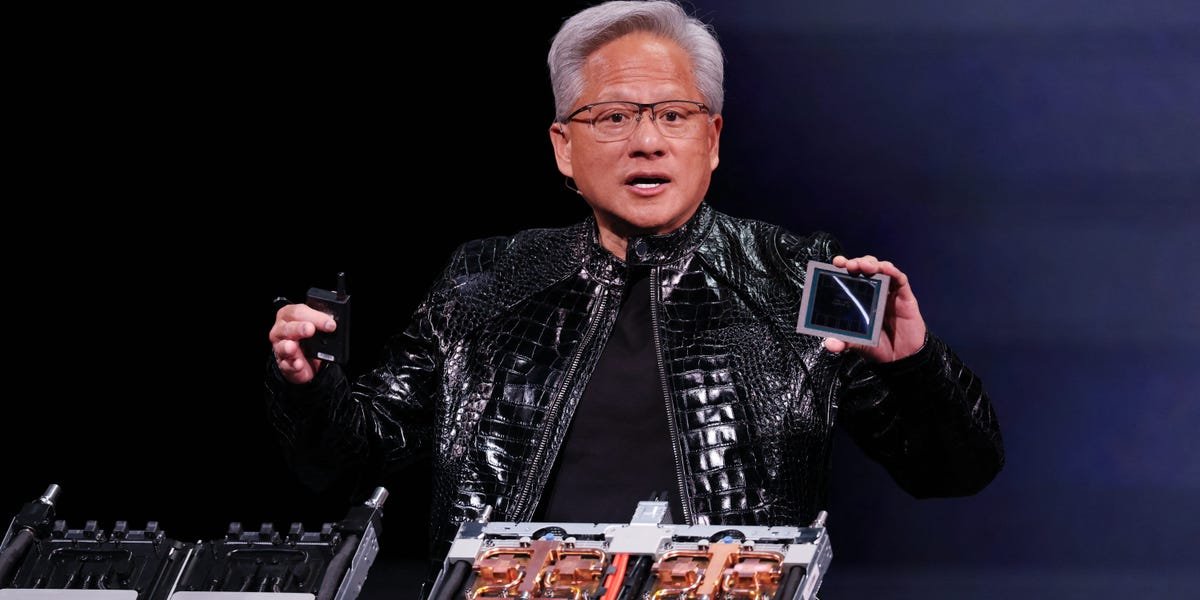
On Monday, ahead of the Consumer Electronics Show, Huang officially introduced the Vera Rubin architecture, which is now in production and expected to ramp up in volume in the second half of the year. This move follows a blockbuster year for its Blackwell chip, as demand for AI infrastructure continued to surge.

In a press briefing ahead of Huang’s keynote, Dion Harris, Nvidia’s senior director of HPC and AI infrastructure solutions, described Vera Rubin as “six chips that make one AI supercomputer.”

“Vera Rubin is designed to address this fundamental challenge that we have: The amount of computation necessary for AI is skyrocketing,” Huang told the audience during a presentation at the CES.

Huang added that compared to the Blackwell model, Rubin marks a leap in performance, with more than triple the speed, could run inference five times faster, and can deliver significantly more inference compute per watt of energy.

Rubin was first announced in 2024 and has been slated to replace Blackwell ever since. The early debut comes months ahead of the late-2026 timeline Nvidia had previously projected.

Named after astronomer Vera Rubin, who discovered the existence of dark matter, Nvidia said in a press release that the architecture is designed to support more complex, agent-style AI workloads, as well as more networking and data movement.

The Rubin systems are already lined up for deployment across much of the cloud industry. Nvidia said partners, including Amazon Web Services, OpenAI, Anthropic, alongside the upcoming Doudna system at Lawrence Berkeley National Laboratory, all plan to use the new platform.

The accelerated launch comes shortly after Nvidia reported record data center revenue, up 66% from a year earlier, driven largely by demand for Blackwell and Blackwell Ultra GPUs. Those chips have become a benchmark for the current AI boom are widely seen as a test of whether spending on AI infrastructure is sustainable.

Huang has previously estimated that between $3 trillion and $4 trillion could be spent globally on AI infrastructure over the next five years. Nvidia said products and services built on the Rubin platform will begin rolling out from partners in the second half of 2026.


Source link

I-spent-a-year-interviewing-and-listening-to-over-50.jpeg

I spent a year interviewing and listening to over 50 tech leaders talk about AI. Here are the 4 biggest lessons.

I’ve listened to and interviewed more than 50 tech leaders this year, from executives running trillion-dollar firms to young founders betting their futures on AI.

Across boardrooms, conferences, and podcast interviews, the people building our AI future kept returning to the same four themes:

1. Use AI, because someone who understands AI better might replace you

This is the line I heard most often. Nvidia CEO Jensen Huang has said it multiple times this year.

“Every job will be affected, and immediately. It is unquestionable. You’re not going to lose your job to an AI, but you’re going to lose your job to someone who uses AI,” he said at the Milken Institute’s Global Conference in May.

Other tech leaders echoed his view, with some saying that younger workers may actually have an edge because they are already comfortable using AI tools.

OpenAI CEO Sam Altman said on Cleo Abram’s “Huge Conversations” YouTube show in August that while AI will inevitably wipe out some roles, college graduates are better equipped to adjust.

“If I were 22 right now and graduating college, I would feel like the luckiest kid in all of history,” Altman said, adding that his bigger concern is how older workers will cope as AI reshapes work.

Fei-Fei Li, the Stanford professor known as the “godmother of AI,” said in an interview on “The Tim Ferriss Show” published earlier this month that resistance to AI is a dealbreaker. She said she won’t hire engineers who refuse to use AI tools at her startup, World Labs.

This shift is already showing up in everyday roles. An accountant and an HR professional told me they’re using AI tools, including vibe coding, to level up their skills and stay relevant.

2. Soft skills matter more in the AI era

Another consensus I’ve heard among tech leaders is that AI makes soft skills more valuable.

Salesforce’s chief futures officer, Peter Schwartz, told me in an interview in May that “the most important skill is empathy, working with other people,” not coding knowledge.

“Parents ask me what should my kids study, shall they be coders? I said, ‘Learn how to work with others,'” he said.


salesforce peter schwartz

I interviewed Salesforce’s chief futures officer, Peter Schwartz, in May.

Lee Chong Ming/Business Insider


LinkedIn’s head economist for Asia Pacific, Chua Pei Ying, also told me in July that she sees soft skills like communication and collaboration becoming increasingly important for experienced workers and fresh graduates.

As AI automates parts of our job and makes teams leaner, the human part of the job is starting to matter more.

3. AI is evolving fast — and superintelligence is coming

As the year went on, the stakes around AI’s future began to feel bigger and more real. Tech leaders increasingly spoke about chasing artificial general intelligence, or AGI, and eventually superintelligence.

AGI refers to AI systems that can match human intelligence across a range of tasks, while superintelligence describes systems that surpass human capabilities.

Altman said in September that society needs to be prepared for superintelligence, which could arrive by 2030. Mark Zuckerberg established Meta’s Superintelligence Labs in June and said that the company is pushing toward superintelligence.

These leaders don’t want to miss the AI moment. Zuckerberg underscored that urgency in September, saying he would rather risk “misspending a couple of hundred billion dollars” than be late to superintelligence.

Some tech leaders, such as Databricks CEO Ali Ghodsi, argued that the industry has already achieved AGI. Others are more cautious. Google DeepMind’s cofounder, Demis Hassabis, said in April that AGI could arrive “in the next five to 10 years.”

Even when tech leaders disagree on timelines, they tend to agree on one thing: AI progress is compounding.

I saw this acceleration from the outside as a user. New tools are rolling out at a dizzying pace — from ChatGPT adding shopping features and image generation to China’s “AGI cameras.”

Things that would have felt magical in January now feel normal.


LingGuang

I tried Ant Group’s vibe coding app LingGuang’s AGI camera last month.

Lee Chong Ming/LingGuang


4. The human needs to be at the center of AI

Many leaders also circled back to the need for human control amid AI acceleration.

Microsoft AI chief Mustafa Suleyman said superintelligence must support human agency, not override it. He said on an episode of the “Silicon Valley Girl Podcast” published in November that his team is “trying to build a humanist superintelligence,” warning that systems smarter than humans will be difficult to contain or align with human interests.

Anthropic CEO Dario Amodei has been blunt about the risks AI poses if it’s misused.

While advanced AI can lower the barrier to knowledge work, the risks scale alongside the rewards, Amodei said on an episode of the New York Times’ “Hard Fork” published in February.

“If you look at our responsible scaling policy, it’s nothing but AI, autonomy, and CBRN — chemical, biological, radiological, nuclear,” Amodei said.

“It is about hardcore misuse in AI autonomy that could be threats to the lives of millions of people,” he added.

Geoffrey Hinton, often referred to as the “godfather of AI,” said in August that as AI systems surpass human intelligence, safeguarding humanity becomes the central challenge.

“We have to make it so that when they’re more powerful than us and smarter than us, they still care about us,” Hinton said at the Ai4 conference in Las Vegas.


Source link

Ex-Google-CEO-Eric-Schmidt-says-AI-isnt-overhyped-—-the.jpeg

Ex-Google CEO Eric Schmidt says AI isn’t overhyped — the biggest gains from automating corporate work are still ahead

If AI feels overhyped now, Eric Schmidt suggests that businesses should brace themselves — the real disruption hasn’t even begun yet.

In an interview with Professor Graham Allison at the John F. Kennedy Jr. Forum at Harvard University on Monday, the former Google CEO pushed back on the idea that AI’s rapid growth is a speculative bubble, saying that the technology is actually under-hyped.

“If anything, it’s under-hyped because you are fundamentally automating businesses,” he said.

The real transformation, he said, is happening deep inside companies, where AI systems are beginning to take over the “boring” tasks that quietly consume billions in corporate spending.

The biggest gains, he suggested, will come from automating the backbone of corporate work: the repeatable, time-consuming processes buried deep inside every organization.

The former Google chief listed billing, accounting, product design, delivery, and inventory management as examples of this.

“There’s an awful lot there — it’s extraordinary,” he said, pointing to areas like medicine, climate solutions, and engineering as sectors where automation could accelerate breakthroughs.

Schmidt, who helped steer Google’s early investments in AI and later co-authored a book on AI with Henry Kissinger, implied the technology’s economic impact will be far larger than markets or executives appreciate.

Still, not everyone agrees with that perspective. Some economists are sounding alarm bells that the AI boom is overheated.

In an interview this week, renowned economist Ruchir Sharma said the AI surge displays all four traits of a classic bubble and could unravel if interest rates rise, while tech leaders such as Sam Altman and Bill Gates have cautioned that parts of the market resemble the dot-com era.

Far beyond coding

To illustrate how quickly AI capabilities are advancing, Schmidt described watching an AI system generate an entire software program.

“Holy crap. The end of me,” he said.

“I’ve been doing programming for 55 years. To see something start and end in front of your own life is really profound,” he added.

However, he said that AI’s long-term upside extends far beyond coding.

From back-office workflows to logistics and scientific discovery, Schmidt believes the automation curve is still in its early stages of scaling and that Wall Street is underestimating the magnitude of the shift.

“The reason people are spending this amount of money,” he said, “is to automate the boring parts of their business.”


Source link

Tesla-scored-a-win-in-China-just-as-its-biggest.jpeg

Tesla scored a win in China just as its biggest rival stumbled

  • Tesla scored a rare win in China, earning bragging rights over its biggest rival in the process.
  • Elon Musk’s automaker saw its sales rise by nearly 10% in November, while its arch-rival BYD’s fell.
  • Tesla has had a difficult year, with sales underwhelming in China and collapsing in Europe.

Things are finally looking up for Tesla in China.

The US automaker’s sales rose 9.9% in November compared to the same month last year, according to data released by China’s Passenger Car Association on Tuesday.

That’s a rare win for Tesla, which has had a difficult year in almost all of its biggest markets. The company has faced a sales collapse in Europe, been squeezed by intense competition in EV-friendly China, and is on track to see its overall sales decline for the second consecutive year.

One bright spot for Tesla: it’s not the only one with problems. The Elon Musk-run automaker’s biggest Chinese rival, BYD, has hit some speed bumps in recent months.

The Shenzhen-based EV giant, which has become one of China’s largest carmakers thanks to a range of affordable and high-tech electric models, has had three straight months of sales declines.

BYD said it sold just over 480,000 EVs and hybrids in November, its highest total this year, but still around 5.3% less than the same period in 2024.

The Chinese automaker, which was once backed by Warren Buffett, has struggled in the face of a renewed price war in China’s ultra-competitive EV market and a government crackdown on aggressive discounting.

Despite these headwinds, BYD is still on course to take Tesla’s crown as the world’s largest seller of battery EVs this year, and the company is rapidly taking market share from Musk and co. outside China.

BYD’s overseas sales hit a record 131,935 in November. The Chinese auto giant is taking advantage of Tesla’s woes in Europe, with BYD outselling its US rival by more than two to one in October.


Source link