Bank of America has agreed to pay $72.5 million to settle a proposed class action lawsuit alleging the bank facilitated financier Jeffrey Epstein’s sex trafficking operation, according to a Manhattan federal court filing released Friday evening.
The deal, which requires sign-off from a judge, would pay “all women who were sexually abused or trafficked by Jeffrey Epstein, or by any person who is connected to or otherwise associated with Jeffrey Epstein or any Jeffrey Epstein sex-trafficking venture, between June 30, 2008 and July 6, 2019, inclusive,” the filing said.
Lawyers have said they are aware of “at least 60 women who were victimized by Epstein” during that time period, the filing added.
US District Judge Jed Rakoff, who is overseeing the case, gave the parties a March 27 deadline to file the terms of settlement and an April 2 hearing to decide whether to approve them.
Bank of America said in a statement that the deal allows it to “put this matter behind us and provides further closure for the plaintiffs.” The bank continues to deny wrongdoing: “Bank of America did not facilitate sex trafficking crimes,” it said.
Epstein, known for rubbing elbows with titans of industry and political powerhouses, was found dead in his Manhattan jail cell the morning of August 10, 2019, while awaiting trial on sex-trafficking charges.
JPMorgan agreed to pay $290 million, and Deutsche Bank agreed to a $75 million payout, to settle similar lawsuits brought by the same group of lawyers representing Epstein victims.
Rakoff previously tossed a parallel lawsuit the attorneys brought against BNY — formerly Bank of New York Mellon Corp. — but allowed portions of the case against Bank of America to move forward.
After being marked for dead, software companies have a chance to tell their side of the story.
Excluding Canada’s Olympic hockey teams, no one has had a tougher go recently than software companies. Everyone faces some fear over AI, but software’s diagnosis has been more dire than most. (Author Nassim Taleb was the latest to write software’s eulogy, although he’s not known for his optimism.)
Two software giants — Salesforce and Snowflake — get to make the case for why they’re still very much alive. Both companies report earnings after the bell and will be interested in changing a narrative that’s helped push their stocks down 27% (Salesforce) and 26% (Snowflake) this year.
(Workday, another software company that’s been getting hammered, made the case yesterday why AI is friend, not foe.)
A major problem for software companies is that their opponent is largely hypothetical. Even if both companies report blockbuster earnings, there’s still the counterargument that AI will eventually eat their lunch.
Anthropic has played this game masterfully. The startup has strategically rolled out product announcements for its AI chatbot, Claude. The news has devastated entire industries despite there being no evidence of widespread adoption yet.
Here’s what to look out for from Salesforce and Snowflake when they report:
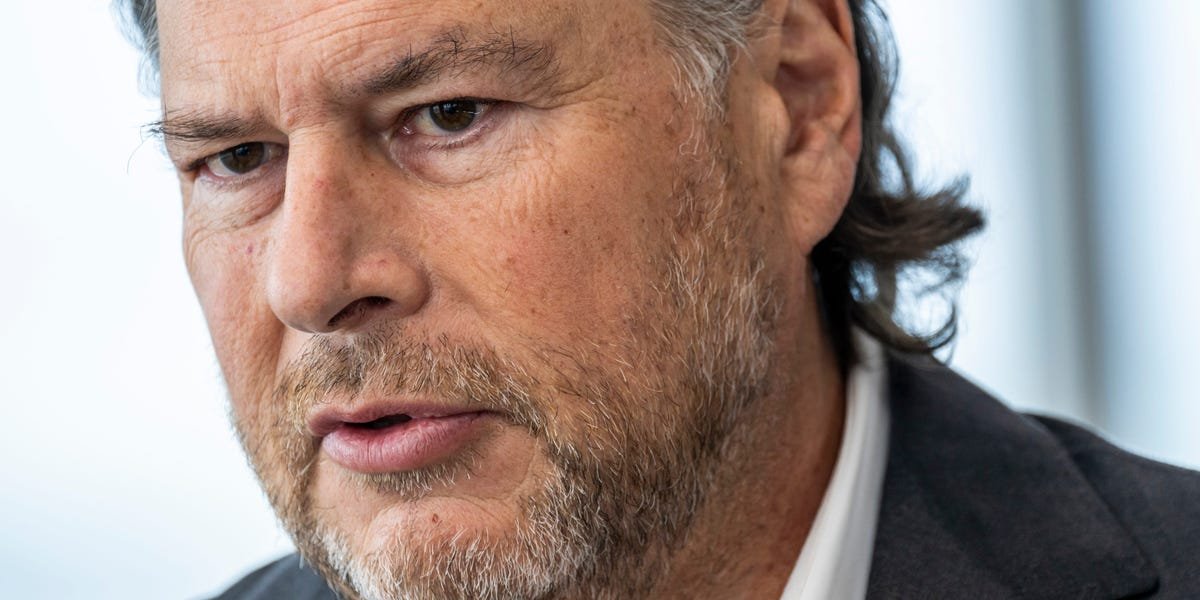
Salesforce: Marc Benioff’s company is the prototypical enterprise software company. Customer relationship management systems are all about workflow and rely heavily on seat-based subscriptions. That makes Salesforce a prime target for AI automation and a bellwether for other software companies.
Benioff has sought to address competitors head-on with Salesforce’s own AI agents and even contemplated a name change to acknowledge the shift. But Agentforce has had its share of challenges. An internal survey showed that most employees feel AI is increasing their productivity, but Salesforce will want the same positivity coming from outside its walls.
These days, AI might not even be Salesforce’s biggest headache. An off-color joke from Benioff at a recent employee event has outraged many workers and even prompted fellow Salesforce executives to speak out.
Snowflake: The data-warehousing giant might seem like a major beneficiary of AI. Models need tons of data to function. Snowflake helps companies organize and analyze massive amounts of data. Everybody wins!
The potential future isn’t as rosy. Snowflake’s business might not face the direct risk that other software companies struggle with, but it could slide down the totem pole of customers’ tool set. Instead of being considered a crucial software, it could become just another piece of back-end infrastructure.
Snowflake’s own CEO warned of this future, saying models’ desire to have easy access to all types of data means “everything else, the world, is just a dumb data pipe that feeds into that big brain.”
And unfortunately for Snowflake, the value you provide to customers as a “dumb data pipe” is a lot lower, meaning you can’t charge as much.
This story is available exclusively to Business Insider
subscribers. Become an Insider
and start reading now. Have an account? .
A junior banking analyst sued her former firm over its unpredictable, grueling work hours.
A settlement in the case was reached just before the case was set to go to trial.
The terms of the settlement were not disclosed.
Centerview Partners and former junior banker Kathryn Shiber have reached a settlement, ending a closely watched lawsuit about Wall Street work culture that was set to go to trial in Manhattan federal court.
The case centered on allegations that the boutique investment bank violated disability discrimination laws when it fired Shiber in 2020 after she said she needed eight to nine hours of sleep each night because of an underlying mood and anxiety disorder.
Court filings and depositions in the case offered a rare look into the grueling demands placed on first-year analysts, including testimony that they typically work between 60 and 120 hours a week and that “in some projects, you are working 24 hours a day.”
Centerview has denied wrongdoing.
“Centerview has said all along that Ms. Shiber’s legal claims have no merit,” a Centerview spokesperson told Business Insider in a statement. “We were ready to prove that in court, and are confident we would have prevailed at trial. But we are nonetheless happy to put this distraction behind us and focus on delivering for our clients.”
The resolution means a jury will not weigh in on questions about Wall Street’s long hours and workplace accommodations.
Terms of the settlement were not disclosed. Lawyers for Shiber did not respond to requests for comment from Business Insider.
This story is available exclusively to Business Insider
subscribers. Become an Insider
and start reading now. Have an account? .
The FBI released new details on a suspect in Nancy Guthrie’s disappearance.
The suspect was described as a male of average build, seen carrying an Ozark Trail Hiker Pack.
The FBI also doubled the reward for information on the case.
The FBI has upped its reward in the disappearance of Nancy Guthrie and shared new details on a suspect.
The agency is offering $100,000, up from $50,000, for information that leads to Guthrie’s location or to the arrest and conviction of anyone involved in her disappearance, the FBI said Thursday.
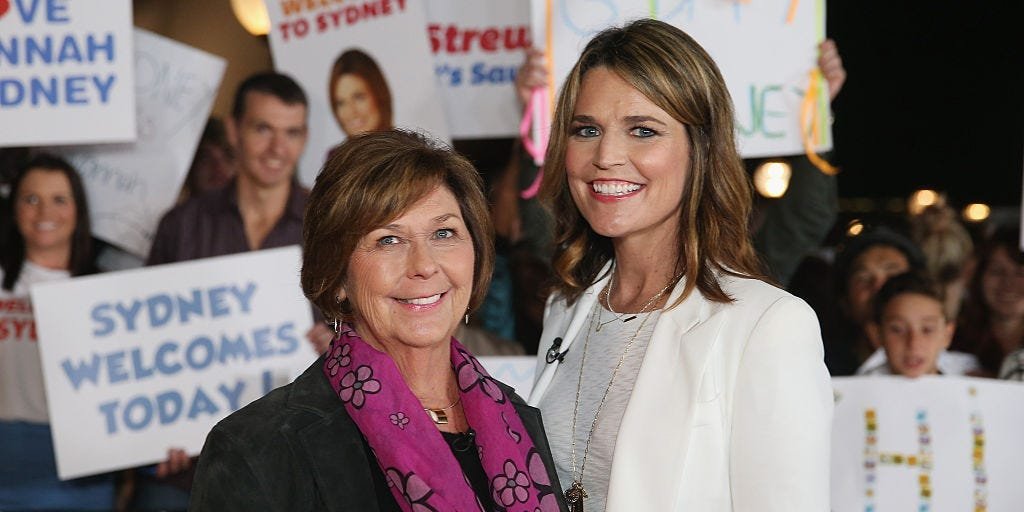
Guthrie, the 84-year-old mother of “Today” show host Savannah Guthrie, has been missing since February 1. Authorities have said Guthrie, who has limited mobility and takes a daily medication for a heart condition, was abducted from her home near Tucson, Arizona.
The FBI said Thursday that identifying details about the suspect had been confirmed, describing him as a man of average build, about 5 feet and 9 to 10 inches tall. He was seen in doorbell camera footage wearing a black backpack identified as a 25-liter Ozark Trail Hiker Pack.
On Tuesday, the FBI and the Pima County Sheriff’s Department released images from Guthrie’s Nest doorbell camera showing a person at her door wearing a full ski mask. Authorities said the person was “armed.”
This is a breaking news story. Check back for updates.
A new lawsuit from a Democratic senator and combat veteran at the heart of a free speech fight seeks to block the Pentagon’s intensifying crackdown.
Arizona Sen. Mark Kelly sued Defense Secretary Pete Hegseth on Monday, warning that the Pentagon’s effort to punish him “sends a chilling message” to veterans who speak out against the Trump administration.
Hegseth accused Kelly of “seditious” acts after Kelly publicly reminded US service members that they are not required to follow illegal orders. The Pentagon’s actions against Kelly have troubling implications for the political speech of millions ofveterans, military law experts said.
Hegseth’s effort to muzzle a US senator “places other retirees who have spoken up potentially in jeopardy,” said Rachel VanLandingham, a professor at Southwestern Law School who is a retired Air Force JAG. “Not knowing whether or not he’s going to come after you already has a chilling effect.”
Kelly said his lawsuit is about fighting back. The Democratic lawmaker announced the federal lawsuit on Monday. His suit also named the Department of Defense, Navy Secretary John Phelan, and the Navy Department as defendants. Kelly’s video urging troops not to follow illegal orders.
Veterans who serve 20 years or more are eligible for a military pension, but those benefits can be revoked or reduced if retirees are found to have violated military law while in uniform. By contrast, Hegseth’s move seeks to punish a veteran for his speech long after serving in uniform, an approach one expert on military law called baseless.
Every time Kelsey publishes a story, you’ll get an alert straight to your inbox!
Stay connected to Kelsey and get more of their work as it publishes.
Kelly’s lawsuit argues that using the military justice system to punish veterans’ political speech risks setting a precedent that abuses the First Amendment rights of other retired troops.
Defense Secretary Pete Hegseth’s prosecution of Kelly has implications for veterans’ speech, legal analysts said.
DoW photo by U.S. Air Force Staff Sgt. Madelyn Keech
Legal basis in question
The lawsuit argues that nothing in the law allows the Pentagon to revisit a retirement determination based on a veteran’s speech. Such a move, the filing says, would raise “serious constitutional concerns” and leave retired service members facing a constant threat to their earned benefits.
There’s no legal basis for Hegseth’s pursuit, VanLandingham said. The defense secretary initially sought to court-martial Kelly, threatening him with the military equivalent of a criminal trial. It later opted for a lesser administrative punishment.
“The process is the punishment,” said Frank Rosenblatt, a retired Army JAG and professor at Mississippi College School of Law. “The claim against Kelly had no merit.”
“Senator Kelly’s speech is not punishable under the UCMJ,” the National Institute of Military Justice nonprofit group said in a December statement in reference to the Uniform Code of Military Justice.
The lawsuit seeks to halt actions that could reduce Kelly’s military rank and retirement pay and characterizes that effort as “unlawful.”
After filing the lawsuit, Kelly requested a temporary restraining order and a preliminary injunction from the federal court, seeking to halt the Pentagon’s actions while the case is reviewed on its merits. Both are emergency measures that ask a judge to stop government action before permanent harm occurs.
The federal government has been increasingly pushing cases important to the Trump administration onto a “rocket docket,” Rosenblatt said, accelerating litigation toward higher courts. If the judge assigned to the case, US District Judge Richard Leon, issues a ruling the government doesn’t like, “this could move very quickly to the DC Circuit and potentially the Supreme Court.”
Leon has previously ruled against the military’s authority over retirees.
“I am not concluding today that Congress could never authorize the court-martial of some military retirees,” Leon wrote in a 2019 memorandum opinion that rejected the government’s argument that military jurisdiction over all retirees was necessary to maintain good order and discipline of its active force. The judge noted he had not seen a clear argument for “why the exercise of such jurisdiction over all military retirees is necessary.”
In a post on X last week, Hegseth called Kelly’s video with five other Democratic lawmakers “reckless and seditious” and said it was “clearly intended to undermine good order and military discipline.”
The military justice provisions that Hegseth accused Kelly of violating — Articles 133 and 134 of the Uniform Code of Military Justice — are not explicitly tied to sedition and can cover a wide range of alleged misconduct.
Kelly’s lawsuit argues that allowing the executive branch to punish a member of Congress for speech is a threat to the Constitution and erodes congressional oversight of the armed services.
“We are aware of the litigation,” a Pentagon spokesperson said Tuesday when asked for comment on the lawsuit. “However, as a matter of policy, the Department does not comment on ongoing litigation.” That same day, Hegseth took aim at Kelly’s military rank in an X post: “‘Captain’ Kelly knows exactly what he did, and that he will be held to account.”
It looks like Sam Altman and Elon Musk are headed for a courtroom showdown.
During a hearing on Wednesday, a California judge said she plans to reject Altman’s lawyers’ last-ditch efforts to end Musk’s case against OpenAI and its CEO.
“This case is going to trial,” US District Judge Yvonne Gonzalez Rogers said at a hearing to consider whether the evidence was sufficient to warrant a jury trial.
“I think there’s plenty of evidence,” she said, referring to Musk’s case. “It’s circumstantial, but that’s how these things work.”
In his lawsuit filed in 2024, Musk accused OpenAI of misleading him in its decision to abandon its original nonprofit mission and structure in favor of a profit-oriented model, including through its partnership with Microsoft.
Musk says he donated $38 million to the maker of ChatGPT over the years to support its mission to develop AI for the benefit of humankind. The Tesla CEO is seeking monetary damages, as well as a judgment to void Microsoft’s licensing agreement with OpenAI.
At a hearing on Wednesday, an Oakland federal court judge said she felt there was enough evidence that Musk may have been deceived to allow the case to move forward to a jury. A trial is scheduled for March.
“There were assurances made, and promises made, that the structure would be maintained,” she said. “There was lots of information that was not shared.”
The judge added that she also felt “there are strong arguments by the defense.”
“I think the jury is going to get to decide,” she said.
OpenAI lawyers have denied Musk’s allegations, saying Musk was aware of the company’s for-profit plans as early as 2018. OpenAI has also pointed out that it is still controlled by OpenAI’s nonprofit arm.
“Mr Musk’s lawsuit continues to be baseless and a part of his ongoing pattern of harassment, and we look forward to demonstrating this at trial,” a spokesperson for OpenAI told Business Insider. “We remain focused on empowering the OpenAI Foundation, which is already one of the best resourced nonprofits ever.”
A spokesperson for Musk did not immediately respond to a request for comment.
Musk has filed multiple lawsuits against OpenAI. Most recently, his AI company, xAI, sued OpenAI in September, accusing it of stealing trade secrets and targeting its employees for recruitment. At the time, an OpenAI spokesperson told Business that the lawsuit is “the latest chapter in Mr. Musk’s ongoing harassment.”
Musk helped found OpenAI in 2015, but left the company in 2018. At the time he said his work with OpenAI could present a conflict of interest with Tesla’s AI ambitions.
Since, Musk has repeatedly criticized Altman and OpenAI, including the company’s structure. Musk later went on to launch his own AI company, xAI, in 2023.
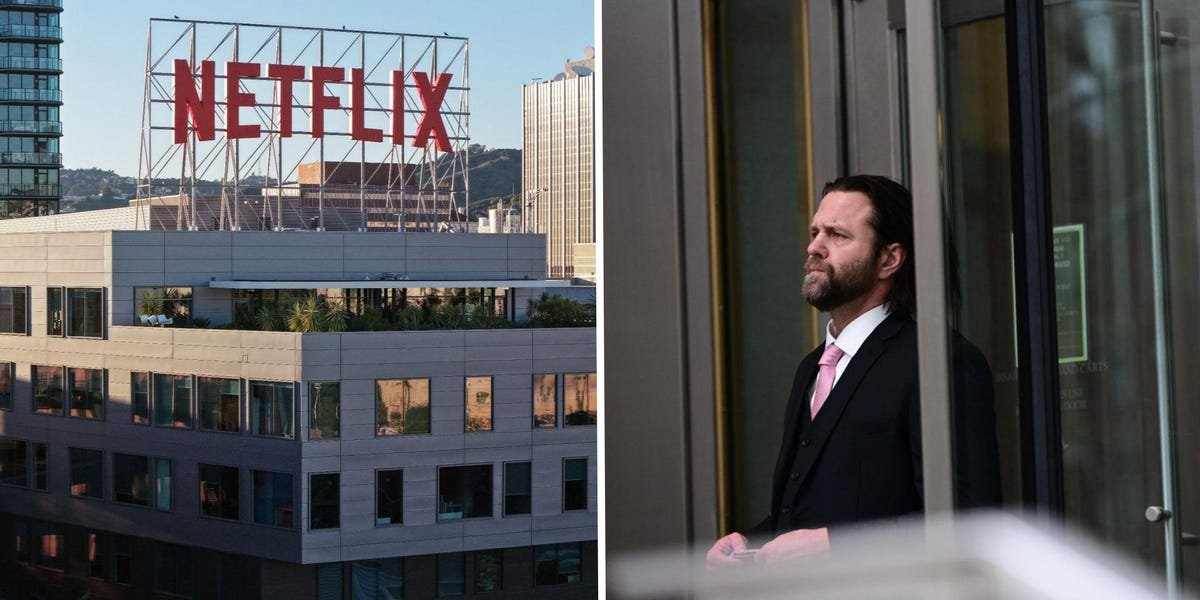
A Manhattan federal jury on Thursday found Carl Rinsch guilty on charges that he scammed Netflix out of $11 million in a lavish spending spree.
After less than five hours of deliberation, the jury said it found Rinsh guilty on all seven counts, including fraud, money laundering, and illegal money transmission. He faces up to 90 years in prison, but is expected to be sentenced to far less.
Rinsch, wearing a purple-plaid tie and matching pocket square, looked straight at the judge as the jury foreman read the verdict.
The case centered on the millions of dollars Netflix paid Rinsch to film “White Horse,” a sci-fi epic about a world where clone-like beings, after a schism with humankind, create their own society walled off from the rest of the world. Rinsch testified in his own defense earlier this week.
Rinsch — a Ridley Scott protege who previously directed the Keanu Reeves-starring “47 Ronin” — shot footage for “White Horse” on two continents. But by the fall of 2019, he exceeded the $44 million Netflix budgeted for the project and asked for more money.
Through the end of 2019 and early 2020, Rinsch negotiated with Netflix to figure out how to move “White Horse” forward and realize his ambitions. He envisioned a franchise like “Star Wars” and “Game of Thrones,” complete with an elaborate fantasy world, that could become part of Netflix’s catalogue.
In March of 2020, the streaming service agreed to give Rinsch’s production company another $11 million.
Then, everything went wrong.
On the witness stand in Manhattan federal court, he said he believed the bulk of the $11 million was meant to reimburse him for keeping the production of “White Horse” afloat the previous fall, when it had gone over-budget. According to him, Netflix expected him to conduct only “soft pre-production” on a potential second season.
Netflix balked. Former executives testified in the trial that the $11 million was meant to go toward finishing a first season that Rinsch never delivered. According to prosecutors, the entire negotiation for the $11 million was a sham, and Rinsch meant to defraud the company all along.
At closing arguments on Wednesday, Assistant US Attorney David Markewitz presented the jury with a Buzzfeed-style list of “10 Ways You Know Carl Rinsch is Guilty.” In a slideshow, he walked them through what he said were Rinsch’s contradictory claims — on the witness stand, in emails and text messages, and in prior statements in a civil legal dispute with Netflix — that he said demonstrated Rinsch wasn’t telling the truth.
He argued it was absurd to think Rinsch’s lavish purchases — like a $439,000 handmade Hastens mattress — could not have possibly been meant for the production of “White Horse.” And Rinch’s 2021 purchases of Rolls-Royces were insured in his own name, rather than insured by Netflix.
“In a TV show, a mattress is going to be covered by sheets and a blanket,” Markewitz told the jury. “No one watching ‘White Horse’ from home is going to have any idea what is under those linens.”
Daniel McGuinness, an attorney representing Rinsch, told the jury that Rinsch never had the “intent” required to find him guilty.
He showed them emails and texts leading up to the March 2020 agreement that he said demonstrated Rinsch’s negotiating posture had always been that Netflix owed him about $11 million for reimbursement. Rinsch never said he would spend all the money on additional production for “White Horse,” McGuinness said.
In reality, according to McGuinness, the situation was a “contract dispute” based on misunderstandings between Rinsch and Netflix.
“They were talking past each other, and the government has turned it into a nefarious fraud conspiracy,” McGuinness said.
This is a breaking story. Please check back for updates.