They-were-about-to-shut-down-their-business-Then-a.jpeg

They were about to shut down their business. Then a raw TikTok changed everything.

For years, Brittany Nemandoust struggled to keep her small business afloat.

Chocbox, her DIY chocolate-making kit company, started as a pandemic project after shutdowns left her temporarily out of work as a dental hygienist. When she returned to the dental office, the business remained a side hustle.

Sales fluctuated, spiking over the holidays and slowing down during the spring and summer.

Around April 2024, she and her husband, Kevin, sat down to discuss whether it was time to shut it down. Sales weren’t enough to cover expenses, including rent for a small office in Los Angeles and payroll for a part-time employee, and Nemandoust had taken on credit-card debt to keep the company running.

On paper, closing made sense. But she wasn’t ready to give it up.

“I was really optimistic. I’m like, ‘I know that it’s going to happen at some point. It’s going to blow up,'” she told Business Insider. “I just had a feeling.”


A Strawberry Crunch Chocobox bar with their Dubai filling.

Each Chocbox kit includes a chocolate mold, pre-measured ingredients, and step-by-step instructions.

Ethan Noah Roy for BI


A few weeks later, an opportunity emerged. Nemandoust had noticed videos of a thick, pistachio-filled “Dubai chocolate” bar flooding TikTok. Influencers were trying to recreate it at home, and comment sections were filled with the same questions: Where do you get these ingredients? How do you make this?

Unlike most viewers, she already ran a chocolate kit business. Plus, years earlier, she had custom-designed a chocolate mold that was 20-30% thicker than standard molds — originally, she said, because she felt customers deserved a more substantial bar. That thickness turned out to be exactly what the viral Dubai bar required.

The couple went to a Middle Eastern grocery store in their neighborhood, bought pistachio cream and kataifi pastry, and tested their own version. Then, they filmed a video of the two of them breaking the bar in half and tasting it.

“It wasn’t a pretty video. It was just very raw,” she said, but the response was immediate.

Within 20 minutes, the video had 500 views, more than her videos typically received. Minutes later, the count doubled. By the end of the day, more than 100,000 people had viewed the video, and orders were pouring in. She hit TikTok’s daily cap for new sellers, 100 orders, that day and again the next.

There was just one problem: She didn’t have hundreds of kits ready to ship.

Managing quick growth after a viral moment

Going viral was exhilarating, but chaotic.

Two ingredients in particular — kataifi and pistachio cream — were difficult to source. Online suppliers were sold out, so she and Kevin started calling Turkish markets across Los Angeles. They even phoned gelato shops, knowing pistachio cream is often used in pistachio ice cream.

They also needed extra hands to pack orders, so they called friends, family, and anyone willing to pack boxes at odd hours.

“When you go viral, you need it now,” Nemandoust said. “You don’t have time to go through a hiring process or wait a week for a bulk order of items. You need it ASAP.”


Brittany and Kevin check out an assortment of their products.

Nemandoust launched Chocbox from her parents’ home during the pandemic. Today, she operates the business out of a 6,000-square-foot warehouse in Los Angeles.

Ethan Noah Roy for BI


In addition to pulling from every resource they had, they worked 15-hour days, waking up around 6 a.m. and finishing late at night. They often livestreamed their long days, which helped build their community that would be integral to sustained success.

“We would be up and just livestream at like 11 pm at night, blasting music, and I honestly think that’s how we started building our community — showing people the rawness of what it means to go viral,” she said.

As chaotic as that time was, the couple still focused on building systems to keep up with demand. They created instructions for assembling a kit, for how it should look when complete, and for packaging and labeling it correctly. They printed photos of finished kits and taped them to the walls, and recorded short videos demonstrating the packing process so new helpers and employees could avoid mistakes.

“The worst thing you can do when you go viral is not fulfill orders,” Kevin, who quit his corporate job in 2025 to help grow Chocbox, said. “People are dying for your product, and if you don’t send it, that can almost instantly kill your momentum.”

They also resisted the temptation to assume the viral spike would last forever. Instead, they focused on turning a moment into infrastructure: improving sourcing, tightening operations, and gradually expanding capacity. They moved from a 5-by-6-foot cubicle to larger office spaces in the same building, eventually upgrading to a 6,000-square-foot warehouse. Today, they employ eight people.

Strategies to build a lasting business

Going viral brought new customers, but didn’t guarantee customer retention. To create a lasting business, they’ve focused on building a community and creating the best possible product.


Brittany opening one of their dips for social media.

Nemandoust regularly hosts livestreams on TikTok to showcase products and connect with customers.

Ethan Noah Roy for BI


From the start, Nemandoust leaned into community-building. She livestreamed on TikTok, assembling kits in real time, answering questions, and interacting directly with viewers.

“I want people to think of me when they think of Chocbox,” she said. “I want to be part of the brand.”

The livestreams weren’t just sales channels. They became a means of building trust. Customers watched orders being packed, saw the behind-the-scenes scramble, and felt included in the growth.

Affiliates became another key pillar. TikTok’s native affiliate system allowed creators to tag Chocbox products in their videos and earn commissions. At first, influencers were simply buying the kits themselves and posting about them. Over time, the couple built a more intentional network of roughly 30 highly engaged affiliates, whom they call “Chocboxers.”

“We invest in them, and they invest in us,” Kevin said, noting that some of their affiliates earn thousands of dollars a month in commission. “They’re an extension of our brand.”

Beyond community, they’ve maintained discipline in their product strategy and kept a tight focus on a hero product: the chocolate-making kit. They later added refill kits and a jarred version of their pistachio filling, branded as “Dubai Dip,” but resisted flooding their website with dozens of flavors.


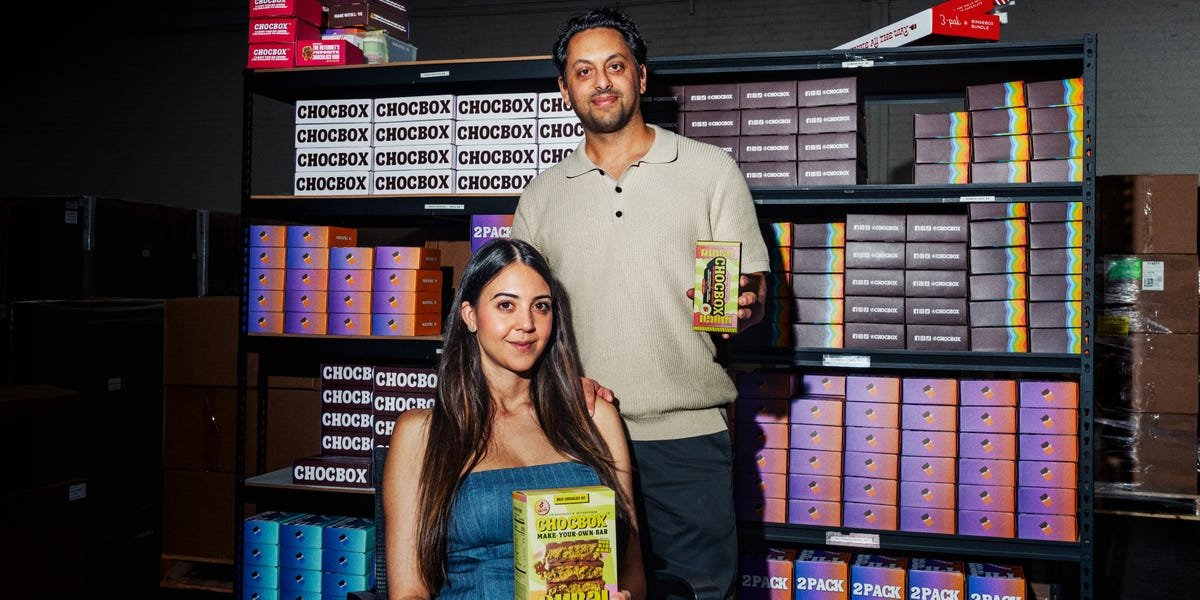
Portrait of Brittany and Kevin next to a shelf of their kits.

The Nemandousts in their Los Angeles warehouse.

Ethan Noah Roy for BI


“When we release products, they have to be really good,” Nemandoust said. “It’s never going to be mediocre.”

They’re constantly engaging with their customers, asking them what they want and using that feedback to create products that excite their community.

Today, both Brittany and Kevin work on Chocbox full time. Sales still fluctuate seasonally — peaking during the holidays and around Valentine’s Day, slowing in summer — and growth still comes with stress, but the conversation they had in April 2024 feels distant now.

They said the company recently surpassed 300,000 units sold on TikTok Shop. Just a couple of years ago, they were preparing to shut Chocbox down. From the outside, the milestone looks like an overnight success. It’s anything but, said Kevin: “If people really knew how hard it was behind the scenes, the amount of turbulence it took to get here is insane.”

That turbulence, the couple says, is the part most aspiring founders don’t see. At the end of the day, starting and maintaining a small business is “really hard,” he said. But if you want to do it, “the only thing getting in the way of starting a business is truly yourself. Just start.”


Source link

After-2-layoffs-and-a-breakup-in-New-York-I.jpeg

After 2 layoffs and a breakup in New York, I booked a one-way flight to Asia. Travel changed how I define success.

I thought I was on track — until the year everything fell apart.

Just weeks into January 2023, I was blindsided by an unexpected breakup. In the months that followed, I moved through my days on autopilot, watching the year continue to unravel.

That May, I was laid off from my job coordinating large conferences and corporate travel. I took a position at a family-run wedding business that was building out its travel department. I told myself things were starting to look up.

But between a 90-minute commute, sitting at a desk all day, and performing mundane tasks not listed in my job description, I began to spiral instead of heal.

Almost every day, I’d retreat to my car at lunchtime and break down in tears, overwhelmed by how unhappy I was.

The “American dream” began to feel like a trap

Since I was a kid, I’d treated success like a checklist built from American expectations I absorbed through school, TV, and social media. It seemed simple enough: Stay in line with peers, get married before turning 30, and buy a big house to raise a family in.

It was becoming clear that this narrative might not align with the life I wanted for myself.

Later that same year, I dealt with a toxic roommate, a serious health scare in my family, and a car accident. Then, just days before the New Year, I got one final surprise: another layoff. This time, however, I felt relief.

Walking out of that office for the last time allowed me to stop chasing a version of success I knew would never satisfy me.

Distance changed the pressure I was living under

As 2024 began, I set a clear goal for myself to sublet my apartment, sell my belongings, and board a one-way flight to South Korea by April 15. My plan was to begin an eight-month journey across Asia and Australia. After four months of careful planning, I boarded that flight.

Starting the trip with a friend in Seoul made the beginning — and the 15-hour flight over — feel safe and manageable. When she boarded her flight back to the US, and I headed off to Thailand alone, that distraction disappeared. I was officially left alone with my own thoughts.

Early on in Southeast Asia, I questioned what I was doing and where it would all lead. I cried in hostels and had panic attacks on the back of motorbikes. My anxiety was triggered by the blasting music of Bangkok’s Khao San Road and Ho Chi Minh City’s endless traffic.


Woman in red, wearing sunglasses, standing on Ha Giang Loop, northern Vietnam.

Strum escaped the pressure she’d been living under while traveling through the mountains in northern Vietnam.

Provided by Macie Strum


The more I took note of my surroundings, the less the world around me matched the urgency in my head.

As I traveled the Ha Giang Loop in Northern Vietnam by motorbike, I realized that my idea of success was built upon a level of pressure that didn’t exist up in these Vietnamese mountains. Local life didn’t revolve around strict deadlines and productivity scales. Instead, it centered on routine, family, and staying present each day.

As I moved through each country, I connected with travelers of every age and background, many of whom were unemployed, exploring new paths, working online, or simply figuring things out as they went. Some were meticulous planners; others lived day to day.

In the jungles of Malaysian Borneo, I met a fellow American who was also redefining her life after a heavy breakup. I remember the first night we met, we talked for hours about life, expectations, and the fear of what would come next.

We ended up traveling together to Kuala Lumpur, meeting again in Penang, and later in Bali. Seeing her in so many different places reminded me how many others were navigating the same uncertainty.

It reframed my view of travel — not as a break from real life, but as an active part of it. For the first time, uncertainty no longer felt like failure.


A woman posing with the Yellow Fortress in Sarajevo, Bosnia and Herzegovina, in the background.

She’s building her career in Sarajevo, Bosnia and Herzegovina.

Provided by Macie Strum


I’ve redefined success

When that trip came to an end, I felt no pull toward the life I’d left the year before.

I returned to the US briefly, but chose to keep traveling to explore what alternative versions of success could look like for me.

In 2025, that decision took me to 17 European countries. As I explored, I found myself falling in love with one of the continent’s most misunderstood regions: the Balkans.

Today, I live in Sarajevo, Bosnia and Herzegovina, building a career as a freelance journalist without sacrificing my ability to travel. While the life I’m creating may not match the version of success I was raised with, it’s more aligned with how I want to live: flexibly, deliberately, and with purpose.

While I don’t know exactly what comes next, that no longer scares me the way it once did.

Do you have a story to share about living abroad? Contact the editor at akarplus@businessinsider.com.


Source link

My-dad-died-at-56-and-never-made-it-to.jpeg

My dad died at 56 and never made it to retirement. The 3 lessons he taught me changed my own plans and perspective.

In 2023, my dad called to tell me he’d dropped down to four days a week at work.

He’d had a long career as an insurance underwriter, though it didn’t define him. At one point, he even left the profession to become a plasterer for a decade to better balance out his schedule. Still, it served him well enough.

“You really are getting old, then,” I joked. Dad laughed — he was only in his 50s.

We talked about his retirement and how he planned to wind down gradually over the next few years, before pulling the trigger and paying a full-time job’s worth of attention to the golf course.

That step was the first, and last dad took toward retiring. A year later, he told me he had cancer.

His diagnosis marked the beginning of a period in which I spent every day with him. He had been exceptionally fit, competing in triathlons, marathons, and Ironman races, but went from Hyrox to hospice care in just eight weeks.

Then on June 19, 2024, at the age of 56, Dad’s oesophageal cancer snatched away his future, and any prospect of a retirement.

I later realized our conversations during his illness were a textbook of the values by which he had lived his life. I’d heard him talk along similar lines in the past, but it wasn’t until I was lucky enough to spend each day for two months with him as his peer that I was able to distill them into three lessons.

Now, at the age of 32, these guide me in my career and life, and frame the way I think about retirement.

Live as if you might never make it


Man jumping in the air in front of a mountain

Dad while doing the Tour De Mont Blanc.

Callum Macauley-Murdoch


It may sound a morbid start, but I see this principle as both pragmatic and a call to action.

I see it as pragmatic because, of course, it is true: You might very well not make it to your retirement. And thinking about death in this way can help you take important practical steps, like ensuring you have an updated will and, at the very least, start thinking about granting powers of attorney.

And I see it as a call to action because, when loss helps you understand that life is precarious, it shines a light on how we often live without confronting the inevitability of death.

With that understanding, a more fulfilling life can emerge years earlier than it might otherwise have; one that, perhaps, you dreamed might come in retirement.

This principle led my dad to travel widely, a habit he passed to me. I’m due to visit New Zealand soon, the place he unknowingly took his final big trip. It also led him to take up the sports that piqued his interest over the years, and achieve a genuine sense of contentment.

It took me a lesson in the brutality of life, and the illuminating chaos of grief, to truly understand the importance of living it.

Build a life that gives you choices


Man on a bicycle

Dad finishing an Ironman in Wales.

Callum Macauley-Murdoch


One of the pitfalls of the first lesson is that, if taken literally, it could lead to financial ruin.

If it were a certainty I’d never make it to retirement, I’d spend everything I had now. However, in a classic catch-22, living life like I’d never make it there would delay my retirement in perpetuity.

So instead, I keep an eye on the future and try to resist the urge to part with all my money in exchange for experiences now, so that I can have some freedom of choice when I retire.

For Dad, working hard and getting an education meant having choices, and that influenced many of my decisions in life, including the one to pursue a career in corporate law.

In the end, that didn’t align with the life I wanted, but the experience gave me the skills and financial backing to choose a different legal career for myself.

Because of my job and savings I’ve built up from it, I had choices when Dad died. I was able to pause, reassess my life, and temporarily step away from my busy career.

During that time, I thought about how he used to ask me about work and I’d sometimes tell him how I wished I could just retire now to travel the world and write. He’d remind me I had a long way to go.

But now, those passions I always thought I’d save for later, like planning a trip to New Zealand or getting my master’s in creative writing, have become present pursuits.

Soon enough, though, I’ll pick up some legal work again. Why? Because unless I write a bestselling novel by the end of the year, I still want choices in retirement, should I make it there.

Find the adventure in everything


Man with hat on a mountain leaning on a stone

My dad on a hike at Arthur’s Pass in New Zealand.

Callum Macauley-Murdoch


Dad took a keen interest in all aspects of life, and didn’t take much of it seriously — because of that, not in spite of it, he was still successful in much of what he did.

This lesson applies to every aspect of life, including retirement, which I’m viewing as simply another opportunity to experience a new pocket of life.

It even applies to terminal illness. When my dad was nearing the end of his life, he said something in an attempt to comfort me, which has ended up being the most transformative lesson of the three.

“Life is one series of adventures. This is just another one.”

That impacted me profoundly, and taught me to seek joy even in life’s darkest corners.

These days, I view my retirement, career, and life much differently


Author Callum Macauley-Murdoch and his dad

Dad and I at my wedding.

Callum Macauley-Murdoch


Losing Dad changed how I think about my life, career, and the very concept of retirement.

Most of all, it prompted me to stop deferring what I truly wanted to my final years while still setting myself up to have choices in the future.

Now that I’m taking incremental steps towards something I’d be happy to do well into my old age, the dream of retirement crosses my mind less often.


Source link

I-worked-14-hour-days-at-a-startup-A-cancer-diagnosis.jpeg

I worked 14-hour days at a startup. A cancer diagnosis changed how I succeeded at Netflix and Meta.

This is an as-told-to essay based on a conversation with David Ronca, a retired video systems engineer. He spent 12 years at Netflix and six years at Meta. This story has been edited for length and clarity.

My time at a startup in the early years of my engineering career was like a really bad relationship.

I joined a company that specialized in video playback around 2000. I loved working on video. I consider those seven years like going to school, and I came out with a Ph.D. in practical video systems. But it was the hardest seven years I’ve ever had in terms of work demands.

I was told when I joined that it would be really important that you’re seen around here a lot. So I would work until 7, 8, 9 — sometimes until 10 p.m. Then we started hitting delivery schedules, and I was getting to work around 10 in the morning and going home sometimes at 2:30 in the morning. We’re talking 14-hours days, six to seven days a week. Eighty hours a week would’ve been a break.

We didn’t have good direction. We’d be four or five months into solving a hard problem before leadership would stop us and say, “Go work on this instead.” It was madness.

We were using work hours to compensate for really bad decisions.

In January 2004, I started feeling ill. On a Sunday, I didn’t feel so good, and by midweek, I got worse.

On Friday night, January 17, my wife took me to the emergency room. The doctor told me, “This is likely colon cancer.” After the first surgery, he said, “There’s no way you have a tumor like this and it’s not cancer.”

Two weeks earlier, I had been running and feeling great. Within a week, I was in a hospital bed on machines.

It took another week before doctors could do the full surgery. And you spend that time with no idea what they’re going to find. That was a very dark week.

My mother died of breast cancer when she was 48. I was 16. Now, I’m in the hospital at 44. I remember thinking, “History doesn’t repeat, but it rhymes.”

My wife would bring the three kids. My oldest, who was seven, would sit quietly in the room with me. My youngest was two years old. He didn’t really know me.

I was looking at my young son, thinking he’s going to grow up without a dad.

After surgery, they told me it was stage 3 colon cancer. They removed 60% of my colon. There was lymph node metastasis. My five-year survival prognosis was about 25%.

‘I will not work like this’

I went back to work part-time at first.

I was told that I had used up all my sick leave and vacation and was put on California disability, which is around $200 a week.

By that time, this was a company I had spent four years working 24/7 for.

I told my boss, “I’m sorry, I will not do this. I still want to work here, but if I have to leave, I will quit. Because I will not work like this.”

From that point on, I didn’t. And that was the irony of it all.

I feel like I did some of my best engineering after that. The real change was that I was no longer wasting my brainpower and my thinking on junk.

You don’t do good work after 12 hours. You can’t work sustained all-nighters and be productive. The quality of your work is going to suck. I don’t care who you are. For most mere mortals, you try to work those hours, you’re just not going to be doing good work.

I also started making intentional decisions for life, not just work.

I coached soccer for all three of my kids. I went to their games. My daughter did ballet, and we were there all the time. We started planning and taking family vacations — hiking in the mountains, RV road trips, and Maui.

I realized you have to work to have a life, but you have to have a life to work. So you want to stand in the middle of those things.

Hours worked are not a performance metric

In 2007, after several clean scans, I joined Netflix. I delayed accepting the offer until I got my scan report. I didn’t want to change jobs yet because if you have positive liver metastasis, you’d be lucky to get two years.

In my interview, Patty McCord, the chief talent officer at the time, told me, “We don’t value 24/7 work. You won’t be successful here working all the time.”

That was almost foreign to me. But it also didn’t mean we didn’t work hard.

At Netflix, I was part of the early streaming team — maybe 12 to 16 people. We made aggressive schedules, and we didn’t miss them. We launched a Netflix app on the original iPad on Day One within two months.

The culture at the company was: If you have to work 24/7 for us to be successful, you’ve got a problem, and we’ve got a problem, and we’re going to fix it.

Even at Meta, my favorite poster had a silhouette of a rocking horse that said, “Don’t mistake motion for progress.”

In other words, high performance is not measured by how much work you do. It’s measured by how impactful your results are.

This is not to say that it’s wrong to work more than eight hours. Instead, you should understand why you’re working more hours. It should be intentional. Intentional exceptions.

If I were to tell my younger self anything, it would be to make work-life balance part of your DNA. Learn to take time off.

Don’t wait until you have cancer or some other near-death experience to realize this.


Source link

GabbyLandsverkpic

A longevity researcher changed his routine after visiting an island ‘Blue Zone’ where people live to 100

Steven Austad is a gym fanatic.

As the director of an anti-aging research nonprofit, he’s deeply aware that exercise might be the closest thing we have to a longevity cure-all.

That’s why he puts in about an hour a day on his bike or in the weight room as part of his longevity routine.

“I don’t take any supplements. I don’t even take a multivitamin, but I do spend a lot of time in the gym,” he told Business Insider

But on a recent research trip, Austad met with centenarians who stayed spry with a completely different style of exercise, and it changed how he thinks about working out.

“I met all these hundred-year-olds and talked to them and watched them,” he said. “They get a lot of exercise, but it’s not heavy exercise.”

Here’s what we know about the healthiest kind of movement — and why being a little bit lazy may be the key to a long, healthy life.

The best exercise for longevity

Sardinia, Italy is one of the few places in the world where people regularly live to be 100 (or even older).

Known as Blue Zones, residents in these regions have traditions that scientists suspect are linked to enduring good health. Despite being spread around the globe, from Okinawa, Japan to Nicoya, Costa Rica, Blue Zones tend to share lifestyle habits like staying active, eating simple, mostly veggie-based superfoods, and building strong social communities.

Austad traveled to Sardinia last year while working on a research paper about whether longevity hotspots live up to the hype. He wanted to test the theory that the high number of centenarians in Blue Zones is more about poor record-keeping than any exceptional anti-aging habits.


Dr Steven Austad, a longevity researcher, and a view of the hillside villages of Sardinia, Italy

Longevity researcher Steven Austad visited active centenarians in Sardinia, Italy, who get their exercise on their local hillsides instead of the gym.

Steven Austad/Getty Images — miroslav_1


What he found is that Sardinian elders are legit. Not only did he verify that residents of the island are active and vibrant into their 90s and 100s, but what he saw changed his own approach to healthy living.

Villages in Sardinia are dotted throughout the region’s rugged, mountainous terrain. As a result, people who live there are consistently hiking as part of their day-to-day activities to get around.

Combined with other household chores like gardening, Sardinians tick all the boxes of longevity exercise without ever setting foot in a gym: lots of easy cardio, a bit of high-intensity effort from walking uphill, and muscle-strengthening movements using a full range of motion.

Austad also spoke with a regenerative medicine doctor in the area, who specializes in staving off problems caused by injury or aging.

She told him that her patients are primarily young people who hurt themselves in the gym.

Austad was stunned. All the 90- and 100-year-olds he had met were vibrant and healthy, while the younger generations needed medical care for pushing themselves too hard.

“That’s just remarkable,” Austad said. “It convinced me that you don’t have to be fanatical about this stuff.”

Take it easy for a longer life

Coming back from his Italian excursion, Austad couldn’t help but rethink his own approach to exercise.


a group of family toasting with classes of wine at a dinner outside

Residents of Italy’s longevity hotspot are known for relaxing habits like drinking wine and socializing, along with their active lifestyles.

Connect Images/Zero Creatives/Getty Images


Previously, he liked hit the gym hard, leaning into the addictive rush of endorphins from intense exercise, and was constantly tempted to push for an extra set or more time working out. For him, rest days felt like a distraction.

“The occasional day off, it drives me nuts,” he said. “I’ve got this one bad knee, and if I overdo it with that knee, I pay the price. So that kind of keeps me real, tells me when I’m starting to overdo it.”

Austad still hits the gym regularly, with a mix of cardio and strength training that prioritizes core stability and everyday motions like pulling and pressing.

But since his recent studies on the Blue Zones, he said he’s more likely to give himself a break without stressing about it.

“It makes me feel a little bit less guilty on the days when I decide that I shouldn’t work out,” Austad said.


Source link

THEN-AND-NOW-Vintage-photos-show-how-department-stores-have.jpeg

THEN AND NOW: Vintage photos show how department stores have changed

  • Department stores have changed dramatically over the last 100 years.
  • Department stores once sold necessities. Now, many are struggling to remain in business.
  • While some classic chains cease to exist, other retailers have found ways to increase sales.

In the early 1900s, department stores existed to sell necessities, including food, home goods, and apparel.

Today, many luxury department stores are struggling to survive.

The rise of the internet and surge in online sales have placed a major strain on department stores. Saks Global, the parent company of Saks Fifth Avenue, Bergdorf Goodman, and Neiman Marcus, became the latest department retailer to file for bankruptcy on Tuesday.

Take a look at how department stores have changed over the last 100 years.

In the early 1900s, department stores were focused on selling the necessities.

A Harrods department store.

Heritage Images/Getty Images

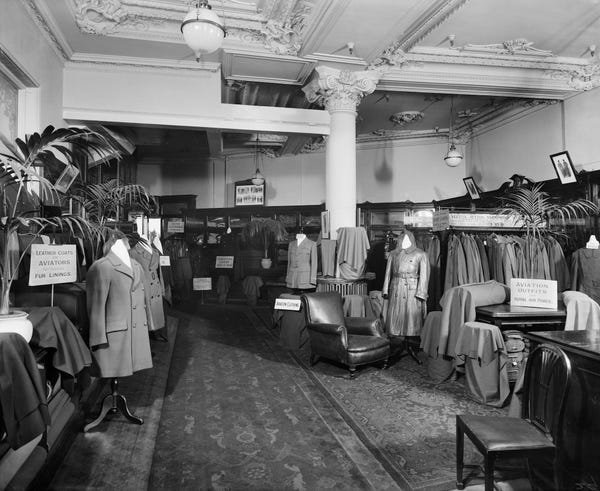
Core products included clothing and home goods. During times of war, the necessities on sale included military jackets, coats, and accessories.

That’s why Harrods, a famous department store in London, featured an in-house tailoring room throughout World War I. The space was utilized to alter used uniforms and sell new ones.

Department stores still sell the basics, but novelty items are also typically present.


Harrod's Department Store holidays

A modern Harrods department store.

Prisma by Dukas/Getty Images

You can find everything from household tools and fashionable clothes to toys and knickknacks at modern department stores — they seem to sell everything, in an apparent bid to compete with online retailers.

Harrods also sells store-branded items, including bags, stationery, and teddy bears.

Leading up to the 1930s, department stores were often crowded.


An old photo of a crowded department store.

A crowded department store.

Bettmann/Getty Images

Around 1929, people were encouraged to shop in order to help boost the nation’s sinking economy, Fortune reported.

But that same year, the stock market crashed, and the Great Depression officially began. The period lasted for 10 years, causing major layoffs, failing banks, and mass poverty.

Today’s department stores rarely see such large crowds, aside from major shopping events like Black Friday.


Macy's on Black Friday/

A Macy’s department store on Black Friday.

Kamil Krzaczynski/Getty Images

Even during major holiday sales, many modern shoppers still prefer to shop online from the comfort of their homes.

In 2025, shoppers in the US were projected to spend a record $11.7 billion online on Black Friday, an 8.3% increase from 2024.

It marked a contrast from the wild Black Friday scenes that could be seen in stores in the decade before the COVID-19 pandemic.

In the 1920s, employees worked in department store basements to make change for cashiers upstairs.


Making change for department store cashiers.

The basement of a department store in the 1920s.

Underwood Archives/Getty Images

In large stores that existed across multiple floors, vacuum systems transported the change upstairs through tubes.

None of those “tube rooms” are needed anymore, thanks to computers and credit cards.


A Macy's cashier.

A cashier at Macy’s.

Kena Betancur/Getty Images

Modern shoppers often don’t even have to interact with a cashier if they don’t want to. Instead, they can use touchscreen self-checkout machines to purchase products from many department stores.

Starting in 1924, Macy’s celebrated the holidays with its first annual “Christmas Parade.”


macy's first thanksgiving day parade

A photo from the first parade was taken in 1924.


Macy’s


Live animals such as elephants were included in the early days of the Macy’s parade. Balloons depicting popular characters such as Mickey Mouse appeared a little later in the ’30s.

The name has since been changed to the “Macy’s Thanksgiving Day Parade.”


The Radio City Rockettes at the Macy's Thanksgiving Day Parade.

The Radio City Rockettes at the Macy’s Thanksgiving Day Parade.

Scott Gries/NBC via Getty Images

Other aspects of the yearly tradition have also been changed. For example, live animals have been replaced with people dressed in costumes, and giant marching bands have become a staple. Tons of celebrities have also appeared on floats.

Minimal merchandise was showcased in store window displays throughout the ’40s.


department store display window

A department store display window.

Kirn Vintage Stock/Getty Images

Beginning in the 1870s at Macy’s, some chain retailers in New York City have made it a tradition to decorate store-front windows each holiday season.

There was some art to these displays, as props were placed alongside mannequins and merchandise to create a scene.

Contemporary display windows are unlike anything of the past.


A holiday display window at Macy's.

A holiday display window at Macy’s.

Nicolas Economou/NurPhoto

Modern department stores often incorporate technology, moving props, and bright lights into window displays.

As early as 1923, Barneys New York was a popular department store.


barneys new york

Barneys New York.

Peter Morgan/AP

Barneys New York was created by a man named Barney Pressman when he pawned his wife’s engagement ring and opened a shop on Seventh Avenue and 17th Street in New York City.

By the ’60s, Barney’s son, Fred, had turned the location into a luxury store, and the company became a national sensation throughout the 1990s and 2000s. By 2019, there were 22 stores in the US.

However, the chain faced difficulties and shuttered all stores in 2020.


A closing sale at Barneys New York.

A closing sale at Barneys New York.

WWD/Penske Media via Getty Images

Barneys New York filed for Chapter 11 bankruptcy in August 2019 and closed all remaining stores in February 2020.

Bonwit Teller was once a prominent luxury department store with a flagship location in New York City.


Bonwit Teller Department Store

A Bonwit Teller department store.

George Rinhart/Getty Images

The store was known for selling a range of high-end women’s clothing inside a luxurious Art Deco building. It grew to more than a dozen locations across cities, including Chicago, Philadelphia, and Columbia, South Carolina.

By 2000, every Bonwit Teller store had gone out of business.


Bonwit Teller out of business

Bonwit Teller’s closing sale.

Barbara Alper/Getty Images

In 1979, the Bonwit Teller company was sold from its original owners to outside corporations. Ten years later, in 1989, the store filed for bankruptcy and began shutting all of its stores, with its last location closing in 2000.

While the flagship Bonwit Teller store would have been exempt from the closure, the building was purchased by Donald Trump in 1979, who demolished it to build Trump Tower.

The Saks Fifth Avenue flagship store in New York City opened in 1924.


Saks Fifth Avenue in New York City.

Saks Fifth Avenue.

Bettmann Archive/Getty Images

Saks Fifth Avenue was once a bustling destination for luxury shoppers. At 650,000 square feet, the store spans an entire city block.

Saks Global filed for bankruptcy on Tuesday.


Saks Fifth Avenue.

Saks Fifth Avenue in New York City.

ANGELA WEISS/AFP via Getty Images

Saks Global’s 2024 acquisition of Neiman Marcus for $2.7 billion left the company in debt and struggling to pay luxury vendors, some of whom have withheld inventory.

Business Insider reporter Madeline Berg visited the Saks Fifth Avenue flagship store the day Saks Global announced it was filing for bankruptcy and found it to be “nearly empty” with little foot traffic.


Source link

A-rattlesnake-bit-my-toddler-at-a-birthday-party-What.jpeg

A rattlesnake bit my toddler at a birthday party. What happened next changed me.

I was sick at home when my 2-year-old son was bitten by a rattlesnake at a kid’s fairy-themed birthday party in LA.

My husband, Mac, was with our two kids when our son fell into the grass, crying and pointing to his hand. At first glance, Mac thought he was having an allergic reaction to a bee sting, a fair assessment for an Angelino parent, until he identified a second puncture wound in the divot between his little fingers.

It’s one thing to be present when your child gets hurt. The self-blame is straightforward — “It’s all my fault. I wasn’t quick enough. I should have seen it coming.” But when it happens without you, the guilt wanders until it emboldens — “Had I been there, I would have prevented it. I would have lured the snake away with the live mouse I keep in my first aid kit next to the Paw Patrol Band-Aids and butt cream.”


Toddler at hospital crying

The author’s son was admitted to the hospital after being bitten by a snake.

Courtesy of the author


Mac rushed to the Children’s Hospital LA while I went through the suddenly delicate motions of being a parent to our oldest. The CHLA attending doctors, in tandem with California’s leading poison specialist, determined that he would require an anti-venom treatment. A Marvel comic book plotline except this was real life, and the idea of Mads becoming Sssnake-Man was far-fetched, even in our desperation. Ironically, this is when you’re meant to conjure hope. Even if your son’s hand has gone from swollen pink to rigid gray.

As we waited to see if the anti-venom would work, I ran through the unthinkable what-ifs until I landed on a firm bed of memories from the last time I feared death.

My mom died at 67

The first time someone deeply close to me died was 10 years ago, when I lost my mother.

Her death made no sense to me. She was 12 years younger than my dad and only 67 when she died. She’d lived a self-proclaimed glamorous life before meeting my dad and becoming surprisingly pregnant with me at 39.

Before that, she was a “walking model” at Bal Harbour Shops in the 70s, touting signage from the then-emerging designers of couture. We loved each other completely, but it was no secret that becoming a mother deprived her of her golden years.


Mom and daughter

The author’s mom died when she was 67.

Courtesy of the author


I traveled across the county to be with her after her first heart attack. She refused medical advice to be added to a heart transplant list and was vehemently against keeping a low-sodium diet. For this, I was angry. I plead with her. I begged. Did she want to live? What if I were to get married one day? Wouldn’t she want to meet her future grandkids? All she wanted was sodium-rich tomato soup. I was so mad, I decided to cut my trip short so I didn’t have to watch her kill herself. Harsh, maybe, but that’s what it felt like at the time.

“Won’t you stay and hold my hand?” she asked before I left.

She died a few weeks later from sepsis after another heart attack. I made it back in time for her last breath.

Then my dad died at 82

I tried to do better when my dad became ill three years later. His death made more sense. He was an 82-year-old personal injury attorney with diabetes, Parkinson’s disease, and eventually bladder cancer.


Dad and daughter

The author’s dad died at 82.

Courtesy of the author


In a word, my dad was basic before it became a popular insult. I mean it in the most endearing way. He was a New York Jew who grew up at the tail end of the Great Depression and was generally satisfied as long as he had a Miami Hurricanes game on and a palmful of peanuts that, in his final hours, he wouldn’t be able to swallow. It was then that I’d watch the games with him and drop ice chips into his mouth to offer some relief.

I knew it wouldn’t be long before he died, but I guess I expected to be there when it happened. Instead, I got a call very early one morning to let me know that my father had “expired.” Like a carton of milk.

My son’s snake bite taught me something important

In the weeks leading up to Madsen’s snake bite, we were preparing to move across the country to be closer to Mac’s family. The decision was made at the last minute, and we had limited assistance. We were moving so fast, we forgot what mattered until Mads was admitted to the ICU.

A decade ago, I had somehow mistaken my mother’s autonomy for abandonment. It was only now that I understood, far too late, that my mom needed me just as much as I needed her.

Madsen received 21 doses of anti-venom over a 72-hour period. And it worked. When I saw him, he kept saying “I got you!” which is what Mac had been telling him since they arrived.

“I got you, too, little buddy,” I said and held his hand in mine.


Source link

Kate-Winslet-says-turning-50-changed-how-she-defines-success.jpeg

Kate Winslet says turning 50 changed how she defines success

Kate Winslet turned 50 this year and says her definition of success has changed.

Speaking to Newsweek in an interview released on Tuesday, the “Titanic” actor spoke about aging and what it’s been like to reach this milestone in her life.

“I think that women get more interesting as we grow older. I think that we’re more involved in life. We have so much more experience,” Winslet told Newsweek.

She added that turning 50 “feels fantastic” and that she’s looking forward to what the coming years will bring.

“When we grow up, and we think about what we want to be when we’re older, I never imagined any of this,” Winslet said.

As a result, she said she has come to view success in a very different way.

“Success, actually, for me more these days is more about pulling it off, being a decent person. You know, being able to take care of people, having time for friends, also learning how to be OK with not being busy all the time,” she said.

Winslet said there’s value in learning to slow down.

“I think it’s important to remind ourselves that sometimes being OK just in stillness and in our own company,” she said.

She said she doesn’t know how to meditate, but it’s something she should learn.

Winslet isn’t the only Hollywood star who has reflected on how turning 50 has changed her perspective.

During a “Today” show appearance in November 2024, Lauren Sánchez Bezos said she didn’t think she would have so much to look forward to in life after turning 50.

“When I was 20, I thought, ‘Oh my gosh, life is over at 50.’ Let me tell you: It is not, ladies. It is not over,” she said.

In January, Chelsea Handler told Parade that she was feeling “pretty into myself” as she turned 50.

“My life is exactly what I hoped it would be — it’s more than I hoped it would be. I had no idea what the possibilities were or that I could live a life like this and feel so free,” Handler said.


Source link

Woman posing for photo in the 80s

I wanted to be perfect like my grandmother. Then she asked me a question that changed my approach to life.

The author’s grandma was a perfectionist.

  • My grandmother’s terminal cancer diagnosis taught us both to let go of perfectionism.
  • Her lifelong pursuit of order and perfection shaped our family’s habits and expectations.
  • Facing illness, she embraced acceptance and inspired me to value effort over unattainable ideals.

My grandmother strove for perfection, convinced that it was an attainable goal if only you worked hard enough.

This meant eating less to lose weight. Food deprivation became a family bonding activity when my grandmother was on a diet. Diets lasted decades. We had marathon cleaning weekends while friends went to the mall. Play clothes were swapped out for school clothes for our rare trips to Burger King. Random dust checks were performed to ensure vacuuming of floors was done correctly. I’ll never forget her finger with a perfectly manicured nail grazing the cool Italian tile floor. Chore lists graced our refrigerator in the same way my friends’ quizzes and pictures graced theirs.

My grandmother wanted and demanded order, believing it led to perfection. My childhood was spent trying to please. She did not expect more from us than she did from herself, though. I hold many memories of Gram chastising herself for her too-big thighs or her less-than-stellar self-control around chocolate. It was a weakness that caused her significant guilt.

I followed her steps

Years later, as I began my own journey toward motherhood, I vowed that my children would not endure what I had. I would allow them to make messes. That dog I always wanted, but was never allowed to have because pets were dirty, would complete the large family I also always wanted. Perfection would become what it was meant to be, a foolish ideal — not a reality to strive for at all costs.

Family birthday
The author’s grandmother was diagnosed with terminal cancer.

Instead, I repeated exactly what I knew. My kids had to have matching outfits, picture-perfect Christmas cards, and all the things perfection required. I would clean and exercise until I reached the point of exhaustion. I worked out through all four pregnancies and directly after.

I recall throwing a birthday party for my son. He was turning 3 or 4. Someone commented on how great I looked. “Nicole makes sure everything is always perfect,” someone else said. I reveled in the praise. Gram heard the comment and smiled. We shared a common bond. When one of us inched closer to it, the other one felt proud.

Then my grandmother was diagnosed with cancer

The exhaustion of parenting four kids and attempting to create the perfect world for them and me was intense. I was stuck in a cycle. It would not break until one sunny fall day. I was running around attempting to clean and wrangle the kids for lunch. The plan was to work out after they took their naps. The phone rang, and my grandmother greeted me on the other end. All I heard was the word sick. I assumed it was regarding my grandfather, who had had heart problems for decades. I thought perhaps it was another heart attack.

“No, baby, it’s me. I’m sick.” It was shocking. Gram had lived a life of such order and perfection. She was in her 70s and active. She took only one pill for high blood pressure. Gram had Stage 4 ovarian cancer, which meant we discovered it late. We looked up the statistical odds of survival. My grandmother had a terminal illness.

The diagnosis changed her. For the first time, her constant need for perfection seemed foolish. Weight didn’t matter, nor did matching a purse to shoes to a blouse. When Gram lost her hair, one of her most beautiful features, and found herself struggling to keep the house clean, she understood things had to change. Maybe a wig wouldn’t be so bad. Maybe hiring someone to come in and help was OK. Her new favorite saying became, “Don’t sweat it.” What mattered was time and how she spent it.

She asked 1 simple question

When she saw me working myself to death to provide a perfect life for my family, Gram realized I had become just like her. She said, “Perfection isn’t worth it. It isn’t even real.” Then, she asked a question that changed everything for me.”Did you do your best?” When I answered that I had, she said, “Well, that’s all you can do then.”

It changed the way I lived my life and significantly reduced the pressure on me.

Watching her health diminish and understanding that she had limited time helped Gram realize what was important. Perfection and holding onto unrealistic expectations and ideals no longer fit into her life. Watching her learn this lesson allowed me to learn it alongside her. She taught me so that I didn’t have to wait until I was in my 70s battling a terminal illness. When I remember her now, I am forever grateful.

Read the original article on Business Insider

Source link

All-my-kids-have-grown-up-so-weve-changed-our.jpeg

All my kids have grown up, so we’ve changed our holiday traditions. We scaled back on decorations and added a day of festivities.

Cookie baking, decorating, stuffing stockings, building a holiday village scene with Iron Man and Thor action figures — just like a huggable snowman discovered, everyone has traditions for that time of year.

We’re a blended family with kids ranging in age from 17 to mid-30s. As our kids have moved from being wide awake at 5:30 am to testing Santa to creating their own holiday magic as adults, our traditions have grown and changed with them. As a result, it’s all less stressful.

We’ve expanded the days of the holiday


Family around table

A Christmas Tweve holiday lunch with Christmas crackers and cassoulet.

Courtesy of the author


Right around Thanksgiving, I am reminded that it’s not just wonderful, it’s also a wacky and wearisome time of the year.

I grew up in blended families. By middle school, both of my parents had remarried, doubling the number of families to see during the festive season. By the fifth stop on a whirlwind Christmas Day in high school, my brother and I were stuffed with cookies and even burned out on opening presents.

For most of our 20-year marriage, I’ve felt like I’m reliving those teenage years all over again as we try to squeeze in his family, my multiple families, and the kids’ other family commitments into two overstuffed days of festive cheer.

As the kids got older and added commitments to their significant others and time for their own families, we realized Christmas is too short. Two days were just not enough time to cram in all the festivities and have at least a little time left for our family.

So, some years, we celebrate what we call “Christmas Tweve,” the day before Christmas Eve. We spend most of the day hanging out, having a festive feast, and then opening gifts. Sometimes we have a houseful overnight, and everyone stays up late watching Christmas movies and eating my feeble attempts at pancake art for breakfast.

We have scaled back the decorations


Advent calendar

Our Advent calendar is surrounded by my favorite decoration, kid’s artwork.

Courtesy of the author


We are down to two kids living at home, and the number of holiday decorations has reduced.

One year, we had multiple trees, each decorated in a different theme — a candy-themed 5-foot tree, a mini tree in the kids’ rooms, and a fancy ornament 7-foot tree.

There were two Christmas villages, one in the kitchen. The kitchen and living room looked like Christmas exploded in them. Every room had a few decorations — a tree, figurines, holiday towels, and a wreath on the door.

There was a time when seven of us were decorating. Now it’s down to four, and we’re focusing more on the nostalgic and sentimental decorations. Our tree is covered in ornaments from places we’ve traveled and the kids created.

I used to frame the sliding door in our kitchen with the kids’ artwork – cotton-ball snowmen, sparkly handprint reindeer, and a painted winter scene.

A few years ago, my youngest and I had a holiday moment of tension when I displayed elementary school artwork with their previous name. They’re nonbinary, and it bothered them seeing that name plastered all over the kitchen.

I got creative and modified my favorites — erasing letters, trimming corners, and folding back edges. Now I display favorites onl,y and it’s down to one wall shared with our Advent calendar.

Our Advent calendar changes along with our family


Dog advent calendar

One year the kids weren’t into the Advent calendar, so we did it with the dog instead.

Courtesy of the author


When the kids were younger, we had multiple Advent calendars — one with treats and one with toys. One year, it was Disney Tsum Tsums, there was “Star Wars” Lego, and then socks. A few years ago, no one was really interested, and we got one for the dog.

Now, our Advent calendar is a meaningful tradition. It’s the same one each year, and this year, my youngest helped shop for the candy, hopefully marking the start of a new tradition.

Our kids have started their own traditions


Holiday village with superheroes

Our kids have made our holiday village their own.

Courtesy of the author


When she was in college, my stepdaughter started making an annual ornament with a silly picture of herself. The perfect gift on a tight budget — inexpensive and very meaningful.

Now she’s a mom, married, and decorating her own place. Every year, my husband, the two youngest kids, and I put all 11 ornaments she’s created on the tree — her with Chipotle burritos, in a snow globe, and with her son.

A few years ago, our oldest came to stay when his spouse was out of town. I put him and his two younger siblings in charge of the holiday village.

When I heard my youngest rummaging through their toys, I knew the holiday village was going to have a different vibe than it had in past years. Lego minifigs, Power Rangers, and assorted superheroes perched on festive rooftops and hid in the snow.

Every stage of our kids’ lives means something new. Sometimes it’s capped with a major milestone, such as a driver’s license, wedding, or graduation, as a reminder to stop and savor this time.

With the holidays, there wasn’t a big event to mentally prepare for the change. Gradually, things were different — gone were the days of classroom holiday party crafts and a big group decorating the tree. Now it’s crafts from doggy day care, Christmas Tweve, and Spider-Man in the village. And I love it.


Source link