Sam-Altman-says-OpenAI-will-tweak-its-Pentagon-deal-after.jpeg

Sam Altman says OpenAI will tweak its Pentagon deal after surveillance backlash

OpenAI said it is amending its contract with the Pentagon.

After public concerns that OpenAI’s new deal with the Pentagon would allow the government to use its AI for mass surveillance, CEO Sam Altman posted an internal memo to X on Monday evening, saying that the company is working with the Pentagon to “make some additions in our agreement.”

“Consistent with applicable laws, including the Fourth Amendment to the United States Constitution, National Security Act of 1947, FISA Act of 1978, the AI system shall not be intentionally used for domestic surveillance of US persons and nationals,” Altman wrote on X.

“The Department also affirmed that our services will not be used by Department of War intelligence agencies (for example, the NSA). Any services to those agencies would require a follow-on modification to our contract,” Altman added.

Altman’s memo came after OpenAI struck a deal with the Pentagon on Friday to deploy its AI models on classified military networks. The contract stepped into a standoff between the Pentagon and Anthropic and happened just a day before the US struck Iran.

In his note, Altman said that he got things “wrong,” saying the company should not have “rushed” to seal the deal.

“The issues are super complex, and demand clear communication,” he said. “We were genuinely trying to de-escalate things and avoid a much worse outcome, but I think it just looked opportunistic and sloppy.”

Hours before the OpenAI deal was announced, President Donald Trump ordered federal agencies to halt use of Anthropic’s Claude system, following a breakdown in talks over the military use of AI. Anthropic had specific red lines: explicit contractual bans on mass domestic surveillance and fully autonomous weapons, which are systems capable of killing without human oversight.

As of Friday, nearly 500 OpenAI and Google employees signed on to an open letter in support of Anthropic’s decision.

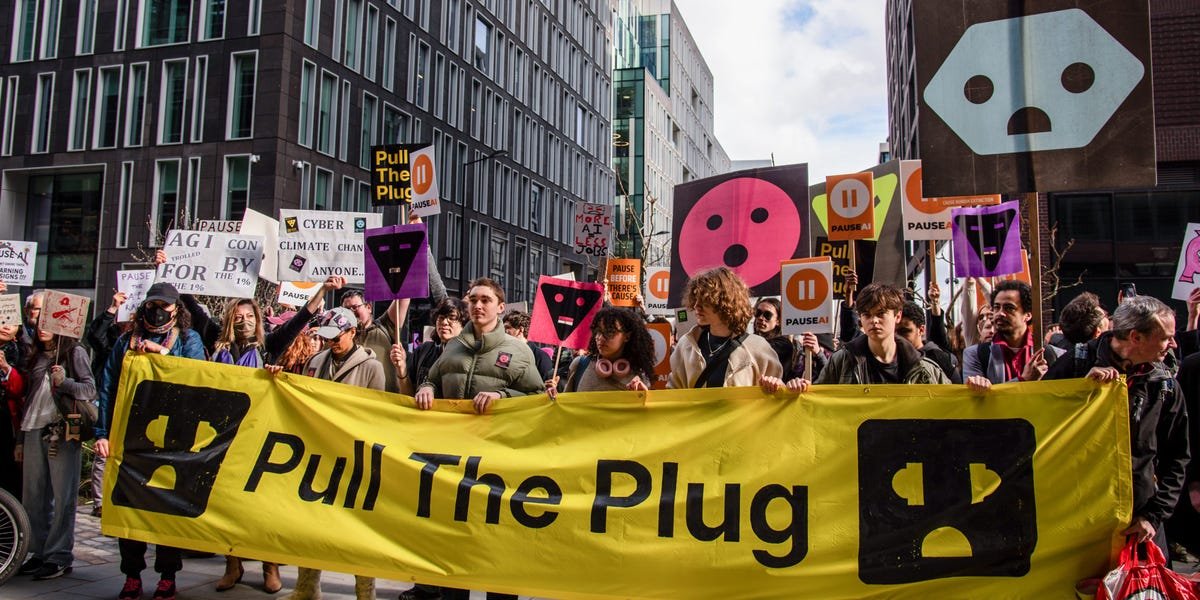
The OpenAI deal soon triggered backlash and concerns that OpenAI’s tools would be used for domestic surveillance or for lethal autonomous weapons, claims which Altman immediately disputed. Protests took place in front of the OpenAI office in San Francisco and London, and QuitGPT, an advocacy group against OpenAI, has launched a boycott and organized a protest scheduled for Tuesday.

Anthropic did not immediately respond to a request for comments.


Source link

5-big-takeaways-from-Sam-Altmans-Saturday-night-AMA-on.jpeg

5 big takeaways from Sam Altman’s Saturday night AMA on OpenAI’s Pentagon deal

  • Sam Altman went on X on Saturday night and told users to ask him anything about OpenAI’s Pentagon deal.
  • Altman on Friday night announced that OpenAI will work with the Pentagon and let it use its AI models.
  • Here are five big takeaways from Altman’s AMA session.

Sam Altman hopped onto X on Saturday night and told users to ask him anything about OpenAI’s agreement with the Pentagon.

Altman, late on Friday, announced that his company had finalized a deal with the Department of War to use its AI models. OpenAI’s deal came after Anthropic refused an ultimatum regarding the terms of use of its frontier model, Claude, for deployment in mass domestic surveillance and fully autonomous weapons.

Here are 5 big takeaways from Altman’s AMA.

The OpenAI-Pentagon deal was ‘rushed,’ and Altman knows the ‘optics’ don’t look good

The Pentagon deal was done quickly in “an attempt to de-escalate the situation,” Altman wrote on X.

He added in a separate post that the deal had been “rushed.”

Still, the “optics don’t look good” for OpenAI, he wrote.

“If we are right and this does lead to a de-escalation between the DoW and the industry, we will look like geniuses, and a company that took on a lot of pain to do things to help the industry,” he wrote.

“If not, we will continue to be characterized as rushed and uncareful,” he wrote.

Altman added that he sees “promising signs” for where this will all land for OpenAI.

OpenAI took the Pentagon deal because it ‘got comfortable’ with the ‘contract language’

Altman was asked why the Department of War went with OpenAI over Anthropic. He said he wouldn’t speak for his competitor, but did speculate on why OpenAI got the contract inked first.

“First, I saw reporting that they were extremely close on a deal, and for much of the time both sides really wanted to reach one,” Altman wrote. “I have seen what happens in tense negotiations when things get stressed and deteriorate super fast, and I could believe that was a large part of what happened here.”

He added that OpenAI and the Department of War “got comfortable with the contractual language” as well.

“I think Anthropic may have wanted more operational control than we did,” he added.

OpenAI has 3 redlines, but it’s open to changing them as tech evolves

Altman said that OpenAI has “three redlines.” But those redlines could change — and there could be more of them put in place — as the technology evolves, and “new risks” come into play.

“But a really important point: we are not elected. We have a democratic process where we do elect our leaders,” Altman wrote. “We have expertise with the technology and understand its limitations, but I think you should be terrified of a private company deciding on what is and isn’t ethical in the most important areas.”

“Seems fine for us to decide how ChatGPT should respond to a controversial question,” he added. “But I really don’t want us to decide what to do if a nuke is coming towards the US.”

Altman says Anthropic is on a ‘dangerous’ path

Altman said OpenAI had been talking to the Department of War for “many months” about non-classified work, before “things shifted into high gear on the classified side.”

“We found the DoW to be flexible on what we needed, and we want to support them in their very important mission,” he wrote.

“I think the current path things are on is dangerous for Anthropic, healthy competition, and the US,” Altman wrote on X as well. “We negotiated to make sure similar terms would be offered to all other AI labs.”

He also asked for “some empathy” for the Department of War, given its “extremely important mission.”

And, in Altman’s words:

Our industry tells them “The technology we are building is going to be the high order bit in geopolitical conflict. China is rushing ahead. You are very behind.”

And then we say

“But we won’t help you, and we think you are kind of evil.”

I don’t think I’d react great in that situation.

I do not believe unelected leaders of private companies should have as much power as our democratically elected government. But I do think we need to help them.

Altman says AI can help counter big security threats on two fronts

Altman says AI could come in useful on two fronts. Firstly, the US’s “ability to defend against major cyber attacks,” particularly, an attack that might take down the country’s electrical grid.

Secondly, biosecurity is an area where AI could help.

“I do not think we are currently set up well enough to detect and respond to a novel pandemic threat,” Altman said.


Source link

Leaked-audio-Warner-Bros-Discovery-CEO-David-Zaslav-tells-employees.jpeg

Leaked audio: Warner Bros. Discovery CEO David Zaslav tells employees Paramount deal felt ‘whiplash-y’

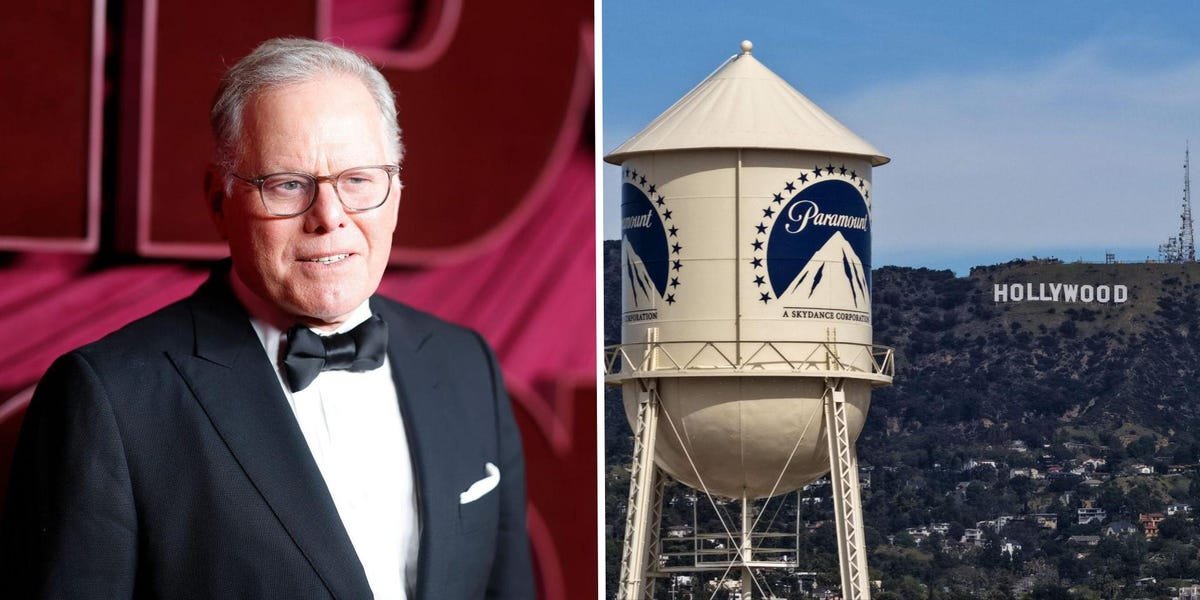
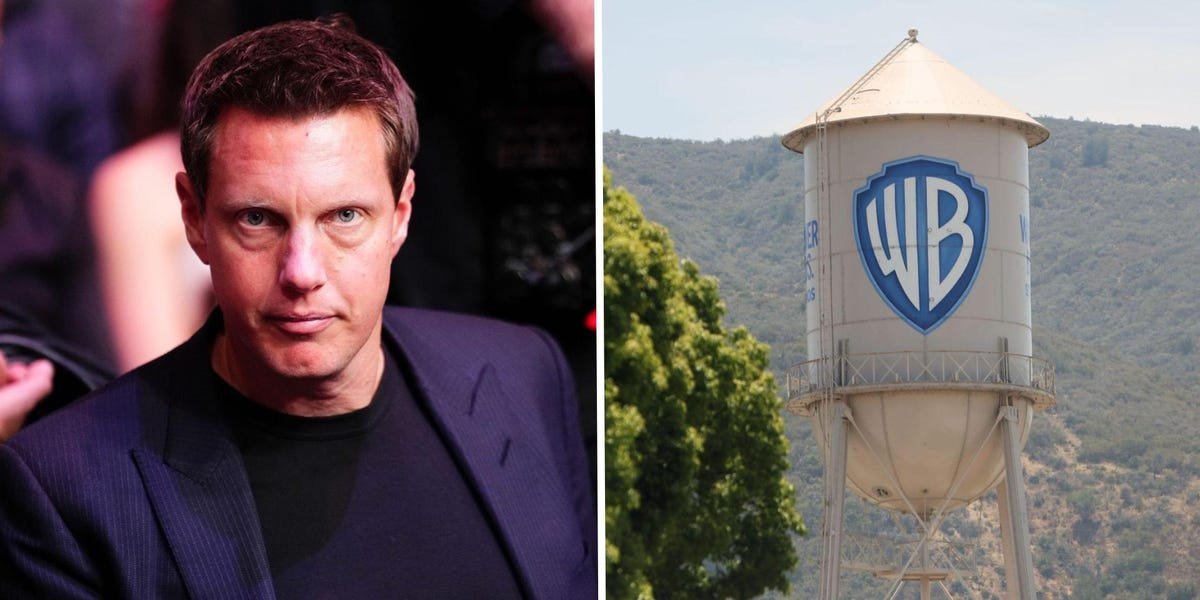
Warner Bros. Discovery’s CEO just pitched employees on its impending Paramount Skydance deal, after spending the last few months arguing against it in favor of the now-nixed Netflix deal.

David Zaslav told WBD staffers at a company town hall on Friday morning that he’s excited to join forces with Paramount.

“I think together, we can be a great company,” Zaslav said on the call, a recording of which was obtained by Business Insider.

“We’re getting bigger, and we’re getting stronger,” he said.

WBD had agreed to sell its studio and HBO assets to Netflix for $27.75 per share. Paramount launched a rival bid of $30 per share for the whole company, including its cable TV networks, and pitched WBD shareholders that its deal was better.

Zaslav acknowledged that the decision to switch from its Netflix deal to Paramount’s rival offer “all happened very quickly.”

“It feels a little whiplash-y,” Zaslav said, adding that he and WBD’s board of directors are still “getting our bearings.”

Paramount “acted with determination” in pursuing WBD, Zaslav said.

WBD underwent a “thorough, rigorous strategic review process” and was under a legal obligation to continue to review and evaluate unsolicited offers that could bring shareholders more value.

Zaslav suggested that teaming up with Paramount is crucial to WBD’s survival.

“If Warner Bros. is going to survive, then we needed to be bigger, and we needed to be global,” Zaslav said.

Zaslav added that “some of these companies are getting so big that they can just run us over.”

The Paramount-WBD deal still needs regulatory approval, a process that will likely take at least six to 12 more months.

“The deal may not close,” Zaslav said. “If it doesn’t close, we get $7 billion, and we get back to work.”

Last week, WBD’s board told its shareholders that there could be an employee exodus if it took Paramount’s deal, citing the $6 billion in cost savings that Ellison’s company planned to achieve. Netflix had said it planned to get $2 billion to $3 billion in savings from its deal.


Source link

Heres-what-smart-people-are-saying-about-Paramount-winning-the.jpeg

Here’s what smart people are saying about Paramount winning the Warner Bros. Discovery deal

Matt Stoller, director of research at the American Economic Liberties Project and author of the “BIG” anti-monopoly newsletter, discussed the legal situation surrounding the deal in a Substack video conversation with Richard Rushfield, a columnist at The Ankler.

He said the merger can be challenged by state enforcers, and Paramount would push to close the deal quickly to get ahead of that.

“That means they get to take over all these assets and start running them,” Stoller said. “They can fire people. They can intermingle the assets. They can choose new lines of business. They can move people around. All of the bonuses get paid out. They can do layoffs.”

Trying to unwind operations where assets are already intermingled would be like “unscrambling eggs,” Stoller said.

Stoller said he was puzzled by why other companies in Hollywood haven’t hired lawyers to compile evidence in opposition to the merger and hand it to state attorneys general to help build their case.

“It just baffles me why people are so passive when you can actually knife fight on stuff,” Stoller said, though he added that it could be happening without his knowledge.


Source link

Trump-demands-Netflix-fire-Susan-Rice-from-board-amid-deal.jpeg

Trump demands Netflix fire Susan Rice from board amid deal talks

  • Donald Trump has chimed in on the Netflix deal negotiations, despite previously saying he wouldn’t.
  • In a Saturday Truth Social post, the president said Netflix should fire Susan Rice from its board.
  • Rice on Thursday predicted an “accountability agenda” for corporations that “take a knee” to Trump.

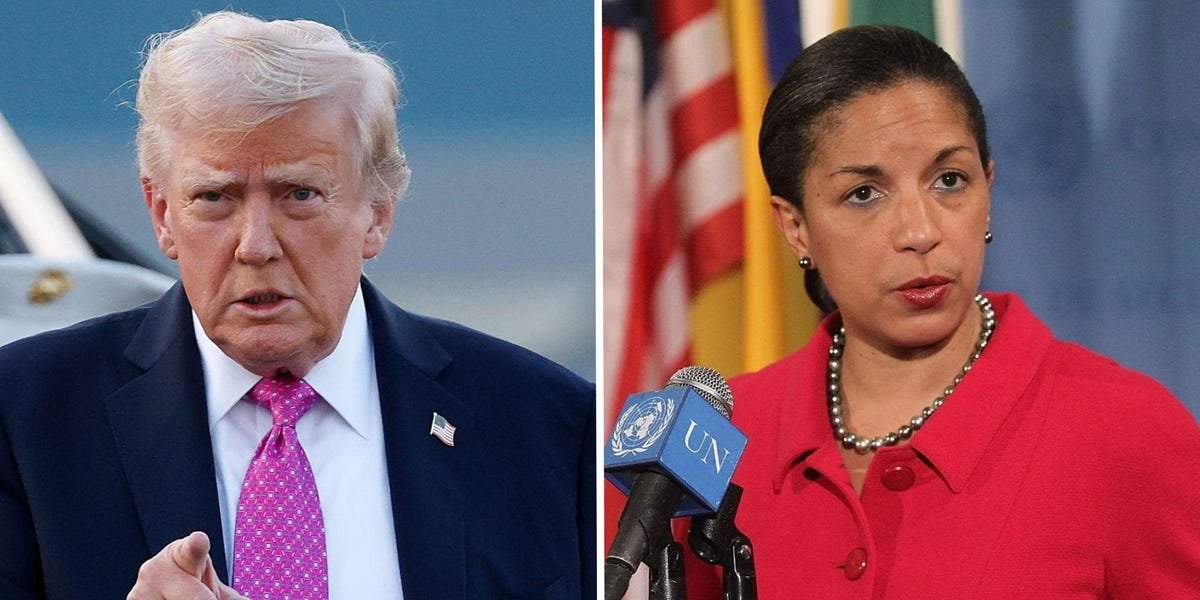
President Donald Trump is calling on Netflix to remove former US Ambassador and national security advisor Susan Rice from its board, sharpening his criticism of the streaming giant as it seeks to merge with Warner Bros. Discovery amid antitrust scrutiny.

In a post on Truth Social, Trump demanded that Netflix “immediately terminate” Rice from its board of directors, “or pay the consequences,” amplifying a message from right-wing activist Laura Loomer. Loomer had urged action against Rice, criticizing her role at the company and pointing to recent remarks she made about Trump and corporate America.

Rice, who served in senior roles in the Obama and Biden administrations, recently warned companies against aligning themselves too closely with Trump. Speaking on Thursday on the “Stay Tuned with Preet Bharara” podcast, she said corporations that “take a knee” to the president and break the law should expect consequences, predicting an “accountability agenda” if Democrats take back power.

The clash comes as the streaming giant pursues a high-stakes merger that will require approval from the Department of Justice’s antitrust division.

Trump in December said that Netflix had a “very big market share,” so its potential acquisition of Warner Bros. “could be a problem.”

However, in February, he said he “shouldn’t be involved” in the deal and would defer to his Department of Justice to investigate the proposed merger, Business Insider previously reported.

Earlier this week, during an appearance on Puck’s “The Town” podcast, Netflix’s co-CEO, Ted Sarandos, said that Trump hadn’t asked for political concessions during discussions of the possible deal, but was focused on bringing jobs back to Hollywood after years of lower production.

Representatives for Netflix and Rice did not immediately respond to requests for comment from Business Insider.


Source link

Nvidia-tightens-its-hold-on-Meta-with-a-multigenerational-deal.jpeg

Nvidia tightens its hold on Meta with a ‘multigenerational’ deal

Meta is doubling down on its relationship with Nvidia in what the AI chip giant called a “multigenerational” deal.

The agreement, announced Tuesday, calls for Meta to build data centers powered by millions of Nvidia’s current and next-generation chips for AI training and inference.

The move underscores how Meta is deepening its reliance on Nvidia, even as the social networking giant develops its own in-house chips and works with competing suppliers like AMD. Reports also suggested Meta has explored using TPUs — chips designed by its rival, Google.

The Nvidia deal could cool speculation around Meta’s purported TPU talks, said Patrick Moorhead, chief analyst at Moor Insights & Strategy — though Big Tech companies often test several suppliers at the same time.

The deal arrives amid increased competition in AI infrastructure. While Nvidia leads the market, rivals including Google, AMD, and Broadcom are working to chip away at its dominance.

Crucially, the partnership will see Meta deploy not only Nvidia’s GPUs, but also CPUs.

CPUs, long dominated by Intel and AMD, are the central processors that work with GPUs inside data centers. They’re used for general computing tasks and are core to essentially all modern computing systems, whereas GPUs are used in specialized cases that require more compute power, such as AI training and graphics in gaming. By supplying both, Nvidia stands to capture even more spend and deepen its role within Meta’s AI stack.

While that increases competitive pressure, Moorhead said the demand for infrastructure has become so high that Nvidia’s rivals will unlikely see outright declines in the near term.

Nvidia has been making its CPU ambitions more explicit, Moorhead said, including marketing its forthcoming Vera CPU as a stand-alone product. This emphasis reflects how CPUs play a larger role as AI workloads move beyond model training and toward inference.

“CPUs tend to be cheaper and a bit more power-efficient for inference,” said Rob Enderle, principal analyst at Enderle Group.

Both Moorhead and Enderle said that Meta’s decision to source both GPUs and CPUs from a single vendor can also reduce complexity, with chief information officers often favoring a “one-throat-to-choke” approach to problem resolution.

In addition to GPUs and CPUs, Meta will use Nvidia’s networking equipment inside data centers as part of the deal, as well as its confidential computing technology to run AI features within WhatsApp.

The companies will also work together to deploy Nvidia’s next-generation Vera CPUs beyond the current Grace CPU model, Nvidia said.

Have a tip? Contact this reporter via email at gweiss@businessinsider.com or Signal at @geoffweiss.25. Use a personal email address, a nonwork WiFi network, and a nonwork device; here’s our guide to sharing information securely.


Source link

Dan Geiger

Eric Schmidt-backed data center venture is negotiating a major deal with Google

Bolt Data and Energy, a data center development firm that was cofounded late last year by former Google CEO Eric Schmidt, is negotiating a deal that would allow it to begin construction on a large data center project it is planning in West Texas.

Schmidt’s firm is in discussions with Google, his former employer, according to two people with direct knowledge of the talks. The tech giant, one of the leaders in the race to develop and commercialize artificial intelligence, is considering a commitment of 250 megawatts, according to one of the people. The other person said it was too early to characterize the exact size of the potential transaction because it was still under discussion.

The sources spoke on the condition of anonymity because the potential transaction is still being arranged and the talks are confidential.

“We don’t comment on rumors,” a Google spokeswoman told Business Insider, declining to comment further. Google announced last year that it plans to build $40 billion of cloud and AI infrastructure in Texas by 2027.

The potential deal highlights how Big Tech is racing to secure the power, physical infrastructure, and land needed to fuel AI, even as the costs and financial risks of those bets loom.

In December, Bolt completed its first funding round, raising $150 million from investors, including $50 million from Texas Pacific Land Corporation, a public company that owns large tracts of land in West Texas. As part of the investment from TPL, Bolt will develop data centers on land in TPL’s portfolio.

A presentation detailing Bolt’s development plans, shared with Business Insider, said that TPL’s land would give it access to abundant power and water for cooling. These commodities have become increasingly strained as data center development has boomed around the country.

The presentation states that Bolt’s development would begin with an “initial 250 megawatt facility” and expand in 250-500 megawatt increments into a 5 gigawatt campus.

Bolt’s plan is one of several large-scale projects that have been envisioned in Texas to cater to the AI race. Fermi, a public company co-founded by former Texas governor and US Energy Secretary Rick Perry, has plans for an 11-gigawatt campus in Amarillo.

In December, Business Insider revealed that Amazon had pulled back a $150 million cash advance it had pledged as part of a preliminary deal to anchor the project. Fermi’s disclosure of the reimbursement of that advance caused its stock to fall by 50%. Fermi’s CEO, Toby Neugebauer, told Business Insider that although Amazon had reclaimed its advance, the negotiations for it to take space with Fermi were still ongoing.

Major bank lenders who extended $38 billion to finance the construction of data center campuses in Shackleford County, Texas, and Port Washington, Wisconsin, for Oracle and OpenAI, meanwhile, have had difficulty selling off pieces of the huge loan to other banks and investors. Those troubles stem, in part, from worries about whether Oracle’s credit will be strained by its massive AI spending.

To help allay concerns, Oracle announced it would raise as much as $50 billion in debt and equity in 2026 to continue to pursue its AI buildout while also maintaining “a solid investment-grade balance sheet.”

Last week, Alphabet, Google’s parent company, revealed in its fourth-quarter earnings report that it plans to spend between $175 and $185 billion on capital expenditures in 2026, roughly double its outlay in 2025. The spending is being done largely to pay for AI equipment and infrastructure.

A record wave of spending has been announced by big technology companies on AI this year, including Amazon’s disclosure during its earnings last week that it would spend $200 billion alone this year.


Source link

Nathan Rennolds

Trump threatens Canada with 100% tariffs over Beijing trade deal: ‘China will eat Canada alive’

President Donald Trump on Saturday threatened to impose 100% tariffs on all Canadian goods and products exported to the US should Ottawa make a trade deal with China.

In a post on Truth Social, Trump warned Canadian Prime Minister Mark Carney, whom he called “Governor Carney,” against making a “drop off” deal with Beijing or face the levies.

“If Governor Carney thinks he is going to make Canada a ‘Drop Off Port’ for China to send goods and products into the United States, he is sorely mistaken,” Trump wrote.

“China will eat Canada alive, completely devour it, including the destruction of their businesses, social fabric, and general way of life,” he added.

Carney made an official visit to China last week — the first by a Canadian leader since 2017 — meeting with Chinese leader Xi Jinping to discuss economic and trade opportunities between the two countries.

In a joint statement following the meeting, Ottawa and Beijing said they had committed to expanding bilateral trade and investment, as well as building cooperation in areas such as energy and agriculture.

Carney also announced that Canada would now allow up to 49,000 Chinese electric vehicles into the Canadian market on the “most-favoured-nation tariff rate of 6.1%.” In return, he said Canada expected China to lower tariffs on Canadian canola seed to around 15% by March 1.

Trump had initially said that the deal was what Carney “should be doing” and that it was “a good thing for him to sign a trade deal.”

Trump’s changing tone comes days after Carney delivered an impassioned speech at the World Economic Forum in Davos, where he opined on the changing face of global politics since Trump’s election.

“We are in the midst of a rupture, not a transition,” Carney, who did not explicitly name Trump, said, adding that “middle powers must act together because if we’re not at the table, we’re on the menu.”

Trump did not miss the opportunity to snap back at Carney during his own speech at Davos, saying the prime minister “wasn’t so grateful.”

“Canada lives because of the United States. Remember that, Mark, the next time you make your statements,” he added.


Source link

Dan Whateley

The TikTok deal is done. Here’s what will change and what will stay the same.

TikTok’s US workers can finally breathe a sigh of relief.

The company announced Thursday that it has closed a deal to spin off parts of its US business in a new joint venture with an investor group.

“The safeguards provided by the Joint Venture will also cover CapCut, and Lemon8, and a portfolio of other apps and websites in the US,” the company said.

Adam Presser is leading the new venture, according to the company’s announcement. Presser has worked at TikTok for nearly four years, most recently leading operations and trust and safety. The venture’s seven-man, majority-American board includes TikTok’s CEO Shou Chew.

The agreement should keep the US government off its back as TikTok’s parent, ByteDance, now owns just under 20% of the new US venture. That ownership stake meets a divestment requirement set by a 2024 US sell-or-ban law targeting TikTok and other apps with owners based in countries like China, which the US has deemed a foreign adversary.

TikTok’s new US owners include tech company Oracle, private-equity firm Silver Lake, and Abu Dhabi investment firm MGX, each of which owns 15% of the new venture. ByteDance will own around 20% of the entity, and affiliates of existing ByteDance investors will own around 30%, according to a December memo from Chew. Other investors include Michael Dell’s family office and a venture run by the partners of growth investor Dragoneer.

What comes next is less clear.

While Oracle, MGX, and Silver Lake will serve as managing investors in the new US joint venture, their focus will be on areas such as data security. Key commercial activities, including e-commerce, advertising, and marketing, will remain with ByteDance.

The company began splitting up its US staff into different legal entities in January based on whether their work would remain under ByteDance’s purview, Business Insider first reported.


Source link

Netflix-strengthens-its-Warner-Bros-bid-as-Paramounts-David-Ellison.jpeg

Netflix strengthens its Warner Bros. bid as Paramount’s David Ellison tries to wreck its deal

Netflix is breaking open its piggy bank to keep Paramount Skydance CEO David Ellison from crashing its Warner Bros. deal.

The streaming giant just sweetened its offer for the Warner Bros. studio and HBO by offering all-cash, matching a key feature of Paramount’s hostile bid. Warner Bros.’ board of directors has approved the all-cash bid, and the companies said they expect Warner shareholders to vote on the transaction by April.

“Our revised all-cash agreement will enable an expedited timeline to a stockholder vote and provide greater financial certainty,” Netflix co-CEO Ted Sarandos said in a statement announcing the news.

“Today’s revised merger agreement brings us even closer to combining two of the greatest storytelling companies in the world,” David Zaslav, president and CEO of Warner Bros. Discovery, said in a statement on Tuesday.

While Netflix isn’t raising its bid from $27.75 per share, converting $4.50 per share in stock to cash takes away a variable for Warner Bros. Discovery shareholders. Netflix shares are down 13% since the Warner Bros. deal was made public and have fallen 28% since late October.

Paramount believes its all-cash offer of $30 per share for all of WBD is superior to Netflix’s winning bid for WBD’s key assets, which include its studio, HBO, and HBO Max, but not its TV networks. Ellison has made eight bids for WBD, all of which have been rejected. Paramount is now suing WBD while fighting for spots on its board.

A key remaining point of difference between the two bids hinges on the perceived value of WBD’s networks. Paramount is looking to buy them, while Netflix is not.

If WBD’s cable channels, such as CNN, TNT, and HGTV, are valued at less than $2.25 per share, or $5.9 billion, then Paramount’s proposal appears, at first glance, to be more appealing than Netflix’s. However, WBD has said that it must knock off $1.79 per share from Paramount’s bid to account for costs it would incur by changing course, like a $2.8 billion breakup fee to Netflix. That would mean WBD’s cable networks only need to be worth $0.46 per share for Netflix’s bid to be financially superior in the board’s eyes.

Paramount has argued that the WBD cable networks it wants to buy are worth $0 per share, or only as much as the debt they’re expected to carry. Ellison and company acknowledged “the theoretical possibility” that those TV assets could be worth $0.50 per share.

Most media analysts have a rosier view of WBD’s cable business, valuing its channels anywhere from the low single digits to $3.51 per share. Even a glass-half-empty view based on the valuation of new cable company Versant would put WBD’s networks at $1.20 per share as of last week, a Business Insider analysis found.

Netflix’s updated all-cash offer helps solidify WBD’s decision to choose it, after accounting for the added costs from Paramount’s bid.

Unless WBD shareholders band against its board of directors, Paramount may face pressure to sweeten its offer by raising its bid.


Source link