Google-officially-snaps-up-Wiz-as-it-closes-mammoth-32.jpeg

Google officially snaps up Wiz as it closes mammoth $32 billion deal

  • Google’s $32 billion Wiz deal has officially closed.
  • The search giant said last year it would buy the cybersecurity firm to bolster its cloud business.
  • It’s Google’s biggest-ever acquisition.

Google’s $32 billion acquisition of cybersecurity firm Wiz has officially closed.

The search giant announced on Wednesday that Wiz will join Google Cloud at a moment when AI is making cloud security more vital. Wiz offers a platform that helps customers protect data across different cloud services.

“In today’s AI era, more businesses and governments are migrating their most important data and systems to the cloud and turning to agile and continuous software development,” Google wrote in a post announcing the news.

“As these organizations operate in a multicloud environment and adopt AI, attackers are using AI to operate with greater speed and sophistication,” the company added.

Google announced last year that it intended to buy Wiz for $32 billion in the search giant’s biggest-ever acquisition.

The deal, which was also viewed as a test for President Donald Trump’s antitrust agenda, could be a boon for Google’s cloud business as it pursues customers for its AI products.

Google said Wiz would remain a multicloud offering after the acquisition, meaning it will continue to be made available through rival cloud providers such as Amazon and Microsoft.

“Our mission remains as bold as ever: to protect everything organizations build and run,” Assaf Rappaport, the CEO of Wiz, said in a blog post. “And we are still just getting started.”


Source link

1772948109_The-fallout-over-OpenAIs-Pentagon-deal-is-growing.jpeg

The fallout over OpenAI’s Pentagon deal is growing

Many other OpenAI staffers have also publicly criticized the company’s Pentagon deal.

“i personally don’t think this deal was worth it,” Aidan McLaughlin, a research scientist at OpenAI, wrote on X.

Another employee told CNN that many of them “really respect” Anthropic for refusing the Pentagon’s deal.

Clive Chan, a technical staffer, wrote in an X post that he believed OpenAI’s contract barred the use of its models for mass weapons or mass domestic surveillance. Chan wrote that he’s advocating for the company to share more information.

“If we later learn this is not the case, then I will advocate internally to terminate the contract,” Chan wrote.

Even before the deal, nearly 900 former and current OpenAI and Google staffers signed a joint petition supporting Anthropic, one of their primary competitors, and opposing the use of their companies’ technology for weapons that can kill without human oversight and mass surveillance.

“The Pentagon is negotiating with Google and OpenAI to try to get them to agree to what Anthropic has refused,” the petition said.


Source link

The-fallout-over-OpenAIs-Pentagon-deal-is-growing.jpeg

The fallout over OpenAI’s Pentagon deal is growing

Many other OpenAI staffers have also publicly criticized the company’s Pentagon deal.

“i personally don’t think this deal was worth it,” Aidan McLaughlin, a research scientist at OpenAI, wrote on X.

Another employee told CNN that many of them “really respect” Anthropic for refusing the Pentagon’s deal.

Clive Chan, a technical staffer, wrote in an X post that he believed OpenAI’s contract barred the use of its models for mass weapons or mass domestic surveillance. Chan wrote that he’s advocating for the company to share more information.

“If we later learn this is not the case, then I will advocate internally to terminate the contract,” Chan wrote.

Even before the deal, nearly 900 former and current OpenAI and Google staffers signed a joint petition supporting Anthropic, one of their primary competitors, and opposing the use of their companies’ technology for weapons that can kill without human oversight and mass surveillance.

“The Pentagon is negotiating with Google and OpenAI to try to get them to agree to what Anthropic has refused,” the petition said.


Source link

OpenAIs-robotics-head-quits-after-companys-Pentagon-deal-This-was.jpeg

OpenAI’s robotics head quits after company’s Pentagon deal: ‘This was about principle’

Caitlin Kalinowski, a hardware executive who joined OpenAI from Meta in 2024 and leads its robotics division, said she is resigning from the company.

In a post on X on Saturday, Kalinowski criticized OpenAI’s recent deal with the Pentagon.

“AI has an important role in national security. But surveillance of Americans without judicial oversight and lethal autonomy without human authorization are lines that deserved more deliberation than they got,” she wrote.

She called her resignation a matter of principle, and said she still deeply respects OpenAI CEO Sam Altman and the team and is proud of their robotics work.

A spokesperson for OpenAI confirmed Kalinowski’s resignation and defended its deal with the Defense Department.

“We believe our agreement with the Pentagon creates a workable path for responsible national security uses of AI while making clear our red lines: no domestic surveillance and no autonomous weapons,” the spokesperson told Business Insider. “We recognize that people have strong views about these issues and we will continue to engage in discussion with employees, government, civil society, and communities around the world.”

OpenAI struck a deal with the Pentagon last week, allowing the Defense Department to use its AI products. The agreement came after its rival Anthropic refused a similar deal over concerns that the technology would be used for mass surveillance and autonomous weapons.

Anthropic has since been effectively blacklisted in Washington. President Donald Trump described the company as “radical woke” in a Truth Social post and demanded federal agencies stop using Anthropic’s technology. Secretary of Defense Pete Hegseth then designated Anthropic a supply-chain risk to national security and said Defense Department contractors would be barred from working with the company.

OpenAI’s decision to strike a deal with the Pentagon caused an immediate backlash. Some users ditched ChatGPT in protest. Anthropic’s chatbot, Claude, is now the No. 1 free app on the Apple App Store, unseating OpenAI’s ChatGPT. Claude’s US downloads increased 240% month over month in February.

Kalinowski’s exit is a setback for OpenAI’s robotics ambitions, which the company has been developing over the past year.

Over the last year, the company has quietly built a San Francisco lab that employs about 100 data collectors. Teams are training a robotic arm to do household chores as part of a broader push to build a humanoid robot. The company told employees in December it also plans to open a second lab in Richmond, California.

A source with knowledge of OpenAI’s plans also previously told Business Insider that the company is exploring several early-stage hardware initiatives — including robotics — but none are considered central to its core mission at this point.


Source link

James Faris headshot

We answered 11 big questions about the Paramount-WBD deal and what happens next

Paramount Skydance outbid Netflix for Warner Bros. Discovery, but the Hollywood-shaking agreement isn’t a done deal.

WBD had planned to sell its studio and streaming assets to Netflix. Paramount wouldn’t give up its pursuit of WBD, including its cable networks, however. After 10 offers, WBD’s board finally said Paramount’s latest bid was better, and Netflix decided to bow out.

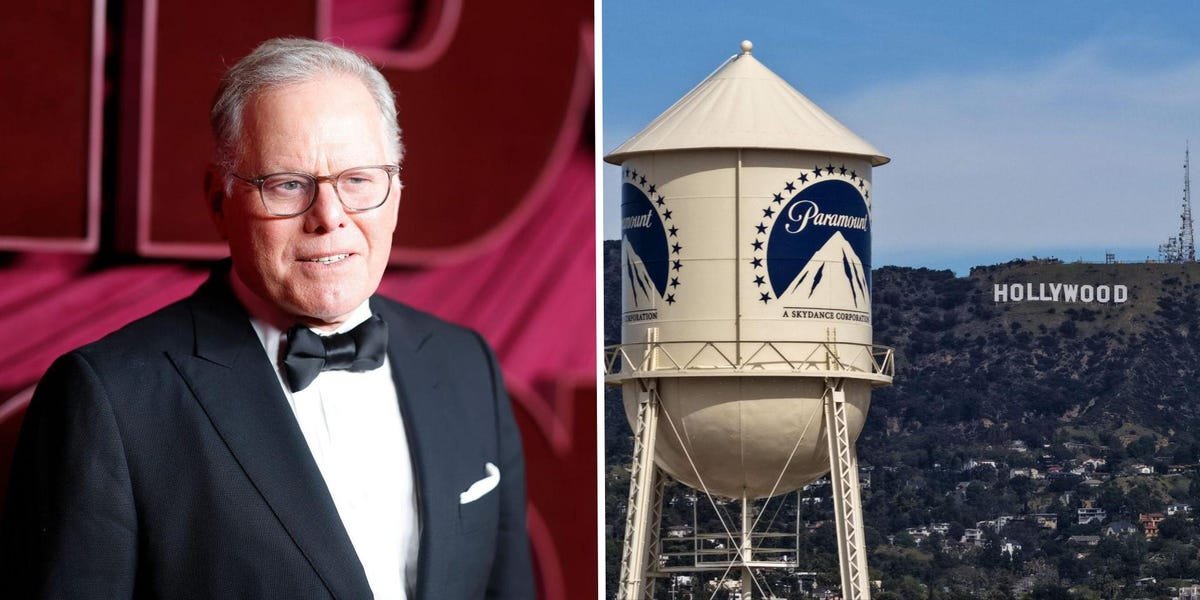
Still, Paramount and its CEO, David Ellison, need regulatory approval in the US and abroad, which WBD CEO David Zaslav told employees could take six to 18 months, Business Insider reported.

In the meantime, everyone from actors to zealous fans of TV and movies has questions about the deal. Business Insider set out to answer them by hosting an Ask Me Anything Q&A session on the r/MediaMergers subreddit.

Below are some of the top questions, along with Business Insider senior reporter James Faris’ answers, based on reporting, company statements, and informed analysis. The Reddit Q&A has been edited for length and clarity.

What are the biggest risks to this deal collapsing? Also, what are the chances it will spill into next year before closing (if it does)?

The biggest risk to the Paramount-WBD deal now is regulatory. David Ellison and his father, Larry, the billionaire Oracle cofounder helping backstop the $110 billion deal, certainly aren’t backing out. And neither are WBD shareholders, since they’d lose a lot of value if they didn’t take this deal with Netflix out of the picture.

As far as the timing, WBD’s Zaslav told staffers during a town hall last Friday that the Paramount-WBD deal approval process could last six to 18 months.

Paramount has agreed to pay a so-called “ticking fee” of $0.25 per share, or about $650 million, every quarter that its deal doesn’t get regulatory approval, starting on September 30.

Is this deal going to be held up in court?

While many analysts and insiders expect the US regulatory process for this deal to be relatively painless, Paramount may face harder challenges at the state level and abroad, including in Europe.

Even if regulators don’t block the Paramount-Warner deal, they could slow it down, costing the Ellisons time and money.

What is the biggest financial risk that the Ellisons are taking on?

The biggest risk here is that the combined Paramount-WBD doesn’t grow earnings fast enough and gets crushed by the massive debt load it’s taking on. (This was also an issue faced by WBD.)

Paramount-Warner will have tens of billions in debt it must pay down, in part by cutting costs, as WBD did. However, growing earnings is also crucial, and it’s very difficult to “cut to growth,” so that’s a challenge ahead of Ellison.

Was it ever an option for Warner Bros. to remain independent after the potential split with Discovery? Alternatively, was there an attempt to sell Discovery to Paramount while Warner Bros. maintained its independence?

No, there was never a realistic plan for Warner Bros. to be independent, since it controls the highly coveted studio and HBO assets that Paramount, Netflix, and Comcast were fighting over.

WBD’s cable networks would have become their own company if Netflix had won the bidding war, since the streaming giant only wanted the studio and streaming side.

Paramount, on the other hand, wanted to buy all of WBD before it broke itself apart.

WBD was formed when Discovery CEO David Zaslav believed that joining forces with Warner Bros. would create a media powerhouse. He took on a ton of debt and promised investors billions of dollars in cost cuts and earnings growth.

WBD’s revenue declined instead of growing, and its stock sank. Zaslav then tried a different strategy by formulating a plan to split off the company’s declining cable TV assets.

As a public company, WBD had to sell itself to the bidder the board believed would deliver the highest value to shareholders. WBD was worth about $10 per share before all the split-and-sale rumors began. So when someone eventually offers to buy the company at $31 per share, the board essentially has to sell.

What are they going to name the new company? Warner Skydance ParaBros? Mount Discovery sounds like a mouthful.

Ellison hasn’t said yet, but there are four names between the two companies: Paramount, Skydance, Warner (Bros.), and Discovery.

If I were Ellison, I’d call the new company “Paramount Warner.” I get the sense they want to make Paramount a household name, and Warner is what many call the WBD assets anyway.

And if Ellison wants to keep the Skydance name alive, the official company name could be: “Paramount Warner, A Skydance Corporation.”

Do you think the studio is viable? Or will it be sold off again in a few years?

Paramount has said that it’s planning to keep Paramount Pictures and Warner Bros. Studios brands separate, with an ambitious goal of producing a combined 30 movies a year.

As to whether there will be another sale in a few years, that will likely depend on whether Paramount can successfully grow earnings while paying down the debt load it’s taking on.

That’s no easy task — just ask WBD.

Netflix has been the clear winner of the streaming wars. Does this deal change its strategy at all?

Netflix is also widely seen as a winner in this deal since it’s collecting a $2.8 billion breakup fee, while driving up the WBD purchase price for an emerging rival.

Netflix could invest that money — and the tens of billions it was planning to put into Warner Bros. — into original and licensed content.

While Paramount-WBD tries to play catch-up in the fight for engagement, Netflix is looking to extend its lead over other paid streamers. Netflix also wants to close the gap with YouTube and take attention from free streamers and social media apps like TikTok and Instagram.

And if in a few years the Paramount-WBD deal doesn’t work out, Netflix could potentially swoop in and buy assets.

Do you think Zaslav and other WB officials are annoyed that Netflix bowed out? It seemed like they wanted Netflix, but Ellison finally raised his bid.

Before WBD floated its split plan last December, the stock was trading around $10 per share. Paramount has agreed to pay more than 3x that amount.

So while the purchase price could have gone even higher if Netflix decided to bid again, WBD execs can’t complain about the hundreds of millions of dollars they’re set to rake in.

Both studios have a lot of movies that are in development. What are the risks to those movies? Are TV shows more at risk compared to movies?

In the near term, not much, since this deal won’t close anytime soon.

The bigger question is whether Paramount-WBD will spend as much on content as company leaders have said they would.

What’s going to happen to the studio lots? Will they work from both or consolidate to one campus?

Ellison highlighted the combined “real estate footprint” as one of the five main areas of cost savings in the WBD deal, so offices will definitely get consolidated.

As for the lots, that’s still an open question. If one studio lot goes up for sale, would Netflix be a buyer?

What kind of involvement does Saudi Arabia have? Will there be any concerns about the content side?

My colleague Peter Kafka has been asking that question. Saudi Arabia, Abu Dhabi, and Qatar were financial backers in earlier versions of Paramount’s bid, but Paramount won’t say whether they’re still involved.

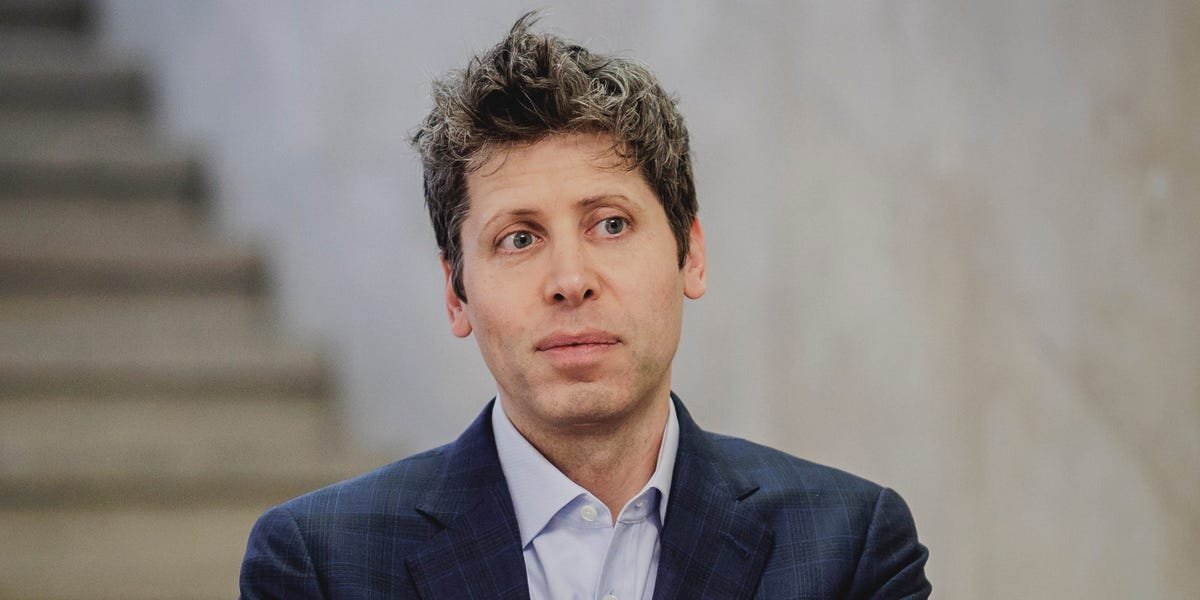
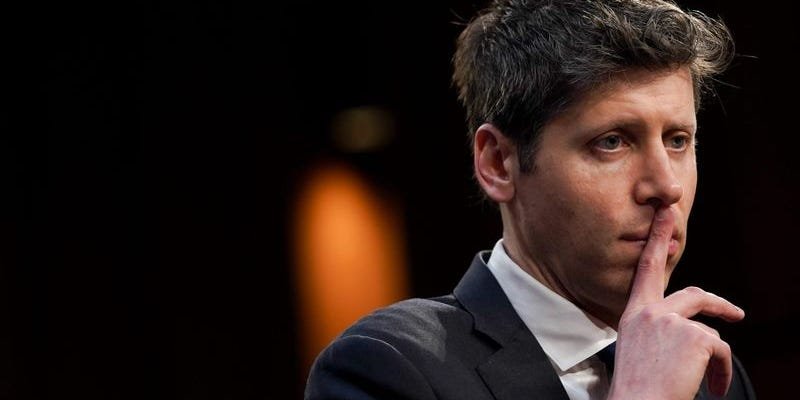
Source link

I-was-at-a-QuitGPT-protest-and-the-discontent-extends.jpeg

I was at a QuitGPT protest, and the discontent extends far beyond OpenAI’s Pentagon deal

Some people are angry with OpenAI, and it’s about more than just the company’s deal with the Pentagon.

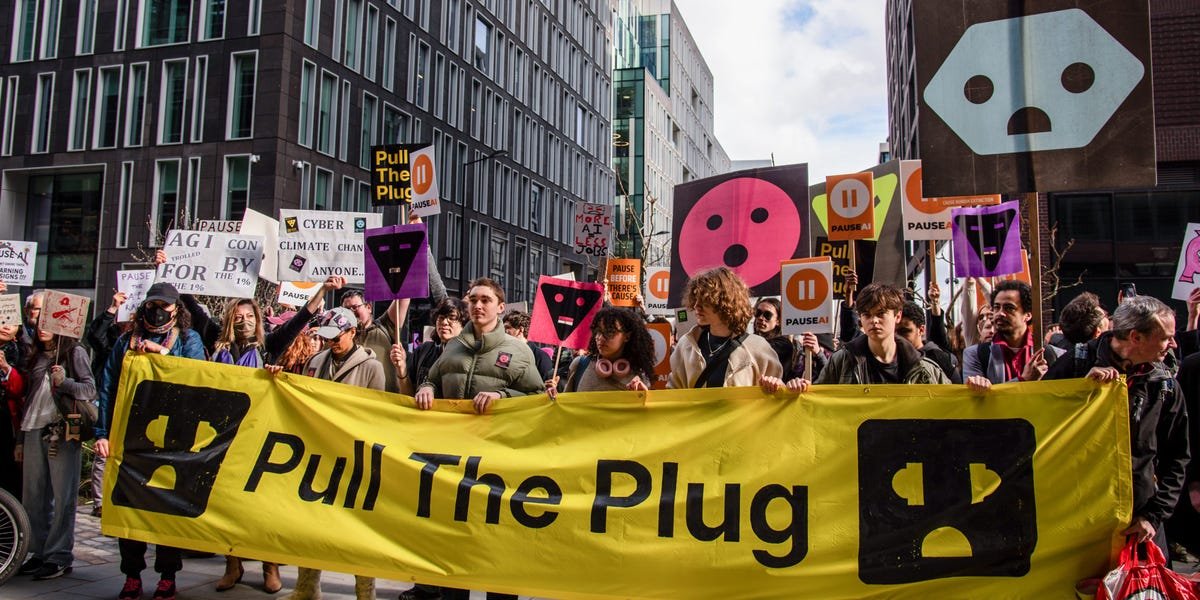
On Tuesday evening, I visited the OpenAI headquarters in Mission Bay, San Francisco, and I was met with a relatively small but energetic and diverse group of protesters, each with very different demands. This protest was part of the nascent QuitGPT movement; between 40 and 50 people attended, holding signs and chalking hundreds of slogans on the sidewalk.

OpenAI triggered widespread backlash when it signed a contract with the Pentagon on Friday, hours after President Donald Trump ordered federal agencies to halt use of Anthropic’s Claude. The negotiation between the Pentagon and Anthropic had broken down because the OpenAI rival sought contractual guarantees against mass surveillance and fully autonomous weapons, its CEO said in a statement.

The backlash against OpenAI sparked a wave of support for Anthropic, including Katy Perry, who publicly endorsed and subscribed to Claude AI. Calls to abandon ChatGPT in favor of Claude spread rapidly across social media, and the momentum showed up in the download charts. Claude shot to No. 1 in the App Store on February 28, up from sixth place.


A protester writes a message against artificial intelligence outside of Open AI headquarters in San Francisco.

Aside from OpenAI’s deal with the Pentagon, protesters have a laundry list of other grievances, including how resource-intensive data centers are and AI’s erosion of human creativity.

Manuel Orbegozo for BI


OpenAI CEO Sam Altman posted an internal memo to X on Monday and said the company is revising its contract with the Pentagon to add explicit protections, including a prohibition on surveilling US persons and nationals and a bar on use by intelligence agencies such as the NSA without a separate contract modification. Altman also acknowledged the rushed rollout in his memo, admitting the company “got things wrong” and that the deal “looked opportunistic and sloppy.” The Pentagon did not respond to Business Insider’s questions about the amended deal.

I talked to six at Tuesday’s protest, who were skeptical of the revised deal, but there were also broader concerns about AI’s rapid rise and the tech industry.

Many attendees were there for climate concerns


Protesters demonstrate against Open AI outside of their headquarters in San Francisco.

Many protesters said they were there over concerns that data center will exacerbate the climate crisis.

Manuel Orbegozo for BI


Wearing a shirt that reads “we have a right to good jobs and a livable future,” Perrin Milliken told me that she has always been a climate advocate and is here to oppose data centers, which she said are an act that puts the need for AI before human needs.

“AI is taking water from communities, polluting communities, and it is also increasing communities’ electricity bills,” Milliken said.

“They’re not even paying for it — we are,” Milliken added of tech companies.

“I want water to drink, not AI to think,” reads a sign held up by a protester.

Tech companies are becoming symbols of wealth inequality


Bill Lo collects the signs he made for the protest against Open AI which took place outside of their headquarters in San Francisco.

Many protest signs target wealth inequality and call tech billionaires “oligarchs.”

Manuel Orbegozo for BI


Sarah Gao, who took to the stage to speak, expressed disapproval of billionaires and the resources they take up.

“Sam Altman lives in a super villain’s mansion here in San Francisco,” Guo told the crowd, which immediately booed. “In a city that struggles with affordable housing, his sprawling compound features an underground to house luxury cars, an art gallery, a stand-alone spa cottage, and occupies an entire city block.”

“Sam and his billionaire buddies helped Trump with his disastrous budget bills that stole trillions of dollars from everyday Americans just to line their pockets,” Guo added.

Behind Guo, signs that call the tech industry “big trouble for humanity” and the billionaire CEOs “oligarchs” stood tall.

Some are rejecting AI entirely on principle


Megan Matson poses for a portrait after a protest against Open AI took place outside of their headquarters in San Francisco.

Meghan Matson said she refuses to participate in using AI and has always felt like AI is “bad news.”

Manuel Orbegozo for BI


When I spoke to Meghan Matson, she told me that she has completely rejected using AI and felt like it was “bad news” from the start.

“I know that AI is participating with me, but I’m not participating with AI,” said Matson.

“As soon as I saw it start showing up in visuals and imagery, I could see exactly where it heads,” Matson added. “It destroys journalism, it destroys art, it destroys the expression of our common humanity.”

“Stop AI stealing art, writing, electricity, water, jobs,” reads a large chalk writing on the street in front of the OpenAI office.

At least one participant was a tech worker unhappy with how their work is used


A protester impersonating a robot lies on the ground after demonstrating against Open AI outside of their headquarters in San Francisco.

The 26-year-old who works in the tech industry loves AI, but doesn’t approve of OpenAI’s Pentagon deal.

Manuel Orbegozo for BI


“I’m an active AI user. I love AI, and I use it every day, to write, to program, to learn,” said a 26-year-old who works in the tech industry who declined to be named.

“What I don’t want is for the technologies that my friends and I build to be used to undermine the freedom we value,” he added.

He told me that he made the robot mask yesterday with a cardboard box, black duct tape, and LED lights.

“I spent $12 on this,” he said of his robot mask. “I bet a lot more people are gonna pay attention to this than OpenAI’s next million-dollar ad.”


Source link

Heres-what-current-and-former-OpenAI-employees-are-saying-about.jpeg

Here’s what current and former OpenAI employees are saying about the company’s Pentagon deal

  • OpenAI employees are publicly discussing the company’s agreement with the Department of Defense.
  • Some have called for more clarity; others say the contract includes strong protections
  • Sam Altman said OpenAI is working with the Pentagon to amend its contract after backlash.

OpenAI employees are airing their views about the company’s deal with the Pentagon.

In posts on X over the weekend, current and former staff weighed in on whether OpenAI compromised its safety principles in negotiations with the US Department of Defense — and how the agreement compares to rival Anthropic’s stance.

Last week, Sam Altman confirmed OpenAI’s deal to give the Department of Defense access to its AI models. The agreement came after Anthropic refused to accept government terms that could have allowed its model, Claude, to be deployed for mass domestic surveillance or autonomous lethal weapons.

OpenAI said in a blog post on Saturday that its contract with the Defense Department is “better” and includes more safety guardrails than Anthropic’s original contract.

On Monday evening, following concerns around the deal, Altman said on X that OpenAI is working with the Pentagon to “make some additions in our agreement.”

Here’s what OpenAI staff have to say:

Boaz Barak

Boaz Barak, a member of OpenAI’s technical staff who works on alignment and is also a Harvard computer science professor, pushed back against the idea that OpenAI had weakened safeguards.

In a post on X on Sunday, Barak said there is a narrative that Anthropic had a “wonderful contract” blocking the US government from using it for mass domestic surveillance or autonomous lethal weapons, and that OpenAI’s deal would now unleash those risks.

“It is wrong to present the OAI contract as if it is the same deal than Anthropic rejected, or even as if it is less protective of the red lines than the deal Anthropic already had in place before,” he wrote.

“Obviously I don’t know all details of what Anthropic had before, but based on what I know, it is quite likely that the contract OAI signed gives more guarantees of no usage of models for mass domestic surveillance or autonomous lethal weapons than Anthropic ever had,” he added.

In another X post on Monday, Barak said: “The red line of not using AI to do domestic mass surveillance is not Anthropic’s red line – it should be all of ours.”

Miles Brundage

Miles Brundage, OpenAI’s former head of policy research, said in a post on X on Saturday that “in light of what external lawyers and the Pentagon are saying, OpenAI employees’ default assumption here should unfortunately be that OpenAI caved + framed it as not caving, and screwed Anthropic while framing it as helping them.”

“To be clear, OAI is a complex org, and I think many people involved in this worked hard for what they consider a fair outcome. Some others I do not trust at all, particularly as it relates to dealings with government and politics,” he added.

He later clarified on Sunday in a reply to his post that he “probably should not have said ‘caved’ in the first tweet.”

“OpenAI may very well have gotten what they wanted and, at the same time, this could have weakened Anthropic’s bargaining position since Anthropic cared about a detail OAI didn’t, and been caving from their POV,” he said.

Clive Chan

Clive Chan, a member of technical staff at OpenAI, said in a post on X on Sunday that he believes the company’s contract includes guarantees against the use of its models for mass domestic surveillance or autonomous lethal weapons. He added that he is “advocating internally to release more information” about the agreement.

“If we later learn this is not the case, then I will advocate internally to terminate the contract,” he added.

In a reply to his post, Chan acknowledged that there are likely limits on what can be publicly disclosed about defense contracts. Still, he said the company should have anticipated public concerns and prepared clearer answers in advance.

Following the publication of OpenAI’s blog post, Chan said on Sunday on X that the post “covers most” of his concerns. “Thanks to the team for being super thoughtful about the approach to this,” he added.

Mohammad Bavarian

Mohammad Bavarian, a research scientist at OpenAI, said in an X post on Monday that he doesn’t think there is an “un-crossable gap between what Anthropic wants and DoW’s demands,” adding that “with cooler heads it should be possible to cross the divide.”

The Pentagon’s designation of Anthropic as a supply chain risk is “unfair, unwise, and an extreme overreaction,” Bavarian wrote on Monday.

“Designating an organization which has contributed so much to pushing AI forward and with so much integrity does not serve the country or humanity well,” he added.

Noam Brown

Noam Brown, a researcher at OpenAI, said in an X post on Tuesday that the original language in the company’s agreement with the Department of War left “legitimate questions unanswered” — particularly around new ways AI could potentially enable lawful surveillance.

After OpenAI updated its blog post on Monday evening, Brown said “the language is now updated to address this,” but he strongly believes that “the world should not have to rely on trust in AI labs or intelligence agencies for their safety and security.”

Brown added that deployment to the NSA and other Department of War intelligence agencies would be paused to allow time to address the potential loopholes “through the democratic process before deployment.”

“I know that legislation can sometimes be slow, but I’m afraid of a slippery slope where we become accustomed to circumventing the democratic process for important policy decisions,” he wrote.


Source link

Sam-Altman-says-OpenAI-will-tweak-its-Pentagon-deal-after.jpeg

Sam Altman says OpenAI will tweak its Pentagon deal after surveillance backlash

OpenAI said it is amending its contract with the Pentagon.

After public concerns that OpenAI’s new deal with the Pentagon would allow the government to use its AI for mass surveillance, CEO Sam Altman posted an internal memo to X on Monday evening, saying that the company is working with the Pentagon to “make some additions in our agreement.”

“Consistent with applicable laws, including the Fourth Amendment to the United States Constitution, National Security Act of 1947, FISA Act of 1978, the AI system shall not be intentionally used for domestic surveillance of US persons and nationals,” Altman wrote on X.

“The Department also affirmed that our services will not be used by Department of War intelligence agencies (for example, the NSA). Any services to those agencies would require a follow-on modification to our contract,” Altman added.

Altman’s memo came after OpenAI struck a deal with the Pentagon on Friday to deploy its AI models on classified military networks. The contract stepped into a standoff between the Pentagon and Anthropic and happened just a day before the US struck Iran.

In his note, Altman said that he got things “wrong,” saying the company should not have “rushed” to seal the deal.

“The issues are super complex, and demand clear communication,” he said. “We were genuinely trying to de-escalate things and avoid a much worse outcome, but I think it just looked opportunistic and sloppy.”

Hours before the OpenAI deal was announced, President Donald Trump ordered federal agencies to halt use of Anthropic’s Claude system, following a breakdown in talks over the military use of AI. Anthropic had specific red lines: explicit contractual bans on mass domestic surveillance and fully autonomous weapons, which are systems capable of killing without human oversight.

As of Friday, nearly 500 OpenAI and Google employees signed on to an open letter in support of Anthropic’s decision.

The OpenAI deal soon triggered backlash and concerns that OpenAI’s tools would be used for domestic surveillance or for lethal autonomous weapons, claims which Altman immediately disputed. Protests took place in front of the OpenAI office in San Francisco and London, and QuitGPT, an advocacy group against OpenAI, has launched a boycott and organized a protest scheduled for Tuesday.

Anthropic did not immediately respond to a request for comments.


Source link

5-big-takeaways-from-Sam-Altmans-Saturday-night-AMA-on.jpeg

5 big takeaways from Sam Altman’s Saturday night AMA on OpenAI’s Pentagon deal

  • Sam Altman went on X on Saturday night and told users to ask him anything about OpenAI’s Pentagon deal.
  • Altman on Friday night announced that OpenAI will work with the Pentagon and let it use its AI models.
  • Here are five big takeaways from Altman’s AMA session.

Sam Altman hopped onto X on Saturday night and told users to ask him anything about OpenAI’s agreement with the Pentagon.

Altman, late on Friday, announced that his company had finalized a deal with the Department of War to use its AI models. OpenAI’s deal came after Anthropic refused an ultimatum regarding the terms of use of its frontier model, Claude, for deployment in mass domestic surveillance and fully autonomous weapons.

Here are 5 big takeaways from Altman’s AMA.

The OpenAI-Pentagon deal was ‘rushed,’ and Altman knows the ‘optics’ don’t look good

The Pentagon deal was done quickly in “an attempt to de-escalate the situation,” Altman wrote on X.

He added in a separate post that the deal had been “rushed.”

Still, the “optics don’t look good” for OpenAI, he wrote.

“If we are right and this does lead to a de-escalation between the DoW and the industry, we will look like geniuses, and a company that took on a lot of pain to do things to help the industry,” he wrote.

“If not, we will continue to be characterized as rushed and uncareful,” he wrote.

Altman added that he sees “promising signs” for where this will all land for OpenAI.

OpenAI took the Pentagon deal because it ‘got comfortable’ with the ‘contract language’

Altman was asked why the Department of War went with OpenAI over Anthropic. He said he wouldn’t speak for his competitor, but did speculate on why OpenAI got the contract inked first.

“First, I saw reporting that they were extremely close on a deal, and for much of the time both sides really wanted to reach one,” Altman wrote. “I have seen what happens in tense negotiations when things get stressed and deteriorate super fast, and I could believe that was a large part of what happened here.”

He added that OpenAI and the Department of War “got comfortable with the contractual language” as well.

“I think Anthropic may have wanted more operational control than we did,” he added.

OpenAI has 3 redlines, but it’s open to changing them as tech evolves

Altman said that OpenAI has “three redlines.” But those redlines could change — and there could be more of them put in place — as the technology evolves, and “new risks” come into play.

“But a really important point: we are not elected. We have a democratic process where we do elect our leaders,” Altman wrote. “We have expertise with the technology and understand its limitations, but I think you should be terrified of a private company deciding on what is and isn’t ethical in the most important areas.”

“Seems fine for us to decide how ChatGPT should respond to a controversial question,” he added. “But I really don’t want us to decide what to do if a nuke is coming towards the US.”

Altman says Anthropic is on a ‘dangerous’ path

Altman said OpenAI had been talking to the Department of War for “many months” about non-classified work, before “things shifted into high gear on the classified side.”

“We found the DoW to be flexible on what we needed, and we want to support them in their very important mission,” he wrote.

“I think the current path things are on is dangerous for Anthropic, healthy competition, and the US,” Altman wrote on X as well. “We negotiated to make sure similar terms would be offered to all other AI labs.”

He also asked for “some empathy” for the Department of War, given its “extremely important mission.”

And, in Altman’s words:

Our industry tells them “The technology we are building is going to be the high order bit in geopolitical conflict. China is rushing ahead. You are very behind.”

And then we say

“But we won’t help you, and we think you are kind of evil.”

I don’t think I’d react great in that situation.

I do not believe unelected leaders of private companies should have as much power as our democratically elected government. But I do think we need to help them.

Altman says AI can help counter big security threats on two fronts

Altman says AI could come in useful on two fronts. Firstly, the US’s “ability to defend against major cyber attacks,” particularly, an attack that might take down the country’s electrical grid.

Secondly, biosecurity is an area where AI could help.

“I do not think we are currently set up well enough to detect and respond to a novel pandemic threat,” Altman said.


Source link

Leaked-audio-Warner-Bros-Discovery-CEO-David-Zaslav-tells-employees.jpeg

Leaked audio: Warner Bros. Discovery CEO David Zaslav tells employees Paramount deal felt ‘whiplash-y’

Warner Bros. Discovery’s CEO just pitched employees on its impending Paramount Skydance deal, after spending the last few months arguing against it in favor of the now-nixed Netflix deal.

David Zaslav told WBD staffers at a company town hall on Friday morning that he’s excited to join forces with Paramount.

“I think together, we can be a great company,” Zaslav said on the call, a recording of which was obtained by Business Insider.

“We’re getting bigger, and we’re getting stronger,” he said.

WBD had agreed to sell its studio and HBO assets to Netflix for $27.75 per share. Paramount launched a rival bid of $30 per share for the whole company, including its cable TV networks, and pitched WBD shareholders that its deal was better.

Zaslav acknowledged that the decision to switch from its Netflix deal to Paramount’s rival offer “all happened very quickly.”

“It feels a little whiplash-y,” Zaslav said, adding that he and WBD’s board of directors are still “getting our bearings.”

Paramount “acted with determination” in pursuing WBD, Zaslav said.

WBD underwent a “thorough, rigorous strategic review process” and was under a legal obligation to continue to review and evaluate unsolicited offers that could bring shareholders more value.

Zaslav suggested that teaming up with Paramount is crucial to WBD’s survival.

“If Warner Bros. is going to survive, then we needed to be bigger, and we needed to be global,” Zaslav said.

Zaslav added that “some of these companies are getting so big that they can just run us over.”

The Paramount-WBD deal still needs regulatory approval, a process that will likely take at least six to 12 more months.

“The deal may not close,” Zaslav said. “If it doesn’t close, we get $7 billion, and we get back to work.”

Last week, WBD’s board told its shareholders that there could be an employee exodus if it took Paramount’s deal, citing the $6 billion in cost savings that Ellison’s company planned to achieve. Netflix had said it planned to get $2 billion to $3 billion in savings from its deal.


Source link