I-dreaded-being-asked-what-I-did-for-fun-As.jpeg

I dreaded being asked what I did for fun. As a working mom, I didn’t have an answer.

For years, the question at the office every Monday, as I got coffee, was, “What did you do for fun over the weekend?”

This question made me want to crawl under the table. Not because I didn’t love small talk, but because as a young executive juggling a demanding job, two little kids, and the constant low-grade scramble of just getting through the day, contemplating this question after a long parenting weekend felt like a cruel joke.

I typically responded back with something lame like, “It was really nice, thanks,” and quickly turned the question back to them, which would be 1000% more interesting. Especially because I worked with talented designers, researchers, strategists, and futurists. Over the weekend, they definitely learned how to DJ, planned a trip to Costa Rica, and painted a mural for a local coffee shop.

My honest answer, never spoken out loud, would have been: “I watched my kids grind Play-Doh into the carpet, get into 10 fights, and devour all my berries. It was riveting.” Not exactly the best commentary for an early-morning office icebreaker.

If I’m being honest with myself, I was jealous. I missed having a fun response to the question.

I had artistic dreams

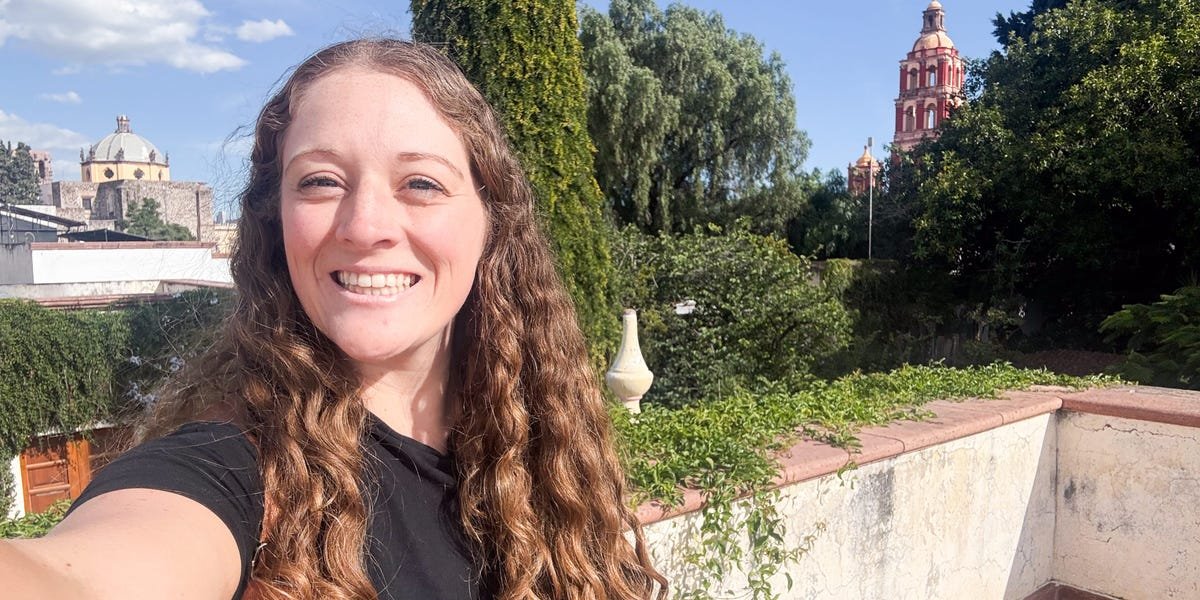
I have always been a creative person, ever since I was a kid with an artistic dream, glitter, and a glue gun. I would spend hours coming up with crafts, ride my bike to get supplies, design them with my friends for days, and eventually sell them on the sidewalk in my neighborhood. That creative spirit continued into my pre-parent life: painting, DIY home repairs, jewelry making, and throwing dinner parties.

Now that I’m in the self-proclaimed “middle motherhood” stage of parenting with more independent elementary- and middle school-aged kids, I have a bit more time on my hands. In this new stage of parenting, I want to be able to answer, “What do you do for fun?” with something unique and creative, honoring the little girl with paint-splattered overalls and big artistic dreams.

I started painting again

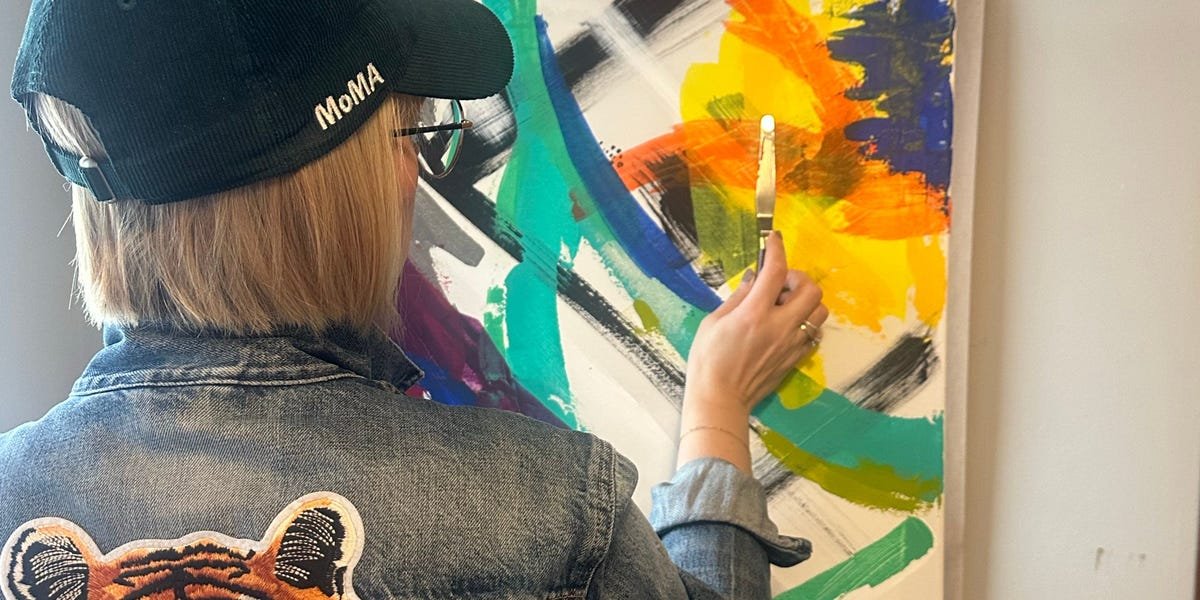
A few years ago, I started this quest to infuse more creativity into my life. Starting out small, I pulled out paintbrushes I hadn’t touched in a decade and found an easel on Facebook Marketplace. I set up in my office area, and my background became my painting progress. Being a mom and an executive, I couldn’t paint for hours at once. Instead, my painting sessions were 30 seconds between bathtime or 15 minutes during a lunch break. When I had a moment, I would take a couple of swipes with acrylic paint. Over time, the painting started to reveal itself.


Woman on computer camera

Courtesy of the author


At first, I was nervous about sharing my background art in Zoom meetings. What would my talented designer colleagues say about my mediocre, mom-ish, abstract artwork? But guess what: they loved it! It became a positive topic of conversation on calls. They would catch new strokes, comment on techniques I used, or provide advice when I was stuck.

Making something, even badly, felt like hitting a reset button in my brain. I felt more alive and calm at the same time. So I kept going, aiming for bite-sized creative bursts.

I kept doing creative little things

I took my creativity on the road, packing friendship bracelet supplies for my son’s travel baseball tournaments so my daughter and I could pass the time. Every once in a while, another feral sports sibling would join, and I played camp counselor, showcasing my superior bracelet-making skills.

For a girls’ trip, I brought paint gems — just like paint-by-numbers, but with sticky paper designs like plants and tiny plastic bits that stick to the paper. It’s an absolute joy, especially the ASMR effect of all those plastic pieces clicking into place. And afterward it became a family activity, our dining room table littered with gems.

Emboldened by these small creative steps, I took a leap to start writing again. I wrote to process my feelings about parenting, share my leadership experiences, and put my UW-Madison Journalism degree to good use.


Paintings in office

Painting made the author more patient. 

Courtesy of the author


My creative action was taking me to new heights, and I hadn’t realized how much I needed it.

Being creative helps me in ways I hadn’t thought of

I learned that when I give myself even tiny pockets of creative time, I’m more patient. I don’t feel as depleted. It turns out that making something, even if it takes time and isn’t outcome-driven, quietly brings me back to myself and makes me an even more present parent. In my opinion, parents should be doing it more, not less.

For a long time, I treated creativity like a luxury, even though it was part of my day job running a design and innovation studio. Sure, I could do it for clients and colleagues. But for myself, I treated it like something I’d return to when life slowed down.

The thing is, parenthood doesn’t really work that way. It never slows down.


Source link

A-room-full-of-seniors-took-on-AI-—-and.jpeg

A room full of seniors took on AI — and didn’t blink

Susanna Lau, 70, squinted at her screen, then laughed.

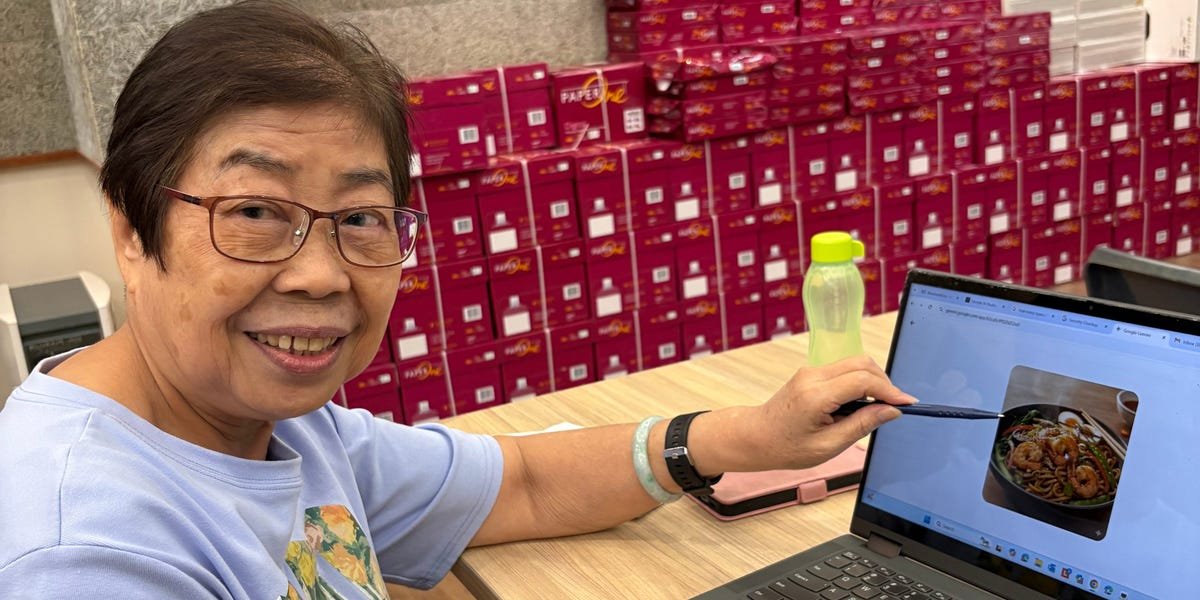
The AI chatbot she was playing with had just generated a dish she described as “an extravagant Hokkien mee,” a Singapore dish of stir-fried noodles in a seafood broth.

Around her, 15 retirees in their 60s and 70s were hunched over laptops, tinkering with AI models and reacting — often out loud — to what they could do.

Asif Saleem, a financial services go-to-market lead for Japan and Asia Pacific at Google, was running the session as a community class in Singapore.

Over four hours, retirees stayed locked in, asking questions, testing prompts, and trying to work out what AI could do for them.

Some came out of fear of being left behind. Others came with doubts. But all were intent on sharpening their skills — proof that learning doesn’t stop with age.

Hands up, questions aplenty

The first hour was spent on teaching them the basics: What AI is, what a large language model is, and how multimodal AI works.

Questions came quickly. Retirees interrupted Saleem to ask about AI videos they had seen on social media, whether those clips could be trusted, and what happens to personal data once it’s fed into a chatbot.


Asif Saleem

Asif Saleem is introducing the tools for the AI workshop in Singapore.

Lee Chong Ming/Business Insider


After fielding their questions, Saleem moved on to teach them prompting. He began with a low-stakes use case: generating images with Google’s Gemini.

The retirees were asked to prompt the AI to design a unique fusion dish, drawing on a hobby many of them already loved.

After generating a Chinese-Japanese fusion dish that looked like “Hokkien Mee,” Lau learned how to prompt the AI to go further. She asked it to generate a full recipe, suggest possible names (“Umami Forest Lo Mien”), and even recommend additional ingredients she could add to elevate the dish.

I asked if she’d try cooking it at home. She paused, then laughed. “I’ll give it some thought.”


Suzannah Lau

Retiree Susanna Lau used AI to generate a Chinese-Japanese fusion noodle dish.

Lee Chong Ming/Business Insider


Another exercise quickly caught on: creating travel postcards.

Retirees prompted the AI to generate images from past trips: a sauna in Japan, a beach in Thailand, and a seaside view in Croatia. They superimposed themselves into the scenes, turning the images into postcards they could send to friends.

Ann Seow, 60, told me she was impressed by AI’s “ability to understand language and create its own interpretative work, like a piece of art.”

AI opens up “immense possibilities” for what people can do in retirement, such as discovering new hobbies, learning new skills, or even starting a business, she added.

Using AI to supercharge work

Next, the class was introduced to NotebookLM, Google’s research and note-taking tool.

At first, I was skeptical about introducing this tool to retirees. NotebookLM is typically pitched as a productivity tool for students, researchers, and office workers.

Saleem quickly showed why that assumption didn’t hold. He taught them how to upload a report to NotebookLM and transform it into a summary — not just text, but also audio, visuals, mind maps, and even presentation slides.

For older people in the room, the appeal was immediate. Instead of straining their eyes over a hundred-page document, they could listen to a spoken summary or grasp key ideas through a visual map.

“How can we know the information is accurate?” one participant asked.

It was a familiar concern. AI systems can hallucinate and sometimes produce inaccurate answers. Saleem acknowledged the risk but pointed out a key difference with NotebookLM: It draws only from the sources the user uploads, rather than the open internet.

Seow was visibly impressed. “That would have saved me so much time when I was working on PowerPoint slides,” she said.

“Work that we used to do manually and take days, now it is done speedily in split seconds for us,” said another retiree, Cindy Ang.

“Looks like there are more plus points to use AI. I was wondering, why do I have to fear AI?” Ang added.


Cindy Ang Retiree

Retiree Cindy Ang said she has learned to embrace AI rather than reject it.

Lee Chong Ming/Business Insider


Engaging AI — on their own terms

For the final segment of the class, the seniors were meant to try vibe coding a simple web app themselves. Time ran out.

Saleem gave a quick demo of how easily one could vibe-code an app using Google AI Studio. In minutes, he built a Lunar New Year app that identified one’s zodiac sign and explained it.

The retirees watched closely. When the app worked, the room broke into excited chatter.

After class, Ang told me she had initially arrived with “some mixed feelings.”

She wanted to master AI skills because she feared she might “become irrelevant.” At the same time, she was wary. “What if AI is out of control?” she said.

By the end of the workshop, she’s convinced that older people “have to engage AI rather than reject it.”

“AI is definitely going to stay. Like it or not, we have to engage it,” she said.

“However, it is important not to be totally reliant on AI, that we forget we have a human brain to use,” she added.


Retiree asking AI questions

Retiree Cindy Ang fired multiple questions at the instructor during the AI class for seniors in Singapore.

Lee Chong Ming/Business Insider


While Seow said she found learning AI useful, she worries the AI era is widening what she calls an “information gap.”

“Seniors did not grow up with smartphones or tablets or digital services, so we may be slower to understand tech concepts,” she explained.

Throughout the session, many furiously scribbled notes as Saleem spoke. They also peppered him with probing questions, rarely accepting explanations at face value.

When I later asked Ang if she might write to me about her reflections, she quipped: “What if I use AI to help me?”


Source link

I-didnt-love-Mexico-City-as-much-as-I-thought.jpeg

I didn’t love Mexico City as much as I thought I would. Luckily, I found a smaller, more charming spot nearby.

When planning my two-week trip to Mexico, I looked beyond destinations like Cancún, Puerto Vallarta, and Cozumel. I wanted to visit central Mexico instead, which is further away from the busy cruise ports and all-inclusive resorts.

For years, I’d heard nothing but great things about Mexico City, so I put it at the top of my list. Travelers seem to always rave about the city’s atmosphere, culinary scene, and world-class museums. I couldn’t wait to check it out for myself.

However, once I arrived in the city, which is home to about 22 million people, I was totally overwhelmed. The influx of tourists for Mexico’s Día de Muertos celebrations at the time probably didn’t help, either.

There was a lot to do there, but I missed the quieter atmosphere of Santiago de Querétaro, where I’d been just a few days prior.

The smaller city, often shortened to just Querétaro, is home to around 1.5 million people and is located just three hours by bus from Mexico City. I knew little about the area beforehand, but was soon blown away by its colorful historic center and nearby attractions.

Mexico City gets a lot of hype, but in the end, it was the city I’d previously barely heard of that exceeded my expectations.

Querétaro’s city center is exceptionally charming


View of people walking in Querétaro

Querétaro is much smaller than Mexico City, but it has a lot to offer.

Jenna DeLaurentis


On my first morning in Querétaro, I was immediately struck by the atmosphere of the historic city center.

It’s a designated UNESCO World Heritage Site, and it’s full of tree-lined public squares. Each square acts as a meeting point for commerce, culture, and dining experiences.


Figure with sugar skull head and colorful dress

Querétaro’s pedestrian-only streets are ideal for a relaxing walk.

Jenna DeLaurentis


I loved dining outdoors in these public squares. Often, musicians played soft piano music during mealtimes, and the atmosphere was alluring.

Beyond the squares, every street offered something new. On a visit to Querétaro’s Museum of Arts, I was blown away by the building’s Baroque-style architecture. The intricate design of the space was just as impressive as the artwork inside.


Querétaro's Museum of Arts

Querétaro’s Museum of Arts has stunning architecture.

Jenna DeLaurentis


Likewise, a brief visit to the Calendar Museum left me impressed. The small museum, which houses exhibitions on time and space, contains intricately manicured gardens in a restored mansion. The space was serene, adding another special touch to Querétaro’s endearing city center.

In contrast, I found Mexico City to be more overwhelming than charming. With millions of people, cars, and buses zooming around every corner, it was impossible to feel relaxed.

While walking around Mexico City’s maze of streets, I found myself missing the small-town feel of Querétaro.

The city is a convenient home base for day trips to other destinations, too


San Miguel de Allende

San Miguel de Allende is a short drive from Querétaro.

Jenna DeLaurentis


Something I loved during my time in Querétaro was the city’s proximity to several exciting destinations. I found it easy to take a day (or overnight) trip from the city.

On my visit, I took a one-night trip to San Miguel de Allende, a small city with well-preserved colonial architecture.

It was the perfect destination for a quick visit. I spent my time wandering around cobblestone streets, dining at rooftop cafes, and marveling at San Miguel de Allende’s prominent pink cathedral.

Querétaro is also within an hour’s drive to two of Mexico’s Pueblo Mágicos, or Magic Towns. There are 177 Pueblos Mágicos within Mexico, and each town has been designated to have significant cultural, historical, or architectural significance within the country.

One of these Pueblos Mágicos, Bernal, is famous for its giant monolith that towers over the town. The other, Tequisquiapan, offers a peaceful getaway where visitors can explore traditional cheese markets, vineyards, and natural hot springs.

Taking day trips from Querétaro doesn’t require a car, either. Uber is convenient throughout the area, and comfortable coach buses can take you from town to town at a low cost.

Mexico City has more to offer overall, but Querétaro is definitely worth a visit


Author Jenna DeLaurentis in Mexico City

I was excited to check out Mexico City for the first time, but it wasn’t my favorite place to visit in Mexico.

Jenna DeLaurentis


Even though I preferred Querétaro to Mexico City, there’s no denying that there’s far more to see and do in the latter.

You could spend months in Mexico City and barely scratch the surface. The city has over 150 museums and galleries along with the palatial Chapultepec Castle, massive Zócalo Square, vast green parks, and more restaurants than you could try in a lifetime.

Its National Museum of Anthropology could take an entire day to see in and of itself!

I expected to fall in love with Mexico City, but I didn’t jive with the city as much as I thought I would. For the most part, though, I’d still agree that Mexico City is worth the hype it receives. The metropolis has an addictive, bustling atmosphere, and the street-food scene is definitely out of this world.

Yet my trip was a good reminder to look beyond the most popular destinations in a particular place. I had never even heard of Querétaro before I planned my trip, but I’m so glad I took the chance to discover somewhere new.


Source link

I-didnt-learn-Chinamaxxing-on-TikTok-—-my-Chinese-mom.jpeg

I didn’t learn ‘Chinamaxxing’ on TikTok — my Chinese mom taught me. Here are 4 habits I still swear by.

  • Faye Bradley was born and raised in Hong Kong with a Chinese mom.
  • When she first started seeing “Chinamaxxing” on social media, she felt a surprising sense of pride.
  • Even though these habits are trending now, they’ve been part of her life for years.

When I first saw “Chinamaxxing” on my feed, I was surprised by how happy it made me.

The viral trend — where people share Chinese lifestyle hacks, from wearing red for luck during Lunar New Year to banning outdoor shoes indoors — felt like watching the world embrace the culture I grew up with.

Around the same time, another phrase was everywhere: “You met me at a very Chinese time in my life.” The line went viral after Hong Kong-born stand-up comedian Jimmy O Yang posted a video of himself singing the well-known Chinese song “Yi Jian Mei” on Instagram in November, with those words splashed across the screen. The clip has since drawn more than 6.5 million views.

It was around the same time that New Jersey TikTok creator Sherry Zhu started sharing wellness tips with her “Chinese baddies.”

Summers in Hong Kong get hot, but Bradley’s mom always discouraged cold water.

Proivded by Faye Bradley

Growing up in Hong Kong, I followed these habits long before they had a name. My mom talked constantly about balance: hot versus cold foods, drying your hair before bed, and the little miracles of White Flower Oil.

Watching the internet embrace these traditions made me reflect. Some explanations oversimplify centuries-old practices — feng shui isn’t just moving your desk, and traditional Chinese medicine (TCM) isn’t just a trendy tea. But the curiosity feels genuine.

Here are four simple things my mom taught me years ago that I still swear by.

1. The herbal ointment is a cure-all


A bottle of White Flower Oil.

Bradley’s mom would use White Flower Oil for aches, pains, and motion sickness; she now does the same.

Provided by Faye Bradley

Growing up, my mom would reach for a tiny bottle of White Flower Oil, a concentrated ointment, whenever my brother or I complained about tummy aches.

A dab of the concentrated herbal ointment — that has a sharp smell that combines menthol, eucalyptus, and a hint of lavender — on my belly, temples, or behind my ears, and relief would follow almost instantly.

Today, I carry a small bottle whenever I travel and keep one at my bedside.

It’s also a staple for motion sickness, muscle aches, or even mild stomach pain.

2. Start every morning with a hot cup of water


An electric kettle and a white mug with warm water.

Hot water helps her with digestion and circulation.

Provided by Faye Bradley

My mom had firm rules about drinks. Hong Kong summers are stifling — often 90 degrees Fahrenheit and humid — yet anything cold in the morning was discouraged.

In TCM, hot water is believed to support digestion and circulation, while cold drinks can “shock” the body and disrupt internal balance.

Switching to hot water first thing in the morning may sound trivial, but it transformed my mornings. My energy feels steadier, my stomach calmer, and I start the day feeling grounded instead of jolted awake.

I used to brush off her advice, but after seeing my friends do the same, I began incorporating it into my routine in my late teens.

To think she was right all along.

3. Never go to bed with wet hair


Woman taking a photo in the mirror at a hair salon.

She avoid going to sleep with wet hair.

Provided by Faye Bradley

“You’ll get sick!” my mom would yell every time I tried to crawl into bed with damp hair.

I used to roll my eyes, but now, decades later, I have to admit she was right. Sleeping with wet hair often leaves me stiff, chilled, and inexplicably irritable — not just uncomfortable, but subtly disruptive to my body’s rhythm and sleep quality.

For me, blow-drying signals closure: a pause at the end of the day and a small act of respect for my body. By keeping warm and dry before bed, I wake up more rested, my muscles looser, and my mind calmer.

4. Don’t underestimate the rice cooker


Black rice cooker plugged in.

Rick cookers can do more than make rice.

Provided by Faye Bradley

I remember heading off to university in the UK and asking my future British flatmates in a group chat whether anyone was bringing a rice cooker. “What’s that?” they replied. “We just boil rice in a pan.” I was stunned. When I moved in, I quickly realized I couldn’t live without one. It makes the rice taste better.

And my rice cooker isn’t just for rice. My mom taught me it’s perfect for complete meals: chicken, vegetables, and rice all in one pot. The magic isn’t just convenience — steaming keeps food tender, flavorful, and healthy, locking in nutrients while reducing oil. It’s practical, too, with fewer pots to scrub.

It’s heartening to see these traditions embraced more widely. For me, they’ve always been simple acts of care; practical, grounding habits shaped by generations before us.


Source link

I-took-my-first-solo-trip-to-Iceland-It-didnt.jpeg

I took my first solo trip to Iceland. It didn’t transform me, but it did wonders for my anxiety levels and confidence.

As I drove through Iceland’s dramatic landscape alone this past June, listening to Bon Iver’s “Holocene,” I started to cry.

I was crying in sheer awe at my surroundings and the lyrics of a favorite song, one about a man pondering his significance. Most of all, though, I was crying because I was proud of myself.

I had faced a fear of mine head-on, and it brought me to an emotional, yet blissful moment that I’ll never forget.

Taking my first solo trip showed me that what I perceived as a threat wasn’t really one after all — and it gave me the confidence to continue traveling alone.

After years of my anxiety holding me back, I planned a solo trip


View of waterfall on green mountains

For a long time, solo travel didn’t feel like an option.

Lily Voss


To rewind a bit, I’ve always been an anxious person, but it really manifested in my mid-20s when I started listening to true-crime podcasts.

Huge mistake. I know too much now about what horrific acts people are capable of. My mind would conjure scenarios in which something I’d just listened to could happen to me or a loved one.

This started to impact my life in different ways — if my boyfriend was on a work trip, I was scared to leave our apartment. When my mom moved into her new home, and we didn’t have an alarm system set up, I insisted I couldn’t stay the night there.

Anxiety had a tight grip on me at home, so the thought of solo traveling by myself? Absolutely not.


Lavendar field with hills in distance

As I began researching where to go, Iceland often came up.

Lily Voss


Then, last January, I found myself freshly laid off, about to turn 30 in six months, with a long list of places I wanted to travel to that year.

I’m not sure what changed in me — maybe it was hitting a milestone age — but after many internal battles, I decided I’d visit at least one of them solo.

I settled on Iceland, which is regarded as one of the safest countries in the world. This made following through on my decision a bit easier.

I also told everyone — my family, friends, even my esthetician— about my travel plans because the more people who knew, the harder it would be for me to back out.

Then, I rented a campervan for three days, with a plan to explore Iceland’s Ring Road.

This trip didn’t entirely change me, but it gave me the confidence to keep solo traveling


Woman with arms up in front of car in Iceland

Seemingly small experiences on my trip helped me build confidence and overcome anxiety.

Lily Voss


No, I didn’t return from Iceland as an entirely different person, nor did I have a transformative “Eat, Pray, Love” experience that changed the fabric of who I am.

Rather, I found that seemingly small experiences on my trip helped me build confidence and overcome so much of the anxiety I’d been struggling with.

I was able to go on my first hike alone and actually enjoy myself. I drove in Iceland’s notoriously high winds solo, staying calm as they shook my van.

Even just being able to sleep (soundly, I might add) in my van at campsites — something I wouldn’t have imagined happening a few years ago — made me feel stronger.

Facing my fears head-on may have even rewired my brain a bit.

After that three-day adventure, I booked another solo trip to Annecy, France, later that summer. I’m still looking forward to going on even more adventures by myself.

Is my anxiety still there? Definitely. However, taking that trip did help me deal with it in a healthier way.

Above all, facing this fear taught me that seeing what’s on the other side of my worries might actually lead me to some of life’s best experiences.


Source link

We-didnt-need-childcare-but-we-still-paid-7500-to.jpeg

We didn’t need childcare, but we still paid $7,500 to send our toddler to a program for 4 hours a week. It helped her build independence.

When I first found out I was pregnant, I frankly didn’t put much thought into long-term childcare plans. Living in New York City, my husband and I knew we wouldn’t have the traditional village available to us — my parents, while local and thrilled to get a first grandchild, are older and weren’t particularly eager to volunteer for solo babysitting, while his parents live thousands of miles away.

But we were in a uniquely lucky situation: We both happened to have flexible, largely remote jobs.

For the first few months of my surprisingly generous parental leave, my husband and I, cocooned in newborn bliss (and perhaps slightly delirious from sleep deprivation), didn’t stress about what would happen when I went back to work. I figured we could make it work through a combination of creative time management and strategically scheduled naps — at least until our daughter was eligible for 3-K, free schooling available in New York City for kids the year they turn 3.

My husband became the primary parent

Surprisingly, this plan ended up working, for the most part, and for just shy of a year, we managed a fairly even 50-50 split in parenting duties. As time went on and my own work ramped up and the baby potato turned into a sprinting toddler, it became clear that my husband would need to become the primary parent.

It wasn’t something either of us had considered before having a child, but it made the most sense: He found far greater fulfillment in being a father than he’d ever found in his career, whereas I had always defined myself by my work as a writer and editor. He kept his job but scaled back, working largely in the evenings and weekends so he could be free during the day for stay-at-home parenting.

As our daughter became a toddler, she blossomed under my husband’s full-time care, with constant adventuring and frequent playdates keeping her days busy. We didn’t need outside childcare — but as it turned out, she did.

I’d considered traditional childcare, but couldn’t stomach the cost

New York City has notoriously high childcare costs.


Child playing with bubbles

The author says traditional childcare was too expensive in New York City.

Courtesy of Michael Matassa


In the interim between our delicate balancing act and deciding my husband would drastically scale down his work, I considered a number of different options, from traditional daycares (upward of $2,500 a month in my neighborhood for full-time programs) to nanny-share arrangements with other local families (maybe slightly cheaper, but a pain to coordinate).

We were lucky in that we were able to avoid childcare costs, which would have effectively canceled out one of our salaries, though I still toyed with the idea of enrolling her somewhere part time to get her used to the idea in case our situation changed.

Enter Barnard College’s Center for Toddler Development.

I first heard about the program in a local moms’ book club I’d joined. One of our first reads was “How Toddlers Thrive” by Tovah P. Klein, a prominent child psychologist — and incidentally the then-director of the Toddler Center. Another mom in the book club with a daughter two years older than mine mentioned she was now applying.

I was frankly flabbergasted when she explained the details. It’s part research program, where the toddlers are minded by teachers and selected students from the college’s graduate program and observed for published research purposes from behind a one-way mirror, and part “school,” albeit an extremely part-time one, with each “class” of toddlers meeting only twice a week for two hours each day for the duration of the school year.

I was intrigued by the program’s unique “gentle separation period” and its said mission to help toddlers have a positive first school experience while supporting healthy social and emotional development through hands-on, child-guided play.

At that point, my daughter was only 18 months old (the halfway point to our 3-K end goal), but I’d already started to suspect that separation might be an eventual issue. With two working-from-home parents, she was used to having us around constantly — and had never had a babysitter.

The few times we’d tried to step out to grab a coffee and handed her to a grandparent, she would shriek like she was being abandoned. Over the next several months, she also grew more shy, coinciding with her stranger danger peaking.

We paid $7,500 for our 2-year-old

Convinced our future would be filled with school refusals and drop-off meltdowns, I hardcore pitched the Toddler Center to my husband for the coming school year. We didn’t need it for childcare, but I became convinced we did need it to help give our daughter the gentlest, most gradual introduction to being away from us. He was less convinced, sure she would grow out of it and be OK with separating by 3-K, but agreed in the end.

If the program details were mind-boggling, the price point was eye-watering. Though there isn’t a set, publicly announced tuition rate, the Toddler Center offers sliding-scale tuition and payment plans to make the program accessible to a broader range of the population. According to its website, a third of Toddler Center families pay tuition on a sliding scale (I assume the higher-profile alum parents like Amy Schumer, Sarah Jessica Parker, and Robert De Niro paid full sticker price for their kids to attend).

After submitting a sliding-scale tuition application, which required forking over the previous year’s tax returns to prove we were indeed not flush with cash, we landed on $7,500 as the final figure for our almost 2-year-old to take her first baby steps toward school.

At first, it was torturous

It did not go well.


Toddler sitting on bench

The author says at first, her daughter wasn’t comfortable with either of her parents leaving.

Courtesy of Michael Matassa


The first few weeks of the program allowed the parents in the classroom, gradually moving us farther from it (a separate, no-toys-allowed room in the back, meant to be unappealing to the kids) to encourage the toddlers to ignore them and play in the main classroom area. That trick didn’t work on our daughter, who simply sat next to the chair of whichever of us had taken her in that day, chattering happily as we tried to gently encourage her to go away.

As I’d dreaded, the initial actual separation — when parents would bring their kids into the classroom and tell them they were leaving — was horrendous. The Toddler Center mandated that only one parent or caregiver drop off their child each morning.

For the first few weeks after separation, we could both sit in the observation room, where we were treated to a front-row show of our daughter sobbing hysterically and trying to reason with the grad students to open the door she was convinced we were right behind. It was excruciating, and plenty of tears were shed on our end as well.

There was virtually no improvement for months, which was far longer than I expected. And I felt an immense amount of guilt for having come up with this idea in the first place: Were we actually traumatizing her instead of helping her? Had I epically miscalculated this? Did I pay $7,500 to torture my toddler and myself?

I was wracked with doubt, and we debated withdrawing her from the program before the first semester had even finished. It was particularly hard on my husband, who, as the primary parent, was typically the one dropping her off and dealing with the meltdowns — and who also really missed her on school days.

Suddenly, though, and for no particular reason at all, it got better. A lot better.

Instead of sobbing by the door for a full hour and a half, she started interacting with the other kids. She found a favorite grad student she’d attach herself to. She played happily on the classroom slide. And eventually, she comforted the other toddlers during their hard separation days, assuring them their mommies or daddies would be back.

The Toddler Center was expensive, but extremely worth it for us

While it was difficult for my husband to be apart from his little buddy for the few hours a week she was at the program, they turned it into an opportunity for new adventures. In the spring semester, he began biking with her to school, stopping to pick up flowers on the way there and back. Another tradition became that he would bring her a blueberry muffin from a local café every day at pickup. These small rituals helped them bond even more.


Child jumping on sand

The author says the $7,500 she spent was worth it.

Courtesy of Michael Matassa


I don’t pretend to have a handle on the intricacies of toddler psychology, and I can’t tell you what the flipped-switch moment was where it finally clicked for my kid that being left at school with her teachers didn’t mean we were gone forever. And yes, for the record, she still cried during drop-off the first few weeks of 3-K.

But I am convinced that completing the Toddler Center program drastically reduced her adjustment period for “real school.” Tossing her into the deep end for six hours a day, five days a week, was simply not the right option for our family.

In the end, I’m glad I listened to my gut, dug into our pockets, and toughed out the tears — and I’d like to think my daughter, somewhere deep down in her toddler brain, is too.


Source link

callie ahlgrim headshot 2023

Bad Bunny didn’t need to sing in English at the Super Bowl to make a statement about America

When Bad Bunny took the field at the 2026 Super Bowl for a historic, joyful halftime show, he wore a jersey with his Latino heritage stitched into its very fabric.

It’s an apt metaphor for his performance, which eschewed explicit anti-ICE statements (he covered that at the Grammys, anyway) in favor of celebration with a side of symbolism.

Nods to the Puerto Rican singer’s motherland were peppered throughout the set, which was designed to evoke the US territory’s signature aesthetics, from sugar cane fields to a storefront labeled “La Marqueta” (a slang term for market) and various vendors selling tacos and piraguas (shaved ice). While performing “El Apagón,” a song about the frequent blackouts and infrastructure issues affecting Puerto Ricans, Bad Bunny brought this symbolism to the forefront, waving the Puerto Rican flag.

He also proclaimed in English, “God bless America,” and brandished a football printed with the phrase “Together, We Are America.” He added in Spanish, “We’re still here.” (Puerto Rico is a US territory, and Puerto Ricans are American citizens.)

It was a stark and knowing contrast to the Latinophobia and anti-immigrant messaging hawked by the Trump administration. So much so that President Donald Trump complained online about Bad Bunny’s performance and his choice to sing primarily in Spanish.

“The Super Bowl Halftime Show is absolutely terrible, one of the worst, EVER! It makes no sense,” Trump wrote on Truth Social after Bad Bunny left the stage. “Nobody understands a word this guy is saying.”

For those who understand visual storytelling, however, Bad Bunny’s performance made perfect sense. He didn’t need to say “ICE out” or declare an explicit political opinion. In keeping with the recent tradition of Super Bowl halftime shows, Bad Bunny used iconography to take a stand instead.

Bad Bunny’s Super Bowl performance is part of a new halftime show tradition

Bad Bunny’s performance shares DNA with Beyoncé and Kendrick Lamar’s Super Bowl appearances, both of which used bold imagery to make strong statements.

Beyoncé’s surprise appearance at Coldplay’s 2016 Super Bowl halftime show became famous — and, to some, infamous — for the iconography present in her performance of her then-new single, “Formation.” In the midst of Trump’s first presidential campaign, Beyoncé and her backup dancers wore outfits that channeled the Black Panther Party, an organization formed amid the ’60s Civil Rights Movement that fought for Black liberation.


Beyoncé performs at the 2016 Super Bowl.

Beyoncé performs at the 2016 Super Bowl.

Robert Beck/Sports Illustrated via Getty Images


The song itself isn’t explicitly political. But as a celebration of identity and legacy that features lyrics about Beyoncé’s parents, her daughter, and her features (“I like my negro nose with Jackson 5 nostrils”), Beyoncé performing it — with visual references to the song’s themes in her and her dancers’ costumes, to boot — was innately political.

It’s not that Beyoncé is allergic to making explicit political statements: She famously performed in front of the word “Feminist” at the 2014 VMAs, and sang “Votin’ out 45, don’t get out of line” on her 2022 album “Renaissance,” referring to Trump as the 45th president. But when the NFL hosts musicians for the night, they’ve lately preferred make their statements symbolic rather than overt.

Last year, Kendrick Lamar followed suit during his own Super Bowl halftime show, outfitting himself and his dancers in red, white, and blue. Although Lamar kept the music focused on his own enemies and triumphs, he used audacious visual language to pose broader, poignantly relevant questions: Who’s allowed to claim patriotism? What does it mean to be an American, especially in times of oppression and conflict?

Bad Bunny’s performance raised similar questions, but offered simpler, more optimistic solutions. For the finale, he was surrounded by backup dancers, band members, and other performers holding flags from around the world; when he proclaimed “God bless America,” he listed out all the countries in both North and South America.

Bad Bunny is not a politician, nor can he single-handedly cure the world of hatred and division. Still, for a brief moment, on a small square of American turf, he chose to use the stage to show millions of people what that could look like.


Source link

Jacob Shamsian hollis unsmiling headshot cassidy edit 2

No, Jeffrey Epstein didn’t have a baby boy, his brother says

Jeffrey Epstein did not have any children, despite what an email in just-released documents suggested, his brother told Business Insider.

“No, Jeff didn’t have any kids,” Mark Epstein said Monday. “If Jeff had a kid, I think I would have known.”

The denial comes in reaction to a set of messages included in the latest cache of Epstein files issued by the US Department of Justice.

The messages, sent in September 2011, are signed “Sarah xx” and reference “The Duke.” They appear to have been sent through BlackBerry Messenger.

The sender’s name and email address were redacted by the Justice Department. The BBC and other British media outlets have reported that they may have come from Sarah Ferguson, the ex-wife of the former Prince Andrew, who also held the title Duke of York.

“Don’t know if you are still on this bbm but heard from The Duke that you have had a baby boy,” one message says. “Even though you never kept in touch, I still am here with love, friendship and congratualtions on your baby boy.”

A follow-up message sent the same day accused Epstein of befriending her “to get to Andrew.”

“You have disappeared. I did not even know you were having a baby,” the message said. “It was sooooo crystal clear to me that you were only friends with me to get to Andrew. And that really hurt me deeeply. More than you will know.”

A representative for Ferguson didn’t immediately respond to a request for comment.

The former prince is now known as Andrew Mountbatten-Windsor. He relinquished his royal titles last year, around the release of a posthumous memoir from Virginia Giuffre, who accused him and Epstein of sexual abuse. In 2022, the former royal had also settled a civil lawsuit brought by Giuffre.

Another message from “Sarah,” dated January 2010, expressed intense gratitude for Epstein.

“You are a legend. I really don’t have the words to describe, my love, gratitude for your generosity and kindness,” Sarah wrote. “Xx I am at your service . Just marry me.”

Aside from the “baby boy” message, the vast public corpus of emails and other documents released so far has made no reference to Epstein having a child.

If you are a survivor of sexual assault, you can call the National Sexual Assault Hotline (1-800-656-4673) or visit its website to receive confidential support.


Source link

A woman in glasses wearing a blue dress standing in front of a bush.

I found dozens of recurring charges on my credit card. I had been wasting $1,600 a year on subscriptions I didn’t even use.

My 17-year-old daughter told me that she’d been offered a special deal at the Verizon store: access to Apple Music for up to six people for $10 a month. She was desperate to take advantage of the promotion and said the streaming service had an amazing selection of songs.

I said no, not only because we have Spotify, but also because I’d had a rude awakening after New Year’s.

My husband and I were worried about how much we were charging to our credit cards, especially during the holiday period.

We decided to do a financial tune-up, and I was responsible for reviewing the Mastercard statement. We only used it as a secondary payment method if a merchant didn’t accept American Express.

I thought I’d been subject to fraud

As a result, I rarely looked at the bill. This time, however, I printed the statement covering November 11 to December 12, 2025, when we did most of our Christmas shopping.

There were a few transactions for items like coffee at a little café that doesn’t take Amex and some co-pays for doctors’ visits, but there were others I didn’t recognize.

What on earth was Uexton? I’d paid them $19.99 on November 11. Then there was Sportelx, to whom I’d paid $29.55 on November 21. I’d never heard of it.

I Googled to find that Uxeton was a gaming website and Sportelx was a sports news service.

I’d been a victim of fraud on several occasions, and assumed it had happened again.


Subscription mailers

The author accidentally signed up for services she never used.

Lam Kraker/Business Insider


Then, I looked over the rest of the bill and saw payments of $29.99 to ESPN New York, $14.99 to Canva, and $11.95 to Audiobookstore.com. As far as I was concerned, neither my husband, kids, nor I had used any of them.

There was also a $25 fee to Rockin’ Jump, where my son went once a week before getting too old for a trampoline park. Why were we still paying for his membership?

I reviewed the last two months’ statements and realized the suspicious payments had occurred before, on the same day each month.

It wasn’t fraud. The recurring fees were subscriptions we’d signed up for before switching banks and credit cards. Some went back years. We had failed to cancel Rockin’ Jump. I didn’t know how the rest had come about.

Over the next few hours, I racked my brains trying to figure out where they came from. The only thing I could think of was that my spouse or I must have shared our credit card information at some point to get a trial subscription.

We’d wasted almost $1,600 annually

We must have forgotten to cancel at the end of the free or discounted period. The total of our unnecessary payments was $131.88 a month, the equivalent of a family cellphone plan.

Over the years, I calculated that we’d spent almost $1,600 annually on streaming and other services we didn’t touch. It was hard to blame the companies that use subscription models when I had been the one to drop the ball. I felt dumb and ashamed.

I sprang into action, canceling as many fees as I could. In most cases, I found it much more difficult to unsubscribe than to subscribe because of the hoops you have to jump through.

Still, the experience taught me a lesson. It’s no thank you to tempting — but ultimately useless — offers from now on.


Source link