

I-regret-signing-my-kids-up-for-so-many-activities.jpeg

I regret signing my kids up for so many activities when they were younger. They really didn’t benefit from being rushed around.

My husband and I adopted three children within four years, and then about three years after, we adopted a fourth child. At the time, it felt like we worked from dawn until, well, all through the night.

When my oldest was born, it felt like there was a big push in parenting circles to put young children in structured activities so they could be exposed to music, gross motor movement, language, and fine motor skills from their earliest days. I have noticed that this — what I thought would be a trend — has never let up.

I resisted, at first. But eventually, in order to meet other moms, and for our children to be “well socialized,” I reluctantly enrolled her, then 3, in a ballet and tap class. From there, the classes, activities, and commitments seem to pile on.

Looking back, I’m not convinced the time, money, and effort it all took was really worth it.

These commitments are exhausting

While my daughter was in dance, I became very good friends with someone I’m still friends with to this day, and I’m grateful for that. However, I remember on multiple occasions, as the sun began to sink behind the trees at our home, I would load my toddler and infant into our family car to head across town to the dance studio, while I fought back yawns the entire 10-minute commute.


The author poses in front of a brick building.

The author said she now regrets signing her kids up for so. any activities when they were younger. 

Courtesy of Rachel Garlinhouse.


I would sit in the waiting room with all the other exhausted moms. Some would be gossiping, others would try to read a book or watch their child through the observation window, and then there were the others, like me, juggling a fussy, tired, hungry infant while trying to support their older sibling. It was a lot.

As the years passed, more activities piled on

I didn’t let the difficulties of juggling multiple responsibilities deter me. When my oldest turned 4, she joined a basketball team. Every Saturday morning, bright and early, our then family of five would head to a carpeted church gym to cheer on my daughter and the team of boys she played with. The fact is, a lot of the thrill of even the youngest kids in structured activities comes from parents who are more competitive and engaged than the children.

I’ll never forget enrolling my son, our third child, in a class called Ninja Warrior. I made another dear friend, which was the only thing that kept me coming back week after week. My son and her daughter would joyfully run around the gym, always ending up in the foam pit, while the other kids sat politely during circle time, stretching and singing preschool songs to warm up for their ninja adventures. To this day, we joke about how appalling and embarrassing circle time was for us.

I then enrolled one of my sons in soccer, and my husband, with zero experience, signed up to help coach. My son ended up hating soccer. Frankly, I don’t think he learned anything valuable from the experience either.

Meanwhile, I’d cart the other kids to and from the wet, cold soccer field to cheer him on every Saturday morning, no matter what. The observing kids would complain about being hungry, the temperature, and being “sooo bored.” I couldn’t blame them. I was fairly miserable myself, and my son didn’t kick the ball once during the entire season.

We found alternatives that worked for us

I discovered that taking my kids to library story time (which ended with a bubble machine party), the park, and our local children’s museum was far more fun for them and far less stressful for me than other organized activities that are usually much more costly.

The more structure, the more dysregulated they became, resulting in no learning but plenty of tears. A child’s job, arguably, is to play. It is what they do best, and, in my observation, how they learn the most.


The author's four children stand at the shoreline at the beach.

The author said her children (pictured on a family trip to the beach) didn’t always enjoy the activities she signed them up for, but they have found a nice balance now that they are older. 

Courtesy of Rachel Garlinghouse.


I eventually learned my lesson. By the time baby number four was preschool age, she’d been enrolled in a whopping zero activities. I held out for a long time and didn’t enroll her in beginner gymnastics until she turned 7. She took two classes, and now, even though she is 8, still prefers more open activities like indoor rock climbing and roller skating with friends.

My older children, all teens now, have chosen more structured, serious activities. One is in color guard, one is in basketball, and one is in wrestling. These activities are more successful simply because my kids are committed to their sports and crave to learn from their coaches and teammates. The motivation is from them — not me, like when I was desperate to manage those early days of motherhood.

The stress of making sure my kids grow up to be “well-rounded” is gone. They are blossoming into their own people, and I get the honor of watching, not pushing, and certainly not fearing that I’m not a good enough mom.


Source link

A-room-full-of-seniors-took-on-AI-—-and.jpeg

A room full of seniors took on AI — and didn’t blink

Susanna Lau, 70, squinted at her screen, then laughed.

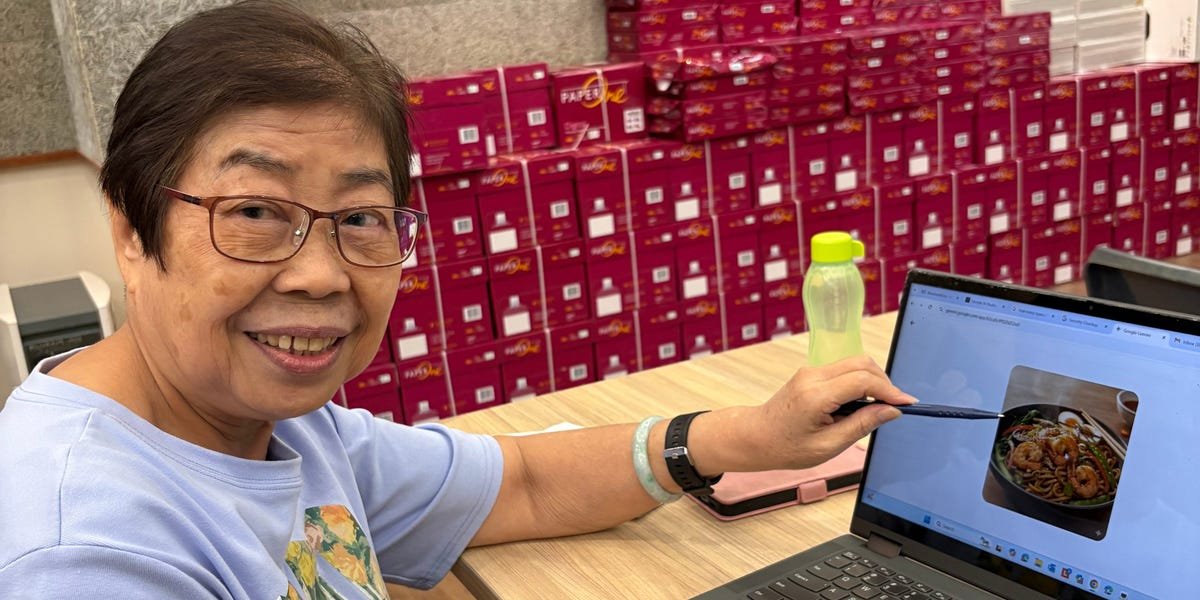
The AI chatbot she was playing with had just generated a dish she described as “an extravagant Hokkien mee,” a Singapore dish of stir-fried noodles in a seafood broth.

Around her, 15 retirees in their 60s and 70s were hunched over laptops, tinkering with AI models and reacting — often out loud — to what they could do.

Asif Saleem, a financial services go-to-market lead for Japan and Asia Pacific at Google, was running the session as a community class in Singapore.

Over four hours, retirees stayed locked in, asking questions, testing prompts, and trying to work out what AI could do for them.

Some came out of fear of being left behind. Others came with doubts. But all were intent on sharpening their skills — proof that learning doesn’t stop with age.

Hands up, questions aplenty

The first hour was spent on teaching them the basics: What AI is, what a large language model is, and how multimodal AI works.

Questions came quickly. Retirees interrupted Saleem to ask about AI videos they had seen on social media, whether those clips could be trusted, and what happens to personal data once it’s fed into a chatbot.


Asif Saleem

Asif Saleem is introducing the tools for the AI workshop in Singapore.

Lee Chong Ming/Business Insider


After fielding their questions, Saleem moved on to teach them prompting. He began with a low-stakes use case: generating images with Google’s Gemini.

The retirees were asked to prompt the AI to design a unique fusion dish, drawing on a hobby many of them already loved.

After generating a Chinese-Japanese fusion dish that looked like “Hokkien Mee,” Lau learned how to prompt the AI to go further. She asked it to generate a full recipe, suggest possible names (“Umami Forest Lo Mien”), and even recommend additional ingredients she could add to elevate the dish.

I asked if she’d try cooking it at home. She paused, then laughed. “I’ll give it some thought.”


Suzannah Lau

Retiree Susanna Lau used AI to generate a Chinese-Japanese fusion noodle dish.

Lee Chong Ming/Business Insider


Another exercise quickly caught on: creating travel postcards.

Retirees prompted the AI to generate images from past trips: a sauna in Japan, a beach in Thailand, and a seaside view in Croatia. They superimposed themselves into the scenes, turning the images into postcards they could send to friends.

Ann Seow, 60, told me she was impressed by AI’s “ability to understand language and create its own interpretative work, like a piece of art.”

AI opens up “immense possibilities” for what people can do in retirement, such as discovering new hobbies, learning new skills, or even starting a business, she added.

Using AI to supercharge work

Next, the class was introduced to NotebookLM, Google’s research and note-taking tool.

At first, I was skeptical about introducing this tool to retirees. NotebookLM is typically pitched as a productivity tool for students, researchers, and office workers.

Saleem quickly showed why that assumption didn’t hold. He taught them how to upload a report to NotebookLM and transform it into a summary — not just text, but also audio, visuals, mind maps, and even presentation slides.

For older people in the room, the appeal was immediate. Instead of straining their eyes over a hundred-page document, they could listen to a spoken summary or grasp key ideas through a visual map.

“How can we know the information is accurate?” one participant asked.

It was a familiar concern. AI systems can hallucinate and sometimes produce inaccurate answers. Saleem acknowledged the risk but pointed out a key difference with NotebookLM: It draws only from the sources the user uploads, rather than the open internet.

Seow was visibly impressed. “That would have saved me so much time when I was working on PowerPoint slides,” she said.

“Work that we used to do manually and take days, now it is done speedily in split seconds for us,” said another retiree, Cindy Ang.

“Looks like there are more plus points to use AI. I was wondering, why do I have to fear AI?” Ang added.


Cindy Ang Retiree

Retiree Cindy Ang said she has learned to embrace AI rather than reject it.

Lee Chong Ming/Business Insider


Engaging AI — on their own terms

For the final segment of the class, the seniors were meant to try vibe coding a simple web app themselves. Time ran out.

Saleem gave a quick demo of how easily one could vibe-code an app using Google AI Studio. In minutes, he built a Lunar New Year app that identified one’s zodiac sign and explained it.

The retirees watched closely. When the app worked, the room broke into excited chatter.

After class, Ang told me she had initially arrived with “some mixed feelings.”

She wanted to master AI skills because she feared she might “become irrelevant.” At the same time, she was wary. “What if AI is out of control?” she said.

By the end of the workshop, she’s convinced that older people “have to engage AI rather than reject it.”

“AI is definitely going to stay. Like it or not, we have to engage it,” she said.

“However, it is important not to be totally reliant on AI, that we forget we have a human brain to use,” she added.


Retiree asking AI questions

Retiree Cindy Ang fired multiple questions at the instructor during the AI class for seniors in Singapore.

Lee Chong Ming/Business Insider


While Seow said she found learning AI useful, she worries the AI era is widening what she calls an “information gap.”

“Seniors did not grow up with smartphones or tablets or digital services, so we may be slower to understand tech concepts,” she explained.

Throughout the session, many furiously scribbled notes as Saleem spoke. They also peppered him with probing questions, rarely accepting explanations at face value.

When I later asked Ang if she might write to me about her reflections, she quipped: “What if I use AI to help me?”


Source link

I-didnt-love-Mexico-City-as-much-as-I-thought.jpeg

I didn’t love Mexico City as much as I thought I would. Luckily, I found a smaller, more charming spot nearby.

When planning my two-week trip to Mexico, I looked beyond destinations like Cancún, Puerto Vallarta, and Cozumel. I wanted to visit central Mexico instead, which is further away from the busy cruise ports and all-inclusive resorts.

For years, I’d heard nothing but great things about Mexico City, so I put it at the top of my list. Travelers seem to always rave about the city’s atmosphere, culinary scene, and world-class museums. I couldn’t wait to check it out for myself.

However, once I arrived in the city, which is home to about 22 million people, I was totally overwhelmed. The influx of tourists for Mexico’s Día de Muertos celebrations at the time probably didn’t help, either.

There was a lot to do there, but I missed the quieter atmosphere of Santiago de Querétaro, where I’d been just a few days prior.

The smaller city, often shortened to just Querétaro, is home to around 1.5 million people and is located just three hours by bus from Mexico City. I knew little about the area beforehand, but was soon blown away by its colorful historic center and nearby attractions.

Mexico City gets a lot of hype, but in the end, it was the city I’d previously barely heard of that exceeded my expectations.

Querétaro’s city center is exceptionally charming


View of people walking in Querétaro

Querétaro is much smaller than Mexico City, but it has a lot to offer.

Jenna DeLaurentis


On my first morning in Querétaro, I was immediately struck by the atmosphere of the historic city center.

It’s a designated UNESCO World Heritage Site, and it’s full of tree-lined public squares. Each square acts as a meeting point for commerce, culture, and dining experiences.


Figure with sugar skull head and colorful dress

Querétaro’s pedestrian-only streets are ideal for a relaxing walk.

Jenna DeLaurentis


I loved dining outdoors in these public squares. Often, musicians played soft piano music during mealtimes, and the atmosphere was alluring.

Beyond the squares, every street offered something new. On a visit to Querétaro’s Museum of Arts, I was blown away by the building’s Baroque-style architecture. The intricate design of the space was just as impressive as the artwork inside.


Querétaro's Museum of Arts

Querétaro’s Museum of Arts has stunning architecture.

Jenna DeLaurentis


Likewise, a brief visit to the Calendar Museum left me impressed. The small museum, which houses exhibitions on time and space, contains intricately manicured gardens in a restored mansion. The space was serene, adding another special touch to Querétaro’s endearing city center.

In contrast, I found Mexico City to be more overwhelming than charming. With millions of people, cars, and buses zooming around every corner, it was impossible to feel relaxed.

While walking around Mexico City’s maze of streets, I found myself missing the small-town feel of Querétaro.

The city is a convenient home base for day trips to other destinations, too


San Miguel de Allende

San Miguel de Allende is a short drive from Querétaro.

Jenna DeLaurentis


Something I loved during my time in Querétaro was the city’s proximity to several exciting destinations. I found it easy to take a day (or overnight) trip from the city.

On my visit, I took a one-night trip to San Miguel de Allende, a small city with well-preserved colonial architecture.

It was the perfect destination for a quick visit. I spent my time wandering around cobblestone streets, dining at rooftop cafes, and marveling at San Miguel de Allende’s prominent pink cathedral.

Querétaro is also within an hour’s drive to two of Mexico’s Pueblo Mágicos, or Magic Towns. There are 177 Pueblos Mágicos within Mexico, and each town has been designated to have significant cultural, historical, or architectural significance within the country.

One of these Pueblos Mágicos, Bernal, is famous for its giant monolith that towers over the town. The other, Tequisquiapan, offers a peaceful getaway where visitors can explore traditional cheese markets, vineyards, and natural hot springs.

Taking day trips from Querétaro doesn’t require a car, either. Uber is convenient throughout the area, and comfortable coach buses can take you from town to town at a low cost.

Mexico City has more to offer overall, but Querétaro is definitely worth a visit


Author Jenna DeLaurentis in Mexico City

I was excited to check out Mexico City for the first time, but it wasn’t my favorite place to visit in Mexico.

Jenna DeLaurentis


Even though I preferred Querétaro to Mexico City, there’s no denying that there’s far more to see and do in the latter.

You could spend months in Mexico City and barely scratch the surface. The city has over 150 museums and galleries along with the palatial Chapultepec Castle, massive Zócalo Square, vast green parks, and more restaurants than you could try in a lifetime.

Its National Museum of Anthropology could take an entire day to see in and of itself!

I expected to fall in love with Mexico City, but I didn’t jive with the city as much as I thought I would. For the most part, though, I’d still agree that Mexico City is worth the hype it receives. The metropolis has an addictive, bustling atmosphere, and the street-food scene is definitely out of this world.

Yet my trip was a good reminder to look beyond the most popular destinations in a particular place. I had never even heard of Querétaro before I planned my trip, but I’m so glad I took the chance to discover somewhere new.


Source link

I-didnt-learn-Chinamaxxing-on-TikTok-—-my-Chinese-mom.jpeg

I didn’t learn ‘Chinamaxxing’ on TikTok — my Chinese mom taught me. Here are 4 habits I still swear by.

  • Faye Bradley was born and raised in Hong Kong with a Chinese mom.
  • When she first started seeing “Chinamaxxing” on social media, she felt a surprising sense of pride.
  • Even though these habits are trending now, they’ve been part of her life for years.

When I first saw “Chinamaxxing” on my feed, I was surprised by how happy it made me.

The viral trend — where people share Chinese lifestyle hacks, from wearing red for luck during Lunar New Year to banning outdoor shoes indoors — felt like watching the world embrace the culture I grew up with.

Around the same time, another phrase was everywhere: “You met me at a very Chinese time in my life.” The line went viral after Hong Kong-born stand-up comedian Jimmy O Yang posted a video of himself singing the well-known Chinese song “Yi Jian Mei” on Instagram in November, with those words splashed across the screen. The clip has since drawn more than 6.5 million views.

It was around the same time that New Jersey TikTok creator Sherry Zhu started sharing wellness tips with her “Chinese baddies.”

Summers in Hong Kong get hot, but Bradley’s mom always discouraged cold water.

Proivded by Faye Bradley

Growing up in Hong Kong, I followed these habits long before they had a name. My mom talked constantly about balance: hot versus cold foods, drying your hair before bed, and the little miracles of White Flower Oil.

Watching the internet embrace these traditions made me reflect. Some explanations oversimplify centuries-old practices — feng shui isn’t just moving your desk, and traditional Chinese medicine (TCM) isn’t just a trendy tea. But the curiosity feels genuine.

Here are four simple things my mom taught me years ago that I still swear by.

1. The herbal ointment is a cure-all


A bottle of White Flower Oil.

Bradley’s mom would use White Flower Oil for aches, pains, and motion sickness; she now does the same.

Provided by Faye Bradley

Growing up, my mom would reach for a tiny bottle of White Flower Oil, a concentrated ointment, whenever my brother or I complained about tummy aches.

A dab of the concentrated herbal ointment — that has a sharp smell that combines menthol, eucalyptus, and a hint of lavender — on my belly, temples, or behind my ears, and relief would follow almost instantly.

Today, I carry a small bottle whenever I travel and keep one at my bedside.

It’s also a staple for motion sickness, muscle aches, or even mild stomach pain.

2. Start every morning with a hot cup of water


An electric kettle and a white mug with warm water.

Hot water helps her with digestion and circulation.

Provided by Faye Bradley

My mom had firm rules about drinks. Hong Kong summers are stifling — often 90 degrees Fahrenheit and humid — yet anything cold in the morning was discouraged.

In TCM, hot water is believed to support digestion and circulation, while cold drinks can “shock” the body and disrupt internal balance.

Switching to hot water first thing in the morning may sound trivial, but it transformed my mornings. My energy feels steadier, my stomach calmer, and I start the day feeling grounded instead of jolted awake.

I used to brush off her advice, but after seeing my friends do the same, I began incorporating it into my routine in my late teens.

To think she was right all along.

3. Never go to bed with wet hair


Woman taking a photo in the mirror at a hair salon.

She avoid going to sleep with wet hair.

Provided by Faye Bradley

“You’ll get sick!” my mom would yell every time I tried to crawl into bed with damp hair.

I used to roll my eyes, but now, decades later, I have to admit she was right. Sleeping with wet hair often leaves me stiff, chilled, and inexplicably irritable — not just uncomfortable, but subtly disruptive to my body’s rhythm and sleep quality.

For me, blow-drying signals closure: a pause at the end of the day and a small act of respect for my body. By keeping warm and dry before bed, I wake up more rested, my muscles looser, and my mind calmer.

4. Don’t underestimate the rice cooker


Black rice cooker plugged in.

Rick cookers can do more than make rice.

Provided by Faye Bradley

I remember heading off to university in the UK and asking my future British flatmates in a group chat whether anyone was bringing a rice cooker. “What’s that?” they replied. “We just boil rice in a pan.” I was stunned. When I moved in, I quickly realized I couldn’t live without one. It makes the rice taste better.

And my rice cooker isn’t just for rice. My mom taught me it’s perfect for complete meals: chicken, vegetables, and rice all in one pot. The magic isn’t just convenience — steaming keeps food tender, flavorful, and healthy, locking in nutrients while reducing oil. It’s practical, too, with fewer pots to scrub.

It’s heartening to see these traditions embraced more widely. For me, they’ve always been simple acts of care; practical, grounding habits shaped by generations before us.


Source link