American bombers made numerous round-trip flights from the US to strike Iran, with each aircraft spending over a day in the air to execute these missions.
Air Force Gen. Dan Caine, chairman of the Joint Chiefs of Staff, told reporters on Wednesday that the US staged 62 bomber missions during Operation Epic Fury before the Trump administration said it reached a ceasefire with Iran Tuesday evening.
Eighteen of those bomber missions involved round-trip flights from the US “to deliver bombs on military targets” in Iran, and each one lasted more than 30 hours in duration, Caine said in a debrief of the five-week war.
“No other military in the world can do that,” the general said, “and it’s a testament to the logistical force that quietly serves behind them.”
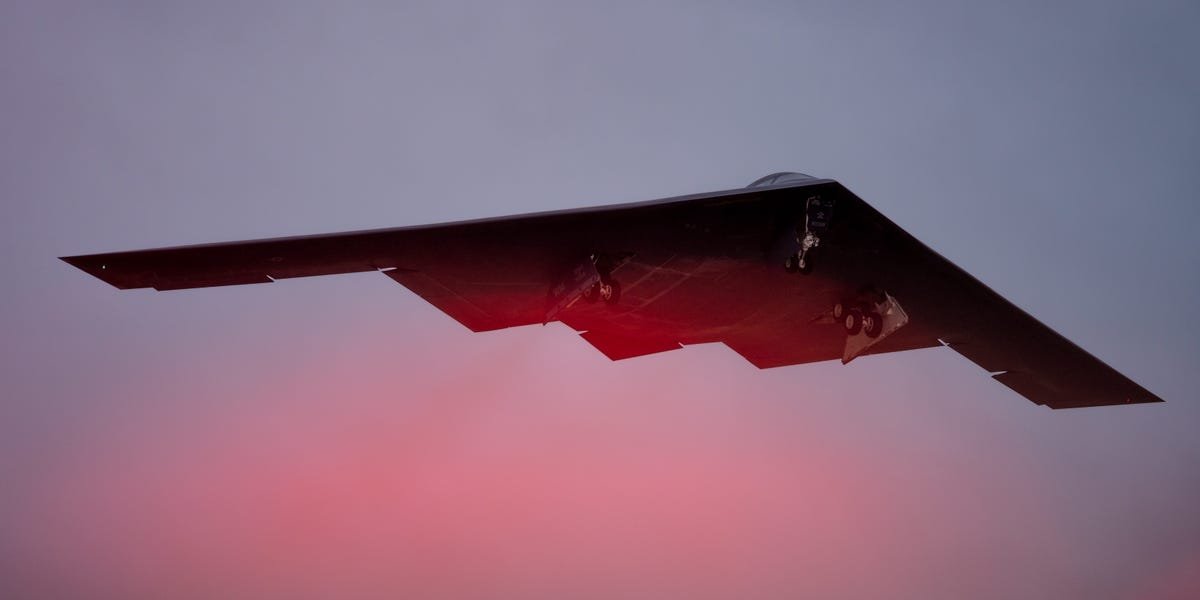
Caine didn’t specify the point of origin, but the 30-hour missions likely involved B-2 Spirit stealth bombers out of Whiteman Air Force Base in Missouri and refueled en route by KC-135 tankers. Other American bomber aircraft — the B-1 Lancer and B-52 Stratofortress — took off from bases in the UK for missions in support of Epic Fury.
Crews perform pre-flight checks on a B-2 during Operation Epic Fury last month.
US Air Force photo
B-2s from Whiteman completed similar long-distance bombing runs during Operation Midnight Hammer, the June 2025 mission to strike Iran’s nuclear sites with 30,000-pound bunker-buster munitions.
US Central Command, which oversees American military operations in the Middle East, said this week that more than 13,000 targets in Iran were struck since the war began in late February.
Caine said these included air defense systems, ballistic missile and one-way attack drone storage facilities, warships, naval mines, and weapons production factories, among other military targets. A majority of Iran’s facilities were destroyed, US officials said.
The US, Iran, and Israel agreed on Tuesday to a two-week ceasefire just ahead of a deadline that President Donald Trump set for Tehran to either make a deal and reopen the Strait of Hormuz or face the death of its civilization — a threat that received widespread global condemnation.
The Israeli military said Wednesday that it carried out strikes inside Iran overnight but has since held fire. Prime Minister Benjamin Netanyahu’s office said that the ceasefire agreement does not include the conflict with Hezbollah in Lebanon.
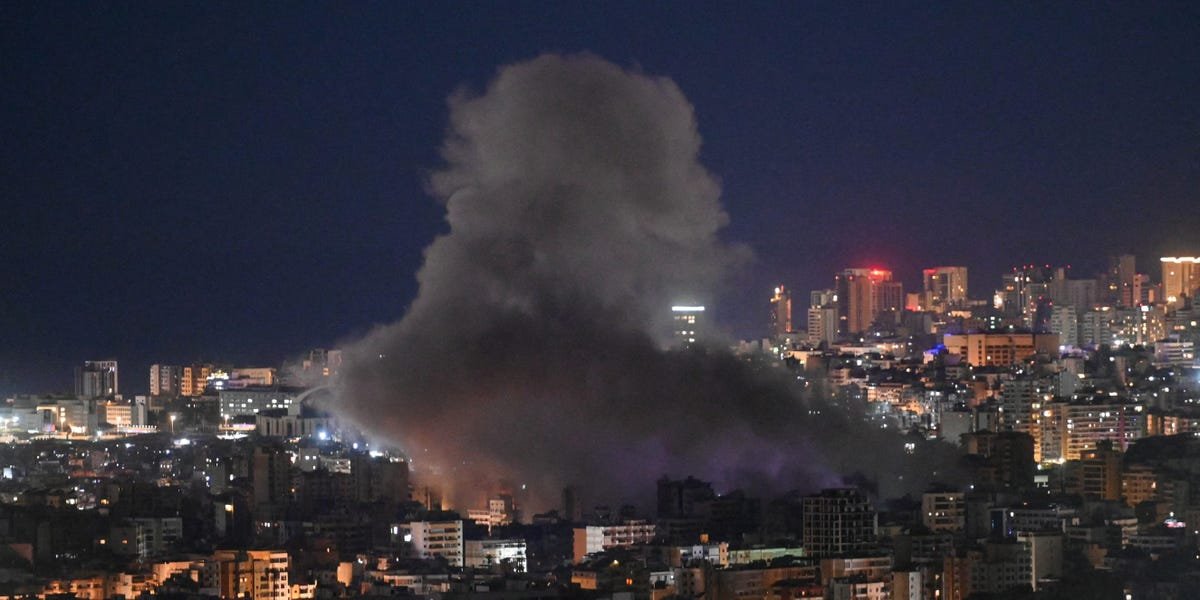
Meanwhile, several Gulf states reported Iranian attacks on Wednesday. The United Arab Emirates, for instance, said that Tehran launched 17 ballistic missiles and 35 drones since the ceasefire took effect.
This story is available exclusively to Business Insider
subscribers. Become an Insider
and start reading now. Have an account? .
Several airlines are suspending flight routes to destinations in the Middle East well in advance.
British Airways cut flights to Abu Dhabi until later this year and others until later this month.
While some airlines are canceling routes, others are operating at a more limited capacity.
The travel fallout from the war in Iran continues, with several airlines canceling flights to the Middle East weeks in advance or more.
Thousands of flights were canceled across the region following the US-Israel attack on Iran on February 28 and subsequent retaliatory strikes. While some flights have resumed and many travelers who got stranded in places like Abu Dhabi and Doha have made it out, the travel disruptions are ongoing.
Industry experts previously told Business Insider that the lasting impacts on tourism and global travel will likely depend on how long the war lasts, as well as how it ends. Canceled flights to Dubai International Airport, which serves as a common connector for routes between Europe, Asia, and Africa, could especially have a ripple effect.
While some airlines are canceling routes altogether, others are continuing to operate but in a more limited capacity. Some airlines have also added repatriation flights to help stranded travelers get home.
Here are the airlines that have suspended services to some destinations in the Middle East.
British Airways
British Airways said Tuesday it was canceling flights to Amman, Bahrain, Doha, Dubai, and Tel Aviv until later this month, and to and from Abu Dhabi until later this year.
It’s unclear when the flights will resume. Flights from London to Abu Dhabi appeared to be bookable on the airline’s website starting April 16.
British Airways also said it had limited seats remaining on its repatriation flights from Oman to London on March 11 and 12 for customers with existing bookings.
“Following these dates, the flights will pause due to reduced demand but will be kept under continuous review,” the airline said.
An update for our customers – 10 March.
Be alert to potential scams and only rely on official British Airways channels for updates – never click suspicious links or share personal or payment details. pic.twitter.com/N0ec4GqFnk
Air Canada has canceled all flights to and from Dubai through March 28 and to Tel Aviv through May 2 due to the conflict.
“If you are in either of these regions, please do not head to the airport. Your safety is our top priority,” the airline said in a statement last week.
(1/2) Due to the military situation in the Middle East, we have now cancelled our Toronto-Tel Aviv flight until May 2, and Toronto-Dubai until at least March 28, both inclusive. We are monitoring the situation and will adjust our schedule accordingly.
Virgin Atlantic canceled its service to Dubai for the remainder of its usual season, or until March 28. The British airline, which typically only operates flights to Dubai seasonally, said in a statement that “the recent escalation in the Middle East has brought forward the end of our operation for this season.”
Virgin also said Sunday it was canceling its flights to Riyadh for the next two weeks.
Oman Air
Oman Air said Sunday it was canceling all flights to and from the following locations through March 15: Amman, Dubai, Bahrain, Doha, Dammam, Kuwait, Copenhagen, Baghdad, and Khasab.
The airline also said it was operating extra flights to and from Muscat during that time, including to London, Istanbul, Cairo, and other destinations in Europe and Asia.
⚠️ Dear valued guests,
Due to ongoing regional airspace closures, the following flights have been cancelled:
Monday, 9 March through Sunday, 15 March 2026:
All flights to and from Amman (AMM), Dubai (DXB), Bahrain (BAH), Doha (DOH), Dammam (DMM), Kuwait (KWI), Copenhagen… pic.twitter.com/eemDExKHXD
Oman Air continues to serve its network from Muscat. To support our guests, extra flights from/to Muscat will operate between 10–15 March to the following destinations: 📍 London Heathrow 📍 Istanbul 📍 Cairo 📍 Rome 📍 Frankfurt 📍 Kuala Lumpur 📍 Bangkok 📍 Munich 📍 Amsterdam… pic.twitter.com/db7QFXiEAB
Air France said Monday it was canceling flights to and from Dubai and Riyadh until March 12, and to and from Tel Aviv and Beirut until March 13.
Lufthansa
Lufthansa said this it was suspending flights to and from the following locations: Dubai, Abu Dhabi, and Dammam until March 15 and Tel Aviv until April 2.
Previously the airline said it was suspending flights to and from Amman and Erbil until March 15, Beirut until March 28, and Tehran until April 30.
Lufthansa said flights to and from Riyadh and Jeddah would continue.
Finnair
Finnair canceled all its flights to and from Doha and Dubai between February 28 and March 29.
It’s been a confusing six days since missile attacks across the Middle East stranded travelers and planes in airports across the world.
Things are still far from normal as of Wednesday, but some travelers are getting home.
There is a slow-growing recovery in the United Arab Emirates, which has partially opened its skies and designated “safe” corridors for rescue planes to use.
There are a lot of people to move: cities like Dubai and Abu Dhabi host large expat populations and tourists, and their hubs usually handle tens of thousands of transit passengers a day.
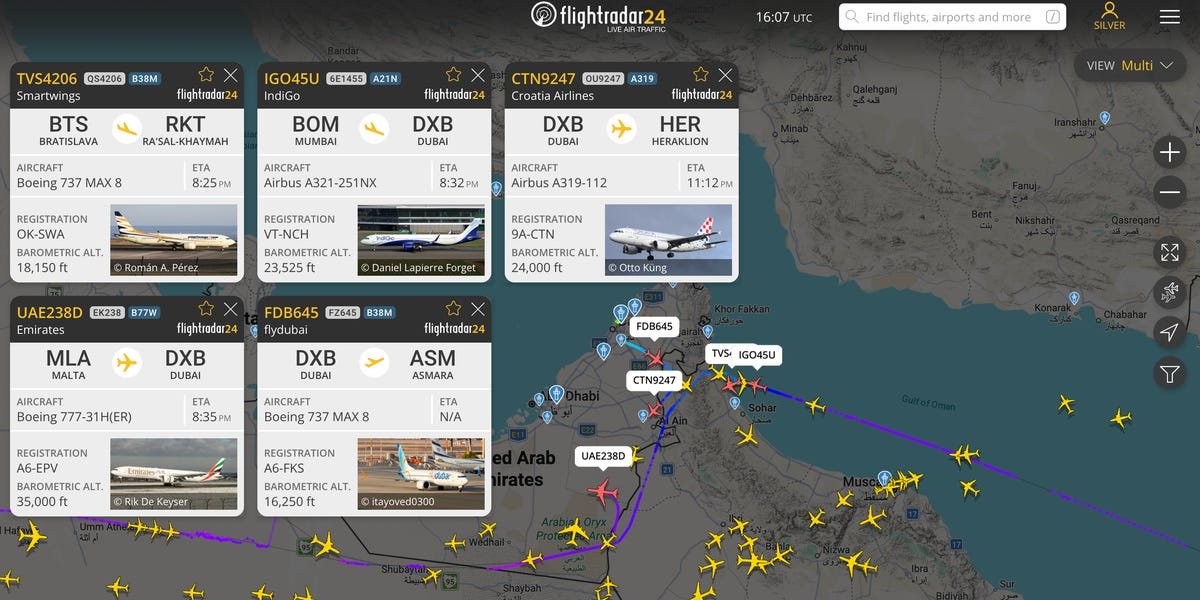
Working with local officials, Emirates, Flydubai, IndiGo, and Etihad Airways were among the first airlines to depart the UAE with passengers, crews, and cargo. Over 100,000 people followed these aircraft live on the aviation tracking website Flightradar24.
Even as Iranian threats continue to disrupt flying — forcing diversions, holds, and U-turns — airlines are still transporting passengers to destinations across Europe, Asia, and Africa.
Fortunately, Emirates and Etihad have big planes: many of their Airbus A380s, capable of carrying up to 615 passengers, have flown to cities such as London, Istanbul, Jeddah, Singapore, Paris, and Düsseldorf.
Although these flights don’t always take travelers all the way home, they offer a crucial escape from limbo — getting people into countries with open airspace and far more onward flight options.
Flightradar24 data shows several other carriers have joined the crowd: Air India, Air Arabia, Uzbekistan Airways, Kenya Airways, Morocco’s Royal Air Maroc, Saudi airline Flynas, Royal Jordanian, and India’s SpiceJet are all flying from Dubai to their respective hubs.
Passengers on a Kenya Airways rescue flight from Dubai arrive back home.
Thomas Mukoya/Reuters
European carriers, including Lufthansa, Swiss International Air Lines, Prague-based Smartwings, Aegean Air, and British Airways, are running special rescue flights from neighboring Muscat, Oman. Smartwings and Croatia Airlines are running select flights from Dubai.
Air France scheduled a repatriation flight from Dubai to Paris on Thursday evening, but suspended the plan shortly after the announcement due to “the ongoing security situation.”
Russian carriers Aeroflot and S7 Airlines have similarly departed with passengers, though their flights to Moscow are taking up to three hours longer because they have to fly the long way around closed airspace rather than fly directly over it.
Still, most airlines’ regular schedules to and from much of the Middle East remain suspended until at least the weekend, and they have asked passengers not to go to the airport unless they have been specifically notified.
No US airlines have sent rescue planes as of Thursday. Mark Dombroff, an aviation attorney with the law firm Fox Rothschild, told Business Insider that even if US carriers like United or American wanted to help, they legally can’t.
“The decision-making resides with the Federal Aviation Administration,” he said. “If the FAA says you can’t fly there as a US certificated carrier, that’s it. And in a sense, it’s no different than any other restricted airspace in this country, like Washington, DC.”
Some Americans have gotten home with the help of the State Department; it previously told those in over a dozen Middle Eastern countries to evacuate. The agency said it flew a charter flight to the US on Wednesday, and that more will be “surged across the region.”
It added that, as of Wednesday, “nearly 18,000 Americans have safely returned to the US,” including 7,300 helped by the State Department. It said thousands of others made it to Europe and Asia and are in transit back, and told those still stuck to get in touch for help by calling +1 (202) 501-4444 or filling out this form.
Some airlines remain effectively frozen. Qatar Airways has not flown a plane since Saturday due to Qatar’s airspace closure, leaving practically no options for those in Doha except to wait or drive hours to Saudi Arabia and fly out from there.
Flight options are still extremely limited
While some flights are better than none at all, special airline operations remain limited to certain routes and airports.
Flightradar24 data shows that Dubai International has seen just 100 takeoffs and landings since Saturday. Operations ramped up from Monday to Tuesday — but that was still less than 10% of the roughly 1,200 flights in and out on a usual day.
Rescue flights are largely restricted to the UAE, Oman, and Saudi Arabia: the skies over Iran, Kuwait, Iraq, Syria, Israel, Qatar, and Bahrain remain closed.
An Emirates A380 ferried hundreds of stranded people back to Germany.
Andreas Rentz/Getty Images
Aviation analytics Cirium estimates there are normally about 900,000 daily seats to, from, and within the Middle East; it said about 4.4 million seats in and out of the Middle East have been canceled since Saturday.
While airlines are actively adding flights to the schedule — despite the on-and-off missile threats in the region — there are nowhere near enough rescue seats yet to accommodate the tens of thousands of stranded travelers. British Airways said on social media on Wednesday that the rescue flights it planned through Saturday are already full.
Some wealthy travelers have abandoned commercial flying altogether, instead paying hundreds of thousands of dollars to charter private jets. Flightradar24 data shows a number of business aircraft flying to and from Oman, Saudi Arabia, and the UAE since Sunday.
Those with less deep pockets have chosen to travel by bus to Oman and Saudi Arabia, hoping to secure seats from airports still operating flights as normal.
But the drives are hourslong, and Oman Air warned Muscat-bound travelers crossing in from the UAE to arrive 12 hours early as traffic backs up for miles.
US embassies in the Middle East are changing their language about helping US citizens evacuate from the region.
Previously, multiple embassies said they were unable to assist citizens in leaving, urging them to evacuate by commercial means. The embassy in Jerusalem said in a notice on Tuesday: “The US Embassy is not in a position at this time to evacuate or directly assist Americans in departing Israel.”
However, they are now issuing notices telling Americans that government assistance is available.
In an X post late on Wednesday, the US Department of State said, “Today, a Department of State charter flight of American citizens departed the Middle East in route to the United States, as part of our ongoing efforts to assist Americans return home.”
Today, a Department of State charter flight of American citizens departed the Middle East in route to the United States, as part of our ongoing efforts to assist Americans return home.Additional flights will be surged across the region and American citizens in UAE, Qatar, Saudi… pic.twitter.com/4egntuuWy3
It added that “additional flights will be surged across the region.”
The post did not say which Middle Eastern country the charter flight on Wednesday had departed from. The State Department post included photos showing consular staff standing next to US Embassy banners at an airport, with the country’s name blurred on the signage.
The embassy in Jerusalem said in a late Wednesday notice that the US government is “ready to help Americans leave the Middle East if you choose to take advantage of the options available.”
A security alert by the US embassy in Kuwait communicated the same message.
In the notice, the embassy added a link to a crisis intake form, which included the option, “I am seeking U.S. government departure assistance.”
The US embassy in Riyadh, Saudi Arabia, said in an X post on Wednesday that “Americans trying to get home from Israel, Saudi Arabia, the United Arab Emirates, or Qatar,” should fill out the crisis intake form.
The Wednesday notice from the embassy in Doha, Qatar, however, said it’s “currently exploring options to assist U.S. citizens in reaching a safe destination,” but did not provide a link to the crisis intake form.
The State Department said on Monday that Americans in the following countries should vacate: Bahrain, Egypt, Iran, Iraq, Israel, the West Bank and Gaza, Jordan, Kuwait, Lebanon, Oman, Qatar, Saudi Arabia, Syria, the United Arab Emirates, and Yemen.
In a Monday X post, the US Department of State Consular Affairs shared three steps for US citizens in the region to follow:
1) Enroll in http://step.state.gov for security updates from the nearest US Embassy.
2) Follow @travelgov on social media or the WhatsApp channel “U.S. Department of State – Security Updates for U.S. Citizens.”
3) For emergency assistance, call:
+1-202-501-4444 from overseas
+1-888-407-4747 from the US and Canada
Air travel remains disrupted
Meanwhile, commercial air travel remains disrupted. Most airports in the region, such as Dubai International Airport and Zayed International Airport in Abu Dhabi, are telling customers not to come unless their airlines have confirmed their flights. Travellers in the region spoke to Business Insider about feeling stranded and terrified.
Some Emirates flights have resumed, prioritizing travelers with earlier bookings. The airline said in a Wednesday X post that it continues to operate a “limited flight schedule,” and data from FlightRadar24 shows that Emirates has scheduled flights on Thursday to Warsaw, San Francisco, Chicago, Tokyo, and other destinations.
Representatives for the State Department did not respond to a request for comment from Business Insider.
Some flights from the Middle East resumed in the wake of the strikes on Iran — but the process hasn’t been without confusion.
Twelve Etihad Airways flights departed Abu Dhabi as of about 5 p.m. local time on Monday, even as the airline said operations remain suspended. Emirates in neighboring Dubai also announced it would operate a “limited number of flights.”
However, more apparent missile threats in the area forced two Etihad cargo flights headed to Abu Dhabi to divert to Muscat, Oman, early Tuesday morning local time, according to Flightradar24 data.
An Emirates A380 passenger jet from Mumbai was holding off the coast and eventually turned around, but it ended up doing a double U-turn and landed in Dubai at about 3:00 a.m. local time.
Reported attacks on the US embassy in Riyadh have sparked disruptions at an airport that had largely been running flights as normal. Flightradar24 shows at least six flights holding or turning back.
Screenshot of Riyadh-bound flights holding or turning back early Tuesday morning.
The US State Department has urged Americans to evacuate over a dozen countries in the Middle East, including the UAE and Saudi Arabia, via commercial means — but it’s unclear how easy that will be amid the latest attacks and closed airports and airspace.
The developments come after the UAE partially reopened its airspace for certain flights, giving travelers hope they’d finally be able to escape after days of waiting. Some did get out.
The first flight carrying passengers to leave the UAE since the attacks, an Etihad Airbus A380 headed for London Heathrow, took off at 2:39 p.m. local time.
It was soon followed by 11 wide-body jets bound for cities in Europe, Asia, and Africa. They were:
Flight 41 to Amsterdam
Flight 33 to Paris
Flight 843 to Moscow
Flight 294 to Karachi, Pakistan
Flight 204 to Mumbai
Flight 300 to Islamabad, Pakistan
Flight 216 to New Delhi
Flight 555 to Riyadh
Flight 611 to Jeddah, Saudi Arabia
Flight 571 to Dammam, Saudi Arabia
Flight 713 to Cairo
About an hour earlier, Etihad Airways had said in an X post that “all flights to and from Abu Dhabi are suspended” until Tuesday afternoon.
Meanwhile, a notice on the airport’s website told passengers to check directly with their airline before heading there, “due to the temporary closure of UAE airspace.”
However, the site also showed several flights available for check-in.
In a statement shared with Business Insider following the departures, Etihad said that flights returning people to their home countries — or delivering cargo or repositioning the airplane — could operate “subject to strict operational and safety approvals.”
A flight from Islamabad to Abu Dhabi landed around 11:00 p.m. Monday. Another from Riyadh landed shortly after.
“All scheduled commercial flights to and from Abu Dhabi remain cancelled,” Etihad said.
Interest in the flights was high among aviation enthusiasts, with over 100,000 people tracking both the first Etihad and Emirates flights out of the UAE on Flightradar24.
Other airlines are similarly revving back up.
At 9:12 p.m. local time, the same Emirates Airbus A380 that landed from Mumbai took off from Dubai heading for the Indian city. Around 15 minutes later, another departed for Chennai. Further Emirates flights to Hyderabad and Bengaluru in India departed Dubai on Monday night.
Other carriers, including Saudia, AirSial, Fly Jinnah, and Flynas, used the UAE’s airspace to fly between cities in Saudi Arabia and India on Monday night.
Meanwhile, IndiGo, Royal Jordanian, Flydubai, and Air India planes took off from Dubai around the same time. Though all of the destinations were blank on Flightradar24.
It’s unclear whether these flights carried passengers or were specially approved. The airlines didn’t immediately respond to a request for comment from Business Insider.
An Emirates Airbus A380.
Nicolas Economou/NurPhoto via Getty Images
On Sunday, a Nepali national was killed, and seven people were injured by debris after an Iranian drone targeting Abu Dhabi airport was intercepted, officials said.
Abu Dhabi International Airport did not immediately respond to requests for comment.
All flights from Qatar, Bahrain, and Kuwait remained suspended on Monday.
A Lufthansa Airbus A380 also took off from Abu Dhabi earlier on Monday, bound for Munich. The enormous airplane can carry over 500 passengers, but an airline spokesperson told Business Insider that there were only two pilots on board.
That’s because the jet arrived in Abu Dhabi for maintenance three months ago, which has now been completed.
The spokesperson said Lufthansa reviewed the possibility of flying passengers, but it would require at least 17 flight attendants who can’t be flown in “due to the current massive restrictions on air traffic in the United Arab Emirates.”
They added that airport accessibility for any potential passengers is “unclear and difficult to organize.”
“Reliable planning of check-in, security checks, and boarding cannot be guaranteed under these circumstances.”
This story is available exclusively to Business Insider
subscribers. Become an Insider
and start reading now. Have an account? .
Airports across the Middle East have suspended all flight operations until further notice, leaving many stranded.
The US and Israel launched strikes against Iran on Saturday, with Iran launching retaliatory strikes across the region.
One Emirates passenger told Business Insider he was stuck on a plane for five hours without food before everyone was deplaned.
Travelers are in limbo as airport departure boards flip to red after air strikes in Iran resulted in closed airspace and triggered mass flight cancellations.
The heart of the chaos is in the Middle East, where airports in Dubai, Doha, and Abu Dhabi serve as megahubs for global connecting traffic. Data from the aviation analytics firm Cirium shows their home airlines — Emirates, Qatar Airways, and Etihad Airways — carry a combined 90,000 transit passengers a day.
That figure does not include the thousands of travelers whose final destination is the Middle East.
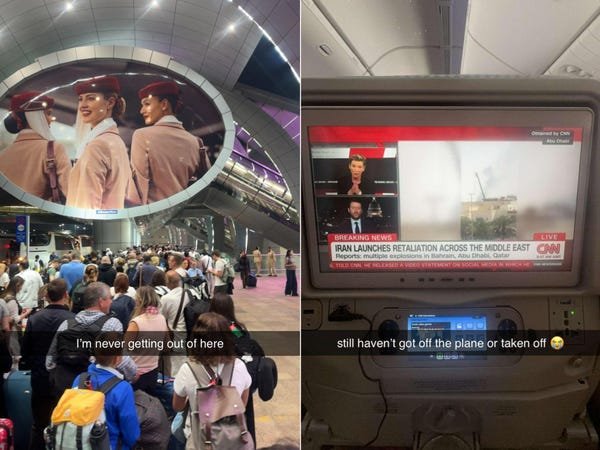
Emirates passenger Jaiveer Cheema, who was set to fly back home to the US on Saturday, told Business Insider that he was stuck on his plane for five hours with no food before everyone was deplaned and shuffled into the crowded terminal at Dubai International.
“The next several hours at the airport were chaos as no one knew what to do,” he said. “We spoke to several security guards and Emirates employees, and they all gave us different answers.”
Cheema said they stood in line after line until they eventually got a hotel voucher and took a bus to the lodging. He was still waiting for a room 90 minutes after arriving — it’s after midnight in Dubai; nearly 20 hours after he initially showed up for his 9 a.m. flight.
While many passengers are stranded within the region’s closed airspace, shuttered until further notice, the disruption has rippled far beyond it.
Flights to the affected region from places like London and the US have been canceled outright or diverted mid-journey — leaving travelers far from home in crowded airport terminals and uncertain when they will be able to depart.
Airlines have told passengers on social media to expect long wait times at airports and on customer-service phone lines as they try to manage the abrupt disruptions.
The sheer number of displaced people and planes on Saturday alone is expected to snowball worldwide if airports are unable to restart operations soon.
Passengers in Dubai were funneled into long snaking lines.
Jaiveer Cheema is one of the thousands of people stranded in limbo. Courtesy of Jaiveer Cheema
Cheema spent hours in line but managed to secure a hotel voucher — though he had yet to secure a room when talking with Business Insider. He said he did not have answers from Emirates on what’s next.
An Emirates spokesperson did not immediately respond to a request for comment from Business Insider.
Passengers at Beirut Rafic Hariri International Airport in Lebanon are stranded.
Passengers are stranded at Beirut Rafic Hariri International Airport on Saturday. Anadolu/Anadolu via Getty Images
Airlines are pivoting their operations in response to the strikes. Lufthansa Group said it is suspending flights to Beirut, Tel Aviv, Amman, Erbil, and Tehran until March 7.
Airlines are suspending flights across the region, including Lebanon.
Flight operations at the Beirut Rafic Hariri International Airport in Lebanon on Saturday. Anadolu/Anadolu via Getty Images
In a statement shared on the Lufthansa Group’s website, the company said it would also suspend flights in additional areas.
“The following airspaces will also not be used until March 7: Israel, Lebanon, Jordan, Iraq, Qatar, and Iran,” the aviation corporation said. “In addition, Lufthansa Group airlines will suspend flights to and from Dubai and Abu Dhabi, Riad, and Dammam until March 1. Furthermore, the airspace of the United Arab Emirates will not be used until March 1.”
International flights at Tribhuvan International Airport in Nepal were disrupted.
Passengers waiting at Tribhuvan International Airport in Nepal on Saturday. Navesh Chitrakar/REUTERS
The Tribhuvan International Airport shared a passenger advisory on Saturday, saying international flights “may be subject to delay, rescheduling, or cancellations” due to airspace restrictions.
Passengers flying with major airlines were told to check their flight status.
Passengers at Tribhuvan International Airport in Nepal on Saturday. Navesh Chitrakar/REUTERS
The Tribhuvan International Airport told passengers flying with major airlines — including Qatar Airways and Turkish Airlines — to coordinate with those companies to navigate travel issues.
Qatar’s airspace closure caused flight disruptions at Hamad International Airport.
Passengers at the Hamad International Airport in Qatar on Saturday. Stringer/REUTERS
Qatar’s Hamad International Airport said all aircraft movement has been temporarily suspended due to the country’s closed airspace.
“Our priority is always the safety of our passengers and employees. We are working closely with government stakeholders and airline partners to look after passengers that have been impacted,” the airport wrote in an advisory.
In London, flights to the countries Middle East were canceled.
The Emirates check-in counter at London Gatwick Airport shows that flights are cancelled on Saturday. Ben Stansall / AFP
Flights heading to the Middle East were also canceled at the London Gatwick Airport in England on Saturday.
London Gatwick Airport told some passengers to expect travel interruptions.
Passengers at London Gatwick Airport on Saturday. Ben Stansall / AFP
A London Gatwick Airport spokesperson told Sky News it’s “expecting disruption to our Qatar and Emirates flights.”
Are you a stranded traveler with a story to share? Contact the reporters at ledmonds@insider.com and trains@insider.com along with your preferred contact information.