
Soaring-gas-prices-convinced-me-to-switch-over-to-Costcos.jpeg

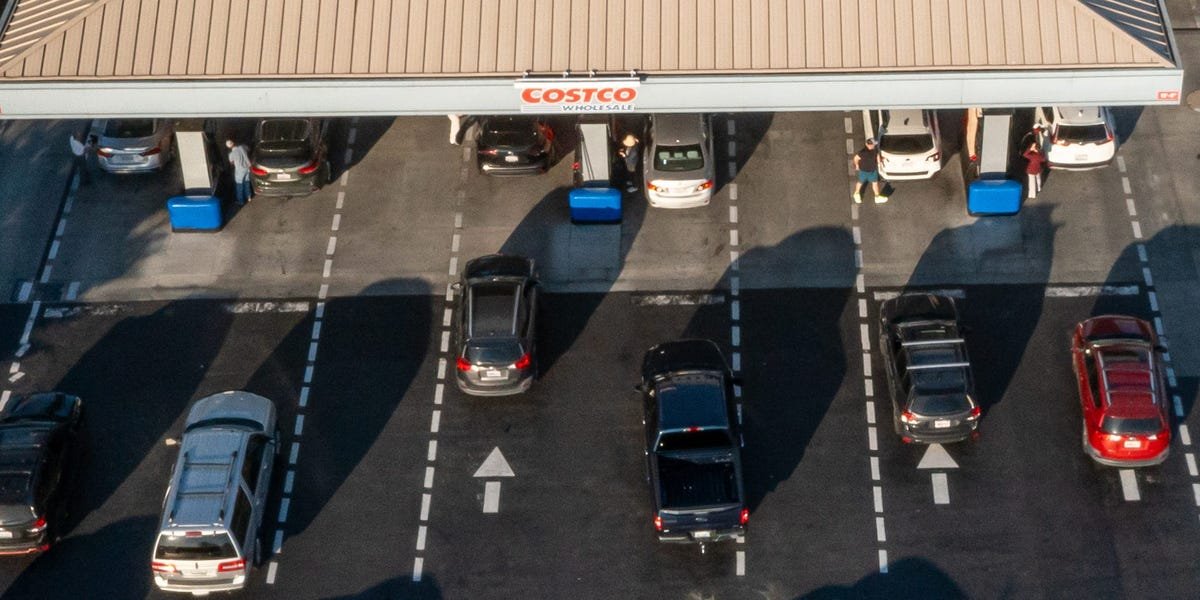
Soaring gas prices convinced me to switch over to Costco’s credit card

When the US and Israel launched the war with Iran and sent the oil market into a frenzy, I figured it would be fair to assume gas prices wouldn’t be coming down anytime soon.

I’ve since become sufficiently convinced of this that I decided to completely shake up the cards in my wallet in recent weeks.

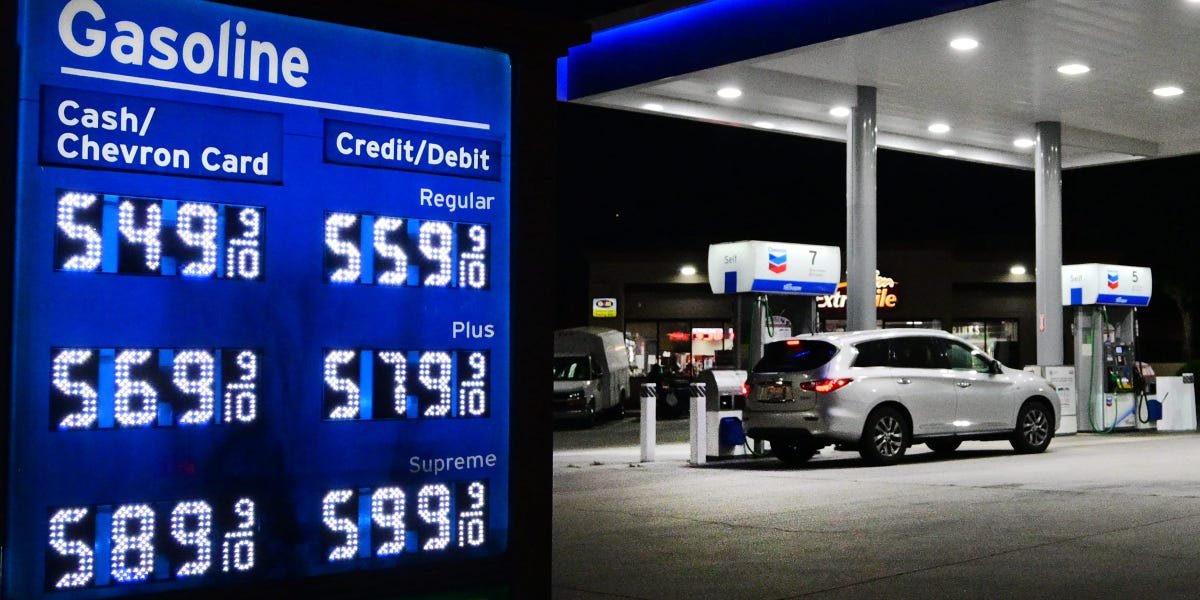
According to AAA, the US average gas price is now around $4.15 per gallon, up more than $0.60 from last month and up nearly $1 from a year ago. That’s no small change.

Gas prices tend to be somewhat lower where I live in Wisconsin compared to the national average, but it has been pretty clear to me that an extended stretch of $4 gas was a strong possibility.

As Business Insider’s retail reporter, I’m well aware of the discounts that wholesale clubs and other loyalty programs offer on gas. I did the math and found that Costco’s gas pricing can more than offset the membership fee.

After that analysis, I got a bit fixated on proactively getting gas from Costco rather than whatever station happened to be closest when my tank was running low.

Prices also began to rise sharply, making the membership advantage clearer. Costco chief financial officer Gary Millerchip seemed to be reading my mind on the company’s earnings call last month.

“When prices are higher, that will tend to cause members to maybe take the extra mile that it might be involved to get to the gas station because of the incremental value they see there,” he said.

Touché, Millerchip.

Still, I knew I was leaving money on the proverbial table.

The thing is, I was already using one of the best fuel and grocery rewards credit cards out there — the Blue Cash Preferred from American Express — but Costco famously (and frustratingly) does not accept AmEx.

That meant I had to pick between Costco’s prices and AmEx’s rewards. I was also using the Chase Sapphire card for rewards in other categories, like dining and travel.

I had considered the Costco Anywhere card before, but dismissed it since it didn’t seem much better than what I already had in my wallet, based on reviews I read from my Business Insider colleagues, NerdWallet, and several finance-focused Reddit communities.

Prolonged high gas prices change the math on rewards

What changed my mind was the prospect that gas could spiral toward $5, making the Costco card’s 5% reward on gas worth more than $0.20 per gallon, which is typically priced $0.20 or more below the traditional retail market. That would work out to a combined savings of about 10% by my math.

I don’t drive a lot of miles, but I also don’t like to pay more than I have to for gas. Plus, the other rewards categories were reasonably similar to those on my other cards, so I decided to consolidate my spending from the two cards onto the Costco card alone.

(I also like the idea of paying fewer annual membership fees, though the rewards from the Blue Cash and the Sapphire more than paid for themselves. We’ll have to see how this year’s fee and rewards math ends up comparing to last year.)

This isn’t intended to be a Costco-only hype session. Walmart-owned Sam’s Club offers low-priced gas and a credit card with a rewards structure very similar to Costco’s, but Sam’s doesn’t have any clubs near me.

In addition, Walmart’s Plus membership offers a $0.10 per gallon discount at thousands of stations across the US, and several major gas brands and grocery chains have their own loyalty programs that could be worth exploring based on your personal needs and habits.

The larger point is that gas rewards didn’t really grab my attention back when prices were relatively low and steady. Now that things are more uncertain, they’re worth a second look.


Source link

Decline-and-recline-Uber-and-Lyft-drivers-are-rethinking-what.jpeg

‘Decline and recline’: Uber and Lyft drivers are rethinking what trips to accept to navigate soaring gas prices

War in the Middle East is fuelling a surge in US gas prices — and drivers for services like Uber and Lyft are among the first to feel the pain.

Several ride-hailing drivers told Business Insider they’re prioritizing the most profitable trips offered by the Uber and Lyft apps to protect their earnings from rising gas prices, while dozens bemoaned the “insane” price spike on Reddit.

Oil prices blew past the $100-a-barrel mark on Monday, before falling back to around $90 after President Donald Trump suggested the war with Iran could soon come to a close.

The impact is already being felt at the pumps. The average price of a gallon of gasoline in the US has jumped by about $0.40 over the past week, according to AAA data.

Justin Fisher, who works as a ride-hailing driver for Uber in Houston, told Business Insider that he has changed which rides he accepts on the app in response to gas prices. He now focuses on taking the most profitable rides, even if they involve going to areas that he doesn’t believe are safe.

“The cost of gas is an unpleasant reality,” Fisher said.

Sergio Avedian, a former Wall Street trader who now drives for Uber and Lyft in Southern California, told Business Insider that the price of a gallon of gas at his two local gas stations in suburban Los Angeles had increased by $1 over the past week.

“It’s been extremely noticeable,” Avedian said.

Avedian said he expected Uber and Lyft drivers to adapt by accepting fewer short city trips, which often consume more gas due to frequent stopping and starting in traffic, and instead target longer trips and freeway rides that offer superior gas mileage.

The primary issue for drivers, he said, is that Uber and Lyft control fare prices, meaning drivers can’t raise their prices when their operating costs soar.

“We do not call the shots. The fares are not going up, and Uber and Lyft are not paying us more to make up this difference, which is immense,” Avedian said.

Uber and Lyft did not respond to inquiries about whether they are considering introducing a surcharge, as they did in 2022 after oil prices spiked following the Russian invasion of Ukraine.

EV drivers take a victory lap

One group of drivers appears to be reaping the benefits of the gas price volatility. Jaret, an Uber and Lyft driver in North Carolina, told Business Insider that the past weekend was one of the best he had had on Lyft.

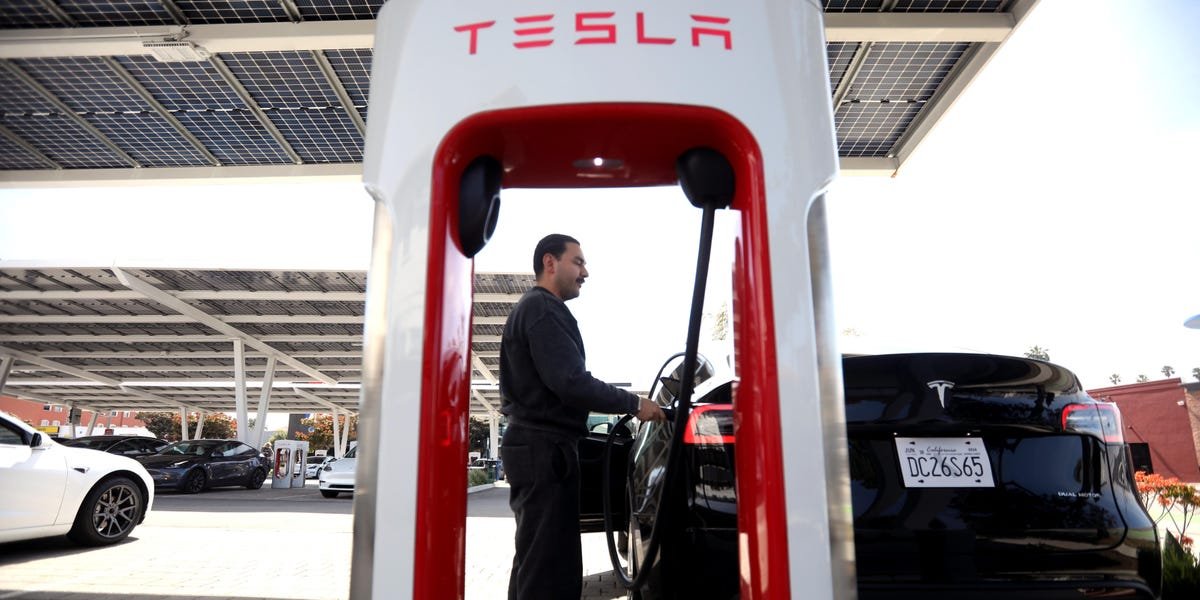
The Tesla driver said owning an EV meant he didn’t have to worry about gas price increases.

“I don’t pay attention, because I haven’t been in a gas station in forever,” he said.

Jaret estimated that charging his Tesla Model Y at home means $1 out of every $14 he earns goes toward refuelling, compared to $1 in every $3 with a gas-powered car.

“I love having an EV,” he said. “I’m not happy that gas prices are going up, but I’m happy that it’s not affecting me.”

Temporary surcharge?

Uber and Lyft both introduced a temporary surcharge of $0.45 to $0.55 per ride to help cover the soaring cost of gas following Russia’s invasion of Ukraine in 2022.

Avedian and Jaret both said that doing the same again would help, but that it would only be a partial fix amid ballooning gas prices and shrinking payouts from rides.

“It isn’t really solving the problem,” said Jaret. “It’s a Band-Aid; it’s treating a symptom more than you’re treating a cause. But will it help? Of course.”

Avedian said he would advise rideshare drivers to take extra care when deciding which trips are profitable, and to decline those that aren’t.

“If a trip that is offered to you as a driver is not profitable, I tell them to ‘decline and recline.’ You have to decline bad offers, because this is not a public service,” he said.

Do you work for Uber, Lyft, or another ride-hailing service? Contact this reporter at abitter@businessinsider.com or via encrypted messaging app Signal at 808-854-4501. Use a personal email address, a nonwork WiFi network, and a nonwork device; here’s our guide to sharing information securely.


Source link

EV-owners-are-taking-a-victory-lap-as-gas-prices.jpeg

EV owners are taking a victory lap as gas prices skyrocket: ‘I had no idea, I drive a Tesla’

Tickers above American gas stations are flashing higher prices.

EV owners, meanwhile, are plugging in — and laughing about it online.

Across social media, electric-vehicle drivers are touting their savings as fuel costs climb during the US and Israel’s military interventions in Iran.

Many have posted meme-filled victory laps about the price of “filling up.”

One shared a compilation of a mustached Tom Selleck turning toward the camera with a smug grin in Magnum P.I.” Others are posting screenshots of their cheap charging sessions. Some are sharing gleeful TikToks while plugging their EVs into a home charger.

Juicy J — the cofounder of Three 6 Mafia and a producer of the Academy Award-winning song “It’s Hard out Here for a Pimp” — also weighed in, saying it was “time to go full electric.”

Gas prices have surged as military strikes in the Middle East disrupted oil production and heightened fears about tanker traffic through the Strait of Hormuz — a key artery for an estimated 20% of global oil and liquified natural gas shipments.

Brent crude climbed over $100 a barrel Sunday night as traders reacted to the instability. By Monday afternoon, the price had dropped back to the low $80s.

American drivers are paying more at the gas station. On February 21 — before tensions escalated — the average price of a gallon of regular gas in the US was $2.93, according to AAA.

By Monday, it had risen to $3.48, an 18.7% jump in 15 days.

In some areas, the increases have been even steeper. A Los Angeles gas station advertised prices above $8 a gallon, according to local ABC affiliate KABC.

Public EV charging rates, by contrast, have risen far less.

Over the same period, the national average price per kilowatt-hour at public charging stations increased from $0.39 to $0.42 — a 7.6% bump, according to AAA data.

And most EV owners charge at home, where electricity rates are typically lower and less directly tied to crude oil prices than gasoline.

“I had no idea,” one driver wrote on X about oil prices. “I drive a Tesla.”

Some users on X pointed out that charging costs vary widely by state and utility provider.

In regions where electricity generation relies heavily on natural gas, power prices could rise if energy markets remain volatile.

For example, in Kansas, EV charging costs about $0.30 per kilowatt-hour, according to AAA. In Louisiana — where charging stations are more sparse — the average is $0.47.

The online gloating comes at a complicated moment for the EV market. Even as gas prices heat up, sales of electric vehicles have cooled.

In January 2026, sales of EVs at American dealerships fell by 53.5% compared to the same month last year, per CarGurus’ data shared with Business Insider.

Even as EV sales shrink, Americans who have traded in the gas tank for the battery are taking this time to bask in their money-saving glory.

“Who’s glad to have an EV during this time of high gas prices?” one person wrote on Reddit. “I guess not having to deal with the ups and downs of gas prices is one of the benefits of owning an EV.”

Are gas prices affecting your daily travel? We want to hear from you. Contact Ben Shimkus at bshimkus@insider.com or Signal at bshimkus.41. Use a personal email address and a nonwork device; here’s our guide to sharing information securely.


Source link