TV is an endangered species. People aren’t watching it, and don’t want to pay for it. And the companies that own TV networks are trying to find someone — anyone — to buy them.
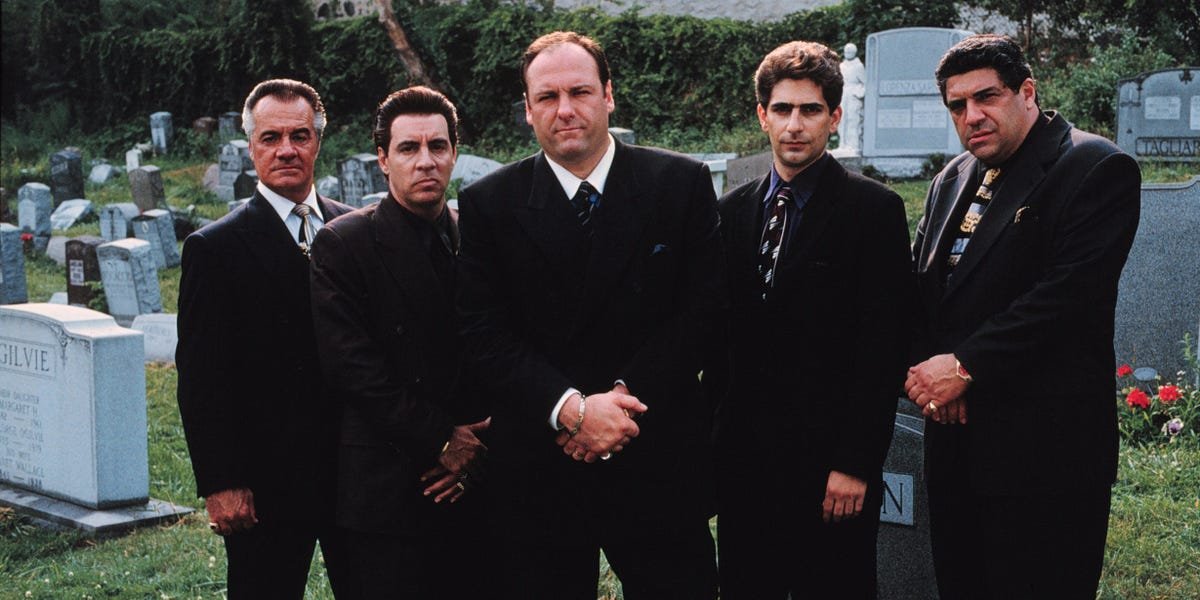
But not that long ago, lots of us were reveling in the “Peak TV” era — a time when inventive TV programming was plentiful and, crucially, popular. A time when you could watch “The Sopranos” on HBO, “Friday Night Lights” on NBC, and “The Shield” on FX.
This was also a time when Kevin Reilly had great jobs in TV, where he steered programming at networks including NBC, FX, Fox, and Turner — and had his hands on all the shows I just mentioned. That run ended in 2000, when Reilly was re-orged out of what was then called WarnerMedia.
Today, Reilly is in AI, of course: He recently became CEO of Kartel, a startup that’s supposed to help big brands use the tech.
But in a recent episode of my Channels podcast, I talked to him about life during TV’s latest (and possibly last) golden age — and whether he thinks it will ever come back. (Spoiler: There’s a reason he’s in AI now.)
You can read an edited excerpt from our conversation below, and listen to the whole thing here.
Peter Kafka: You got to be a TV executive in what we now call the Peak TV era. What was that like?
Kevin Reilly: When I got to network television, there were still these rules, like “the good guy always wins” and “people don’t want to watch depressing things on television.”
And then cable, when I went to FX, that was really one of the most fun chapters of my career because it was the very early days of basic cable. All of a sudden, we started doing “The Shield” and “Nip/Tuck” and doing these things that the press had labeled “HBO for basic cable.”
Prior to this, basic cable was mostly infomercials and reruns.
Kevin Reilly: I was sitting there talking to great creators, and I was telling them we were HBO for basic cable. And on the monitor above my head was “Cops” running 24 hours a day, keeping the lights on.
I was like, “Don’t look at the monitor.”
But all of a sudden, we were able to do stuff that really wasn’t fit for broadcast by being very particular and being a little bit more forward.
Around the same time, streaming popped up, and Netflix debuted “House of Cards” in 2013 as an explicitly HBO-style show. There was a lot of fascination with streaming but also dismissiveness: Jeff Bewkes, who was running Time Warner at the time, famously dissed Netflix as “the Albanian army.” Did you believe that back then?
I think Jeff is an extraordinary leader, and I loved working for him. At the time, though, I think he had to do what he needed to do.
You don’t think he was really dismissive of Netflix? It was just something he had to say?
I think at that point, throughout the entire business, everyone was dismissive of Netflix. “We’re picking these guys’ pockets. They’re gonna go out of business. We’re selling them all the stuff that we can’t sell. They’re idiots.”
But at the same time, Netflix was all anybody was talking about, all day long. I remember flying to Detroit to talk to a big [advertising] client for one of our series. It was going to be a $50 million, $60 million transaction. And all they were talking about was Netflix.
They were buying advertising, and then telling me how all their kids are only watching things on their phones all day long. And I was like, “Isn’t this ironic that you, an advertiser, are talking about a non-advertising-based service and how your kids don’t watch TV anymore?”
What did you think?
I thought they would experiment and do stuff, but maybe not at scale. I mean, they don’t have the system for that, and it’s really hard. Well, first of all, they did what we did (at FX) — they took a page out of the HBO handbook: Fire the money cannon and say, “Hey, we’ll just dream. Bring us in your dreams. Do what you wanna do.”
Your last job in TV was at what was then called WarnerMedia, which had been purchased by AT&T, and there were a bunch of different justifications for that deal, but the real one turned out to be “maybe Wall Street will give us a Netflix stock multiple,” which never happened. Did you think that combination was going to work?
I mean, the product itself works and has been a success. But to take the entirety of Time Warner, and then it was going to be a one-product system that we would single-handedly launch and build an ad play around it, and all of a sudden compete with Google and Netflix …
I don’t know that even Wall Street ever bought that narrative, no matter how hard we sold it.
Comcast and Paramount are bidding for WBD. Netflix is bidding, too. There’s going to be some kind of consolidation no matter what. Do you think that when all of this gets done that there’s a future for traditional television, or do you think it becomes, in the end, a subset of a bigger tech platform?
I’d love to be able to just give you the knee-jerk answer, “Of course, there’ll always be traditional television.” I think unfortunately, everybody waited too long to figure out how we were going to prop it up.
So will it have a very long tail on it, like radio? The heyday of radio went away and we still have radio. I believe it will be around in some fashion. And as some of these assets get shed or reinvented — yeah, they might end up having a little bit more life in some ways than we thought they did.
And radio became podcasts…
Exactly. So there’s always new expressions of it.
But retooling traditional businesses, especially while you’ve got to pull the profit out from underneath, is really difficult.
Correction: December 1, 2025 — An earlier version of this story misstated one of the companies bidding for WBD: They are Paramount and Comcast, along with Netflix.