Before my daughter was born, I carefully laid the groundwork for the support system everyone told me I would need as a new Mom, especially one living far from family.
I took to heart the advice that I would need a village to make it through the early years of navigating motherhood, and I wanted my child to be surrounded by love.
Yet, when my daughter was born with disabilities and complex medical needs, my village vanished, and I had to create a new one entirely.
I worked hard to meet other first-time moms
As soon as I found out I was pregnant, I joined online groups for women who were due around the same time as me. I signed up for prenatal yoga classes because I enjoyed the gentle stretches that eased my aches and pains. However, I kept going back because I enjoyed the company of other women who, like me, were pregnant for the first time. In my natural birth class, I constantly arranged (decaf) coffee dates and offered rides to other moms-to-be who wanted to look at cribs and bouncers at suburban big-box stores.
I loved navigating pregnancy with my newly found group of expecting mothers. Together, we navigated prenatal woes like the dreaded glucose test and celebrated joys, like settling on the perfect baby name.
I grew close to several of these women. We vowed to support each other by cooking meals for one another after delivery. We vowed to get together at least a couple of times a week during maternity leave. Someone suggested creating a babysitting co-op once our newborns were a few months old, and I was all in.
My daughter was born with disabilities and complex medical needs
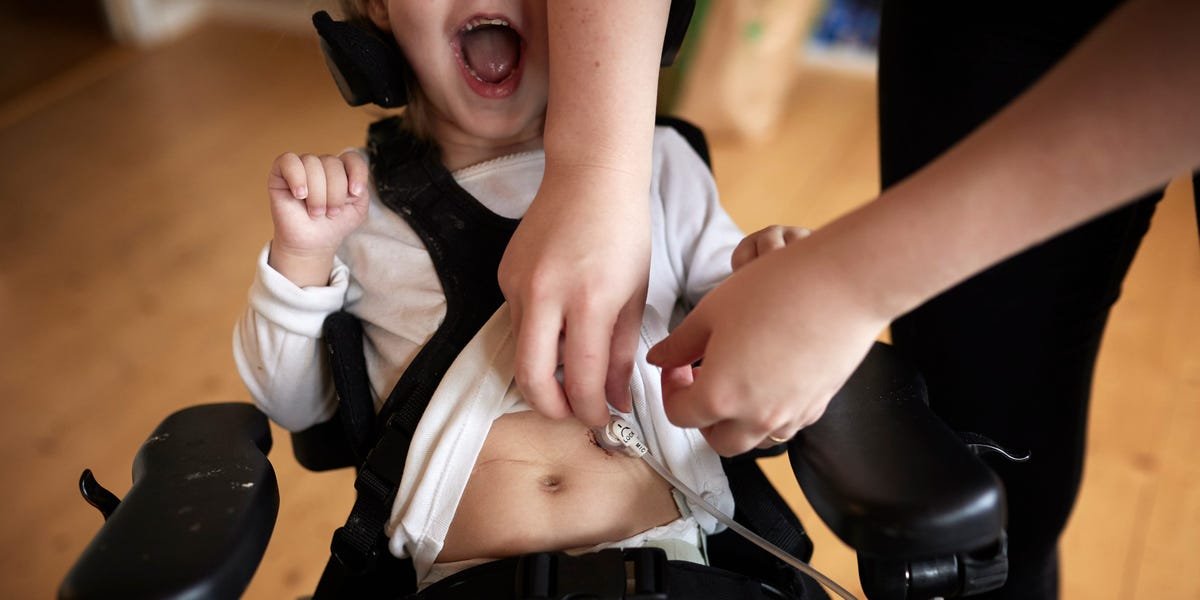
After a picture-perfect pregnancy, everything changed. My daughter was born disabled and with complex medical needs. She spent weeks in the NICU while I pumped milk for her round-the-clock and slept on uncomfortable hospital fold-out chairs made out of vinyl that stuck to my skin.
Most days, I forgot to eat. I didn’t know whether my daughter would live or die, or what kind of life she would live if she ever saw the world outside her hospital room. When it came time to give my daughter a Hebrew name, I chose “Chaya,” meaning “life” or “to be strong.” I was willing her to pull through, but I seemed to be alone.
My daughter survived, but my village disappeared
My daughter survived those fraught few weeks. Eventually, she went home, albeit with monitors and oxygen tanks instead of teddy bears and soft blankets.
I reached out to the moms I had thought would be my support system, knowing I would be there for any one of them if they needed me. I discovered that the moms in the group that formed when we were pregnant had indeed been getting together as planned. They didn’t want to bother me, they said, so they hadn’t reached out. They assumed I needed my space, they told me, when what I really needed was their friendship and support.
I often wondered if I was their worst nightmare, a Mom with a sick and disabled baby who made problems with sleep regression seem like child’s play. Their reaction made sense. Throughout our pregnancies, all we ever heard was that if our babies were born healthy, everything else would be OK. Now that one of us had a baby that had not been born healthy, there was no road map for how to react or for what came next.
Eventually, I found my group. Without meaning for it to happen, all of my close friends have a child with a disability or complex medical needs. I am incredibly grateful that I was able to create a village, even if it’s not the one I originally planned.
Ever since I became a mother, I have seen many acts of kindness.
Like the woman who rushed to give me a paper bag after my child was sick on the bus, hurriedly taking her stuff out of it. Or the waitress who would take my baby and walk around the restaurant with him so I could eat in peace.
Most of these moments of kindness are fleeting, from random strangers I never see again. But one act of kindness led to a lot more than that.
A stranger offered me a double stroller
When my third child was born, he hated being in the stroller and insisted on being in the baby sling.
I was walking home up a steep hill with my oldest on the buggy board and my middle child in the stroller. The baby was in a baby carrier, and my back was aching. It was raining cats and dogs, and we were all drenched.
The author’s third child did not like riding on a stroller.
Courtesy of the author
In my peripheral vision, I saw someone in a car waving at me, assuming they were going to ask for directions, I walked toward them. A lovely woman wound the window down and asked if I wanted a double stroller. She said she saw me walking up and down the hill a lot and was worried about my back.
I was surprised, but I said yes. The next day, I nervously went to collect it with a box of chocolates. We had a wonderful conversation and instantly connected. We exchanged numbers, and she invited me over for breakfast.
A stranger offered the author (black shirt) a double stroller, and they became instant friends.
Courtesy of the author
This is how I met my friend, Salma. Salma is an amazing cook, and the huevos rancheros for breakfast were amazing. She even made mint tea from scratch.
It was hard to make friends as a mom
The next time we met up, we were going to a coffee shop, but we met at the library first. I was saying goodbye to my friend, Nadia, whom I met when our oldest children went to preschool together.
I was totally out of my depth when my oldest started preschool. It is such a sociable time, but I did not know how to make friends with the other moms. Most of them had older children who had been at the school for years, and they were all friends. It felt impenetrable. Other moms were working moms rushing to office jobs, while I worked from home as a freelance writer. Nadia was my savior. A down-to-earth, genuine, and kind person who came from the same part of Scotland as me. Since we became friends, we have had two more children each, bringing our total to four. Our children have grown up together.
The author’s friend cooks fo her.
Courtesy of the author
That fateful day, it felt too weird to leave Nadia behind. I looked at Salma, and she said Nadia should come too. We quickly realized how much we all had in common. We don’t talk enough about how friendship is about chemistry. It is something you cannot explain. We all lived in the same area. That is the thing about motherhood, it is not enough on its own to bind. You have to genuinely like each other. Our trio was born.
We support each other
Motherhood was never supposed to be done alone, and thanks to Nadia and Salma, it never has been. But we are more than just mothers. More than our children. When one of us passes a test or achieves something career-wise, we celebrate that too.
For one big birthday, Nadia bought me beautiful earrings, and they remind me of our beautiful friendship every time I wear them. There is something about knowing that these women have my back, that we have created this little village between us.
The author’s new friend gifted her a pair of earrings.
Courtesy of the author
We have all had a fourth child since we first became friends, and Salma came round with delicious food. I never had that with my other babies, and it made such a difference. Nadia was thoughtful enough to buy lots of baby clothes, which saved my life many times.
Our friendship means that not only are we growing up together, but so are our children. As our families grow together, we troubleshoot together. Asking for advice and reassurance. The emotional support makes all the difference. We keep each other sane through Instagram Reels and sage advice. I know they have my back and that if anything serious happened, they would be there for me. Ditto for them.
We don’t talk enough about how hard it is to make and keep friends. Life always gets in the way despite our good intentions. Having two good friends who are also friends with each other makes me feel like the luckiest woman in the world.
Am I getting laid off, or is my company announcing a big AI pivot?
These days, it’s probably a bit of both.
A weird thing is happening in Corporate America. Companies are cleansing their layoff announcements with a healthy dose of AI strategy talk, writes BI’s Tim Paradis.
Australian-American software company Atlassian was the latest to announce some AI-branded job cuts. When it laid off 10% of its staff, CEO Mike Cannon-Brookes said the move was part of Atlassian’s repositioning in the “AI era.” (You can watch his four-minute video explaining the layoffs here.)
The news comes a few weeks after Jack Dorsey laid off 40% of Block’s staff while also pointing out that AI reshaped how the company could run.
Shedding staff because you’re ushering in a new era of AI efficiency is a convenient bit of corporate magic.
Atlassian’s stock was down more than 50% this year before the layoff announcement, a victim of the ongoing SaaSpocalypse. Block, meanwhile, was down more than 80% from its 2021 highs when it pulled the trigger on its cuts.
Block’s Dorsey said blaming layoffs on overhiring during the pandemic “misses all the complexity.”
The math does look simple here, though. Layoffs, which investors typically gobble up, and a sprinkle of AI reinvention can also be a sure-fire way to jumpstart a company that’s had a tough run.
My colleague broke down another interesting theory on the recent job cuts.
Alistair Barr, author of the Tech Memo newsletter (are you really not subscribed yet?), wrote about another driving force behind these cuts: restricted stock units.
RSUs are the generous chunks of equity that tech companies use as part of their comp packages. It’s a nice bit of financial engineering that works really well when business is booming.
But Alistair got an impromptu call from the CEO of a major public software company, who pointed out a red flag. The executive told him that RSUs are becoming a problem now that software companies’ shares are nosediving.
Basically, the lower your share price, the more RSUs you need to issue to maintain the same comp level to entice and retain tech talent. That dilutes existing shareholders, which is no bueno.
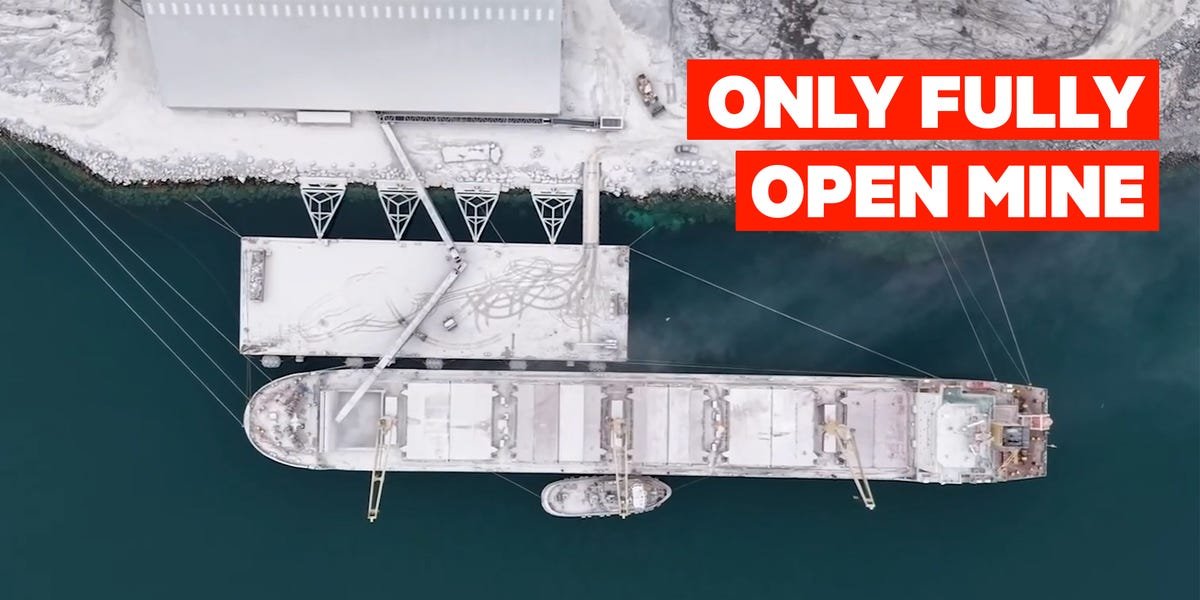
Just after noon in the northern Arabian Sea, the captain of a US Navy fuel ship gave the order to take a shortcut through risky waters rather than take a longer, safer route to their destination.
Two hours later, the 677-foot replenishment oiler USNS Big Horn struck the sea floor at high speed, shaking violently as the vessel ran aground. Music was audible on the bridge as sailors missed key navigational warnings.
The Navy command investigation obtained by Business Insider said that the September 2024 incident, initially characterized as an allision, was caused by “a series of poor decisions, failure to follow procedure, application of open water navigation to restricted waters, and failure to exhibit proper risk calculation.”
The ship suffered more than $20 million in damage.
Every time Jake publishes a story, you’ll get an alert straight to your inbox!
Stay connected to Jake and get more of their work as it publishes.
The Navy’s investigation, the details of which have not previously been made public, reveals that the captain and his watchstanders failed to prepare for the shortcut and failed to monitor navigation alerts that could have averted disaster at the last minute.
“The grounding was preventable,” investigators wrote.
The investigation recommended administrative or disciplinary action against Big Horn’s captain and several officers. Military Sealift Command said that both the captain and the ship’s navigator are still employed. It is unclear if they will be permitted to hold their positions again.
“Pursuant to the investigation, all administrative and disciplinary matters were submitted for appropriate review,” command spokesperson Jillian Morris said in response to Business Insider’s query on accountability and discipline. “However, to protect employee privacy, we do not comment on, nor share the details of, the outcome of those matters.”
The Big Horn during a replenishment-at-sea with the aircraft carrier USS Abraham Lincoln.
US Navy photo
Making a risky choice
Shortly after 12 p.m. local time on September 23, the Big Horn was wrapping up its final replenishment-at-sea with ships from the Abraham Lincoln Carrier Strike Group.
The next move for the Henry J. Kaiser-class replenishment oiler, which refuels warships at sea, was to sail from the northern Arabian Sea to the Duqm port in Oman for a scheduled visit.
The new navigator was drafting route options for the captain to get the Big Horn to apickup point, where the oiler would embark a harbor pilot to guide the ship into port.
During a conversation with another officer, the transcript of which is included in the Navy’s investigation, the navigator expressed concerns about running aground on a particular route and said they preferred an option through deeper water.
The navigator told the officer that they could take the riskier shortcut and save time. “I’m just scared of right here,” they said, “scared of these shallow points.” The officer said they should present the shortcut to the captain.
The officer said “ask the captain and say, ‘This route is about 10 miles shorter but goes through this. Do you feel comfortable?'”
One route, known as Duqm A, was shorter but ran through known shoal areas. Duqm B was a “deep water” path that added several miles to the journey to the rendezvous point.
Just before 12:30 p.m., with the last replenishment-at-sea ongoing, the navigator asked the captain which route they preferred.
“Let’s try to shoot the gap there,” the captain told the navigator, selecting the Duqm A route, even though it threaded a gap between charted shoals dangerously close to the oiler’s draft. The navigator said that they had checked on the under keel clearance, to which the captain replied: “Rad.”
The Navy investigation into the grounding that followed that decision said that there was no indication that the captain reviewed a paper chart during the decision-making process.
‘Slow down, slow down, slow down’
The Big Horn sails between Navy destroyers in July 2024.
US Navy photo
About an hour later, at roughly 1:30 p.m., the Big Horn completed its final replenishment-at-sea and set out for the pick-up point for the harbor pilot. Pilots are standard for most harbor approaches because they have the local knowledge to help ship captains navigate through tight channels.
Duqm A took the Big Horn through a gap between two charted areas of shoal — or shallow — water known as the San Carlos Banks that were not deep enough for the oiler.
Navy investigators wrote that “attention to detail and consideration of the risks should have negated Duqm A as an option.”
The Big Horn sailed through the San Carlos Banks at 17 to 18 knots. In transit, the ship’s system triggered safety alarms. They were silenced but had visual cues; there is no indication that they were acknowledged.
Meanwhile, the ship’s fathometer — which measures water depth under the hull — showed the water growing progressively shallower.
At 2:12 p.m., the vessel began vibrating as it struck the sea floor.
“Slow down, slow down, slow down,” the captain said.
“We must have hit a shallow spot somewhere, but there is nothing on the chart,” he said moments later as the ship came to a full stop.
Crew members reported fuel leaks on both main engines.
“We must have hit a shallow spot. We must have hit a sand bank,” the captain said.
The grounding cost the Navy more than $20 million.
US Navy photo
The damaged oiler was anchored and later towed into Duqm.
A ‘preventable’ blunder
Investigators found that the members of the bridge team appeared “unreasonably” focused on meeting a 3 p.m. harbor pilot pick-up time, which contributed to the decision to take the risky shortcut at high speeds.
“We gotta haul ass,” the navigator told an officer at one point. In a separate conversation with the captain, they said they believed they could make it, if only slightly behind schedule.
“If we cut corners we’ll get there,” the captain said, per the investigation.
“Yes sir!” the navigator replied. That was minutes before the ship ran aground.
Although the captain later said he did not believe he was operating in restricted waters and was unaware of any safety hazards or navigational concerns, investigators concluded that the Duqm A track met the definition of restricted waters under Navy policy, meaning a formal navigation brief should have been conducted before entering the area.
“However, no members of the bridge team, including the Captain and Navigator, seemed to realize they were steaming into restricted waters,” the investigation said. “No consideration was given for a required navigation brief, a more detailed plan, or thorough review of the proposed track prior to steaming through.”
The command investigation also found that, when the Big Horn ran aground, the ship was operating with two separate electronic navigation chart databases, and there was some confusion among the officers about which one was in use at the time. Safety contours and the shoal area were not clearly displayed.
Records indicate there was music was playing on the bridge up until the grounding. Tug boats brought the Big Horn into port the following day.
The grounding caused extensive damage to the Big Horn’s hull, internal support structures, port propeller, and port rudder. According to Navy cost breakdowns, expenses included roughly $7.5 million for towing, $8.6 million for services in Oman, $1.9 million for fuel offloading, and $2.4 million in additional costs in the US — totaling more than $20 million.
Greg Abel paid tribute to Warren Buffett and reassured Berkshire Hathaway shareholders he wouldn’t do anything drastic as their new CEO in his first letter to them on Saturday.
Buffett handed Berkshire’s reins to Abel at the start of this year, ending a six-decade run during which he transformed the failing textile mill into a sprawling conglomerate worth more than $1 trillion.
The legendary investor oversaw a 6,100,000% return for Berkshire shareholders between 1965 and 2025, trouncing the S&P 500’s total return of 46,100% including dividends. His compounded annual gain of 19.7% was nearly double the index’s 10.5% figure over a 60-year timeframe.
“Warren is obviously a very hard act to follow,” Abel wrote, continuing Buffett’s decades-long tradition of penning an annual shareholder letter.
Berkshire’s new boss dedicated the first section of his letter to Buffett, praising everything from his patience and judgment to his investing prowess, legacy as an educator, track record as a CEO, and the unique company he built with the late Charlie Munger.
Every time Theron publishes a story, you’ll get an alert straight to your inbox!
Stay connected to Theron and get more of their work as it publishes.
Abel used the letter to properly introduce himself to shareholders, and even tried to inject some of Buffett’s trademark wit.
“I will not be your CEO for the next 60 years as simple arithmetic makes that — shall we say — an ambitious plan,” he quipped.
More of the same
Abel made it clear to shareholders that he “gets it” — he understands what makes Berkshire special and has no plans to ruin it.
He walked through what he called Berkshire’s “foundational values”: its decentralized model, integrity, financial strength, capital discipline, risk management, and operational excellence.
Abel lingered on the topic of capital discipline, showing he’s aware of how much scrutiny Berkshire has received for hoarding more than $370 billion of liquid assets.
He signaled there won’t be any rushed deals or immediate dividend payouts on his watch. He described Berkshire’s cash pile as both its rainy-day fund and its “dry powder” for stock purchases and acquisitions, but said he’ll remain disciplined in spending it “regardless of the size” of the company’s reserves.
Digging into the details
Abel’s letter contained several keynuggets for close followers of Berkshire.
First,he described its Kraft Heinz investment as “disappointing” with a return “well short of adequate,” echoing Buffett’s uncharacteristic bashing of the food giant.
Second, Abel broke out the five stakes in Japanese companies purchased by Buffett a few years ago. The dedicated table showed Berkshire paid a total of $15.4 billion for positions worth a combined $35.4 billion at December’s close, and collected $862 million in dividends from them last year.
Third,he revealed that Ted Weschler now oversees about 6% of Berkshire’s investments after assuming control of the recently departed Todd Combs’ portion of the company’s portfolio.
Abel also positioned Weschler as one of his key deputies, writing that his “impact extends beyond these investments” to weighing in on big opportunities and Berkshire’s businesses, and providing other support.
Finally, he signaled a shift to a bigger brain trust at Berkshire. Instead of Buffett and Munger holding court for the entire Q&A at Berkshire’s annual meeting, as they did for many years, Abel will field questions with Berkshire’s insurance chief, Ajit Jain, and later with Katie Farmer and Adam Johnson, two of his top deputies.
As companies rethink how they train early-career workers in a job market shaped by AI, Salesforce executive Andy White said resilience is top of mind for him — both at work and at home.
White oversees Salesforce’s implementation of Slackbot, an AI personal agent that generates responses based on conversations, files, and workflows inside Slack.
As White raises his son and daughter during a period of rapid technological change, he said he preaches to his kids the importance of powering through moments that don’t go as planned. He said resilience is pivotal and that it’s important for people to focus on doing the hard things and being OK when things don’t go as expected.
The senior vice president of business technology said he recently spoke with his daughter about the importance of dealing with situations rather than merely labeling them as “good” or “bad.”
“Hard is hard,” White told Business Insider. “Hard isn’t necessarily bad.”
Every time Ana publishes a story, you’ll get an alert straight to your inbox!
Stay connected to Ana and get more of their work as it publishes.
Expectations, he said, are the “destroyer of hope and joy,” and that when things don’t go as planned, it often turns out to be a good thing down the line, even if it doesn’t seem that way in the moment.
“It’s when we look back, and it’s like, ‘Oh man, I’m glad that didn’t go the way I expected,'” White said. “But when you’re in it, it’s really hard.”
The importance of persistence
The resilience lesson is one White also thinks is relevant for entry-level workers. While junior hires often arrive ready to use new tools and deliver a “pretty high output,” he said, persistence is an area where some still need to grow.
He described today’s entry-level talent pool as “incredibly capable, very bright, and very driven,” with a stronger grasp of how to use AI tools to solve problems.
“They’re much more fluent at being able to leverage AI tooling in the flow of their work,” White said.
However, he said the group sometimes struggles when it comes to working through challenges.
“There’s more willingness to give up sooner,” he said, adding that this traitdoesn’t apply across the board.
Finding confidence
White said he’s seen AI tools, such as the company’s recently upgraded Slackbot, help boost entry-level workers’ confidence. He said they could help reduce feelings of imposter syndrome by helping early-career workers navigate challenging situations that arise at work.
With that said, White added that workers need to stay balanced and not let tools make them “overly confident.” He said workers need to bring skepticism to “any kind of information” they get, and be diligent about reviewing sources and citations when using AI.
“If you don’t believe something, read the citation, and if it doesn’t have a citation, you have to assume it’s a hallucination,” White said, adding that he tells his kids the same thing.
Greenland holds vast reserves of rare earths that power everything from electric vehicles to military tech. As the world races to loosen China’s grip on critical minerals, this Arctic island is emerging as a new battleground, where extreme conditions, soaring costs, and local resistance stand in the way. Can Greenland become the next global player in the resource race?
In July 2025, my husband, Zach, and I moved our family of four from the suburbs of Ft Worth, Texas, to Denver.
After nearly 10 years of marriage, two kids, and three work-related moves, it was finally time to settle in a place of our choosing. This time, we didn’t just want a change of scenery; we wanted a change of lifestyle.
But finding a house in the bustling city neighborhood of our dreams within our budget meant downsizing — drastically.
Moving from our 3,300-square-foot home to a 2,300-square-foot bungalow with 1,200 square feet of actual living space (the rest being unfinished basement) wasn’t easy. It meant swapping our large kitchen island for a small dining table. It meant no more master bath soaking tub, my refuge from life’s stresses on more occasions than I could count. And it meant my kids giving up their separate rooms to share one.
But what we’ve gained in the quality and quantity of time spent together is worth every bit of lost square footage.
Every time Blythe publishes a story, you’ll get an alert straight to your inbox!
Stay connected to Blythe and get more of their work as it publishes.
We’re spending our time on what matters
Our bigger house in Texas required more upkeep, and we were more than happy to give that up for extra free time on the weekends. Now, we spend our time visiting attractions such as the Denver Zoo and the Denver Museum of Nature and Science. We’re fostering our kids’ curiosity, exploring new places together. Our everyday life feels more special and meaningful because these shared experiences amplify our family connection.
The author’s new house is about a third the size of her previous house.
Courtesy of the author
We’re also getting out in nature more. Aside from weekend hiking and skiing adventures, our days revolve around outdoor living. We walk everywhere we can, including restaurants, parks, and even Trader Joe’s, which is beneficial because driving to Trader Joe’s means parking at Trader Joe’s, and nobody enjoys that. Our moods are lighter, and our stresses are reduced.
The first time we walked to a restaurant instead of driving, it felt like we were on vacation. Our lives had always been car-dependent, but that’s no longer the case. The kids laughed and raced each other down the sidewalk. We marvelled at the mature trees and brightly colored flowers lining 7th Avenue Parkway. There was no timeline or rushing, just the joy of being present. When we made our way home after an alfresco dinner at Postino, I asked my son if he liked walking to dinner. He asked simply, “Can we do this every day?”
We’re finding connections in our community
Zach and I frequently sit on our front porch while our boys play with neighborhood kids, a first for us. Having houses so close together makes it easier to meet people and form real connections. We know almost every household on our block, and we regularly visit with our closest neighbors. We even enjoyed our first block party in August, which fell on my eldest’s birthday, and according to him, it was his “Best birthday ever!”
The author’s child loved his backyard birthday party.
Courtesy of the author
Our boys run between yards while we chat with new friends. They are experiencing a childhood closer to the one we grew up with. They’re building confidence and finding their place, and that’s translating to more smiles and fewer tantrums. Zach and I are finding our village, and parenthood feels less solitary.
On a recent trip back to Texas for Thanksgiving, I texted our next-door neighbor to let her know we’d be out of town. Without even asking, she offered to take in our mail. It may be a small gesture, but that sense of community is priceless to us.
My boys have more freedom
Downsizing has also allowed our kids to play more independently in an outdoor space that feels safe and protected. We have an unobstructed line of sight to the backyard, and no matter where my husband and I are in the house, we can hear them if they need us. The result has been hours of creative play, building campsites and outdoor kitchens, playing soccer and baseball, and having water balloon fights or Nerf battles.
The author’s kids have more freedom and can play outside in their new home.
Courtesy of the author
Most evenings, my kids are in the backyard playing games and getting dirty. When the weather is nice, they run around with their friends down the street. I would never have felt comfortable not knowing every move my kids were making before, but here, where everyone is watching out, and I can wave at my kids down the block to signal when it’s time to come home, less space means more freedom.
Our downsized life isn’t always perfect. Despite all our decluttering efforts, we’re still left with more stuff than we can accommodate. We also struggle with the lack of privacy, and at times, our smaller shared space feels more claustrophobic than cozy. However, downsizing for an urban lifestyle has given us the opportunity to live beyond our four walls, and that’s worth more than any amount of space could ever be.
Recruiting a new head of preparedness may be trickier for OpenAI than you might think.
The ChatGPT maker recently generated buzz online when it said the position — which pays $555,000 a year plus equity — is up for grabs. Yet some tech-industry observers say finding someone who’s qualified and willing to take it on poses a challenge.
Whoever lands it will be tasked with balancing safety concerns and the demands of CEO Sam Altman, who has shown a penchant for releasing products at an exceptionally fast clip. This year, OpenAI rolled out its Sora 2 video app, Instant Checkout for ChatGPT, new AI models, developer tools, and more advanced agent capabilities.
The head of preparedness role is “close to an impossible job,” because at times the person in it will likely need to tell Altman to slow down or that certain goals shouldn’t be met, said Maura Grossman, a research professor at the University of Waterloo’s School of Computer Science. They’ll be “rolling a rock up a steep hill,” she said.
Altman himself has even described the position as intense.
“This will be a stressful job, and you’ll jump into the deep end pretty much immediately,” he recently wrote on X.
Still, it could be a dream come true for the right individual. OpenAI has had a major impact on people’s lives, and the more than half a million dollars in base pay is in line with what AI talent can expect to earn these days.
Who might be qualified for the job
The posting for the position doesn’t list common requirements such as a college degree or a minimum number of years of work experience.
OpenAI said a person “might thrive” in the role if they have led technical teams; are comfortable making clear, high-stakes technical judgments under uncertainty; can align diverse stakeholders around safety decisions; and have deep technical expertise in machine learning, AI safety, evaluation, security, or adjacent risk domains.
OpenAI’s former head of preparedness, Aleksander Madry, moved into a new role in July 2024. He left a vacancy within the company’s Safety Systems team, which builds evaluations, safety frameworks, and safeguards for its AI models.
Madry has a background in academia, but a seasoned tech-industry executive would be a better fit going forward, said Richard Lachman, a professor of digital media at Toronto Metropolitan University. Academic types, he said, tend to be more cautious and risk-averse.
Lachman expects OpenAI to seek out someone who can protect the company’s public image regarding safety, while allowing it to continue innovating quickly and driving growth. “This is not quite a ‘yes person,’ but somebody who’s going to be on brand,” he said.
OpenAI’s approach to safety has raised concerns internally, prompting some prominent early employees, including a former head of its safety team, to resign. The company has also been sued by some people who allege it reinforces delusions and drives other harmful behavior.
In October, OpenAI acknowledged that some ChatGPT users have exhibited possible signs of mental health problems. The company said it was working with mental health experts to improve how the chatbot responds to those who show signs of psychosis or mania, self-harm or suicide, or emotional attachment.