Greenland holds vast reserves of rare earths that power everything from electric vehicles to military tech. As the world races to loosen China’s grip on critical minerals, this Arctic island is emerging as a new battleground, where extreme conditions, soaring costs, and local resistance stand in the way. Can Greenland become the next global player in the resource race?
In July 2025, my husband, Zach, and I moved our family of four from the suburbs of Ft Worth, Texas, to Denver.
After nearly 10 years of marriage, two kids, and three work-related moves, it was finally time to settle in a place of our choosing. This time, we didn’t just want a change of scenery; we wanted a change of lifestyle.
But finding a house in the bustling city neighborhood of our dreams within our budget meant downsizing — drastically.
Moving from our 3,300-square-foot home to a 2,300-square-foot bungalow with 1,200 square feet of actual living space (the rest being unfinished basement) wasn’t easy. It meant swapping our large kitchen island for a small dining table. It meant no more master bath soaking tub, my refuge from life’s stresses on more occasions than I could count. And it meant my kids giving up their separate rooms to share one.
But what we’ve gained in the quality and quantity of time spent together is worth every bit of lost square footage.
Every time Blythe publishes a story, you’ll get an alert straight to your inbox!
Stay connected to Blythe and get more of their work as it publishes.
We’re spending our time on what matters
Our bigger house in Texas required more upkeep, and we were more than happy to give that up for extra free time on the weekends. Now, we spend our time visiting attractions such as the Denver Zoo and the Denver Museum of Nature and Science. We’re fostering our kids’ curiosity, exploring new places together. Our everyday life feels more special and meaningful because these shared experiences amplify our family connection.
The author’s new house is about a third the size of her previous house.
Courtesy of the author
We’re also getting out in nature more. Aside from weekend hiking and skiing adventures, our days revolve around outdoor living. We walk everywhere we can, including restaurants, parks, and even Trader Joe’s, which is beneficial because driving to Trader Joe’s means parking at Trader Joe’s, and nobody enjoys that. Our moods are lighter, and our stresses are reduced.
The first time we walked to a restaurant instead of driving, it felt like we were on vacation. Our lives had always been car-dependent, but that’s no longer the case. The kids laughed and raced each other down the sidewalk. We marvelled at the mature trees and brightly colored flowers lining 7th Avenue Parkway. There was no timeline or rushing, just the joy of being present. When we made our way home after an alfresco dinner at Postino, I asked my son if he liked walking to dinner. He asked simply, “Can we do this every day?”
We’re finding connections in our community
Zach and I frequently sit on our front porch while our boys play with neighborhood kids, a first for us. Having houses so close together makes it easier to meet people and form real connections. We know almost every household on our block, and we regularly visit with our closest neighbors. We even enjoyed our first block party in August, which fell on my eldest’s birthday, and according to him, it was his “Best birthday ever!”
The author’s child loved his backyard birthday party.
Courtesy of the author
Our boys run between yards while we chat with new friends. They are experiencing a childhood closer to the one we grew up with. They’re building confidence and finding their place, and that’s translating to more smiles and fewer tantrums. Zach and I are finding our village, and parenthood feels less solitary.
On a recent trip back to Texas for Thanksgiving, I texted our next-door neighbor to let her know we’d be out of town. Without even asking, she offered to take in our mail. It may be a small gesture, but that sense of community is priceless to us.
My boys have more freedom
Downsizing has also allowed our kids to play more independently in an outdoor space that feels safe and protected. We have an unobstructed line of sight to the backyard, and no matter where my husband and I are in the house, we can hear them if they need us. The result has been hours of creative play, building campsites and outdoor kitchens, playing soccer and baseball, and having water balloon fights or Nerf battles.
The author’s kids have more freedom and can play outside in their new home.
Courtesy of the author
Most evenings, my kids are in the backyard playing games and getting dirty. When the weather is nice, they run around with their friends down the street. I would never have felt comfortable not knowing every move my kids were making before, but here, where everyone is watching out, and I can wave at my kids down the block to signal when it’s time to come home, less space means more freedom.
Our downsized life isn’t always perfect. Despite all our decluttering efforts, we’re still left with more stuff than we can accommodate. We also struggle with the lack of privacy, and at times, our smaller shared space feels more claustrophobic than cozy. However, downsizing for an urban lifestyle has given us the opportunity to live beyond our four walls, and that’s worth more than any amount of space could ever be.
Recruiting a new head of preparedness may be trickier for OpenAI than you might think.
The ChatGPT maker recently generated buzz online when it said the position — which pays $555,000 a year plus equity — is up for grabs. Yet some tech-industry observers say finding someone who’s qualified and willing to take it on poses a challenge.
Whoever lands it will be tasked with balancing safety concerns and the demands of CEO Sam Altman, who has shown a penchant for releasing products at an exceptionally fast clip. This year, OpenAI rolled out its Sora 2 video app, Instant Checkout for ChatGPT, new AI models, developer tools, and more advanced agent capabilities.
The head of preparedness role is “close to an impossible job,” because at times the person in it will likely need to tell Altman to slow down or that certain goals shouldn’t be met, said Maura Grossman, a research professor at the University of Waterloo’s School of Computer Science. They’ll be “rolling a rock up a steep hill,” she said.
Altman himself has even described the position as intense.
“This will be a stressful job, and you’ll jump into the deep end pretty much immediately,” he recently wrote on X.
Still, it could be a dream come true for the right individual. OpenAI has had a major impact on people’s lives, and the more than half a million dollars in base pay is in line with what AI talent can expect to earn these days.
Who might be qualified for the job
The posting for the position doesn’t list common requirements such as a college degree or a minimum number of years of work experience.
OpenAI said a person “might thrive” in the role if they have led technical teams; are comfortable making clear, high-stakes technical judgments under uncertainty; can align diverse stakeholders around safety decisions; and have deep technical expertise in machine learning, AI safety, evaluation, security, or adjacent risk domains.
OpenAI’s former head of preparedness, Aleksander Madry, moved into a new role in July 2024. He left a vacancy within the company’s Safety Systems team, which builds evaluations, safety frameworks, and safeguards for its AI models.
Madry has a background in academia, but a seasoned tech-industry executive would be a better fit going forward, said Richard Lachman, a professor of digital media at Toronto Metropolitan University. Academic types, he said, tend to be more cautious and risk-averse.
Lachman expects OpenAI to seek out someone who can protect the company’s public image regarding safety, while allowing it to continue innovating quickly and driving growth. “This is not quite a ‘yes person,’ but somebody who’s going to be on brand,” he said.
OpenAI’s approach to safety has raised concerns internally, prompting some prominent early employees, including a former head of its safety team, to resign. The company has also been sued by some people who allege it reinforces delusions and drives other harmful behavior.
In October, OpenAI acknowledged that some ChatGPT users have exhibited possible signs of mental health problems. The company said it was working with mental health experts to improve how the chatbot responds to those who show signs of psychosis or mania, self-harm or suicide, or emotional attachment.
Dating is difficult at any age. Dating when you have a child is complicated. But, when you decide to date after the passing of your partner, there’s even more to consider. I was 48 when my husband succumbed to cancer. My daughter was almost 10.
Why would I want to date? I was heartbroken. A piece of my life and my entire vision of the future had been ripped away from me. I didn’t want love. I wasn’t interested in a replacement. I’d lost the illusion of forever.
I just wanted conversation, companionship, and a new way of looking forward and reimagining. But, any kind of reimagining requires imagination and reconciliation. I was parenting a traumatized child while also trying to care for myself.
What would my daughter think about me dating? Would she think I was betraying her dad?
I didn’t tell my daughter I was going on dates at first. I didn’t bring anyone to meet her until I’d had a few positive dates. I didn’t introduce her to anyone I didn’t think of as potential friend, a good person.
I was clear with everyone I went out with that I wasn’t looking for something permanent and that I certainly wasn’t looking for a new dad for my daughter. My daughter adored her dad, and rightfully so. She had thoughts on the few people I did introduce her to:
Every time Lisa publishes a story, you’ll get an alert straight to your inbox!
Stay connected to Lisa and get more of their work as it publishes.
“He’s too young for you.”
“He likes you too much.”
“I don’t have a good feeling about him. Even if he got me a good present.”
And, eventually, “He seems pretty chill.”
Then, when you find someone you’re interested in seeing, there’s the challenge of when and where
Solo parenting is not single parenting. My daughter didn’t split time between me and another parent. I couldn’t tell a potential date, “my daughter’s with her other parent this weekend — I’m free.”
I had to define what my boundaries were and enforce them. So, no one could be in the space I shared with my daughter. I couldn’t make him dinner, invite him in for drinks.
There’s also not a lot of free time for a solo parent with a full-time job. I needed to be there for soccer, Girl Scouts, school plays. Those were nonnegotiable. I wouldn’t date someone who wanted me to prioritize them over my daughter.
There were also internal challenges I had to settle for myself
Dating as a widowed parent means accepting a need for connection and feeling guilty for wanting it at the same time.
What did it say about me? Did it mean that my feelings about my husband hadn’t been sincere? Was it fair to the men I went out with?
I wanted conversation with people who didn’t know me in my married life, people who could see present and future me, but who also wouldn’t push too much for a future with me.
Even with so much to consider, dating has not only been possible, but it’s been positive
Despite all of the challenges, I’m not only making it work, I’m thriving. I’ve met some really good people who want connection, whatever that looks like, in this iteration of our lives.
In 2019, my 5-year-old son and 4-year-old daughter were excited to start their first year of public school. But like millions of students in March of 2020, they never got to finish the school year.
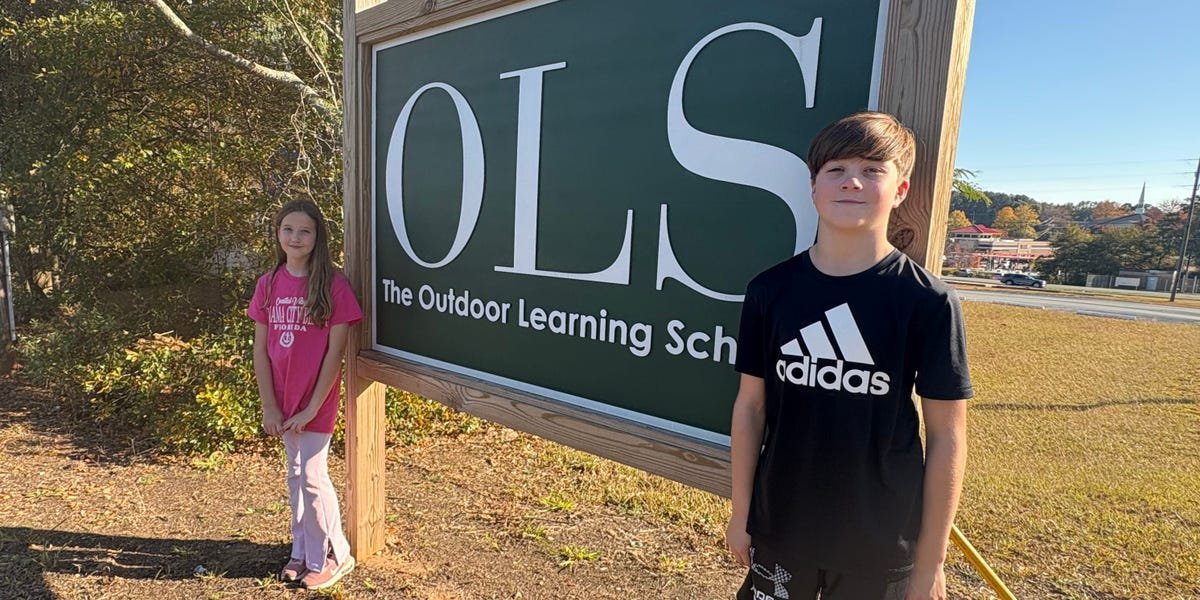
The COVID pandemic closed the classrooms, forcing my husband and me to rethink how we wanted to handle our children’s education. An outdoor learning school at The Learning Tree, a local day care, became our solution.
The unique education exceeded our expectations in every way.
Why we chose an outdoor learning school
The pandemic made us nervous to send our kids back to school after summer break. We were told that if someone in their class contracted COVID, the entire class would shut down for two weeks. This wasn’t feasible for us as parents with full-time jobs, plus it would disrupt the learning experience for our kids.
That summer, the day care our kids attended prior to starting school announced a new opportunity: a K/1 program focused on interactive, accelerated education. It promised small class sizes (roughly 12 students per class), project-based and student-led learning, and academics balanced with outdoor activities and healthy habits.
Despite the $125 weekly tuition fee per child, we were sold on smaller classes, less exposure to others, and the included after-school care.
We enrolled our kids for the 2020-2021 school year: our daughter in kindergarten and our son in first grade. When the school added second grade the following year and then third grade the year after, we stayed.
We missed out on traditional opportunities, but gained so much more
We didn’t plan on sending our kids to a private program for most of their elementary school years. But after comparing what public school offered that The Learning Tree didn’t, and vice versa, the outdoor learning school was a no-brainer.
The author’s kids loved their outdoor school.
Courtesy of Alli Hill
At The Learning Tree, there was no library, computer lab, or even a cafeteria. They didn’t have art, music, or gym classes. The playground was small, and there was no option for gifted testing.
However, they did have an in-ground swimming pool, and swimming was built into the curriculum during warm months. A mile-long nature trail and morning fitness exercises replaced the gym. Students helped to build gardens and grow food, which made its way into their lunches. Most notably, screen time was minimal — almost nonexistent.
There was also more parental involvement. We went kayaking on the river as part of a history lesson, and we always had special celebrations for Thanksgiving and Christmas.
Instead of reading math word problems, they acted them out in real time with things like farmers’ markets and food prep. Projects, not worksheets, were a focal point for each grade. And since students played a role in their own education and pacing, there was no need for a separate “gifted” curriculum.
Transitioning back to the ‘real world’ was a tough lesson
The original K/1 program added a new grade each year, up to fifth grade. However, we pulled our children out when they started fourth grade to give them time to transition back into public education before middle school. Where we live, fifth grade is at the middle school, and we felt like jumping from outdoor learning to a public middle school would be too stressful.
Both of our kids already had lots of friends in public school, so it wasn’t completely unfamiliar to them. Still, it was challenging.
They went from spending most of the day outside to getting only 20 minutes of recess. Classes were much larger, so they didn’t have the opportunity to learn at their own pace. They had more rules and a more rigid structure to follow. There was more sitting and busywork than they were used to.
They missed the kindness and genuine interest of their teachers at their old school. They also lacked the opportunities to guide their own education and pursue their own interests in the classroom.
While we loved our time at the outdoor learning school, all good things must end. Our kids gained a solid foundation of work ethic, self-discovery, and leadership that continues to help them in and out of the classroom, and we’d do it again in a heartbeat — pandemic or no pandemic.
When one of my favorite graduate school professors died just weeks into her retirement, it hit me: I didn’t want to spend my life working toward a future I might never get to experience.
I started my career in education as a high school counselor. My husband, Sam, was a self-published author who could work from anywhere, so we took full advantage of my school holidays and long summer breaks, jetting off to new places whenever we could. We created a travel blog, ForgetSomeday, to share our stories.
But the trips we took during school breaks left me yearning for more, and I approached my husband about taking a year off from our careers to travel full-time.
It didn’t take much convincing. We didn’t own a home and hadn’t yet started a family, so the timing seemed right.
I submitted a request for a year of leave, but it was denied due to pending budget cuts. We decided to move forward with our plan anyway, not wanting to wait until retirement to make this dream a reality.
The couple’s adventures included a road trip through Scotland.
Provided by Toccara Best
Time for an adventure
Over the next year, we slashed our spending and saved more than $30,000 by cutting out anything nonessential.
We sold our car for $5,000 and brought in a bit more by selling smaller items, storing the rest in a 10×10 unit because we thought we’d be gone for just a year.
By June 2015, we had about $40,000 in the bank, walked away from our lease, and flew to Prague on one-way tickets.
We ate our way through Central and Eastern Europe and Southeast Asia, partaking in bucket-list festivities like Oktoberfest in Munich and St. Patrick’s Day in Dublin along the way.
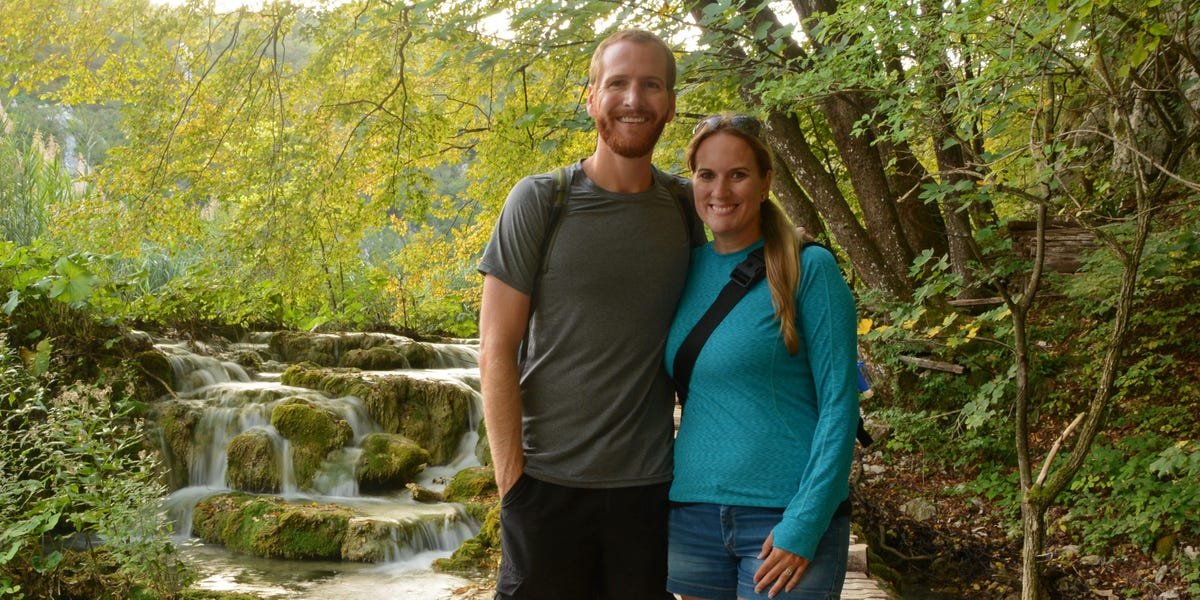
Best visited more than a dozen countries, including Vietnam (pictured).
Provided by Toccara Best
We visited more than a dozen countries — island-hopping in Croatia, Thailand, and Portugal; exploring Cambodia’s temples; soaking in Hungary’s thermal baths; and driving 500 miles through Scotland in a campervan.
From hiking in Austria and Slovakia to swimming with seals in Sweden, the year became a crash course in adventure travel.
As our official gap year came to an end, our bank account was still surprisingly healthy, thanks to housesitting opportunities and blog partnerships that helped stretch our budget. And because I didn’t have a job to go back to, we decided to keep traveling.
Little did we know, our biggest adventure was right around the corner: 6 months later, we found out we were expecting.
Iceland was Best’s final stop before returning to the US.
Provided by Toccara Best
And then we were three
We returned to the US to have our son, but just a few months after his birth, we began traveling full-time again, this time exploring America.
By his third birthday, my son had already visited 27 states. Eventually, the pandemic put a halt to our full-time travels, and we took that as a sign to settle down.
We returned to California five years after the adventure started.
When we planned our gap year, it was supposed to be just that, a year. But as time went on, the gap on my résumé grew, and my motivation to return to the career I once loved began to fade. My husband was also trying to figure out what he wanted to pursue next.
The couple continued to travel around the US after having their son.
Provided by Toccara Best
Reentering the workforce
We didn’t realize that our global adventure would end with such a hurdle — a career pivot after five years away, right in the middle of a global pandemic.
Maybe it was the break we both needed to reevaluate our next steps, but it has taken us both quite a while to get back in the saddle.
Once our son started preschool, I transitioned back into the workforce as an executive personal assistant for a busy entrepreneur, putting my organizational skills to good use.
When the executive moved out of state just over a year later, I quickly found a new role as operations manager at a nonprofit organization, where I’ve worked part-time for nearly four years. I’ve been searching for meaningful full-time employment for the past year and a half, which has been especially challenging in today’s competitive job market.
Was our gap year impulsive? Not exactly. We spent a year saving and planning. Was it risky? Definitely. More so than we imagined. Would we do it all over again? Absolutely.
That said, if we were to do it again, we’d probably just stick to a year.
Do you have a story about taking a gap year that you want to share? Get in touch with the editor: akarplus@businessinsider.com.
A US Navy aircraft carrier’s hard evasive turn to avoid enemy missile fire caught crewmembers off guard and sent a $60 million F/A-18 Super Hornet rolling off the deck and into the Red Sea, an investigation into the fighter jet loss revealed.
The fighter’s brakes weren’t functioning properly, investigators found, allowing the jet to slide across the deck when the carrier USS Harry S. Truman abruptly changed course during the late April action.
Poor communication, bad brakes, and a slippery surface all contributed to the loss.
A tow tractor also fell into the water alongside the expensive F/A-18 fighter jet, the second of three that the Truman lost during a monthslong Middle East combat deployment. When it went over, it nearly took sailors overboard as well.
Evading enemy fire
During their deployment, the Truman and its strike group led Navy combat operations against the Houthis, the heavily armed Iran-backed rebel group in Yemen that spent more than a year attacking key Middle East shipping lanes.
An F/A-18 fell overboard the Truman while the carrier took a hard turn.
US Navy Photo by Mass Communication Specialist 3rd Class Abbigail Beardsley
On April 28, the move crew lost control of an F/A-18 under tow in the Truman’s hangar bay, a maintenance area below the flight deck, the Navy reported at the time, and both the jet and its tow tractor tumbled into the Red Sea.
Right before it fell in, a sailor jumped from the cockpit, suffering minor injuries. The Navy didn’t share information or insight into the warship’s situation at the time of the plane loss.
According to the command investigation, the fighter jet and the tractor fell overboard while the Truman was conducting evasive maneuvers to avoid an incoming medium-range ballistic missile fired by the Houthis, a detail that had been reported but not confirmed at the time.
The move crew, which was preparing the F/A-18 from Strike Fighter Squadron 136 (VFA-136), the “Knighthawks,” for planned flight operations, didn’t hear the announcement that the ship was making a hard turn and was caught unaware when the ship began to tilt.
Sailors had removed the chocks and chains to pull the F/A-18 into the hangar bay. With the brakes engaged but not actually working, there was nothing to hold the aircraft in place when the carrier heeled in an evasive turn.
The hangar bay is an area underneath the flight deck where aircraft receive maintenance.
US Navy photo
It slid backward toward the deck edge, dragging the tow tractor behind it. The crew moving the Super Hornet abandoned their posts just before the fighter jet fell into the sea.
Bad brakes
The command investigation put the blame for the incident primarily on the fighter jet’s inadequate brake engagement and the lack of communication from the Truman’s bridge to flight deck control and the hangar bay.
Leadership also said that the non-skid, a rough, high-friction coating applied to the decks of Navy ships to keep people, vehicles, and aircraft from slipping on smooth steel surfaces, was ineffective, having not been replaced since 2018.
These problems, the investigation said, cost the Navy an F/A-18, a multirole fighter made by the US aerospace giant Boeing that has been in service with the Navy for decades.
The April incident was one of four major mishaps that the Truman and its strike group suffered during their deployment.
In December, the cruiser USS Gettysburg accidentally shot down one of the Truman’s F/A-18s in what the military described as a friendly fire incident. In February, the carrier collided with a cargo ship. And in May, the ship lost its third fighter jet after a landing failure caused it to slide off the flight deck and plunge into the sea.