
I-moved-my-family-from-Florida-to-Colombia-The-lifestyle.jpeg

I moved my family from Florida to Colombia. The lifestyle is affordable and we love the vibrant culture, but it’s hard to adjust to the lack of urgency.

This as-told-to essay is based on a conversation with Alyssa Bolaños, a 35-year-old creative freelancer living in Medellín, Colombia. It’s been edited for length and clarity.

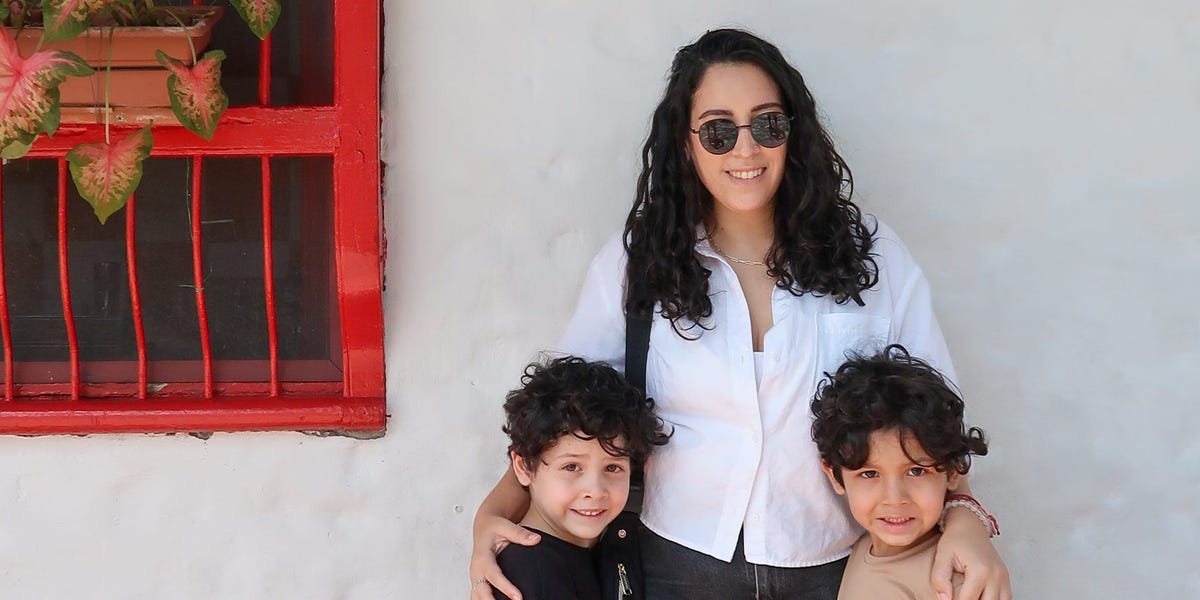
My husband, two sons —who were four and five at the time — and I moved from Orlando to Medellín, Colombia, in August 2025.

My husband is from Colombia, and he always said he never wanted to move back, but when the Trump administration took office a second time, we started having serious conversations about it.

We also had safety concerns about our children’s school and decided we absolutely did not want to raise our kids in a place with a threat of school shootings. That’s what really clicked with my husband and made him think, “We can’t stay here.”

Since moving, we’re spending more time as a family, enjoying the affordable lifestyle, and integrating into Colombia’s vibrant culture. I’m still adjusting to some of the differences in work culture, and I miss my family, but I have no plans of moving back.

Our families were concerned about us leaving

Once we made the decision to move, I really didn’t have any fears. The only problem was that our immigrant families questioned why we would move back after they sacrificed so much to move to the States — my parents are from Cuba.

We weren’t going to let anyone’s perspective hold us back because, at the end of the day, we have to focus on the lives of our children and ourselves. It was really only six months from that point that we actually moved.

The emotional aspect of moving, saying goodbye to friends and family, was the hardest. Family is a big part of Latino culture, so it was hard being the first of our family to leave.

The whole process of selling and donating our belongings was also exhausting. We shipped two big boxes of our belongings, but we had to be really discerning about only taking the most sentimental things with us.

I’m able to be present in my kids’ lives here

Colombian culture is so family-oriented. When people finish work, they spend time with their families and enjoy life. Every day is a reason to celebrate, and I love that about Colombia.

My husband is a stay-at-home dad, and I do a little bit of everything as a freelancer, like social media strategy and marketing for brands and small businesses. We’re currently homeschooling our kids while we wait for them to be accepted into a school in the area.

Actually being present with your kids is a blessing that you don’t always get as a parent in the States. In Colombia, we spend lunchtime from 11 a.m. to 2 p.m. playing with them or exploring. It’s tiring to be with your kids all the time, but it’s a luxury.

The food and the walkability are also amazing. We don’t have a car, so we walk most places or take public transit. Our kids also scooter around. Worst case, we take an Uber.

The lack of urgency here is good and bad

People work to live here, not live to work. It’s an amazing change of pace, but it’s still taking some getting used to. I used to sit at my desk job all day and work the entire time. Here, there are lots of holidays and a strong emphasis on getting outside and spending time with loved ones.

One thing I didn’t expect was the overall lack of urgency. In the States, we’re so used to the “go go go” hustle culture. I got so accustomed to constantly moving and feeling like I was doing something wrong if I wasn’t being productive.

In Colombia, there aren’t as many strict timelines, and people are more focused on enjoying little moments in their day. If I’m being honest, the lack of urgency stresses me out sometimes, but I’m really trying to be chill with it and remember that not everything is an emergency.

This change of pace is good for me, but it’s hard.

I miss my family, but I prefer the Colombian version of things

There’s not much I really miss about the United States other than family and friends. We’re lucky to have some family and friends here who have introduced us to others, and we’ve attended some events for other immigrants, but building new connections is taking time.

Other than that, we have all of the same comforts like public transportation, air conditioning, and stores. People have this misconception that Colombia is a backward place, and it’s absolutely not like that.

Medellín is innovative and full of life, culture, and community. There are even some Colombian versions of things I prefer, like the Colombian Frisby instead of KFC. I miss IHOP a little bit, though.

Our lifestyle is affordable, but there’s a caveat

Our groceries are less than they used to be for our family of four, and my personal cellphone bill is $30 a month. Everything here has been much more affordable and accessible for us.

That being said, I always want to be careful saying that our lifestyle is affordable because Colombia is experiencing a big problem with gentrification. If you move here, my advice is to support local Colombian stores and really integrate with the culture. Colombia is a beautiful place, and we have no plans to leave.

Do you have a story to share about leaving the United States? If so, please reach out to the reporter at tmartinelli@businessinsider.com.




Source link

I-found-making-friends-as-a-new-mom-so-hard.jpeg

I found making friends as a new mom so hard. A stranger on the street changed everything.

Ever since I became a mother, I have seen many acts of kindness.

Like the woman who rushed to give me a paper bag after my child was sick on the bus, hurriedly taking her stuff out of it. Or the waitress who would take my baby and walk around the restaurant with him so I could eat in peace.

Most of these moments of kindness are fleeting, from random strangers I never see again. But one act of kindness led to a lot more than that.

A stranger offered me a double stroller

When my third child was born, he hated being in the stroller and insisted on being in the baby sling.

I was walking home up a steep hill with my oldest on the buggy board and my middle child in the stroller. The baby was in a baby carrier, and my back was aching. It was raining cats and dogs, and we were all drenched.


Woman babywearing

The author’s third child did not like riding on a stroller.

Courtesy of the author


In my peripheral vision, I saw someone in a car waving at me, assuming they were going to ask for directions, I walked toward them. A lovely woman wound the window down and asked if I wanted a double stroller. She said she saw me walking up and down the hill a lot and was worried about my back.

I was surprised, but I said yes. The next day, I nervously went to collect it with a box of chocolates. We had a wonderful conversation and instantly connected. We exchanged numbers, and she invited me over for breakfast.


Women posing for selfie

A stranger offered the author (black shirt) a double stroller, and they became instant friends.

Courtesy of the author


This is how I met my friend, Salma. Salma is an amazing cook, and the huevos rancheros for breakfast were amazing. She even made mint tea from scratch.

It was hard to make friends as a mom

The next time we met up, we were going to a coffee shop, but we met at the library first. I was saying goodbye to my friend, Nadia, whom I met when our oldest children went to preschool together.

I was totally out of my depth when my oldest started preschool. It is such a sociable time, but I did not know how to make friends with the other moms. Most of them had older children who had been at the school for years, and they were all friends. It felt impenetrable. Other moms were working moms rushing to office jobs, while I worked from home as a freelance writer. Nadia was my savior. A down-to-earth, genuine, and kind person who came from the same part of Scotland as me. Since we became friends, we have had two more children each, bringing our total to four. Our children have grown up together.


Mexican food made my mom

The author’s friend cooks fo her.

Courtesy of the author


That fateful day, it felt too weird to leave Nadia behind. I looked at Salma, and she said Nadia should come too. We quickly realized how much we all had in common. We don’t talk enough about how friendship is about chemistry. It is something you cannot explain. We all lived in the same area. That is the thing about motherhood, it is not enough on its own to bind. You have to genuinely like each other. Our trio was born.

We support each other

Motherhood was never supposed to be done alone, and thanks to Nadia and Salma, it never has been. But we are more than just mothers. More than our children. When one of us passes a test or achieves something career-wise, we celebrate that too.

For one big birthday, Nadia bought me beautiful earrings, and they remind me of our beautiful friendship every time I wear them. There is something about knowing that these women have my back, that we have created this little village between us.


Close up of earrings

The author’s new friend gifted her a pair of earrings.

Courtesy of the author


We have all had a fourth child since we first became friends, and Salma came round with delicious food. I never had that with my other babies, and it made such a difference. Nadia was thoughtful enough to buy lots of baby clothes, which saved my life many times.

Our friendship means that not only are we growing up together, but so are our children. As our families grow together, we troubleshoot together. Asking for advice and reassurance. The emotional support makes all the difference. We keep each other sane through Instagram Reels and sage advice. I know they have my back and that if anything serious happened, they would be there for me. Ditto for them.

We don’t talk enough about how hard it is to make and keep friends. Life always gets in the way despite our good intentions. Having two good friends who are also friends with each other makes me feel like the luckiest woman in the world.


Source link

Layoffs-or-an-AI-pivot-Its-hard-to-tell-the.jpeg

Layoffs or an AI pivot? It’s hard to tell the difference now

Am I getting laid off, or is my company announcing a big AI pivot?

These days, it’s probably a bit of both.

A weird thing is happening in Corporate America. Companies are cleansing their layoff announcements with a healthy dose of AI strategy talk, writes BI’s Tim Paradis.

Australian-American software company Atlassian was the latest to announce some AI-branded job cuts. When it laid off 10% of its staff, CEO Mike Cannon-Brookes said the move was part of Atlassian’s repositioning in the “AI era.” (You can watch his four-minute video explaining the layoffs here.)

The news comes a few weeks after Jack Dorsey laid off 40% of Block’s staff while also pointing out that AI reshaped how the company could run.

Shedding staff because you’re ushering in a new era of AI efficiency is a convenient bit of corporate magic.

Atlassian’s stock was down more than 50% this year before the layoff announcement, a victim of the ongoing SaaSpocalypse. Block, meanwhile, was down more than 80% from its 2021 highs when it pulled the trigger on its cuts.

Block’s Dorsey said blaming layoffs on overhiring during the pandemic “misses all the complexity.”

The math does look simple here, though. Layoffs, which investors typically gobble up, and a sprinkle of AI reinvention can also be a sure-fire way to jumpstart a company that’s had a tough run.

My colleague broke down another interesting theory on the recent job cuts.

Alistair Barr, author of the Tech Memo newsletter (are you really not subscribed yet?), wrote about another driving force behind these cuts: restricted stock units.

RSUs are the generous chunks of equity that tech companies use as part of their comp packages. It’s a nice bit of financial engineering that works really well when business is booming.

But Alistair got an impromptu call from the CEO of a major public software company, who pointed out a red flag. The executive told him that RSUs are becoming a problem now that software companies’ shares are nosediving.

Basically, the lower your share price, the more RSUs you need to issue to maintain the same comp level to entice and retain tech talent. That dilutes existing shareholders, which is no bueno.


Source link

Jake Epstein

A US Navy oiler ran hard aground after its captain urged a last-minute shortcut: ‘Let’s try to shoot the gap’

“Let’s try to shoot the gap there.”

Just after noon in the northern Arabian Sea, the captain of a US Navy fuel ship gave the order to take a shortcut through risky waters rather than take a longer, safer route to their destination.

Two hours later, the 677-foot replenishment oiler USNS Big Horn struck the sea floor at high speed, shaking violently as the vessel ran aground. Music was audible on the bridge as sailors missed key navigational warnings.

The Navy command investigation obtained by Business Insider said that the September 2024 incident, initially characterized as an allision, was caused by “a series of poor decisions, failure to follow procedure, application of open water navigation to restricted waters, and failure to exhibit proper risk calculation.”

The ship suffered more than $20 million in damage.

The Navy’s investigation, the details of which have not previously been made public, reveals that the captain and his watchstanders failed to prepare for the shortcut and failed to monitor navigation alerts that could have averted disaster at the last minute.

“The grounding was preventable,” investigators wrote.

The investigation recommended administrative or disciplinary action against Big Horn’s captain and several officers. Military Sealift Command said that both the captain and the ship’s navigator are still employed. It is unclear if they will be permitted to hold their positions again.

“Pursuant to the investigation, all administrative and disciplinary matters were submitted for appropriate review,” command spokesperson Jillian Morris said in response to Business Insider’s query on accountability and discipline. “However, to protect employee privacy, we do not comment on, nor share the details of, the outcome of those matters.”


The Henry J. Kaiser-class fleet replenishment oiler USNS Big Horn (T-AO 198) sails alongside the Nimitz-class aircraft carrier USS Abraham Lincoln (CVN 72) during a replenishment-at-sea.

The Big Horn during a replenishment-at-sea with the aircraft carrier USS Abraham Lincoln.

US Navy photo


Making a risky choice

Shortly after 12 p.m. local time on September 23, the Big Horn was wrapping up its final replenishment-at-sea with ships from the Abraham Lincoln Carrier Strike Group.

The next move for the Henry J. Kaiser-class replenishment oiler, which refuels warships at sea, was to sail from the northern Arabian Sea to the Duqm port in Oman for a scheduled visit.

The new navigator was drafting route options for the captain to get the Big Horn to a pickup point, where the oiler would embark a harbor pilot to guide the ship into port.

During a conversation with another officer, the transcript of which is included in the Navy’s investigation, the navigator expressed concerns about running aground on a particular route and said they preferred an option through deeper water.

The navigator told the officer that they could take the riskier shortcut and save time. “I’m just scared of right here,” they said, “scared of these shallow points.” The officer said they should present the shortcut to the captain.

The officer said “ask the captain and say, ‘This route is about 10 miles shorter but goes through this. Do you feel comfortable?'”

One route, known as Duqm A, was shorter but ran through known shoal areas. Duqm B was a “deep water” path that added several miles to the journey to the rendezvous point.

Just before 12:30 p.m., with the last replenishment-at-sea ongoing, the navigator asked the captain which route they preferred.

“Let’s try to shoot the gap there,” the captain told the navigator, selecting the Duqm A route, even though it threaded a gap between charted shoals dangerously close to the oiler’s draft. The navigator said that they had checked on the under keel clearance, to which the captain replied: “Rad.”

The Navy investigation into the grounding that followed that decision said that there was no indication that the captain reviewed a paper chart during the decision-making process.

‘Slow down, slow down, slow down’


The Arleigh Burke-class guided-missile destroyer USS Daniel Inouye (DDG 118), right, sails alongside the Henry J. Kaiser-class replenishment oiler USNS Big Horn (T-AO 198) as it transfers fuel to the Arleigh Burke-class guided-missile destroyer USS John S. McCain (DDG 56), July 20.

The Big Horn sails between Navy destroyers in July 2024.

US Navy photo


About an hour later, at roughly 1:30 p.m., the Big Horn completed its final replenishment-at-sea and set out for the pick-up point for the harbor pilot. Pilots are standard for most harbor approaches because they have the local knowledge to help ship captains navigate through tight channels.

Duqm A took the Big Horn through a gap between two charted areas of shoal — or shallow — water known as the San Carlos Banks that were not deep enough for the oiler.

Navy investigators wrote that “attention to detail and consideration of the risks should have negated Duqm A as an option.”

The Big Horn sailed through the San Carlos Banks at 17 to 18 knots. In transit, the ship’s system triggered safety alarms. They were silenced but had visual cues; there is no indication that they were acknowledged.

Meanwhile, the ship’s fathometer — which measures water depth under the hull — showed the water growing progressively shallower.

At 2:12 p.m., the vessel began vibrating as it struck the sea floor.

“Slow down, slow down, slow down,” the captain said.

“We must have hit a shallow spot somewhere, but there is nothing on the chart,” he said moments later as the ship came to a full stop.

Crew members reported fuel leaks on both main engines.

“We must have hit a shallow spot. We must have hit a sand bank,” the captain said.


The Arleigh Burke-class guided-missile destroyer USS Chung-Hoon (DDG 93) conducts an emergency breakaway drill with the Henry J. Kaiser-class fleet replenishment oiler USNS Big Horn (T-AO 198). Chung-Hoon, part of the Nimitz Carrier Strike Group, is in U.S. 7th Fleet conducting routine operations.

The grounding cost the Navy more than $20 million.

US Navy photo


The damaged oiler was anchored and later towed into Duqm.

A ‘preventable’ blunder

Investigators found that the members of the bridge team appeared “unreasonably” focused on meeting a 3 p.m. harbor pilot pick-up time, which contributed to the decision to take the risky shortcut at high speeds.

“We gotta haul ass,” the navigator told an officer at one point. In a separate conversation with the captain, they said they believed they could make it, if only slightly behind schedule.

“If we cut corners we’ll get there,” the captain said, per the investigation.

“Yes sir!” the navigator replied. That was minutes before the ship ran aground.

Although the captain later said he did not believe he was operating in restricted waters and was unaware of any safety hazards or navigational concerns, investigators concluded that the Duqm A track met the definition of restricted waters under Navy policy, meaning a formal navigation brief should have been conducted before entering the area.

“However, no members of the bridge team, including the Captain and Navigator, seemed to realize they were steaming into restricted waters,” the investigation said. “No consideration was given for a required navigation brief, a more detailed plan, or thorough review of the proposed track prior to steaming through.”

The command investigation also found that, when the Big Horn ran aground, the ship was operating with two separate electronic navigation chart databases, and there was some confusion among the officers about which one was in use at the time. Safety contours and the shoal area were not clearly displayed.

Records indicate there was music was playing on the bridge up until the grounding. Tug boats brought the Big Horn into port the following day.

The grounding caused extensive damage to the Big Horn’s hull, internal support structures, port propeller, and port rudder. According to Navy cost breakdowns, expenses included roughly $7.5 million for towing, $8.6 million for services in Oman, $1.9 million for fuel offloading, and $2.4 million in additional costs in the US — totaling more than $20 million.


Source link

Theron Mohamed — Profile Picture

Greg Abel pays tribute to Warren Buffett in his first letter as Berkshire Hathaway CEO, calling him a ‘very hard act to follow’

Greg Abel paid tribute to Warren Buffett and reassured Berkshire Hathaway shareholders he wouldn’t do anything drastic as their new CEO in his first letter to them on Saturday.

Buffett handed Berkshire’s reins to Abel at the start of this year, ending a six-decade run during which he transformed the failing textile mill into a sprawling conglomerate worth more than $1 trillion.

The legendary investor oversaw a 6,100,000% return for Berkshire shareholders between 1965 and 2025, trouncing the S&P 500’s total return of 46,100% including dividends. His compounded annual gain of 19.7% was nearly double the index’s 10.5% figure over a 60-year timeframe.

“Warren is obviously a very hard act to follow,” Abel wrote, continuing Buffett’s decades-long tradition of penning an annual shareholder letter.

Berkshire’s new boss dedicated the first section of his letter to Buffett, praising everything from his patience and judgment to his investing prowess, legacy as an educator, track record as a CEO, and the unique company he built with the late Charlie Munger.

Abel used the letter to properly introduce himself to shareholders, and even tried to inject some of Buffett’s trademark wit.

“I will not be your CEO for the next 60 years as simple arithmetic makes that — shall we say — an ambitious plan,” he quipped.

More of the same

Abel made it clear to shareholders that he “gets it” — he understands what makes Berkshire special and has no plans to ruin it.

He walked through what he called Berkshire’s “foundational values”: its decentralized model, integrity, financial strength, capital discipline, risk management, and operational excellence.

Abel lingered on the topic of capital discipline, showing he’s aware of how much scrutiny Berkshire has received for hoarding more than $370 billion of liquid assets.

He signaled there won’t be any rushed deals or immediate dividend payouts on his watch. He described Berkshire’s cash pile as both its rainy-day fund and its “dry powder” for stock purchases and acquisitions, but said he’ll remain disciplined in spending it “regardless of the size” of the company’s reserves.

Digging into the details

Abel’s letter contained several key nuggets for close followers of Berkshire.

First, he described its Kraft Heinz investment as “disappointing” with a return “well short of adequate,” echoing Buffett’s uncharacteristic bashing of the food giant.

Second, Abel broke out the five stakes in Japanese companies purchased by Buffett a few years ago. The dedicated table showed Berkshire paid a total of $15.4 billion for positions worth a combined $35.4 billion at December’s close, and collected $862 million in dividends from them last year.

Third, he revealed that Ted Weschler now oversees about 6% of Berkshire’s investments after assuming control of the recently departed Todd Combs’ portion of the company’s portfolio.

Abel also positioned Weschler as one of his key deputies, writing that his “impact extends beyond these investments” to weighing in on big opportunities and Berkshire’s businesses, and providing other support.

Finally, he signaled a shift to a bigger brain trust at Berkshire. Instead of Buffett and Munger holding court for the entire Q&A at Berkshire’s annual meeting, as they did for many years, Abel will field questions with Berkshire’s insurance chief, Ajit Jain, and later with Katie Farmer and Adam Johnson, two of his top deputies.


Source link

photo-of-Ana-Altchek

Salesforce exec shares the advice he gives entry-level talent: ‘Hard isn’t necessarily bad.’

As companies rethink how they train early-career workers in a job market shaped by AI, Salesforce executive Andy White said resilience is top of mind for him — both at work and at home.

White oversees Salesforce’s implementation of Slackbot, an AI personal agent that generates responses based on conversations, files, and workflows inside Slack.

As White raises his son and daughter during a period of rapid technological change, he said he preaches to his kids the importance of powering through moments that don’t go as planned. He said resilience is pivotal and that it’s important for people to focus on doing the hard things and being OK when things don’t go as expected.

The senior vice president of business technology said he recently spoke with his daughter about the importance of dealing with situations rather than merely labeling them as “good” or “bad.”

“Hard is hard,” White told Business Insider. “Hard isn’t necessarily bad.”

Expectations, he said, are the “destroyer of hope and joy,” and that when things don’t go as planned, it often turns out to be a good thing down the line, even if it doesn’t seem that way in the moment.

“It’s when we look back, and it’s like, ‘Oh man, I’m glad that didn’t go the way I expected,'” White said. “But when you’re in it, it’s really hard.”

The importance of persistence

The resilience lesson is one White also thinks is relevant for entry-level workers. While junior hires often arrive ready to use new tools and deliver a “pretty high output,” he said, persistence is an area where some still need to grow.

He described today’s entry-level talent pool as “incredibly capable, very bright, and very driven,” with a stronger grasp of how to use AI tools to solve problems.

“They’re much more fluent at being able to leverage AI tooling in the flow of their work,” White said.

However, he said the group sometimes struggles when it comes to working through challenges.

“There’s more willingness to give up sooner,” he said, adding that this trait doesn’t apply across the board.

Finding confidence

White said he’s seen AI tools, such as the company’s recently upgraded Slackbot, help boost entry-level workers’ confidence. He said they could help reduce feelings of imposter syndrome by helping early-career workers navigate challenging situations that arise at work.

With that said, White added that workers need to stay balanced and not let tools make them “overly confident.” He said workers need to bring skepticism to “any kind of information” they get, and be diligent about reviewing sources and citations when using AI.

“If you don’t believe something, read the citation, and if it doesn’t have a citation, you have to assume it’s a hallucination,” White said, adding that he tells his kids the same thing.


Source link