A-federal-regulator-said-hes-coming-for-insider-traders-in.jpeg

A federal regulator said he’s coming for insider traders in prediction markets

Insider trading on prediction markets is illegal and could get perpetrators sued or land them in prison, the top enforcement lawyer at the Commodity Futures Trading Commission said Tuesday.

David Miller, who was named earlier this year as the enforcement chief for the federal finance regulator, said he will be hiring more staff to bring cases — and cut deals — with traders, including those active on new marketplaces like Kalshi and Polymarket.

“A myth has spread that insider trading is permissible, or even encouraged, in the prediction markets. Prominent individuals in finance, media, and particularly on social media, have contended that insider trading law does not apply to these markets,” Miller said. “These comments all suggest that insider trading is an important and acceptable part of the prediction market ecosystem. Not so.”

Miller’s remarks come amid explosive growth in prediction markets, which offer “event contracts” on things like sports and cryptocurrency price movements. Kalshi said more than $1 billion was staked on its markets related to the Super Bowl, and activity on Polymarket’s US platform jumped after it poured money into March Madness-related promotions.


David Miller

David Miller, the CFTC enforcement chief 

CFTC


The platforms’ characterization of sports betting as a financial swap has allowed millions of Americans, including in states like Texas and California that have yet to legalize sports betting, to put money at risk based on the outcomes of athletic events. The companies behind prediction markets have underscored the ways they’re different from traditional sportsbooks — for instance, by not banning high-performing users.

Speaking at an event at New York University’s School of Law, Miller said insider trading, including on prediction markets, will be one of his top five priorities.

The other four are market manipulation, including in markets for gasoline and other fuels; market abuse, like spoofing and “wash trading” that sends misleading price signals to market participants; fraud schemes like pig-butchering that impact retail investors; and “willful violations” of know-your-customer and anti-money laundering rules by entities the CFTC regulates.

He also addressed reports that the CFTC has lost many enforcement lawyers. Barron’s reported last month that every enforcement lawyer in its Chicago office, historically one of its largest, had left.

It’s “not true” to say that there’s no “cop on the beat” in commodities markets, Miller said. “We have sufficient personnel and resources. That being said, we are hiring.”

He also said the CFTC will soon release a new, simpler cooperation policy — superseding one released 13 months ago — to give entities the CFTC regulates the opportunity to avoid penalties if they fully cooperate.

Big bets on prediction markets

Miller’s remarks come after Kalshi and Polymarket, the two biggest prediction market companies in the US, have tried to emphasize their own focus on curbing insider trading.

Earlier this year, Kalshi announced that it had taken action against a California politician who wagered on his own election and an editor for MrBeast who traded on markets related to the production. Miller referred to the latter case in his remarks.

More recently, Polymarket announced a new hard line against misusing confidential information on both its international and regulated US platform. Previously, its founder Shayne Coplan had said the potential for people to trade based on insider information was “cool.”




Source link

Lloyd Lee

Jack Dorsey just laid off 40% of staff. He said he’s still hiring AI engineers.

Jack Dorsey said he’s still hiring for his fintech company Block — even after he just laid off 40% of its workforce.

The cofounder said during an earnings call on Thursday that he expects to bring in more senior AI engineering talent to the team. The company’s stock was up nearly 23% after trading hours as of 7 p.m. Eastern Time.

On Thursday, Dorsey said in a memo to employees that Block was cutting its head count from 10,000 people to “just under 6,000.” The reason, he said, was because AI is unlocking “a new way of working” with “smaller and flatter teams.”

“We’re not making this decision because we’re in trouble. Our business is strong. Gross profit continues to grow, we continue to serve more and more customers, and profitability is improving,” Dorsey wrote in the memo. “But something has changed.”

Dorsey said in an earnings call on Thursday that AI tools have increased productivity at the company with a 40% increase in production code shipment per engineer since September.

“We’ve seen engineering work that would have taken weeks to complete be done by a small team in a fraction of the time with agentic coding tools,” he said.

Despite the layoffs, Dorsey said during the call that Block expects to invest in hiring.

“We see meaningful opportunity to invest in our people and invest in hiring, invest in retaining a world-class team to deliver for our customers; ultimately, we expect to hire some more senior AI engineering talent who will continue to level up our engineering and product capabilities,” he said.

Dorsey and a spokesperson for Block did not immediately respond to a request for comment.

AI’s impact is being felt across industries and roles, as companies find ways to automate work. One study by Stanford University researchers found that early-career positions in fields such as software engineering and customer service are on the decline.

Some workers have also said that their responsibilities have increased with AI. A software engineer told Business Insider that the simultaneous increase in productivity and workload is leading to “AI fatigue.”


Source link

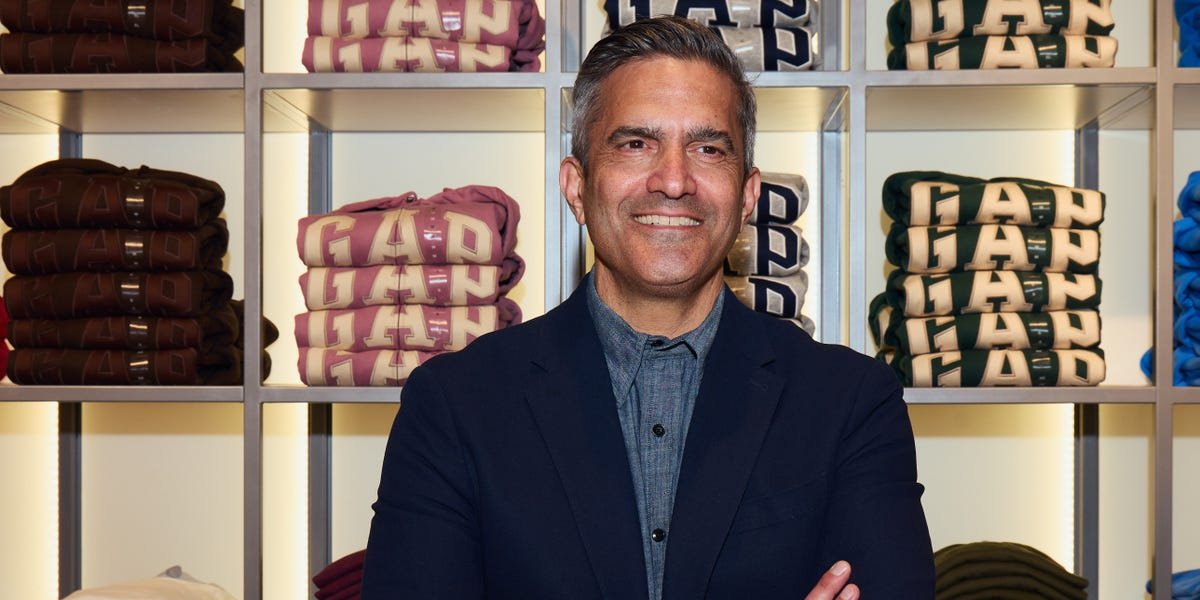
Gap-CEO-has-3-rules-for-cutting-down-meetings-—.jpeg

Gap CEO has 3 rules for cutting down meetings — and asking if he’s on the invite list breaks one of them

In an era of hyper-efficiency, leaders are taking a close look at the meetings on their calendars — and Gap’s CEO is no exception.

Since returning to lead Gap’s global brand in 2020, CEO Mark Breitbard told Business Insider he’s been focused on restoring the brand’s relevance, and part of that has included stripping away bureaucracy and unnecessary layers.

Meetings are often viewed as the pinnacle of corporate bureaucracy, — and Breitbard said he follows three rules to keep them in check.

The 3 rules

Breitbard said that if no one is sure why a recurring meeting is happening, it should be examined critically.

“If it’s a default meeting, like it happens every single week, then I feel like we need to question it,” Breitbard told Business Insider.

His second rule is to keep the invite list tight. Breitbard said it’s a red flag when he walks into a meeting, and someone asks, “Oh, are you in this meeting?”

“If you ask, the answer is ‘no.’ I clearly don’t need to be here if you have to ask,” Breitbard said, suggesting that the meeting shouldn’t be so big that people are invited without having a clear purpose for attending.

His third habit rule is to end on time — or early. He said when it’s near the end of a meeting, there often comes a time when people say something along the lines of, “Well, we have five more minutes…”

“We don’t have five more minutes,” Breitbard said. “We’re done now.”

Breitbard said that people often book 30-minute meetings, but he’s inclined to finish earlier if the purpose of the discussion has been accomplished.

“At minute 24, I say, ‘OK, good, this was great. Thanks, everyone,'” Breitbard said, adding that when people question if it’s really time to end, he says, ‘Yeah, we got what we needed.'”

Cutting down on meetings

The debate over meetings and how they should be run isn’t new. In 2018, Elon Musk said in an email that large meetings should be scrapped or kept “very short,” and billionaire investor Mark Cuban has similarly said they get in the way of his productivity.

But in today’s results-driven work culture, the push to rein in the amount of time spent in meetings in has taken on a new form of urgency.

Snowflake CEO Sridhar Ramaswamy told Business Insider in December that “meetings are like bureaucracies,” and he has four rules for managing his own, which involve keeping gatherings short, ensuring there’s a purpose, and making sure there’s an agenda and notes.

Instagram chief Adam Mosseri, also recently announced that recurring meetings would be canceled every six months and only re-added if “absolutely necessary.” He also encouraged making recurring one-on-ones biweekly “by default” and said workers should decline meetings that interfere with “focus blocks.”


Source link

Chong Ming Lee, Junior News Reporter at Business Insider's Singapore bureau.

Trump says he’s declassifying files about aliens and UFOs. That’s going to make some longtime betters on Polymarket very rich.

President Donald Trump says he is directing federal agencies to declassify UFO files. For traders betting on aliens, that could mean a very earthly payday.

“Based on the tremendous interest shown, I will be directing the Secretary of War, and other relevant Departments and Agencies, to begin the process of identifying and releasing Government files related to alien and extraterrestrial life, unidentified aerial phenomena (UAP), and unidentified flying objects (UFOs), and any and all other information connected to these highly complex, but extremely interesting and important, matters,” Trump said in a Truth Social post on Thursday night.

Earlier on Thursday, Trump took aim at former President Barack Obama, accusing him of improperly discussing classified material when speaking about extraterrestrial life on a recent podcast.

Trump told reporters aboard Air Force One that Obama “gave classified information” and wasn’t “supposed to be doing that,” adding that he could get him “out of trouble” by declassifying the relevant files.

Obama said in a tongue-in-cheek exchange with podcaster Brian Tyler Cohen last week that aliens are “real” and that they’re not “being kept” at Area 51. He later clarified in an Instagram post that there was no evidence during his presidency that aliens “have made contact with us.”

Aliens have always had a niche following. In prediction markets, aliens are tradable assets.

On the decentralized prediction platform Polymarket, guessing about aliens has become a high-volume betting category. Traders have poured millions of dollars into whether the US will confirm the existence of extraterrestrial life.

One of the platform’s largest markets asks whether the US will confirm that aliens exist before 2027. The market has drawn more than $4 million in trading volume as of Thursday.

Betting activity has also centered on whether a Trump administration would declassify UFO files before 2027, with odds climbing above 80% in December.

Polymarket users also placed bets on other extraterrestrial theories, including whether mysterious drones spotted over New Jersey were aliens.

If the files are released and contain anything definitive, longtime alien bettors may finally cash in.

Notable speculation about aliens and UFOs

In November 2024, unidentified drones were seen flying at night over New Jersey and other East Coast states.

The mysterious sightings unsettled residents and drew questions from local officials, fueling a wave of speculation about what — or who — was in the sky. Alien theories quickly gained traction.

At that time, Trump said the government “knows what is happening” but wasn’t sharing it.

“For some reason, they don’t want to comment. I think they’d be better off saying what it is. Our military knows, and our president knows, and for some reason, they want to keep people in suspense,” he said at Mar-a-Lago.

“Something strange is going on,” he added.

A Facebook group titled “New Jersey Mystery Drones — let’s solve it” has grown to more than 81,000 members as of writing. Users in the group continue to float the possibility of extraterrestrial involvement, alongside speculation about commercial or military craft.


Source link

Screen Shot 2020 09 04 at 6.22.07 PM

DoorDash’s CEO says he’s got an edge on Amazon in groceries

DoorDash CEO Tony Xu says that his company’s grocery offering has a key advantage over Amazon: choice.

Amazon is doubling down on grocery delivery, especially perishables like produce and ice cream. The retail and tech giant said last month that it’s expanding same- and next-day grocery delivery to more parts of the US this year, adding to the thousands of towns and cities it already serves — news that sent shares of Instacart and DoorDash tumbling at the time.

DoorDash, though, has something that shoppers want and that Amazon isn’t replicating, Xu said on the company’s fourth-quarter earnings call on Wednesday.

Unlike Amazon, which owns Whole Foods and several of its own food brands, DoorDash works with existing grocery chains. The delivery service has struck deals in recent years. Last year, it expanded its partnership with Kroger and signed new deals with regional chains, including Schnucks in the Midwest.

Few customers complete all their grocery shopping at a single chain, Xu said. Many stop at multiple stores each week, especially to find specific fresh groceries, such as produce, meat, and seafood.

“Consumers prefer choice,” Xu said on the call, adding that he expects there to “continue to be very strong interest in the DoorDash product” as a result.

DoorDash is also expanding its services for retailers, such as fulfillment through its DashMarts, convenience store-sized retail spaces designed for picking and delivering orders.

Xu said DoorDash is “doing that for every single grocer so that they have the capability to compete against companies like Amazon.”

DoorDash shares rose as much as 14% in after-market trading on Wednesday, despite disappointing fourth-quarter earnings and guidance for 2026. The company’s stock took its biggest one-day hit in November after it unveiled plans to spend hundreds of millions of dollars on tech improvements.

While DoorDash has become known for restaurant deliveries, its gig workers are increasingly making grocery deliveries — many of which make more financial sense for DoorDash.

Xu said DoorDash has attracted more big grocery orders from customers, not just small fill-in trips. That matters in the grocery industry, where grocers tend to make more money when customers buy a wider range of goods.

“People use us for both the quick runs as well as the stock-up use cases,” he said.

Ravi Inukonda, DoorDash’s CFO, said on the call that DoorDash’s retail and grocery business expects to “be unit-economic positive” in the second half of 2026.

Have a tip? Contact this reporter at abitter@businessinsider.com or via encrypted messaging app Signal at 808-854-4501. Use a personal email address, a nonwork WiFi network, and a nonwork device; here’s our guide to sharing information securely.


Source link

OpenClaw-creator-says-Europes-stifling-regulations-are-why-hes-moving.jpeg

OpenClaw creator says Europe’s stifling regulations are why he’s moving to the US to join OpenAI

In Europe, there’s been a lot of handwringing over why there are very few large, successful tech companies in the region. Peter Steinberger, the creator of the agentic AI hit OpenClaw, has an answer.

Steinberger was recently hired by OpenAI and is moving from Europe to the US. An Austrian by birth, he previously split his time between London and Vienna.

On X, a professor from a European university asked why Europe couldn’t retain this tech talent.

Steinberger replied that most people in the US are enthusiastic, while in Europe, he’s scolded about responsibility and regulations.

If he built a company in Europe, he would struggle with strict labor regulations and similar rules, he added.

At OpenAI, he said most employees work 6 to 7 days a week and are paid accordingly. In Europe, that would be illegal, he added.

The most valuable company in Europe is Dutch chip-equipment maker ASML, valued at about $550 billion. In contrast, there are 10 US companies worth more than $1 trillion. Most of these are tech companies.

In 2024, a landmark EU report found that the region had fallen behind the US, particularly in innovation. It proposed a series of changes to tackle the problem, but by the end of 2025, few of the recommendations had been implemented.

Steinberger said he was hopeful about EU INC, an effort to create a single corporate legal framework to make it simpler to run a business across the region.

But this seems to be “fizzling out,” he wrote on X. “Watered down, too much egoistic national interest that ultimately hurts everyone.”

Sign up for BI’s Tech Memo newsletter here. Reach out to me via email at abarr@businessinsider.com.


Source link

Lauren Edmonds Profile Photo

Read the memo: Talent agent Casey Wasserman tells staff he’s selling his company after Epstein files fallout

Casey Wasserman is selling his high-profile sports marketing and talent agency after his correspondence with Ghislaine Maxwell surfaced in the Epstein files.

The entertainment executive informed the Wasserman Group’s 4,000 staffers about the sale in a memo on Friday.

“At this moment, I believe that I have become a distraction to those efforts,” he wrote. “That is why I have begun the process of selling the company, an effort that is already underway.”

In January, the Justice Department began to release more than 3 million pages of documents related to convicted sex offender Jeffrey Epstein, who died in jail in 2019 while awaiting trial on sex-trafficking charges.

The names of numerous prominent people, such as Bill Gates and US Commerce Secretary Howard Lutnick, have shown up in the documents. While appearing in the files does not mean a person is associated with Epstein’s crimes, some have nonetheless faced a public fallout by association.

In Wasserman’s case, the documents revealed that the entertainment mogul flew on Epstein’s jet with several people, including former US President Bill Clinton. He also exchanged emails with Maxwell, who is serving a 20-year prison sentence for sex trafficking girls for Epstein. Wasserman’s emails with Maxwell were dated 2003, long before police began to investigate Epstein and over a decade before police arrested Maxwell.

Wasserman issued an apology following the revelations, but a backlash from his roster of top talent had already begun. Singer Chappell Roan, Olympian Abby Wambach, and others said they intended to leave his agency over his association with Epstein.

“It was years before their criminal conduct came to light, and, in its entirety, consisted of one humanitarian trip to Africa and a handful of emails that I deeply regret sending,” Wasserman wrote in the memo to staff on Friday. “And I’m heartbroken that my brief contact with them 23 years ago has caused you, this company, and its clients so much hardship over the past days and weeks.”

Read the full memo Wasserman sent to his employees:

Team:
I wanted to write to you all directly to share a few important updates. Over the past couple of weeks, I have spoken to many of you directly — and I wish I could have spoken with every one of you because you all have put your hearts and souls into this incredible organization.
First and foremost, I want to apologize to you. I’m deeply sorry that my past personal mistakes have caused you so much discomfort. It’s not fair to you, and it’s not fair to the clients and partners we represent so vigorously and care so deeply about.
The pain experienced by the victims of Jeffrey Epstein and Ghislaine Maxwell is unimaginable – and I’m glad, as I’m sure you all are, that those who helped them commit their crimes are rightly being held accountable.
Hopefully by now you know the facts about my limited interactions with those two individuals. It was years before their criminal conduct came to light, and, in its entirety, consisted of one humanitarian trip to Africa and a handful of emails that I deeply regret sending. And I’m heartbroken that my brief contact with them 23 years ago has caused you, this company, and its clients so much hardship over the past days and weeks.
Other than my children and my fiancée, there are two things that matter most to me in this world: this company that I founded 24 years ago, and the dream I’ve pursued for more than a decade of bringing the Olympic Games back to the city I love.
This organization, its leadership and the entire team mean the world to me. Our 4,000 employees are the absolute best in the business. I see you put it all on the line for your clients every day. Our clients expect — and deserve — world-class representation. And that’s exactly what they get because of all of you.
At this moment, I believe that I have become a distraction to those efforts. That is why I have begun the process of selling the company, an effort that is already underway. During this time, Mike Watts will assume day-to-day control of the business while I devote my full attention to delivering Los Angeles an Olympic Games in 2028 that is worthy of this outstanding city.
I so appreciate the passion and fight you bring to your jobs. It’s why you succeed.
I am beyond proud of what this company has accomplished to date and excited to watch its next chapter.
All my best,
Casey


Source link