In an era of hyper-efficiency, leaders are taking a close look at the meetings on their calendars — and Gap’s CEO is no exception.
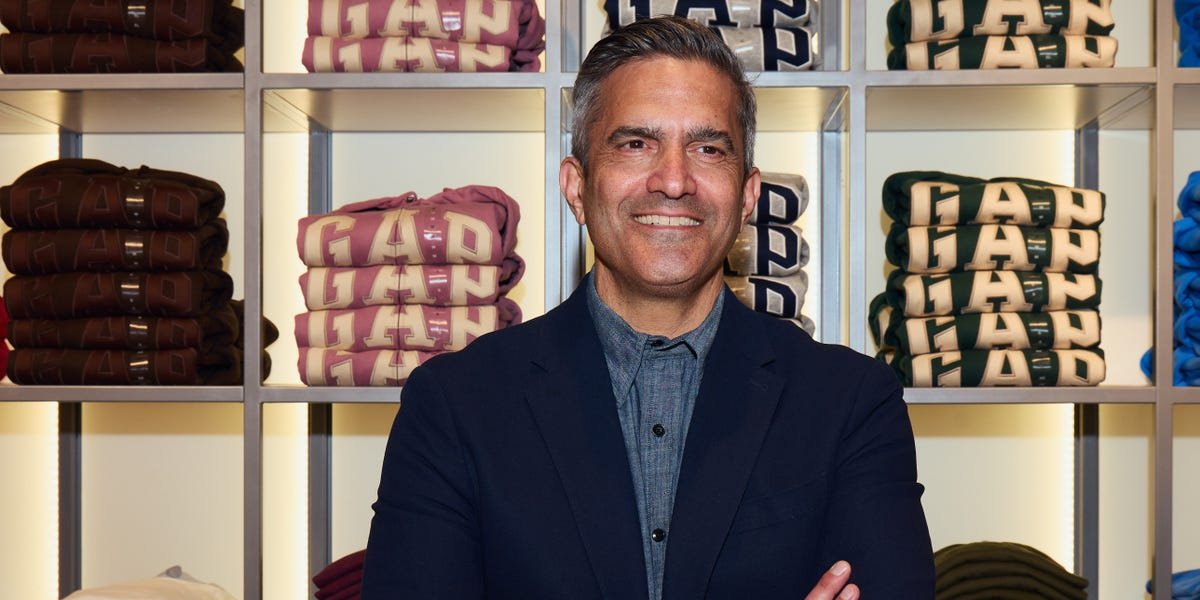
Since returning to lead Gap’s global brand in 2020, CEO Mark Breitbard told Business Insider he’s been focused on restoring the brand’s relevance, and part of that has included stripping away bureaucracy and unnecessary layers.
Meetings are often viewed as the pinnacle of corporate bureaucracy, — and Breitbard said he follows three rules to keep them in check.
The 3 rules
Breitbard said that if no one is sure why a recurring meeting is happening, it should be examined critically.
“If it’s a default meeting, like it happens every single week, then I feel like we need to question it,” Breitbard told Business Insider.
His second rule is to keep the invite list tight. Breitbard said it’s a red flag when he walks into a meeting, and someone asks, “Oh, are you in this meeting?”
“If you ask, the answer is ‘no.’ I clearly don’t need to be here if you have to ask,” Breitbard said, suggesting that the meeting shouldn’t be so big that people are invited without having a clear purpose for attending.
His third habit rule is to end on time — or early. He said when it’s near the end of a meeting, there often comes a time when people say something along the lines of, “Well, we have five more minutes…”
“We don’t have five more minutes,” Breitbard said. “We’re done now.”
Breitbard said that people often book 30-minute meetings, but he’s inclined to finish earlier if the purpose of the discussion has been accomplished.
“At minute 24, I say, ‘OK, good, this was great. Thanks, everyone,'” Breitbard said, adding that when people question if it’s really time to end, he says, ‘Yeah, we got what we needed.'”
Cutting down on meetings
The debate over meetings and how they should be run isn’t new. In 2018, Elon Musk said in an email that large meetings should be scrapped or kept “very short,” and billionaire investor Mark Cuban has similarly said they get in the way of his productivity.
But in today’s results-driven work culture, the push to rein in the amount of time spent in meetings in has taken on a new form of urgency.
Snowflake CEO Sridhar Ramaswamy told Business Insider in December that “meetings are like bureaucracies,” and he has four rules for managing his own, which involve keeping gatherings short, ensuring there’s a purpose, and making sure there’s an agenda and notes.
Instagram chief Adam Mosseri, also recently announced that recurring meetings would be canceled every six months and only re-added if “absolutely necessary.” He also encouraged making recurring one-on-ones biweekly “by default” and said workers should decline meetings that interfere with “focus blocks.”
President Donald Trump says he is directing federal agencies to declassify UFO files. For traders betting on aliens, that could mean a very earthly payday.
“Based on the tremendous interest shown, I will be directing the Secretary of War, and other relevant Departments and Agencies, to begin the process of identifying and releasing Government files related to alien and extraterrestrial life, unidentified aerial phenomena (UAP), and unidentified flying objects (UFOs), and any and all other information connected to these highly complex, but extremely interesting and important, matters,” Trump said in a Truth Social post on Thursday night.
Earlier on Thursday, Trump took aim at former President Barack Obama, accusing him of improperly discussing classified material when speaking about extraterrestrial life on a recent podcast.
Trump told reporters aboard Air Force One that Obama “gave classified information” and wasn’t “supposed to be doing that,” adding that he could get him “out of trouble” by declassifying the relevant files.
Obama said in a tongue-in-cheek exchange with podcaster Brian Tyler Cohen last week that aliens are “real” and that they’re not “being kept” at Area 51. He later clarified in an Instagram post that there was no evidence during his presidency that aliens “have made contact with us.”
Every time Lee Chong Ming publishes a story, you’ll get an alert straight to your inbox!
Stay connected to Lee Chong Ming and get more of their work as it publishes.
Aliens have always had a niche following. In prediction markets, aliens are tradable assets.
On the decentralized prediction platform Polymarket, guessing about aliens has become a high-volume betting category. Traders have poured millions of dollars into whether the US will confirm the existence of extraterrestrial life.
One of the platform’s largest markets asks whether the US will confirm that aliens exist before 2027. The market has drawn more than $4 million in trading volume as of Thursday.
Betting activity has also centered on whether a Trump administration would declassify UFO files before 2027, with odds climbing above 80% in December.
Polymarket users also placed bets on other extraterrestrial theories, including whether mysterious drones spotted over New Jersey were aliens.
If the files are released and contain anything definitive, longtime alien bettors may finally cash in.
Notable speculation about aliens and UFOs
In November 2024, unidentified drones were seen flying at night over New Jersey and other East Coast states.
The mysterious sightings unsettled residents and drew questions from local officials, fueling a wave of speculation about what — or who — was in the sky. Alien theories quickly gained traction.
At that time, Trump said the government “knows what is happening” but wasn’t sharing it.
“For some reason, they don’t want to comment. I think they’d be better off saying what it is. Our military knows, and our president knows, and for some reason, they want to keep people in suspense,” he said at Mar-a-Lago.
“Something strange is going on,” he added.
A Facebook group titled “New Jersey Mystery Drones — let’s solve it” has grown to more than 81,000 members as of writing. Users in the group continue to float the possibility of extraterrestrial involvement, alongside speculation about commercial or military craft.
DoorDash CEO Tony Xu says that his company’s grocery offering has a key advantage over Amazon: choice.
Amazon is doubling down on grocery delivery, especially perishables like produce and ice cream. The retail and tech giant said last month that it’s expanding same- and next-day grocery delivery to more parts of the US this year, adding to the thousands of towns and cities it already serves — news that sent shares of Instacart and DoorDash tumbling at the time.
DoorDash, though, has something that shoppers want and that Amazon isn’t replicating, Xu said on the company’s fourth-quarter earnings call on Wednesday.
Unlike Amazon, which owns Whole Foods and several of its own food brands, DoorDash works with existing grocery chains. The delivery service has struck deals in recent years. Last year, it expanded its partnership with Kroger and signed new deals with regional chains, including Schnucks in the Midwest.
Few customers complete all their grocery shopping at a single chain, Xu said. Many stop at multiple stores each week, especially to find specific fresh groceries, such as produce, meat, and seafood.
Every time Alex publishes a story, you’ll get an alert straight to your inbox!
Stay connected to Alex and get more of their work as it publishes.
“Consumers prefer choice,” Xu said on the call, addingthat he expects there to“continue to be very strong interest in the DoorDash product” as a result.
DoorDash is also expanding its services for retailers, such as fulfillment through its DashMarts, convenience store-sized retail spaces designed for picking and delivering orders.
Xu said DoorDash is “doing that for every single grocer so that they have the capability to compete against companies like Amazon.”
DoorDash shares rose as much as 14% in after-market trading on Wednesday, despitedisappointing fourth-quarterearningsand guidance for 2026. The company’s stock took its biggest one-day hit in November after it unveiled plans to spend hundreds of millions of dollars on tech improvements.
While DoorDash has become known for restaurant deliveries, its gig workers are increasingly making grocery deliveries — many of which make more financial sense for DoorDash.
Xu said DoorDash has attracted more big grocery orders from customers, not just small fill-in trips. That matters in the grocery industry, where grocers tend to make more money when customers buy a wider range of goods.
“People use us for both the quick runs as well as the stock-up use cases,” he said.
Ravi Inukonda, DoorDash’s CFO, said on the call that DoorDash’s retail and grocery business expects to “be unit-economic positive” in the second half of 2026.
Have a tip? Contact this reporter at abitter@businessinsider.com or via encrypted messaging app Signal at 808-854-4501. Use a personal email address, a nonwork WiFi network, and a nonwork device; here’s our guide to sharing information securely.
In Europe, there’s been a lot of handwringing over why there are very few large, successful tech companies in the region. Peter Steinberger, the creator of the agentic AI hit OpenClaw, has an answer.
Steinberger was recently hired by OpenAI and is moving from Europe to the US. An Austrian by birth, he previously split his time between London and Vienna.
On X, a professor from a European university asked why Europe couldn’t retain this tech talent.
Steinberger replied that most people in the US are enthusiastic, while in Europe, he’s scolded about responsibility and regulations.
If he built a company in Europe, he would struggle with strict labor regulations and similar rules, he added.
At OpenAI, he said most employees work 6 to 7 days a week and are paid accordingly. In Europe, that would be illegal, he added.
The most valuable company in Europe is Dutch chip-equipment maker ASML, valued at about $550 billion. In contrast, there are 10 US companies worth more than $1 trillion. Most of these are tech companies.
In 2024, a landmark EU report found that the region had fallen behind the US, particularly in innovation. It proposed a series of changes to tackle the problem, but by the end of 2025, few of the recommendations had been implemented.
Steinberger said he was hopeful about EU INC, an effort to create a single corporate legal framework to make it simpler to run a business across the region.
But this seems to be “fizzling out,” he wrote on X. “Watered down, too much egoistic national interest that ultimately hurts everyone.”
Sign up for BI’s Tech Memo newsletter here. Reach out to me via email at abarr@businessinsider.com.
Casey Wasserman is selling his high-profile sports marketing and talent agency after his correspondence with Ghislaine Maxwell surfaced in the Epstein files.
The entertainment executive informed the Wasserman Group’s 4,000 staffers about the sale in a memo on Friday.
“At this moment, I believe that I have become a distraction to those efforts,” he wrote. “That is why I have begun the process of selling the company, an effort that is already underway.”
In January, the Justice Department began to release more than 3 million pages of documents related to convicted sex offender Jeffrey Epstein, who died in jail in 2019 while awaiting trial on sex-trafficking charges.
The names of numerous prominent people, such as Bill Gates and US Commerce Secretary Howard Lutnick, have shown up in the documents. While appearing in the files does not mean a person is associated with Epstein’s crimes, some have nonetheless faced a public fallout by association.
Every time Lauren publishes a story, you’ll get an alert straight to your inbox!
Stay connected to Lauren and get more of their work as it publishes.
In Wasserman’s case, the documents revealed that the entertainment mogul flew on Epstein’s jet with several people, including former US President Bill Clinton. He also exchanged emails with Maxwell, who is serving a 20-year prison sentence for sex trafficking girls for Epstein. Wasserman’s emails with Maxwell were dated 2003, long before police began to investigate Epstein and over a decade before police arrested Maxwell.
Wasserman issued an apology following the revelations, but a backlash from his roster of top talent had already begun. Singer Chappell Roan, Olympian Abby Wambach, and others said they intended to leave his agency over his association with Epstein.
“It was years before their criminal conduct came to light, and, in its entirety, consisted of one humanitarian trip to Africa and a handful of emails that I deeply regret sending,” Wasserman wrote in the memo to staff on Friday. “And I’m heartbroken that my brief contact with them 23 years ago has caused you, this company, and its clients so much hardship over the past days and weeks.”
Read the full memo Wasserman sent to his employees:
Team:I wanted to write to you all directly to share a few important updates. Over the past couple of weeks, I have spoken to many of you directly — and I wish I could have spoken with every one of you because you all have put your hearts and souls into this incredible organization.First and foremost, I want to apologize to you. I’m deeply sorry that my past personal mistakes have caused you so much discomfort. It’s not fair to you, and it’s not fair to the clients and partners we represent so vigorously and care so deeply about.The pain experienced by the victims of Jeffrey Epstein and Ghislaine Maxwell is unimaginable – and I’m glad, as I’m sure you all are, that those who helped them commit their crimes are rightly being held accountable.Hopefully by now you know the facts about my limited interactions with those two individuals. It was years before their criminal conduct came to light, and, in its entirety, consisted of one humanitarian trip to Africa and a handful of emails that I deeply regret sending. And I’m heartbroken that my brief contact with them 23 years ago has caused you, this company, and its clients so much hardship over the past days and weeks.Other than my children and my fiancée, there are two things that matter most to me in this world: this company that I founded 24 years ago, and the dream I’ve pursued for more than a decade of bringing the Olympic Games back to the city I love.This organization, its leadership and the entire team mean the world to me. Our 4,000 employees are the absolute best in the business. I see you put it all on the line for your clients every day. Our clients expect — and deserve — world-class representation. And that’s exactly what they get because of all of you.At this moment, I believe that I have become a distraction to those efforts. That is why I have begun the process of selling the company, an effort that is already underway. During this time, Mike Watts will assume day-to-day control of the business while I devote my full attention to delivering Los Angeles an Olympic Games in 2028 that is worthy of this outstanding city.I so appreciate the passion and fight you bring to your jobs. It’s why you succeed.I am beyond proud of what this company has accomplished to date and excited to watch its next chapter.All my best,Casey
Elon Musk says he’s happy to lose one lunar milestone if it helps him win the bigger prize.
The SpaceX chief said in a post on X on Monday that he would congratulate Blue Origin if it lands on the moon before SpaceX, as his company focuses on a more ambitious goal: building a “self-growing city” on the moon.
“What really matters for the future is being able to land millions of tons of equipment and people to build a self-growing city on the moon,” Musk wrote. “In this respect, perhaps we are be more the tortoise than the hare for now,” he added.
Musk’s comments about SpaceX being more “tortoise than the hare” came in response to an X post by Blue Origin founder Jeff Bezos, who shared a black-and-white image of a tortoise. The post on Monday appeared to be a nod to the tortoise-and-hare fable, framing Blue Origin as the slow-and-steady contender and SpaceX as the faster but more distracted rival.
Musk and Bezos have been rivals for years, frequently clashing over their space ambitions at SpaceX and Blue Origin, as well as over their fortunes.
Every time Lee Chong Ming publishes a story, you’ll get an alert straight to your inbox!
Stay connected to Lee Chong Ming and get more of their work as it publishes.
After long touting Mars as SpaceX’s main destination, Musk said on Sunday that the company has shifted its focus to the moon.
“For those unaware, SpaceX has already shifted focus to building a self-growing city on the moon, as we can potentially achieve that in less than 10 years, whereas Mars would take 20+ years,” he wrote in a post on X.
“That said, SpaceX will also strive to build a Mars city and begin doing so in about 5 to 7 years, but the overriding priority is securing the future of civilization and the moon is faster,” he added.
The Wall Street Journal reported on Friday that SpaceX told investors it is targeting March 2027 for an uncrewed landing on the moon.
In a separate post on X, Musk said on Sunday that SpaceX would “continue to launch directly from Earth to Mars while possible, rather than moon to Mars.”
“Fuel is relatively scarce on the moon,” Musk added.
Musk previously said SpaceX would send an uncrewed mission to Mars by the end of 2026.
“No, we’re going straight to Mars. The moon is a distraction,” he said in January last year in response to a post on X.
Musk is known for rolling out bold timelines for projects such as electric vehicles — only to revise or abandon them later.
Bezos has long emphasised the moon as humanity’s next destination, and has taken aim at Musk’s push to colonize Mars.
“Go live on the top of Mount Everest for a year first and see if you like it, because it’s a garden paradise compared to Mars,” Bezos said in 2019.
During a presentation for project Blue Moon, Bezos included a slide about Mars with the title “FAR, FAR AWAY,” referencing SpaceX’s Mars ambition.
Blue Origin said previously it aimed to reach the moon by 2023 — a target it did not meet.
President Donald Trump said Netflix and Paramount Skydance have called him about their fight over Warner Bros. Discovery — but he says he’s staying out of it.
“I’ve been called by both sides,” Trump told “NBC Nightly News.” “It’s the two sides, but I’ve decided I shouldn’t be involved. The Justice Department will handle it.”
This is a shift from what Trump said in December of last year.
“They have a very big market share, and when they have Warner Bros., you know, that share goes up a lot so, I don’t know,” Trump said after Netflix made its bid for Warner Bros. Discover. “I’ll be involved in that decision, too. But they have a very big market share.”
The fight for Warner Bros. Discovery, and its well-known IP, has been contentious.
In November of last year, formal bids for the media behemoth were submitted, including those from Netflix and Paramount Skydance — which previously signaled interest in buying Warner Bros. Discovery.
Netflix announced in early December that it would acquire parts of WBD — the studio and streaming — for an equity value of $72 billion ($27.75 per share).
“The seismic cash-and-stock deal, which has a total enterprise value of $82.7 billion, will bring together Netflix’s streaming platform with Warner Bros.’ century-old studio, HBO, HBO Max, and some of the most iconic franchises in film and television,” Business Insider reported when the deal was announced.
Paramount Skydance came in days later with a hostile, all-cash offer of $30 per share for all of WBD, including its cable assets, making its appeal directly to shareholders.
The battle has continued with Netflix revising its deal with an all-cash offer at the same price per share, Paramount Skydance saying Oracle billionaire Larry Ellison was backing its offer, and WBD telling its shareholders to reject the Paramount deal.
No matter how the saga ends, the bids will need to clear regulatory hurdles for the merger — and for now Trump said he’ll leave that to the DOJ.
What do Timothée Chalamet, Ariana Grande, Sabrina Carpenter, Addison Rae, and Blackpink’s Rosé have in common?
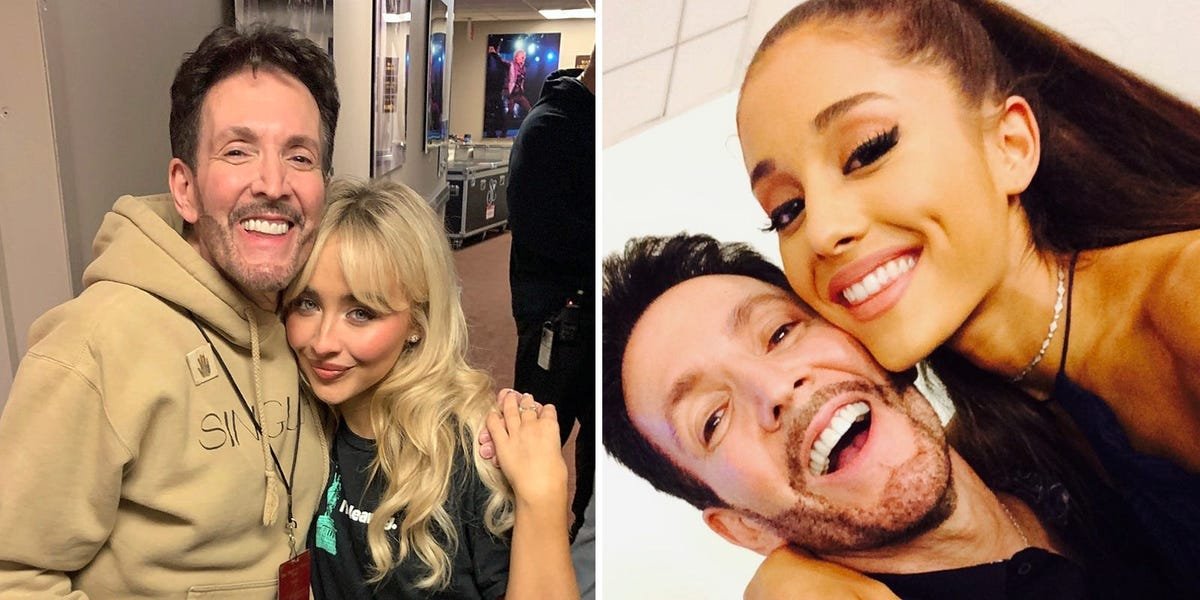
They’re all nominated for Grammy Awards this year, and they’ve all worked closely with the same vocal coach: Eric Vetro.
In an industry that runs on pomp and publicity, Vetro is the man behind the curtain shaping the voices of some of Hollywood’s biggest stars. Over the decades, his A-list roster has grown largely by word of mouth, with happy students across all genres recommending him to friends and coworkers.
In addition to counting many of today’s biggest pop stars like Grande, Katy Perry, and Carpenter as clients, he’s been involved in over 40 feature films, training actors like Chalamet, Angelina Jolie, and Jeremy Allen White to emulate musicians like Bob Dylan, Maria Callas, and Bruce Springsteen. He’s done his time coaching rock singers (Meat Loaf, Weezer’s Rivers Cuomo), Broadway stars (Bette Midler, Kristin Chenoweth) and Oscar winners (Emma Stone, Renée Zellweger). He even got a shoutout in an Ariana Grande lyric in her 2019 single “Monopoly” (“I never track my vocals, so shout out to Eric Vetro / I love Eric Vetro, man”).
Vetro’s vocation may keep him in close proximity to the limelight, but he’s never wanted to step into it himself, preferring to play his coaching role with a proudly gentle touch. Being a vocal coach, he said, is as much about building confidence and managing his famous clients’ stress as it is about delicately giving feedback when they don’t hit the high notes.
“I’m pretty good at delivering a negative in a way that they know I’m only doing it because I care about them,” Vetro explained. “A lot of times I say to people, look, I’m going to be honest with you because I don’t want you to come back to me later and say, ‘You told me I was doing a great job, but I really wasn’t,’ or, ‘You said I sounded great on this song, but I really didn’t.'”
“Most of them are pretty open. They want to hear what can make them sound better,” he added. “I’m not really interested in working with someone who’s just phoning it in.”
Vetro himself certainly isn’t. His job has seen him huddled in public bathrooms with pop stars (for better acoustics, of course) and ferried to LAX at 6 a.m. to run vocal warmups with a client as soon as they deplaned. Once, he had a session with Julia Louis-Dreyfus in the middle of a poison ivy patch while she was filming the 2000 musical “Geppetto.”
Despite the ever-frenzied logistics, Vetro said he loves his job now more than ever.
“I wouldn’t have it any other way,” he said.
Ahead of the 2026 Grammys, Vetro spoke to Business Insider about what it’s like to teach, critique, and win affection from some of the biggest names in show business.
On managing the stresses and vulnerabilities of A-list stars while giving honest feedback
Ariana Grande performs at the 2024 Met Gala.
Kevin Mazur/MG24/Getty Images for The Met Museum/Vogue
You work with a lot of people on the cusp of something big — a movie, a tour, a performance. How much of your job is stress management?
Well, picture singing at the Grammys, which is live. So if they screw up, that’s not good. Or the Oscars. That’s live, so if they make a mistake, that’s not good.
So a lot of it is stress management. But I try to think of all the things that the person needs, and then I try to fulfill all of those needs in every session that we do.
I try to get them to really learn how to use their voice the best way they possibly can, how to warm up their voice the best way they possibly can, how to find the correct placement for the song that they’re going to be singing, or songs that they’re going to be singing. But also how to stay grounded, how to stay relaxed.
It’s kind of like a holistic approach. What they eat and drink is going to affect how they sound, how much sleep they get is going to affect how they sound, the environment they’re in. It might be very dry, so they need to have a humidifier going, or they might have to make sure they have a personal steamer with them, depending on how much hydration they get. It entails a lot of different things. So I just try to fit all of that in as much as I can.
What have you learned about what it’s like to be famous through working with some of your students?
I’ve learned it’s exhausting. It’s intrusive. It can be really fun and wonderful, but it also makes people much more self-conscious because they don’t want to get caught looking their worst. They don’t want to get caught tripping, looking foolish.
Sometimes they just want to be with their friends alone. And how often can you really do that? You might be in a city and go, “I just want to take a walk up and down this strip where there are some great stores,” or, “I’ve heard this is a really fun walking path.” Well, how can you just be yourself when people are taking pictures of you? And not just paparazzi now. It’s anybody.
Eric Vetro with Jeremy Allen White.
Courtesy of Eric Vetro
You necessarily see a vulnerable side of very famous people, because it’s vulnerable to sing in front of someone — especially if you’re tired, if you’re doing it a cappella, if your voice may be a little strained.
I do, but I get also a really sweet, wonderful side, people who are so appreciative. I don’t have any bad stories. I couldn’t sell a bad story about someone. I’ve had such great experiences with people — and most of them, when you really get to the heart of things, are pretty humble. Even the biggest stars are the most humble, and they aren’t arrogant about what they do.
A lot of people come across much more confident and assured on camera when they’re doing an interview, because that’s basically what’s expected of them. The fans want them to be that way. But in person, when we’re just alone, they’re really very sweet people who want to do the best job they can, who don’t want to disappoint. They don’t want to disappoint their family. They don’t want to disappoint their teams, and they don’t want to disappoint their fans. So they’re working really hard to do the best possible job they can.
I used to have this image in my head of a pyramid: all the bricks on the bottom of the pyramid represented agent, manager, labels, choreographers, vocal coaches, stylists, hair, makeup — all these people holding this one person up, whether it’s an actor or a music artist, at the top. That’s how I used to see it before I really worked in the “big time” or the professional realm.
Now I see it as completely opposite: The person who is the artist or the actor is at the bottom, holding up all of this. Because without that person, none of these people have jobs. So they have to be successful in order for all these people to have jobs, and people feel that. They feel the pressure of making sure their team is taken care of, making sure their team has work.
On Sabrina Carpenter’s work ethic and helping Timothée Chalamet sing like Bob Dylan
Eric Vetro with Rosé and Addison Rae.
Courtesy of Eric Vetro
I’m so glad Addison Rae is nominated for best new artist at the Grammys. Since she came from the TikTok world, what was something you focused on to develop her voice as someone who wasn’t known as a singer before?
My main focus with her was just to get her to understand her voice, so that she would know how to sound like she wanted to sound.
She was working with two excellent female songwriters. They all were on the same page with everything, and especially after I heard “Diet Pepsi,” I was like, “Oh, OK. I completely get what they’re going for.” So now, let me try to keep working with her to be able to have her voice sound the best it can — in that world, in that sound, in that genre, keeping that vibe.
Addison has a phenomenal personality, and she also has a very creative mind. I think if you watch any of the videos of her performing, you go, “Oh, this is very specific to her.” Addison has her own thing going on, and so I just wanted her to feel confident when she got onstage that she could sound like the album.
Timothée Chalamet is also nominated for a Grammy for the “A Complete Unknown” soundtrack. What’s the biggest difference between training someone who is trying to emulate a certain singer versus somebody who is singing as themselves?
I start out basically the same with both, just trying to teach them how best to use their voice, how to understand their voice, vocal exercises to strengthen their voice, to increase their range.
Then we start listening, and I try to get them to really listen: What are the characteristics that make this singer special? Is it the way they pronounce a word? Is it the way they attack a note? We start really discovering the essence of these singers that they’re going to emulate — not as a carbon copy, because a carbon copy then becomes an impersonation.
With Timothée Chalamet, it’s like, why did Bob Dylan sound a certain way? And then when you look at him, you go, oh, well, he had a certain posture about him. You can see maybe his leg twitching a little or tapping on the beat. Whereas Joan Baez was very aggressive in her tone. So I would say to Monica Barbaro, who was playing Joan Baez, why do you think it was so aggressive? Do you think it was just, that was her naturally? Or maybe she felt like she had to be a woman in a man’s world, especially in those days? Or is it because the subject matter she’s singing about is so powerful to her and so strong, and she wants to get it across?
So then you start thinking why they are singing a certain way. That’s a better way to capture the essence of them organically.
Timothée Chalamet as Bob Dylan in “A Complete Unknown.”
Macall Polay/Searchlight Pictures
If I’m working with a singer who just wants to sound like themselves, then I start by saying, what do you think is special about your voice? What do we want to bring out about it? Or what is it you want to sound like?
I usually ask, if someone is listening to you in a concert, what do you want them to walk away with? How would you want your voice to be described? That’s a huge question to ask. Sometimes they haven’t even thought about that, and they might think, oh, I want my voice to have a really warm tone, or I want to have a tone that they can relate to, so they can relate to what I’m singing about.
Another big nominee this year is Sabrina Carpenter. I know that you two have worked together for a long time. From the perspective of someone on the inside, what would you say is most notable about her growth over the last couple of years?
Sabrina worked so hard for so many years. She’s one of those performers that, kind of like Ariana, once they get on a roll, they know what they’re doing. Once they find their voice, find out how they want to sound, what they want their vibe to be, what they want their performances to look like and sound like, they just get on a roll, and then it’s almost like a freight train. It just goes.
Sabrina has really honed in on having the best possible time being authentically herself, and I think that that’s what’s so great. She takes episodes out of her own life and puts them into her music, and she’s been doing that for a long time, but I think she just keeps getting better and better and better at it.
That’s the thing about someone who’s continually doing it. Now, if they’re the type of person who takes big vacations, big chunks of time off in between, I don’t think you can have that momentum, but these girls don’t take time off. They’re constantly moving and doing things. You might not see what they’re doing because they’re prepping for something else or prepping for something for the future, but she’s working all the time. She is the least lazy person on the planet.
It sounds like a big part of your job is focused on longevity, making sure people keep their voices healthy through the craziness.
I focus a lot on that. I think that’s so important. I don’t want anyone to burn out, or miss a really great opportunity, or to sing incorrectly, then get a vocal nodule, then have vocal cord surgery, then lose several months out of their life. I try to avoid that at all costs.
I say this every year, so I think people probably go, “Yeah, right,” but I enjoy it more now than ever. I keep enjoying it more as I get older.
I feel like I’m more empathetic than I’ve ever been, because I really understand how difficult it is.
This interview has been edited and condensed for length and clarity.
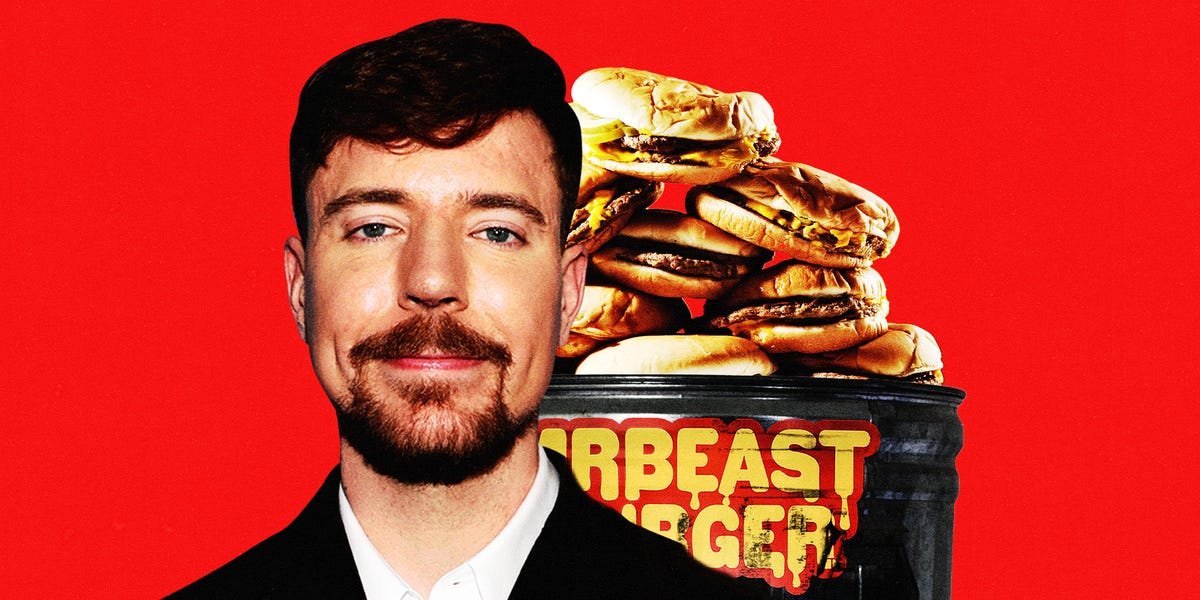
It was nearly six in the morning on a Tuesday in mid-2023, and Jimmy Donaldson, better known to the world as MrBeast, had been up for hours sending a stream of frustrated texts about MrBeast Burger, his nearly three-year-old food venture.
The YouTuber was furious with his business partners over customer complaints of undercooked burgers, and tensions had reached a breaking point.
He was done.
“As long as I have no control, I couldn’t care less about it,” Donaldson, who is known to be exacting and kill projects he doesn’t believe are up to snuff, texted a friend.
These texts — revealed as evidence in a legal battle between MrBeast and his partner Virtual Dining Concepts that could go to trial later this year — represent a stark departure from the grand ambitions Donaldson had described for the brand just six months earlier. They are part of thousands of pages of contracts, messages, and depositions that show how the partnership imploded and reveal a confrontational side of Donaldson far different from his polished, smiley persona on camera.
MrBeast Burger, a largely delivery-only venture that sells burgers and fried chicken sandwiches, was meant to be a cornerstone of a food empire that would “run circles” around Nestlé, Donaldson said in a text exchange with his cousin in December 2022.
“I want to go down the food rabbit hole and become a god in this space,” he wrote. “The king of healthy food innovation.”
By mid-2023, the promising fast-food endeavor had become a colossal headache for Donaldson.
“I was getting destroyed online, and it was impacting how people viewed me, and it made me chronically depressed,” he later said of the experience in a deposition.
The MrBeast Burger saga provides a cautionary tale for independent creators about the potential downsides of handing over control to third parties, and to brands about working with influencers who insist on tight creative oversight.
A promising start or a recipe for disaster?
Plenty of celebrity-brand deals have been fruitful, but for every Kim Kardashian and Skims partnership, there’s a Kanye West and Gap flameout. Each partnership brings its own nuances and complexities, and “virtual dining” businesses like MrBeast Burger come with built-in risks.
MrBeast Burger’s food is made by various “ghost kitchen” partners ranging from 7-Eleven and Red Robin to local mom-and-pops. That meant low overhead and few barriers to entry for the brand, but the potential for uneven food quality.
For social media creators, whose livelihoods depend on their relationships with fans, reputation is paramount.
“The inherent risk is, when you do these licensing deals, the creator’s name is the product,” said Keith Gelman, founder of entertainment marketing agency Talent Partnership Advisors, who has negotiated partnerships with celebrities including Snoop Dogg and Reba McIntyre. “The audience doesn’t distinguish between the operator and the creator.”
MrBeast and VDC came from different business and cultural worlds.
Donaldson was 22 when MrBeast Burger launched in 2020. He’d soared to internet fame through videos involving cash giveaways and stunts like being buried alive. His business was mainly run by family members, a close circle of friends, and his management team at Night Media.
VDC’s founder, Robert Earl, is a British expat restaurateur and TV personality best known for founding Planet Hollywood before moving with his son into the virtual dining business. Often seen sporting colorful shirts, Earl is at home with movie stars like Arnold Schwarzenegger and Bruce Willis. YouTubers like MrBeast were not in his orbit when his son signed the influencer for a burger partnership.
Robert Earl, front, with celebrity pals.
Denise Truscello/WireImage
MrBeast Burger launched in 2020 with a bang.
Donaldson set up a pop-up version of the restaurant near his hometown of Greenville, North Carolina, where he slid wads of cash into burger bags and handed out free iPads. He posted a video of the event, which crossed 200 million views on YouTube — a marketer’s dream.
“We were beyond slammed and ill-prepared for his incredible following and demand that ensued,” Earl told Business Insider shortly after MrBeast Burger’s launch. “It was beyond any expectation.”
After selling over 1 million sandwiches in just a couple of months, the company expanded to over 1,000 restaurants in 2021.
Donaldson was giddy with excitement about the possibilities. Early on, he began musing about merging MrBeast Burger with his candy brand Feastables and going public.
He imagined a $10 billion IPO — and he wanted an even bigger stake in the business.
“I’ll get my equity, everyone who built the channel will get their equity, and the investors will get sick returns,” he wrote in a text in late 2022.
Fans gather at the first physical MrBeast Burger restaurant opening in 2022.
Dave Kotinsky/Getty Images for MrBeast Burger
Raw burgers and soggy fries
Despite a hot start, there were early signs of trouble.
Customer complaints about product quality — including undercooked burgers, soggy fries, and incorrect orders — began appearing on social media almost immediately.
The worst part for Donaldson: There was little he could do about it.
Many of the hundreds of restaurants that sold MrBeast Burger’s food operated independently, which meant tracking down any mistakes was like playing a game of whack-a-mole.
The problems MrBeast Burger ran into are common for ghost kitchen brands with many locations, Rich Shank, a senior principal at the food-service consultant and research firm Technomic, told Business Insider.
“There’s just a lot of variances and nuances in the ghost kitchen space that make it challenging,” he said, including standardizing ingredients, cooking processes, and other factors that differ from kitchen to kitchen.
Complaints about MrBeast Burger started appearing soon after its launch.
Beast Investments vs. Virtual Dining Concepts
VDC used a variety of methods to monitor quality issues, including working with the guest feedback platform Tattle to analyze customer satisfaction. It hired a third-party firm, Intellishop, to send “mystery shoppers” to order from various MrBeast Burger locations and see what they delivered. At one time, about 5% of orders were coming back wrong, more than double VDC’s target rate of around 2%, according to an email from VDC CEO Stephanie Sollers.
Sollers said in a deposition that incorrect orders were an unfortunate feature of “most restaurant businesses.” For Donaldson, the complaints were personal.
“People were ridiculing me and saying I didn’t care,” Donaldson said in a deposition.
Donaldson’s lawsuit compared his philosophy to that of Yankee great Joe DiMaggio: “There is always a kid who may be seeing me for the first time. I owe him my best.”
Donaldson’s solution was the same one he applies to his YouTube content: “obsess over it” until he figures out an answer.
He proposed to VDC that each restaurant could submit a photo of every item to verify its quality before sending it to customers, and he wanted to hire someone to make quality control their obsession.
That kind of micromanaging wouldn’t be “operationally prudent” and would be “a very quick way of having your line cooks want to quit,” Shank said.
Jimmy Donaldson poses with fans at the opening of the first physical MrBeast Burger restaurant in 2022.
Dave Kotinsky/Getty Images for MrBeast Burger
The beef enters the boardroom
Undercooked food was not the only source of tension in MrBeast Burger land.
Donaldson accused VDC in his lawsuit of having used his name, image, and likeness in social posts and trademarks without his consent. He also told associates he wanted a larger ownership stake to gain control over MrBeast Burger’s destiny and get out of what he called in a text a “fucked deal.”
In November 2022, Donaldson made the first in a series of attempts to acquire nearly all of the company from VDC.
The stakes were high. Tech billionaire Chamath Palihapitiya, an investor in MrBeast’s company, said in a 2023 email that the creator’s media business was a break-even proposition that had “some enterprise value but not much.”
“The real value is using it as a platform to launch CPG and other kinds of companies,” Palihapitiya wrote. “We need to own at least 80% of each company.”
The problem: Donaldson’s company only owned 50% of MrBeast Burger, and the newest deal he’d signed made that agreement indefinite.
The negotiations, which dragged on for months, led to the complete fracturing of MrBeast’s relationship with VDC.
During one meeting with VDC, Donaldson banged a clothes hanger on the table out of frustration. In another, the YouTuber claimed Earl showed him a desk drawer of lawsuits to make the point that he wasn’t afraid of being sued. (Earl denied this.)
“Let’s throw a grenade in the room of VDC,” Donaldson wrote in one text as negotiations continued.
In the background, Donaldson took other steps to try to seize control. His lawyers shot a letter to VDC alleging breach of contract, and his team changed the passwords on the MrBeast Burger social accounts, cutting off VDC’s access.
“Robert is dead to me once the deal closes,” he texted his cousin during the negotiations.
“Fuck those pieces of shit,” he wrote to a friend.
In June 2023, his rage went from texts to tweets when he fired off a string of posts about MrBeast Burger that would become central to VDC’s countersuit.
MrBeast tweeted that if he had the ability to shut down MrBeast Burger, he “would have done so a long time ago sadly.” He added that sometimes when you’re young, “you sign a shit deal.”
After Donaldson’s tweets, one VDC investor pronounced the venture “dead and buried.” VDC’s complaint called it “sabotage.”
Amid the feud, MrBeast Burger’s ghost kitchen revenue fell from around $64 million in 2022 to about $45 million in 2023, court documents said.
Behind the scenes, Donaldson was working on his ‘new giga brain play’
As the negotiations stalled, Donaldson hatched a new plan. The first step was to go to court and request termination of the partnership and a ban on VDC using his name or image.
In a series of text messages, he called it “the new giga brain play.”
The full plan went something like this: Win the VDC lawsuit, make a deal with Burger King or McDonald’s for MrBeast Burger 2.0, do $100 million in sales, and eventually be bought out for $300 or $400 million.
The result, he wrote, would be “a legendary dub” — online speak for “win.”
In July 2023, Donaldson’s company sued VDC, portraying the YouTuber as a victim seeking to escape an unfair contract that had tarnished his reputation as a philanthropic, family-friendly entertainer.
VDC fired back soon after with its own lawsuit, saying Donaldson had walked away from a promising deal and failed to meet various contractual obligations, including appearances and promos.
“But for Donaldson’s opportunism, disparagement, and interference, MrBeast Burger would have continued its explosive growth,” VDC’s suit says.
The MrBeast Burger brand lost customers and market partners after Donaldson went scorched earth, Earl said in a deposition. A deal with Red Robin fell through, and a plan to distribute the burgers in supermarkets, which could bring in $500 million a year, never materialized, he added.
Donaldson’s lawsuit said that VDC had earned millions from the endeavor, while the creator hadn’t earned “a dime.” Earl said in a deposition that Donaldson’s mother and financial manager instructed VDC to reinvest the money in the business.
Donaldson has been doubling down on his Feastables candy line, which launched after MrBeast Burger.
Don Arnold/WireImage
MrBeast enters a new era
Donaldson, meanwhile, moved on. By the time of the lawsuit, his focus had turned to Feastables, the candy line he launched in 2022.
“I’m never giving up control of Feastables so I can always do what’s best for my fans,” he said in a July 2023 tweet contrasting the business with MrBeast Burger. “Harsh lesson to learn.”
So far, it’s been a winning strategy. Feastables generated over $200 million in 2024 and was profitable, according to investor materials from early 2025 viewed by Business Insider.
“I just obsess over the product,” he said during a deposition when asked why Feastables had been successful.
Donaldson has taken more control of his company, Beast Industries. The company, now some 450 employees strong, is mostly centralized in Greenville. Donaldson made Silicon Valley vet Jeff Housenbold his in-house CEO and parted ways with his external management company.
In large part thanks to Feastables, Beast Industries was valued at about $5 billion in a 2024 capital raise.
Donaldson’s plans for Beast Industries will again put control at odds with expansion.
His road map includes launching in new categories like mobile phones and financial services — with help from $200 million in fresh funding from a crypto company — that will require bringing on partners.
In investor pitch materials from early 2025, Beast Industries said its plan for Beast Financial was to partner with a “scaled fintech partner to white label a suite of products,” tailored to MrBeast’s audience and supported by financial literacy content. Partnership is simply a necessity for creators with big business ambitions.
“There’s no way that a lot of these creators could just on their own build and run a hundred million or billion dollar brand,” Eric Bogard, CEO of talent-firm UnderCurrent Management, which operates a product division called Viral Goods, told Business Insider. “You absolutely need a third party.”
As for MrBeast Burger, it marches on amid the winding legal fight, long after Donaldson stopped promoting it. You can still order his Beast Style crinkle-cut fries and smash burgers from hundreds of ghost kitchens around the world — from Singapore to Switzerland — according to its website, which still features photos of a beaming Donaldson.
MrBeast’s zombie brand lives on, even if it’s dead to its creator.
The AI race doesn’t need to be a zero-sum game, says Satya Nadella.
On an appearance of the “All-In” podcast recorded in Davos on Wednesday,the Microsoft CEO said current competition is intense — but that’s not a bad thing.
“The way I always think is it’s always helpful when you have a complete new set of competitors every decade because that keeps you fit,” he said. He added, “It’s a pretty intense time. I’m glad there’s the competition.”
Nadella said that when he joined the computer giant in 1992, Novell, a Utah-based software and services company, was the “big, existential competitor” Microsoft had.
Novell’s dominance declined in the late 1990s, and it was acquired in 2011.
Nadella said that the tech industry as a whole will continue to dominate economically.
“At the end of the day, when I look at it as a percentage of GDP, five years from now, where will tech be? It will be higher,” he said, referring to gross domestic product. “So we’re blessed to be in this industry. It’s a lot of intense competition, but it’s not so zero-sum as some people make it out.”
Nadella said that his approach is a different take on Peter Thiel’s advice. He said Microsoft avoids competition by understanding what customers really want fromthe company rather than treating everybody like a competitor.
The Microsoft CEO’s embrace of competition matches the approach one of his predecessors, Bill Gates, and top rival, former Apple CEO Steve Jobs, took toward competition.
“Competition is always a fantastic thing, and the computer industry is intensely competitive,” Gates said in a 2005 interview. “Whether it’s Google or Apple or free software, we’ve got some fantastic competitors, and it keeps us on our toes.”
Jobs famously shifted his perspective on competition after returning to Apple in 1997. He went from dismissing Microsoft’s taste and originality to saying that Apple needed to focus on its own success rather than Microsoft’s failure.
“If we want to move forward and see Apple healthy and prospering again, we have to let go of this notion that for Apple to win, Microsoft has to lose,” he said at the 1997 Macworld Expo.