What-smart-people-are-saying-about-Jack-Dorsey-slashing-jobs.jpeg

What smart people are saying about Jack Dorsey slashing jobs at Block: ‘The canary in the coal mine’

  • Jack Dorsey announced major layoffs at Block, cutting nearly half of its workforce.
  • Dorsey said AI was behind the cuts, and the company’s stock rose over 20% in after-hours trading.
  • Tech and VC leaders have reacted to Block’s layoffs, with some calling it a sign of what’s to come.

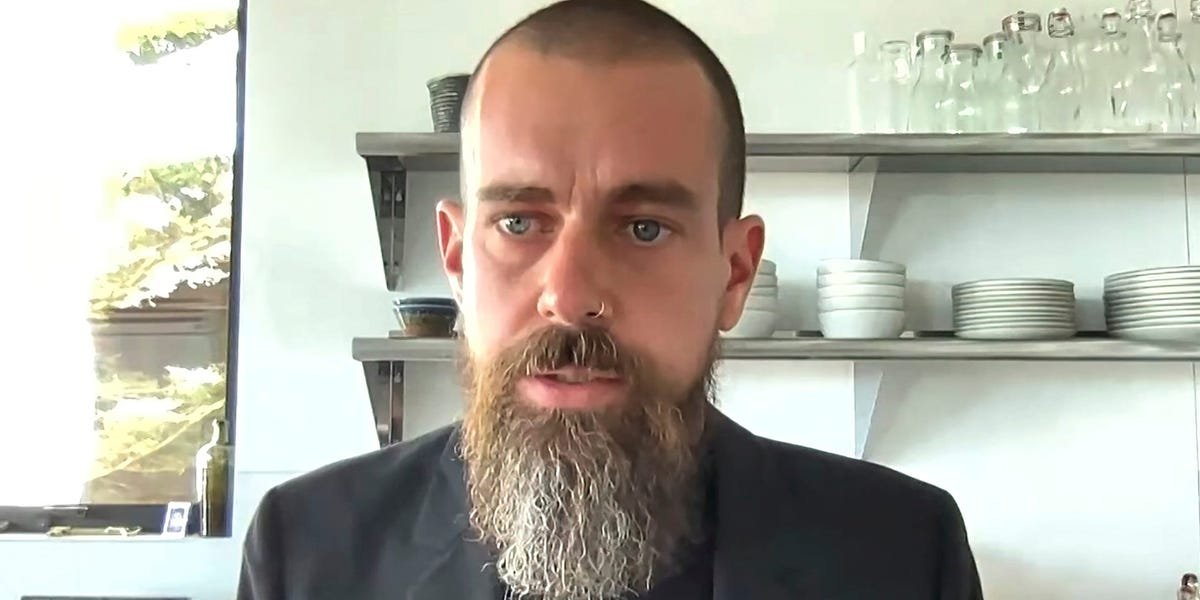
Jack Dorsey’s announcement on Thursday that Block was slashing its workforce nearly in half sent shockwaves through the tech world.

Dorsey, Block’s CEO and cofounder, said AI was rapidly changing work at the financial services company, which owns Square, Cash App, and Afterpay.

“A significantly smaller team using the tools we’re building can do more and do it better,” he said on Thursday’s earnings call, shortly after the reduction in force was shared on X.

“I had two options: cut gradually over months or years as this shift plays out, or be honest about where we are and act on it now,” he wrote in a memo. “I chose the latter.”

Block’s stock was up over 20% in after-hours trading following the announcement. Shares were down more than 16% in the last year as of market close on Thursday.

Leaders in tech and venture capital quickly reacted to the news, with some saying it could be the first of what’s to come as AI fundamentally transforms companies and the nature of work. Others were more skeptical of AI’s role.

Here’s what smart people are saying about the job cuts at Block.

Balaji Srinivasan

“This is the first AI cut,” tech investor Balaji Srinivasan said on X. “And it will send shockwaves.”

The Silicon Valley venture capitalist said the Block cuts were a “signal to everyone in tech: get good now. Become indispensable. Work nights and weekends. Learn the AI tools and raise your game. Or you might not make the cut, as an employee or as a company.”

Aakash Gupta

“Block is the canary in the coal mine,” Aakash Gupta, host of “The Growth Podcast,” said on X. “And they’re not alone.”

Gupta said Dorsey “said the quiet part out loud: intelligence tools paired with smaller teams have already changed what it means to run a company.”

“Block went from 10,000 to 6,000 while growing revenue and raising guidance. Every CEO running a company with more than a few thousand employees is doing this math tonight,” he added. “The canary just stopped singing.”

Ben Carlson

Ben Carlson, a financial analyst and director at Ritholtz Wealth Management, expressed skepticism that the cuts were purely driven by AI innovation, sharing a chart that shows Block’s share price is down sharply from its high point in 2021.

“Maybe Block laying off a ton of employees is a sign that AI is gonna destroy everything,” he wrote on X. “Or maybe the stock is down 80% from the highs and they overhired and AI is a convenient excuse.”

Jason Calacanis

Jason Calacanis, angel investor and co-host of the “All-In” podcast, praised Dorsey for the cuts.

“Leadership is hard, but this feels like (another) visionary move,” he said on X. “Have never sold a share, since being a private investor in square.”

Jessica Verrilli

“Feels inevitable this is about to ripple through every public company,” Jessica Verrilli, cofounder of VC firm Adverb Ventures, said on X. “We’ve gotta find a way to make everyone an owner w/ some exposure to the upside as the # of employees falls off a cliff.”

Shaun Maguire

“Respect to @jack for doing the hard thing,” Shaun Maguire, partner at Sequoia Capital, wrote on X. “While doing it intentionally and owning the decision.”

Clara Shih

“Square is just the beginning,” Clara Shih, a startup investor and senior advisor at Meta, said in an X post. “Every CEO faces the same decision today that manufacturing CEOs did in 2000: do a big layoff or your competitor will, pass on cost savings to customers and investors, and beat you.”

“In 2000, jobs were lost to Shenzhen. In 2026, jobs will be lost to AI,” she added.

Matt Shumer

Matt Shumer, an AI CEO who wrote the viral “Something Big is Happening” essay earlier this month, said this is “one of the first major examples of AI driving layoffs, but certainly not the last.”

“If you’re saying ‘this won’t happen to me’, re-evaluate your thoughts. Now,” he said on X. “It may be the most important thing you do.”




Source link

Jordan Hart's face on a gray background.

Career tips for creators from 5 of Steve Jobs’ powerful friends on what would have been his 71st birthday

Late Apple cofounder Steve Jobs had a variety of powerful friends, and they’re honoring his legacy by sharing their recipes for success.

To celebrate his birthday on Tuesday, the Steve Jobs Archive released two collections of letters from business leaders, designers, writers, and more.

The entries were originally distributed to 2023 and 2024 fellows of the SJA program for young creators, and they’ve been compiled into two volumes titled “Letters to a Young Creator.”

The volumes feature the words of advice from tech trailblazers like Tim Cook and Jony Ive, to successful businessmen Bob Iger and Arthur Rock, to creative minds like Pixar’s Pete Docter and filmmaker Jon Chu.

Some wove their lessons together with personal anecdotes about their relationships with Jobs, while others laid out lists to aid in the creative process.

Tuesday would’ve been Jobs’ 71st birthday. The former Apple CEO died in 2011 after living with pancreatic cancer for a number of years. Jobs became known for his inspirational public speeches and quotes shared by those who worked closely with him.

Volume one of “Letters To a Young Creator” ends with an email Jobs sent to himself in 2010. In the note, he reflected on how his appreciation for human creativity.

“I love and admire my species, living and dead, and am totally dependent on them for my life and well being,” Jobs wrote.

In volume two, Jobs referred to himself in a 1984 quote as a student.

“Don’t take it all too seriously,” he concluded.

Here’s what his friends had to say about pursuing success as a young creator.

Tim Cook posed one question to young creators


Apple CEO Tim Cook

Apple CEO Tim Cook took over for Jobs in 2011.

Perry Knotts/Getty Images


Cook took over as CEO in 2011 after Jobs stepped down to focus on his health. Before his death, the pair worked closely together at Apple. Cook has been with the company since he met Jobs in 1998.

In his 2024 letter, Cook described the fateful meeting that led to a decadeslong career at one of the biggest tech companies in the world. He said he was warned against taking a job at Apple as the company had been struggling around that time. One conversation with Jobs changed everything.

“I had never met someone with so much passion and vision,” Cook wrote. “I knew I had to be a part of it.”

His advice to young creators facing similar decisions on their future career paths was to ask themselves one question.

“And so when you imagine your future, and the winding path that is laid before you, remember the question you should ask is not ‘What will happen?’ but ‘Who will I be when it does?'” Cook said.

Jony Ive said that Jobs liked to focus on ideas


Former chief design officer of Apple Jony Ive

Former chief design officer of Apple Jony Ive worked closely with Jobs.

Mike Windle/Getty Images


Ive, Apple’s former design chief, worked with Jobs for nearly 15 years. The pair would often have lunch together as they came up with ideas that led to successful products like the iPhone.

Ive wrote about his relationship with Jobs.

“His insatiable curiosity was not limited or distracted by his knowledge or expertise, nor was it casual or passive,” Ive wrote. “It was ferocious, energetic, and restless.”

Ive and Jobs connected over their shared curiosity. He encouraged people to be like Jobs and show their admiration for humans by being creators themselves. According to Ive, Jobs was focused on ideas rather than the problems that come along with them.

“Ideas are fragile. If they were resolved, they would not be ideas, they would be products. It takes determined effort not to be consumed by the problems of a new idea,” Ive wrote.

Pete Docter listed tips that help his creative process along


Pixar's Pete Docter

Pete Docter directed several Pixar movies.

LISA O’CONNOR/AFP via Getty Images


Docter is the chief creative officer at Pixar, which Jobs owned before Apple’s comeback. In recent years, Docter has been vocal about the intersection of tech and animation, saying artificial intelligence won’t fully replace humans in filmmaking.

He’s known for directing hit animated movies like “Monsters, Inc.,” “Up,” “Inside Out,” and “Soul.”

Docter laid out nine tips that he uses in his own creative process. Here are three of them:

  1. Start with whatever shows up. Go as far as you can on that initial confidence and enthusiasm.
  2. Start fast and rough; worry about details later.
  3. Each day, start by pretending you’ve never seen it before, with no expectations or preconceptions. Take it in as your audience will: see what it is, not what you HOPE it is. Then change or add to make it better.

Bob Iger said to take risks


GREEN BAY, WISCONSIN - NOVEMBER 10: Walt Disney Company CEO Bob Iger looks on prior to the game between the Philadelphia Eagles and the Green Bay Packers at Lambeau Field on November 10, 2025 in Green Bay, Wisconsin. (Photo by Michael Reaves/Getty Images)

Disney CEO Bob Iger led the acquisition of Pixar in 2006.

Michael Reaves/Getty Images


Iger has had two stints as Disney’s CEO, starting in 2005. The media giant acquired Pixar in 2006. Jobs became a member of Disney’s board of directors as part of the deal.

In true Disney fashion, Iger wrote about “magic and wonder” in his letter to creators. He remarked that creativity can’t be reduced to math or science.

Being risk-averse, he said, is the “death of creativity.”

“Second-guessing creative decisions is a perilous endeavor. Learn from creative mistakes, and never second-guess why things were made,” Iger wrote. “Instead, ask how they could have been made better.”

Arthur Rock said it’s all about who you keep around

Rock is an iconic Silicon Valley investor behind Intel, Xerox, and Apple. The 99-year-old wrote his 2025 letter about what makes a good leader.

“A good leader chooses good people,” he said.

Execution outweighs ideas, according to Rock, and finding people who can execute is essential. It’s the traits that money can’t buy, like “fire in the belly,” that Rock learned to identify throughout his decades as a venture capitalist.

“You want people who know what they can do, and do it. Even more important: You want people who know what they don’t know,” Rock said.


Source link

Katherine Li, West Coast breaking news reporter at the Business Insider.

The author of a viral AI report warns that blue-collar jobs won’t be safe from an AI-driven recession

The coauthor of an AI research paper is speaking out after his work triggered a global stock sell-off.

Citrini, a firm focused on thematic equity investing, alongside Alap Shah, CEO of Littlebird.ai, theorized a future where, instead of transforming the economy in a positive way, the AI boom erases white-collar jobs and severely reduces the spending power of those workers, and eventually stunts economic growth.

On Monday, Shah told “TBPN” podcast hosts John Coogan and Jordi Hays that despite how well it seems to be going for blue-collar jobs at the moment in terms of growth and the lack of mass layoffs, these jobs won’t be safe if white collar jobs go away because ultimately, there is only “one labor market.”

“Let’s say in our scenario, we talk about 5% of folks might get fired in a couple of years,” said Shah. “Those 5%, if there aren’t white collar jobs for them to relocate into, then they’re going to have to move into the gig economy and the blue collar labor force.”

“And so that puts pressure on the entire labor market, not just the white collar one,” Shah added.

Shah and Citrini published a report on Sunday, written from a futuristic point of view set in 2028, that predicts a negative domino scenario triggered by the AI boom. The research theorizes that AI will kick off a mass white-collar layoff too quickly, which will then deal a blow to the metro housing and mortgage market, and eventually lead to a global stock sell-off and a widespread recession in all sectors. In this scenario, the paper said, AI growth could also lose momentum due to a lack of funding.

“The system turned out to be one long daisy chain of correlated bets on white-collar productivity growth,” the paper theorizes. “The November 2027 crash only served to accelerate all of the negative feedback loops already in place.”

Shah elaborated on these concerns on “TBPN.” When asked what he thinks of the current growth in the health and education sectors, Shah said most of it could be spurred by government spending, which would go away if personal income declines.

“Those sectors continue to grow because government spending grows,” said Shah. “But again, gets very circular if government spending is coming primarily from taxes and primarily payroll taxes because the average worker pays a lot more in taxes per dollar than the average corporate does.”


Source link

Gary-Marcus-says-AI-fatigue-could-hit-coders-but-other.jpeg

Gary Marcus says AI fatigue could hit coders but other jobs may be spared — and even become more fun

AI fatigue won’t hit everyone the same way, AI researcher Gary Marcus said.

“In some domains, AI might actually make a person’s job more fun,” Marcus told Business Insider.

Software engineers are increasingly discussing how AI is draining them. Siddhant Khare, who builds AI tools, recently wrote about how he’s experiencing AI fatigue.

“If someone who builds agent infrastructure full-time can burn out on AI, it can happen to anyone,” Khare wrote.

Marcus said that not all industries are set to be disrupted in the same way AI has upended programming and engineering.

“If somebody needs to do some artistic work and they don’t really have artistic talent, it might be fun to get the system to make them feel like they have a superpower,” he said.

However, Marcus said he isn’t surprised that programmers are beginning to feel fatigued.

“Some people in coding, in particular, probably feel like constant pressure, and now they feel like what they’re doing is debugging somebody else’s code, instead of writing code,” he said. “Debugging somebody else’s code is not particularly fun.”

The feeling Marcus described echoed what Khare told Business Insider when asked to expand on his AI fatigue.

“We used to call it an engineer, now it is like a reviewer,” Khare said. “Every time it feels like you are a judge at an assembly line and that assembly line is never-ending.”

Steve Yegge, a veteran engineer, said companies should limit employees’ time spent on AI-assisted work to 3 hours. He said AI has “a vampiric effect.”

“I seriously think founders and company leaders and engineering leaders at all levels, all the way down to line managers, have to be aware of this and realize that you might only get three productive hours out of a person who’s vibe coding at max speed,” Yegge told The “Pragmatic Engineer” newsletter/podcast. “So, do you let them work for three hours a day? The answer is yes, or your company’s going to break.”


Source link

Tech-leaders-are-raising-tough-questions-over-Matt-Shumers-viral.jpeg

Tech leaders are raising tough questions over Matt Shumer’s viral essay on how AI will impact jobs.

Scientists and business leaders are responding to a viral essay warning of AI’s impact on jobs with a mix of agreement and skepticism.

The essay, titled “Something Big is Coming,” written by cofounder and CEO of OthersideAI, Matt Shumer, has racked up more than 60 million views on X as of Thursday.

In the 5,000-word post, Shumer said that AI could upend daily life on a scale “much bigger” than COVID, a comparison which drew pushback online. He wrote that the changes already unfolding in the tech sector are likely a preview of disruptions that could soon reach other industries as well.

“Even if there is a 20% chance of this happening, people deserve to know and have time to prepare,” Shumer told Business Insider’s Brent Griffiths in an interview.

Here’s what some of the sharpest minds in AI are saying about Shumer’s essay.

David Haber

Haber, a general partner at venture capital firm Andreessen Horowitz specializing in technology investments, posted on X that Shumer’s essay contains “great advice for how to get ahead in your job at any large company right now.”

“‘I used AI to do this analysis in an hour instead of three days is going to be the most valuable person in the room.’ Not eventually. Right now,” Haber quotes from the essay. “Learn these tools. Get proficient. Demonstrate what’s possible.”

Alexis Ohanian

The Reddit founder responded to Shumer’s initial post on X with a simple comment: “Great writeup. Strongly agree.”

Since 2023, Reddit has introduced a range of AI-driven tools, from search features that summarize user discussions to AI that sharpens its content recommendations and targets ads, but Ohanian recently emphasized that the platform must retain its humanity to stay competitive.

Eric Markowitz

Markowitz, the author and managing partner and director of research at Nightview Capital, a long-term-oriented investment firm, responded to Schumer with an essay almost as long, which criticized the practice of chasing speed and replacing the value of humanity simply because it could be done.

“These two worlds — Wall Street and Silicon Valley — have formed a feedback loop of short-termism so tight, so self-reinforcing, that they’ve confused efficiency with purpose, growth with meaning, and the elimination of people with progress,” wrote Markowitz.

“I have two research assistants. Could I replace them with AI? Of course. But their value extends their weekly output,” Markowitz added. “They give meaning to my work and I love seeing the excitement in their faces when they make a new discovery that I, alone, could not have found.”

“Let me say it again: we are not our tools. We never have been,” Markowitz wrote in conclusion.

Todd McLees

McLees, the founder of HumanSkills.AI, wrote on X that Shumer is not wrong, but he said that the advice Shumer provided is akin to “telling someone the floodwaters are rising and handing them a better bucket.”

“As AI grows in ability, our role in defining direction, values, and purpose only becomes more essential,” McLees said.

“What do you bring when the machine can do the work? That’s the only question that matters when intelligence is abundant,” McLees added. “Shumer wrote the alarm. It’s a good one. But alarms don’t tell you where to go. You have to find that within yourself.”

Gary Marcus

Marcus, Emeritus Professor of Psychology and Neural Science at NYU and founder of AI companies Robust.AI, has some harsh words for Schumer in his newsletter.

Marcuz called Shumer’s blog post “weaponized hype, filled with vivid narrative and marketing speech,” and said he did not provide real data to support the claim that the latest AI can write complicated apps without mistakes.

“Shumer’s presentation is completely one-sided, omitting lots of concerns that have been widely expressed here and elsewhere,” Marcus added, after discussing various studies that question the accuracy and productivity gain AI tools actually provide.

Vishal Misra

Misra, Vice Dean of Computing and Artificial Intelligence at Columbia University, responded in a lengthy Substack article that detailed why he doesn’t think AI is as scary as it sounds, at least not right now.

Misra wrote that many strange AI behaviors that make them seem sentient, such as perceived resistance and self-preservation, are simply a result of training data.

As for the possible elimination of jobs, Misra said he understands the anxiety, but history says we may not need to panic.

“When the camera was invented, portrait painters had every reason to panic. Their livelihood depended on a skill that a machine could now approximate,” Misra wrote.

“What happened? Painters didn’t disappear. They were freed from the obligation to faithfully reproduce reality and ventured into impressionism, cubism, abstract expressionism,” Misra added. “The camera didn’t kill painting. It liberated it.”


Source link

Jobs-report-updates-Dow-SP-futures-hold-steady-ahead-of.jpeg

Jobs report updates: Dow, S&P futures hold steady ahead of employment data release

It’s jobs Wednesday!

Yes, you read that right. The monthly jobs report, a Friday tradition, is coming out this morning, five days later than originally scheduled due to the partial government shutdown.

Economists expect the US added 65,000 jobs in January and unemployment remained at 4.4%.

Investors are looking at the January jobs report to see if the job market has continued stabilizing following a difficult 2025. The US added only 584,000 jobs last year, the lowest employment growth since 2003, excluding recessions.

The coming report will include revisions to past job growth, so last year’s employment level could change.

The report is expected to drop at 8:30 a.m. ET. Stay with us as we preview the data and then give you an inside look at everything you need to know about the report when it drops.


Source link

12-high-paying-jobs-that-dont-need-a-college-degree-and.jpeg

12 high-paying jobs that don’t need a college degree and are projected to grow over the next decade

  • Business Insider looked at jobs projected to grow that typically pay at least $75,000 and don’t require a college degree.
  • First-line supervisors of construction trades and extraction workers ranked No. 1 based on our methodology.
  • Some of the jobs usually require related work experience.

Depending on the position, a high school diploma could be the ticket to a growing, high-paying job.

Business Insider looked at wages and growth projections for jobs that usually need a high school diploma, its equivalent, or a postsecondary nondegree award. We then took the geometric mean of the ones that pay at least $75,000, based on 2024 median annual wage data, and are expected to need more workers, based on projected employment growth from 2024 to 2034. We then ranked the jobs, with the larger the geometric mean, the better the rank.

Many of the top 12 fell into one of three job groups: construction and extraction; protective service; or installation, maintenance, and repair.

First-line supervisors of construction trades and extraction workers took the top spot. Employment of these supervisors is expected to grow by 49,000 from its 2024 level, and they typically make about $79,000 annually. It’s also one of the roles that typically don’t require a degree, but often require job seekers to have relevant experience.

Employers may be interested in candidates with higher educational attainment. The Bureau of Labor Statistics said commercial pilots usually need a postsecondary nondegree award, but some employers may prefer a degree or even require it.

Below are the top 12, along with information from the Bureau of Labor Statistics.

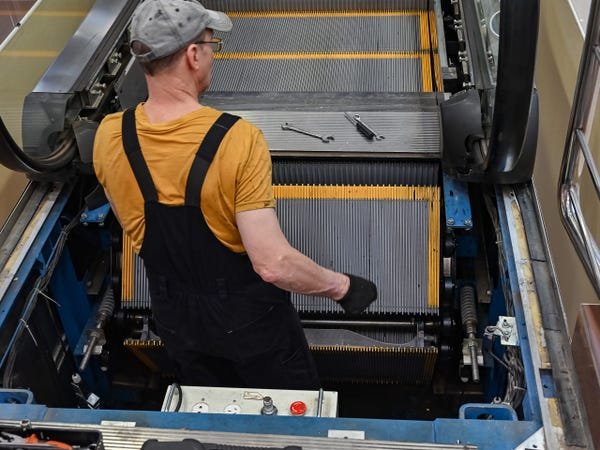
12. Elevator and escalator installers and repairers


Svetlana Verbitskaya/Getty Images

Median annual wage: $106,580

Job growth: 1,200

Typical education required: High school diploma or equivalent

11. Electrical and electronics repairers, powerhouse, substation, and relay


A worker with a hard hat is working in a power substation


Shinyfamily/Getty Images

Median annual wage: $100,940

Job growth: 1,300

Typical education required: Postsecondary nondegree award

10. Avionics technicians


Avionics technician checking an aircraft


Monty Rakusen/Getty Images

Median annual wage: $81,390

Job growth: 1,700

Typical education required: Postsecondary nondegree award

9. First-line supervisors of firefighting and prevention workers


Fire engine


carlofranco/Getty Images

Median annual wage: $92,430

Job growth: 3,400

Typical education required: Postsecondary nondegree award

8. Commercial pilots


Two pilots working


AlexeyPetrov/Getty Images

Median annual wage: $122,670

Job growth: 2,800

Typical education required: Postsecondary nondegree award

7. Aircraft mechanics and service technicians


Two people doing aircraft maintenance


Monty Rakusen/Getty Images

Median annual wage: $78,680

Job growth: 5,600

Typical education required: Postsecondary nondegree award

6. First-line supervisors of police and detectives


Yellow tape that says


kali9/Getty Images

Median annual wage: $105,980

Job growth: 4,600

Typical education required: High school diploma or equivalent

5. Electrical power-line installers and repairers


Electrical power line technician working outside and looking at a tablet


RyanJLane/Getty Images

Median annual wage: $92,560

Job growth: 8,400

Typical education required: High school diploma or equivalent

4. Transportation, storage, and distribution managers


People wearing hard hats are talking in a warehouse


MoMo Productions/Getty Images

Median annual wage: $102,010

Job growth: 13,100

Typical education required: High school diploma or equivalent

3. First-line supervisors of mechanics, installers, and repairers


Manager and technician with a vehicle


Nitat Termmee/Getty Images

Median annual wage: $78,300

Job growth: 19,100

Typical education required: High school diploma or equivalent

2. Police and sheriff’s patrol officers


Police vehicles


Douglas Sacha/Getty Images

Median annual wage: $76,290

Job growth: 22,000

Typical education required: High school diploma or equivalent

1. First-line supervisors of construction trades and extraction workers


Construction workers


Vukasin Stanojlovic/Getty Images

Median annual wage: $78,690

Job growth: 49,000

Typical education required: High school diploma or equivalent


Source link

Amazon-expected-to-cut-thousands-more-corporate-jobs-soon.jpeg

Amazon expected to cut thousands more corporate jobs soon

  • Amazon plans to lay off thousands of corporate employees in coming days.
  • This second major round of Amazon layoffs since October would bring the total to about 30,000 jobs.
  • Amazon is trying to streamline operations and reset its culture.

Amazon is planning to eliminate thousands of corporate employees, with cuts expected to begin as soon as next week, according to people familiar with the matter.

The reductions would mark the company’s second wave of mass layoffs since October, when Amazon cut about 14,000 jobs. Two of the people said the company is expected to eliminate a similar number of roles in the coming round, bringing total job cuts to almost 30,000.

The latest cuts underscore Amazon’s continued efforts to streamline operations and reset its culture.

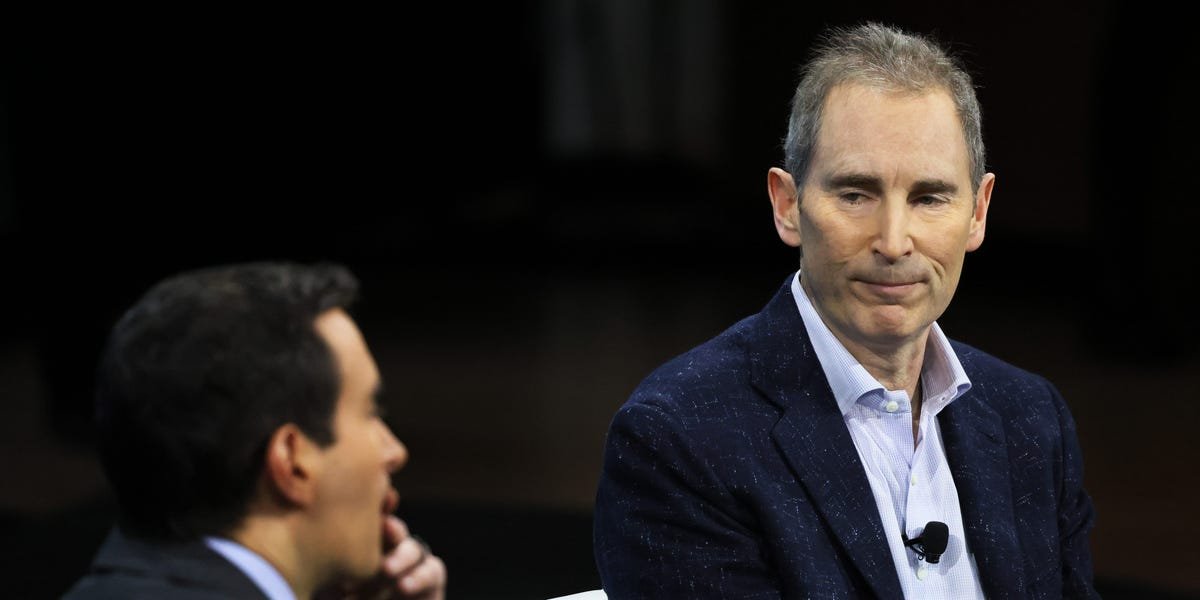
Amazon first attributed the October job cuts to changes brought on by AI. But CEO Andy Jassy later said the layoffs were instead tied to cultural fit, not cost savings or AI.

Amazon employs more than 1.5 million people globally, though its corporate workforce makes up a relatively small share, at about 350,000.

An Amazon spokesperson did not respond to a request for comment.

Have a tip? Contact this reporter via email at ekim@businessinsider.com or Signal, Telegram, or WhatsApp at 650-942-3061. Use a personal email address, a nonwork WiFi network, and a nonwork device; here’s our guide to sharing information securely.


Source link

I-met-my-husband-at-work-and-then-we-quit.jpeg

I met my husband at work, and then we quit our jobs to travel the world together. On that 18-month-long trip, we eloped.

My coworker and I were both single, and I was in the trenches of online dating. Stew and I took lunch at the same time, and over sandwiches eaten from Tupperware, we bonded over our shared love of cycling.

One lunch, he told me he was going to cycle the highest pass in Wales. My eyes widened, “I’d love to do that.” That’s when he told me to join him.

He picked me up that weekend, and we cycled Gospel Pass.

The next lunch break, Stew asked me out for dinner. I said yes. He stayed over and never went home. The rest, as they say, is history, and what a ride it’s been so far.

I joined his 24,000-mile cycling adventure

We were dating for about a month when Stewart said, “I’ve got something to tell you.” He continued: “I’m going to quit my job and cycle around the world. Do you want to come with me?”

“Yes!” I said without hesitation.

Stew had already planned a 24,000-mile turn-by-turn route across 32 countries.

He saved enough money that he could ride around the world for 18 months unemployed. His plan was to carry a tent and stay in cheap accommodations, like hostels and Airbnb rooms.

All I needed to do was save enough money to cover my flights. For a few months, we cut costs, but left ourselves with enough money to enjoy being a young couple; a meal out each month was a non-negotiable.

As we left our jobs, Stewart also organized the bikes: bright yellow steel-frame touring bikes that could manage long-distance cycling, as well as the additional weight of our luggage.

We explored countries together

When we left the UK, we waved goodbye to our families at Stewart’s mom’s house, and we wobbled down the driveway on the heaviest bikes we’d ever ridden.

I will never forget the feeling of freedom. We were unemployed, and everything we needed for the next 18 months was packed into six bright yellow panniers, which fit proudly on our bikes.

I was nervous, excited, and weightless.

There are many prominent moments as you cycle from one country to another. But the first one was leaving Georgia and arriving in Azerbaijan. The gorgeous greenery of Azerbaijan turned into flat desert landscapes.


Zoe Ashbridge and her husband marrying in New Zealand

The author and her husband eloped in New Zealand.

Courtesy of Zoe Ashbridge


Australia was similar. Across Nullarbor Plain, we rode desert flatlands with kangaroos and Wedge-Tailed Eagles. Service stations were over 100 miles apart. Then we reached New South Wales, home to green mountains and Bulli Pass.

At the top, there was a wedding venue overlooking the sea. We talked about weddings and all the things we didn’t want: first dances, speeches, and the pressure of invitations.

Planning an elopement in New Zealand

After Australia, our next stop was New Zealand. We flew to Queenstown and researched what it takes to get married there. You need a marriage license and a celebrant who will officiate the ceremony in front of two witnesses.

Our celebrant was someone we found online, named Sean. He was a lovely Irish gentleman with a steady voice, a calming presence, and an art for perfectly timed humor. He knew exactly when to drop a joke and when to let a moment breathe. He promised us two witnesses (his wife, Vee, and friend, Chris) for the price of two quality bottles of wine.

After one call with Sean, we stepped out into Queenstown, engaged-ish. We booked a date, bought New Zealand-gold wedding rings, and hired wedding attire.

Stew surprised me with a proposal and a placeholder ring, and of course, I said yes.

Our next bike ride was 500 miles from Queenstown to Christchurch, so we could marry. I’d love to tell you that it was straightforward, but on a cycling adventure, unforeseen challenges arise. At Haast Pass, there was a landslide. Delays meant we would miss our own wedding.

The beauty of an elopement? We only had ourselves to please. I called Sean, the hair salon, and the florist to change the date. The landslide was cleared, and we made our way to Christchurch.

The wedding was perfect

We married at The Sign of the Bellbird in the Port Hills. It was beautiful. Rolling hills with the yellowest of flowers looked stunning against the deep green mountains and gorgeous blue skies.

On that quiet hill, with only us to please, and nothing but birdsong and sunshine, we spoke our vows and became husband and wife.

There were no crowds, no pressure, and no expectations. It was just us, which was all we’d known in the year leading up to it as we cycled from the UK to New Zealand. What followed was an eight-month honeymoon cycling home via South America.


Source link

Jobs-report-updates-US-added-fewer-jobs-in-December-than.jpeg

Jobs report updates: US added fewer jobs in December than expected, but unemployment dropped

It’s jobs day in America.

The US added 50,000 jobs in December, and the unemployment rate dropped to 4.4%, according to the Bureau of Labor Statistics’ monthly report on the employment situation.

Economists expected to see 70,000 jobs added in the final month of 2025, and an unemployment rate of 4.5%.

The report wraps up a year of a job market marked by a “Great Freeze” in which companies haven’t been hiring very much, employees haven’t been switching jobs a ton, but large-scale layoffs that would mark a deeper downturn haven’t materialized yet either.

Check back here for updates leading up to and following the biggest job market data release of the month.


Source link