

Erica Sweeney

4 new jobs that AI has created in HR and people management

More human resources teams are using artificial intelligence for a variety of functions. Amazon and Siemens, for example, use AI for HR to analyze résumés and make job recommendations based on an applicant’s skills.

Indeed, 31% of organizations this year report using some type of AI technology, according to a 2025 survey of nearly 10,000 HR professionals by Sapient Insights Group.

Many companies are also creating new HR job titles that require AI skills, such as data literacy, analytics, large-language model prompt engineering, and workflow redesign.

Moreover, in 2026, many organizations are willing to offer higher salaries for AI-related skills, including data science, data analytics, and business intelligence, according to a Robert Half report.

“Historically, technological shifts have reshaped some jobs and the way we work, but they’ve also opened doors to new roles and skills,” said Christina Giglio, technology hiring and consulting expert at Robert Half. “AI seems to be continuing that trend.”

Here are four new HR job titles that are appearing in the AI age, according to experts.

1. AI adoption and employee experience lead

This role coordinates the adoption of AI tools, helping people understand the technology’s value, how to use it, and how it benefits them, ensuring that AI rollouts go smoothly.

“AI doesn’t eliminate people,” says Anthony Donnarumma, CEO of the recruiting agency 24 Seven. Companies need individuals to manage the relationship between human and machine work to ensure the technology produces consistent outcomes and meets an organization’s needs, he says.

Humans are needed to oversee how teams adopt AI in their daily work, says Lana Peters, chief revenue and experience officer at Klaar, a performance management software.

The job often includes training managers, redesigning workflows, and connecting company culture and technology while helping employees adapt to the changes.

“Without this role, AI use is at risk of being done in silos or improperly, which is why we’re seeing this position pop up across the job market,” Peters adds.

2. AI trainer or coach

This role trains AI systems, such as chatbots, AI agents, and other tools, to ensure the technology works effectively to produce the desired HR outcome. This might include organizing data and reviewing it for bias.

“Part technical, part editorial, part quality control,” Ronni Zehavi, CEO and co-founder of HR tech platform HiBob, says the individual in this role curates and labels data for AI to use, reviews outputs, and teaches AI systems how to respond to data to meet company goals.

This person “improves AI quality through hands-on review and feedback,” he explains.

3. People data and AI insights lead

Turning “raw people data,” such as from performance reviews and manager check-ins, into insights that leaders can act on is this role’s focus, Peters says.

This individual helps leaders make data-based decisions on their workforce strategy and better understand “how employees are performing, when they are ready to be elevated to a new role, and when they may be a flight risk,” she adds.

Data literacy, analytical thinking, and the ability to interpret AI outputs are crucial skills for this role, says Lauren Winans, CEO and principal human resources consultant at Next Level Benefits.

“Additionally, employers will value soft skills such as ethical awareness, critical thinking, collaboration, and the capacity to translate AI capabilities into strategic decisions, especially in roles that bridge technology, policy, and operations,” Winans says.

4. Responsible AI and people governance manager

Policies and oversight are needed to ensure that AI use is safe, fair, and transparent; this role sets those “guardrails,” Peters says. This individual oversees how employee data is used and ensures there’s no bias that could negatively impact them, she says.

Also referred to as an AI governance and risk lead, the job establishes policies to “keep AI use safe and compliant” and focuses on privacy protection and accuracy monitoring, helping organizations manage regulatory shifts and legal or reputational risks, Donnarumma says.

Essentially, Zehavi says, the role “guides teams on fairness, transparency, and compliance, helping companies use AI in ways that support people rather than unintentionally excluding them.”



Source link

Madison Hoff's face on a gray background

4 takeaways from the final jobs report of the year

This week brought a vanishingly rare jobs report on Tuesday after the longest government shutdown in history threw a wrench in federal data collection, and it was a mixed bag.

The new data emphasized trends we’ve been seeing this year, including unemployment inching up and a tougher market for many job seekers.

The Bureau of Labor Statistics delayed the report from December 5 to extend data collection and processing after its activities were affected by the government shutdown that lasted from October to about mid-November.

The new data allowed economists, job seekers, reporters, and more to understand how job growth looked in both October and November; the BLS didn’t produce an October jobs report last month. While the report was missing items like the October unemployment rate, it gives us a fresh look at the labor market.

Here are four takeaways from the latest jobs report.

The job market is still frozen

Both Nicole Bachaud, a labor Economist at ZipRecruiter, and Laura Ullrich, the director of economic research in North America at the Indeed Hiring Lab, described the job market as still stagnant.

The US economy added 64,000 jobs in November, surpassing the 50,000 expected. That comes after a big net loss in October, largely because federal workers who took the deferred resignation offered as part of the DOGE job cuts earlier this year finally appeared in the data after the deferment ended.

Data published by the BLS last week showed job openings have been trending upward as of October, although they’re still far below what job seekers were accustomed to a few years ago. Workers’ confidence has also been low, as October’s quit rate was the lowest since 2020.

“Job growth has been very slow over the course of 2025, and it doesn’t seem like we’ve turned around quite yet to translate the pent-up demand for hiring and the recent increase in job openings into actual hires,” Bachaud said, adding that uncertainty over tariffs, inflation, and geopolitical issues has added to companies holding back on hiring plans.

“That’s the big question mark — when is that uncertainty going to finally ease up?” she said.

Healthcare’s job growth masks weakness in many other sectors

The better-than-expected growth in November was largely helped by job growth in healthcare, so Ullrich said this “doesn’t show a whole lot of strength in the macro labor market.”

Healthcare and social assistance sectors together had a net gain of 64,000 over the month. Most industries had a decline or a small rise in employment. Manufacturing, for instance, has continued its ongoing net loss.

Healthcare has been a bright spot throughout the year, and Bachaud said there will still be demand for workers as the population ages. However, it could be challenging for job seekers to pivot into these positions. Ullrich said many jobs in the sector typically require certain training and education.

“Construction is the other industry that we saw really strong growth in, as there is demand for continued skilled trades,” Bachaud said. Construction added 28,000 jobs, with the largest growth from specialty trade contractors.

Employers still have the upper hand

Wage growth has gradually cooled and reached the lowest point so far this year in November. Average hourly earnings rose 3.5% from a year ago.

The generally softer job market has made it harder for workers to negotiate higher wages. Ullrich said physicians have better wage-setting power than roles that aren’t seeing a lot of openings and where talent is waiting on the sidelines for a role.

She said employers can probably offer lower raises to current talent, too, since more people are staying put.

“If you know people aren’t quitting, you might not have to offer them the same bump in pay that you would if the quits rate was higher,” she said. “That being said, there’s still very tight competition for certain roles.”

Unemployment is the highest since 2021

The October 2025 unemployment rate won’t ever be released because that data, typically gathered from a survey of around 60,000 households a month, couldn’t be collected during or after the government shutdown. However, unemployment had been trending upward before that, and November was the same story.

November’s unemployment rate was the highest since September 2021 and slightly higher than expected. Still, the Bureau of Labor Statistics warned of data issues with unemployment and related figures over the next few months due to the missing October household survey, so economists and others will have to see how the rate continues to pan out.

Despite the data challenges, Bachaud said the higher unemployment rate and stickier long-term unemployment, where people have been out of a job for at least 27 weeks and actively searching, indicate that it has become harder to land a job.


Source link

My-husband-and-I-left-our-jobs-to-travel-full-time.jpeg

My husband and I left our jobs to travel full-time in our 30s. Transitioning back into the workforce has been hard.

When one of my favorite graduate school professors died just weeks into her retirement, it hit me: I didn’t want to spend my life working toward a future I might never get to experience.

I started my career in education as a high school counselor. My husband, Sam, was a self-published author who could work from anywhere, so we took full advantage of my school holidays and long summer breaks, jetting off to new places whenever we could. We created a travel blog, ForgetSomeday, to share our stories.

But the trips we took during school breaks left me yearning for more, and I approached my husband about taking a year off from our careers to travel full-time.

It didn’t take much convincing. We didn’t own a home and hadn’t yet started a family, so the timing seemed right.

I submitted a request for a year of leave, but it was denied due to pending budget cuts. We decided to move forward with our plan anyway, not wanting to wait until retirement to make this dream a reality.


Man in a campervan in Scotland.

The couple’s adventures included a road trip through Scotland.

Provided by Toccara Best


Time for an adventure

Over the next year, we slashed our spending and saved more than $30,000 by cutting out anything nonessential.

We sold our car for $5,000 and brought in a bit more by selling smaller items, storing the rest in a 10×10 unit because we thought we’d be gone for just a year.

By June 2015, we had about $40,000 in the bank, walked away from our lease, and flew to Prague on one-way tickets.

We ate our way through Central and Eastern Europe and Southeast Asia, partaking in bucket-list festivities like Oktoberfest in Munich and St. Patrick’s Day in Dublin along the way.


Two women doing crafts in Mai Chau Village, Vietnam.

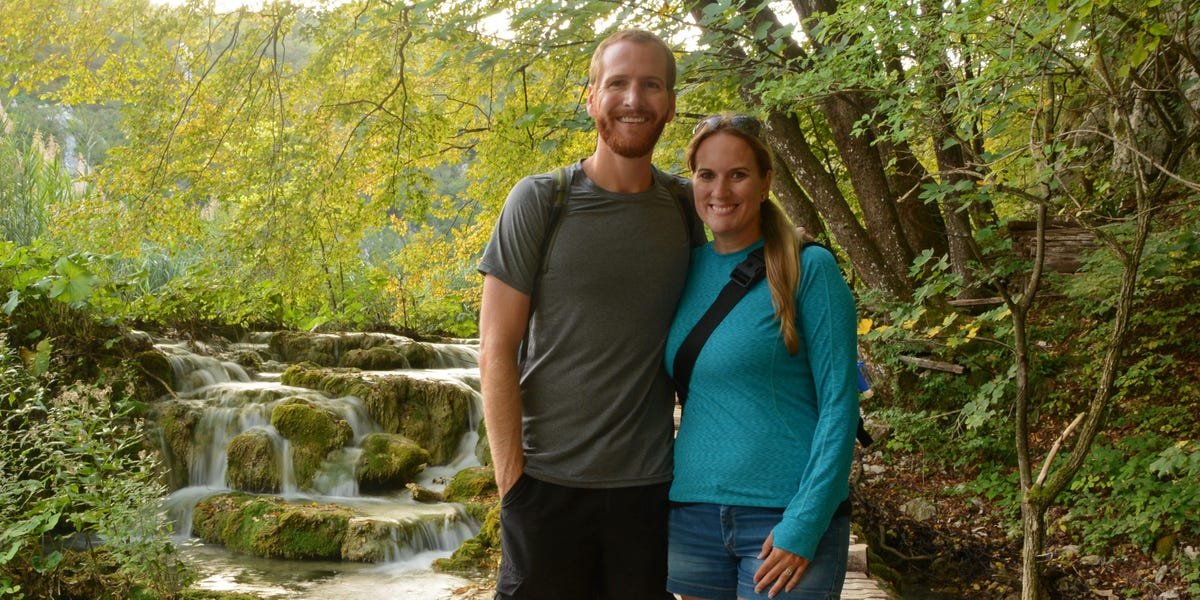
Best visited more than a dozen countries, including Vietnam (pictured).

Provided by Toccara Best


We visited more than a dozen countries — island-hopping in Croatia, Thailand, and Portugal; exploring Cambodia’s temples; soaking in Hungary’s thermal baths; and driving 500 miles through Scotland in a campervan.

From hiking in Austria and Slovakia to swimming with seals in Sweden, the year became a crash course in adventure travel.

As our official gap year came to an end, our bank account was still surprisingly healthy, thanks to housesitting opportunities and blog partnerships that helped stretch our budget. And because I didn’t have a job to go back to, we decided to keep traveling.

Little did we know, our biggest adventure was right around the corner: 6 months later, we found out we were expecting.


Pregnant woman posing in Iceland with snow in the background.

Iceland was Best’s final stop before returning to the US.

Provided by Toccara Best


And then we were three

We returned to the US to have our son, but just a few months after his birth, we began traveling full-time again, this time exploring America.

By his third birthday, my son had already visited 27 states. Eventually, the pandemic put a halt to our full-time travels, and we took that as a sign to settle down.

We returned to California five years after the adventure started.

When we planned our gap year, it was supposed to be just that, a year. But as time went on, the gap on my résumé grew, and my motivation to return to the career I once loved began to fade. My husband was also trying to figure out what he wanted to pursue next.


Small boy walking down a trail at Quinault Rain Forest, Olympic National Park, Washington.

The couple continued to travel around the US after having their son.

Provided by Toccara Best


Reentering the workforce

We didn’t realize that our global adventure would end with such a hurdle — a career pivot after five years away, right in the middle of a global pandemic.

Maybe it was the break we both needed to reevaluate our next steps, but it has taken us both quite a while to get back in the saddle.

Once our son started preschool, I transitioned back into the workforce as an executive personal assistant for a busy entrepreneur, putting my organizational skills to good use.

When the executive moved out of state just over a year later, I quickly found a new role as operations manager at a nonprofit organization, where I’ve worked part-time for nearly four years. I’ve been searching for meaningful full-time employment for the past year and a half, which has been especially challenging in today’s competitive job market.

Was our gap year impulsive? Not exactly. We spent a year saving and planning. Was it risky? Definitely. More so than we imagined. Would we do it all over again? Absolutely.

That said, if we were to do it again, we’d probably just stick to a year.

Do you have a story about taking a gap year that you want to share? Get in touch with the editor: akarplus@businessinsider.com.


Source link