
Jamie-Dimon-shared-a-key-career-lesson-hes-learned-and.jpeg

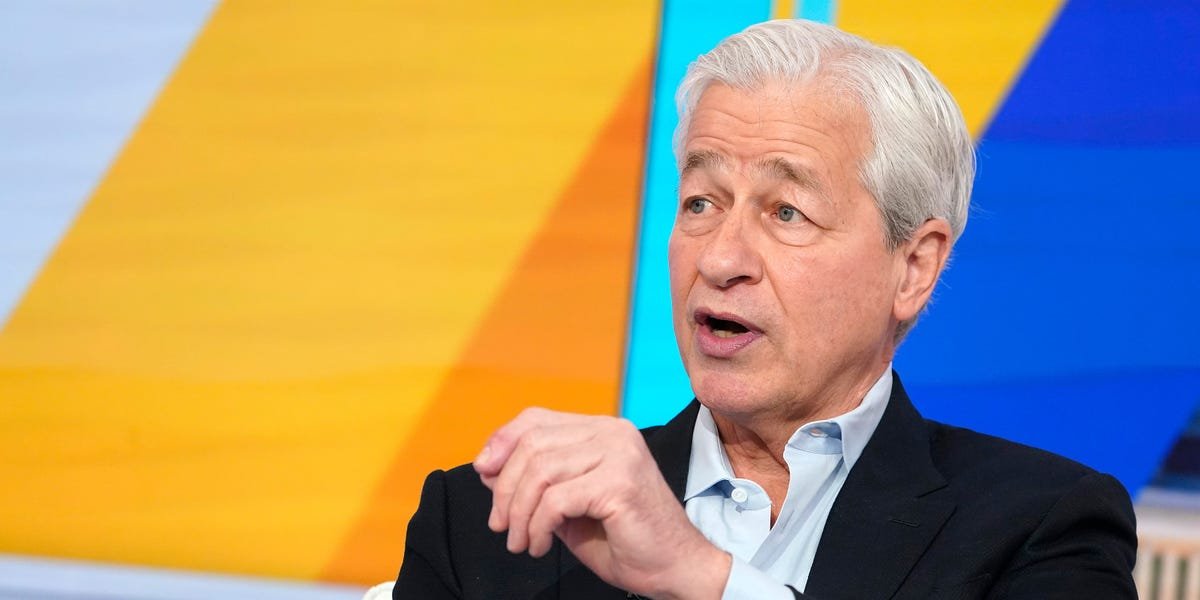
Jamie Dimon shared a key career lesson he’s ‘learned and relearned’ — don’t make big decisions on Fridays

Thinking about making a big decision at the end of a long week? JPMorgan CEO Jamie Dimon says it’s worth waiting.

“Making big decisions on a Friday when you’re tired is a really bad idea,” Dimon said in an interview with NPR’s “Newsmakers” on Tuesday.

The comment came as part of a broader answer about what he wishes he knew earlier in life, after nearly 22 years running the world’s largest bank by market capitalization and after he turned 70 last month.

Alongside tactical advice, Dimon pointed to emotional discipline as a key leadership skill.

“Anger doesn’t help,” he said, describing the kinds of habits that can quietly undermine judgment.

He framed these insights as lessons “learned and relearned” over time.

“I still make some of those mistakes, unfortunately,” Dimon said.

Have a ‘purpose in life’

Dimon said he was raised to “have a purpose in life, treat everyone well, do the best you can, leave the world a better place,” and “that hasn’t changed.”

He also pointed to his latest annual letter to shareholders, released Monday, which highlights the USA’s upcoming 250th anniversary as a moment to “rededicate ourselves to the values that made this great nation of ours — freedom, liberty, and opportunity.”

In the NPR interview, Dimon said the idea of happiness in the phrase “the pursuit of happiness” has often been misunderstood.

“When they said the pursuit of happiness, they didn’t mean happiness like we mean happiness,” he said, seemingly referring to the authors of the US Declaration of Independence, but rather “purpose.”

Dimon said that the idea of purpose can take many forms — from business and politics to everyday life.

“That purpose could be an artist, politician, reporter, you know, business person,” he said. “You could be just a caregiver, a mother.”

He recalled reading an op-ed about a Medal of Honor recipient who, decades later, came to see that the real heroes were those who quietly helped others every day — though he did not specify which piece he was referring to.

“They never gave up, and they did it through health and sickness and things like that,” Dimon said.

“So that’s the purpose. You made the world a better place in the way you can contribute,” he added.





Source link

Jake Epstein

NATO is stepping up its Arctic patrols. A key goal is getting eyes on Russian subs before they can disappear into deep water.

NATO is expanding its footprint across the Arctic and North Atlantic, increasing patrols and joint operations as Russia’s submarine forces grow more active, two Western officials told Business Insider.

Across air, land, and sea, NATO’s presence and overall activity in the region have more than doubled over the last two to three years, said Vice Adm. Rune Andersen, chief of the Norwegian Joint Headquarters.

Andersen said that the surge is “partially a response to increased Russian out-of-area deployments with the submarines” and “a need to keep track of that.”

Russia maintains one of the world’s largest submarine fleets, with an estimated 64 active boats. The Northern Fleet, based in the Murmansk region on the Barents Sea, operates dozens.

To get from Murmansk to the Atlantic Ocean or the Mediterranean and Baltic seas, Russian submarines often sail west through the Arctic before turning south and going through the North Sea or the waters in between Greenland, Iceland, and the UK — a naval chokepoint known as the GIUK gap.

In recent years, Western military officers have increasingly called attention to the growing Russian naval presence — specifically its submarines — in the Arctic and the North Atlantic, and have stressed the need to monitor this activity to avoid surprises.


Royal Navy ships track a Russian submarine through the English Channel in December 2025.

The Royal Navy tracks a Russian submarine through the English Channel.

Royal Navy


If the Russian submarines make it out of the relatively “shallow water and out into the deep Atlantic sea, it becomes more difficult once they’re out in the really big ocean to track them,” said Col. Martin O’Donnell, the spokesperson for Supreme Headquarters Allied Powers Europe, or SHAPE, which commands all NATO operations.

“Not that they can’t be tracked, but the difficulty — if you don’t pick them up, if you’re not sensing, if you’re not monitoring things — that increases exponentially and poses a threat not just to Europe, but also to the United States in that regard,” O’Donnell said.

NATO militaries have a range of tools for anti-submarine operations, including frigates, other submarines, helicopters, and other patrol aircraft, and some allies have recently invested in acquiring additional capabilities.

Last month, European nations participated in NATO’s Arctic Dolphin 26 exercise off the coast of Norway, with defense of the North Atlantic and GIUK gap top of mind.

There are, however, other reasons behind NATO’s expanded footprint in the North Atlantic beyond just the Russian naval concerns, O’Donnell and Andersen acknowledged.

The back-to-back accession of Finland and Sweden into NATO, which was triggered by Russia’s full-scale invasion of Ukraine, increased the number of Arctic states within the alliance from five to seven. Helsinki and Stockholm brought more troops, ships, and aircraft into the alliance’s Arctic defense.


A US Air Force KC-135 Stratotanker aircraft provides aerial refueling to a US Navy P-8 Poseidon aircraft assigned to US Air Naval Station Keflavik Base, Iceland, over the North Sea region, Royal Air Force Mildenhall, England, June 21, 2023.

NATO militaries, including the US, use P-8 Poseidon aircraft to monitor Russian naval activity.

US Air Force photo by Senior Airman Viviam Chiu


O’Donnell also said that alliance activity in the North Atlantic has increased since December, when JFC Norfolk — NATO’s newest joint force command — added Finland, Sweden, and Denmark to its area of responsibility. It now leads the alliance’s new Arctic Sentry deterrence operation.

More generally, there is a greater understanding among NATO states that the North Atlantic and Arctic regions are becoming more strategically valuable, making it critical for allies to maintain a strong deterrent posture there, Andersen said.

The region is full of natural resources, and melting sea ice is creating new trade routes. To prevent Russia and China from gaining military and economic influence in the High North to the detriment of alliance states, NATO’s leadership wants allies to continue prioritizing Arctic security.

One of the key benefits of Arctic Sentry, NATO Secretary General Mark Rutte said last month, is that “we now have a one Arctic approach, where allies synchronise activities, enhance and expand regular presence throughout the region.”

“It is bringing together what you already have, and adding on top, based on a gap assessment, what we need to do more,” Rutte said.


Source link

The-US-is-temporarily-lifting-sanctions-on-Russian-oil-a.jpeg

The US is temporarily lifting sanctions on Russian oil, a key pressure point for the Kremlin’s war chest

The US Treasury Department is lifting Russian oil sanctions until April 11, as the Trump administration seeks to relieve global crude supplies choked by war in the Middle East.

A notice issued by the department’s Office of Foreign Assets Control on Thursday laid out a roughly four-week window authorizing the “sale, delivery, or offloading of crude oil or petroleum products” from Russia.

The move eases a yearslong effort by the US and its allies to squeeze Russia’s finances in response to its full-scale invasion of Ukraine in 2022.

Moscow, however, has still benefited from its energy trade — taxing the industry typically accounted for nearly half of its federal budget revenues before 2022 — by quietly transporting it via what the West has called a “shadow fleet” of third-party tankers.

An analysis from Urgewald, a German NGO, showed Russia’s fossil fuel export revenues averaged 510 million euros, or $587 million per day in the week following the strikes — 14% higher than the daily average in February daily average.

Treasury Secretary Scott Bessent said on Thursday that Russia stood to benefit from the temporary lifting of sanctions, but described the gains as limited in scale.

“This narrowly tailored, short-term measure applies only to oil already in transit and will not provide significant financial benefit to the Russian government, which derives the majority of its energy revenue from taxes assessed at the point of extraction,” he wrote in a post on X.

Brent crude oil prices were 0.6% higher at $101.07 per barrel at 11:16 p.m. on Thursday while US West Texas Intermediate was 0.4% higher at $96.15 per barrel.

The US and Israel launched a massive airstrike campaign against Iran on February 28, attacking over 5,500 targets with land, sea, and air assets. Iran has, in turn, vowed to block the Strait of Hormuz, the critical waterway serving the Persian Gulf, which accounts for about a fifth of the world’s crude oil.

Traffic in the strait has plummeted in the past week amid over a dozen reports of commercial vessels being attacked in its vicinity.

Despite sweeping Western sanctions imposed after the invasion of Ukraine, Russia has reoriented much of its energy exports away from Europe and toward alternative partners in Asia, notably China and India, where discounted Russian crude has become a major source of demand.

Last week, the US granted a temporary 30-day waiver to allow Indian refiners to purchase Russian oil.

Ukraine and its allies have long raised concerns about Russia’s ability to muster resources from its global energy trade to feed its war manufacturing industry. The Kremlin is now spending record amounts of its federal budget on defense, reaching 6.3% of its GDP in 2025.

Daily revenues of $610 million would be the equivalent of 12,000 to 30,000 of Russia’s Shahed-136 one-way attack drones, based on estimates that the loitering munitions cost $20,000 to $50,000 each.

President Donald Trump has repeatedly warned Iran that continuing to impede traffic along the strait would incur further US military action.

But Tehran has maintained a defiant posture, retaliating with drone and missile attacks on its neighbors and US forces in the region. Reports say it’s also begun to sparsely lay mines along the strait, which would further delay an opening of the strait by forcing the US and its allies to meticulously sweep for and clear explosives.

On Thursday, the new Iranian supreme leader, Mojtaba Khamenei, issued a statement through a newscaster that his government would continue blocking the strait.


Source link

Millions-of-student-loan-borrowers-are-kicked-off-of-Bidens-key.jpeg

Millions of student-loan borrowers are kicked off of Biden’s key affordable repayment plan in a surprise court reversal

The roller coaster ride for borrowers enrolled in a key affordable repayment plan continues.

On Monday, the 8th Circuit directed a district court to approve President Donald Trump’s proposed settlement with the state of Missouri to eliminate the SAVE student-loan repayment plan.

The plan has been embroiled in a legal back-and-forth for years. Most recently, a district court declined to rule on the proposed settlement, which some advocates and lawmakers saw as a win for borrowers and urged the Department of Education to carry out relief under SAVE.

However, the 8th Circuit’s ruling means that, once approved, the department will move forward with the settlement and require enrolled borrowers to transition to a new plan.

“In the coming weeks, the Department will issue clear guidance on next steps for borrowers enrolled in the illegal SAVE Plan, including details regarding how borrowers can move into a legal repayment plan,” Nicholas Kent, the undersecretary of education, told Business Insider in a statement. “The Trump Administration will continue to realign the federal student loan portfolio to better serve students and taxpayers.”

The settlement would give borrowers “a limited time” to select a new repayment plan and begin repaying the loans. Once the settlement is approved, the department will not enroll any new borrowers in SAVE, it will deny pending applications, and move all enrolled borrowers to existing plans.

Advocates criticized the 8th Circuit’s ruling, saying it will push borrowers into unaffordable monthly payments.

“The millions of borrowers who had a right to lower monthly student loan payments and relief through SAVE will now face thousands of dollars in higher bills every year thanks to the right-wing campaign against borrowers,” Winston Berkman-Breen, legal director at advocacy group Protect Borrowers, said in a statement.

SAVE was created by former President Joe Biden in 2023 and intended to give borrowers cheaper monthly payments and a shorter timeline to debt relief. The plan has been blocked since the summer of 2024 due to litigation from GOP-led states, including Missouri, which said that the relief through SAVE was unconstitutional.

This ruling pushes SAVE borrowers off the plan earlier than scheduled. Trump’s “big beautiful” spending legislation called for the plan to be phased out by 2028, giving enrolled borrowers more time to prepare for higher payments on a new plan.

Have a story to share? Contact this reporter at asheffey@businessinsider.com.


Source link

Ayelet Sheffey

Trump’s attempt to quickly axe a key affordable student-loan repayment plan gets shut down in court

Student-loan borrowers might not lose a key affordable repayment plan just yet.

On Friday, a court dismissed a proposed settlement announced by the Department of Education and the state of Missouri in December that would have eliminated the SAVE income-driven repayment plan ahead of schedule.

President Donald Trump’s “big beautiful” spending legislation called for phasing out SAVE by 2028. This latest update means that the department has to stick with that timeline, and it cannot eliminate the plan before 2028 without court approval or a lengthy negotiated rulemaking process.

John Ross, Missouri’s district court judge, wrote in his ruling that the settlement was not presented to the court, and that federal law allows courts to “exercise jurisdiction only over cases or controversies,” which he said does not exist in this case because both the Department of Education and Missouri have agreed on the outcome they’re seeking without debate.

“It appears that there is no longer a live case or controversy sufficient to authorize the Court to enter a judgment on the merits,” Ross wrote.

The SAVE plan was created by former President Joe Biden in 2023, and it intended to give borrowers cheaper monthly payments with a shorter timeline to loan forgiveness. The plan has been halted since 2024 due to lawsuits seeking to block it, and while Trump’s “big beautiful” spending legislation included a provision to eliminate SAVE over the next few years, the settlement would have done so much sooner than anticipated.

Ross also wrote in a footnote that it’s “not lost on the Court that millions of borrowers who enrolled in the SAVE plan have patiently awaited clarity while this litigation has proceeded. However, that clarity must come from the Department of Education, and not from this Court, which is no longer empowered to weigh the merits of a case that is now moot.”

Winston Berkman-Breen, legal director at advocacy group Protect Borrowers, said in a statement that the court’s ruling means the department can now move forward with relief under the SAVE plan.

“As of today, not only is there no legal barrier to delivering those rights through the SAVE plan, but the Secretary has a legal obligation to do so,” Berkman-Breen said. “The U.S. Department of Education must immediately identify borrowers who are eligible to have their loans cancelled under SAVE and instruct their student loan servicers to cancel those loans.”

A Department of Education spokesperson told Business Insider that the department is evaluating the court’s decision.

The department said in December that, should the settlement be approved, it would not enroll any new borrowers in the SAVE plan, it would deny pending applications, and move the 7 million enrolled borrowers to other repayment plans. Those borrowers would have a limited time to prepare to make their payments.

Have a story to share? Contact this reporter at asheffey@businessinsider.com.


Source link

David-Ellison-has-a-message-for-Paramount-staffers-tech-is.jpeg

David Ellison has a message for Paramount staffers: tech is a key to winning

Paramount Skydance CEO David Ellison gave employees a shoutout after the media company roughly met Wall Street’s estimates in the fourth quarter.

“The progress we’ve made over the past 6+ months — from advancing our strategy to strengthening our portfolio and reorganizing our businesses to operate more efficiently and effectively — is a direct reflection of your hard work and commitment,” Ellison wrote in an email to staffers, which was viewed by Business Insider.

Ellison, who wants to turn his 114-year-old Hollywood studio into a tech-forward company, said in his memo that Paramount is focused on supercharging its tech and data capabilities.

“We recognize that in today’s highly competitive marketplace, sustainable growth depends not only on what people watch, but on the quality of the overall user experience,” Ellison wrote. “That’s why we are prioritizing investments in advanced technology and data capabilities to strengthen and differentiate our DTC offering. We are making meaningful investments across the company in innovation and technology, and we look forward to sharing more details in the coming months.”

That message comes weeks after Ellison made data a bigger part of Paramount by expanding the role of the company’s streaming data and insights team.

Paramount is planning to add short-form video to Paramount+ and is exploring ways to bring interactive features and user-generated content to its streamers, Business Insider previously reported.

In the memo, Ellison also emphasized storytelling, saying that he wants Paramount to be “the home for the industry’s leading creative talent.” While Ellison lured former Netflix original content executive Cindy Holland to run its streaming business, Paramount is losing star TV creator Taylor Sheridan to rival NBCUniversal when his contract expires.

Paramount’s biggest initiative is its quest to buy Warner Bros. Discovery, which seems increasingly open to Ellison’s advances, even though it has a signed deal with Netflix.

Paramount’s results were roughly in line with analyst expectations in its latest quarter, the first full quarter since Ellison took the helm in early August. As expected, Paramount’s full-year revenue shrank for a second straight year to $28.89 billion, just under the estimate of $28.95 billion.

Paramount+ now has 78.9 million paid subscribers, up from 77.9 million last quarter and 4% higher than a year ago. Paramount’s product chief told employees that its flagship streamer added about 1 million customers on the first day it carried UFC rights in the US, Business Insider previously reported.

Read Ellison’s memo to Paramount employees here:

Team,
Today we held our 4th quarter and fiscal year-end earnings call, where we reviewed our performance and reinforced our commitment to executing against our strategy and roadmap. Anchored by our North Star priorities, we continue to drive measurable progress across all areas of the business and remain confident that we are on the right path to deliver sustained, long-term value for our shareholders.
First and foremost, I want to take this opportunity to thank all of you. The progress we’ve made over the past 6+ months — from advancing our strategy to strengthening our portfolio and reorganizing our businesses to operate more efficiently and effectively — is a direct reflection of your hard work and commitment.
This shared commitment powers our primary focus here at Paramount: delivering exceptional storytelling. We want to be the home for the industry’s leading creative talent, ensuring they have the resources, platform and reach to bring their best stories to the broadest possible audience across film, television and streaming. Every decision we make — from capital allocation to operational priorities — is in service of this objective. And our increased investment in content creation reflects this commitment, with 11 films and 11 series greenlit since August and more to come.
We recognize that in today’s highly competitive marketplace, sustainable growth depends not only on what people watch, but on the quality of the overall user experience. That’s why we are prioritizing investments in advanced technology and data capabilities to strengthen and differentiate our DTC offering. We are making meaningful investments across the company in innovation and technology, and we look forward to sharing more details in the coming months.
One of our greatest strengths as a company is our ability to mobilize the entire ecosystem behind key priorities and events through our “Paramount One” initiative. We saw this clearly demonstrated with the launch of the UFC on Paramount+ in January. Every part of the organization — from CBS Sports to Pluto, marketing to ad sales — contributed to the promotion of this landmark partnership. This all-hands on deck mentality is a true force multiplier for the Company — and I know you’ve put the same firepower behind Survivor 50, premiering tonight on CBS!
I encourage you to review our shareholder letter for more details on our quarter and full fiscal year 2025 performance. A replay of the earnings call will be available shortly on our Investor Relations site.
I couldn’t be prouder of this team. Keep up the great work.
Let’s go!
Best,
David


Source link