How-Walmart-and-Google-became-key-to-the-search-for.jpeg

How Walmart and Google became key to the search for Nancy Guthrie

In the search for Nancy Guthrie, authorities have relied not only on traditional investigative work but also on data trails tied to two of the world’s largest companies.

Google and Walmart have both emerged as significant players in the high-profile investigation, assisting local Arizona law enforcement and the FBI as they work to locate the 84-year-old mother of “Today” show host Savannah Guthrie.

Authorities believe that Nancy Guthrie was abducted from her ranch-style home in the Catalina Foothills, just outside Tucson, AZ, nearly three weeks ago.

A major break in the case came more than a week into the elderly woman’s mysterious disappearance, thanks, in part, to the help of Google.

Initially, authorities said they were unable to retrieve any footage from Nancy Guthrie’s Google-owned Nest doorbell camera because she did not have a subscription to store her video feed.

That changed when investigators, working with “private sector partners,” managed to cover some doorbell footage from “residual data located in backend systems,” FBI Director Kash Patel said in a previous statement on X.


A

Police believe Nancy Guthrie was taken from her home on February 1.

Rebecca Noble/REUTERS


The footage, released widely to the public by the FBI on February 10, revealed a masked and armed man outside Nancy Guthrie’s home appearing to tamper with the doorbell camera on February 1, the day she vanished.

It took Google engineers several days to recover the footage, CNN has reported, citing a person familiar with the investigation. Google did not respond to Business Insider’s request for comment.

The tech giant is attempting to obtain additional video from Nancy Guthrie’s other home cameras, Pima County Sheriff Chris Nanos told NewsNation in a report published on Wednesday.

“We’ve asked Google, ‘Hey guys, can you do this?’ and they said the very same thing, ‘Sheriff, we don’t think we can get anything, but we’ll try,” Nanos said, adding that investigators remain “hopeful.

Meanwhile, authorities believe the backpack the suspect wore in the doorbell camera footage was a 25-liter “Ozark Trail Hiker” backpack sold exclusively at Walmart.

A spokeswoman for the Pima County Sheriff’s Department said this week that investigators are working with Walmart management to “identify and isolate the individual who purchased the backpack.”

In an interview with CBS News, Nanos described the backpack as “one of the most promising leads” in the case.

The sheriff said investigators have been scouring surveillance footage from local Walmart stores and that the megaretailer has turned over records of all Ozark Trail Hiker backpack purchases from the last several months, the news outlet reported.

A Walmart spokesman declined to comment on the matter.


Video image of a person of interest in Nancy Guthrie disappearance.

The FBI released this image of a suspect in the disappearance of Nancy Guthrie.

FBI


So far, the only item that has been “positively identified” on the suspect in the doorbell camera footage is the Ozark Trail Hiker packpack, a Pima County Sheriff’s Department spokeswoman said.

“Investigators are working to determine where the other items may have been purchased,” the spokeswoman said.

Nancy Guthrie’s disappearance has gripped the nation. Her famous daughter, Savannah Guthrie, has issued tearful video messages, pleading for her mother’s safe return.

Authorities have not publicly identified any suspects or persons of interest in the case.

DNA found at Nancy Guthrie’s property is being analyzed by investigators, the sheriff’s department said this week.

Earlier this week, Nanos, the sheriff, said the Guthrie family, including all siblings and spouses, has been cleared as possible suspects in the case.

“The family has been nothing but cooperative and gracious and are victims in this case,” Nanos said.



Source link

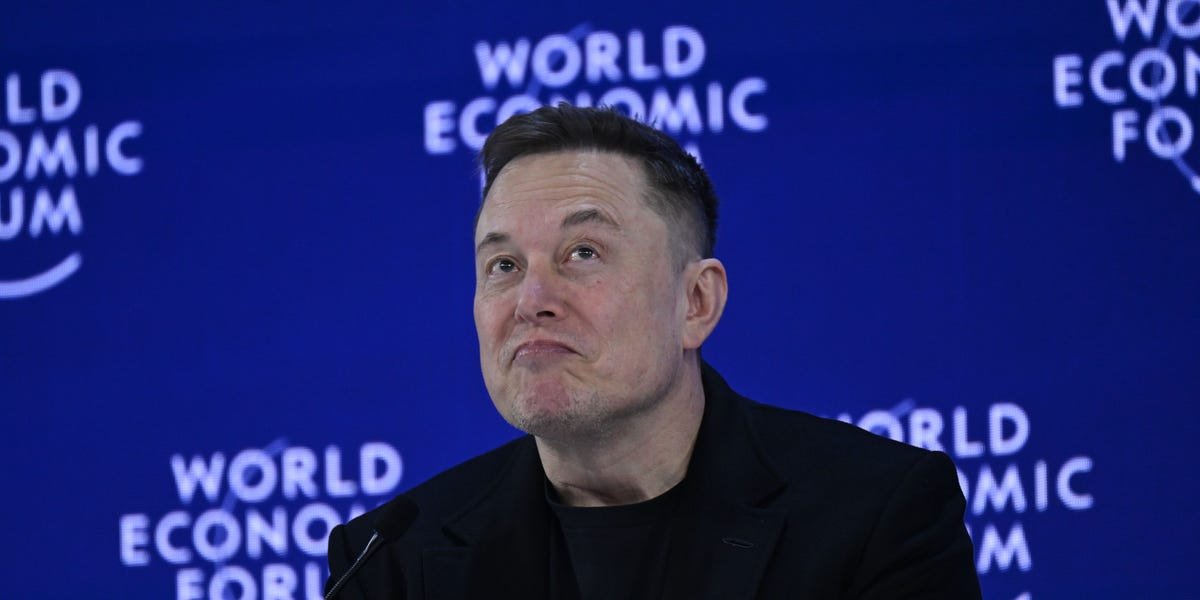
Here-are-the-key-xAI-figures-who-have-departed-in.jpeg

Here are the key xAI figures who have departed in the recent exodus

  • Elon Musk’s AI startup is facing a flurry of top employee departures.
  • The departures included xAI cofounders Jimmy Ba and Tony Wu, who both thanked Musk for the opportunity.
  • More than half of xAI’s cofounders have left the startup since Musk founded it in 2023.

xAI is facing an exodus of top employees.

Two cofounders and at least eight other employees have announced their departures from Elon Musk’s AI startup in the past few days, with the billionaire telling xAI’s workforce in a Tuesday all-hands that the company was restructuring as it continues to grow.

In a post on X, Musk wrote that xAI had been reorganized “to improve speed of execution.”

“This unfortunately required parting ways with some people,” he wrote, adding that xAI was still “hiring aggressively.”

It comes after Musk announced that xAI would merge with his rocket company, SpaceX, in a deal the billionaire said would help the joint entity build a network of AI data centers in Earth’s orbit. I

In the Tuesday all-hands, which was posted on X, Musk said the combined company would aim to build a “self-sustaining” city and a catapult, or mass driver, on the moon to launch AI data center satellites into space.

SpaceX is reportedly gearing up for a massive public offering later this year that could value the company at as much as $1.5 trillion. That could be a major boost for xAI, which reportedly burned through billions of dollars last year.

The departures are the latest turmoil to hit the startup since Musk founded xAI in 2023 with the aim of taking on Google and OpenAI.

Since then, around half of the company’s cofounders have left, and xAI has faced global backlash over sexual images of real people generated on X by Grok, the startup’s AI chatbot.

Here’s everyone who has left xAI in the company’s most recent exodus. Business Insider has contacted each of the following employees for comment.

Tony Wu

xAI cofounder Tony Wu announced his resignation from the company on February 9. In a post on X, the former Google researcher said it was time for his “next chapter” and thanked Musk for “the ride of a lifetime.”

Business Insider’s Grace Kay previously reported that Wu began reporting directly to Musk last year and led xAI’s reasoning efforts.

Jimmy Ba

Jimmy Ba became the second xAI cofounder to announce his departure from the company in less than 48 hours.

The executive, who previously oversaw the startup’s AI tutoring efforts, also thanked Musk for the opportunity and said he was proud of what xAI had accomplished in a post on X.

Ba’s departure means that six out of the 11 cofounders who launched xAI with Musk in 2023 have now left the company.

Hang Gao

Hang Gao, a member of technical staff, also announced in an X post on February 10 that he had left xAI.

The Berkeley alumnus, who worked on xAI’s Grok Imagine AI video generator, described his time at the company as “unique and memorable.”

Vahid Kazemi

Vahid Kazemi, a member of xAI’s technical staff, said on X on February 11 that he had left the company a few weeks prior. “That was short! IMO, all AI labs are building the exact same thing, and it’s boring. I think there’s room for more creativity,” he wrote, adding that he was starting “something new.”

Kazemi joined xAI last year and, before that, worked at OpenAI. He also previously worked at Google and Apple.

Ayush Jaiswal

Ayush Jaiswal worked on Grok at xAI and announced on February 6 that it was his last week at the company. “Will be taking a few months to spend time with family & tinker with AI,” he wrote in a post on X. Jaiswal joined xAI in September 2025, according to his LinkedIn profile. Before that, he was head of growth at Scale AI.

Shayan Salehian

Shayan Salehian said on February 7 that he was leaving after a seven-year stint across Twitter and X to build something new.

He worked on the X timeline as well as various Grok models, he said in a post on X. He added that he is leaving to work on something “focused on accelerating science.”

“Working closely with Elon across X and xAI, I saw what happens when you refuse to accept impossible as an answer,” he wrote on X.

Simon Zhai

Simon Zhai, a member of the xAI technical staff, joined the company in October 2025 and announced his departure on February 9.

“Today is my last day at xAI, feeling very fortunate about the opportunity. It has been an amazing journey,” he wrote in a brief departure post on X. Before xAI, Zhai was a research scientist at Google DeepMind.

Andrew Ma

Member of technical staff Andrew Ma wrote in an X post on February 11 that he had left xAI this week.

Ma worked on X’s recommendation system and was “solely responsible” for writing a new version of the platform’s user search algorithm, according to his LinkedIn.

The former Twitter engineer praised xAI’s “wartime mentality” and thanked Musk for “creating this org that the world needs.”

Radhakrishnan Venkataramani

Radhakrishnan Venkataramani wrote in an X post on February 12 that he had left xAI this week.

The former Google and Facebook engineer joined xAI last July, per his LinkedIn, and worked on reasoning and reinforcement learning systems for Grok, as well as the company’s coding model.

In his farewell post, Venkataramani said he was “grateful” to have been part of xAI, calling the company “the most hardcore team ever.”

Rahul Ravishankar

Rahul Ravishankar, a member of technical staff at xAI, said February 13 was his last day at the company.

The Berkeley graduate, who joined Musk’s AI startup last year, wrote on X that leaving xAI was “one of the hardest decisions” he had ever made.


Source link

Matthew Loh Headshot

A US Marine veteran who trained with Ukrainians 20 years ago says he already could see the key to their success today

This as-told-to essay is based on a conversation with Troy Smothers, a US Marine veteran sergeant who now runs American Made Freedom, a nonprofit that assists Ukrainian troops with fiber-optic drones. Business Insider verified his military records and deployment to Ukraine with the Department of Defense.

The following has been edited for clarity and brevity.

I was a standard infantry corporal in the Marines when I was sent to Odesa, Ukraine, in 2005.

There were perhaps 100 of us, and our clear role was to teach infantry tactics, such as leap and bound alternating movements, sectors of fire, and calling for artillery fire.

This was NATO doctrine. Because 20 years ago, the Ukrainians were indoctrinated by Soviet tactics that just throw people at their enemy like human meat waves.

The roles are somewhat reversed now. Now the West is trying to learn how Ukrainians are fighting, and how they’ve turned what little they had into formidable weapons.

Even two decades ago, I noticed the same mindset among them that’s been the key to Ukraine’s strength today.

I was only in Ukraine for about three weeks in 2005, but my time training with the soldiers there left a similar impression on me.

We knew that Ukraine’s military budget was, let’s just say, underfunded. Everything they had was Soviet-era equipment comparable to the stuff that the US had decommissioned 20 years earlier.

We asked ourselves what we were doing sitting in their old Russian-made helicopters.

Helicopters commonly leak hydraulic fluid. However, when we boarded the helicopters in Ukraine, there were puddles of fluid in the cracks on the floor of the aircraft.

Definitely, nobody smoked near those things.

Most of the Ukrainians’ equipment was old, but it was a testimony to how they worked with what they had.

‘We’ll make it work’

Since the full-scale war started in 2022, I’ve been traveling to Ukraine for months at a time, showing new fiber optic spools to drone manufacturers so they can build and improve unjammable drones. We’re testing out designs that are used on the battlefield today.

You see that same “this is all that we have, so we’ll make it work” determination in Ukraine now. The Ukrainians are getting some great kit from Europe and the US, but it clearly still isn’t enough to win.

Out of necessity, they took toy hobby drones and turned them into cutting-edge military equipment.

We don’t fight that way in the US. If something breaks, we typically order a replacement part or return it.

In Ukraine, they open up the part and repair it. Salaries there are much lower, so their people are more used to repairing electronics or appliances on their own. If a mobile phone breaks, they’ll open it up and start soldering.

Because of this, they had a greater army of people who were electronically knowledgeable, enabling them to bring in an immediate solution in the war.

That isn’t culturally ingrained in the American military or our people. Of course, we would adapt in the same situation, but could we have done it as quickly as the Ukrainians did, transforming toys and parts bought from China’s Alibaba into something that the entire world is now watching today?

Here’s an example of their DIY ingenuity. The Ukrainians have a contraption nicknamed a “mustache” on their first-person-view drones, which is essentially two rigid copper wires protruding in front.

When the drone flies into its target, these wires touch and send a signal to the blasting cap — like turning on a light switch — in the attached explosive to trigger the detonation. The mustache’s safety device is a simple, 3D-printed pin that gets pulled out when you launch the drone.

I’ve bought and used dozens of these while developing fiber-optic drones, and one mustache costs just $12 to $15. In the US, to get a similar piece of equipment, you’d spend $400 to $500, even at scale.

Most of these Ukrainians were just regular people living their lives until they were forced by the invasion to start killing Russians. But if anything, they’ve had an incredible advantage in finding solutions, sometimes because their uncle or friend might have run a repair or electronics business.

We were down there 20 years ago to bring the Ukrainians up to NATO standards. Today, I can see how much they can teach us about innovation. It’s humbling.


Source link

Image of Lakshmi Varanasi

This is the key breakthrough AI still requires to reach superintelligence, according to those building it

In humans, working memory — our ability to hold and use information in everyday life — is closely linked to general intelligence.

That means the ability for AI to remember things could be the key to realizing a superintelligent AI, a still theoretical version of AI that reasons as well or better than humans.

OpenAI CEO Sam Altman thinks it’s hard to predict just how intelligent AI can really be because the possibilities of memory retention are limitless.

“Even if you have the world’s best personal assistant, they don’t, they can’t remember every word you’ve ever said in your life, they can’t have read every email, they can’t have read every document you’ve ever written, they can’t be looking at all your work every day and remembering every little detail, they can’t be a participant in your life to that degree. No human has like infinite, perfect memory,” Altman said recently on the “Big Technology” podcast.

AI, however, will definitely have the capacity for that, he said.

“Right now, memory is still very crude, very early,” he said. Once AI is able to remember every granular detail of a user’s life, including even the small preferences they didn’t explicitly indicate, it will be “super powerful,” he said.

Altman added that it’s one of the future features he’s most excited about — and he’s not the only one.

Andrew Pignanelli, the cofounder of The General Intelligence Company of New York, a company that builds AI agents for businesses, said that memory will become the biggest focus for AI companies in the coming year.

“It will become the most important topic discussed and recognized as the final step before AGI,” Pignanelli wrote in a blog post. “Every model provider will add and improve on memory for their apps after seeing OpenAI’s success with ChatGPT memory (like Claude just did).”

Pignanelli, however, said that the industry is still a long way from perfecting long-term memory.

“Larger context windows continue to improve things, as they allow more data to be passed into the context window, which allows the agent to better read parts of a large memory index,” he wrote, in reference to the amount of information a large language model can process in a single prompt. “Even then, though, the vast level of detail that we need to reach to consider something AGI requires memory architecture improvements.”

Even shorter-term episodic memory hasn’t been fully solved yet, he said.

Solving that memory problem is the ticket to turning AI from something that feels artificial to something that seems human, he said.

“Our systems today get the interaction part right. In terms of a Turing test for interaction, we’re basically all the way there. But that’s only half of what’s needed to make a digital self,” he wrote.

“The first AGI will be a very intelligent processor combined with a very good memory system,” he said.


Source link

Lucia Moses

MrBeast’s release strategy for Season 2 of ‘Beast Games’ highlights a key concern creators have with TV

  • MrBeast is making the first episode of “Beast Games” Season 2 copyright-free on Prime Video.
  • That will enable people to share reaction clips without fear of repercussions.
  • Season 2 features 200 contestants competing for over $10 million in prizes.

MrBeast is blurring the lines between YouTube and TV in a new way with the release of season two of his reality TV hit, “Beast Games,” on Amazon’s Prime Video.

The superstar YouTuber, whose real name is Jimmy Donaldson, announced that the first episode will be copyright-free. That’ll enable people to share reaction clips to their heart’s content without fear of repercussions on platforms like Google’s YouTube and Amazon’s Twitch. The show kicks off on Wednesday.

It’s only for one episode, but it gives MrBeast a way to have his TV cake and eat it, too — and for Amazon to juice exposure for the show.

The Amazon deal exposed MrBeast to a new audience and enabled him to create a big-budget spectacle that would have been difficult to make economically viable if it ran on YouTube. However, a potential risk was that MrBeast’s fans might not follow him to Prime Video, which is behind a paywall requiring a Prime membership.

Last year, MrBeast uploaded part of the first season to YouTube to ensure his fans on that platform were aware of it. MrBeast is YouTube’s top creator, with over 450 million subscribers, and regularly receives more than 100 million views and numerous comments on his YouTube videos.

Traditional media companies, such as Netflix and Fox, have been trying to stay relevant with younger viewers by striking deals with YouTube creators. The loss of fan interaction and decreased reach are concerns for some creators, though. In negotiating deals with podcasters, Netflix has told talent agents that it’s exploring how to replicate community features for podcast hosts that it brings onto its platform.

Season 2 of “Beast Games,” which features 100 “strong” and 100 “smart” contestants competing for more than $10 million in prizes, blends elements of TV and digital platforms in other ways.

It’ll include a crossover episode with “Survivor,” the famous reality TV show that “Beast Games” took inspiration from. And Twitch is promoting the season kickoff with a VIP screening on Tuesday featuring streamers alongside MrBeast.


Source link

Streamers-like-Disney-and-HBO-Max-have-a-key-problem.jpeg

Streamers like Disney+ and HBO Max have a key problem with no clear solution

Free streaming services are having success, and it may be coming at the expense of their paid peers.

YouTube and other free ad-supported services, such as The Roku Channel and Fox-owned Tubi, have become increasingly popular over the last two years, according to Nielsen’s viewership data.

“For consumers, cost sensitivity is often a more important deciding factor than user experience,” said Brandon Katz, a media analyst at entertainment data provider Greenlight Analytics. “Saving money outweighs the annoyance of terrible insurance commercials.”

As these free streamers eat up a larger chunk of viewership time on US smart TVs, they may be holding back the growth of services like Disney+, Hulu, and HBO Max.

Free-to-access services YouTube, Tubi, and The Roku Channel have grown their viewership by 53% from December 2023 through November, according to a Business Insider analysis of Nielsen data. Those three free streamers make up nearly 18% of all watch time on US TVs, and that doesn’t include Paramount’s Pluto TV, which Nielsen broke out individually until March.

In that span, major paid streamers’ collective watch time is only up 5%. That includes Netflix, Amazon Prime Video, Disney+, Hulu, Peacock, and HBO Max, formerly known as Max. (Paramount+ was included until March, when Nielsen stopped reporting its individual share. And HBO Max’s viewership includes sister streamer Discovery+.)

That means free streamers are growing more than 10 times faster than their paid counterparts, though the bulk of that growth is driven by YouTube, which has become a force in Hollywood.

Slower engagement growth is a troubling sign for paid streamers. Viewership is positively tied to pricing power and inversely correlated with cancellations, meaning that people who watch a streamer more often are less likely to cancel.

“Engagement drives churn down,” said Hernan Lopez, founder of media consulting firm Owl & Co.

“It’s not just about hours spent,” he added, but also the frequency that viewers return to an app and the breadth of content that they watch.

Engaged streaming subscribers are also usually more receptive to price hikes, Katz said, since they likely place a higher value on the service than inactive users.

“The goal is to offer customers enough attractive content that opening the app becomes a regular occurrence,” Katz said. “At that habitual usage point, streamers are able to reasonably raise prices without fear of a mass exodus of customers.”

For customers on ad-supported plans, higher engagement also translates to more ad revenue.

It’s not all bad news for paid streamers. Streaming is an increasingly profitable business, thanks in large part to price hikes, which every major service (except for Prime Video) has implemented or announced in the past 12 months.

Disney+, Hulu, and HBO Max have also continued to add customers this year. However, Peacock hasn’t grown its subscriber base since the first quarter of 2025, and Netflix no longer reports its subscriber count on a quarterly basis.

The large gap between free and paid streamer viewership growth rates suggests that so-called stream-flation could be taking a toll. Media giants must walk a tightrope between pleasing Wall Street and pushing consumers toward free streamers, or apps like Instagram and TikTok.

Streaming giants Netflix and Disney each have creative ideas for driving engagement in 2026.

Netflix is turning to video podcasts in hopes of adding lean-back content that keeps subscribers engaged throughout the day. It’s also been trying to use games as a way to create daily habits among its users.

Disney is taking a different tack by betting on AI-generated video through a new partnership with OpenAI. This AI initiative will enable fans to create short clips of Disney characters, such as Mickey Mouse or Darth Vader, eventually within the Disney+ app.


Source link

Disney-is-betting-OpenAI-can-help-it-solve-a-key.jpeg

Disney is betting OpenAI can help it solve a key problem

Disney is losing the war for attention. Can its blockbuster OpenAI licensing deal change the momentum on the battlefield?

Soon, you’ll be able to use OpenAI products, such as ChatGPT and the video generator Sora, to create content featuring Disney characters like Mickey Mouse, Ariel, and Darth Vader.

CEO Bob Iger said the move would let Disney take advantage of a fast-growing area of entertainment.

Iger said initially Disney would “curate some of the videos that have been created on the Sora platform and put them onto Disney+, which we think is a great way to increase engagement with our Disney+ users, particularly the younger users.” Iger said eventually the company wants users to create AI videos within Disney+ itself.

There’s a key word in Iger’s comment that signals why Disney might be particularly motivated to make this deal: engagement.

Time people spend on Disney’s and other leading streaming services has stayed essentially flat over the past few years, while YouTube and social video have grown. Disney’s share of US TV viewership for its streaming services — including Disney+, Hulu, and ESPN+ — has been stuck at around 4.8% this year, according to Nielsen. YouTube is the top streaming platform on TVs, with a nearly 13% share in October, and its lead has been widening.

Data from analytics firm Luminate showed that engagement with Disney+’s original content fell to a 3% share of US viewing time in the third quarter of 2025. That’s down from 9% three years earlier, the largest decline among paid streamers.

Disney has been highly protective of its famous characters and favors keeping people on its own platforms. This stance has made it difficult for the company to capitalize on the rise of user-generated content. And it’s losing its monopoly on its core constituency, kids, as they increasingly watch YouTube over Disney+.

Hollywood needs new strategies to keep people engaged

Traditional media companies are struggling to grow, so they’re trying to figure out new ways to get people to engage with their content, whether it be games, live events, or fan content creation, media analyst Doug Shapiro, a senior advisor at BCG, recently told Business Insider.

“It’s a zero-sum game they’re losing, and it’s only going to get worse,” he said. “I think they’re all asking themselves, how can they have a deeper relationship with fans?”

Disney invested $1.5 billion in Fortnite maker Epic Games last year and struck a deal with Webtoon to create a new digital platform for Disney’s comics, including Marvel and Star Wars. Outside Disney, Netflix is opening Netflix Houses, mini theme parks in malls that let people enter the worlds of its popular shows. Amazon has backed Fable Studios, a startup that has an AI streaming platform that lets users make their own shows and play with existing IP.

John Attanasio, CEO of Toonstar, a tech-driven animation studio, said Disney’s IP is so popular that the Sora videos could help drive more audience. He thought Disney could potentially charge for access to AI tools on Disney+ or use the Sora videos to discover franchise extensions.

“UGC, when it’s so specific, the reach is limited,” he said. “But when you use known IP, that expands the potential audience.”

Disney fans and Hollywood insiders had mixed reactions to the OpenAI news.

Shae Noble, a Disney superfan in her late 30s, said she could see herself sending birthday messages or making fan videos of the characters interacting in interesting ways — especially if it were integrated into Disney+.

“I’ve already seen some of the negative impacts of AI and people pushing it too far to create harmful images,” she added. “So it’s smart of them to be proactive about it.”

Some in Hollywood worried about the risks to professional creators.

For one thing, the deal puts the emphasis on existing IP rather than making new content, Toonstar’s Attanasio said.

The Writers Guild of America came out swinging against the deal, and said it planned to meet with Disney to explore how much the pact would let user-generated videos use the work of its members.

Sam Tung, a storyboard artist and cochair of the Animation Guild’s AI committee, wondered if OpenAI’s guardrails would be strong enough to protect Disney’s IP, recalling a widely publicized incident earlier this year when Fortnite users used AI to make the Darth Vader character swear. He also doubted the UGC would move the needle on engagement.

“I think what audiences want is high-quality stuff to watch with your family,” Tung said.

James Faris contributed reporting.


Source link

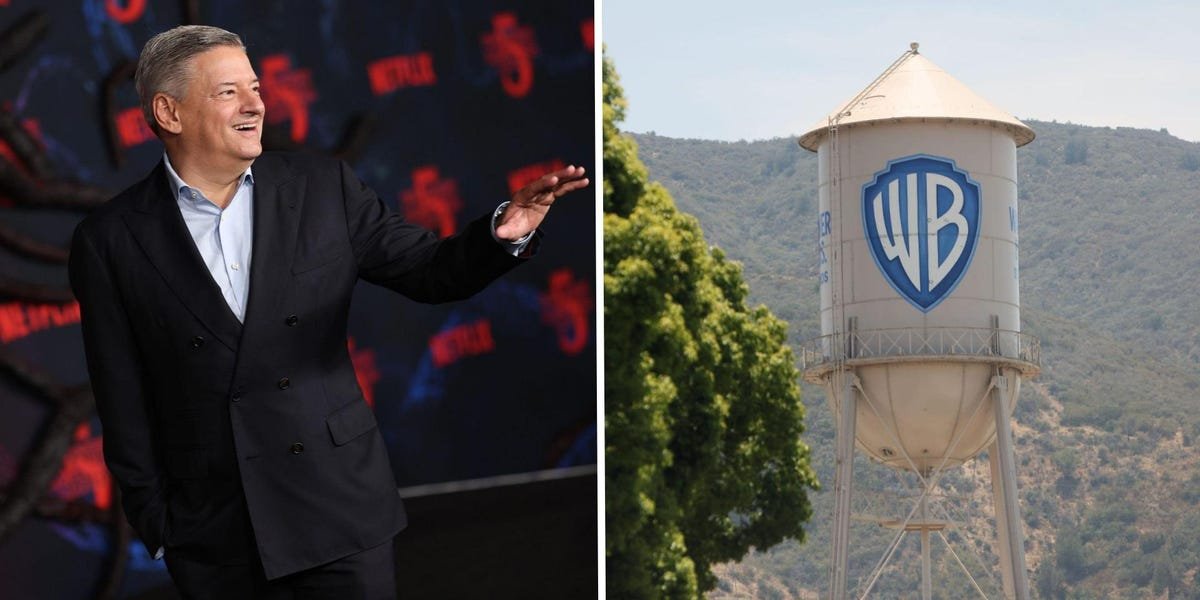
Read-the-memo-Warner-Bros-Discovery-sent-employees-after-Netflix.jpeg

Read the memo Warner Bros. Discovery sent employees after Netflix won the bidding war for its key assets

  • Netflix agreed to purchase Warner Bros. in a $72 billion deal.
  • Netflix will buy HBO Max and the Warner Bros. studio, but not WBD’s TV networks like CNN and TNT.
  • Here is the memo Warner Bros. Discovery CEO David Zaslav sent to employees.

Netflix is buying Warner Bros. Discovery’s studio and streaming businesses in a seismic $72 billion deal that promises to shake up Hollywood.

The Netflix-WBD tie-up, which the companies announced on Friday morning, would be the industry’s largest since Disney bought 21st Century Fox for $71 billion in 2019. Netflix is planning to buy HBO Max and the top-performing Warner Bros. studio, but not WBD’s TV networks like CNN, TNT, and TBS.

Netflix must first secure regulatory approval from the US and foreign governments, which some media analysts say could be a challenge. If all goes as planned, the deal is set to close in 12 to 18 months, the companies said.

Netflix beat out Paramount Skydance and Comcast in a bidding war.

Since Netflix is only buying the Warner Bros. studio and HBO Max, the remaining TV assets that are seen as less valuable will be spun out, as WBD originally planned. WBD was formed in April 2022 after a merger between AT&T’s WarnerMedia and Discovery.

“In the coming days, we will establish an Integration Office, which will coordinate all planning with Netflix, consistent with regulatory requirements,” WBD CEO David Zaslav wrote in a note to employees on Friday. “Until the transaction closes, WBD and Netflix remain separate companies. It may be tempting to reach out directly to counterparts or former colleagues at Netflix, but it is essential that all interactions are managed through this office to ensure we meet every legal and regulatory obligation.”

Here’s the full memo that Zaslav sent employees on Friday morning:

This communication has been sent to everyone at WBD.
Team,
The Board of Directors of Warner Bros. Discovery (WBD) approved a transaction under which Warner Bros. will be acquired by Netflix, subject to regulatory approvals and closing conditions, including the completion of the separation of Discovery Global from WBD.
As part of the structure, the Global Networks business will form a new standalone company, Discovery Global, with Gunnar Wiedenfels to serve as CEO once the new company separates from WBD, now expected to be completed in Q3 2026.
This decision reflects the realities of an industry undergoing generational change – in how stories are financed, produced, distributed, and discovered – and recognizes the strong, transformed company we are today, the significant value we have created, and the resilience and attractiveness that now position us in a rapidly evolving marketplace. Over the past several months, the Board evaluated a full set of strategic paths. Their conclusion is that this structure – Warner Bros. joining Netflix, and Discovery Global becoming a focused standalone company – provides the strongest long-term foundation for both sets of businesses.
As outlined in the announcement, the proposed combination of Warner Bros. and Netflix reflects complementary strengths, more choice and value for consumers, a stronger entertainment industry, increased opportunity for creative talent, and long-term value creation for shareholders.
I know this announcement creates many questions about what’s next. For some, it brings clarity about direction. For others, it raises questions about what this means for their teams and their work. All of those reactions are understandable. A transaction of this nature naturally creates uncertainty, and not all answers will be available immediately. Some will be clarified in the coming days and weeks; others depend on regulatory processes and on work that cannot begin until separation or closing.
People across WBD have navigated extraordinary change over the last three years, while building a company with real creative, journalistic, and commercial strength. That deserves to be acknowledged plainly.
What we can say now, based on the direction set out today, is that this structure provides a clearer path forward for Warner Bros. within Netflix, and for Discovery Global as a standalone company. For both, the goal is to position their creative work, talent, and brands to navigate a market that is constantly evolving and increasingly global.
What happens now
Later today, we will hold a Global Town Hall to walk through what we know and what is still to be determined. Calendar invites will follow shortly after this email.
Business Unit leaders will hold discussions specific to their areas in the coming days, so you can hear directly from your leader.
Managers will also come together early next week so they have the context and support they need to guide their teams through the early stages of this transition.
What happens next
The path toward a separation of WBD into Warner Bros. and Discovery Global will shift. We will redirect work tied to the earlier, planned two-company operating model and focus instead on the steps required to enable this transaction.
In the coming days, we will establish an Integration Office, which will coordinate all planning with Netflix, consistent with regulatory requirements. Until the transaction closes, WBD and Netflix remain separate companies. It may be tempting to reach out directly to counterparts or former colleagues at Netflix, but it is essential that all interactions are managed through this office to ensure we meet every legal and regulatory obligation.
What this means for you
We also recognize that many people are looking for more clarity about what to focus on, how to prioritize work, and what this means for their teams. Those details will become clearer over the next several weeks, as we move toward our 2026 goal-setting and operating plan alignment processes.
As part of that, you will hear guidance from your Business Unit and functional leaders early in the new year, with expectations and priorities anchored to what we know at that point in the regulatory process.
In the meantime, please continue to focus on the work needed to wrap up 2025, support year-end deliverables, and take the opportunity to rest and recharge over the holidays.
We will continue to communicate regularly, and new information will be shared in One Insider and on the One website. And we will see you later today at the Global Town Hall.
As we move through this next chapter, our aim is simple: handle decisions with care, communicate clearly about what we know, and make sure people have the information and support they need at each step.
I know moments like this carry weight. And they can also mark the beginning of new possibilities. The work you bring to this company – and the way you have shown up for one another – has built something that others clearly see value in. That matters. And while I cannot predict every step ahead, I am confident in the strength of our brands, in the talent of our teams, and in the stories, journalism, and experiences we will continue to bring to audiences around the world.
David


Source link