Alex Nicoll

Ares is the latest private credit player to limit withdrawals after investors ask to redeem their money

Ares is the latest private credit fund limiting payouts to investors following a record spike in attempts to withdraw money.

Investors requested to redeem more than 11% of shares in Ares Strategic Income Fund this quarter, and the firm decided to cap payouts at 5%, according to a filing with the Securities and Exchange Commission. The fund’s net value is $10.7 billion as of February 28, with a total portfolio value of $22.7 billion.

Investors looked to withdraw more than $1.2 billion in the quarter, with the firm limiting withdrawals to about $524.5 million. It plans to allow 43% of the requested redemptions, with it pro-rated so that each requesting shareholder receives a portion of their request.

The fund actually grew in the first quarter, with $708 million in inflows leading to $184 million in net gain. According to an SEC filing, the fund actually saw the amount of money coming in from investors increase from January to February to March, even as jitters increased in the asset class.

Ares joins other major private credit firms, like Blackstone, Apollo, and Blue Owl, in seeing massive redemptions amid rising anxiety about the asset class. Concerns over the underlying quality of private credit loans, overexposure to embattled software companies, and concerns about liquidity in the industry’s popular semi-liquid retail strategies have led some investors to look for an exit.

According to a letter sent to shareholders, a majority of requests came from a “limited number of family offices and smaller institutions in select geographies,” making up less than 1% of the fund’s total shareholders.

The choice to limit withdrawals to 5% of outstanding shares was made “consistent with the Fund’s design,” according to the letter, which also touted Ares’s ability to deploy capital, and make money for investors in challenging times. The fund, the letter says, is “well-positioned.”

“We believe periods of market dislocation have historically created some of the most attractive opportunities in direct lending, in certain cases, such as during the COVID pandemic, driving nearly 300 basis points of incremental return,” the letter said.


Source link

How-Sergey-Brin-is-linked-to-the-latest-Miami-mega-mansion.jpeg

How Sergey Brin is linked to the latest Miami mega-mansion sale

The latest mega-sale in Miami — a $51 million waterfront mansion — had been completed, and the deal has ties to Google cofounder Sergey Brin.

If Brin is confirmed as the new owner, that would mean four of the five wealthiest people in the world now own homes within about 20 square miles. Three of those purchases — those of Brin, his Google cofounder Larry Page, and Meta CEO Mark Zuckerberg — were completed over the past few months. Elon Musk, the wealthiest person in the world, is the only holdout.

The rush of tech titans buying homes in Miami comes amid criticism of a proposed wealth tax in California that, if passed, would subject residents with a net worth of more than $1 billion to a one-time 5% tax on their wealth.

On Tuesday, a deed was recorded for a home on Allison Island, an exclusive enclave in Miami’s Biscayne Bay. The $51 million sale was from MB 1 LLC, owned by Michael Burke, the chairman and CEO of LVMH, to Lagoon LLC, a corporation registered at a Reno, Nevada, address with attorney Michaelle Rafferty listed as an officer.

Brin’s name is nowhere near the transaction, but both Rafferty and the Reno address, which matches that of Rafferty’s law firm, appear on previous real estate purchases linked to Brin.

Alpine Bay LLC, which owns a Lake Tahoe property reportedly purchased by Brin, is registered to the same Reno address. Christine Wade, a lawyer Brin has used for several other property transactions, is listed as an officer of Alpine Bay LLC. A Malibu property also linked to Brin is owned by Dume Cove LLC, which was converted out of California in December by Christine Wade. A few days later, a Dume Cove LLC was incorporated in Nevada with Rafferty named as a manager.

Rafferty and representatives for Brin’s family office did not respond to requests for comment from Business Insider.


aerial view of Allison Island

Allison Island sits in Miami’s Biscayne Bay and is just a few miles from Indian Creek, the island known as the Billionaire Bunker.

Jeffrey Greenberg/Universal Images Group via Getty Images


Last month, the New York Post reported that Brin had made an offer on an Allison Island home that had not yet gone through.

The transaction was off-market, which means the waterfront property was not listed for sale, so photos and other details are sparse. The house was built in 2019 and has nearly 10,000 square feet of living space, according to property assessments. It features a cabana, a marble patio, a luxury pool, and a hot tub, all installed in 2019.

The price tag marks a record for Allison Island. Luxury real estate in Miami Beach, including hot spots like Indian Creek and Coconut Grove, has reached new heights of late, in part due to an influx of billionaires from California, real estate agents recently told Business Insider.

Beginning in December, Page spent over $180 million on three properties in Coconut Grove and moved several companies out of California.

“What just happened was that there was a ringleader, Larry Page, who closed on his property the last days of December, and that sounded the alarm for the others,” Douglas Elliman agent Dina Goldentayer told Business Insider in February.

On Monday, Bloomberg reported that Zuckerberg paid a record-breaking $170 million for a single property on Indian Creek Island, joining a small community that includes Amazon founder Jeff Bezos and Ivanka Trump.

Danny Hertzberg of the Jills Zeder Group was the listing agent for one of the homes purchased by Page, as well as the $170 million property on Indian Creek Island. In January, he told Business Insider that the wave of Californians toward the end of 2025 and into 2026 was unanticipated, but as more people came started to make sense.

“People want to be around their colleagues,” he said. “They want to be around people in technology and finance. So it’s made a big impact on the market.”

The prices have skyrocketed, in what Goldentayer described as a gold rush, as sellers sitting on exclusive acreage pretty much get to name their price.

“If they build it, someone will come for it,” she said. “I truly believe that. That’s what keeps me motivated every day.”


Source link

WBD Ellison

Warner Bros. Discovery’s board says Paramount’s latest offer is better than Netflix’s


Aleksander Kalka/NurPhoto via Getty Images; Kristina Bumphrey/Variety via Getty Images

Paramount Skydance may finally have the upper hand on Netflix in the bidding war for Warner Bros. Discovery.

The WBD board announced on Thursday afternoon that it believes Paramount’s offer to buy the entire company for $31 per share is better than Netflix’s proposal to buy its studio and HBO assets for $27.75 per share.

This story will be updated.


Source link

OpenAI-Meta-and-Apples-latest-battle-Breaking-your-phone-addiction.jpeg

OpenAI, Meta, and Apple’s latest battle: Breaking your phone addiction

The average American picks up their phone more than 200 times a day. Teens are pinged with some 250 notifications a day — during school, after school, and overnight. The apps meant to prevent you from checking apps have done little to stop the problem. Now, some of the tech companies that helped create our screen dependence are trying to disrupt it.

Later this year, OpenAI plans to debut a small, screenless device that Sam Altman describes as more “peaceful” than a smartphone. Apple, the Oz of screentime, is developing smart glasses, a pin, and AirPods with more AI built in, according to a Tuesday report from Bloomberg, with the rumored pendants featuring microphones and cameras to be the “eyes and ears” of the iPhone. Meta has teased its fully augmented reality Orion glasses since 2024. While that device doesn’t have a release date, the company last year sold some 7 million pairs of its smart glasses, which is the start of the post-smartphone future Mark Zuckerberg has predicted. Eventual smart specs could be more screen all-the-time than screenless, but they also rely on AI to make the experience much more hands-free than swiping and scrolling on a phone.

Could AI be what finally breaks our phone addiction?

Since 2007, no device out of Silicon Valley has captured universal imagination the way Steve Jobs did when he put your iPod, your phone, and the internet together on a 3.5-inch screen. Competitors have tried for a decade-plus to get people to shift us from the iPhone to smart glasses, and largely failed. The awe around smartphones has turned to derision, as excessive screen time is linked to disrupted sleep, anxiety, and fractured attention. Now, developers are hoping the AI boom can give us the next big thing.

Beating the smartphone would mean replacing a device that 91% of American adults now carry — a device for which millions of apps have been developed and people now depend on in lieu of wallets and cameras and health monitors. New AI devices can’t just copy what smartphones do, says Ramon Llamas, a research director at a technology intelligence firm IDC: They have to show they have a solution to an everyday problem. If they don’t, Llama says, “these things are just gonna really end up as solutions looking for a problem to solve.”


Critiques of screen time can be as blunt and smoothbrained as what the critics say excessive screen time makes you. A seven-hour daily log may seem like a staggering amount of dependence, but what did the person spend those seven hours doing? Doomscrolling late into the night, or FaceTiming with a far-away friend? With AI wearables, there’s the risk of becoming dependent on the device for different reasons.

“The screen may not be there, but what’s getting filled in the back is already this problem of AI companionship,” says Olivia Gambelin, an AI ethicist and author of the book “Responsible AI.” An AI device designed to do something very specific — like listen to a meeting and then send follow-up emails or messages related to action points discussed — could save people time and keep them from writing tedious emails and Slack messages from their desk. But that same device listening in to personal conversations with family and friends could compromise a relationship, and erode the positive effects that texting a friend to check-in can have on both people (already, my friends are tiring of AI summaries on the iPhone that summarize our group text and become an intermediary into our threads of gossip and jokes in the name of efficiency). Wearing microphones and cameras to social interactions and into businesses is likely to really weird out some of the people around you. More people are entering into romantic, dependent relationships with AI companions, and a swell of loud dissenters are criticizing the technology for taking jobs and attempting to replicate human relationships.

But OpenAI is betting that it can package its technology in a device in a way that calms the user. “When I use current devices or most applications, I feel like I am walking through Times Square in New York and constantly just dealing with all the little indignities along the way,” Altman said in November. OpenAI’s device, he said, would be less Time Square, more “sitting in the most beautiful cabin by a lake and in the mountains and sort of just enjoying the peace and calm.” That’s because the AI device would learn “contextual awareness of your whole life,” and when best to send you alerts.

The screen itself may not be the problem; it’s what’s summoning us to the screen.

Other AI wearables have failed by falling short of that goal. Humane AI sold a wearable pin, priced at $700 plus a monthly fee to connect it, but pulled it from the market a year ago. It failed perhaps because it tried too hard to replace our phones — it didn’t interact with them, but provided a shoddy replacement. Novelty wasn’t a factor that could outshine usability. The AI Friend pendant, which can’t search the internet or help with tasks outside of sending reminders and acts instead as an eavesdropping sycophant around its user’s neck, was mocked relentlessly and sold just a few thousand devices after it hit the market last year.

Companies trying to make AI hardware should focus on “transformative features,” Jason Low, research director at Omdia, tells me in an email. AI wearables must be more than “marginally more convenient,” should integrate with our existing products, and have a clear, stated value. For example, glasses that provide real-time language translation or devices for fitness and health tracking offer features our smartphones can’t do as well. The Oura ring continues to grow in popularity, particularly among women after starting out as a niche tech bro buy, for the novel insights it can offer; the company announced last fall it has sold 5.5 million rings since 2015, with more than 2.5 million sold between June 2024 and September 2025. “These devices often deliver a more polished user experience compared to general-purpose, do-it-all AI devices,” Low says.

Llamas tells me that the AI functions of a wearable have to be “contextual, personalized, and actionable,” like reminding the wearer to send birthday flowers or responding accurately to being asked to direct the user to the nearest Starbucks. A first attempt device shouldn’t try to replace the smartphone, but to integrate with the Apple or Google ecosystems, he says. Apple and OpenAI did not respond to requests for comment about their rumored products for this story.

If anything has hyped Silicon Valley like the iPhone, it’s been AI. But three years after the mainstream adoption of ChatGPT, the value generative AI in the white collar workforce has yet to be fully realized. That could make a product for consumers a hard sell, too. “Some of the overwhelm that’s coming with AI that I see in general users is you can use it for everything, or it’s promoted that way, which is actually quite stifling,” Gambelin says.

In our quest to find a peaceful equilibrium with tech, the screen itself may not be the problem; it’s what’s summoning us to the screen. Its bright colors, games, and infinite scroll give quick dopamine hits that entice us to stay glued to it. But much of what pings my phone throughout the day are useless notifications trying to get me to reopen one of the dozens of apps — a markdown moment on a clothing thrifting app, a like on the Instagram story I’ve posted of my dog from my best friend, and ironically, a report of how much time I’ve already logged. There’s a relentless business model at play to keep us on these apps. No screens would mean no infinite scroll through TikTok, no Candy Crush — but app developers and companies may need to find new ways to reach people if wearables caught on, and an always-there AI device and companion might not be as peaceful as Altman describes. Our collective screen time is a problem, but the AI wearable will have to surprise us all with something novel to be useful.


Amanda Hoover is a senior correspondent at Business Insider covering the tech industry. She writes about the biggest tech companies and trends.

Business Insider’s Discourse stories provide perspectives on the day’s most pressing issues, informed by analysis, reporting, and expertise.



Source link

Taylor-Swifts-latest-business-move-is-another-attempt-to-hack.jpeg

Taylor Swift’s latest business move is another attempt to hack the charts — and it’ll probably work

Taylor Swift is the biggest-selling artist in the world by most reliable measures, so when she makes an unconventional business move — no matter how random or trivial it may appear — it’s worth paying attention.

On Friday, Swift unveiled the self-directed music video for “Opalite,” her latest single from “The Life of a Showgirl.” Upon release, the cameo-laden clip was available exclusively on Spotify and Apple Music, with its YouTube premiere scheduled for a two-day delay.

Streamers like Spotify and Apple Music specialize in hosting songs, albums, podcasts, and playlists — not visual works. Meanwhile, YouTube is famously a destination for music video lovers. So what gives?

As usual, when it comes to Swift, the answer seems to lie with her bottom line. In December, YouTube announced it would withdraw its streaming data from Billboard’s chart formulas because the music company tweaked its methodology so that streams from YouTube subscribers were weighted even more heavily than free streams. YouTube’s stance is that the ratio is unfair to fans.

Swift recently scored her longest reign yet on the Billboard Hot 100 with “The Fate of Ophelia,” the lead single from “Showgirl,” which charted at No. 1 for 10 weeks. With “Opalite” officially serving as its follow-up, Swift appears to be making moves to boost the song’s chart performance.

If fans were flocking to YouTube today to watch her new music video, none of those views would help “Opalite” reach No. 1 — and nobody wants to follow a personal best with a personal flop, least of all an athlete-style competitor like Swift.

Of course, this savvy tweak to the song’s promo schedule was paired with a physical release: a seven-inch vinyl single in “pearlescent blue,” only available in Swift’s online store for 48 hours.

How Taylor Swift moves, other artists tend to follow

Swift’s unyielding commitment to commerce isn’t just something to behold. It’s something to study. Swift’s sales tactics often become instructive for other artists.

Much has been made about Swift’s push to sell physical albums, for example, but many fellow pop stars have followed suit. Charli XCX released about two dozen vinyl variants for her 2024 album “Brat” and its deluxe editions. Sabrina Carpenter, a self-professed disciple of Swift’s work, released 13 vinyl variants last year for “Man’s Best Friend,” in addition to seven-inch singles, cassettes, and CDs. As a result, “Man’s Best Friend” scored the ninth-biggest vinyl sales week of the modern era, according to Billboard. (Seven of the top eight slots on that list belong to albums by Swift.)


Taylor Swift in the music video for

“The Fate of Ophelia” reached No. 1 on the chart dated October 18, 2025.


Taylor Swift/YouTube


So, it could very well mean that Swift’s strategic video rollout will start a trend as well. Although YouTube is the customary platform for music videos, customs can be changed, and she isn’t the only artist who cares about climbing the charts.

It could also be that Swift’s premiere delay will inspire YouTube to rethink its attitude toward Billboard. If one of the most influential celebrities in the world is delaying their content to your product, that could be bad for business — and it wouldn’t be the first time Swift convinced a major company to change its tune. Back in 2015, she criticized Apple Music for refusing to pay artists during a new user’s free trial. Within 24 hours, Apple updated its policy and tagged Swift in the announcement online.

It remains to be seen whether “Opalite” will affect the music industry beyond Swifties, but if the song’s lyrics are any indication, Swift is content to manufacture success on her terms — or, in her words, to make her own sunshine.


Source link

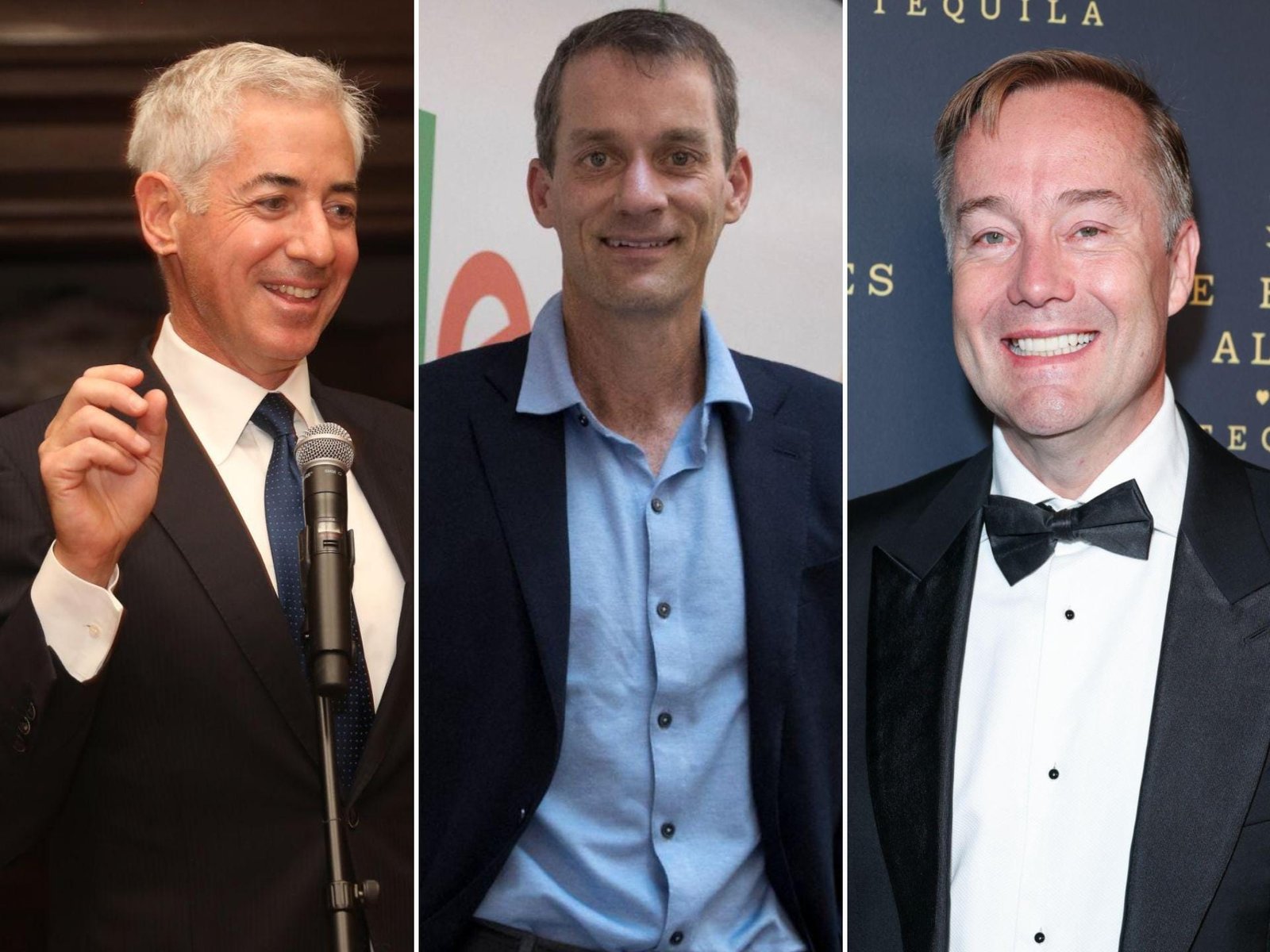
Bill Ackman, Jeff Dean, and Jason Calacanis composite image

‘Absolutely shameful’: Business and tech leaders react to the latest fatal ICE shooting

Business leaders spoke about federal immigration officers’ latest fatal shooting over the weekend.

  • Federal immigration officers shot and killed Alex Pretti, 37, in Minneapolis on Saturday.
  • The killing elicited sharp reactions from Americans, including business and tech leaders.
  • Google DeepMind’s chief scientist said it was “absolutely shameful.”

After a second fatality in confrontations with immigration officers in Minnesota on Saturday, business leaders took to social media to have their say.

Eric Horvitz
Microsoft's chief scientific officer, Eric Horvitz, poses against a window.
Microsoft’s chief scientific officer Eric Horvitz.

Microsoft’s chief scientific officer posted a screenshot of a statement from Alex Pretti’s parents with the caption “Anguish and pursuit of truth” on X on Sunday.

Horvitz also wrote on X, “Values, service, and character,” in response to a video posted by CBS News of Pretti reading a final salute to a veteran.

Yann LeCun
Former Meta chief AI scientist Yann LeCun talks to an audience and stands against a black background.
Former Meta chief AI scientist Yann LeCun

Former Meta chief AI scientist Yann LeCun replied “Murderers” to footage of the shooting circulating on Saturday. He has since reposted anti-ICE tweets and pushed back against users who criticize his stance.

LeCun has regularly shared posts critical of the Trump administration on social media.

Paul Graham
Paul Graham is pictured in conversation with Charlie Rose.
Almost a year out from his viral essay, Paul Graham reflected on the difference between going “founder mode” and micromanaging.

Paul Graham, cofounder of startup accelerator Y Combinator, wrote in a post on X on Saturday: “If someone had predicted before the last election that if Trump won, federal officers would be shooting Americans in the streets, he’d have been dismissed as an alarmist.”

Chris Olah

Anthropic cofounder Chris Olah wrote on X that he typically doesn’t comment on politics, but recent events “shock the conscience.”

“My deep loyalty is to the principles of classical liberal democracy: freedom of speech, the rule of law, the dignity of the human person. I immigrated to the United States — and eventually cofounded Anthropic here — believing it was a pillar of these principles,” he wrote, adding: “I feel very sad today.”

CEOs of major Minnesota-based companies
A woman walksi n front of a Target store

The Minnesota Chamber of Commerce distributed a letter on Sunday signed by more than 60 CEOs of Minnesota-based companies, including professional sports teams.

Among the signatories were Target CEO Michael Fiddelke, 3M CEO William Brown, Allianz Life Insurance Company CEO Jasmine Jirele, Cargill CEO Brian Sikes, General Mills CEO Jeff Harmening, and UnitedHealth Group CEO Stephen Hemsley, among many others.

The letter called for an “immediate de-escalation of tensions” and for state, local, and federal officials to “work together to find real solutions.”

“In this difficult moment for our community, we call for peace and focused cooperation among local, state, and federal leaders to achieve a swift and durable solution that enables families, businesses, our employees, and communities across Minnesota to resume our work to build a bright and prosperous future,” the letter says.

Khosla Ventures partners disagree

The shooting divided leaders even within the same VC firm. Khosla Ventures’ Keith Rabois posted on X “no law enforcement has shot an innocent person. illegals are committing violent crimes everyday.” Rabois is a self-proclaimed contrarian whose political opinions have courted controversy in recent years.

Two colleagues — Ethan Choi and Vinod Khosla — disagreed with Rabois on X. Khosla described the video of Pretti’s death as “macho ICE vigilantes running amuck empowered by a conscious-less administration.”

Choi said Rabois’ post did not represent the VC firm’s view. “What happened in Minnesota is plain wrong. Don’t know how you could really see it differently. Sad to see a person’s life taken unnecessarily,” Choi wrote.

Bill Ackman
Bill Ackman.

The hedge-fund billionaire, who supported Trump in the 2024 election, called for calm in an X post on Saturday. Ackman said that the United States had reached a point where “there are only two sides to every issue and every incident.”

“Individuals are ‘convicted’ of serious crimes in the headlines, by politicians appealing to their base, and ultimately in the minds of the public, or they are exonerated, before all of the facts are in and a detailed investigation has been completed,” he wrote. “This is not good for America.”

Two hours later, in another post on X, Ackman laid the blame on Minnesota’s governor, Tim Walz.

“It is almost as if the governor of Minnesota called for protesters to intervene in ICE enforcements in an incendiary manner,” he said, tagging Walz. “Inciting the people to rise up against law enforcement is guaranteed to end badly, and now we have seen the tragic consequences.”

Ackman later donated $10,000 to a GoFundMe set up for Pretti’s family after being asked to do so in a post on X by Shannon Watts, the founder of Moms Demand Action for Gun Sense in America.

Ackman wrote in a reply on X: “Done. That said, I don’t agree with the gofundme that he is an American hero, but his loss is tragic for him and his family.”

Reid Hoffman
Reid Hoffman at a conference with mic in hand

Like Ackman, billionaire LinkedIn cofounder Reid Hoffman is perpetually online, posting frequently on social media. The Democratic donor has been largely quiet this weekend, though he has reposted comments from other people, including one that called ICE “out of control.”

In another post that Hoffman amplified, an X user called out “chronically online tech leaders” for suddenly falling quiet. Another X user called on business and tech leaders to use their platform to stand up to the Trump administration and its immigration enforcement tactics, to which Hoffman replied, “It’s time for all Americans to do so.”

James Dyett

James Dyett, the head of global business at OpenAI, called on leaders in the tech and business communities to use their influence to criticize the Trump administration’s immigration policies.

“There is far more outrage from tech leaders over a wealth tax than masked ICE agents terrorizing communities and executing civilians in the streets,” Dyer wrote on X. “Tells you what you need to know about the values of our industry.”

Jeff Dean
Jeff Dean stands in front of Google logo

Jeff Dean, Google DeepMind’s chief scientist, wrote in response to a video of the shooting circulating on X: “This is absolutely shameful.”

“Agents of a federal agency unnecessarily escalating, and then executing a defenseless citizen whose offense appears to be using his cellphone camera,” he wrote. “Every person, regardless of political affiliation, should be denouncing this.”

Minneapolis police confirmed that Alex Pretti, who was filming federal agents when they wrestled him to the ground, was legally carrying a gun.

Border Patrol officials said Pretti had threatened them with the gun, but multiple videos of the incident show that agents had already disarmed and subdued Pretti when he was shot.

Jason Calacanis
Jason Calacanis in black tie

Jason Calacanis, a prominent investor and entrepreneur who is these days perhaps most known as one of the hosts of the popular “All-In” podcast, blamed the country’s political leaders in a post on X on Sunday.

“Once again, I will remind everyone that our leaders are failing us,” he wrote. “True leadership would be to calm this situation down by telling these non-peaceful protesters to stay home while recalling these inadequately-trained agents.”

He later posted that “all of this violence” could be avoided by fining businesses that hire immigrants who are not in the country legally.

Ray Dalio
Hedge fund manager Ray Dalio speaks at an event.

Billionaire investor Ray Dalio posted an X article on Monday, reflecting on a book he’d recently written. Current events made Dalio feel like he was “watching a movie that I have seen many times in history,” he wrote.

Minneapolis exhibited signs of stages five and six of his “Big Cycle,” he wrote: the pre-breakdown and breakdown of existing orders.

“The United States is now a tinderbox,” Dalio wrote. “The world saw the killings in Minneapolis of two opponents to Trump’s ICE initiative and is now watching to see which side will back down.”

Garry Tan
Garry Tan is pictured at the 2022 Web Summit
Gary Tan said that some academic entrepreneurship programs are creating “fake” founders like Elizabeth Holmes and Sam Bankman-Fried.

Garry Tan, the CEO of startup accelerator Y Combinator, said in a post on X that the “Minneapolis tragedy is truly sad,” and that he wanted “order and peace.”

The YC CEO, who had faced some criticism for posting about coding in recent days, wrote that he was staying focused on San Francisco, where he has a strong political presence.

“Remind yourself politics is local not national,” he wrote. “I’m going to keep fighting for my city.”

Caitlin Kalinowski

OpenAI’s robotics head, Caitlin Kalinowski, responded on X, citing the Constitution.

The OpenAI staffer referenced the 1st, 2nd, 4th, 5th, and 14th amendments, which include the right to protest and assembly, the right to bear arms, and the right to due process under the law.

Before working at OpenAI, Kalinowski was Meta’s head of AR Glasses Hardware.

David Marcus

David Marcus, cofounder and CEO of crypto payments company Lightspark, wrote on X in response to the incident: “The number of people who can hold two thoughts at the same time is dwindling at a dangerous rate.”

“It’s not because these anti-ICE protests are mostly inorganic and designed to generate this chaos, or that protesters show up with loaded guns that you can’t also be totally appalled by citizens being shot dead on our streets,” added Marcus, who is also a former president of PayPal.

“Let’s just remember we’re all Americans for a second.”

Cristina Cordova

Cristina Cordova, the chief operating officer at Linear, a product management software company, called the incident “indefensible” in a post on X.

“The victim’s legally owned handgun was removed from the scene, and then ICE agents shot him multiple times. It’s far from law enforcement — it’s just murder,” she wrote.

“Those who defend this don’t care about law or order. It’s about money, power, and protecting an executive branch that’s already been bought and paid for.”

Kath Korevec

Kath Korevec, the director of product at Google Labs, has called on X users to support their local immigration organizations.

“I can’t go to Minneapolis. And it’s only a matter of time before they show up in force here in the Bay Area. So here’s what I’m doing to help my neighbors prepare,” Korevec wrote in a post on X on Sunday.

She said in the post that she is researching, donating, and offering help to organizations that support immigrants.

Korevec said that she is calling her “congressmen and women and asking them not to approve ICE funding without major reform to how the organization is run.”

“And I’m paying attention. Not looking away, even when it’s hard,” she added. “If you’re able to do any of this where you live, now is the time.”

Josh Miller

Josh Miller, the cofounder and CEO of The Browser Company, wrote on X that he has been hesitant to speak on politics — but that this moment was no longer political.

“It is about something more fundamental,” he wrote. “It is about what America stands for. Call it morals, call it decency, whatever word resonates most with you.”

Miller wrote that the government “executed a man,” and that he was “deeply sad for his parents.”

Before The Browser Company, Miller sold his startup, Branch, to Facebook. He then left Facebook for the federal government, becoming the White House’s first director of product under former President Barack Obama.

Google DeepMind’s Dean thanked Miller for speaking up. Miller responded: “10 shots in the back of an American citizen who worked as an ICU nurse at the veterans hospital in town. While they knew they were being filmed in broad daylight. And our Secretary of War cheers them on from Twitter. Something is not right.”

Read the original article on Business Insider

Source link

Image of Lakshmi Varanasi

An OpenAI researcher turned venture capitalist says investors are 3 to 5 years behind the latest AI studies

There is a yearslong lag in the AI hype cycle, according to one former AI researcher turned venture capitalist.

Jenny Xiao, who cofounded Leonis Capital in 2021 after a stint at OpenAI, said the current investment excitement around AI is far behind the actual research.

“There is a massive disconnect between what researchers are seeing and what investors are seeing,” Xiao said on the Fortune Magazine podcast this week.

What’s being discussed at the biggest AI conferences is as much as 3 to 5 years behind what researchers are thinking about, Xiao said.

“We are so behind the technical frontier, and that’s the gap I really want to bridge,” she added.

Xiao, who dropped out of a Ph.D. program in economics and AI to take a researcher role at OpenAI, founded Leonis Capital to bridge the worlds of venture capital and deep academic AI research.

“With AI, there needs to be a new generation of founders. There needs to be a new generation of VCs,” she said.

It’s also the first time investors need to be able to provide financial support to both the market and the technology, she added. Unlike SaaS companies, which were built on a “stable tech stack,” AI is moving fast. To keep up, Xiao said investors are going to need to be as technical as the founders.

If she has one piece of advice for investors who haven’t gone deep into the technical side, it’s that they should know “AI progress isn’t linear,” she said.

They should know AI progress happens in “lumps,” she said. So, questions about why AI progress is slowing down or speeding up aren’t the best way to characterize the rate of development.

“It’s neither of those two extremes,” she said. “It’s somewhere in between.”

Leonis Capital did not immediately respond to a request for comment from Business Insider.


Source link

Im-at-CES-in-Las-Vegas-to-check-out-the.jpeg

I’m at CES in Las Vegas to check out the latest in autonomous driving. Here’s what I’ve learned so far.

  • Robotaxis and autonomous cars once again have a large presence at CES 2026.
  • Several companies, including Amazon’s Zoox, are providing off-site demos.
  • Business Insider is providing an on-the-ground look at the latest in the advanced mobility space.

Business Insider is taking on CES 2026.

I’m on the ground in Las Vegas from Tuesday to Thursday, taking in all there is to know about the latest in the driverless space.

Robotaxis and self-driving cars have already had an outsize presence at the tech conference, especially in the previous hype cycle of the late 2010s and early 2020s.

Things have changed since then. The industry has largely moved on from mere concepts and technology validation to: How are we going to realistically scale autonomy?

It’s day one of the conference, and there’s already a lot to take in.

Nvidia CEO Jensen Huang unveiled the Alpamayo family, which will serve as an autonomous-driving stack for OEMs to deal with those stubborn edge cases — or the “long tail” of self-driving.

Uber and Nuro showed off an early look at the Lucid Gravity SUV that the companies hope public riders will be able to take by late 2026.

I’ll be spending less time at keynotes and speaker events and more on real-life demonstrations and meetings with industry leaders and commentators in autonomy

Think of this as my personal notebook, where I jot down everything I’ve learned and seen at the conference.

Check back in for more updates.

Amazon-backed Zoox is unlike any other robotaxi.

Zoox robotaxis line up in front of Resorts World Las Vegas

Lloyd Lee/BI

This is the first year Zoox, an Amazon-backed robotaxi company, will be giving live demonstrations of its service during CES.

I got to take a ride in one on Monday night in front of Resorts World. (The company tagline that I saw from an ad at the Harry Reid International Airport was: “Don’t just do the Strip. Zoox it.”)

My immediate thoughts were that Zoox feels unlike any other robotaxi or pseudo-robotaxi on the market. It felt more like I was on a theme park ride than in an everyday car we’re familiar with.

Unlike Waymo’s robotaxis, Zoox is not a regular car you could buy that’s been retrofitted with sensors. The Zoox car is bi-directional — meaning there’s no real front or back of the car — and the inside has no steering wheel, just seats.

The robotaxis were clearly a great tourist attraction from what I saw. My Uber driver wasn’t too happy about them.

Uber, Lucid, and Nuro have big plans to scale.


Uber, Lucid, Nuro

Left to right: Uber’s Sarfraz Maredia, Lucid interim CEO Marc Winterhoff, and Nuro cofounder Dave Ferguson.

Lloyd Lee/BI

Uber, Lucid, and Nuro had a swanky cocktail hour at Fontainebleau Las Vegas, where they quite literally wined and dined a room full of reporters, analysts, and investors: endless glasses of wine and an open bar, lobster tails, jumbo shrimp, too many appetizers to count, and a giant charcuterie board — the works.

Maybe understandably so? 2026 will be a big year for the three companies.

Uber’s plan is to roll out a robotaxi service by late 2026. The first market is San Francisco, where Uber will directly compete with Waymo. These two companies are partners in other markets, like Austin.

“We’ve been moving very, very quickly,” Nuro’s co-CEO and cofounder Dave Ferguson said. “We signed this partnership last July. We’re already testing the production-intent vehicles on public roads. And very soon, we’re going to have tens of thousands of them worldwide.”

Here’s a 60,000-pound John Deere combine for scale.


John Deere

John Deere’s X9 combine.

Lloyd Lee/BI

A quick image to get a sense of how big CES’s mobility division is at West Hall of the convention center: There’s a 60,000-pound combine from John Deere that’s sitting in the middle of the showroom.

The combine is one of the world’s largest on the market, according to Julian Sanchez, an engineer at the machinery company.

Even so, John Deere doesn’t even have the largest footprint on the floor. This year, it’s Hyundai.

The combine isn’t autonomous in the way we think about self-driving cars, Sanchez told me, but it is self-steering.

The world got a reality check on self-driving cars since the last hype cycle.


Tensor

Tensor aims to sell a personally-owned vehicle that will have Level 4 driving.

Lloyd Lee/BI

There’s a lot of talk of self-driving cars in the automotive industry, but the scope of what it can realistically achieve has narrowed down in the last decade or so.

Paul Costa, an ex-Apple veteran of 25 years who worked on the company’s abandoned self-driving car project, gave me a bit of interesting color from what he saw at CES in 2015 — when the driverless car hype was reaching its peak — and what’s different now.

“My sense at the time was that people really wanted to focus on Level 5 autonomy,” Costa, who now leads Ford’s electrical engineering team, told me. Level 5 is the highest level of autonomous driving set forth by the Society of Automotive Engineers. That means full autonomy in all weather conditions and no geofences. Waymo is currently Level 4.

The tone has been brought down to reality, according to Costa. The focus is on highly advanced driver assistance systems and eyes-off driving or Level 3 systems, he said.

“Now, I feel like here in 2026, L3 is extremely interesting,” Costa said. “It’s interesting for me to see how the industry — its focus has changed over the years.”

Signup Today: Connectivity and Tech Pro by Business Insider Intelligence


Source link

Latest-updates-Trump-says-the-US-has-captured-and-indicted.jpeg

Latest updates: Trump says the US has captured and indicted Venezuelan President Nicolás Maduro

President Donald Trump said on Saturday that the United States had captured Venezuelan President Nicolás Maduro and his wife, Cilia Flores, following a “large-scale strike” on Venezuela.

Attorney General Pamela Bondi has said that Maduro and Flores have now been indicted in the Southern District of New York.

Maduro was charged with drugs and weapons offenses, Bondi said, adding that they would “soon face the full wrath of American justice on American soil in American courts.”

Venezuela said the US had carried out strikes on Caracas and the coastal states of Miranda, Aragua, and La Guaira early Saturday.

Trump had repeatedly threatened Venezuela with military action in recent months as tensions with Maduro soured over what the Trump administration says are drug trafficking networks in the country. Caracas has maintained that Washington’s aim is to overthrow the Venezuelan government.

Follow this liveblog for updates.


Source link