
We-gave-my-grandma-an-iPhone-when-she-was-80.jpeg

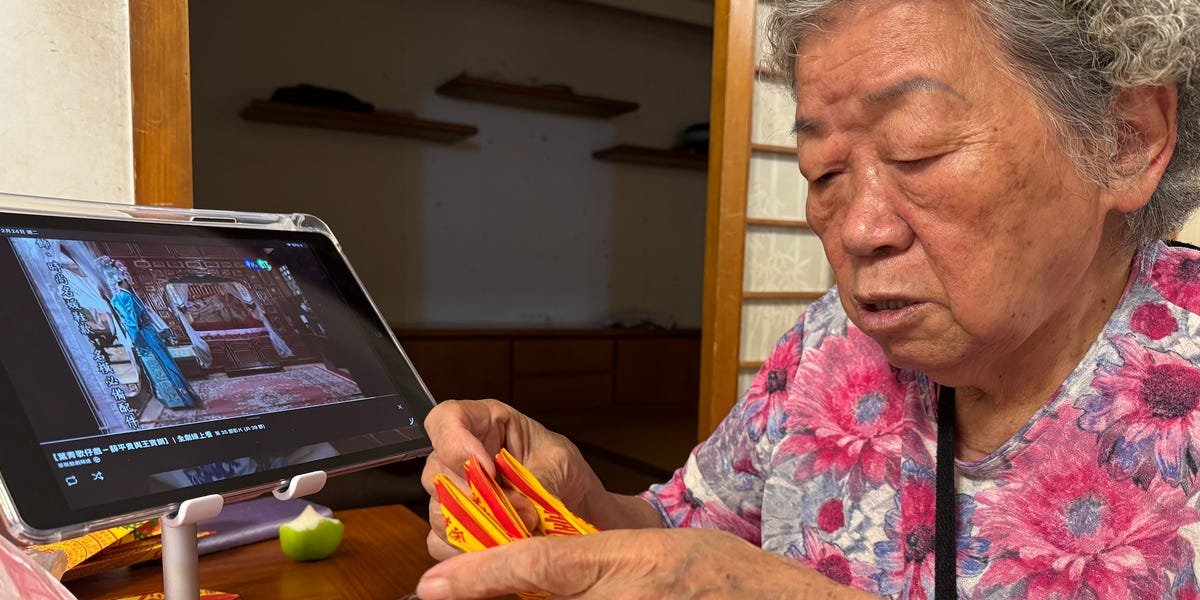
We gave my grandma an iPhone when she was 80. I learned a lot about her from what she started watching on YouTube.

On the day my Taiwanese grandma A-Ma turned 80, she complained about a lingering dizziness.

When she got up from the floor mat, she fainted. Though the blackout lasted only two seconds and the doctor ruled the trigger to be temporary low blood pressure, my aunt was worried enough to dust off an old iPhone in case of an emergency.

Being illiterate, it took my grandma a full week to master punching in the four-digit passcode. I was worried during my entire visit home in Taiwan.

My cousin helped her figure out her phone

Everything changed when my 6-year-old cousin came home from kindergarten with a new obsession with Minecraft videos. Not having a phone to his name, A-ma became my cousin’s easy target. He downloaded YouTube onto her phone. A thread of over-the-top romance videos popped up on my grandma’s feed. She clicked on one after another.


Grandma and little boy

The author’s grandma learned about YouTube through the author’s cousin. 

Courtesy of TING WANG


Turns out, my grandma’s taste in entertainment was 30-second dramatic YouTube Shorts with ridiculous premises filmed on a low production budget: a housekeeper starved by her boss, who eventually fell in love with her. A college senior slept with dad’s best friend, who has a BDSM lair. A high school girl endured bullying, then revealed she is an heir to a kingdom. Everything that made me cringe made her giggle.

Then the effects of her phone permeated into real life. The family store she started with my grandpa in 1975 began seeing her less. Instead of stocking the shelves with my aunt in the morning, she opted for a long breakfast: two boiled eggs dipped in soy sauce with an endless side of YouTube Shorts.

The situation briefly looked up when A-ma’s friend, who ran a sticky rice shop, stopped by the store with some fresh gossip. The friend brought hot-off-the-press news about a local’s son and daughter. My grandma played the attentive listener, given that she did not have the skills to scour the market for scandals. Yet, not even 20 minutes in, I noticed A-ma started glancing at her phone. No longer a top-tier audience, the friend retreated to the sticky rice shop, defeated.

I noticed she was paying less attention

As a writer in New York who used my phone sparingly, I flew back to Taipei every three months to see family. Each time, I noticed her attention span suffered more than the last.

Her dining table was once the place I brought her behind-the-scenes anecdotes of working in a New York City ad agency, but not anymore. Last time we ate together, her eyes were glued to her screen. I sighed and threw my finished plates into the sink. She glanced at me, then back to her original program, completely mesmerized by the content.

Instead of being angry, I caught a glimpse of A-ma blushing from the corner of my eye. Like a girl reading a coming-of-age story, her cheeks flushed pink. Then she turned the screen toward me, relaying the plot of a cringey romance. Her smile stretched up to her eyes.

I finally understood her

That was when I realized it was not YouTube Shorts with horrible storylines she was watching. It was a window into what young adulthood could’ve been like if she were given the chance to be a normal girl.

As my mother told me, A-ma grew up in a war-torn time in Taiwan, where her childhood consisted of running into bunkers during air-raid drills. By 15, she was at the fishing port helping her family haul fresh catches into the local market. Years later, her parents arranged for her to marry the neighborhood boy. Then, together, they had six kids. They took a leap of faith, left the village, and set up shop in Taipei City, selling handmade beef jerky and pork floss.

Never having the chance to go to school, dress up for a party, or sneak out at night to steal a kiss from a cute boy — she didn’t get to live, not like a young girl. Before anyone or herself knew, she became an adult.

I realized, 65 years later, after a brief health scare, A-ma got this iPhone that served as a portal into a world she never had access to. Filling a void she didn’t know existed.

Last time I visited, I showed her how dictation works. With her callused thumb, she hit the microphone button and uttered: “Young. Stories.”

However, her accent, thick with a dialect, was too much for Siri to understand. For the first time, I felt like I did.


Source link

I-attended-a-weekend-reading-retreat-in-my-60s-Surrounded.jpeg

I attended a weekend reading retreat in my 60s. Surrounded by women of all ages, I learned more than I’d ever imagined.

In my 30s, I joined a book club but soon dropped out. Between juggling work and family, the last thing I needed then was another deadline, even a read-for-fun one.

Flash forward decades: I’m in my 60s now, the kids have flown the nest, and I have more downtime and love all things outdoorsy.

So when a friend suggested All Booked, a luxe reading retreat for women in New York State’s Catskill Mountains, I was excited to try book clubs again, especially this one-off weekend version.

When I signed up, I imagined lengthy chats surrounding the retreat’s featured trending book: “Mother Mary Come to Me,” a memoir by prize-winning author Arundhati Roy. We certainly had those.

But what made the literary getaway especially meaningful were the casual connections we shared as total strangers — eight women in our 20s to late 60s — about life, love, and living with intention.

The retreat’s luxe cabin was the perfect place for book chats and a reset


Exterior of a log cabin with bushes in front of it

The weekend retreat offered amenities, including a guided meditation and a hike in a gorgeous getaway-from-it-all location.

Sandra Gordon


Tucked among 12 wooded acres in Windham, New York, the weekend retreat’s luxury log cabin was straight out of Airbnb central casting, complete with pine exposed beams, stone floors, and a dramatic great room with soaring vaulted ceilings and cozy reading nooks.

The first night, we met our host, Suzanne, a former New York City journalist who headed to the Catskills a few years ago and never left.

We introduced ourselves with a favorite book recommendation over an Indian-inspired dinner of delicata-squash salad and curry-marinated chicken, a nod to featured author Roy, who calls New Delhi home.

After changing into our PJs, we gathered on yoga mats in the cabin’s loft for a guided meditation before padding off to our log beds.


Two beds in room of cabin

We slept in cozy beds.

Sandra Gordon


Introductions continued the next morning over a breakfast of blueberry scones and homemade granola.

Among us were two 20-something bookstagrammers, each with her own daunting stack of extracurricular romantasy novels to speed-read.

Their tripods and ring lights triggered the multitasking question that seemed to trail many of us these days wherever we went: Should we turn an experience into shareable content or power down and just enjoy it, conceivably leaving likes, followers, and revenue (from somewhere) on the table?

Aside from planning to snap a few photos, I am Team Commune with Nature.

Our multigenerational group bonded over books, nature, and a lively debate


Wood table with books on it

Our trip consisted of more than just reading.

Sandra Gordon


After a morning of quiet reading time, our group met at the Windham Path for an afternoon of forest bathing, which turned out to be a slow-motion hike led by Beth, our certified forest therapy guide.

Beth, who left a corporate job to embrace her calling as a forest therapist, invited us to wander off and “connect with a tree you are drawn to.”

After appreciating the bark, treetops, and stillness, we reunited with a tea ceremony. Beth poured tiny cups of tea steeped from pine needles from an insulated kettle.

Before sipping the sour reddish liquid, we were instructed to pour some on the ground to give back and thank the forest for its sustenance.

During Saturday night’s dinner, Suzanne moderated our discussion of “Mother Mary Comes to Me,” about Roy’s complicated relationship with her mother, Mary, which eventually led to this question for the group: Is it OK to go no-contact with your parents if they upset you?

The 20-somethings were Team No-Contact, while those of us in midlife and beyond disagreed because bad-parenting moments come with the territory, and well, family is family.

Our POV tracked with the memoir’s theme: Roy remained stubbornly devoted to her mom despite their lifelong turbulent relationship.

The connection and community I found that weekend reminded me that life is full of possibilities


Author Sandra Gordon smiling in front of trees

I left the weekend retreat with a new perspective.

Sandra Gordon


The next day, I came home intoxicated with pine-scented fresh air and nurtured by the experience.

Confession: In this chapter as an empty nester, I often feel nestless. It’s almost like I’m back in my 20s, asking fundamental questions again, such as: What should I do now? Where should I live now that I don’t have to be tied to a good school system?

However, spending the weekend with retreat members, including Suzanne and forest-bathing Beth, who’ve made bold midlife moves, reminded me that life is an open book, filled with exciting possibilities.

Meanwhile, I’ve been really noticing the trees during my daily walks, brushing up on my vlogging skills (inspired by the bookstagrammers’ industriousness), and seeking out even more ways to meet new friends of all ages.


Source link

I-bombed-my-first-interview-at-Google-so-badly-that.jpeg

I bombed my first interview at Google so badly that it took 3 years to get another one. Here’s what I learned.

Throughout university, Google was always my dream job. I watched “The Internship” and dreamt of the day that I would get to work there.

Eventually, after a few years, I made my way in and landed a role at Google as a global product lead. Prior to that, I was at Meta as the business operations and planning lead for North America. Now I’ve left Big Tech to build multiple businesses, including one that is doing seven figures a year, and invest in over 20 companies.

None of that was a straight line. The first time I interviewed at Google, I was one of three finalists after a 12-month process, but I walked out knowing I had lost the moment I opened my mouth.

I bombed the final round so badly that it took three years before I interviewed there again. Here’s what happened, and the four lessons I’ve carried into every interview and career decision since.

I interviewed for a sales account manager role on Google’s ad team

I had never interviewed at a Big Tech company before, and the process was unlike anything I’d experienced.

I spent months preparing. I did hundreds of practice interviews. I was still so painfully nervous I could feel my hands shaking in the waiting room.

Somehow, I made it to the final interview. During the interview, the interviewer asked the most deceptively simple question imaginable: “What do you do for fun outside of work?”

I froze.

Here’s the truth: I was a nerd. A genuine, unashamed nerd who spent his evenings building websites, obsessively testing productivity tools, and writing about everything he learned. I had started a tiny tech newsletter I shared with a handful of friends (and my mom).

I had this image in my head of what a “Google person” looked like. Cool hobbies. Cool parties. Cool music. I was convinced that if I told her who I really was, she’d disqualify me on the spot.

So I lied.

I tried to change my personality for the job, and it didn’t work

I told the interviewer, “I go to a lot of parties and music festivals and watch a lot of TV.”

The color drained from her eyes. I could feel it happening in real time. She followed up: “What kind of music festivals? What was the best show you watched?”

I doubled down.

“I like Drake and Taylor Swift. And I’ve basically watched every show on Netflix. Literally every single one.”

I never got a callback. She thanked me for my time, said they decided to go with another candidate, and that was that. It took three years before Google interviewed me again.

What I’ve learned since

A year after that failure, I interviewed at another tech company — a better role, higher pay, and in my dream city. This time, I told them everything.

I talked about the tech newsletter I was building. I walked them through the websites I’d built for fun. I rambled about my obsession with productivity software in a way that — in hindsight — must have seemed slightly unhinged.

I got the job. Honestly, it changed my life.

Those two experiences taught me four things I now share with every early-career professional I coach.


Andrew Yeung speaking at an event.

The lessons Yeung learned earlier in his career have helped him become a successful entrepreneur.

Courtesy of Andrew Yeung


1. The version of yourself you perform in an interview has to survive the job

Here’s the practical problem with lying in an interview: if it works, you’ve created a prison for yourself.

If I had gotten that Google role by pretending to love music festivals and Taylor Swift, I would’ve had to sustain that fiction with a manager I saw every single day. The relationship starts on a false foundation. The version of you that got hired isn’t the version that shows up on Monday morning.

When you’re authentic in an interview, you’re not just trying to impress them — you’re also evaluating whether this is a place where the real version of you can actually thrive. That calculus matters.

2. Generic answers are a death sentence

“I like Drake and Taylor Swift” is the résumé equivalent of “I’m a hard worker who loves a challenge.” It says nothing. It connects with no one. It helps no one.

“I run a tech newsletter about productivity tools — mostly friends, and my mom read it” is memorable, specific, and real. Even if the hiring manager has zero interest in productivity software, they now have a picture of who you are.

The goal isn’t to guarantee they’ll love your hobbies. The goal is to give them something real to react to.

3. Your niche obsessions are your competitive advantage

At the time, I was embarrassed by my interests. I thought they made me less hireable.

The opposite turned out to be true.

My obsession with building things, writing about what I learned, and exploring new tools were exactly the signals a company like Google was looking for. Someone who builds things in their spare time because they simply can’t help it.

Ask yourself: What are the interests you’re most tempted to hide in an interview? Chances are, those are exactly the ones that make you most distinctive.

4. Culture fit is a two-way interview

After failing that Google interview, I was devastated. I spent months replaying every answer.

What I understand now is that culture fit isn’t just something that happens to you — it’s something you also get to assess. A company that would pass on me for being a nerd who builds websites and runs newsletters was probably not a company where I would have thrived.

The right fit wants the real you. If it doesn’t, you’ve learned something valuable — for free, before you’re three years into the wrong job.

Andrew Yeung is a former Meta and Google employee who now throws tech parties through Andrew’s Mixers, runs a tech events company called Fibe, and invests at Next Wave NYC.


Source link

Chong Ming Lee, Junior News Reporter at Business Insider's Singapore bureau.

I work at Meta’s Superintelligence Labs and used to be at OpenAI. Here’s what the job is like — and what I’ve learned.

This as-told-to essay is based on a conversation with Prakhar Agarwal, an applied researcher at Meta Superintelligence Labs who previously worked at OpenAI. The following has been edited for length and clarity. Business Insider has verified his employment and academic history.

My day-to-day varies a lot depending on what stage of the project we are in versus what the immediate deliverables are.

At OpenAI and Meta, you have these milestones — say, a big training or reinforcement-learning run — in 10 months. It gets intense when we’re approaching the deadline.

Whatever work I identify is always based on the current iteration of the model. If I say the model isn’t good at X and my solution helps fix X, it is based on that version of the model. If I miss the deadline, I don’t know whether the next version will have the same issues or not.

If we are further away from that deadline, then we’re mostly working on evaluations and trying to find failure cases and issues with the existing model.

The work is super dynamic. Sometimes you think something is super easy and you’ll get it done in a day. Other times, it’s the opposite — because there are so many unknowns, it might take a week.

Working at frontier labs feels very different from Big Tech

What we’re limited by in these foundational labs is compute. It’s not like Big Tech or other places where you can keep hiring a bunch of people and give them small pieces of a task to do.

Everyone needs compute to actually do something, and as soon as you have a lot of people, the compute gets divided, so no one will be able to do anything.

You also want high-bandwidth communication between stakeholders — you don’t want 10 different layers of communication. The speed of iteration is much faster. These core groups tend to be much smaller and tighter.

The idea of a “team” is also very fluid. Each person has their own projects, but they collaborate with others to work on joint projects. At Meta and OpenAI, there are a lot of senior people and not a lot of junior people, so everyone has a decent scope of projects.

Sometimes I collaborate more with people outside my immediate team than within it. Your scope isn’t restricted to four or five people. Your scope is the problem you’re trying to solve.

Communication and going deep with coding are key

Communication is the most important aspect in these labs. Because a lot of things aren’t documented, you need to be able to articulate what you’re doing, why you’re doing it, what the next steps are, convey your results, and get feedback on your work.

Becoming comfortable going through the code and identifying the specifics is one of the most important skills I’ve seen. The speed at which the code evolves is much faster than the documentation. If you’re stuck on something, read the code and try to understand it yourself.

Having some understanding of what’s happening across different verticals also gives you a good overview of the ideas and approaches people are trying. Because everything is super related, you might learn something from there or find ways to contribute.

The biggest advantage these labs have is knowing what doesn’t work

A research paper tells you, “I did X, Y, and Z in this specific order, and it works.” But what you don’t see is that before doing X, Y, and Z, I tried 50 different things that didn’t work — and people don’t talk about that.

That, to me, is the real strength of these foundation labs. Because of all the experimentation and all the work that has already been done, the teams have built really strong intuitions. They know which things won’t work or won’t scale, and which are going to work well.

People outside often look for the gains, but they miss the point that even the misses are very valuable.

Advice for those who want to work in top labs

I don’t have a good answer for managing burnout. You’re pretty much just going with the flow. You’re working at the cutting edge, and to put it simply, if you want to be here, you can’t think about it on a strict day-to-day basis.

What I would tell my younger self is to be comfortable exploring new avenues and new ideas. What I’ve seen is that we try to play to our strengths or stay in a deterministic setting where we know we’ll do fine. But in these domains, the speed at which things are moving is so fast that you need to be able to switch to a new topic.

Build the muscle to handle being thrown into something completely new. Sometimes, it’s more psychological than a skill issue.

Do you have a story to share about working at a top AI lab? Contact this reporter at cmlee@businessinsider.com.


Source link

My-son-bought-a-2-car-and-learned-how-to.jpeg

My son bought a $2 car and learned how to fix it himself. It gave him the independence he was craving.

My eldest felt a strong urge to own a car for most of his teenage years. He would pop into the living room and show his dad and me his latest internet find, usually a 20-year-old jalopy with questionable reliability costing several thousand dollars.

Each summer break, he would talk about buying a car with us. Each time, we wouldn’t say no. We would just urge him to consider his situation as a full-time student with an uncertain future.

We provided transportation to and from school, and while there, he walked, rode a bike, and grabbed rides from friends. Each time, he decided on his own that it might not be the smartest time to invest a couple of thousand dollars in a car of questionable repair.

He got a deal from a family friend

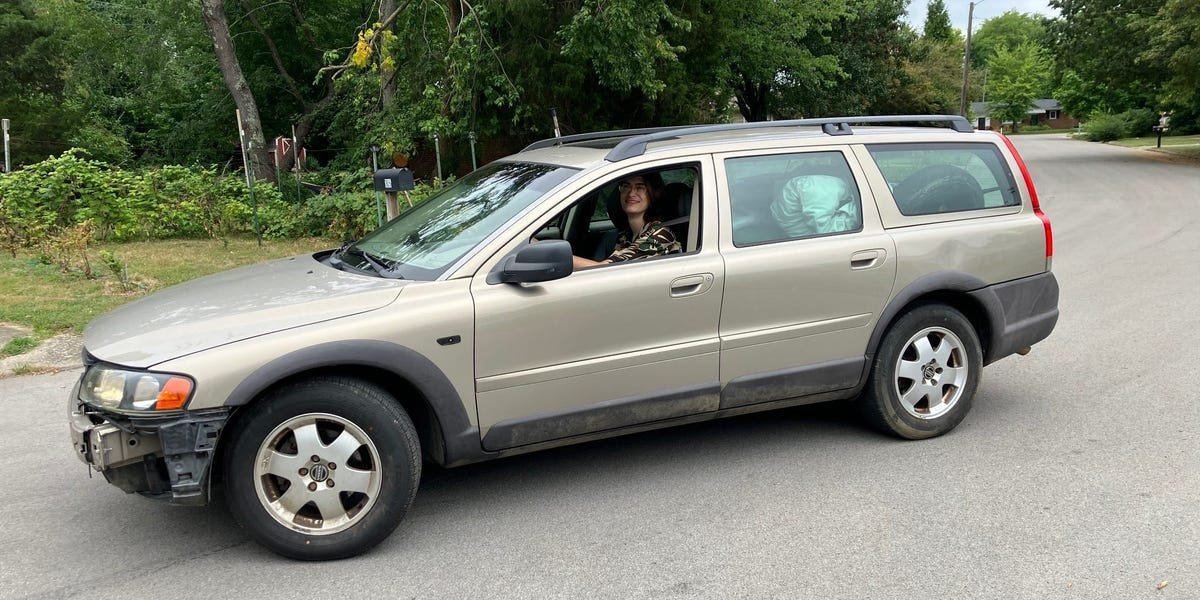
The summer before his junior year of college, however, a family friend offered him a deal he couldn’t pass up. It was a 20-year-old Volvo wagon that had a run-in with a deer. The front end was crumpled, it was undrivable, and he didn’t have the title. But the price was right — $2, twice the friend’s original purchase price of a buck.

In some ways, it was a bold move. My son didn’t have much experience in car mechanics. During that school break, he put money and time into repairs. He straightened the front radiator support with a winch so all the parts would fit again. He replaced the radiator and flushed out the intercooler. By the end, it stayed in motion long enough to limp to a storage barn for the winter.


Abandoned car

The author’s son learned how to fix the car with YouTube videos.

Courtesy of the author


The next summer, it was his main focus. He installed a new radiator fan, bought a new battery. Replaced two tires and had them aligned. Put in a new headlight and did more bodywork. He cleaned it, inside and out. And just a couple of days before returning to college, the crowning glory: a salvaged hood that perfectly matched the golden hue of his car.

He learned a lot from fixing the car

There was a fair amount of angst. Figuring out the process for issuing a new title. Hunting down the owner who last had it and arranging a meeting. Ordering the wrong or incomplete parts and having to send them back. Determining what needed to be fixed and how much it cost. Calculating how much he should spend, even after fixing it up, the car was probably only worth about $2,000.

He elected to do much of the work himself, spending hours at the “University of YouTube.” At one point, as he lamented the money he had spent so far, with the possibility that it would all be for naught, my husband asked him how much a college credit hour costs. My son looked it up. It was exactly what he had spent so far on the car. My husband said, “Haven’t you learned a lot?”


Young man posing with car

The author says her son learned so much from fixing his own car.

Courtesy of the author


That helpful reframing stuck: The night before he drove the car to college, my son commented, “Hey, I got a free car at the end of that college class.” We celebrated with him that evening, telling him how proud we were of his persistence and frugality, of his push to learn something new.

He got the independence he wanted

Seeing him drive off in that car left an indelible impression on me. Armed with his insurance’s roadside assistance, a toolbox gifted by his dad, and a bag of extra fluids in the passenger seat, he set out on the 8-hour, 57-minute drive to York College in Pennsylvania from our home in Kentucky. He couldn’t shake the small, satisfied smile on his face. I couldn’t shake my delight and my apprehension.

Being the mom that I am, I asked him to text whenever he stopped so we could track him on his journey. First stop: at the coffee shop halfway, our usual lunch break, and the new thrift store next door. Next, at a Civilian Conservation Corps museum, he saw signs along the highway. Finally, in the parking lot of his dorm. Even through text, I could sense the satisfaction and pride he felt for accomplishing that trip in his own ride.

In the ensuing months, the $2 car has safely delivered him each week to his internship and to a friend’s house for fall break. It has given him a measure of independence he didn’t have before. And it gave him something we, as parents, couldn’t, no matter how much we wanted to: a sense of self-sufficiency. That was something he had to earn.

We could only encourage him, support him, and talk him through his next steps, then see if he succeeded or failed. In the end, he knew that he could handle the road ahead by himself.


Source link