XAI cofounder Manuel Kroiss has told people he is leaving the company, according to insiders with knowledge of his exit.
Kroiss, who is also known as “Makro,” is one of 11 engineers who helped launch the company alongside Elon Musk in 2023. With his exit, the number of cofounder departures now sits at 10.
Guodong Zhang, Zihang Dai, Toby Pohlen, Jimmy Ba, Tony Wu, and Greg Yang have all stepped away since January.
XAI and Kroiss did not immediately respond to requests for comment.
Kroiss led pretraining, which helps train the company’s AI models on large datasets, and reported directly to Musk. He also worked on improving xAI’s coding models alongside Zhang, who left earlier in March. Musk said at the Abundance Summit earlier this month that xAI is “behind in coding,” but the company is working to “exceed our competitors on coding.”
Before joining xAI, Kroiss worked at Google and DeepMind.
Ross Nordeen, who came to xAI from Tesla, is the only remaining cofounder aside from Musk.
The company’s organizational structure has been in flux over the past few weeks, according to people with knowledge of the changes. Musk has taken over managing dozens of direct reports and has brought in workers from Tesla and SpaceX. It has also shed dozens of employees, the people said.
Earlier this month, Musk said on X that “xAI was not built right first time around, so is being rebuilt from the foundations up.”
He has also said that the company is resifting through old xAI candidates to bring in new people.
“Many talented people over the past few years were declined an offer or even an interview @xAI,” Musk wrote on X.
Musk’s rocket company, SpaceX, acquired xAI earlier this year. The company is expected to file an initial public offering this year, which could value it at $1.5 trillion.
Do you work for xAI or have a tip? Contact this reporter via email at gkay@businessinsider.com or Signal at 248-894-6012. Use a personal email address, a nonwork device, and nonwork WiFi; here’s our guide to sharing information securely.
This story is available exclusively to Business Insider
subscribers. Become an Insider
and start reading now. Have an account? .
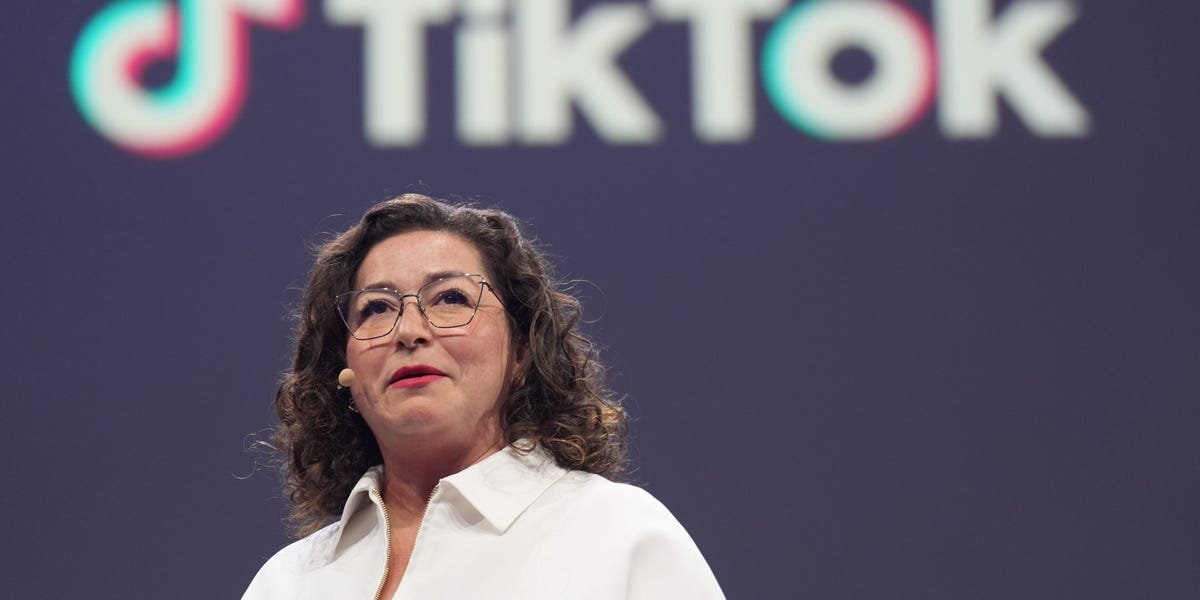
Sofia Hernandez, TikTok’s global head of marketing and commercial partnerships, is leaving.
Hernandez oversaw TikTok’s marketing strategy for brands, advertisers, and consumers.
Isobel Sita-Lumsden, another TikTok exec based in the UK, will take her place.
Sofia Hernandez, TikTok’s global head of marketing and partnerships, is leaving the company, according to a memo from global business solutions lead Will Liu.
Hernandez worked at TikTok and ByteDance for nearly six years. She initially focused on marketing related to the company’s advertising business before expanding her remit to include consumer marketing. Prior to joining TikTok, Hernandez served as chief customer officer at the consumer-insights platform Suzy. Before that, she worked at a creative agency within Publicis Groupe.
Hernandez is being replaced by Isobel Sita-Lumsden, an exec in the UK who has focused on off-platform marketing partnerships and social, according to the memo.
“Sofia played a defining role in shaping our global go to market approach,” Liu wrote in his memo. “This included expanding our presence across priority markets, and strengthening how brand, product and commercial teams work together.”
Hernandez is the latest in a string of US executives to leave TikTok in the past year. About a year ago, advertising executive Blake Chandlee, who previously oversaw global business solutions, stepped down. In January, Kim Farrell, TikTok’s global head of creators, left the company amid a reorganization of the company’s content division.
Hernandez’s exit comes at a moment of transition for TikTok, which recently split off parts of its US business into a joint venture. While some employees now work for a new US division overseen by managing investors like Oracle, Silver Lake, and MGX, advertising and marketing workers remain under the oversight of ByteDance.
TikTok and ByteDance did not immediately respond to a request for comment.
Growing up in the suburbs of southern California, I knew a few things to be true about my family. Most importantly, I knew that all we had were each other. Unlike my friends at school, we did not have any extended family. There were no big Thanksgivings, hangouts with our cousins, or sleepovers at our grandparents’ house.
It was just us four, navigating the differences between the Western culture we lived in and the Eastern culture of our roots.
I grew up in Los Angeles as the eldest daughter of an immigrant family. My parents had left their motherland in search of new possibilities in this one. The only family they would have here was the one that they would go on to create: my little sister and me.
But all that changed when I landed a job in a different city after college.
My parents encouraged me to move
When I received my acceptance letter to a university in Los Angeles, I was reassured that I would not be too far from home. When I was not on campus, I was back in my childhood living room, catching up with my little sister over our favorite boba orders and proudly taking pictures of her high school theater performances. I was playing Chinese checkers with my mom on our dining room table, followed by walking our family pup with my dad under the palm trees.
Meanwhile, in college, my life was actively progressing. By the end of my degree, I landed a dream job that would be the first building block of my future career.
It was based in Seattle.
All my life, my parents had encouraged me to go where the opportunity is. After all, that is what led them to America, where they were able to give their children the childhood they never had. In their eyes, if Seattle was where the opportunity was, that is where I should go.
“The flight is not too far,” my mom said, “but we will miss you.”
I couldn’t shake the guilt of leaving my family
I felt a continuous wave of internal conflict. On one hand, I was excited to experience something new. On the other hand, I felt guilty for leaving my already small family.
When I asked my friends if they ever felt guilty about moving away from home, I was surprised by their responses. For most of them, it never even crossed their minds. They chose to move because they never saw themselves living in the same area they grew up in, and they knew it would not provide the industries they needed.
The author decided to move to Seattle.
Courtesy of Sherri Lu
They took possibly never living near their parents again as a given part of adulthood. Their parents share this belief and, like mine, encouraged them to carve out the life path that best suits them.
Perhaps my guilt stemmed from the fact that I was choosing to leave a city that could potentially offer similar career prospects. Would I feel the same guilt about moving away if my family were located somewhere I did not feel as warmly about?
Eventually, I did talk myself into taking the job. As I settled into Seattle, I thought about how my grandparents felt when their daughter moved across the ocean from China to America. By comparison, my living just a few states away felt minor.
“How did you feel when Mom told you she was considering leaving home?” I asked my grandma over video chat.
“She needed to make her own decisions on what she thought was best for her life, but I did secretly cry about it,” she told me. “I made sure your mother never saw because I did not want it to influence her decision.”
I made the right decision
Beyond my career, living on my own gave me the space to understand myself more deeply. I began sharing my self-discovery journey online with “Eldest Daughter Club” and grew it into a community of other women doing the same. I found different forms of family as I bridged the distance between my own.
I called my family often and planned routine trips back home. Although our in-person time was now more limited, I made sure that a larger percentage of it was true quality time.
Guilt was the feeling that encompassed the discomfort of leaving behind the familial support system that I had always counted on. In the end, support transcends location.
We must all make the decisions on what we think is best for our lives. Guilt is just a signal of what you cherish, but it does not tell your whole story. That is for us to build, wherever we decide to call home.
Meta is dialing back the metaverse to mean something far less futuristic: an app on your phone.
The company, which spent billions of dollars to build Horizon Worlds — an immersive, virtual hangout zone on its Quest virtual reality headsets — is “shifting focus” for Horizon Worlds “to be almost exclusively mobile,” according to a blog post published on Thursday.
Horizon Worlds is part of Meta’s Reality Labs division for VR products and smart glasses, a unit that has burned nearly $80 billion since 2020.
“Last year, we began to experiment with Worlds as a mobile platform, and we saw positive momentum,” wrote Samantha Ryan, Meta’s vice president of content at Reality Labs. “Now, to truly change the game and tap into a much larger market, we’re going all-in on mobile.”
The move signals how dramatically Meta has redrawn its VR ambitions.
Every time Pranav publishes a story, you’ll get an alert straight to your inbox!
Stay connected to Pranav and get more of their work as it publishes.
Last month, Meta laid off roughly 10% of Reality Labs employees, closed three VR gaming studios it owned, and stopped releasing new content for Supernatural, a popular VR fitness app it acquired in 2023.
Meta said it is still committed to virtual reality hardware and supporting third-party developers who create games for it.
“We’re in it for the long haul,” Ryan wrote, and pointed to the company’s “robust roadmap of future VR headsets tailored to different audience segments.”
Meta invested nearly $150 million in VR developer platforms in 2025, Ryan wrote, and she said that popular games like “The Thrill of the Fight 2,” “Hard Bullet,” and “UG” had earned “millions” in revenue.
Still, she wrote that 86% of the time people spend in Meta’s headsets is in third-party apps, not its own. The pivot to mobile effectively pits Horizon Worlds against entrenched competitors like Roblox and Fortnite that cater to casual mobile gamers rather than VR enthusiasts with headsets.
On Meta’s latest earnings call, CEO Mark Zuckerberg pitched Horizon as the natural home for “immersive 3D” content: AI-generated scenes, objects, and mini experiences. Now, rather than putting on a headset, people could just spin up that content with a prompt and then share it straight into Instagram, Facebook, or Threads, he said.
Have a tip? Contact Pranav Dixit via email at pranavdixit@protonmail.comor Signal at 1-408-905-9124. Use a personal email address and a nonwork device; here’s our guide to sharing information securely.
Canadians are pulling back from visiting the US — and airlines are paying attention.
Montreal-based Air Transat will no longer fly to the US this summer, with its last flight across the border operating in early June.
In March last year, it operated nine routes to and from the US, but that number had dropped to three as of early 2026.
At the moment, Air Transat flies from Montreal to Orlando and to Fort Lauderdale, and from Quebec City to Fort Lauderdale.
Air Transat, which focuses on vacation travel, was named the world’s best leisure airline by Skytrax for the third year in a row in 2025.
Every time Pete publishes a story, you’ll get an alert straight to your inbox!
Stay connected to Pete and get more of their work as it publishes.
An airline spokesperson told Business Insider that its presence in the US “remains very marginal today,” with only two of its 67 destinations in the US.
“This adjustment is part of a proactive management of our capacity, as we focus our efforts on markets where Air Transat is best positioned and that allow us to optimize the deployment of our resources,” they said.
The spokesperson added that its winter schedule “will be determined at a later date.”
WestJet, Canada’s second-biggest airline, is also slashing flights across the border for this summer.
It’s suspending 16 routes, including big city pairings like Boston to Vancouver and Los Angeles to Toronto.
The airline has reduced its “full-year transborder flying by close to 10%,” a spokesperson told Business Insider.
“We saw a notable decline in transborder travel demand throughout 2025,” they said.
“As such, WestJet has redeployed its fleet by increasing capacity on routes Canadians want to fly.”
Canadians’ travel demand has sunk since President Donald Trump took power early last year.
Last month, capacity was down 10% on flights from Canada to the US compared to a year earlier, according to data from Cirium, an aviation analytics firm.
Canadian residents made 1.6 million return trips from the US last month, down 24.3% from a year earlier, according to Statistics Canada.
Tensions flared when the US imposed a 25% tariff on imports from Canada and Mexico last March. It sparked a “Buy Canadian” movement and helped Prime Minister Mark Carney win last April’s elections.
Trump has also referred to Canada as the “51st state.” Following Canada’s trade talks with China earlier this year, he threatened a 100% tariff on Canadian goods and to block the opening of a bridge between Detroit and Ontario.
This story is available exclusively to Business Insider
subscribers. Become an Insider
and start reading now. Have an account? .
Anderson Cooper is leaving CBS’s “60 Minutes” after two decades in the gig.
The correspondent said he balanced his CNN and CBS jobs for 20 years.
Now, he’s quitting one gig to spend more time with his children.
Anderson Cooper has called it quits on CBS’s “60 Minutes” after nearly two decades with the show.
Cooper, who is a political commentator on CNN’s “Anderson Cooper 360” and a correspondent on “60 Minutes,” said on Monday that he would be leaving the latter job.
“Being a correspondent at 60 Minutes has been one of the great honors of my career,” he said in a statement to multiple news outlets.
“For nearly twenty years, I’ve been able to balance my jobs at CNN and CBS, but I have little kids now and I want to spend as much time with them as possible, while they still want to spend time with me,” he added.
Cooper, 58, joined “60 Minutes” in 2006 and has become one of its most recognizable hosts.
In a statement to Business Insider, a CBS spokesperson said, “For more than two decades, Anderson Cooper has taken 60 Minutes viewers on journeys to faraway places, told us unforgettable stories, reported consequential investigations and interviewed many prominent figures.”
“We’re grateful to him for dedicating so much of his life to this broadcast, and understand the importance of spending more time with family,” the spokesperson added. “60 Minutes will be here if he ever wants to return.”
This is a developing story. Please check back for updates.
This as-told-to essay is based on a conversation with Kat Smith, 35, who has lived abroad since 2015. Smith, the founder of Away Abroad, a website for female travelers, currently lives in Trieste, Italy, with her husband. This conversation has been edited for length and clarity.
I think people don’t always believe me when I say it, but living abroad has always felt more fun to me. I love the cultural challenges, the language barrier, the different food, and the process of figuring out the day-to-day.
I’m originally from Conyers, a small town just outside Atlanta. In high school, I moved to Athens, Georgia. It was a typical small, suburban place — there weren’t many people traveling internationally. Certainly, no one was moving abroad the way I eventually did.
When I was 18, between graduating from high school and starting at the University of Georgia, my parents basically forced a gap semester on me. They came home from a dinner party one night and were like, “Instead of going to college, you’re going to Guatemala.”
I did not want to go, but hindsight is 20/20.
Going to Guatemala was the best thing that could have happened to me. While I was there, I met a Peace Corps volunteer. Spending time with them and being in the country changed my perception of the world and opened my eyes to what was even possible.
When I got back and started university, I met with an advisor who had also served in the Peace Corps. After talking with him more, it just felt like the right path for me.
Living abroad changed me as a person
In 2013, almost exactly a month after I graduated from university, I joined the Peace Corps and left the US for Ecuador.
At the time I applied, you didn’t really have much say in where you went. I basically said, “Send me anywhere in the world,” and they sent me to Ecuador. During training, they placed me in a community based on my skill set and the community’s needs.
I ended up in Tumbaco for 3 months for training and then in Arenillas, a really small town in the southwestern province of El Oro, where I lived for about two years.
When my service ended, a friend of mine and I hitchhiked through the Peruvian Amazon and ended up working at an eco-lodge in the middle of the rainforest for a few months.
Smith’s boat ride on the Amazon River.
Courtesy of Kat Smith
Around that time, in 2015, my dad was like, “Okay, you haven’t been home in almost three years. I’m buying you a ticket—you’re coming to visit.” So, begrudgingly, I went back to the US.
I remember feeling reverse culture shock more intensely than I ever felt culture shock. It completely caught me off guard. All of a sudden, the US didn’t feel like home anymore. I felt like I didn’t fit in.
I also knew I wasn’t the same person I’d been when I’d left, which created an internal conflict. I don’t want to be that dramatic, but I had a different mindset, and trying to be the old me was hard.
I’ve traveled and lived all around the world
Over the years, I’ve lived in Panama City, been to Colombia, worked on a yacht in the South of France, and backpacked through Eastern Europe for a couple of months. I also backpacked between Vietnam and Thailand, and taught English in South Korea.
Smith and her husband, Rafael Tudela, in Cartagena, Colombia.
Courtesy of Kat Smith
Somewhere in the middle of all of that, I fell in love and got married in Colombia in 2018. Not long after, my husband and I moved to Vietnam, where we stayed for three years while I was teaching English, before leaving in 2021 because of COVID restrictions.
After Vietnam, we went back to the US for a while. We bought a van, converted it, and traveled up and down the West Coast. I loved nature, but after a few months, I was ready to leave again.
Smith inside of the van she traveled with across the West Coast.
Courtesy of Kat Smith
So we tried Albania next. We stayed for a couple of months, but it didn’t feel like the right long-term fit. Instead, we kept moving and spent time around the Balkans — traveling through Montenegro, Serbia, Bosnia, and Croatia.
My journey hasn’t been perfect
Looking back, I’ve made a few mistakes along the way.
One of the things I cringe about most is how I treated my friends and family back home. I was pretty insensitive about their choices — friends who just wanted to graduate, buy a house 10 minutes from where they grew up, and settle into a typical, structured, no-surprises kind of life. I think I judged that because I felt like what I was doing was so extravagant.
But honestly, I was a bit of a brat about accepting other people’s paths.
I did something similar with my family, too. I didn’t really consider what it meant for them when I left. I was so focused on what it meant for me, and not necessarily on how it was affecting everyone around me.
Smith and friends exploring a neighborhood in Seoul.
Courtesy of Kat Smith
Italy is home — for now
In 2023, we moved to Italy for a job opportunity for my husband. He has an EU Blue Card — basically a work permit for skilled workers — and I’m on a family reunification visa linked to his.
We’ve been living in Trieste for the past 2.5 years. Trieste is fantastic, but it’s also an up-and-coming city that’s gotten really expensive, fast. Even in the short time we’ve been here, we’ve seen a big jump in costs. Our rent, for example, increased by $308 a month, which still feels crazy.
Our apartment is really nice: one bedroom, one bath, open floor plan, and close to everything. I’m really into nature, and we have a beautiful view of the sea and the hills. We were paying $1,423 a month, and now it’s $1,732.
The view from Smith’s apartment in Trieste.
Courtesy of Kat smith
That rising cost of living is one of the reasons we started looking at other places — just to get more for our money.
We ended up buying an apartment in Belluno for $260,955, and we’ll move in April. Belluno is a much smaller town, kind of a gateway to the Dolomites, and it sits north of Venice. We’re big mountain people, and the Dolomites are genuinely my happy place. Being closer to them means we can hike and snowboard more regularly without a long drive, which was a huge perk for us.
Although we didn’t choose Italy initially and only moved here for my husband’s job, there are a lot of reasons we’ve chosen to stay rather than move on like we typically do after a few years.
Italy has a strategic geographic position. I love living smack dab in the middle of the world. Not only is this exciting adventure-wise, but it’s also meant more people have been able to visit us, including our parents, who aren’t as keen on the long-haul flights.
Smith and her dog on a hike in Montenegro.
Courtesy of Kat Smith
On top of that, the culture clicks for both of us. As an intercultural couple, we have different triggers, things we look for, and things we want to avoid. Northern Italy has provided the perfect balance for us.
I really hope Italy can be our home base, at least for the foreseeable future. But I also know myself: If, two years from now, it doesn’t feel right, we’ll pivot. I’m not setting a deadline; it’s more about whether it still feels like home. And right now, it does.
A Pentagon watchdog report is warning that gaps in Pentagon policy are leaving some US military bases vulnerable to drone threats.
The report, released Tuesday by the Pentagon’s Inspector General, said that the military lacks consistent guidance for defending sensitive “covered assets” — US-based sites legally authorized to use certain counter-drone defenses — against offensive uncrewed aircraft, a problem exacerbated by jumbled, contradictory policies across the services.
While the Defense Department has issued multiple counter-UAS policies — rules governing how the military can detect, disrupt, or disable uncrewed aerial systems — those directives are not standardized, leaving some base leaders unaware that their installations qualify as “covered assets.” The term refers to locations within the US that deal with sensitive missions like nuclear deterrence, missile defense, presidential protection, air defense, and “high yield” explosives.
That lack of awareness derived from confusing policy risks leaving bases exposed to uncrewed threats, a growing concern.
The Inspector General report examines 10 military installations where drone incursions have occurred. The watchdog assessment found multiple examples of “covered assets” left uncovered due to unclear policies.
The Air Force base in Arizona where most F-35 pilots are trained, for instance, is not authorized to defend against UAS incursions because pilot training does not qualify as a “covered” activity under Pentagon policy, despite the Air Force describing the F-35 as “an indispensable tool in future homeland defense.”
Another Air Force facility in California that manufactures aircraft repair parts, conducts aircraft maintenance, and makes the Global Hawk, an ultra-advanced large surveillance drone that costs more than the F-35A, has also been left vulnerable, and the site experienced a series of drone incursions in 2024, the report said.
“Air Force officials told us that the government-owned, contractor-operated facility was denied coverage during the active incursions,” in 2024, the IG report says.
The problem extends beyond determining whether a site is covered. The process for obtaining counter-drone systems — and securing rapid legal approval to use them when needed — is complex and slow, reflecting legal restrictions on using electronic jamming or force inside the US, the report found.
A contractor hand-launches a drone at a counter-UAV training site in California in January 2020.
PFC Gower Liu/US Army
The growing counter-drone problem
Concerns about drone threats to military installations have grown in recent years as small, inexpensive commercial drones have become dramatically more popular and easy to use. Such systems lower the barrier to entry on surveillance and precision strike from the state level to non-state actors and can create challenges for security personnel who are often constrained in their response options, or improperly trained and equipped to react.
In 2024, multiple bases within the US and abroad experienced strings of drone incursions, events that can involve one or more unmanned aircraft entering restricted airspace or operating close enough to installations to trigger alarms, even when the drones are not linked to foreign adversaries.
“In recent years, adversary unmanned systems have evolved rapidly,” a Department of Defense counter-drone strategy released in the final months of the Biden administration said. “These cheap systems are increasingly changing the battlefield, threatening US installations, and wounding or killing our troops.”
Efforts to address the drone problem have been in the works for years, though a Center for New American Security report released last September said the military’s efforts were “hindered by insufficient scale and urgency.”
Some units have received counter-drone tools such as portable “flyaway kits” — deployable systems meant to be moved quickly between sites — and the “Dronebuster,” a handheld electronic-warfare device that emits a signal to disrupt or disable an offending drone. The Army secretary recently questioned the latter system’s effectiveness, underscoring broader uncertainty about how best to defend US bases from the growing drone threat.
The US military is trying to catch up with the threat, to develop defenses as fast or faster than drone technology is currently developing, driven in large part by the drone-dominant Ukraine war. As he announced the creation of Joint Interagency Task Force 401 last August, Secretary of Defense Pete Hegseth said “there’s no doubt that the threats we face today from hostile drones grow by the day.”
“The challenge for airspace management is how to deter or defeat such incursions without endangering the surrounding civilian communities or legitimate air traffic. That rules out everything kinetic,” Mark Cancian, a defense expert and retired US Marine Corps colonel, told Business Insider in late 2024 during a series of incursions.
“This has become a huge problem for both military and civilian airfields and will get worse and drone usage proliferates further,” he said.
The head of Paramount Skydance’s streaming product and tech is leaving the company, Business Insider has learned.
Vibol Hou told colleagues in the company’s streaming tech Slack channel that he’s leaving Paramount at the end of January.
“After nearly 12 years of exhilarating work pushing our businesses to new heights, it feels like the right time to hand the torch to the next wave of leaders while I take a much-needed pause to rest, focus on my health (including some serious marathon training), and spend more time with my family before I jump into whatever comes next,” Hou wrote in the Slack message, which was viewed by Business Insider.
Hou’s exit has been anticipated within Paramount for months.
In Hou’s Slack message, he referenced a previous memo from Dane Glasgow, Paramount’s chief product officer, that hinted at the move.
Every time James publishes a story, you’ll get an alert straight to your inbox!
Stay connected to James and get more of their work as it publishes.
“Vibol has expressed interest in exploring other opportunities, and while he will remain in his role with an anticipated transition early next year, we will continue to explore new projects together,” Glasgow wrote in a mid-October email viewed by Business Insider.
Hou was at Paramount or its subsidiaries for over a decade, including six years at its free streamer, Pluto TV. In that span, Paramount went through several corporate changes, from a ViacomCBS merger to the Paramount Skydance merger that closed in the summer of 2025.
“What we’ve built together across Pluto TV, CBS All Access/Paramount+, and Network Streaming was never easy,” Hou wrote in the Slack message. “But we built these products from the ground up, in tough environments that didn’t necessarily believe in our vision, with limited resources and non-existent technology where we often had to build our own, and under constant pressure to deliver.”
Hou’s Slack message was received warmly, with 118 “care” emojis, 67 classic “red heart” emojis, and 43 “thank you” emojis, among other signals of support as of early Thursday afternoon.
Since Paramount Skydance CEO David Ellison took over in early August, he’s made several noteworthy moves, like landing UFC rights in the US and hiring Bari Weiss to lead CBS News.
Ellison is now focused on buying Warner Bros. Discovery, which has rejected its takeover offer eight times.
Paramount did not immediately respond to a request for comment.
Read Hou’s Slack message to colleagues announcing the move:
@channel Team,
As Dane shared in his note, I’ll be transitioning out of my role and leaving the company at the end of January. After nearly 12 years of exhilarating work pushing our businesses to new heights, it feels like the right time to hand the torch to the next wave of leaders while I take a much-needed pause to rest, focus on my health (including some serious marathon training), and spend more time with my family before I jump into whatever comes next.
What we’ve built together across Pluto TV, CBS All Access/Paramount+, and Network Streaming was never easy — but we built these products from the ground up, in tough environments that didn’t necessarily believe in our vision, with limited resources and non-existent technology where we often had to build our own, and under constant pressure to deliver. Yet again and again, this team showed grit, creativity, and passion. Whether you came from Pluto or another part of Streaming, the story is the same: we took on impossible problems and innovated our way through.
The culture we live — being curious about everything, feeling that hunger to solve problems, caring deeply for others, iterating constantly, and innovating in everything we do — belongs to all of you now. You should be proud of what you’ve achieved, and you should be confident that this is a team that can handle anything thrown its way.
As to the future, I have a lot of confidence in Dane and the vision and strategic pillars he’s laid out for the year ahead. They set a strong foundation for where this organization can go over the next several years, and I’m excited to see what you all do together under his leadership.
I plan to hold my last open office hours next Friday so anyone who wants to drop in, ask questions, or just say hello/goodbye has a space to do that together. In the meantime, if you’d like to stay in touch beyond my time here, please feel free to connect with me on LinkedIn.
Serving alongside you has been one of the great privileges of my life, and I’ll be proudly cheering you on as you write the next chapter together.