I-started-a-list-of-Black-owned-businesses-in-Maine-6.jpeg

I started a list of Black-owned businesses in Maine 6 years ago. I took it down when ICE showed up.

This as-told-to essay is based on a conversation with Rose Barboza, founder of Black Owned Maine. It has been edited for length and clarity.

In the summer of 2020, I started a directory of Black-owned businesses in Maine. I was looking for a way to support the Black community for people who couldn’t attend protests. I also wanted to make a longer-term economic impact.

It immediately took off. These were my neighbors and local businesses that I just hadn’t heard about. That’s the thing: People joke about Maine being the whitest state, but there are actually plenty of Black-owned businesses here. They’re just not in Maine’s heritage industries, so they don’t necessarily get a lot of attention.

The directory took off like a rocket ship. Black Owned Maine now has four employees, including me, and an annual operating budget of about $250,000. In addition to the directory, we host events and business advising to support Black Business owners. As of late 2025, we had 423 businesses on the list, including a gym, beauty salons, restaurants, translation services, and more. About half of them were owned by immigrants.

I felt the directory became too dangerous when ICE arrived in Maine

I’ve always worried about what could happen if the list got into the wrong hands. My concern grew as there were rumors of ICE coming to Maine to do a large-scale raid. I was worried about agents being able to scrape our website and target the businesses that were listed.

My community was hesitant to bring the list down. Many businesses rely on us for free advertising. One beauty salon owner recently told me she got four new clients in one week after we featured her on our social media. I didn’t want to take that away if I didn’t need to.

When ICE arrived in Maine in January, I decided it was too unsafe to have a public-facing list of Black businesses. We took down the directory in late January.

We’re considering putting the list behind a paywall

Creating Black Owned Maine is the biggest thing I’ve ever done, aside from having children. Taking it down felt like a defeat of my life’s work.

When I feel discouraged — which is often these days — I have to remind myself we’re not at the end. There’s a path forward from here, and we just have to see what it is.

One option we’re looking at is putting the directory behind a paywall. It’s expensive to run this nonprofit, and in recent years, grants for this type of work have been hard to come by. We believe people should be compensated for doing social justice work, and charging to access the directory feels like a way to practice what we preach about economic empowerment.

It would take about $100,000 to rebuild the website in a way that can keep information secure. That includes the cost of staff needed to operate it for about two to three years. Still, it’s a lot of money to ask for. Right now, we’re encouraging people who have used our list to donate.

Despite everything, I’m still hopeful

Maine is such an accepting place. And yet, I’ve had business owners reach out to ask me to take down social media posts featuring them. People are scared. It feels like they’re being forced into hiding.

I’m hoping people will continue to support Black and immigrant communities in Maine. Recently, I booked an appointment with a new dentist, an immigrant from Southeast Asia. Her clinic is a little further away, but I want to support her. If we’re all more intentional about where we spend our money, we can make a difference.

Sometimes I think, “Why are we even doing this?” But underneath the difficulties, I’m still hopeful.

Editor’s note: Business Insider reached out to ICE for comment.



Source link

The-list-of-companies-laying-off-staff-this-year-includes.jpeg

The list of companies laying off staff this year includes Citi and Angi, with dozens of others like Meta warning of job cuts

The year 2026 is just getting started, and layoffs are already underway.

Companies, including Angi, the company formerly known as Angie’s List, and the popular web tool Tailwind, have cut staff, citing the impact of artificial intelligence among the reasons for the layoffs.

More than 100 other companies, from Amazon to Nike to Verizon, have filed legally mandated WARN notices about job cuts to come in 2026, according to WARN Tracker. Some of the cuts are part of previously announced reductions.

This year’s cuts follow three years of significant workforce reductions across a broad range of industries, including tech, media, finance, and retail.

The moves come as artificial intelligence, public policy, and broader economic conditions present sweeping changes to the business landscape.

A World Economic Forum survey last year found that some 41% of companies worldwide expected to reduce their workforces in the next five years because of the rise of artificial intelligence. The survey also found that jobs in big data, fintech, and AI are expected to double by 2030.

Last year, Business Insider tracked layoffs at around 65 major companies, such as Amazon, Meta, Paramount, and Starbucks. In 2026, we’ll continue to track additional job cuts based on company announcements, WARN notices, and our own reporting.

Here are the companies with job cuts underway in 2026, listed in alphabetical order.

Angi is cutting 350 jobs

Angi, a contractor listing platform, was previously known as Angie’s List.

Donald King/AP

Angi, the popular contractor listing site once known as Angie’s List, said in January that it was cutting around 350 jobs “to reduce operating expenses and optimize the organizational structure in support of long-term growth.” The company also said it’s making the cuts “in light of AI-driven efficiency improvements.”

In a January 7 SEC filing, Angi said that the cuts would save between $70 million and $80 million in annual spending. The layoffs will cost the company between $22 million and $30 million, according to the filing.

Citi’s job cuts continue this year


Citibank logo

Citibank said it will continue to cut jobs in 2026.

Kevin Carter/Getty Images

Citi will cut more jobs this year as part of its plan to reduce its workforce by 10%, or 20,000 employees.

In a statement on January 13, the bank said that it will continue to reduce head count in 2026.

“These changes reflect adjustments we’re making to ensure our staffing levels, locations and expertise align with current business needs,” a spokesperson for Citi said.

The plan was detailed in the company’s January 2024 earnings report and could save the bank as much as $2.5 billion.

Meta is preparing for layoffs


The Meta Quest 3s, the standalone virtual reality headset developed by Reality Labs, a subdivision of the American company Meta Platforms, is exhibited at the Qualcomm pavilion during the Mobile World Congress 2025 in Barcelona, Spain, on March 5, 2025. (Photo by Joan Cros/NurPhoto via Getty Images)

Meta is preparing to slash jobs within its Reality Labs division as the branch’s cash burn continues.

Joan Cros/NurPhoto via Getty Images

Meta is preparing to slash jobs within its Reality Labs division, the unit responsible for Mark Zuckerberg’s metaverse ambitions, three people familiar with the matter told Business Insider.

Two employees said that teams working on virtual reality headsets and Horizon Worlds, the company’s VR social network, will be disproportionately affected. The New York Times reported that roughly 10% to 15% of the division’s 15,000 employees are expected to be laid off, with announcements coming as soon as this week.

The cuts coincide with a high-stakes division-wide meeting scheduled for Wednesday. Meta’s CTO and Reality Labs chief Andrew Bosworth described the upcoming gathering as the “most important” of the year and urged employees to attend in person.

Tailwind cut 3 of its 4 engineers

Tailwind, a popular web tool, said it cut three of its four engineers in January, citing an AI-driven decline in revenue.

“75% of the people on our engineering team lost their jobs here yesterday because of the brutal impact AI has had on our business,” CEO Adam Wathan wrote in a GitHub comment on January 6 that made waves in the tech community.

Is your company conducting layoffs? Got a tip?


Hand Holds Smartphone Near Computer Keyboard At Desk, Showing Multitasking Communication, Notifications, And Mobile Work Updates For Business Productivity In A Modern Office Workflow.

Using a non-work device and an encrypted messaging service is recommended when contacting reporters.

michnik101/Getty Images

Have a tip about company layoffs? Contact Business Insider reporter Dominick Reuter using a personal email address, a non-work WiFi network, and a non-work device; here’s our guide to sharing information securely.


Source link

See-the-list-of-Californias-200-plus-billionaires-who-could-be.jpeg

See the list of California’s 200-plus billionaires who could be hit by the proposed wealth tax

California has a lot of billionaires, more than any other state and more than most countries. So a proposed wealth tax on its billionaires could be a windfall, if they stick around.

Under the Billionaire Tax Act, California residents worth over $1 billion would face a one-time tax totaling 5% of their assets.

If the tax plan receives enough signatures, it will appear on the ballot in November and, if passed, would apply retroactively to billionaires living in the state as of January 1. The tax would be due in 2027, with the option to spread the payment out over five years, with interest.

The idea has drawn sharp reactions from lawmakers and business leaders.

Google cofounders Larry Page and Sergey Brin moved entities tied to them out of the state last month just ahead of the deadline, Business Insider first reported.

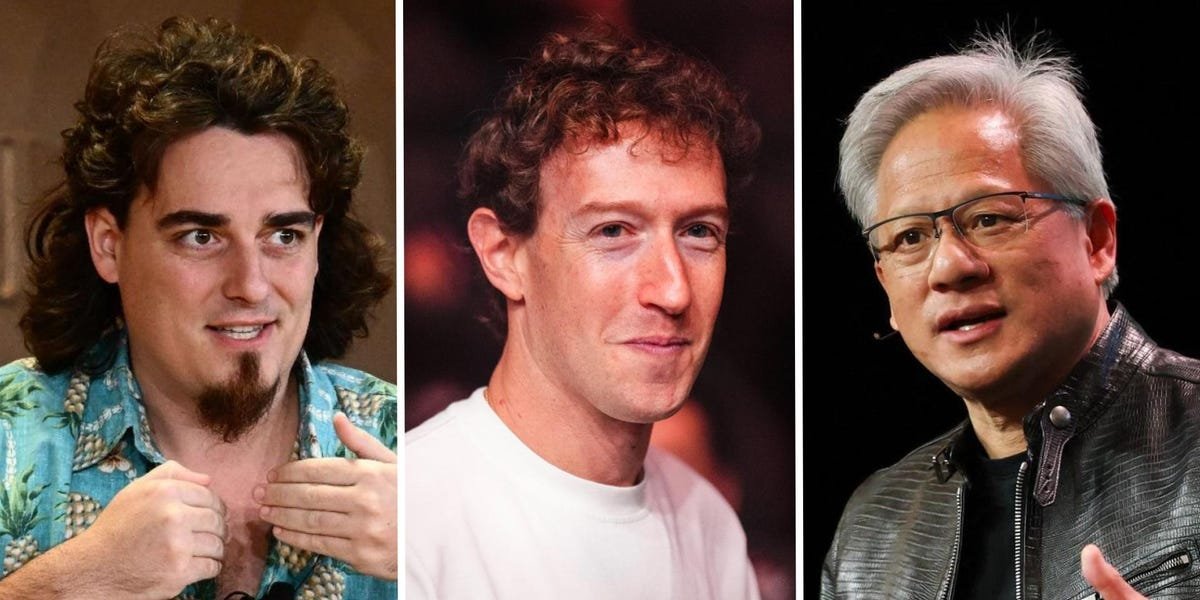
Nvidia CEO and billionaire Jensen Huang said he was “perfectly fine” with the tax. Palmer Luckey, the billionaire founder of defense tech startup Anduril, said it would force companies to “immediately pivot into profit obsession over mission or long-term sustainability.”

Critics of the tax have warned it will encourage ultrawealthy residents to flee the state and hurt California’s economy.

As of January 1, there were 214 billionaires in California, according to Forbes data compiled by Americans for Tax Fairness, a group that advocates for higher taxes.

Below is the full list of billionaires in California. Names with asterisks have recently moved at least some of their business entities out of the state.

Loading
Loading
Loading
Loading
Loading
Loading
Loading
Loading
Loading
Loading
Loading


Source link

China-is-going-after-US-defense-firms-and-execs-over.jpeg

China is going after US defense firms and execs over weapons sales to Taiwan — and Palmer Luckey’s on the list

China announced sanctions against 20 US defense companies and 10 senior executives on Friday, citing US arms sales to Taiwan as its motive.

In a statement, China’s foreign ministry said its assets within China, including movable and immovable properties, would be frozen and that domestic organizations and individuals would be prohibited from doing business with them.

Individuals named on the list would also be denied visas and entry to the country, the ministry added.

The sanctions list includes Northrop Grumman Systems Corporation, Boeing’s St. Louis branch, Epirus, and Anduril Industries founder Palmer Luckey.

In a statement, a spokesperson for the foreign ministry said: “We stress once again that the Taiwan question is at the very core of China’s core interests and the first red line that must not be crossed in China.”

“Any company or individual who engages in arms sales to Taiwan will pay the price for the wrongdoing,” they added.

When reached for comment, Anduril pointed Business Insider to an X post from Luckey in which the CEO joked that he was honored.

“I want to thank my family, my team, and my Lord Jesus Christ for this award,” Luckey wrote on X. “Anduril has been sanctioned for a while now, as have many of my peers, but it means so much to finally have my non-existent Chinese assets seized and repurposed.”

China’s sanctions follow the US announcement of a $11 billion military package for Taiwan last week.

The deal, which includes self-propelled Howitzers and HIMARS rocket launchers, still needs to be approved by Congress — but it drew a swift response from Beijing.

Lin Jian, a spokesperson for the foreign ministry, said in a statement at the time that China “strongly deplores and firmly opposes” the sales.

China regards Taiwan as a breakaway province that will one day come under Beijing’s control, and Chinese President Xi Jinping has refused to rule out an invasion of the island. Taiwan’s ruling Democratic Progressive Party views Taiwan as separate from China.

Under the Taiwan Relations Act, the US is obligated to assist Taiwan in defending itself.

Beijing has ramped up pressure around the island in recent years, holding frequent military exercises in the surrounding skies and waters.

A 2024 report by the Washington, D.C.-based think tank the Center for Strategic and International Studies suggested that China may be able to exert power over Taiwan without launching an invasion.

The report said China could impose a quarantine of the island using its coast guard.

“The purpose of a quarantine is not to completely seal Taiwan off from the world but to assert China’s control over Taiwan by setting the terms for traffic in and out of the island,” it argued.

“A key goal is to compel countries and companies to comply with China’s terms.”


Source link