
Meta-is-running-intensive-AI-training-weeks-to-get-employees.jpeg

Meta is running intensive AI training weeks to get employees testing agents and coding with Claude

At Meta, there’s no escaping AI.

The company has begun running intensive AI training weeks to encourage staff to experiment more with AI tools, according to Meta employees who spoke with Business Insider and public LinkedIn posts.

The weeks have involved a series of hackathons, demos, and other projects where Meta staff show off what they can build with AI, regardless of their job title or seniority. Some of the projects are built with Anthropic’s Claude Code, which the company has adopted widely internally.

This is part of Meta’s latest initiative to embrace AI across its workforce, which has included setting org targets for AI adoption and reorganizing some teams around AI-native “pods.” Similar pushes are taking place across corporate America as companies aim to become more efficient with AI. Google has told some employees their AI use will be considered in performance reviews, and JPMorgan has told software engineers it expects them to be harnessing AI to save time.

“It’s well-known that this is a priority and we’re focused on using AI to help employees with their day-to-day work,” a Meta spokesperson told Business Insider.

Internally, these sessions have been given names such as “AI Transformation Week.” During the sessions, some employees were given demos on how agents and other tools could work across their laptops and phones, an employee who attended some sessions told Business Insider.

Some of these AI weeks took place in March. One Meta employee told Business Insider that some teams held their own AI weeks at the end of last year, during which staff used vibe coding to create something valuable with no strict output requirements.

At one hackathon during Meta’s AI Transformation Week, attendees sat through demos of its own internal AI tools, Claude Code, and others, according to a LinkedIn post from an employee. AI agents are a big focus, with the aim of having employees guide autonomous systems that can handle everything from coding to compiling reports.

Design is also part of the effort. One Meta product manager touted building an interactive vibe-coding guide for designing products at Meta using Claude Code, according to her website.

Pods and goals

While some employees were brushing up on AI this week, Meta laid off several hundred employees across Reality Labs, the division overseeing its virtual reality projects, and other orgs. The company has spent billions on hiring top AI talent and building out infrastructure. However, it has yet to launch its long-awaited frontier model, internally codenamed Avocado.

While that has given Meta the perception of being behind in the AI race, a top Wall Street analyst said earlier this month that the company’s aggressive internal AI transformation could, in fact, give it “insurmountable” cost and performance advantages.

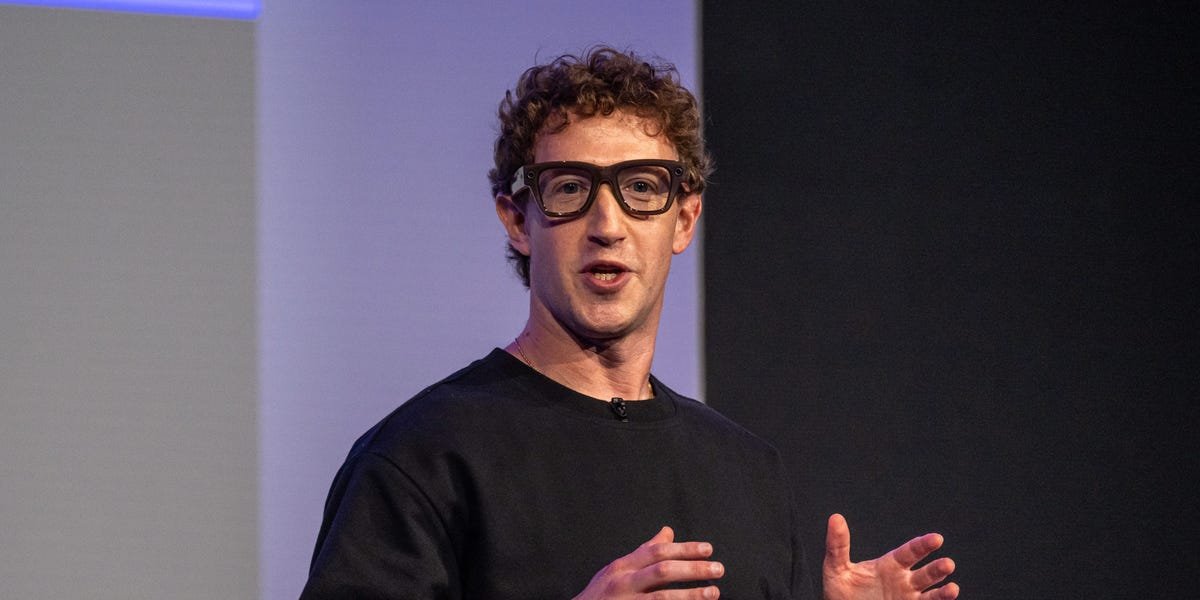
Meta has been making other changes in an effort to be what CEO Mark Zuckerberg has described as “AI native.” In a division of Reality Labs, the organization overseeing Meta’s virtual reality projects, employees were rebranded with titles like “AI builder” and were organized into AI-native “pods,” Business Insider previously reported.

The company has also set specific goals for adopting AI tools that vary across teams, according to an internal document reviewed by Business Insider.

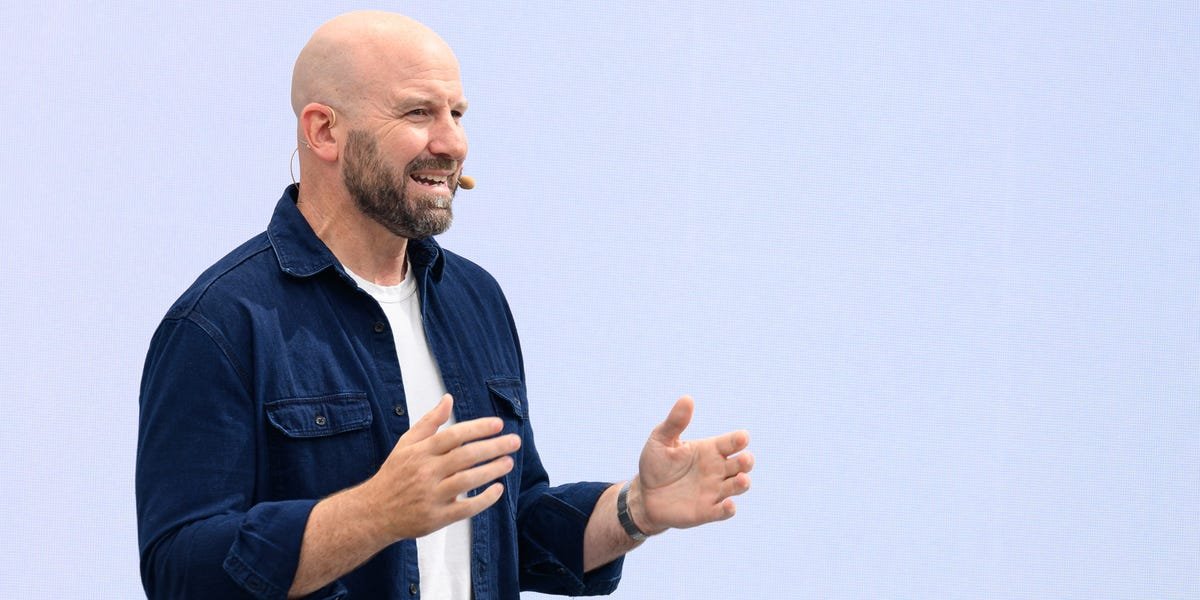
On Tuesday, Meta’s CTO Andrew Bosworth said he would take leadership over the company’s efforts to adopt AI for internal use, an initiative known internally as “AI for Work,” according to a copy of the post seen by Business Insider and first reported by The Wall Street Journal.

“These tools hold the promise of giving each employee so much more power to accomplish their work,” Bosworth said in a post on X.


Source link

Meta-CTO-shares-7-traits-he-likes-to-see-in.jpeg

Meta CTO shares 7 traits he likes to see in an employee

Want to work at Meta? Boz just gave you a guide.

Andrew Bosworth — also known as “Boz” — is Meta’s chief technology officer, overseeing divisions from the metaverse and gaming to AI glasses. On Monday, a respondent to his Instagram AMA asked what “type of person” thrived at Meta.

“It’s a good question,” Bosworth said. “You should probably ask my org.”

Bosworth went on to share seven traits that he liked in an employee.

First, they have to be “relentless in pursuit of doing great work.” Meta employees take “pride and ownership” in their work, he said. They also “take it personally.”

Two of Bosworth’s tips were based on communication. Good Meta employees are both direct and appreciate directness in return.

Employees should take direct communication “in the spirit it’s intended and turn it into progress,” Bosworth said.

Direct communication can cause conflict. Luckily, Bosworth has a solution there, too. In a September blog post, he shared four steps for resolving workplace disputes, something that he has done “so many times” that he sometimes uses the same tools on himself.

Another trait Bosworth valued was the ability to roll with the punches. Bosworth called this being “adaptable.”

“When plans change, their first reaction isn’t a knee-jerk fear of change, but rather a tremendous curiosity and enthusiasm about what that might mean for them,” he said.

Indeed, things often change at Meta — including in Bosworth’s divisions. In his last AMA, he explained the company’s stance on VR after recent cuts. Bosworth said the company was still “bullish,” but its investment had to “match the size of growth.”

The final trait Bosworth said he looked for?

“Just a good person,” he said.


Source link

Pranav Dixit

Meta is forming a new AI engineering org for its superintelligence push, with teams as large as 50 people per manager

Meta is establishing a new applied AI engineering organization designed to accelerate the company’s push toward superintelligence, according to two employees familiar with the matter.

The new organization will be headed by Maher Saba, a vice president at Reality Labs, the division responsible for Meta’s metaverse products and AI-powered smart glasses. Saba’s new group will report directly to Chief Technology Officer Andrew Bosworth. Teams within the organization will have manager-to-employee ratios of up to 1:50, the people said.

Meta declined to comment.

The group will work in close partnership with Meta Superintelligence Labs, the organization that Meta created last summer and is led by former Scale AI chief Alexandr Wang, to oversee the development of Meta’s frontier AI models. Saba’s team will build “the data engine that helps our models get better, faster,” according to an internal memo, sources said. The Wall Street Journal first reported about the memo.

The new organization will have two distinct teams: one focused on building interfaces and internal tooling, and another dedicated to helping feed the AI with data.

Saba wrote in the memo that “building great models isn’t just about researchers and compute,” according to the employees.

Saba added that the group aims to turn capable AI models into market-leading ones. He pointed to recent AI research gains in reinforcement learning and post-training as evidence that Meta has an opening to accelerate if it invests more aggressively in this area, the people said.

The unusually flat structure reflects a broader organizational philosophy that CEO Mark Zuckerberg outlined during Meta’s most recent earnings call. Zuckerberg told investors that Meta is “elevating individual contributors and flattening teams” and said the company is already seeing “projects that used to require big teams now be accomplished by a single, very talented person.”

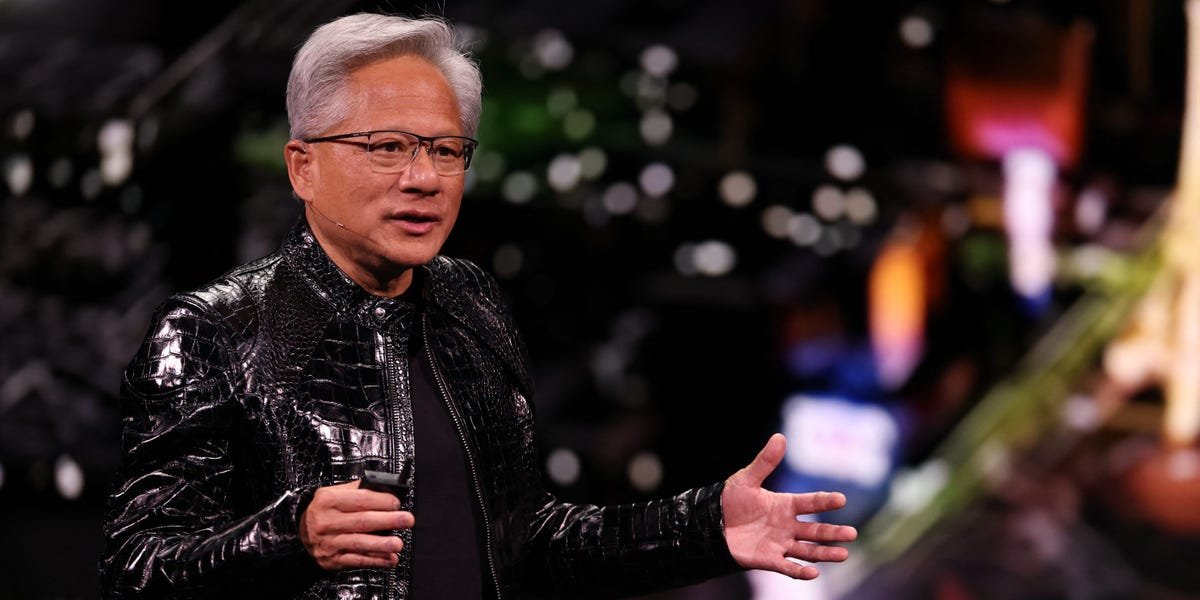
Another Big Tech company, Nvidia, is also known for its flat structure, with CEO Jensen Huang having over 30 direct reports.

Have a tip? Contact Pranav Dixit via email at pranavdixit@protonmail.com or Signal at 1-408-905-9124. Use a personal email address and a nonwork device; here’s our guide to sharing information securely.


Source link

I-worked-14-hour-days-at-a-startup-A-cancer-diagnosis.jpeg

I worked 14-hour days at a startup. A cancer diagnosis changed how I succeeded at Netflix and Meta.

This is an as-told-to essay based on a conversation with David Ronca, a retired video systems engineer. He spent 12 years at Netflix and six years at Meta. This story has been edited for length and clarity.

My time at a startup in the early years of my engineering career was like a really bad relationship.

I joined a company that specialized in video playback around 2000. I loved working on video. I consider those seven years like going to school, and I came out with a Ph.D. in practical video systems. But it was the hardest seven years I’ve ever had in terms of work demands.

I was told when I joined that it would be really important that you’re seen around here a lot. So I would work until 7, 8, 9 — sometimes until 10 p.m. Then we started hitting delivery schedules, and I was getting to work around 10 in the morning and going home sometimes at 2:30 in the morning. We’re talking 14-hours days, six to seven days a week. Eighty hours a week would’ve been a break.

We didn’t have good direction. We’d be four or five months into solving a hard problem before leadership would stop us and say, “Go work on this instead.” It was madness.

We were using work hours to compensate for really bad decisions.

In January 2004, I started feeling ill. On a Sunday, I didn’t feel so good, and by midweek, I got worse.

On Friday night, January 17, my wife took me to the emergency room. The doctor told me, “This is likely colon cancer.” After the first surgery, he said, “There’s no way you have a tumor like this and it’s not cancer.”

Two weeks earlier, I had been running and feeling great. Within a week, I was in a hospital bed on machines.

It took another week before doctors could do the full surgery. And you spend that time with no idea what they’re going to find. That was a very dark week.

My mother died of breast cancer when she was 48. I was 16. Now, I’m in the hospital at 44. I remember thinking, “History doesn’t repeat, but it rhymes.”

My wife would bring the three kids. My oldest, who was seven, would sit quietly in the room with me. My youngest was two years old. He didn’t really know me.

I was looking at my young son, thinking he’s going to grow up without a dad.

After surgery, they told me it was stage 3 colon cancer. They removed 60% of my colon. There was lymph node metastasis. My five-year survival prognosis was about 25%.

‘I will not work like this’

I went back to work part-time at first.

I was told that I had used up all my sick leave and vacation and was put on California disability, which is around $200 a week.

By that time, this was a company I had spent four years working 24/7 for.

I told my boss, “I’m sorry, I will not do this. I still want to work here, but if I have to leave, I will quit. Because I will not work like this.”

From that point on, I didn’t. And that was the irony of it all.

I feel like I did some of my best engineering after that. The real change was that I was no longer wasting my brainpower and my thinking on junk.

You don’t do good work after 12 hours. You can’t work sustained all-nighters and be productive. The quality of your work is going to suck. I don’t care who you are. For most mere mortals, you try to work those hours, you’re just not going to be doing good work.

I also started making intentional decisions for life, not just work.

I coached soccer for all three of my kids. I went to their games. My daughter did ballet, and we were there all the time. We started planning and taking family vacations — hiking in the mountains, RV road trips, and Maui.

I realized you have to work to have a life, but you have to have a life to work. So you want to stand in the middle of those things.

Hours worked are not a performance metric

In 2007, after several clean scans, I joined Netflix. I delayed accepting the offer until I got my scan report. I didn’t want to change jobs yet because if you have positive liver metastasis, you’d be lucky to get two years.

In my interview, Patty McCord, the chief talent officer at the time, told me, “We don’t value 24/7 work. You won’t be successful here working all the time.”

That was almost foreign to me. But it also didn’t mean we didn’t work hard.

At Netflix, I was part of the early streaming team — maybe 12 to 16 people. We made aggressive schedules, and we didn’t miss them. We launched a Netflix app on the original iPad on Day One within two months.

The culture at the company was: If you have to work 24/7 for us to be successful, you’ve got a problem, and we’ve got a problem, and we’re going to fix it.

Even at Meta, my favorite poster had a silhouette of a rocking horse that said, “Don’t mistake motion for progress.”

In other words, high performance is not measured by how much work you do. It’s measured by how impactful your results are.

This is not to say that it’s wrong to work more than eight hours. Instead, you should understand why you’re working more hours. It should be intentional. Intentional exceptions.

If I were to tell my younger self anything, it would be to make work-life balance part of your DNA. Learn to take time off.

Don’t wait until you have cancer or some other near-death experience to realize this.


Source link

Nvidia-tightens-its-hold-on-Meta-with-a-multigenerational-deal.jpeg

Nvidia tightens its hold on Meta with a ‘multigenerational’ deal

Meta is doubling down on its relationship with Nvidia in what the AI chip giant called a “multigenerational” deal.

The agreement, announced Tuesday, calls for Meta to build data centers powered by millions of Nvidia’s current and next-generation chips for AI training and inference.

The move underscores how Meta is deepening its reliance on Nvidia, even as the social networking giant develops its own in-house chips and works with competing suppliers like AMD. Reports also suggested Meta has explored using TPUs — chips designed by its rival, Google.

The Nvidia deal could cool speculation around Meta’s purported TPU talks, said Patrick Moorhead, chief analyst at Moor Insights & Strategy — though Big Tech companies often test several suppliers at the same time.

The deal arrives amid increased competition in AI infrastructure. While Nvidia leads the market, rivals including Google, AMD, and Broadcom are working to chip away at its dominance.

Crucially, the partnership will see Meta deploy not only Nvidia’s GPUs, but also CPUs.

CPUs, long dominated by Intel and AMD, are the central processors that work with GPUs inside data centers. They’re used for general computing tasks and are core to essentially all modern computing systems, whereas GPUs are used in specialized cases that require more compute power, such as AI training and graphics in gaming. By supplying both, Nvidia stands to capture even more spend and deepen its role within Meta’s AI stack.

While that increases competitive pressure, Moorhead said the demand for infrastructure has become so high that Nvidia’s rivals will unlikely see outright declines in the near term.

Nvidia has been making its CPU ambitions more explicit, Moorhead said, including marketing its forthcoming Vera CPU as a stand-alone product. This emphasis reflects how CPUs play a larger role as AI workloads move beyond model training and toward inference.

“CPUs tend to be cheaper and a bit more power-efficient for inference,” said Rob Enderle, principal analyst at Enderle Group.

Both Moorhead and Enderle said that Meta’s decision to source both GPUs and CPUs from a single vendor can also reduce complexity, with chief information officers often favoring a “one-throat-to-choke” approach to problem resolution.

In addition to GPUs and CPUs, Meta will use Nvidia’s networking equipment inside data centers as part of the deal, as well as its confidential computing technology to run AI features within WhatsApp.

The companies will also work together to deploy Nvidia’s next-generation Vera CPUs beyond the current Grace CPU model, Nvidia said.

Have a tip? Contact this reporter via email at gweiss@businessinsider.com or Signal at @geoffweiss.25. Use a personal email address, a nonwork WiFi network, and a nonwork device; here’s our guide to sharing information securely.


Source link

Zuckerbergs-courthouse-entourage-showed-up-in-Meta-Ray-Bans.jpeg

Zuckerberg’s courthouse entourage showed up in Meta Ray-Bans

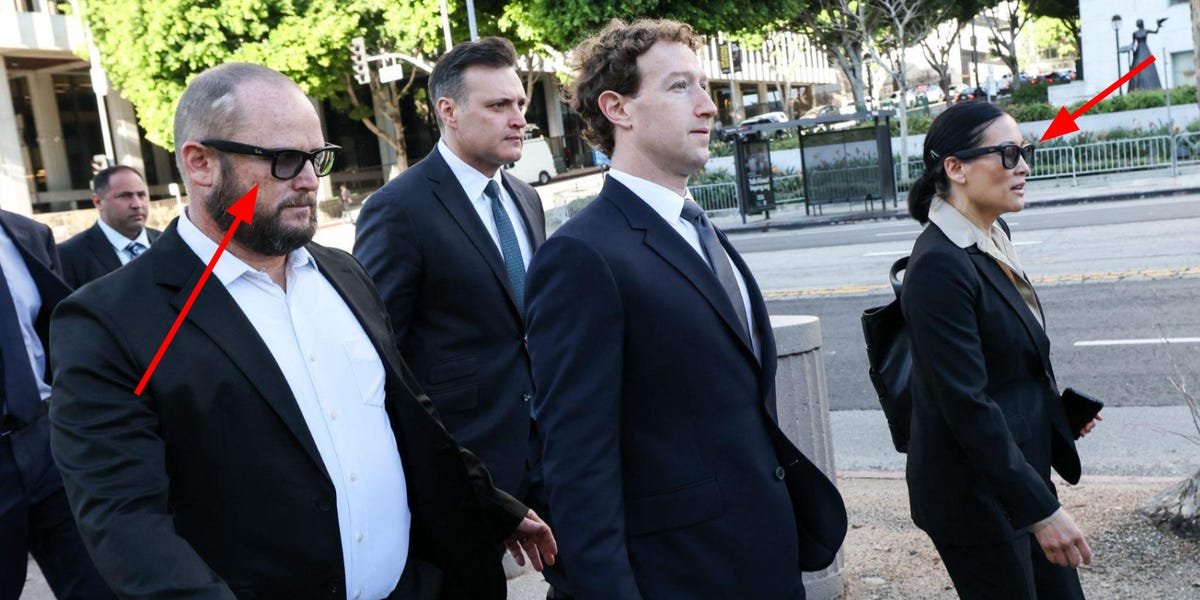
As Mark Zuckerberg was ushered into the Los Angeles Superior Court early on Wednesday morning, one accessory in his entourage stood out: Meta Ray-Ban glasses.

Zuckerberg, wearing a navy blue suit and tie, arrived without any glasses. Flanking either side of him as he walked up to the courthouse were longtime executive assistant Andrea Besmehn and an unidentified man donning Meta’s Ray-Ban glasses.

Meta declined to comment about the accessory choice.

AI-powered smart glasses weren’t just a hot accessory in the California sun. They were a hot topic inside the courtroom.

The judge presiding over the trial announced that anyone using glasses to record inside the courtroom would be “held in contempt of the court,” according to CNBC.

This isn’t the first trial where Meta’s glasses have caused issues.

Last year, while Meta battled the Federal Trade Commission’s antitrust allegations, New York Times reporter Mike Isaac posted on X (formerly Twitter) that he had been reprimanded by the court for wearing Meta Ray-Bans.


Meta Ray-Bans on Zuckerberg executive assistant and security detail

Andrea Besmehn (left) and an unidentified man donning Meta’s Ray-Ban glasses while accompanying Zuckerberg.

Frederic J. Brown / AFP via Getty Images; Mike Blake/Reuters


The glasses cameo came as Zuckerberg took the stand in a Los Angeles trial accusing major social media companies of building addictive products that harm young users. The case centers on a now-20-year-old plaintiff, identified in court filings as “KGM,” who alleged that Instagram and YouTube worsened her depression and suicidal thoughts after she started using the apps as a child. TikTok and Snap have already settled, leaving Meta and Google’s YouTube as the remaining defendants in the trial, which could shape similar lawsuits nationwide.

The trial underway in Los Angeles is focused on design features that plaintiffs say keep teens scrolling. Zuckerberg’s testimony follows an earlier appearance from Instagram chief Adam Mosseri.

Meta’s Ray Ban smart glasses have become a surprise hit. On the company’s earnings call last month, Zuckerberg said that sales of the glasses more than tripled in 2025, and compared the moment to the shift from flip phones to smartphones.

Meta has increasingly positioned the glasses as a vehicle for its AI ambitions. In addition to taking pictures and playing music, users can ask questions to Meta AI, Meta’s AI assistant, about anything that they’re looking at through the glasses.

Last week, the New York Times reported that Meta is planning to add facial recognition technology to the glasses.


Source link