I-worked-14-hour-days-at-a-startup-A-cancer-diagnosis.jpeg

I worked 14-hour days at a startup. A cancer diagnosis changed how I succeeded at Netflix and Meta.

This is an as-told-to essay based on a conversation with David Ronca, a retired video systems engineer. He spent 12 years at Netflix and six years at Meta. This story has been edited for length and clarity.

My time at a startup in the early years of my engineering career was like a really bad relationship.

I joined a company that specialized in video playback around 2000. I loved working on video. I consider those seven years like going to school, and I came out with a Ph.D. in practical video systems. But it was the hardest seven years I’ve ever had in terms of work demands.

I was told when I joined that it would be really important that you’re seen around here a lot. So I would work until 7, 8, 9 — sometimes until 10 p.m. Then we started hitting delivery schedules, and I was getting to work around 10 in the morning and going home sometimes at 2:30 in the morning. We’re talking 14-hours days, six to seven days a week. Eighty hours a week would’ve been a break.

We didn’t have good direction. We’d be four or five months into solving a hard problem before leadership would stop us and say, “Go work on this instead.” It was madness.

We were using work hours to compensate for really bad decisions.

In January 2004, I started feeling ill. On a Sunday, I didn’t feel so good, and by midweek, I got worse.

On Friday night, January 17, my wife took me to the emergency room. The doctor told me, “This is likely colon cancer.” After the first surgery, he said, “There’s no way you have a tumor like this and it’s not cancer.”

Two weeks earlier, I had been running and feeling great. Within a week, I was in a hospital bed on machines.

It took another week before doctors could do the full surgery. And you spend that time with no idea what they’re going to find. That was a very dark week.

My mother died of breast cancer when she was 48. I was 16. Now, I’m in the hospital at 44. I remember thinking, “History doesn’t repeat, but it rhymes.”

My wife would bring the three kids. My oldest, who was seven, would sit quietly in the room with me. My youngest was two years old. He didn’t really know me.

I was looking at my young son, thinking he’s going to grow up without a dad.

After surgery, they told me it was stage 3 colon cancer. They removed 60% of my colon. There was lymph node metastasis. My five-year survival prognosis was about 25%.

‘I will not work like this’

I went back to work part-time at first.

I was told that I had used up all my sick leave and vacation and was put on California disability, which is around $200 a week.

By that time, this was a company I had spent four years working 24/7 for.

I told my boss, “I’m sorry, I will not do this. I still want to work here, but if I have to leave, I will quit. Because I will not work like this.”

From that point on, I didn’t. And that was the irony of it all.

I feel like I did some of my best engineering after that. The real change was that I was no longer wasting my brainpower and my thinking on junk.

You don’t do good work after 12 hours. You can’t work sustained all-nighters and be productive. The quality of your work is going to suck. I don’t care who you are. For most mere mortals, you try to work those hours, you’re just not going to be doing good work.

I also started making intentional decisions for life, not just work.

I coached soccer for all three of my kids. I went to their games. My daughter did ballet, and we were there all the time. We started planning and taking family vacations — hiking in the mountains, RV road trips, and Maui.

I realized you have to work to have a life, but you have to have a life to work. So you want to stand in the middle of those things.

Hours worked are not a performance metric

In 2007, after several clean scans, I joined Netflix. I delayed accepting the offer until I got my scan report. I didn’t want to change jobs yet because if you have positive liver metastasis, you’d be lucky to get two years.

In my interview, Patty McCord, the chief talent officer at the time, told me, “We don’t value 24/7 work. You won’t be successful here working all the time.”

That was almost foreign to me. But it also didn’t mean we didn’t work hard.

At Netflix, I was part of the early streaming team — maybe 12 to 16 people. We made aggressive schedules, and we didn’t miss them. We launched a Netflix app on the original iPad on Day One within two months.

The culture at the company was: If you have to work 24/7 for us to be successful, you’ve got a problem, and we’ve got a problem, and we’re going to fix it.

Even at Meta, my favorite poster had a silhouette of a rocking horse that said, “Don’t mistake motion for progress.”

In other words, high performance is not measured by how much work you do. It’s measured by how impactful your results are.

This is not to say that it’s wrong to work more than eight hours. Instead, you should understand why you’re working more hours. It should be intentional. Intentional exceptions.

If I were to tell my younger self anything, it would be to make work-life balance part of your DNA. Learn to take time off.

Don’t wait until you have cancer or some other near-death experience to realize this.



Source link

Nvidia-tightens-its-hold-on-Meta-with-a-multigenerational-deal.jpeg

Nvidia tightens its hold on Meta with a ‘multigenerational’ deal

Meta is doubling down on its relationship with Nvidia in what the AI chip giant called a “multigenerational” deal.

The agreement, announced Tuesday, calls for Meta to build data centers powered by millions of Nvidia’s current and next-generation chips for AI training and inference.

The move underscores how Meta is deepening its reliance on Nvidia, even as the social networking giant develops its own in-house chips and works with competing suppliers like AMD. Reports also suggested Meta has explored using TPUs — chips designed by its rival, Google.

The Nvidia deal could cool speculation around Meta’s purported TPU talks, said Patrick Moorhead, chief analyst at Moor Insights & Strategy — though Big Tech companies often test several suppliers at the same time.

The deal arrives amid increased competition in AI infrastructure. While Nvidia leads the market, rivals including Google, AMD, and Broadcom are working to chip away at its dominance.

Crucially, the partnership will see Meta deploy not only Nvidia’s GPUs, but also CPUs.

CPUs, long dominated by Intel and AMD, are the central processors that work with GPUs inside data centers. They’re used for general computing tasks and are core to essentially all modern computing systems, whereas GPUs are used in specialized cases that require more compute power, such as AI training and graphics in gaming. By supplying both, Nvidia stands to capture even more spend and deepen its role within Meta’s AI stack.

While that increases competitive pressure, Moorhead said the demand for infrastructure has become so high that Nvidia’s rivals will unlikely see outright declines in the near term.

Nvidia has been making its CPU ambitions more explicit, Moorhead said, including marketing its forthcoming Vera CPU as a stand-alone product. This emphasis reflects how CPUs play a larger role as AI workloads move beyond model training and toward inference.

“CPUs tend to be cheaper and a bit more power-efficient for inference,” said Rob Enderle, principal analyst at Enderle Group.

Both Moorhead and Enderle said that Meta’s decision to source both GPUs and CPUs from a single vendor can also reduce complexity, with chief information officers often favoring a “one-throat-to-choke” approach to problem resolution.

In addition to GPUs and CPUs, Meta will use Nvidia’s networking equipment inside data centers as part of the deal, as well as its confidential computing technology to run AI features within WhatsApp.

The companies will also work together to deploy Nvidia’s next-generation Vera CPUs beyond the current Grace CPU model, Nvidia said.

Have a tip? Contact this reporter via email at gweiss@businessinsider.com or Signal at @geoffweiss.25. Use a personal email address, a nonwork WiFi network, and a nonwork device; here’s our guide to sharing information securely.


Source link

Zuckerbergs-courthouse-entourage-showed-up-in-Meta-Ray-Bans.jpeg

Zuckerberg’s courthouse entourage showed up in Meta Ray-Bans

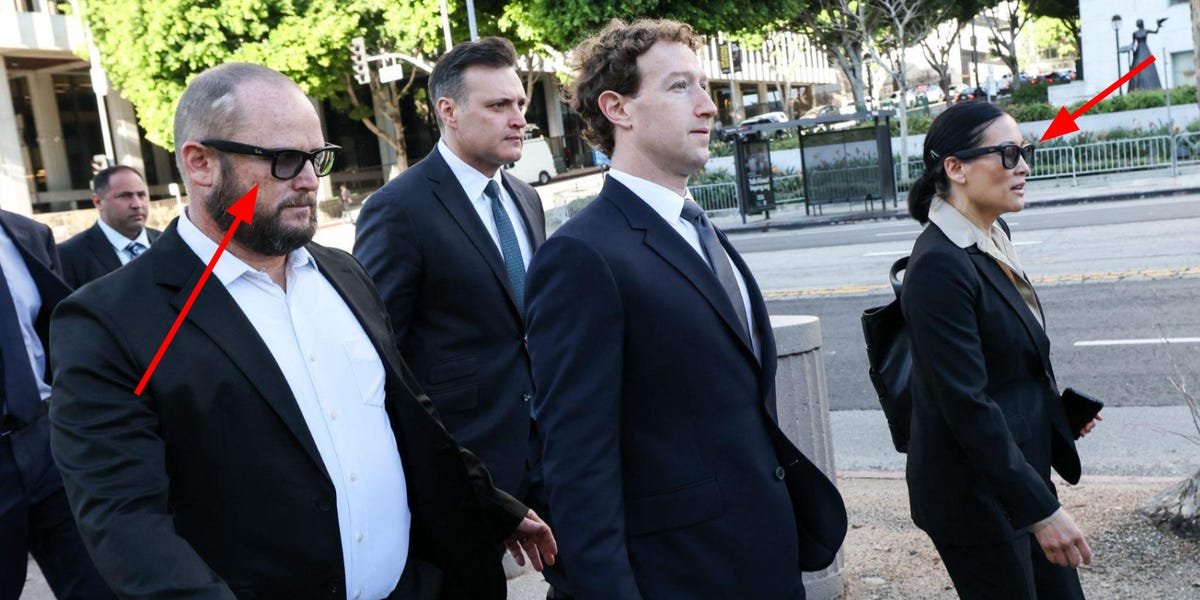
As Mark Zuckerberg was ushered into the Los Angeles Superior Court early on Wednesday morning, one accessory in his entourage stood out: Meta Ray-Ban glasses.

Zuckerberg, wearing a navy blue suit and tie, arrived without any glasses. Flanking either side of him as he walked up to the courthouse were longtime executive assistant Andrea Besmehn and an unidentified man donning Meta’s Ray-Ban glasses.

Meta declined to comment about the accessory choice.

AI-powered smart glasses weren’t just a hot accessory in the California sun. They were a hot topic inside the courtroom.

The judge presiding over the trial announced that anyone using glasses to record inside the courtroom would be “held in contempt of the court,” according to CNBC.

This isn’t the first trial where Meta’s glasses have caused issues.

Last year, while Meta battled the Federal Trade Commission’s antitrust allegations, New York Times reporter Mike Isaac posted on X (formerly Twitter) that he had been reprimanded by the court for wearing Meta Ray-Bans.


Meta Ray-Bans on Zuckerberg executive assistant and security detail

Andrea Besmehn (left) and an unidentified man donning Meta’s Ray-Ban glasses while accompanying Zuckerberg.

Frederic J. Brown / AFP via Getty Images; Mike Blake/Reuters


The glasses cameo came as Zuckerberg took the stand in a Los Angeles trial accusing major social media companies of building addictive products that harm young users. The case centers on a now-20-year-old plaintiff, identified in court filings as “KGM,” who alleged that Instagram and YouTube worsened her depression and suicidal thoughts after she started using the apps as a child. TikTok and Snap have already settled, leaving Meta and Google’s YouTube as the remaining defendants in the trial, which could shape similar lawsuits nationwide.

The trial underway in Los Angeles is focused on design features that plaintiffs say keep teens scrolling. Zuckerberg’s testimony follows an earlier appearance from Instagram chief Adam Mosseri.

Meta’s Ray Ban smart glasses have become a surprise hit. On the company’s earnings call last month, Zuckerberg said that sales of the glasses more than tripled in 2025, and compared the moment to the shift from flip phones to smartphones.

Meta has increasingly positioned the glasses as a vehicle for its AI ambitions. In addition to taking pictures and playing music, users can ask questions to Meta AI, Meta’s AI assistant, about anything that they’re looking at through the glasses.

Last week, the New York Times reported that Meta is planning to add facial recognition technology to the glasses.


Source link

OpenAI-Meta-and-Apples-latest-battle-Breaking-your-phone-addiction.jpeg

OpenAI, Meta, and Apple’s latest battle: Breaking your phone addiction

The average American picks up their phone more than 200 times a day. Teens are pinged with some 250 notifications a day — during school, after school, and overnight. The apps meant to prevent you from checking apps have done little to stop the problem. Now, some of the tech companies that helped create our screen dependence are trying to disrupt it.

Later this year, OpenAI plans to debut a small, screenless device that Sam Altman describes as more “peaceful” than a smartphone. Apple, the Oz of screentime, is developing smart glasses, a pin, and AirPods with more AI built in, according to a Tuesday report from Bloomberg, with the rumored pendants featuring microphones and cameras to be the “eyes and ears” of the iPhone. Meta has teased its fully augmented reality Orion glasses since 2024. While that device doesn’t have a release date, the company last year sold some 7 million pairs of its smart glasses, which is the start of the post-smartphone future Mark Zuckerberg has predicted. Eventual smart specs could be more screen all-the-time than screenless, but they also rely on AI to make the experience much more hands-free than swiping and scrolling on a phone.

Could AI be what finally breaks our phone addiction?

Since 2007, no device out of Silicon Valley has captured universal imagination the way Steve Jobs did when he put your iPod, your phone, and the internet together on a 3.5-inch screen. Competitors have tried for a decade-plus to get people to shift us from the iPhone to smart glasses, and largely failed. The awe around smartphones has turned to derision, as excessive screen time is linked to disrupted sleep, anxiety, and fractured attention. Now, developers are hoping the AI boom can give us the next big thing.

Beating the smartphone would mean replacing a device that 91% of American adults now carry — a device for which millions of apps have been developed and people now depend on in lieu of wallets and cameras and health monitors. New AI devices can’t just copy what smartphones do, says Ramon Llamas, a research director at a technology intelligence firm IDC: They have to show they have a solution to an everyday problem. If they don’t, Llama says, “these things are just gonna really end up as solutions looking for a problem to solve.”


Critiques of screen time can be as blunt and smoothbrained as what the critics say excessive screen time makes you. A seven-hour daily log may seem like a staggering amount of dependence, but what did the person spend those seven hours doing? Doomscrolling late into the night, or FaceTiming with a far-away friend? With AI wearables, there’s the risk of becoming dependent on the device for different reasons.

“The screen may not be there, but what’s getting filled in the back is already this problem of AI companionship,” says Olivia Gambelin, an AI ethicist and author of the book “Responsible AI.” An AI device designed to do something very specific — like listen to a meeting and then send follow-up emails or messages related to action points discussed — could save people time and keep them from writing tedious emails and Slack messages from their desk. But that same device listening in to personal conversations with family and friends could compromise a relationship, and erode the positive effects that texting a friend to check-in can have on both people (already, my friends are tiring of AI summaries on the iPhone that summarize our group text and become an intermediary into our threads of gossip and jokes in the name of efficiency). Wearing microphones and cameras to social interactions and into businesses is likely to really weird out some of the people around you. More people are entering into romantic, dependent relationships with AI companions, and a swell of loud dissenters are criticizing the technology for taking jobs and attempting to replicate human relationships.

But OpenAI is betting that it can package its technology in a device in a way that calms the user. “When I use current devices or most applications, I feel like I am walking through Times Square in New York and constantly just dealing with all the little indignities along the way,” Altman said in November. OpenAI’s device, he said, would be less Time Square, more “sitting in the most beautiful cabin by a lake and in the mountains and sort of just enjoying the peace and calm.” That’s because the AI device would learn “contextual awareness of your whole life,” and when best to send you alerts.

The screen itself may not be the problem; it’s what’s summoning us to the screen.

Other AI wearables have failed by falling short of that goal. Humane AI sold a wearable pin, priced at $700 plus a monthly fee to connect it, but pulled it from the market a year ago. It failed perhaps because it tried too hard to replace our phones — it didn’t interact with them, but provided a shoddy replacement. Novelty wasn’t a factor that could outshine usability. The AI Friend pendant, which can’t search the internet or help with tasks outside of sending reminders and acts instead as an eavesdropping sycophant around its user’s neck, was mocked relentlessly and sold just a few thousand devices after it hit the market last year.

Companies trying to make AI hardware should focus on “transformative features,” Jason Low, research director at Omdia, tells me in an email. AI wearables must be more than “marginally more convenient,” should integrate with our existing products, and have a clear, stated value. For example, glasses that provide real-time language translation or devices for fitness and health tracking offer features our smartphones can’t do as well. The Oura ring continues to grow in popularity, particularly among women after starting out as a niche tech bro buy, for the novel insights it can offer; the company announced last fall it has sold 5.5 million rings since 2015, with more than 2.5 million sold between June 2024 and September 2025. “These devices often deliver a more polished user experience compared to general-purpose, do-it-all AI devices,” Low says.

Llamas tells me that the AI functions of a wearable have to be “contextual, personalized, and actionable,” like reminding the wearer to send birthday flowers or responding accurately to being asked to direct the user to the nearest Starbucks. A first attempt device shouldn’t try to replace the smartphone, but to integrate with the Apple or Google ecosystems, he says. Apple and OpenAI did not respond to requests for comment about their rumored products for this story.

If anything has hyped Silicon Valley like the iPhone, it’s been AI. But three years after the mainstream adoption of ChatGPT, the value generative AI in the white collar workforce has yet to be fully realized. That could make a product for consumers a hard sell, too. “Some of the overwhelm that’s coming with AI that I see in general users is you can use it for everything, or it’s promoted that way, which is actually quite stifling,” Gambelin says.

In our quest to find a peaceful equilibrium with tech, the screen itself may not be the problem; it’s what’s summoning us to the screen. Its bright colors, games, and infinite scroll give quick dopamine hits that entice us to stay glued to it. But much of what pings my phone throughout the day are useless notifications trying to get me to reopen one of the dozens of apps — a markdown moment on a clothing thrifting app, a like on the Instagram story I’ve posted of my dog from my best friend, and ironically, a report of how much time I’ve already logged. There’s a relentless business model at play to keep us on these apps. No screens would mean no infinite scroll through TikTok, no Candy Crush — but app developers and companies may need to find new ways to reach people if wearables caught on, and an always-there AI device and companion might not be as peaceful as Altman describes. Our collective screen time is a problem, but the AI wearable will have to surprise us all with something novel to be useful.


Amanda Hoover is a senior correspondent at Business Insider covering the tech industry. She writes about the biggest tech companies and trends.

Business Insider’s Discourse stories provide perspectives on the day’s most pressing issues, informed by analysis, reporting, and expertise.


Source link

Jacob Zinkula

A Gen Zer took a 6-figure job at Meta to rebuild her savings. Then she quit and returned to her dream.

When Alyson Isaacs joined Meta in 2022, she only had about $200 in her savings account. A six-figure salary offered a chance to rebuild her finances, but her ultimate goal lay outside Big Tech.

After college, Isaacs “completely drained” her savings on a startup she’d co-founded, and found herself grappling with her next career move. After weighing her options, she decided to follow the advice of a mentor: go to “startup rehab” — in other words, take a full-time job.

“You can always get a job at a Big Tech company,'” said Isaacs, who’s 28 and lives in San Francisco.

About four months later, she landed a product manager role at Meta in the company’s Quest for Business virtual reality division. But her entrepreneurial itch never left, and she eventually began mapping out the best path back into the startup world.

“There are ways you can be entrepreneurial,” she said of working at Big Tech, “but it’s very much not the same.”

Over the past year, I’ve interviewed more than a dozen workers who, like Isaacs, chose to quit their jobs at major employers — in some cases without another role lined up. While some eventually landed at another large company, others stepped away from the corporate world entirely — joining a smaller business, launching their own venture, pursuing a career pivot, or focusing on personal priorities like parenting.

They’ve become outliers in an economy where workers are quitting at one of the lowest rates in the past decade — a trend driven by a hiring slowdown that’s left some clinging to their jobs with few appealing alternatives. Those who have called it quits told me they did so for a mix of reasons: concerns about job security, shifts in workplace culture, entrepreneurial ambitions, or a desire for more meaningful work. In short, they wanted greater long-term agency over their careers.

Isaacs shared how she decided to take the leap back into entrepreneurship — and offered advice for others facing a similar career crossroads.

Preparing for a return to entrepreneurship

After leaving her post-college startup, Isaacs took a month to reset. She then spent two months interviewing at smaller companies to fine-tune her résumé and sharpen her interview skills. Eventually, she applied for a role at Meta and landed the job. She moved from the Berkeley area to San Francisco and started in May 2022 — about a year after graduation.

While Isaacs didn’t have firm plans to return to entrepreneurship, she knew that if she ever went down that path again, she’d need to be financially prepared for life without a steady paycheck. So she started living well below her means, including living in a less expensive area, going to a basic gym, cooking at home, and avoiding shopping sprees.

“I saved so hard because I knew that this wasn’t going to be the end game for me, and I wanted to start my own thing again eventually,” she said.

Isaacs also prepared for a potential return to entrepreneurship by spending about five hours a week angel investing, which involved scouting and backing startups. After about a year of saving, she began making a few investments, each under $10,000. She said the experience helped her build a network in San Francisco’s startup scene and spot gaps other entrepreneurs could exploit — insights that helped shape her own business ideas.

The final phase of Isaacs’ preparation was soaking up everything she could from her time at Meta, including transitioning to a product manager position at Instagram — one of Meta’s subsidiaries — in 2024. She said the roles gave her knowledge and experience that entrepreneurship alone couldn’t provide.

“Traditional entrepreneurship was just flying by the edge of my seat and seeing what worked,” she said. “But I needed that level of expertise to go farther in my career.”

The question was when to make the leap and leave Meta. Isaacs said the death of her father in 2024 weighed heavily on her thought process.

“That really triggered this thought in my brain of, ‘Is being a product manager at a Big Tech company what I want to do for the rest of my life?'” she said. “And the answer was resoundingly no — I wanted to do something on my own and prove myself.”

By mid-2025, Isaacs found herself thinking more and more about a startup idea in the consumer AI space — and struggling to focus on her job at Meta. On July 1, she resigned; the next day, she began working full-time on her startup, which she described as an “agentic AI solution for personal wellness.” The company is currently in stealth, meaning the team isn’t publicly sharing full details while the product is still in development. She said she and her two co-founders are testing the product with users and plan to open a pre-seed funding round in the spring.

Read more about people who’ve found themselves at a corporate crossroads

Advice for others weighing big career moves

Isaacs said she knows many people might hesitate to give up a Big Tech job. But she believes some underestimate their chances of finding a new role or building something themselves — and end up stuck in jobs they don’t enjoy.

“It’s kind of like dating,” she said, adding that if you anticipate a bad dating pool, “you’re going to stay with your bad ex.”

Isaacs said she wasn’t worried about resigning from Meta, in part because she’s a “super optimist” about her career. If her startup doesn’t work out, she’s confident in her backup plan — the same one she relied on after her post-college startup opportunity fell through.

“Leaving Meta wasn’t scary for me because I was like, ‘I can always get another job in Big Tech,'” she said.

Isaacs has a few pieces of advice for other aspiring entrepreneurs. She recommends connecting with as many people as possible who are relevant to the venture you want to pursue — and looking for ways to help them, whether through angel investing, advising, or offering support.

“You kind of create this flywheel of people helping you if you help other people first,” she said.

Additionally, even if your end goal is to build a business, Isaacs said having experience at a big-name company can give you valuable credibility as an entrepreneur.

“I needed to be undeniable as a founder, and having a big-box name brand on your résumé gives you that undeniability,” she said.


Source link

Katie Notopoulos

Meta is considering bringing facial recognition to Ray-Bans. It thinks we’re too distracted to notice.

Since Meta’s Ray-Ban Smart Glasses launched in 2021, there’s always been a lingering, controversial question about whether they could be used for facial recognition.

The question has surfaced again more recently, according to a New York Times report on Friday. And this time, the story says, there’s a reason the company thinks it could add facial recognition without kicking up too much of a fuss: because we’re all busy worried about so many other things going on in the world.

It’s not clear whether Meta will follow through on the plans. “While we frequently hear about the interest in this type of feature — and some products already exist in the market — we’re still thinking through options and will take a thoughtful approach if and before we roll anything out,” Erin Logan, a Meta spokesperson, told Business Insider in a statement.

Since their launch, the Meta Ray-Ban glasses have been a surprise hit, with Ray-Ban owner EssilorLuxottica saying it tripled sales in 2025 and is struggling to keep up with demand.

In 2024, some Harvard students rigged Meta Ray-Bans to perform facial recognition by sending camera photos to a third-party service for scanning. At the time, Meta was adamant that people understand the glasses themselves weren’t performing facial recognition, and that this wasn’t a capability of the device itself. Which was true, but a truth somewhat orthogonal to the public horror about the idea of people using facial recognition glasses in public.

Thus far, legal and privacy issues surrounding facial recognition, not technical limitations, have kept the feature at bay. So what’s changed?

The New York Times viewed a document that gives us a clue:

Meta’s internal memo said the political tumult in the United States was good timing for the feature’s release.
“We will launch during a dynamic political environment where many civil society groups that we would expect to attack us would have their resources focused on other concerns,” according to the document from Meta’s Reality Labs, which works on hardware including smart glasses.

This is straight out of the playbook for a celebrity announcing their divorce during the Super Bowl to minimize attention. Basically, at least one person at Meta was apparently considering the fact that — waves hands — so many other horrors are going on in the world that people will be too distracted to focus on this.

And what, exactly, might this unnamed Meta person be assuming are the “other concerns” keeping civil society groups’ resources focused? I have some ideas:

Frankly, any of these is a big enough distraction to keep me from complaining about facial-recognition glasses!


Source link

Meta-says-it-wont-chop-the-bottom-5-performers-this.jpeg

Meta says it won’t chop the bottom 5% performers this year

  • Meta denies plans for new performance-based layoffs amid online speculation.
  • Meta previously considered annual job cuts based on performance to manage low performers.
  • Meta recently cut 10% of its Reality Labs division, affecting over 1,000 employees.

Meta says it will not have a fresh round of performance-based layoffs, even as a smattering of online chatter has raised questions about whether the social media giant will quietly restart its performance-driven purge.

“These are individual cases not related to any company wide initiatives,” a Meta spokesperson told Business Insider when asked about a recent restructuring. “For example we are not doing any 5% low performers like we did last year.”

That’s a notable shift in tone from early 2025, when Business Insider reported that an internal FAQ circulating at Meta suggested performance-based job cuts could become an annual practice, with the company saying it “may use future performance cycles” to move out its lowest performers. Early last year, Meta cut 5% of its workforce, saying it was focusing on its lowest performers.

The clarification also comes as Meta continues to reshape other parts of the business. Last month, the company cut about 10% of its Reality Labs division, a move that affected over 1,000 employees.

Have a tip? Contact Pranav Dixit via email at pranavdixit@protonmail.com or Signal at 1-408-905-9124. Use a personal email address and a nonwork device; here’s our guide to sharing information securely.


Source link

Bill Ackman attends 2025 Pershing Square Foundation MIND and Cancer Prize Award Dinner at The Pool on May 22, 2025 in New York.

Bill Ackman’s hedge fund reveals big stake in Meta — ‘one of the clearest beneficiaries of AI integration’


Michael Ostuni/Patrick McMullan via Getty Images

  • Bill Ackman’s Pershing Square has invested roughly 10% of its capital in Meta.
  • The fund told investors Meta is set to be “one of the clearest beneficiaries of AI integration.”
  • Meta has been plowing cash into data center projects, which Ackman’s firm expect to pay off long-term.

Bill Ackman is betting big on Meta — saying it believes it to be “one of the clearest beneficiaries of AI integration.”

The billionaire investor’s Pershing Square hedge fund revealed Wednesday that it has invested around 10% of its capital in Meta, or approximately $2 billion, as of the end of December.

“We believe Meta’s current share price underappreciates the company’s long-term upside potential from AI and represents a deeply discounted valuation for one of the world’s greatest businesses,” the presentation said.

At around $668 per share on Wednesday afternoon, Meta’s stock price is roughly flat in 2026 so far, and down approximately 7% from one year ago.

Pershing Square also revealed it had allocated 13% of its fund to Amazon as of the end of 2025, and a 2% position in Hertz in late 2024.

Wall Street has been less than enthusiastic about some of Big Tech’s planned capital expenditure plans, but Meta’s budget-busting $135 billion forecasted spend was rewarded last month with a short-lived 8% bump the share price.

Either way, Ackman’s team says they’re very much on board with the strategy.

“We believe concerns around META’s AI-related spending initiatives are underestimating the company’s long-term upside potential from AI,” the presentation said.


Pershing's Meta investment thesis

Pershing Square’s investment thesis for its stake in Meta.

Pershing Square


The presentation also said Meta’s 3.5 billion users are increasing at a steady clip, setting the company up as the “dominant” leader in digital ads.

“Meta’s business model is one of the clearest beneficiaries of AI integration,” the presentation said.


Source link

ICE-arrested-2-truck-drivers-heading-to-a-major-Meta.jpeg

ICE arrested 2 truck drivers heading to a major Meta data center project

  • ICE arrested two drivers on Wednesday near a Meta construction project in Louisiana, officials said.
  • The individuals were detained during a traffic stop inspection of vehicles heading to the site.
  • “ICE did not enter the Meta site at any time,” the local sheriff’s office said.

Meta’s new mega data center project had a brush with immigration authorities.

The Sheriff’s Office in Louisiana’s Richland Parish, where the massive Hyperion Data Center is under construction, said Wednesday that US Immigration and Customs Enforcement detained two dump truck drivers traveling to the site during a traffic stop inspection.

“During those stops, two drivers were arrested by ICE due to their immigration status,” the office said. The drivers were from Guatemala and Honduras.

“ICE did not enter the Meta site at any time,” the office said.

In a statement to Business Insider late Thursday, the Department of Homeland Security said that ICE did not target a Meta data center in Louisiana.

The DHS spokesperson said that the ICE agents had carried out a “targeted operation” to arrest the truck driver from Honduras, and had encountered another driver from Guatemala. It said both were arrested and are in ICE custody.

Meta declined to comment to Business Insider.

The Meta project is the largest of several multi-gigawatt data centers that CEO Mark Zuckerberg has said will come online as the company races to catch up on AI computing capacity.

Wednesday’s arrests crystallize an issue that companies have increasingly had to grapple with over the past year: how to prepare workers for an ICE encounter, whether on or off company property.

The action also follows a recent surge of ICE activity in cities and towns across the US, which has met some resistance in Democratic-led states.

Louisiana Gov. Jeff Landry has been a prominent supporter of President Donald Trump’s immigration policies. The state is receiving nearly $1 million a month to house detainees at its Angola prison, Axios reported, citing public records.

January 15, 11.25 p.m. E.T. — This story was updated to include comments from a DHS spokesperson.


Source link

The-list-of-companies-laying-off-staff-this-year-includes.jpeg

The list of companies laying off staff this year includes Citi and Angi, with dozens of others like Meta warning of job cuts

The year 2026 is just getting started, and layoffs are already underway.

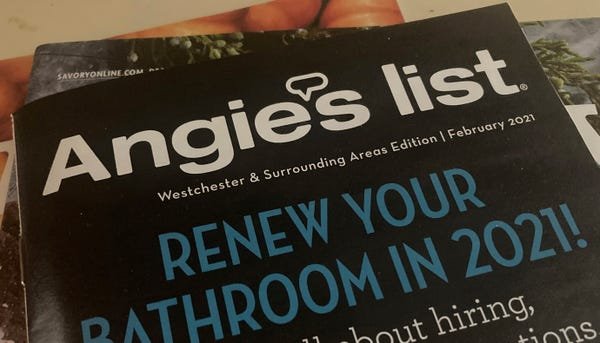
Companies, including Angi, the company formerly known as Angie’s List, and the popular web tool Tailwind, have cut staff, citing the impact of artificial intelligence among the reasons for the layoffs.

More than 100 other companies, from Amazon to Nike to Verizon, have filed legally mandated WARN notices about job cuts to come in 2026, according to WARN Tracker. Some of the cuts are part of previously announced reductions.

This year’s cuts follow three years of significant workforce reductions across a broad range of industries, including tech, media, finance, and retail.

The moves come as artificial intelligence, public policy, and broader economic conditions present sweeping changes to the business landscape.

A World Economic Forum survey last year found that some 41% of companies worldwide expected to reduce their workforces in the next five years because of the rise of artificial intelligence. The survey also found that jobs in big data, fintech, and AI are expected to double by 2030.

Last year, Business Insider tracked layoffs at around 65 major companies, such as Amazon, Meta, Paramount, and Starbucks. In 2026, we’ll continue to track additional job cuts based on company announcements, WARN notices, and our own reporting.

Here are the companies with job cuts underway in 2026, listed in alphabetical order.

Angi is cutting 350 jobs

Angi, a contractor listing platform, was previously known as Angie’s List.

Donald King/AP

Angi, the popular contractor listing site once known as Angie’s List, said in January that it was cutting around 350 jobs “to reduce operating expenses and optimize the organizational structure in support of long-term growth.” The company also said it’s making the cuts “in light of AI-driven efficiency improvements.”

In a January 7 SEC filing, Angi said that the cuts would save between $70 million and $80 million in annual spending. The layoffs will cost the company between $22 million and $30 million, according to the filing.

Citi’s job cuts continue this year


Citibank logo

Citibank said it will continue to cut jobs in 2026.

Kevin Carter/Getty Images

Citi will cut more jobs this year as part of its plan to reduce its workforce by 10%, or 20,000 employees.

In a statement on January 13, the bank said that it will continue to reduce head count in 2026.

“These changes reflect adjustments we’re making to ensure our staffing levels, locations and expertise align with current business needs,” a spokesperson for Citi said.

The plan was detailed in the company’s January 2024 earnings report and could save the bank as much as $2.5 billion.

Meta is preparing for layoffs


The Meta Quest 3s, the standalone virtual reality headset developed by Reality Labs, a subdivision of the American company Meta Platforms, is exhibited at the Qualcomm pavilion during the Mobile World Congress 2025 in Barcelona, Spain, on March 5, 2025. (Photo by Joan Cros/NurPhoto via Getty Images)

Meta is preparing to slash jobs within its Reality Labs division as the branch’s cash burn continues.

Joan Cros/NurPhoto via Getty Images

Meta is preparing to slash jobs within its Reality Labs division, the unit responsible for Mark Zuckerberg’s metaverse ambitions, three people familiar with the matter told Business Insider.

Two employees said that teams working on virtual reality headsets and Horizon Worlds, the company’s VR social network, will be disproportionately affected. The New York Times reported that roughly 10% to 15% of the division’s 15,000 employees are expected to be laid off, with announcements coming as soon as this week.

The cuts coincide with a high-stakes division-wide meeting scheduled for Wednesday. Meta’s CTO and Reality Labs chief Andrew Bosworth described the upcoming gathering as the “most important” of the year and urged employees to attend in person.

Tailwind cut 3 of its 4 engineers

Tailwind, a popular web tool, said it cut three of its four engineers in January, citing an AI-driven decline in revenue.

“75% of the people on our engineering team lost their jobs here yesterday because of the brutal impact AI has had on our business,” CEO Adam Wathan wrote in a GitHub comment on January 6 that made waves in the tech community.

Is your company conducting layoffs? Got a tip?


Hand Holds Smartphone Near Computer Keyboard At Desk, Showing Multitasking Communication, Notifications, And Mobile Work Updates For Business Productivity In A Modern Office Workflow.

Using a non-work device and an encrypted messaging service is recommended when contacting reporters.

michnik101/Getty Images

Have a tip about company layoffs? Contact Business Insider reporter Dominick Reuter using a personal email address, a non-work WiFi network, and a non-work device; here’s our guide to sharing information securely.


Source link