I-went-to-an-AI-conference-and-got-a-crash.jpeg

I went to an AI conference and got a crash course in middle management

I have seen the future of AI, and we are all managing agents.

We are telling them where to go. What to look at. We are answering their follow-up questions. We are correcting them when they make a mistake.

These were some of the talking points at last week’s AI Engineer conference in London, which brought together people from across the industry, including Google, Anthropic, and OpenAI.

The talks were varied, highly technical, and curated for the people steeped deepest in AI right now.

What was striking was how many of the presentations and discussions weren’t so much about the quality and abilities of AI models and agents — software that can perform tasks semi-autonomously — but the humans managing them.

Ryan Lopopolo, a member of OpenAI’s technical staff, called the moment early in the show. He said coding had changed dramatically in late 2025 because of advances in AI tools. The role of today’s software engineers, he said, is to steer and unblock agents.

That prompted several recurring questions: How much control should we cede to agents? What should agents look like? Should they delegate to other sub-agents? Is human language too limiting for telling an agent what you want it to do?


AI Engineer Europe 2026

Anthropic’s David Soria Parra said agents are about to jump from coding to other jobs. 

Hugh Langley


The event quickly started to feel like an MBA for the AGI-pilled. Everyone had a perspective on how agents should be managed. Words like “guardrails” and “context engineering” (a plan to have the agent perform optimally while burning fewer tokens) were everywhere.

These details matter because there’s an emerging consensus that 2026 will be an inflection point, when agents move from the experimental phase into one where they’re more reliable and leap from coding into other domains.

“I think 2025 was all about exploring, and 2026 is all about putting these agents into production,” said Anthropic’s David Soria Parra onstage. It’s not just coders who are going to have to think about these things: Parra said he expects we’ll soon see more “general agents that will do real knowledge worker stuff” such as financial analysis and marketing.

In this utopian work future, the agents are doing the grunt work for us — but they still need oversight. That means they need the right documentation, context, and guidelines to keep them from careening off course and doing things they shouldn’t.

It’s an irony of this moment that companies including Meta, Google, and Amazon are cutting management layers but may also end up turning everyone into AI supervisors. Individual contributors at tech companies, who once coded away without worrying about their direct reports, are now delegating and reviewing work done by AI.

Another big topic of debate was the amount of control we should give to agents — especially given how prone they are to breaking things. There was more than one dig at a recent disruption at Amazon caused by an AI coding assistant.

Mario Zechner, the creator of coding agent Pi, struck a more cautious message than most speakers. Agents learned on the internet, which is filled with a lot of garbage code, he said. He proposed a model for software engineers working with agents: use them sparingly, and don’t let them make decisions for you. “All of the decisions it makes are learned from the internet,” he said.

Agentcraft

Keeping tabs on agents means being able to see them, which prompted another interesting question: what should an agent look like?

One answer came via a showstopping moment from Monday.com’s Ido Salomon, who built a program called Agentcraft that, yes, displays functioning agents in a “Warcraft”-inspired environment.

The user can spawn new agents, prompt them as they would in any other AI interface, and there’s a handy way to cycle through agents with follow-up questions or that need your approval to execute a task. A heat map shows you if your agents are at risk of colliding — a problem that can occur when running multiple agents in parallel. This can happen if two agents are editing the same file at the same time, or both are tweaking different code functions that rely on each other.


AI Engineer Europe

How do you make controlling agents fun? Make it a video game. 

Hugh Langley


Several attendees who spoke to Business Insider weren’t from major AI labs but companies big and small that are embracing agents in the workplace.

Yann Mainier, a senior engineer at Sky UK who attended the event, told Business Insider he wanted to learn more about how he and his team can build better agents.

“It’s more about: once you get agents, how do you make sure they are doing a good job? You can’t check them the same way you are doing with traditional software,” he said. For example, ask an agent to write the same function twice, and it might do it differently. “You need to have other ways,” Mainier said.

Managing agents may also require rearchitecting parts of the web to make it more legible.

Vercel CTO, Malte Ubl, said that in the week leading up to the AI Engineer conference, more than 60% of page views on Vercel.com were from agents.

“We have to consider another shift that the software itself is going to be used by agents now,” he said. When an employee proposes a new feature or interface, Ubl said he now asks a new question: “How does an agent use this?”

Have something to share? Contact this reporter via email at
hlangley@businessinsider.com or Signal at 628-228-1836.


Source link

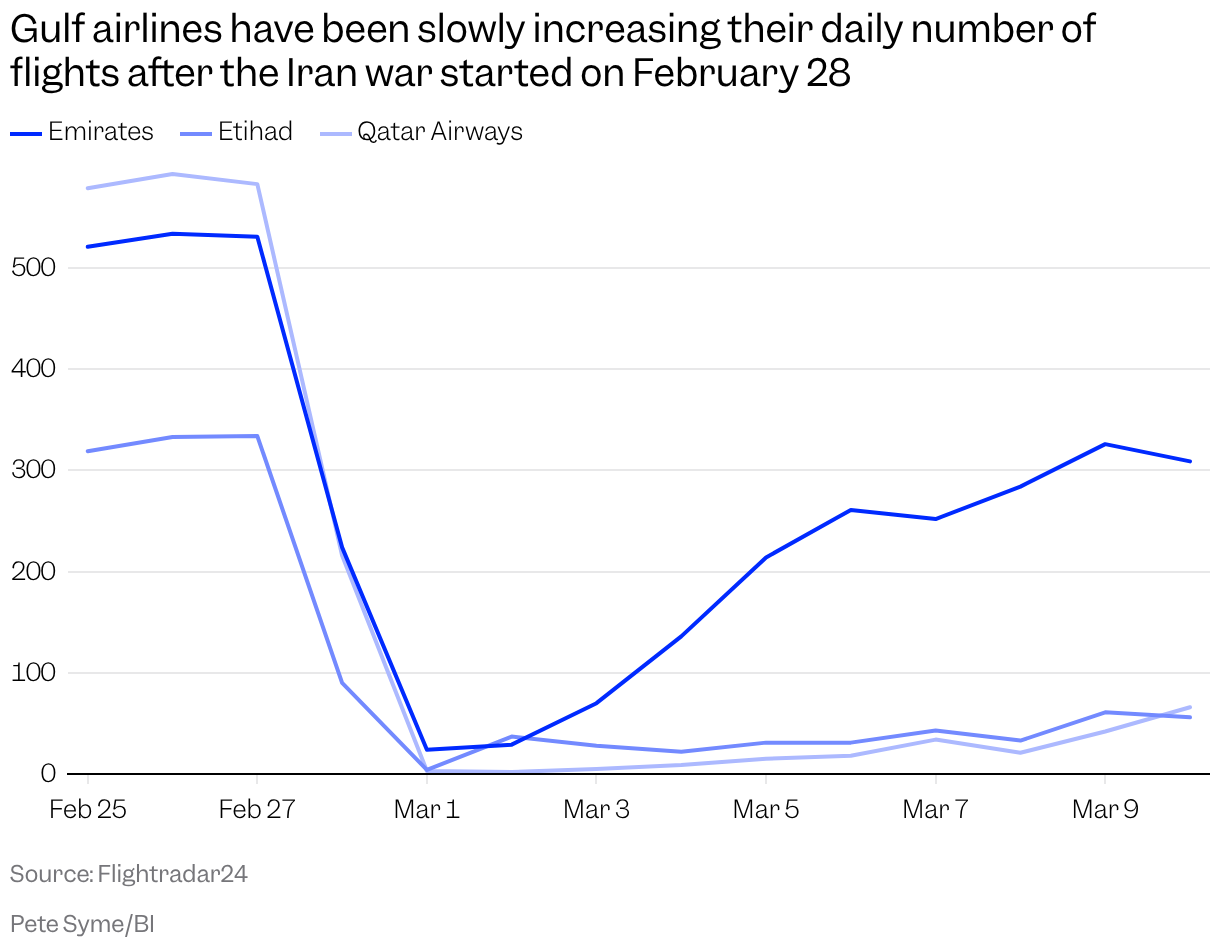
A chart showing the number of flights per day for Emirates, Etihad Airways, and Qatar Airways between February 25 and March 10, 2026.

Flights to the Middle East have resumed, but travel chaos is nowhere near over

Air travel is only getting more complex due to the Iran war.

Eleven days since the first strikes, some flights have restarted after the UAE partially reopened its airspace. However, cancellations and rising ticket prices spell headaches for travelers.

Dubai is leading the restoration of flights in the region.

Its airline, Emirates, operated less than 60% as many flights on Wednesday as on February 27, according to data from Flightradar24. That’s compared to 11% and 17% for Qatar Airways and Abu Dhabi’s Etihad Airways, respectively.

Emirates said last Friday it “anticipates a return to 100% of its network within the coming days.”

However, it still may not be plain sailing for customers. Flights into Dubai are often forced to circle around before landing due to Iranian drones or missiles.

Early on Wednesday, four people were injured when two drones fell near Dubai International Airport, the world’s second busiest airport for international passenger traffic last year.

Hours later, several inbound flights were again forced to enter holding patterns for 55 minutes.

“Safety, as ever, remains paramount as is our duty of care,” Emirates said in its statement.

Meanwhile, British Airways has canceled flights to the Middle East until at least March 28 — and to Abu Dhabi until “later this year.”

KLM, the Dutch flag carrier, canceled all flights to Dubai until March 28.

Rising ticket prices

Passengers flying in and out of the Middle East aren’t the only travelers affected, either.

“In general, it is likely airfares will increase in the short term, depending on the duration of the war,” Hans Jørgen Elnæs, an aviation analyst and advisor, told Business Insider.

Jet fuel is getting more expensive as oil prices have experienced huge volatility. Brent crude was around $90 a barrel on Wednesday morning — up 50% since the start of the year.

The Gulf airlines have become popular for offering stopovers between Europe and Asia, but many travelers are now looking for direct flights instead.

High demand and lower capacity have led to a “significant spike” in airfares on these routes, Elnæs said. “These ticket prices are not sustainable over time, in my view,” he added.

Thai Airways is raising ticket prices by 10% to 15% due to “overwhelming” demand and rising fuel costs, Chief Financial Officer Cherdchom Therdthirasak said Wednesday.

Also, Malaysia Airlines last week deployed additional flights from Kuala Lumpur to London and Paris.

The Middle East is also a vital air corridor for overflights, but airplanes have been forced to reroute north over the Caucasus or further west over Saudi Arabia.

Until at least next Wednesday, the European Union Aviation Safety Agency has banned European operators from flying over the region — including Saudi Arabia and Oman, whose airspace remains open.

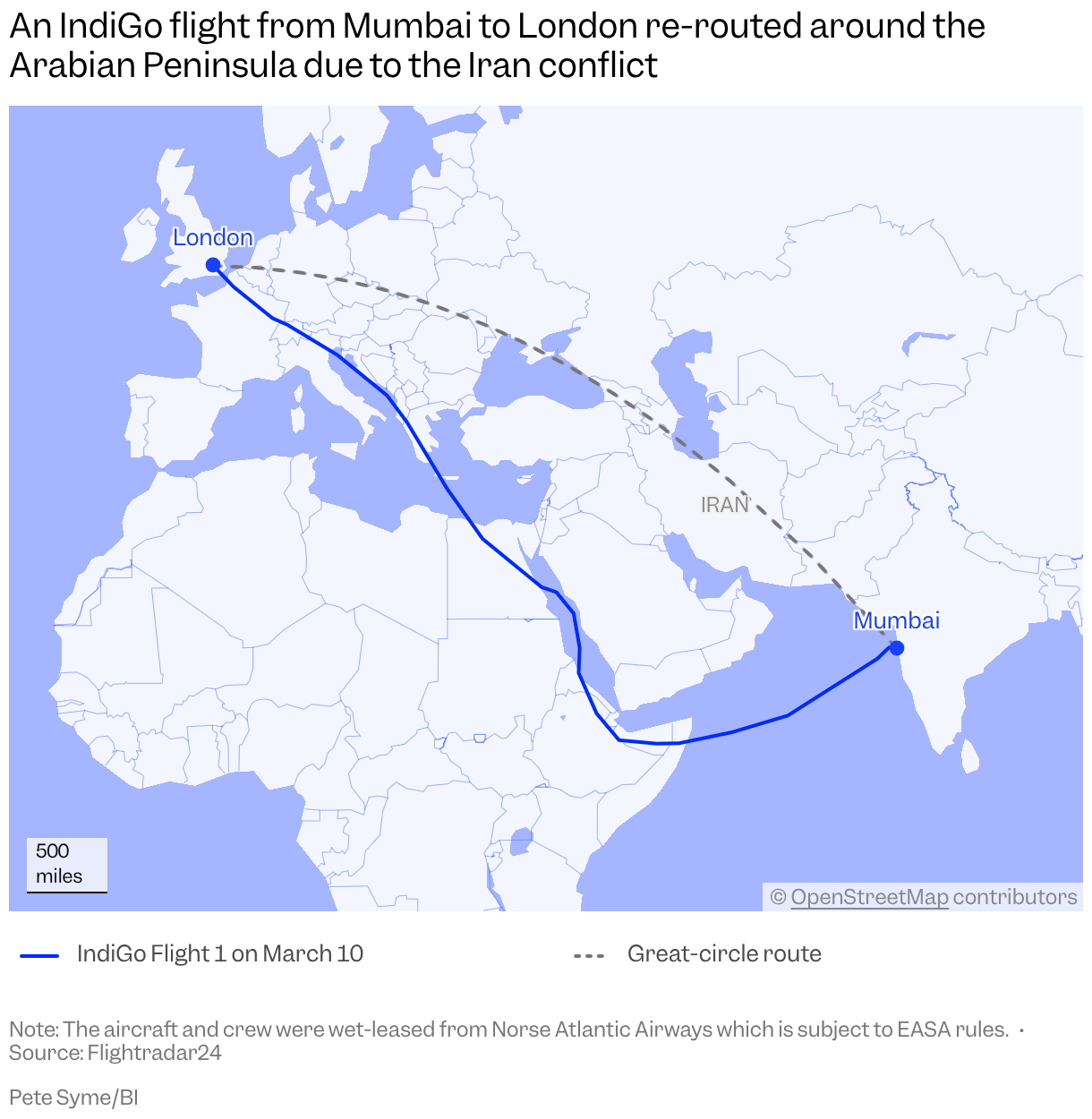
The Indian budget airline IndiGo is taking some particularly long detours; its flight from Mumbai to England is up to two hours longer than before.

That’s partially because it leases airplanes and crew from Norse Atlantic Airways for this journey. As it is a Norwegian airline, the EASA rules require it to fly over East Africa to avoid the Arabian Peninsula.

Some travelers look elsewhere

The World Travel & Tourism Council said Wednesday that it estimates the conflict is already negatively impacting the Middle East to the tune of at least $600 million a day in international visitor spending.

“It is too early to define the long-term impact on the Gulf region’s airlines and tourism. But in the worst case, if the war continues over time, it will hit hard on airlines, tourism, and GDP,” Elnæs told Business Insider.

“If airfares increase too much, it will hit demand, so the airlines need to find a balance here.”


A United Airlines Boeing 787-9 Dreamliner airplane departs from Los Angeles International Airport en route to Tokyo on October 17, 2025 in Los Angeles, California.

United Airlines is seeing more people transit through the US between Oceania and Europe.

Kevin Carter/Getty Images


The conflict has already prompted people to find new ways to travel between Europe and Oceania, such as taking a layover in the US. This is known as the Southern Cross Route and was formerly popular in the mid-20th century.

“Each day this week, we have booked over 1,000 people from Australia and New Zealand to Europe. Last year, we booked less than one a day,” United Airlines CEO Scott Kirby said at a Harvard event last Thursday, according to CNBC.

Some Europeans are also reconsidering where to vacation over the spring vacation period.

“We’ve seen, certainly, there’s a big collapse in bookings to the Middle East, and a big surge in bookings on short-haul airlines within Europe,” ​said Ryanair CEO Michael O’Leary.

Due to their cheaper tickets and strategy of hedging against fuel-price increases, such low-cost airlines often gain market share during geopolitical crises, Elnæs told Business Insider.


Source link

British-Airways-is-among-the-airlines-slashing-flights-to-the.jpeg

British Airways is among the airlines slashing flights to the Middle East weeks in advance or more

  • Several airlines are suspending flight routes to destinations in the Middle East well in advance.
  • British Airways cut flights to Abu Dhabi until later this year and others until later this month.
  • While some airlines are canceling routes, others are operating at a more limited capacity.

The travel fallout from the war in Iran continues, with several airlines canceling flights to the Middle East weeks in advance or more.

Thousands of flights were canceled across the region following the US-Israel attack on Iran on February 28 and subsequent retaliatory strikes. While some flights have resumed and many travelers who got stranded in places like Abu Dhabi and Doha have made it out, the travel disruptions are ongoing.

Industry experts previously told Business Insider that the lasting impacts on tourism and global travel will likely depend on how long the war lasts, as well as how it ends. Canceled flights to Dubai International Airport, which serves as a common connector for routes between Europe, Asia, and Africa, could especially have a ripple effect.

While some airlines are canceling routes altogether, others are continuing to operate but in a more limited capacity. Some airlines have also added repatriation flights to help stranded travelers get home.

Here are the airlines that have suspended services to some destinations in the Middle East.

British Airways

British Airways said Tuesday it was canceling flights to Amman, Bahrain, Doha, Dubai, and Tel Aviv until later this month, and to and from Abu Dhabi until later this year.

It’s unclear when the flights will resume. Flights from London to Abu Dhabi appeared to be bookable on the airline’s website starting April 16.

British Airways also said it had limited seats remaining on its repatriation flights from Oman to London on March 11 and 12 for customers with existing bookings.

“Following these dates, the flights will pause due to reduced demand but will be kept under continuous review,” the airline said.

Air Canada

Air Canada has canceled all flights to and from Dubai through March 28 and to Tel Aviv through May 2 due to the conflict.

“If you are in either of these regions, please do not head to the airport. Your safety is our top priority,” the airline said in a statement last week.

Virgin Atlantic

Virgin Atlantic canceled its service to Dubai for the remainder of its usual season, or until March 28. The British airline, which typically only operates flights to Dubai seasonally, said in a statement that “the recent escalation in the Middle East has brought forward the end of our operation for this season.”

Virgin also said Sunday it was canceling its flights to Riyadh for the next two weeks.

Oman Air

Oman Air said Sunday it was canceling all flights to and from the following locations through March 15: Amman, Dubai, Bahrain, Doha, Dammam, Kuwait, Copenhagen, Baghdad, and Khasab.

The airline also said it was operating extra flights to and from Muscat during that time, including to London, Istanbul, Cairo, and other destinations in Europe and Asia.

Air France

Air France said Monday it was canceling flights to and from Dubai and Riyadh until March 12, and to and from Tel Aviv and Beirut until March 13.

Lufthansa

Lufthansa said this it was suspending flights to and from the following locations: Dubai, Abu Dhabi, and Dammam until March 15 and Tel Aviv until April 2.

Previously the airline said it was suspending flights to and from Amman and Erbil until March 15, Beirut until March 28, and Tehran until April 30.

Lufthansa said flights to and from Riyadh and Jeddah would continue.

Finnair

Finnair canceled all its flights to and from Doha and Dubai between February 28 and March 29.


Source link

The-US-is-sending-a-new-drone-killer-to-the-Middle.jpeg

The US is sending a new drone-killer to the Middle East. It’s logged over 1,000 Shahed intercepts over Ukraine.

The US Army is deploying an American-made counter-drone system that has intercepted more than 1,000 Shahed-type drones in Ukraine to the Middle East, two defense officials confirmed on Saturday to Business Insider.

One of the US officials, who spoke on the condition of anonymity to discuss military developments, said that the Merops system will arrive in the Middle East within a week. Once it arrives, it’ll be ready for combat in a matter of days.

They declined to say how many systems the US is sending to the Middle East, only that the deployment will include a large quantity of interceptors.

The Associated Press first reported the Merops deployment.

The counter-drone system, which uses a roughly $15,000 interceptor, would give US and allied forces a much cheaper air defense option against Iranian drones, compared to expensive surface-to-air missiles.

The weapon’s deployment to the region comes as Iran has launched thousands of cheap attack drones at the US military and its allies across the Middle East after the US and Israel began Operation Epic Fury on February 28.

The Shahed drones, which cost roughly $20,000 to $50,000 according to available estimates, complicate the air defense picture.

In significant quantities, they can overwhelm even advanced air defense systems, or at the very least force Patriot and Terminal High Altitude Area Defense (THAAD) crews to expend millions of dollars in interceptors to defeat a threat only a fraction of that cost.

How the Merops works

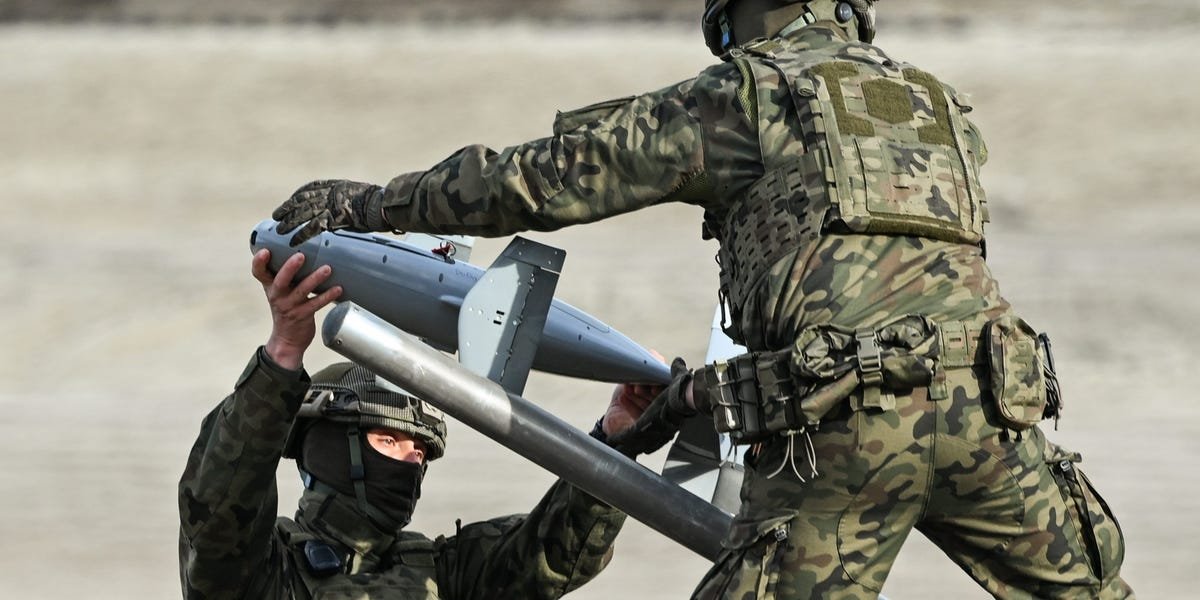
The Merops counter-drone system launches a propeller-driven drone called the Surveyor, which is a few feet long, can be carried by a single soldier, and uses artificial intelligence to navigate in jammed environments.

The overall system includes the Surveyor interceptor, a ground control station, and launch stations — all operated by a four-man crew with a commander, a pilot, and two technicians.

Its developer, the American initiative Project Eagle, says the Merops is tailor-made for taking down propeller-driven and jet-powered drones like the Shahed. So far, it’s logged over 1,000 kills against such uncrewed aircraft.

The Surveyor can fly at speeds of over 175 mph, meaning it’s more than fast enough to catch Iran’s commonly used propeller-driven Shahed-136, which flies at around 115 mph. Jet-powered versions of the Shahed reportedly fly as fast as 230 mph and are more challenging threats.

If the Surveyor, which can be mounted with a small explosive warhead, fails to hit its target, it can deploy a parachute to allow retrieval and relaunch of the drone.


A Surveyor drone descends while suspended from a parachute.

A Surveyor drone can be retrieved if it fails to hit any targets.

Artur Widak/NurPhoto via Getty Images


When Business Insider observed a demonstration of the Merops in Poland last year, one of the launchers was mounted on the back of a pickup truck.

A push for interceptor drones

According to one of the defense officials Business Insider spoke with, US forces in the Middle East are to be trained by Army soldiers from Europe to operate the Merops. The system is also being sent to countries in the region where US troops are not deployed.

The second defense official said that Merops’ use in Ukraine has provided the Army with air defense information that has already proven valuable in Eastern Europe and will now be useful for the Middle East.

US Army soldiers in Europe have taught NATO allies how to operate the Merops system, which was deployed to the alliance’s eastern flank following Russian drone incursions into Polish airspace.

Meanwhile, Ukrainian President Volodymyr Zelenskyy said on Thursday that his country had received a direct request from the US for help with countering Shahed drones.

Zelenskyy shared that he “gave instructions to provide the necessary means and ensure the presence of Ukrainian specialists who can guarantee the required security.”

Over the past year, Kyiv has focused heavily on building and deploying an arsenal of cheap interceptor drones to counter Russia’s versions of the Shahed, which the Kremlin launches in hundreds-strong waves at times.

Ukrainian interceptor drones cost around $2,500 each, and Zelenskyy has said that his country makes 1,000 of them a day.

All of these broader developments come amid the backdrop of President Donald Trump saying in an early morning TruthSocial post on Saturday that Iran had agreed to stop attacking US allies in the region.

“Iran, which is being beat to HELL, has apologized and surrendered to its Middle East neighbors, and promised that it will not shoot at them anymore,” he wrote. The president also threatened additional action against Iran, warning that the US is going to hit it harder.


Source link

Travelers-stranded-in-the-Middle-East-are-racking-up-mounting.jpeg

Travelers stranded in the Middle East are racking up mounting bills: ‘That’s a lot of money we were not intending to spend’

Emilia Vasquez, a business development manager for Goodwill, landed in Dubai on Thursday, February 26. She and her 6-year-old son had flown in to celebrate her birthday, and they were planning to stay until Tuesday.

Two days later, the United States and Israel launched strikes on Iran, and everything changed — across the Middle East, airspaces shut down, airports closed, and thousands of travelers, like Vasquez, found themselves stuck in place.

As they navigated the logistics of getting stranded, they also faced another issue: the cost of getting stranded.

In a statement on March 1, the General Civil Aviation Authority of the United Arab Emirates, or GCAA, announced that the State would be bearing “all hosting and accommodation costs for affected and stranded passengers.” The announcement did not specify how or when travelers would be reimbursed.

For Vasquez, the flight cancellations meant watching her hotel stay grow longer by the day. She was staying at Taj Dubai hotel, a 5-star hotel near the Dubai Mall, and spending about $500 a day, roughly $300 of which went to her hotel bill. As of Thursday, she had spent $6,800.

With bills racking up and no immediate money from the Emirati government, she was only a few thousand dollars away from her credit card limit.

“I’m being responsible for paying for this hotel, the hotel literally telling us that if I cannot afford the hotel to leave and go somewhere else,” Vasquez told Business Insider on Wednesday. “I don’t feel safe to leave the hotel and go somewhere else. So I’ve been extending the days every day.”

With some airlines slowly resuming limited service out of the region, Vasquez managed to leave Dubai on Friday, but for many of the travelers who remain on the ground, bills continue to mount and confusion remains about whether they will be saddled with or reimbursed for these bills.

The Abu Dhabi and Dubai tourist ministries did not respond to requests for comment from Business Insider. The General Civil Aviation Authority of the United Arab Emirates did not respond to a request for comment.

‘We’re just trying to be as cheap as possible’


Fate Show and her father standing in the Dubai Mall China Town with lanterns hanging behind them.

Fate Show and her father in the Dubai Mall China Town.

Courtesy of Fate Show


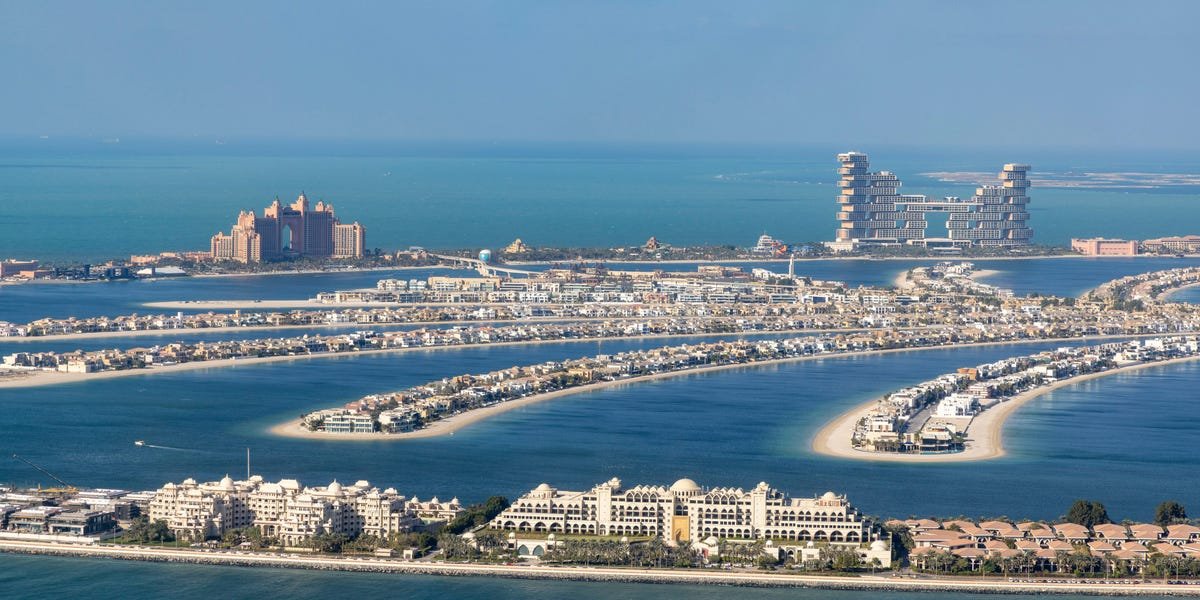
While some well-heeled visitors paid six figures to get out of Dubai, others have been funding their extended stays through a mix of credit cards, airline-provided vouchers, and crowdfunding.

As of Saturday, two of the region’s biggest airlines — Emirates and Etihad — have resumed limited flight schedules, prioritizing existing customers. Qatar Airlines remained grounded with the exception of limited flights to Doha. While the airlines haven’t released guidance around obtaining hotel vouchers, several travelers said they’ve been able to receive them.

Fate Show, a Ph.D. student, was flying from Kuala Lumpur, Malaysia, to London with her dad after seeing her family for Chinese New Year. Their flight was scheduled to stop in Dubai on Saturday afternoon. When she arrived at the airport, she was met with chaos.

Emirates canceled their flight to London and provided a voucher to cover food and a hotel stay at the S Hotel Al Barsha, a 4-star hotel about 20 minutes from Dubai International Airport.

That voucher lasted four nights. On Tuesday, after the voucher ran out, they switched hotels to the Hampton by Hilton Dubai Al Barsha, where they paid for their stay out of pocket. The room, with two single beds, cost $112 a night and included breakfast.

They are trying to limit additional spending on food to $30 a day.

“We’re not trying to do anything fancy,” she said. “We’re just trying to be as cheap as possible.”

She and her father tried to buy new tickets home, but said they were too expensive. On Friday, they moved to the Copthorne Hotel with their Emirates voucher. Her flight has been rescheduled for Tuesday.

Even with the help of the Emirates hotel voucher, Show and her father have had to spend hundreds of dollars during their unexpectedly extended stay in Dubai.

“Obviously, that’s a lot of money we were not intending to spend,” she said. “We’re using a credit card, so we’re hoping to be reimbursed by next month when we repay it.”


Shanice Day in Dubai with an owl

Shanice Day has managed to get a flight to Australia from Dubai, in order to make it back to the US.

Courtesy of Shanice Day


Shanice Day, a stylist from Houston, traveled to Dubai on February 24 to celebrate her 30th birthday with her friend Remy Thomas, staying at the FIVE Luxe hotel near Jumeirah Beach. Their original flight home on March 1 was canceled, along with subsequent rebookings, and they were left paying for their hotel out of pocket.

On Tuesday, Thomas started a GoFundMe to fundraise for their accommodation and flights back. As of Friday, the pair had raised $9,978 of their $11,000 target.

Day managed to secure a flight out of Dubai to Sydney on Thursday. The following day, she flew from Sydney to Los Angeles, the penultimate leg of her round-the-world journey back to Texas.

“I’ll probably get therapy after this experience,” Day told Business Insider. “I know it’s going to take me a while to build up the courage to travel again.”

Shrihari Madhu, the manager of Coral Cove, which rents out three apartments in Dubai Marina, told Business Insider they have been helping tourists stranded by flight cancellations by offering free accommodation or a base fee of around $40 a night. Ordinarily, they rent their properties out for prices starting around $110.

“Many travelers are reaching out because they need an immediate reliable place to stay while navigating these disruptions,” Madhu said.

Madhu said the three apartments are currently occupied by guests whose travel plans were canceled.

The only thing more expensive than staying is leaving

On Monday, as tensions escalated and airspaces across the region shut down, some wealthy travelers in the UAE hired chauffeurs to drive them into Oman and Saudi Arabia. The trips involved hours in the car, including long waits at border crossings.

From there, they chartered private planes, spending upward of $200,000 to make it out, Ameerh Naran, the CEO of Vimana Private Jets, previously told Business Insider.

He said demand to leave the region had started to tick up on Friday, when the possibility of a conflict with Iran became more acute.

“There has been a clear emphasis on speed and certainty of departure, with many clients prioritizing the earliest viable routing rather than specific aircraft types or traditional preferences,” Naran said. “We have also seen increased demand for coordinated ground support to facilitate access to airports where airspace remains open.”


Source link

The-narrow-corridor-planes-are-being-pushed-through-to-avoid.jpeg

The narrow corridor planes are being pushed through to avoid the Middle East just got even narrower

A narrow flight corridor that’s become vital to airlines is shrinking as the Iran conflict expands.

On Thursday, Azerbaijan’s foreign ministry said that Iranian drones attacked the Nakhchivan Autonomous Republic. It’s an exclave to the north of Iran, which is separated from the rest of Azerbaijan by Armenia.

One drone damaged the terminal at Nakhchivan Airport, and another fell near a school building, the ministry said. Two civilians were injured, it added.

As a result, Azerbaijan closed the southern sector of its airspace.

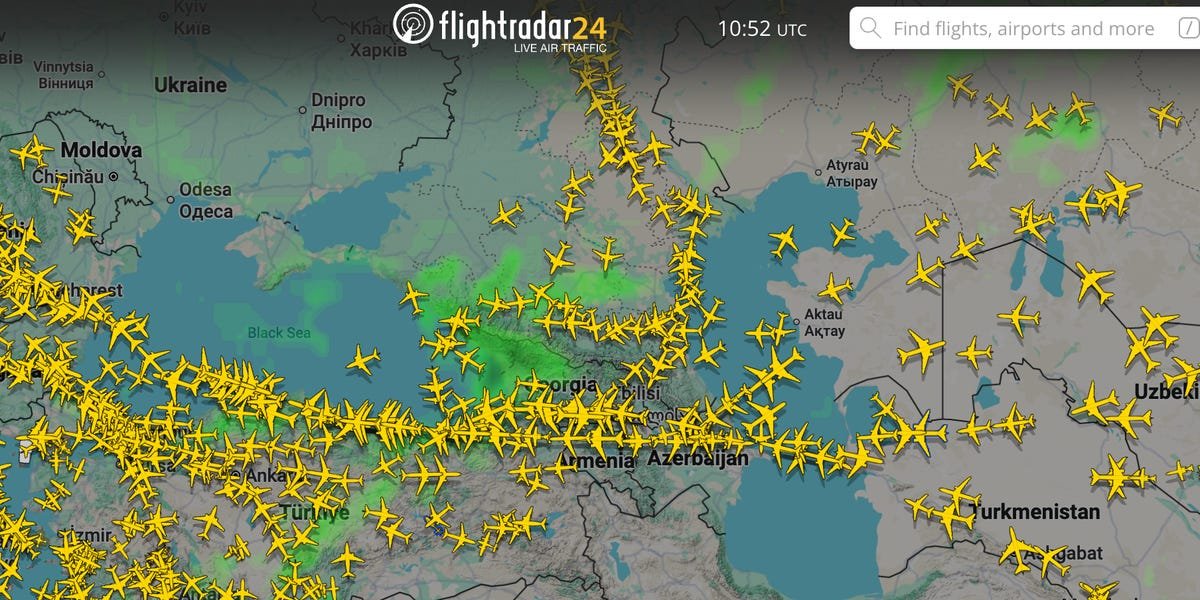
It leaves airplanes flying between Europe and Asia with an even smaller space to navigate.

Since the US and Israel launched strikes against Iran on Saturday, airlines have been unable to fly over the Persian Gulf, which was previously the main route.

Instead, they have been rerouting through Saudi Arabia or the Caucasus. The region consists of Armenia, Georgia, and Azerbaijan, and links the Black Sea with the Caspian Sea. It is bordered by Iran and Turkey to the south, and Russia to the north.

Most airlines have been unable to fly over Russia since the invasion of Ukraine in 2022.

The Caucasus is not without its own tensions, either.

In 2023, Azerbaijan launched a military offensive against Nagorno-Karabakh, a region within its territory that was governed and mostly populated by ethnic Armenians.

The conflict in Iran, however, is encouraging Armenia and Azerbaijan to refrain from escalating tensions.

After the drone attack on Nakhchivan, the two foreign ministers held a phone call where they “noted the importance of sustainable peace between Armenia and Azerbaijan and exchanged views on matters of mutual interest,” according to a press release.


Source link

Headshot of Chris Panella.

Top American admiral in the Middle East says the US struck an Iranian drone carrier. He said ‘it’s on fire.’

The US struck an Iranian drone carrier, and the vessel is currently on fire, the top American admiral in the Middle East said.

Iran’s drone carriers are specialized crewed combat vessels capable of launching a mix of one-way attack drones and uncrewed reconnaissance and strike platforms. Destroying Iran’s naval forces, including warships, has been named a priority by US President Donald Trump and other officials in Operation Epic Fury.

On Thursday afternoon, Adm. Brad Cooper, commander of US Central Command overseeing the Middle East, said, “In just the last few hours, we hit an Iranian drone carrier ship, roughly the size of a World War II aircraft carrier, and as we speak, it’s on fire.”

Cooper didn’t elaborate on where the carrier was located or what it kind of munition hit it. He said that US forces have sunk over 30 Iranian vessels since the start of Operation Epic Fury last weekend.

Tehran has multiple vessels capable of serving as launch platforms for drones, including a former tanker converted into a forward base ship that was seen smoking at its home port in recent satellite images, but Iran’s dedicated, purpose-built drone carrier is the IRIS Shahid Bagheri.

Cooper didn’t identify the targeted Iranian vessel.

The Shahid Bagheri, formerly a container ship before it was reworked and commissioned into the navy last year.

The Iranian vessel features a ski jump-style ramp, one similar in some respects to those on Soviet-built carriers like the Russian Admiral Kuznetsov or Chinese derivatives, that are used to launch aircraft. The vessel can launch a mix of different drones.

During Thursday’s briefing, Cooper also offered several other updates on the US war in Iran. He said that within the last 72 hours, US bombers had struck nearly 200 targets “deep inside of Iran, including around Tehran.” In the last hour, he said at the 5 pm EST event, US Air Force B-2 Spirit bombers dropped “dozens” of 2,000-pound penetrative bombs on buried ballistic missile launchers.

The last day of operations, compared to the start of the conflict, has seen dramatic decreases in Iranian attacks beyond its borders, Cooper said. Ballistic missile attacks are down by 90% and the drone attacks are down by 83%. Reductions in these attacks reduces the strain on air defenders and interceptor stockpiles.

US forces have also targeted Iran’s equivalent of US Space Command, Cooper said, “which degrades their ability to threaten Americans.”


Source link