This story is available exclusively to Business Insider
subscribers. Become an Insider
and start reading now. Have an account? .
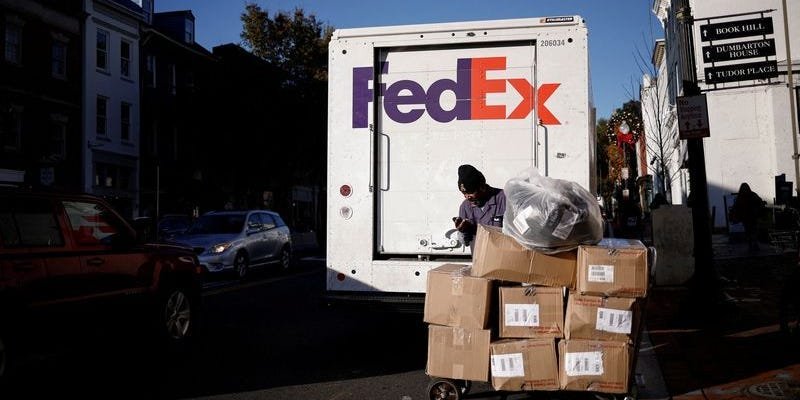
FedEx says it will refund customers for tariff charges if its own efforts to get a refund succeed.
On Monday, FedEx sued the Trump administration in trade court seeking a refund.
An exact timeline or process for refunds remains unclear after last week’s Supreme Court ruling.
FedEx says it will give you a refund if you used its shipping service and paid President Donald Trump’s unconstitutional tariffs — that is, if the company itself gets a refund from the government.
Days after the US Supreme Court ruled againstmany of Trump’s tariffs, FedEx filed a lawsuit against the Trump administration seeking a refund of the tariffs it had paid on behalf of customers.
If that effort is successful, the company said, it plans to pass that money on to the businesses and people it charged for those duties.
“Our intent is straightforward: if refunds are issued to FedEx, we will issue refunds to the shippers and consumers who originally bore those charges,” FedEx said in a statement on its website.
Right now, there’s no timeline or process for handling refunds, FedEx said, adding that it’s waiting “on future guidance from the government and the court.”
Rival UPS, which had not revealed plans to seek tariff refunds as of Friday, did not immediately respond to a request for comment from Business Insider.
FedEx is one of many companies suing the Trump administration to recover some or all of the tariffs they paid.
Many US consumers have been hit directly by tariffs through international shipments carried by services like UPS and FedEx, Business Insider previously reported.
Some individual customers and businesses have had packages held up at customs for weeks, or tried to dispute tariff charges they say were incorrectly calculated, including at a 200% rate for Russian aluminum.
Do you have a story to share about tariffs? Contact this reporter at abitter@businessinsider.com or via encrypted messaging app Signal at 808-854-4501. Use a personal email address, a nonwork WiFi network, and a nonwork device; here’s our guide to sharing information securely.
BYD’s lawsuit marks the first from a Chinese carmaker against Trump’s tariffs.
The EV giant filed the suit on February 9 and detailed nine executive orders related to tradethat affected the company, including tariffs on cars, auto parts, aluminum, steel, and exports from China.
In the complaint, BYD wrote that it is seeking a refund of “all IEEPA tariffs paid to date” and “all IEEPA tariffs that may be paid in the future.”
The company also said that aside from China, its imports into the US from Canada, Germany, Mexico, and Poland were also affected.
The Chinese carmaker does not sell passenger cars in the US, but its business here includes buses, commercial vehicles, batteries, energy storage systems, and solar panels. According to its website, the company’s truck plant in Lancaster, California, employs 750 workers.
Sophisticated money managers have long turned to intel from credit-card receipts or satellite images of retailers’ parking lots into an investing edge, but this data is increasingly becoming table stakes.
Hedge funds and other money managers spent $2.8 billion on alternative data in 2025, according to a new report from consultancy Neudata, a 17% jump from the year before. It’s more than double what asset managers spent on alternative data in 2021, which includes a wide range of non-traditional information sources.
The report projects that the total spend on alternative datasets could jump to more than $23 billion in the consultancy’s bull case in 2030 and just under $8 billion in the bear case. The driver for this growth — and how much will come over the rest of the decade — will be based on how many new entrants, both buyers and sellers, enter the market, Daryl Smith, head of research at Neudata, said.
“Plenty of funds have only stuck their toes in,” Smith said, and “several hundred” new datasets were launched last year alone.
AI is also changing how funds consume and ingest alternative data sources, the report notes.
Now that structuring and cleaning raw data has become a faster, cheaper task thanks to AI tools, asset managers are looking for direct hook-ups to alternative data vendors’ feeds. It’s also opened up alt data to a range of managers that were once unable to pull meaningful insights from the data because of technical challenges.
These new funds could be a big driver of the industry’s growth in the coming years, from the demand side, Smith said.
More companies could be selling data
Some new data vendors might not be start-ups that stumbled onto something intriguing, but instead familiar brand names. Established corporations that have seen web-scraping bots take their data to sell are now getting into the game, Smith said.
He said Neudata’s consulting team, which helps new buyers and sellers navigate the market, has gotten outreach from big-name companies recently, though he said he couldn’t reveal the names of the potential sellers. Trustpilot, the consumer review website, is one example of a firm that has begun selling its data and has presented at Neudata conferences in the past, Smith said.
Unsurprisingly, data sources tracking the growth of artificial intelligence were in high demand last year. The report points out vendors such as Aterio, which track data center construction and power usage, for example.
Still, the most popular type of dataset, of which there are thousands, is web-scraping offerings, which accounted for 15% of the total spend in 2025, roughly in line with 2024.
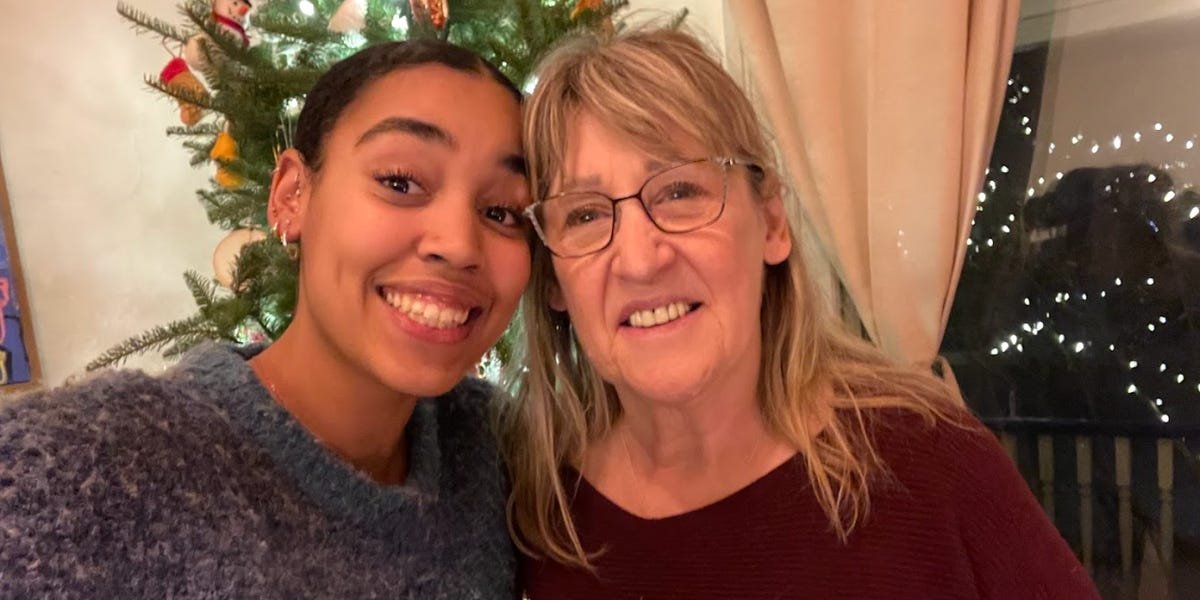
I grew up spending weekends, school breaks, and holidays in my grandparents’ home, but moving into it years later with a husband wasn’t something I ever pictured.
We moved into my grandparents’ basement not long after we got married in spring 2025. We both traveled as kids and have gone on a few short adventures as a couple, but we’d never done any long-term.
With our lease ending in the fall, it felt like the perfect time to make a big change, and we started looking at flights to Japan.
I eventually came across a deal on December plane tickets that we couldn’t pass up, but the opportunity left us with a two-month gap to fill before moving away.
Short-term rentals and Airbnbs were too expensive to commit to, especially with a big move ahead. So, when my grandparents suggested we stay in their basement, only 40 minutes away from where we’d been living, it was easily the most practical option.
Being back in my grandparents’ home reminded me how much of my childhood still lives here
Moving in with my grandparents as an adult brought me right back to my childhood.
Alessa Hickman
Even before we started unpacking, the house instantly brought me back to my childhood. My grandparents have moved a few times over the years, but no matter the location, their home always feels the same.
The dishes and teacups I grew up using are still in the cupboards. The same family photos and decorations are on the fridge and walls, with new additions that have been layered in over the years.
Then there’s Crash, my grandparents’ herb-loving budgie bird, who has a habit of landing on people (and plates) without warning. They’ve only had him for a few years, but their home has alwaysincluded animals, so even a new bird felt completely natural.
Being surrounded by the memories, familiar faces, and sense of home that shaped my childhood felt grounding during this period of change.
Moving here as an adult meant learning how to fit our lives together differently
We had to adjust to new routines, boundaries … and my grandparents’ budgie bird, Crash.
Alessa Hickman
Living with my grandparents came with a series of practical adjustments.
As my husband and I prepared to move abroad, we packed up or sold almost everything we owned, and now found ourselves living outside the city, setting up temporary workstations, and cooking for four instead of two.
Before long, the basement had boxes tucked into corners, the kitchen cabinets were full of our spices and small appliances, and my plant collection had completely taken over the front entrance table.
Moving in also meant navigating new boundaries and having conversations about topics that didn’t come up when I was younger — like finances, household responsibilities, and how much space to give each other.
One of the first conversations we had was about food. Cooking is one of my love languages, so even before we moved in, I told my grandparents that I wanted to take on the family meals.
After so many years of being cared for in their home, it felt important to give something back in a way that came naturally to me.
Because I work remotely, we also had to have conversations about my work-from-home schedule. I had work deadlines to meet and calls to take, which meant setting expectations around when I would be working and when I would be free.
That adjustment took some time on all sides, but those early conversations ultimately helped us find common ground.
This time with my grandparents gave me a chance to appreciate family in a new way
The experience turned into a meaningful chapter of my life.
Alessa Hickman
As I’ve grown older and gotten busier, my time with family has naturally become shorter and much more spread out.
Between work, different homes, relationships, and planning a move abroad, so many visits have been quick moments squeezed in on birthdays, holidays, or weekend check-ins.
Having a stretch of time with family like this isn’t something that comes up often, and it made the simple moments with my grandparents feel more meaningful — sitting down for dinner together, cooking a meal we used to eat when I was little, or laughing at the stories we’ve all heard a thousand times.
This in-between season has been filled with memories, lessons, and changes that taught me how much growth can happen in familiar spaces.
As we start this new chapter abroad, I’m grateful that this time with my grandparents was part of our journey. It reminded me to embrace the unexpected moments, make the most of every experience, and start our next adventure with an open mind.
The SpaceX and Tesla CEO is by far the richest person in the world. Per the Bloomberg Billionaires Index, he is worth $668 billion. The second-richest person in the world, Larry Page, is worth $285 billion.
Musk’s wealth has soared by $49 billion since the start of the year, buoyed by SpaceX’s high valuation and news of its merger with his AI startup, XAI.
So, is Musk right or wrong that money can’t buy you happiness?
Studies show that money does bring happiness, but there could be a limit for the ultrawealthy.
Every time Roya publishes a story, you’ll get an alert straight to your inbox!
Stay connected to Roya and get more of their work as it publishes.
David Bartram, an associate professor of sociology at the University of Leicester, told Business Insider that while wealth and happiness are linked, “It’s very much a matter of ‘diminishing returns.'”
“Once you’ve got a few million, anything extra is meaningless for happiness,” he said.
Bartram said for the very wealthy, “happiness is probably best achieved by having a sense that you’ve done some good in the world, and that you’ve treated people around you with care and kindness. It’s not exactly rocket science.”
A 2021 study by Matthew Killingsworth, a senior fellow at the Wharton School at the University of Pennsylvania, found that happiness and feelings of well-being increased in tandem with a person’s rising income.
However, the amount of money needed for happiness becomes an exponentially moving goalpost, Killingsworth concluded in a 2024 paper.
While the data he analyzed did not examine what millionaires or billionaires are experiencing, Killingsworth said it was “plausible” that the pattern would continue among the world’s wealthiest.
Musk discussed the relationship between happiness and wealth in a recent conversation with Nikhil Kamath on the “People by WTF” podcast.
“Aim to make more than you take. Be a net contributor to society,” Musk said in November.
“It’s kind of like the pursuit of happiness. You know, if you want to create something valuable financially, you don’t pursue that. It’s best to actually pursue providing useful products and services. If you do that, then money will come as a natural consequence, as opposed to pursuing money directly,” he added.
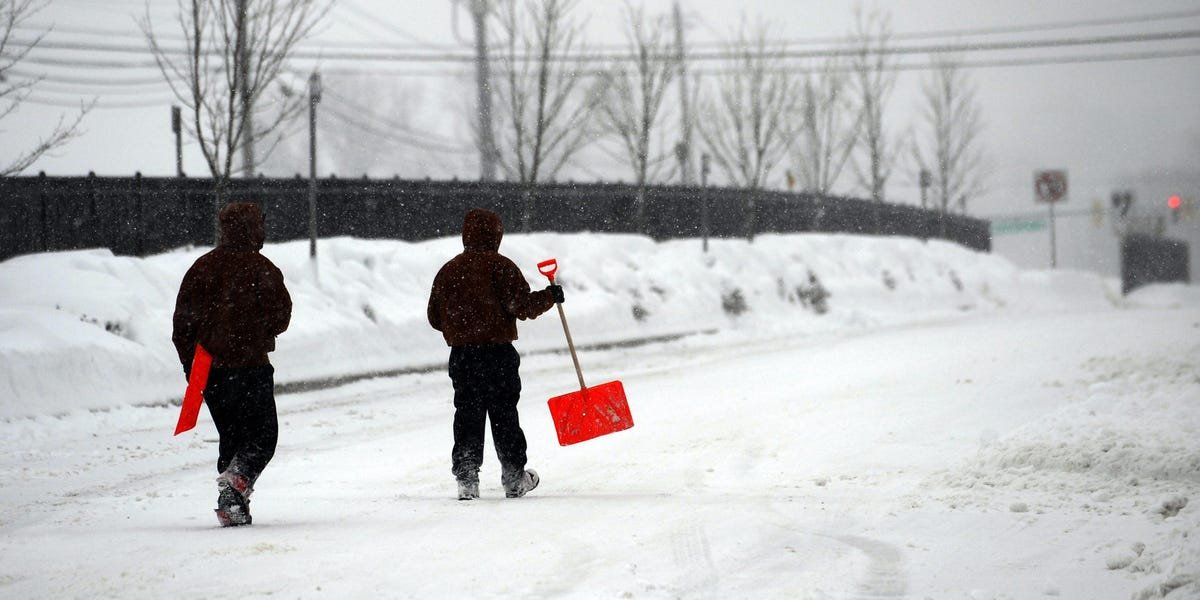
As Americans rush to buy essentials ahead of Winter Storm Fern, some are also buying shares on prediction markets, like Kalshi and Polymarket, betting on how much snow will fall in New York City.
Traders on Kalshi have bet almost $900,000 as of Saturday afternoon on whether more than 12 inches of snow will fall in New York City on Saturday and Sunday. Meanwhile, on Polymarket, traders have bet about $210,000 on how much snow New York City will see this weekend. The winning category is now 8 to 10 inches.
The storm is expected to bring heavy snow, sleet, and freezing rain to multiple states in the South, Mid-Atlantic, Midwest, and Northeast this weekend. The National Weather Service says the storm could impact some 180 million Americans. Thousands of flights have already been canceled.
Prediction markets allow users to buy and sell shares in the outcomes of future events, such as sports or elections. Polymarket also provides real-time updates, allowing bets to provide insights into how consumers and investors think.
Polymarket bettors correctly predicted nearly the entire slate of Golden Globe winners last week, prompting a celebration from Polymarket CEO Shayne Coplan.
“We have a long way to go to educate the public on the value of market-based forecasts, but you can’t deny its accuracy,” Coplan wrote. “People have more clarity about the world because Polymarket exists.”
The new markets are not strictly regulated, and some bets have looked a lot like insider trading. A last-minute bet on Polymarket earlier this month that Venezuelan leader Nicolás Maduro would be ousted netted strong returns after the US captured Maduro in a surprise raid hours later.
Snowfall totals, on the other hand, are perhaps less susceptible to market manipulation.
If you’re reading this, you probably have more money on hand than YouTube billionaire MrBeast.
The world’s biggest YouTuber, whose real name is Jimmy Donaldson, has said he owns more than half of his business, which was valued at $5 billion in its latest funding round. But a hefty net worth doesn’t always translate to cash.
“I have negative money right now,” Donaldson said in a Wall Street Journal video interview published in early January. “I’m borrowing money right now — that’s how little money I have.”
Donaldson also said that “technically, everyone watching this video has more money than me,” though the self-made billionaire suspected that some people wouldn’t believe him.
“It’s funny talking about my personal finances, because no one ever believes anything I say,” Donaldson said.
MrBeast made a similar point last summer when he said he had to borrow money from his mom for his wedding, adding that he had “very little money” since he tries to “reinvest everything.”
“I’m so busy working, I don’t really think about my personal bank account,” Donaldson told the WSJ.
Donaldson’s lack of dollars may come as a surprise to fans who have watched him hand out wads of cash to strangers and stand on a pyramid of money. However, MrBeast’s company, Beast Industries, is still a startup, and cash flow can be a problem for executives at young companies that aren’t publicly traded and have fewer lanes to liquidate their stock.
A lack of cash on hand hasn’t stopped Donaldson from splurging occasionally. The YouTuber said he once rented a private jet for about $150,000 to visit his then-girlfriend (now-fiancée), Thea Booysen, in the United Kingdom.
Donaldson is known to drop millions of dollars on YouTube videos, too, which former staffers said he would sometimes kill entirely if they didn’t meet his quality standards. The YouTuber said that despite Amazon paying him for his Prime Video show, “Beast Games,” he overspent and ended up losing tens of millions of dollars on the first season.
His company, Beast Industries, has made a push over the last year to reduce unnecessary spending, following a loss of over $100 million in its media division in 2024.
Donaldson has made personal finance a growing portion of his brand.
He’s looking to start Beast Financial, a banking and financial advisory venture. The YouTuber also said he wants to launch a YouTube channel featuring personal finance videos to help educate his viewers on how to handle money.
Financial content “just feels like a nice fit for us because we do so much with money,” Donaldson told creator Jon Youshaei.
Larry and David Ellison, who own Paramount, want to use $24 billion in Middle Eastern money to finance their bid for Warner Bros. Discovery. Is that a problem for WBD?
You might think so — especially since $10 billion of that came from the Saudi government. That’s the same government that US intelligence said killed a Washington Post journalist in 2018. The kind of partner you might think a major American media conglomerate would want to keep at arm’s length.
But that’s not a problem WBD raises in its newest communication to shareholders, where it urges them to take the deal offered by Netflix instead.
What actually worries WBD about the Ellisons’ bid isn’t the Ellisons’ particular partners. It’s that the Ellisons had partners.
In a regulatory filing that tells the backstory of the proposed WBD sale, WBD execs and their reps repeatedly told the Ellisons they wanted a firm commitment that Larry Ellison — currently the world’s 5th-richest man, with an estimated net worth of $243 billion — would guarantee the deal himself.
Instead, WBD argues, the Ellisons never gave them the assurances they wanted.
The filing does bring up the fact that money from Middle Eastern sovereign wealth funds would likely complicate regulatory issues for a proposed Ellison/Paramount deal. (Ditto for a proposed $1 billion investment from China’s Tencent, which the Ellisons later took out of their proposal.) But those are presented as technical hurdles. Not moral or patriotic dealbreakers.
And when it comes to the main pitch WBD is making to investors, all of that stuff disappears. It just boils down to “we did our homework, and the Netflix deal is better.”
That’s not shocking: If you’re a WBD investor, you are (supposedly) only interested in getting the maximum value for shares. And WBD’s filing argues that Netflix is the one that can pay the most.
Now we’re waiting to see what the Ellisons do next: Many observers believe they’ll return with yet another, higher bid. Will this one have Gulf money, too?
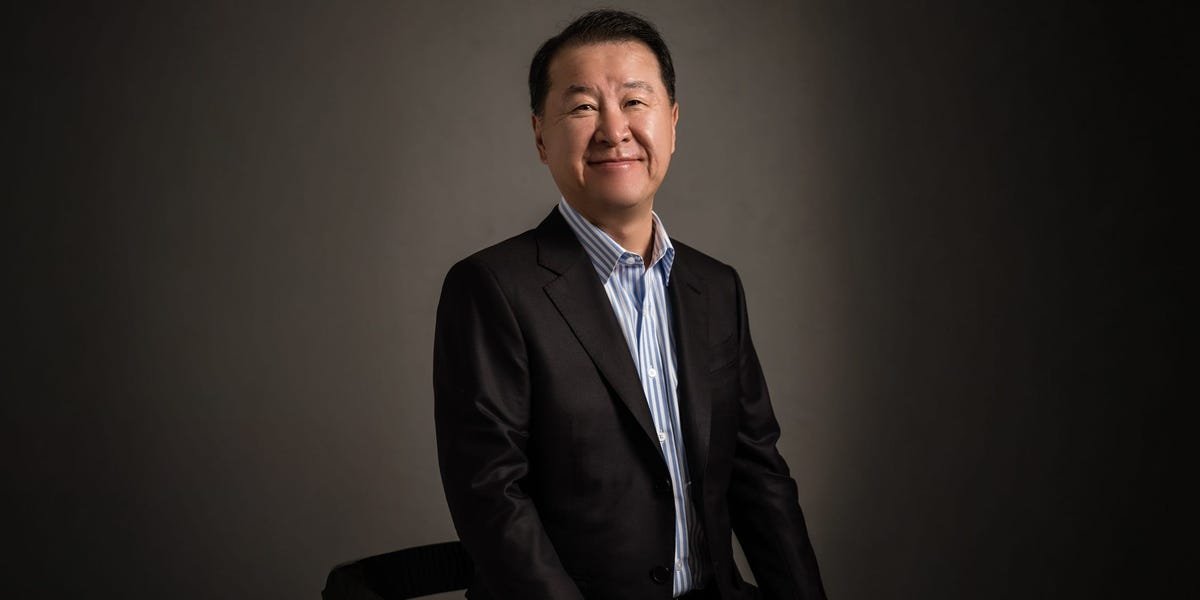
This as-told-to essay is based on a conversation with David Chung, owner and chairman ofAmare Global. It has been edited for length and clarity.
I couldn’t believe there was a banana just sitting on the kitchen table. In Korea, having a banana was a big deal, but when I immigrated to New York City at 12, we had fruit and even M&Ms. Everything was so luxurious.
David Chung and his mom moved to New York.
Courtesy of David Chung
My mother immigrated to the US in 1963 with less than $100. When she arrived in New York, she started a small, mom-and-pop gift shop. She grew the business through and eventually got her green card. I joined her about eight years later, in the middle of a New York winter. I didn’t speak the language, but I felt lucky to be in the US.
I decided to get into cosmetics after watching my mom’s business
My mother continued to grow her store, expanding into a drugstore and pharmacy. By the early 2000s, she had a business worth tens of millions.
She was very, very entrepreneurial. Watching her journey inspired me and has carried over even today. I have a lot of her DNA when it comes to business. Now that I’m 66, I’ll think, “I’m just like my mother!” It’s scary.
My mom’s business set the stage for mine. Working in her shop, I saw that beauty products provided a great business opportunity. The products are small, which reduces warehousing and shipping costs. They’re consumable, so customers return again and again. And even if the economy is bad, people don’t give up on their skin.
I started my first business at 23
I went to college, but I found it difficult to concentrate because I was always thinking about starting my business. Even today, I don’t drive much because I get so distracted thinking about running my companies (instead, I use a driver). Eventually, I graduated with a degree in engineering.
Right next to my school, there was a small video rental store. These were the days before Blockbuster. I bought that store when I was 23, and expanded it slowly to sell gifts and cosmetics.
David Chung started his business at the age of 23.
Courtesy of David Chung
That was my start in business. Other than my mom, I’ve never worked for anyone else. That meant I had to learn hard lessons about business structure, processes, and systems on my own.
I have more money than I could ever spend, but still love building businesses
Over time, I pivoted from retail to research, design, and manufacturing. In 2018, I sold my shares in one company for $53.7 million. In 2021, I sold my company, Farmacy Beauty, for hundreds of millions (I’m not allowed to share the specific amount). I remember being at my computer on December 31st, watching the funds being deposited into my account. I didn’t feel anything. I didn’t think “I’m rich now.” I didn’t even go out to dinner to celebrate.
Entrepreneurship has never been about money for me. It’s more about the accomplishment and excitement of building something. I remember the first time I was in a room with people who had more credentials than me. I came up with an idea they hadn’t considered. That’s the first time I realized that I had a different way of thinking about things.
I have a huge amount of money now — I could never spend it all. And yet, when those funds hit my account, I didn’t buy a Rolex or a fancy car. I went out and bought another company to run.
I want to build wealth in order to give back
Recently, I told an employee that I’m going to retire in three years. She laughed and said I told her the same thing 15 years ago.
I don’t think I will ever retire fully. God has given me a talent for being business-minded and good at what I’m doing. I want to utilize that as long as I’m able to.
My mother was very passionate about giving back, particularly to the Korean American community. I figure the more money I make, the more I can give back. So, why not use this skill?