From-a-fear-of-dying-to-AI-martyr-Meet-the.jpeg

From a fear of dying to AI ‘martyr’: Meet the 20-year-old Texan accused of plotting against Sam Altman

Almost one year to the day before he traveled to California in what authorities said was a bid to kill OpenAI CEO Sam Altman, Daniel Moreno-Gama handed in an assignment for a college English class.

“My most important belief can be described in one of my favorite proverbs: ‘A society grows great when old men plant trees whose shade they know they shall never sit in,'” read the assignment for Lone Star College in Montgomery, Texas, which was posted to a Substack account using his name in February. It’s a quote that would appear again in the bio of an Instagram account linked to Moreno-Gama.

He did not mention artificial intelligence, Altman, or OpenAI, the company behind ChatGPT, though those were frequent topics of his writings over the 22 months leading up to the 20-year-old’s Friday arrest.

Since June 2024, posts from Instagram, Discord, and Substack accounts linked to Moreno-Gama paint a picture of a young man increasingly focused on AI and the “existential threat” it poses. He’s part of a growing movement of discontent with and violence against Big Tech and Corporate America.


Daniel Moreno-Gama, middle, appears in court with public defenders Diamond Ward, left, and Nuha Abusamra on Tuesday, April 14, 2026, in San Francisco.

Daniel Moreno-Gama, middle, appears in court with public defenders Diamond Ward, left, and Nuha Abusamra on Tuesday, April 14, 2026, in San Francisco. 

AP Photo/Jeff Chiu, Pool


By earlier this year, posts linked to him became even more fatalistic, exploring the idea of martyrdom. One post reads: “It is my personal belief that there is no truer form of love than that of the Martyr.”

Last week, authorities say, Moreno-Gama tossed a lit Molotov cocktail at Altman’s San Francisco home and threatened an attack on OpenAI’s nearby headquarters.

Public defender Diamond Ward said on Tuesday that Moreno-Gama has a “history of autism and mental health illness,” and that her client’s actions “appear to have been driven by an acute mental health crisis.”


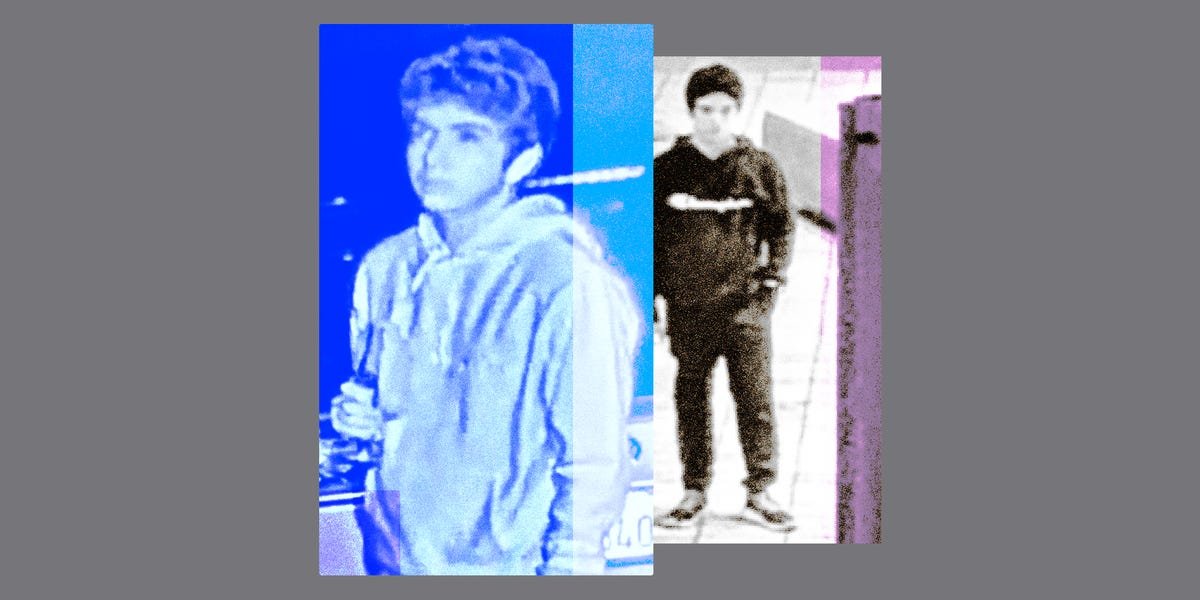
Daniel Moreno-Gama on security footage.

Authorities say Daniel Moreno-Gama was captured on security footage at Sam Altman’s home. 

Department of Justice


The court-appointed attorney called the federal and state charges against Moreno-Gama — which include state-level attempted murder — “unfair and unjust” and accused prosecutors of exploiting “the mental illness of a vulnerable young man by turning a vandalism case into an attempted murder, life exposure case to gain support of a billionaire.”

San Francisco District Attorney Brooke Jenkins said in response, “It wouldn’t matter if this was a billionaire or a CEO or any average San Franciscan.”

The Substack bearing Moreno-Gama’s name suggests he was deeply religious in his youth, inspired by his father, who started two Spanish-speaking ministries.

His family was “extremely devout in protestantism,” and he had a “debilitating fear of death,” reads the post about his April 2025 school assignment. He shed those religious beliefs as he got older, which, he said, led to a new sense of purpose.

“I came to a realization that simply because a god had not given us some divine purpose does not mean that we are purposeless, it only means it is up to us to create our own,” the post said.

He went to public school before starting classes at Lone Star College, about a 15-minute drive from the 1,500 square-foot, three-bedroom home he shared with his mom on a cul-de-sac in the Houston suburbs, social media posts and public records show.


The home of Daniel Moreno-Gama is seen after the FBI raided his home in Spring, Texas, Monday, April 13, 2026. (Jason Fochtman/Houston Chronicle via AP)

The home of Daniel Moreno-Gama is seen after the FBI raided his home in Spring, Texas, Monday, April 13, 2026. 

Jason Fochtman/Houston Chronicle vía AP


Moreno-Gama was one week into his college tenure when he first posted in the PauseAI Discord channel.

“I am very passionate about this issue and am willing to learn and help whatever means necessary,” he wrote on June 11, 2024, under the alias Butlerian Jihadist, a reference to the first book in the Legends of Dune series, which tells the story of humans fighting against artificial intelligence.

PauseAI, an AI safety advocacy group, condemned the attack on Altman in a statement. PauseAI said he was banned from its public Discord site following news of his arrest. His posts have since been deleted.

Over the next year and a half, he posted 34 times on the forum, PauseAI said. On Discord, he described himself as a “community college student with no tech background” who enjoyed writing and asked if he could help with recruitment or activism, according to copies of the Discord posts confirmed by Business Insider. In one early post, he shared a draft of a letter he planned to send to Texas Rep. Dan Crenshaw, saying a “small cartel of individuals has successfully pulled the wool over the eyes of our government and the public.” The letter asked the representative to “look further into this issue.”

An Instagram account linked to his Substack and followed by several relatives, features photos of empty European streets and church facades — as well as news segments, charts, and reports about the threat of AI. The account contains a clip from a “60 Minutes” interview with “the Godfather of AI” Geoffrey Hinton about the importance of AI safety, shared an article headlined “AI might let you die to save itself,” and recommended a book titled “If Anyone Builds It, Everyone Dies.”

Towards the end of last year and into 2026, his writings appeared increasingly urgent.

“We owe it to everyone who came before us, and to ourselves, and everyone we know and love, and everyone who might exist someday, to be stronger than that and at least die fighting if it comes to that,” he wrote on Discord on November 6.

A few weeks later, he wrote that the “someday” was approaching.

“We are close to midnight it’s time to actually act,” he posted.

In response, a moderator warned Moreno-Gama: “Advocating violence in any form is grounds for a ban.”


public defender Diamond Ward

Public defender Diamond Ward 

Katherine Li/BI


Moreno-Gama did not return to Lone Star for the new semester in January, the school confirmed. He was working part time at a pizzeria, his lawyer said.

The Substack linked to him also posted increasingly detailed missives about martyrdom and tech CEOs like Altman.

“These people are almost nothing like you. They are most likely sociopathic/psychopathic and, in the case of Altman, consistently reported to be a pathological liar,” said a January Substack post titled “AI Existential Risk.”

He called for the US to halt all data center construction and strike a deal with China to end the AI race.

“Giving up is unacceptable, not trying is a death sentence,” the January post said.

On Friday, he was caught on surveillance footage, standing in front of Altman’s $27 million San Francisco mansion that overlooks the Bay in the tony Russian Hill neighborhood. Just after 3:30 am, authorities say he threw a Molotov cocktail at the six-bedroom home, setting fire to the top of the driveway gate.

Moreno-Gama ran off, and about an hour and a half later, he arrived at OpenAI’s headquarters, where he struck the building’s glass doors with a chair and threatened to “burn it down and kill anyone inside,” according to a federal affidavit that included the surveillance images.

A three-part “anti-AI” note that San Francisco cops recovered from Moreno-Gama “identified views opposed to Artificial Intelligence (AI)” and included a target list with the names and addresses of other AI CEOs, board members, and investors, the affidavit said. The people on the list have been alerted, an FBI official said, though they have not been named publicly.


The home of Sam Altman is seen from Chestnut Street in San Francisco on Friday, April 10, 2026.

Left: The home of Sam Altman is seen from Chestnut Street in San Francisco on Friday, April 10, 2026. Right: Pedestrians walk on Lombard Street past a driveway at the home of Sam Altman in San Francisco on Friday, April 10, 2026. 

Lea Suzuki/San Francisco Chronicle via AP


The alleged attacks by Moreno are not the first time fears over AI have turned physical.

OpenAI locked down its San Francisco office in 2025 after receiving what it believed at the time to be a threat from an individual who had previously been associated with an AI protest group.

A recent poll of 5,458 Americans by Bentley University found that 78% of respondents didn’t trust companies to use AI responsibly.

Altman addressed the attack and fears over AI on his blog the day it occurred.

“A lot of the criticism of our industry comes from sincere concern about the incredibly high stakes of this technology,” he wrote. “While we have that debate, we should de-escalate the rhetoric and tactics and try to have fewer explosions in fewer homes, figuratively and literally.”

Since the attack, several Instagram users have commented their support on posts linked to Moreno-Gama, echoing some of the same sympathetic reactions that emerged in the case of accused UnitedHealthcare CEO killer Luigi Mangione.

“You are a good person,” one comment read. “You are in league with Luigi now.”


Source link

5-big-takeaways-from-Sam-Altmans-Saturday-night-AMA-on.jpeg

5 big takeaways from Sam Altman’s Saturday night AMA on OpenAI’s Pentagon deal

  • Sam Altman went on X on Saturday night and told users to ask him anything about OpenAI’s Pentagon deal.
  • Altman on Friday night announced that OpenAI will work with the Pentagon and let it use its AI models.
  • Here are five big takeaways from Altman’s AMA session.

Sam Altman hopped onto X on Saturday night and told users to ask him anything about OpenAI’s agreement with the Pentagon.

Altman, late on Friday, announced that his company had finalized a deal with the Department of War to use its AI models. OpenAI’s deal came after Anthropic refused an ultimatum regarding the terms of use of its frontier model, Claude, for deployment in mass domestic surveillance and fully autonomous weapons.

Here are 5 big takeaways from Altman’s AMA.

The OpenAI-Pentagon deal was ‘rushed,’ and Altman knows the ‘optics’ don’t look good

The Pentagon deal was done quickly in “an attempt to de-escalate the situation,” Altman wrote on X.

He added in a separate post that the deal had been “rushed.”

Still, the “optics don’t look good” for OpenAI, he wrote.

“If we are right and this does lead to a de-escalation between the DoW and the industry, we will look like geniuses, and a company that took on a lot of pain to do things to help the industry,” he wrote.

“If not, we will continue to be characterized as rushed and uncareful,” he wrote.

Altman added that he sees “promising signs” for where this will all land for OpenAI.

OpenAI took the Pentagon deal because it ‘got comfortable’ with the ‘contract language’

Altman was asked why the Department of War went with OpenAI over Anthropic. He said he wouldn’t speak for his competitor, but did speculate on why OpenAI got the contract inked first.

“First, I saw reporting that they were extremely close on a deal, and for much of the time both sides really wanted to reach one,” Altman wrote. “I have seen what happens in tense negotiations when things get stressed and deteriorate super fast, and I could believe that was a large part of what happened here.”

He added that OpenAI and the Department of War “got comfortable with the contractual language” as well.

“I think Anthropic may have wanted more operational control than we did,” he added.

OpenAI has 3 redlines, but it’s open to changing them as tech evolves

Altman said that OpenAI has “three redlines.” But those redlines could change — and there could be more of them put in place — as the technology evolves, and “new risks” come into play.

“But a really important point: we are not elected. We have a democratic process where we do elect our leaders,” Altman wrote. “We have expertise with the technology and understand its limitations, but I think you should be terrified of a private company deciding on what is and isn’t ethical in the most important areas.”

“Seems fine for us to decide how ChatGPT should respond to a controversial question,” he added. “But I really don’t want us to decide what to do if a nuke is coming towards the US.”

Altman says Anthropic is on a ‘dangerous’ path

Altman said OpenAI had been talking to the Department of War for “many months” about non-classified work, before “things shifted into high gear on the classified side.”

“We found the DoW to be flexible on what we needed, and we want to support them in their very important mission,” he wrote.

“I think the current path things are on is dangerous for Anthropic, healthy competition, and the US,” Altman wrote on X as well. “We negotiated to make sure similar terms would be offered to all other AI labs.”

He also asked for “some empathy” for the Department of War, given its “extremely important mission.”

And, in Altman’s words:

Our industry tells them “The technology we are building is going to be the high order bit in geopolitical conflict. China is rushing ahead. You are very behind.”

And then we say

“But we won’t help you, and we think you are kind of evil.”

I don’t think I’d react great in that situation.

I do not believe unelected leaders of private companies should have as much power as our democratically elected government. But I do think we need to help them.

Altman says AI can help counter big security threats on two fronts

Altman says AI could come in useful on two fronts. Firstly, the US’s “ability to defend against major cyber attacks,” particularly, an attack that might take down the country’s electrical grid.

Secondly, biosecurity is an area where AI could help.

“I do not think we are currently set up well enough to detect and respond to a novel pandemic threat,” Altman said.


Source link

Sam-Altman-says-concerns-of-ChatGPTs-energy-use-are-overblown.jpeg

Sam Altman says concerns of ChatGPT’s energy use are overblown: ‘It also takes a lot of energy to train a human’

Sam Altman is pushing back on the idea that ChatGPT consumes too much energy.

“One of the things that is always unfair in this comparison is people talk about how much energy it takes to train an AI model relative to how much it costs a human to do one inference query,” Altman told The Indian Express last week on the sidelines of a major AI summit. “But it also takes a lot of energy to train a human.”

Altman suggested it’s not an apples-to-apples comparison, arguing that it’s unfair to discount the years spent nurturing and educating someone to be capable of making their own inquiries.

“It takes a lot of energy to train a human,” he said, prompting some laughter in the crowd. “It takes, like, 20 years of life, and all of the food you eat during that time before you get smart.”

Altman said the clock really began thousands of years ago.

“It took, like, the very widespread evolution of the 100 billion people that have ever lived and learned not to get eaten by predators and learned how to, like, figure out science or whatever,” he said.

Altman also called out what he said were “totally insane” claims on the internet that OpenAI is guzzling down water to power ChatGPT.

“Water is totally fake,” Altman said, when asked about concerns AI companies use too much water. “It used to be true, we used to do evaporative cooling in data centers, but now that we don’t do that, you know, you see these like things on the internet where, ‘Don’t use ChatGPT, it’s 17 gallons of water for each query’ or whatever.”

In June, Altman said that the average ChatGPT query consumes roughly the amount of energy needed to power a lightbulb for a few minutes.

“People are often curious about how much energy a ChatGPT query uses; the average query uses about 0.34 watt-hours, about what an oven would use in a little over one second, or a high-efficiency lightbulb would use in a couple of minutes,” he wrote on X.

Altman said it is fair as a whole to point out the AI industry’s overall energy consumption because of the large growth in usage. He said it’s why he and other AI CEOs have pushed alternative energy sources like solar, wind, and nuclear.

Unlike other CEOs, namely xAI’s Elon Musk, Altman is dismissive of the idea that space-based data centers are realistic in the next decade, a concept that some companies have floated as a way to reduce energy consumption.

Outside of OpenAI, Altman is a major investor in nuclear energy. He previously served as chairman of Oklo, a nuclear energy startup, and has been a major backer of Helion, which plans to build what it calls “the world’s first fusion power plant” in Washington state.

In the US, data center energy consumption is becoming a major topic. Last month, President Donald Trump said he was working with tech companies on “a commitment to the American people” to ensure that citizens don’t pay higher energy bills because of a nearby data center.

Consulting firm McKinsey & Company estimated last year that data centers could account for 14% of total power demand in the US by 2050.


Source link

Sam-Altman-says-Elon-Musks-idea-of-putting-data-centers.jpeg

Sam Altman says Elon Musk’s idea of putting data centers in space is ‘ridiculous’

SpaceX CEO Elon Musk and OpenAI CEO Sam Altman famously don’t agree on much.

The latest point of contention: data centers in space. Musk has made it a priority. Altman thinks it’s a fantasy, at least for now.

“I honestly think the idea with the current landscape of putting data centers in space is ridiculous,” Altman said during a live interview with local media in New Delhi on Friday, causing audience members to laugh.

Altman said that orbital data centers could “make sense someday,” but factors like launch costs and the difficulty of repairing a computer chip in space remain overwhelming obstacles.

“We are not there yet,” Altman added. “There will come a time. Space is great for a lot of things. Orbital data centers are not something that’s going to matter at scale this decade.”

Musk would almost certainly disagree.

While many Big Tech and AI companies are spending billions on data center construction on Earth, Musk’s eyes are on the stars, per usual. Orbital data centers are his latest ambition, as he mentioned in an all-hands xAI meeting in December.

In February, SpaceX said its goal is to launch a “constellation of a million satellites that operate as orbital data centers.” The company has already begun hiring engineers to make that happen.

During an all-hands meeting with xAI employees this month, Musk said SpaceX’s acquisition of xAI will allow them to deploy the orbital data centers faster.

Despite Altman’s skepticism, other tech leaders are also racing to place data centers in space. Google’s Project Suncatcher, unveiled in November 2025, aims to do just that. Google CEO Sundar Pichai told Fox News Sunday the company could start placing data centers — powered by the sun — in space as early as 2027.

Tech and AI companies rely on data centers to power their products, like large language models and chatbots. Those data centers, however, can deplete water resources, strain power grids, increase pollution, and decrease the overall quality of life.

An investigation by Business Insider published last year found that over 1,200 data centers had been approved for construction across the US by the end of 2024, nearly four times the number from 2010.

Now, proposed data center campuses in Texas, Oklahoma, and elsewhere are increasingly facing stiff resistance from local communities.


Source link

Jake-Paul-says-Sam-Altman-taught-him-the-value-of.jpeg

Jake Paul says Sam Altman taught him the value of a 15-minute meeting

Jake Paul was a firebrand YouTuber. Then he was an NFT merchant, and a betting site operator. Now, Paul is a professional boxer — and venture capitalist. And he’s learning from one of the biggest names in tech.

On “Sourcery,” Paul said that he met OpenAI CEO Sam Altman while sitting next to each other at President Donald Trump’s inauguration.

“Sam likes fast cars, and so do I,” Paul said. “So, we just started talking about cars, and then we got along, and that was really it.”

Paul’s Anti Fund — which is also led by his brother Logan and longtime founder Geoffrey Woo — invested in OpenAI in 2025. The biggest lesson he’s learned from Altman is efficiency, Paul said.

He described the quick-and-tidy meetings that Altman runs. The OpenAI CEO “walks into the room, sits down, let’s get right into the conversation, boom boom boom,” he said.

In 15 minutes alone, Altman was “hella productive,” Paul said. Then, Altman can go on to his next meeting and do it all over again.

“We’ll do hourlong meetings or calls and just waste time,” Paul said. “I think that was inspiring because time is the most valuable thing, and it’s the only reason you can’t accomplish more.”

Indeed, Altman has long opted for the 15-minute meeting. In a 2018 blog post, he wrote that the ideal meeting time is either around 15 to 20 minutes or 2 hours, but “the default of 1 hour is usually wrong.”

Paul has worked closely with OpenAI in the last year, beyond participating in fundraising.

Remember all of those strange Paul memes running around the internet during the Sora 2 launch? They were by design. Paul said he helped consult on the project and was one of the first to sign over his name, image, and likeness.

Woo also appeared on the podcast, and spelled out the thinking behind those far-out memes (such as an AI Paul declaring he was gay). “It was not something that was like, ‘Hey, Jake Paul is now gay.’ Jake was thoughtful in terms of why we were part of that launch.”

Woo also said that he had formed a good friendship with Altman and Mark Chen, OpenAI’s chief research officer.

For the Sora 2 launch, Paul said that he had “regular calls” with OpenAI and offered “super detailed consulting.”

“Me and my brother have however many years combined of social media experience since the beginning,” Paul said. “We were there when the term ‘influencer’ was even made up.”

This background, Paul said, helped him give good advice on what OpenAI’s social media-like interface should look like. He advised on both what creators and audiences wanted, he said.

Anti Fund closed its $30 million fund in September. Other investments include defense tech startup Anduril and prediction market Polymarket.

Woo said their ties to OpenAI remain strong. “We were just at OpenAI for three hours looking for other ways to collaborate,” he said. “Things might be cooking.”


Source link