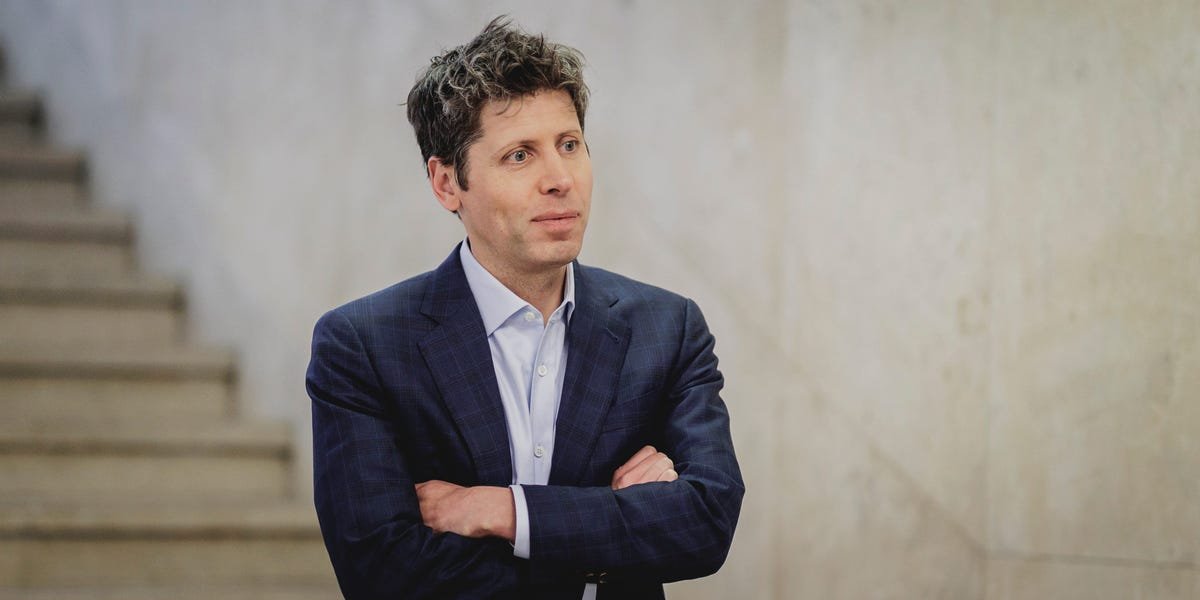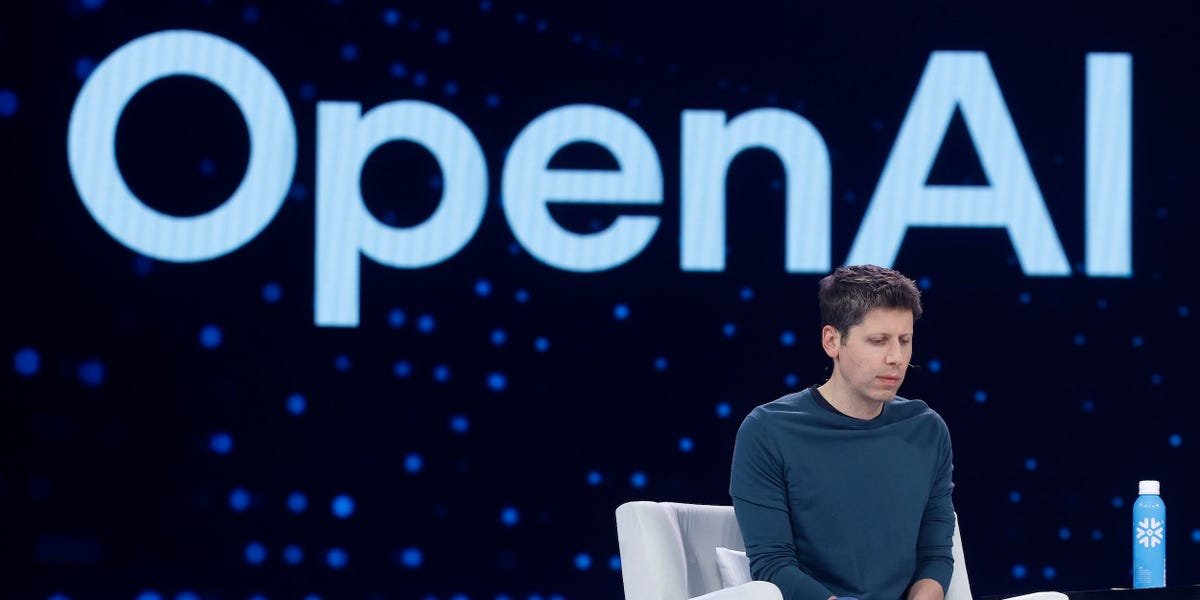
Sam-Altman-says-OpenClaw-creator-Peter-Steinberger-is-joining-OpenAI.jpeg

Sam Altman says OpenClaw creator Peter Steinberger is joining OpenAI to build next-gen personal agents

  • Sam Altman says OpenClaw creator Peter Steinberger is joining OpenAI.
  • OpenClaw is a viral AI agent launched last month.
  • Altman said Steinberger will build “next generation” AI agents at OpenAI.

OpenAI just scored a win in the AI talent wars.

Sam Altman said Sunday on X that Peter Steinberger, the creator of OpenClaw, the viral AI agent powering the agent-only social network Moltbook, is joining OpenAI.

Altman said Steinberger would build the “next generation” of personal AI agents at the company.

“He is a genius with a lot of amazing ideas about the future of very smart agents interacting with each other to do very useful things for people,” Altman said about Steinberger. “We expect this will quickly become core to our product offerings.”

Altman added that OpenClaw, which was for a brief moment in time known as Moltbot and then Clawdbot before Anthropic took notice, will live on as an open-source project supported by OpenAI.

“The future is going to be extremely multi-agent and it’s important to us to support open source as part of that,” he wrote.

Steinberger, previously best known for founding the PDF processing company PSPDFKit, came out of retirement to launch OpenClaw in late 2025.

He is likely to bring a new perspective to OpenAI’s race to develop artificial general intelligence. Steinberger said he believes AGI is best as a specialized form of intelligence rather than a generalized one.

“What can one human being actually achieve? Do you think one human being could make an iPhone or one human being could go to space?” Steinberger said on a Y Combinator podcast in February. “As a group we specialize, as a larger society we specialize even more.”


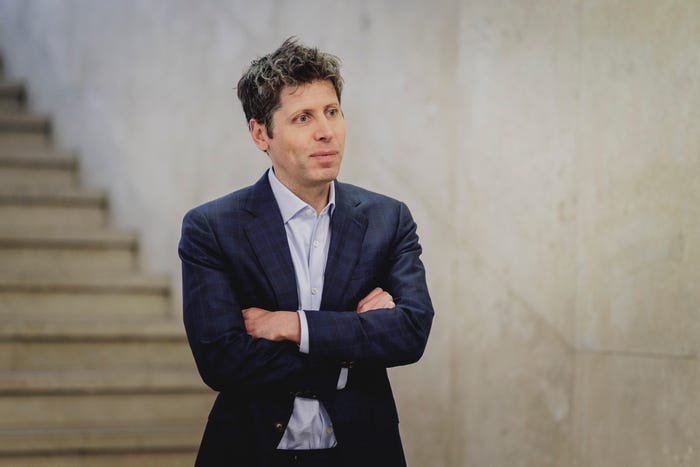
Source link

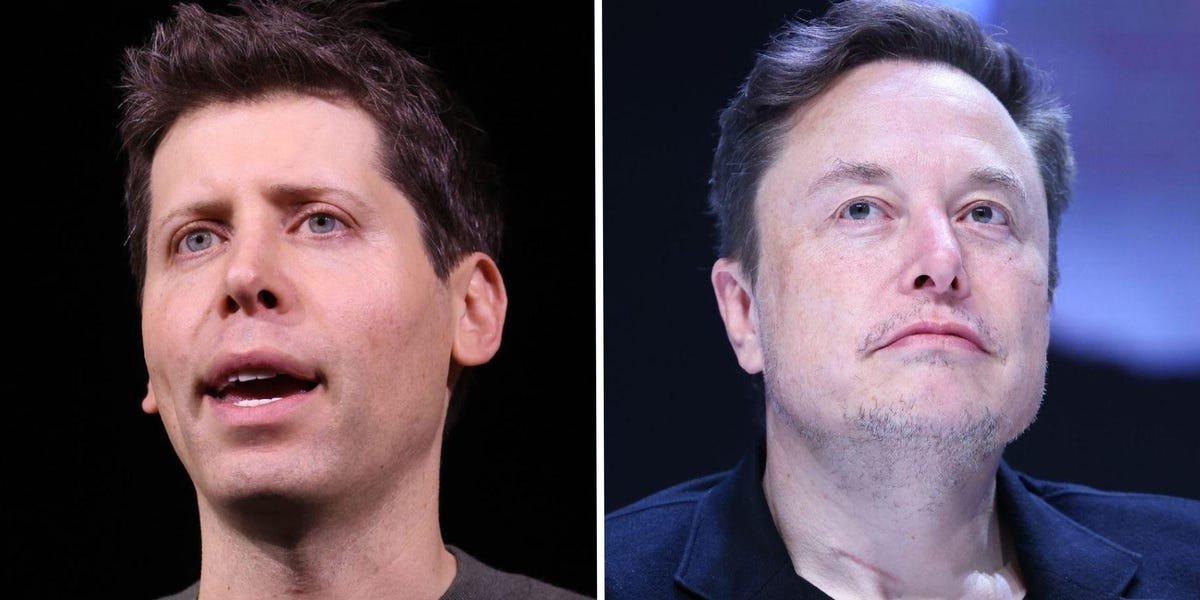
Sam-Altman-says-he-cant-wait-to-get-Elon-Musk.jpeg

Sam Altman says he can’t wait to get Elon Musk under oath

  • Sam Altman said he’s “really excited” to get Elon Musk under oath.
  • Their case will go to trial in April, a California judge said in January.
  • Musk has accused OpenAI and Altman of misleading him into thinking it would remain a nonprofit.

Sam Altman is pumped to take on Elon Musk in court.

“Really excited to get Elon under oath in a few months, Christmas in April!” the OpenAI CEO said in a Tuesday evening X post.

He also reposted his chief security officer Jason Kwon’s X post, with the caption “concerning.”

The post contained screenshots of a court filing from OpenAI’s attorneys, which said that Musk preferred using messaging apps like Signal or XChat with message retention settings of a week or less.

Altman and Musk took their yearslong public feud to the next level in 2024. Musk, who is Tesla and SpaceX’s CEO, launched a lawsuit against OpenAI and Altman in February 2024, accusing Altman of jeopardizing its nonprofit mission.

Musk said that he contributed $38 million to OpenAI, thinking it would remain a nonprofit. He was one of the company’s founders, along with Altman, PayPal cofounder Peter Thiel, and others.

Despite OpenAI’s attorneys’ attempts to have the case thrown out, a California judge said in a January hearing that there was enough evidence to go to trial, which is set for April.

The billionaire duo have been trading barbs on social media. Musk attacked OpenAI’s ChatGPT on January 20, writing “Don’t let your loved ones use ChatGPT.” He was responding to an X post alleging that the chatbot has been linked to multiple deaths since 2022.

Altman responded to Musk’s post, slamming Tesla’s Autopilot system as unsafe, and questioning xAI’s Grok chatbot. Grok has faced criticism from governments in several countries after reports of Grok users uploading pictures of women and minors and asking the chatbot to undress them.

Representatives for Musk and Altman did not respond to requests for comment from Business Insider.


Source link

Chong Ming Lee, Junior News Reporter at Business Insider's Singapore bureau.

Jensen Huang says Nvidia would love to back an OpenAI IPO, and there’s ‘no drama’ with Sam Altman

Jensen Huang says Nvidia would love to invest in a future OpenAI IPO.

Huang said in an interview on CNBC’s “Mad Money” on Tuesday that there was “no drama” between Nvidia and OpenAI CEO Sam Altman, pushing back against recent chatter of tension in the relationship between the two companies.

“The first deal is on,” the Nvidia CEO said, referring to the company’s September deal with OpenAI, under which the company said it planned to invest up to $100 billion in the AI startup.

“​​And then there’s, of course, an IPO in the future,” he added. “We love to be participating in that as well,” he added.

Huang also described OpenAI as a “once in a generation company” and said Nvidia is “delighted to invest in it.”

His comments come amid reports suggesting internal unease around the deal.

The Wall Street Journal reported on Saturday that the investment had sparked internal concerns at Nvidia, with some executives questioning the deal, according to people familiar with the matter.

Separately, Reuters reported on Tuesday that OpenAI had been unhappy with certain newer Nvidia chips and had looked at alternatives since last year, citing people familiar with the matter.

Huang told reporters in Taipei on Saturday that speculation of any dissatisfaction with OpenAI was “nonsense.”

“We will invest a great deal of money, probably the largest investment we’ve ever made,” he added.

Altman has also pushed back on rumors of tension.

“We love working with NVIDIA and they make the best AI chips in the world,” wrote Altman in a post on X on Tuesday.

“We hope to be a gigantic customer for a very long time. I don’t get where all this insanity is coming from,” he added.

OpenAI is one of the world’s most valuable private AI companies and a major customer for Nvidia’s chips, which power the training and deployment of large language models.

The startup has not announced plans for an IPO, but its fundraising and computing needs have fueled speculation about how it will finance future growth.

“Big Short” investor Michael Burry said in a Substack exchange in January that he was surprised that ChatGPT “kicked off a multi-trillion-dollar infrastructure race.”

“It’s like someone built a prototype robot and every business in the world started investing for a robot future,” he wrote.


Source link

Read-Sam-Altmans-internal-Slack-message-to-employees-saying-ICE.jpeg

Read Sam Altman’s internal Slack message to employees saying ICE ‘is going too far’

Being patriotic means you also need to call out “overreach” when you see it, Sam Altman privately told OpenAI employees in a message that said Immigration and Customs Enforcement had gone “too far.”

“I love the US and its values of democracy and freedom and will be supportive of the country however I can; OpenAI will too,” the OpenAI CEO wrote in an internal Slack message. “But part of loving the country is the American duty to push back against overreach. What’s happening with ICE is going too far.”

OpenAI employees responded positively to Altman’s message on Slack, including heart and thank-you emojis.

Altman’s message, which was first reported by The New York Times’ Dealbook newsletter, comes as CEO and tech leaders face internal and external pressures in the wake of the deadly Border Patrol shooting of Alex Pretti on Saturday. Pretti is the second person to be fatally shot by federal law enforcement amid a surge in immigration enforcement in and around Minneapolis.

Altman also praised Trump’s leadership in his message and expressed hope that the president could cool tensions — the latest example of a CEO attempting to balance being critical of actions tied to the Trump administration’s policies while also staying on the president’s good side.

“President Trump is a very strong leader, and I hope he will rise to this moment and unite the country,” Altman wrote. “I am encouraged by the last few hours of response and hope to see trust rebuilt with transparent investigations.”

As a general principle, Altman wrote that OpenAI tries to “stick to our convictions and not get blown around by changing fashions too much.”

On Monday, the White House appeared to be recalibrating its response in the wake of significant criticism, including from some congressional Republicans.

White House press secretary Karoline Leavitt declined to associate Trump with Homeland Security Secretary Kristi Noem and White House advisor Stephen Miller’s initial statements that Pretti was trying to commit domestic terrorism.

Read Sam Altman’s message to employees

I love the US and its values of democracy and freedom and will be supportive of the country however I can; OpenAI will too. But part of loving the country is the American duty to push back against overreach. What’s happening with ICE is going too far. There is a big difference between deporting violent criminals and what’s happening now, and we need to get the distinction right.
President Trump is a very strong leader, and I hope he will rise to this moment and unite the country. I am encouraged by the last few hours of response and hope to see trust rebuilt with transparent investigations.
As a company, we aim to stick to our convictions and not get blown around by changing fashions too much. We didn’t become super woke when that was popular, we didn’t start talking about masculine corporate energy when that was popular, and we are not going to make a lot of performative statements now about safety or politics or anything else. But we are going to continue to try to figure out how to actually do the right thing as best as we can, engage with leaders and push for our values, and speak up clearly about it as needed.

Correction: January 27, 2026 — Alex Pretti was fatally shot by Border Patrol, not ICE.

Do you work at OpenAI? Contact the reporter from a non-work email and device at bgriffiths@businessinsider.com


Source link

Henry Chandonnet is pictured

Sam Altman included a subtle dig at Mark Zuckerberg in his message to employees

Don’t expect to see Sam Altman lamenting the absence of “masculine energy” in corporate America to Joe Rogan anytime soon.

The OpenAI CEO sent employees a message on Slack criticizing Immigration and Customs Enforcement — and appears to have taken the opportunity to also take a subtle jab at his rival, Mark Zuckerberg.

The reference can be found where Altman wrote that OpenAI aims to “not get blown around by changing fashions.”

“We didn’t start talking about masculine corporate energy when that was popular,” Altman told employees.

Last year, Zuckerberg championed a return to masculinity at Meta on “The Joe Rogan Experience.”

“The masculine energy, I think, is good,” Zuckerberg said in the January podcast episode. “Society has plenty of that, but I think corporate culture was trying to get away from it.”

Zuckerberg described the merits of a corporate culture that “celebrates the aggression” of business.

The Meta CEO said that the intent of corporate culture’s shift away from masculinity was good. Women likely feel that companies are “too masculine,” he told Rogan, and that things are “biased” against them. But the shift had gone too far, the Facebook cofounder said.

“It’s one thing to say we want to be welcoming and make a good environment for everyone,” Zuckerberg said. “It’s another to basically say that masculinity is bad.”

Altman also wrote in his memo that OpenAI didn’t “become super woke when that was popular.”

Meta didn’t respond to Business Insider’s request for comment on Altman’s remark.

The latest in an AI rivalry

Altman and Zuckerberg are currently engaged in a talent war for top AI researchers and engineers.

Zuckerberg has attempted to poach OpenAI employees with eye-popping compensation packages, which Altman in June said included $100 million signing bonuses.

While Altman at the time said that he was happy that “at least so far, none of our best people have decided to take them up on that,” Zuckerberg successfully hired away some prominent OpenAI talent.

The Meta CEO, who even hand-delivered soup to an OpenAI employee he was attempting to poach, hired away ChatGPT co-creator Shengjia Zhao and three researchers who helped build OpenAI’s Zurich office.


Source link

Sam Altman.

Sam Altman said OpenAI was planning to ‘dramatically slow down’ its pace of hiring


Florian Gaertner/Photothek via Getty Images

  • Sam Altman said that AI would “dramatically slow down” how quickly OpenAI hires.
  • Altman said the company will “hire more slowly but keep hiring.”
  • Altman’s comments came after a year when job growth stalled and hit young job seekers hard.

Sam Altman is addressing AI’s impact on the workforce, including on OpenAI’s hiring practices.

During a live-streamed town hall event on Monday, catered mainly toward developers, the OpenAI CEO said that AI has changed how quickly the company expands its head count, but the company is not in a hiring freeze and is nowhere close to doing away with human employees entirely.

“We are planning to dramatically slow down how quickly we grow because we think we’ll be able to do so much more with fewer people,” said Altman in response to a participant who asked if AI has changed OpenAI’s interview process of potential candidates.

“What I think we shouldn’t do, and what I hope other companies won’t do either, is hire super aggressively, then realize all of a sudden AI can do a lot of stuff, and you need fewer people, and have to have some sort of very uncomfortable conversation,” Altman added. “So I think the right approach for us will be to hire more slowly but keep hiring.”

Altman’s comments come amid the “Great Freeze” and concerns that job creation in America has lost momentum. The unemployment rate in November 2025 climbed to its highest level since 2021, while job openings have fallen 37% from their peak in 2022, according to data from the Bureau of Labor Statistics.

Business Insider previously reported that, while in 2022 there were roughly two job openings for every unemployed worker, by September 2025 that ratio had fallen to one. Workers who have been jobless for at least 27 weeks also now make up about a quarter of all unemployed Americans.

Based on data from the US Census Bureau, young workers have been hit especially hard by the hiring slowdown. The unemployment rate for Americans ages 20 to 24 reached 9.2% in August and September, the highest level since the recovery from the pandemic recession.


Source link

The-gloves-are-off-in-the-feud-between-Sam-Altman.jpeg

The gloves are off in the feud between Sam Altman and Elon Musk

  • Sam Altman and Elon Musk escalated their long-running feud on Tuesday in a series of posts on X.
  • Each of the tech giants traded barbs about deaths and safety concerns tied to each other’s products.
  • The pair is in the middle of a lengthy legal battle over OpenAI’s status as a for-profit entity.

Sam Altman and Elon Musk are at it again, with each of the tech titans taking aim at the other in a series of heated posts on X.

Musk appeared to start the latest escalation early on Tuesday morning, when he posted “Don’t let your loved ones use ChatGPT” in response to a post that use of OpenAI’s chatbot had been linked to the deaths of children and adults since it was released in 2022.

Altman fired back, first in defense of ChatGPT and OpenAI’s desire to protect its users, and then blasting Tesla’s Autopilot technology calling it unsafe.

“It is genuinely hard; we need to protect vulnerable users, while also making sure our guardrails still allow all of our users to benefit from our tools,” Altman said.

Altman continued, calling out Autopilot.

“I only ever rode in a car using it once, some time ago, but my first thought was that it was far from a safe thing for Tesla to have released,” he wrote. “I won’t even start on some of the Grok decisions.”

Altman added: “You take ‘every accusation is a confession’ so far.”

Representatives for Musk and Altman did not immediately respond to requests for comment from Business Insider.

The social media feud comes as the pair is stuck in the middle of a long-running legal battle over OpenAI’s status as a nonprofit company. Musk sued Altman, and other leaders of OpenAI, alleging that they misled him when they decided to pursue a for-profit structure, moving the company away from its original nonprofit mission.

Musk said he donated $38 million to OpenAI when it was originally founded as a nonprofit.

This is a developing story. Check back for updates.


Source link

This-case-is-going-to-trial-Judge-rejects-Sam-Altmans.jpeg

‘This case is going to trial’: Judge rejects Sam Altman’s efforts to toss Elon Musk’s OpenAI lawsuit

It looks like Sam Altman and Elon Musk are headed for a courtroom showdown.

During a hearing on Wednesday, a California judge said she plans to reject Altman’s lawyers’ last-ditch efforts to end Musk’s case against OpenAI and its CEO.

“This case is going to trial,” US District Judge Yvonne Gonzalez Rogers said at a hearing to consider whether the evidence was sufficient to warrant a jury trial.

“I think there’s plenty of evidence,” she said, referring to Musk’s case. “It’s circumstantial, but that’s how these things work.”

In his lawsuit filed in 2024, Musk accused OpenAI of misleading him in its decision to abandon its original nonprofit mission and structure in favor of a profit-oriented model, including through its partnership with Microsoft.

Musk says he donated $38 million to the maker of ChatGPT over the years to support its mission to develop AI for the benefit of humankind. The Tesla CEO is seeking monetary damages, as well as a judgment to void Microsoft’s licensing agreement with OpenAI.

At a hearing on Wednesday, an Oakland federal court judge said she felt there was enough evidence that Musk may have been deceived to allow the case to move forward to a jury. A trial is scheduled for March.

“There were assurances made, and promises made, that the structure would be maintained,” she said. “There was lots of information that was not shared.”

The judge added that she also felt “there are strong arguments by the defense.”

“I think the jury is going to get to decide,” she said.

OpenAI lawyers have denied Musk’s allegations, saying Musk was aware of the company’s for-profit plans as early as 2018. OpenAI has also pointed out that it is still controlled by OpenAI’s nonprofit arm.

“Mr Musk’s lawsuit continues to be baseless and a part of his ongoing pattern of harassment, and we look forward to demonstrating this at trial,” a spokesperson for OpenAI told Business Insider. “We remain focused on empowering the OpenAI Foundation, which is already one of the best resourced nonprofits ever.”

A spokesperson for Musk did not immediately respond to a request for comment.

Musk has filed multiple lawsuits against OpenAI. Most recently, his AI company, xAI, sued OpenAI in September, accusing it of stealing trade secrets and targeting its employees for recruitment. At the time, an OpenAI spokesperson told Business that the lawsuit is “the latest chapter in Mr. Musk’s ongoing harassment.”

Musk helped found OpenAI in 2015, but left the company in 2018. At the time he said his work with OpenAI could present a conflict of interest with Tesla’s AI ambitions.

Since, Musk has repeatedly criticized Altman and OpenAI, including the company’s structure. Musk later went on to launch his own AI company, xAI, in 2023.


Source link

Sam-Altman-says-OpenAI-has-gone-code-red-multiple-times.jpeg

Sam Altman says OpenAI has gone ‘code red’ multiple times — and they’ll do it again

“Code red” isn’t a one-off at OpenAI.

CEO Sam Altman said on an episode of the “Big Technology Podcast” published Thursday that the company has entered emergency mode multiple times in response to competitive threats — and expects to continue doing so as rivals close in.

“It’s good to be paranoid and act quickly when a potential competitive threat emerges,” Altman said.

“My guess is we’ll be doing these once maybe twice a year for a long time, and that’s part of really just making sure that we win in our space,” he added.

Altman said that OpenAI had gone “code red” earlier this year when China’s DeepSeek emerged. DeepSeek shocked the tech industry in January when it said its AI model matches top competitors like ChatGPT’s o1 at a fraction of the cost.

OpenAI entered “code red” earlier this month, about two weeks after Google released its latest AI chatbot, Gemini 3. The model drew widespread praise after its release in November, with Google touting it as its most advanced model to date. Altman reportedly told staff in an internal Slack memo that OpenAI would prioritize ChatGPT while pushing back other product plans.

Altman said in the podcast episode that Google’s Gemini 3 did not have “the impact we were worried it might.”

“But it did — in the same way that Deepseek did — identify some weaknesses in our product offering strategy, and we’re addressing those very quickly,” he added.

Since OpenAI entered “code red,” the company has moved quickly to ship new upgrades and features.

Last week, it rolled out a more advanced AI model aimed at improving ChatGPT’s performance across professional work, coding, and scientific tasks. OpenAI also unveiled a new image-generation model earlier this week.

Altman said the company will not be in code red “that much longer.”

“Historically, these have been kind of like six- or eight-week things for us,” he added.

The state of “code red” has also been a precedent for other tech companies. In 2022, Google declared an internal “code red” after ChatGPT’s debut. The search giant was lagging in consumer AI, despite having funded much of the research that made the AI boom possible.


Source link

Elon-Musk-just-hit-Sam-Altman-with-an-800-billion.jpeg

Elon Musk just hit Sam Altman with an $800 billion counterpunch

If Elon Musk and Sam Altman like each other, they hide it well.

In the latest turn in the rivalry, the two are battling over the top spot on the list of the world’s most valuable private companies.

While the two cofounded OpenAI together back in 2015, the partnership has frayed spectacularly since.

Musk left OpenAI in 2018 and later founded rival startup, xAI. Musk or his company, xAI, has filed lawsuits against OpenAI.

OpenAI held a secondary share sale in October that valued it at $500 billion, taking the lead from Musk’s SpaceX by a cool $100 billion.

Not one to cede ground to a rival, Musk is now planning his own secondary share sale at SpaceX, according to an internal letter to employees seen by multiple outlets. It would value the company at a whopping $800 billion. If that happens soon, it means Musk would have only let Altman hold the mantle for a couple of months.

Musk also confirmed on X this week that the company is exploring a blockbuster initial public offering, which might be the only way OpenAI can regain its lead as a private company. OpenAI this year restructured its business, which would allow it to also pursue its own eye-watering IPO in the future.

While this valuation battle between the two billionaires is maybe cringeworthy theater for the average earner, it underscores a significant shift: investors are pouring unprecedented money into technologies once viewed as speculative science projects.

SpaceX, which aims to make life multi-planetary and colonize Mars, and OpenAI, which seeks to develop a theoretical AI that can reason like humans, are two of the most visible examples, but they are part of a broader surge in frontier-tech valuations. AI, robotics, and defense tech startups have all notched multibillion-dollar valuations in the past year — bubble be damned.


Source link