Snap-is-the-latest-high-profile-company-to-double-down-on.jpeg

Snap is the latest high-profile company to double down on small, AI-powered ‘squads’ amid layoffs

Score another one for tiny teams.

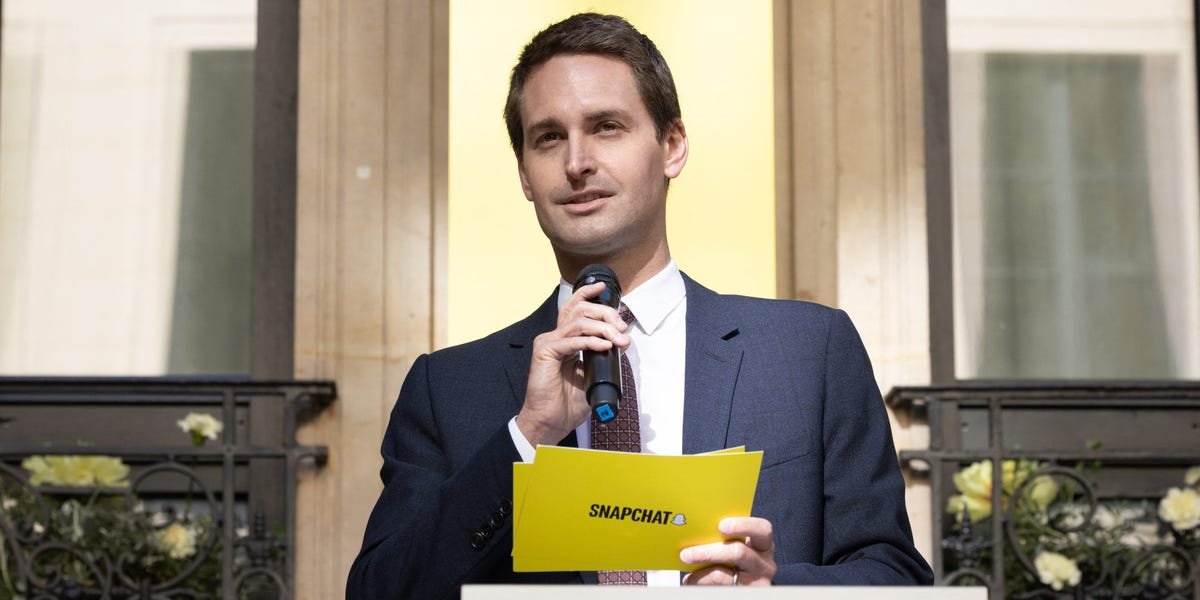
On Wednesday, Snap CEO Evan Spiegel framed plans to slash 1,000 jobs as part of a shift the social-media company started last year toward organizing employees into small, AI-powered “squads.” He said the strategy is already playing out as AI cuts repetitive tasks and speeds up execution.

Leaders at several other big companies have recently made similar remarks about the benefits of leaner workforces and the role that AI plays in making small teams highly productive. In some cases, the comments were linked to layoffs.

“It would be disingenuous to pretend AI doesn’t change the mix of skills we need or the number of roles required in certain areas. It does,” Mike Cannon-Brookes, CEO of software company Atlassian, wrote last month in a securities filing about plans to cut 1,600 jobs.

“We’re starting to see projects that used to require big teams now be accomplished by a single very talented person,” Meta chief Mark Zuckerberg said on a January earnings call with analysts.

The tiny team trend isn’t limited to Big Tech. JPMorgan boss Jamie Dimon said in his annual letter to shareholders this month that “the real competitive battles” are waged by small, laser-focused teams.

Embracing startup culture

While startup founders have long prioritized scrappiness, the philosophy has been gaining traction among established businesses in recent years due to the AI boom. The technology allows just a few workers, or in some cases individuals, to carry out what previously required large teams, proponents say.

“We’re going to see 10-person companies with billion-dollar valuations pretty soon,” OpenAI CEO Sam Altman predicted in February 2024.

Leaner teams reflect a related shift away from middle managers and toward flatter hierarchies. Earlier this month, Block CEO Jack Dorsey described the “most ideal” setup as one where all 6,000 of the payments company’s employees report directly to him, while Amazon boss Andy Jassy said that flattening the tech giant’s structure has improved its speed.

Benefiting from shrinking teams requires changing how work gets done, said Erik Brynjolfsson, an economics professor at Stanford University.

“The winners won’t simply be the leanest organizations,” he said. “They’ll be the ones that best redesign work so humans and AI complement each other.”

Bias, morale, and pipeline problems

Going too small can be dicey, said Matt Poepsel, vice president of talent optimization at the Predictive Index, an HR software company. Workers who rely solely on AI for decision-making might amplify personal biases, he said, whereas groups provide checks and balances.

“AI is programmed to try to keep you using it,” said Poepsel. “That’s why I refer to it as the silicon sycophant, because it’s wired for a very different outcome.”

Companies going down the tiny team path also risk hurting morale, which can negatively impact business outcomes, said Alex Lovell, a political psychologist at O.C. Tanner, an employee-recognition software company.

Engagement is driven by interaction with colleagues and leaders, he said, and without that, “inspiration can decay.”

Another potential downside is that tiny teams can diminish talent pipelines, said Soumitra Shukla, a research fellow at Harvard Business School. Cutting entry-level roles, for example, can lead to shortages of experienced workers.

“You don’t have as many people to promote to seniors,” he said.

Further, early-stage professionals may start to question their ability to climb the corporate ladder at companies embracing tiny teams, added Shukla, also a researcher at The Burning Glass Institute, a nonprofit research organization that studies the future of work and learning.

“Junior talent is not going to be junior forever,” he said.


Source link

My-wife-and-I-let-go-of-our-dreams-and.jpeg

My wife and I let go of our dreams and left New York City. We moved to a small town so we could be closer to my in-laws.

Two years before our son was born, my partner, Liv, and I moved to New York City to immerse ourselves in the city that never sleeps. She was working full-time and pursuing a master’s degree at Columbia, while I was figuring out what it meant to be human after I quit my tech job.

We dreamed of the community and opportunity that awaited us in that glorious place of concrete and glass. After the loneliness COVID brought, I fantasized that we’d meet other adults who shared enough of our values to create a tight community in New York City, one that was more than just friends.

But everything changed after our son was born.

We moved to New York City to live our dream life

My sister-in-law, her boyfriend, and a handful of friends already lived in New York City. The region’s high population density came with the promise of new close relationships.

Within six weeks, we sold our house in suburban Maryland and moved into a New York City apartment, sight unseen.

Living in NYC is like gripping life’s volume knob with both hands and cranking it up past the breaking point. The city offers an unmatched variety of sights, sounds, smells, tastes, and feelings to the privileged people who can afford it.

Some nights over the next year, I sat on our windowsill, admiring the twinkling cityscape teeming with life. I was making new friends, but I wasn’t seeing a path to the fantastical relationships with other adults that I thought would come easily.

The question of whether or not to expand our biological family also hung heavily in my mind.

After an errand to the Financial District, I shared a transformative conversation with a tourist couple from rural Germany. We talked about their children, and I revealed my ambivalence about having my own.

The man’s response was warm and adamant: Having children is the best. There’s never going to be a right time. Just do it.


a view of the new york skyline

The author’s frequent meditation spot, overlooking Brooklyn and Manhattan.

Courtesy of Zachary Fox Photography


We hugged, took a selfie, and parted ways. Six months later, having learned countless lessons from the city and its people, Liv was pregnant with our first child.

Our priorities shifted after the birth of our son

Shortly after our son was born and I became a stay-at-home dad, our family reached a decision point. We could not afford to live in New York City and enjoy our preferred lifestyle. We needed more space and more help.

A house in my in-laws’ neighborhood was put up for sale at an attractive price. Liv’s desire burned for this home and the comfort of neighbor-parents, but I was unconvinced. Leaving my community and moving to Slower Lower Delaware felt like a massive downgrade.

As our son’s eyes opened and he began to crawl, my priorities shifted toward my growing family. Whenever my mother-in-law trekked up to the city to help with childcare, I felt rested and loved. If we moved, her love and nurturing spirit would be just down the road.

I chose to be excited about the move, focusing on the reasons it felt good, like the familial help, lower financial pressure, and quieter calm.

We bought the house and moved after our son’s first birthday.

An unexpected step toward a dream come true

I am fortunate enough to both love and like my family, including the family I inherited from Liv. With this type of love comes a web of commitment to the well-being of all members of our system. Societal norms make the depth of this commitment far more accessible to family than it is to friends.

In an alternate universe, there’s a version of myself whose hyperlocal community consists of friends and family, where our children have sprawling chosen families and roam freely between homes. In this imaginary village, shops and services are walkable, and what we make transcends money. I thought we might make this happen in New York City. Maybe it can for others, but it didn’t for me.

Perhaps that idealized universe is actually this one, only set a few years in the future. The open-door policy we happily share with my in-laws is a part of the dream made real.


Source link

Irans-Shahed-war-turns-into-booming-business-for-worlds-small.jpeg

Iran’s Shahed war turns into booming business for world’s small interceptor manufacturers

As the US-Israeli war with Iran rages across the Middle East and roils global markets, a small subset of drone makers — ones who build drones to destroy other drones — are seeing an upside to the conflict.

Interceptor drone manufacturers outside the region told Business Insider of a surge in requests for demonstrations and inquiries from potential buyers over the past week, as the US and its allies scramble to counter Iran’s loitering munitions.

“Since the beginning of the war, we have been receiving daily requests from the Middle East, whereas previously it might have been once or twice a month,” said Jens Holzapfel, business development director for Nordic Air Defense. The Swedish startup is building a propeller-driven interceptor, the Kreuger-100XR, which is being tested in Ukraine.

New interest has overwhelmingly come from Gulf state governments or entities working with their defense ministries, although European countries have also reached out, the companies said.

Misha Lu, a spokesperson for the Taiwanese firm Tron Future, said international inquiries for its counterdrone products, which include a single-use quadcopter interceptor and net-launcher drone, have “effectively doubled” since the war began.

Almost all prospective clients were asking for ways to protect critical infrastructure, such as airports and power grids, he said.

Lu added that potential buyers are also largely shifting their focus from anti-drone jammers to “hard-kill” solutions, which rely on explosives or physical force to destroy drone threats.

Surging interest in Ukrainian drones

Heightened demand for hard-kill counterdrone tech comes as Iran has launched thousands of one-way attack Shaheds against the US and its allies in the Gulf region. Some of the loitering munitions have successfully gotten through air defenses and struck their targets, including US military facilities.

Key concerns in air defense against Shahed threats have been cost and quantity. Traditional air-to-air or surface-to-air missiles are limited in supply and would be too expensive to engage en masse against Shaheds, which cost $20,000 to $50,000 each.


An Iranian Shahed drone sits in the middle of a room on Capitol Hill as congressional leaders make a presentation.

The Iranian Shahed has been a subject of Western concern for years, as Russia used the drones to bombard Ukraine.

Win McNamee/Getty Images


A cheaper solution, pioneered largely by Ukraine, is to use first-person-view or small drones to catch and ram into Shaheds.

The Wild Hornets, the Ukrainian manufacturer of a popular interceptor drone called the Sting, told Business Insider that the company previously fielded one or two business inquiries daily, but since last week has received “several dozen per day.”

Sting production is still heavily dedicated to helping Ukraine fight off Russia’s locally built versions of the Shahed; Kyiv says Moscow has launched over 57,000 of them so far.

“These are requests, not what we’ve agreed to,” a Wild Hornets spokesperson said of the new inquiries. “Our priority is Ukraine’s defense.”

Another major Ukrainian drone maker, Skyfall, told Reuters last week that it was receiving foreign requests for interceptors and could produce up to 10,000 a month without affecting Ukraine’s needs.

Still, Ukrainian firms may have difficulty closing any such deals for now. A wartime law broadly blocks drone exports from the country, as uncrewed aerial systems remain the pillar of its tactical combat operations.


A Urkainian soldier holds a Sting interceptor drone, which has been decorated to resemble a shark.

The Wild Hornets manufacture the Sting, a popular interceptor drone now used in Ukraine.

Alex Nikitenko/Global Images Ukraine via Getty Images


Whether the ban will remain, however, is unclear. Kyiv has been exploring the possibility of controlled exports, seeking to promote its fledgling defense tech market and touting its wartime production expertise and ability to test weapons in combat.

Ukrainian President Volodymyr Zelenskyy has also repeatedly signaled openness to assisting allied countries, including Gulf States, that request support and expertise against Shaheds.

So far, though, Zelenskyy has only confirmed that Kyiv is sending experts to the Middle East, without mentioning export sales.

Too much demand to cope with

For interceptor makers in other countries, the sudden demand is so great that most aren’t sure they can keep up with the influx of business. The technology is also fairly young, meaning some firms have yet to build out their production lines fully.

Agirs Kipurs, CEO of the Latvia-based firm Origin Robotics, told Business Insider that his firm is already working to fulfill existing contracts and may thus only meet a “limited part of the demand.”

“Obviously, we will not be able to meet all requests, as we are still scaling up production and building toward full output capacity,” said Kipurs, whose firm builds drones deployed in Ukraine and an autonomous interceptor used by NATO forces.

Jiří Janoušek, a representative for the Czech firm TRL Drones, said his company recently received multiple requests a day for its fixed-wing interceptors — a short-range drone and a larger jet-powered system that are used in Ukraine.

TRL Drones is increasing production capacity to accommodate new requests, Janoušek said, but has had to “carefully prioritize incoming opportunities,” giving preference to customers who already know their operational requirements and are ready to move quickly.

“Supporting Ukraine remains a core priority that continues to utilize a portion of our capacity,” Janoušek added.

Lu, of Tron Future, said that his firm is “fully engaged” with all the inquiries it’s receiving, but is still working on scaling production.


A quadcopter interceptor built by Tron Future sits on display.

One of Tron Future’s interceptors on display at an aerospace and defense show in Taipei.

Tron Future


Demand from Taiwan and East Asia has recently doubled, too, he added, with inquiries from Taiwanese law enforcement and military agencies reaching double digits.

There is concern about China’s own delta-wing drones, Lu said, such as the Loong M9 and Feilong 300D. Both appear highly similar to the Shahed-136.

Chinese industries have long supplied drone components to both sides of the Ukraine war, and Lu said it’s clear that the People’s Liberation Army is learning from the battlefield there.

“So we know that in a conflict scenario across the Taiwan Strait, we will also see similar saturation attacks where cheap drones of various classes mingle with missiles,” Lu said.


Source link