I remember arriving in Leavenworth, a town of about 3,000 people, and immediately feeling like we had stepped into an entirely new country, despite being just a short three-hour day trip from Seattle.
The drive itself revealed just how varied Washington’s landscape can be, moving from familiar surroundings into farmland and alpine scenery.
Despite visiting in early April, right before wildflower season, the setting still felt storybook-like, with open fields nearby and snow-capped peaks in the distance.
Downtown Leavenworth leaned fully into its Bavarian theme, from German restaurants and beer gardens to a quirky nutcracker museum. Even the exteriors of everyday places, such as grocery stores and coffee shops, matched the town’s aesthetic, completing the immersion.
We stayed at Abendblume Inn, a small bed-and-breakfast with a distinctly European feel that overlooks the Cascade Mountains. It famously serves up breakfast aebleskiver, Danish pancake puffs often dusted with powdered sugar or served with jam, to make the Euro experience feel complete.
Perhaps my favorite find was the local reindeer farm, where we could pet and feed the animals. Although Leavenworth is known for its Christmas festivities, visiting out of season revealed a quieter version of the town that felt just as intentional.
Ukraine’s large-scale drone war is pushing Western militaries to treat small drones less as high-end equipment and more as expendable ammunition that isn’t meant to come back.
US Army and British Army officials, as well as a NATO veteran who volunteered to fight in Ukraine, told Business Insider that effective drone warfare requires sending large numbers forward — and accepting many will be lost as a routine cost.
Maj. Rachel Martin, the director of the US Army’s new drone lethality course, told Business Insider that the conflict shows that “if you’re going to flood the zone with drones,” especially in a combat situation where electronic warfare is heavy, “you’re going to lose a lot of drones.”
She said it’s a “transition from the army of old,” where a lost drone was “a significant emotional event” that was reported to senior leadership. In Ukraine, it’s different. “Drones go down all the time.” There, losses are typically shrugged off, rather than investigated.
Drones are key to Ukraine’s fight, and the idea that many will be lost is understood across the military.
Sean Gallup/Getty Images
That shifting mindset is shaping how Western militaries train.
Lt. Col. Ben Irwin-Clark, the commanding officer of the British Army’s 1st Battalion of the Irish Guards, told Business Insider that his battalion has changed its training to allow drones to be damaged or even destroyed to reflect battlefield realities. “I absolutely think they need to be disposable because otherwise you’re not training realistically,” he said.
Not high-end equipment
Jakub Jajcay, a former special forces member from Slovakia who fought in Ukraine, told Business Insider that if NATO militaries want to start using drones for real missions, they “need to get used to the fact that they’re basically expendable material more akin to ammunition or fuel or gasoline, things like that, rather than specialized high-end pieces of equipment that need to be looked after.”
He said when he was serving in the military for his home country, “drones were very specialized pieces of equipment.”
The drones were fairly expensive, he shared, “and there was always a sort of bureaucratic process” in using them. Sometimes, only designated individuals were allowed to use the drones.
Ukraine uses small drones differently from the way that Western militaries did in previous conflicts.
Paula Bronstein/Getty Images
If something happened to a drone, “that would’ve been a big problem in training. If we had lost a drone, somebody would’ve been in big trouble for that.” The war in Ukraine shows how poorly that peacetime mindset fits large-scale combat.
Russia’s invasion of Ukraine has featured drones on an unprecedented scale. Ukraine says roughly 80% of its strikes are carried out using drones rather than other weapons. Many never reach their targets and are lost along the way, though.
Cheap drones worth several hundred dollars have destroyed weaponry worth millions. But many of them don’t have any effect. A report last year from the UK’s Royal United Services Institute said that “between 60 and 80% of Ukrainian FPVs fail to reach their target, depending on the part of the front and the skill of the operators.”
Some drones are jammed or disrupted by electronic warfare, while others are shot down or get their cables cut. Sometimes they’re knocked out by soldiers on their own side.
Many of the drones on the battlefield are single-use, designed to explode when they hit their target, but many of them are destroyed, damaged, or disabled before they even reach that point.
Jajcay said that even drones designed to be used again and again “have a lifespan of maybe a few dozen missions at most.”
He also said that drones failed “all the time,” and those losses were expected.
Allies want to learn as much as possible from Ukraine’s drone warfare.
Paula Bronstein /Getty Images
The West is changing its view
The US Army is recognizing and learning from these dynamics in Ukraine, as are other Western militaries, as they incorporate the idea that drones cannot be treated as overly precious assets into their drone warfare training and doctrine.
Maj. Wolf Amacker, who leads the Army’s Unmanned Aircraft Systems and Tactics Branch at the Aviation Center of Excellence, told Business Insider that out of the thousands of drones used daily, only around 30% of them hit their targets, while many others don’t have a significant impact on their targets.
The Army is learning that lots of drones need to be sent forward.
Irwin-Clark told Business Insider that the way the UK sees drones has also shifted. He said “every time there’s an iterative change in technology in the battlefield, everyone gets very excited about it and the ownership of that asset tends to be far too high.”
The US Army is training troops for drone warfare.
US Army/Leslie Herlick
He said that often when a new and powerful technology emerges, senior leaders will try to tightly control it, arguing that because there are only a handful available, only a select few should have the authority to decide when it’s used. The assets are carefully protected, at least initially. Later on, trust is imparted to soldiers to handle technology previously in the charge of higher-ups.
That pattern, Irwin-Clark said, is “exactly what’s happening with drones.”
His battalion wrapped the first drones it received years ago in bubble wrap, “and we didn’t fly them very often,” he said. “When we did,” he continued, “we made sure we flew in the middle of a field with nothing, no obstacles around.”
Now, his battalion is deliberately crashing its latest drone delivery into targets, while looking at how to make repairs. “It really doesn’t matter if we break them,” Irwin-Clark said.
The US is coming at it the same way. Martin, who previously commanded a Gray Eagle drone company, said her course takes into account that “drones crash. I’ll say that to the day I die having owned drones as a commander: drones crash.”
Secretary of Defense Pete Hegseth said last year that the defense department needs to view small drones as consumables rather than “durable property” — more like ammunition than valuable equipment. It’s a change that Jajcay described as “a step in the right direction.”
Western armies were using various drones in warfare before Russia’s invasion, often using them as surveillance platforms or tools for launching missile strikes. Small drones weren’t used the way they’re being used in Ukraine, but the US, UK, and others are learning drone lessons from the war.
Martin said the ongoing conflict in Ukraine shows that even when you lose drones, it’s ultimately “still cheaper than employing missiles on specific targets.” That’s an equation the US Army can’t totally ignore.
“They’re cheaper, and you’re not putting human lives in danger” to carry out the mission, she shared. And the Army knows that “they’re going to crash. It’s going to happen.”
I’ve seen multiple articles lately about the boomer avalanche — all this stuff people have — and their kids not wanting it. I’m not a boomer, but at 46, I’m already aware that I have too much stuff.
Three recent events made me think about the burden our possessions would place on our kids if something happened to us. So I started decluttering so they don’t have to deal with my stuff.
I helped my mom downsize
The first event was helping my mom downsize.
She moved from a 2,000-square-foot townhome into a much smaller rental home. Doing a pre-move assessment, it was clear that all her stuff wouldn’t fit in the new place.
The author’s mom downsized from a two-story, 2,000+ square-foot townhome to a 900-square-foot home.
Courtesy of the author
She saw it as an opportunity and spent two months purging, donating, and selling items.
Every time Trisha publishes a story, you’ll get an alert straight to your inbox!
Stay connected to Trisha and get more of their work as it publishes.
When scoping out storage spots in her new home, my mom shared that she has a stack of boxes of stuff from her mom’s house. She doesn’t want it, but doesn’t feel like she can get rid of it, and has been holding onto it since her mom passed over 10 years ago.
My kids made sure grandma didn’t get rid of her little rocking chair. They both have memories of climbing on it at Grandma’s house. It’s now in our living room.
Sometimes, there are memories wrapped up in stuff
Decorating our house for the holidays was the second event that confirmed we have too much stuff.
Every year, my husband goes into our crawl space and hauls out a full 19 boxes of holiday decor — trees, lights, ceramic villages, wrapping paper. Our house ends up covered with holidays.
This holiday season, the author started a new tradition, donating decorations her family no longer uses.
Courtesy of the author
This year, when decorating, I decided to downsize and packed a giant box with ornaments, tablecloths, mugs, and random decorations we haven’t put up in years.
During this process, I was reminded how important it is to check before donating. My husband noticed a few decorations from his mom in the “donation box.” We’re keeping them. We may not display them, but there are memories in those figurines.
I asked my kids what they wanted us to keep for them. Stockings, our Advent calendar, and the holiday village — each of them had items they associated with their holiday memories. These things will never go into the donation box.
Our stuff can be so valuable to others
During our remodel last year — event three — my youngest and I learned how much the things we have sitting on a shelf can mean to someone else. My child’s donation of stuffed animals made a huge difference to volunteers and children at a local soup kitchen.
The author says she has way too many tablecloths.
Courtesy of the author
We had a repeat experience this year, but this time with tablecloths. I have too many tablecloths. The last count was over 20. Even if I can’t get laundry done for weeks, that is many more than we need. I challenged myself to get rid of half of them.
A friend who volunteers at a shelter and soup kitchen happily took the donation. A few weeks later, we learned those tablecloths had a new life as blankets for a family of four who were living in their car at the time.
I have a process to downsize my wardrobe
Remodeling our house was the most eye-opening demonstration of how many things we have. Our storage space is still crammed with stuff that didn’t make it back into the house after the remodel.
Finding a place for everything during the renovation was a huge challenge. We quickly realized we couldn’t fit 50% of our belongings (three bedrooms and my office) in the other 50% of our house.
Hooking hangers on seat belts maximized space and kept the clothes in place when driving.
Trisha Daab
Taking up the most space — the items in my closet, which filled my entire soccer-mom-sized SUV.
So today, for every new thing I add, I donate at least two items. I’ve designated a section of my closet for things I haven’t worn, and when the seasons change, anything in that section goes. And — the most fun — I invite friends to come “shop” in my closet.
Some things are my memories, not my kids’
In my office are multiple items that remind me of my grandma.
One of my favorite memories is being at her house, spending hours poring over her high school and college yearbooks.
Yearbooks from my grandma’s high school and college years are items I won’t be getting rid of.
Courtesy of the author
When it was clear the end was near for her, she had me take those yearbooks from the nursing home. She barely remembered who she was, but she remembered how much those books meant to me.
Seeing those yearbooks evokes memories of her, keeping her alive in my mind. But they are my memories of her, not my kids’.
And that’s really the thing, isn’t it? Wrapped up in all this stuff are memories and maybe a bit of guilt about getting rid of it.
So, I will keep cleaning out that closet, clearing out the storage unit, and reducing our holiday decor, but one day, my kids may have to get rid of those yearbooks.
A second fatal shooting by federal officers in Minneapolis on Saturday has further inflamed tensions in the city.
Immigration agents, in full view of filming protesters, tackled a 37-year-old man to the ground before one shot him multiple times. City officials said in a press conference on Saturday that the man, who they believed to be a US citizen, had died at the scene.
The shooting occurred as thousands of protesters converged in downtown Minneapolis to rally against the Department of Homeland Security’s Operation Metro Surge, which has flooded Minnesota with ICE agents since December. Tensions have been high since officer Jonathan Ross fatally shot 37-year-old Renee Good on January 7.
Caught in the middle of all this are the city’s small businesses, which are typically grappling with a quiet January.
Dan Marshall, the owner of Mischief Toys in neighboring St. Paul, said he usually spends the month cleaning up after Christmas, painting the walls, and doing his taxes.
This year, though, “that’s not what we’re being called to do,” he said. Marshall co-owns the toy and game store with his wife and daughter.
Instead, he said the store has distributed about 4,000 3D printed whistles, which Minnesotans have been using as an alert and protest system against ICE. Marshall said that the store has also served as a space for the community to come in, relax, and process what they’ve been seeing.
“Retail feels totally different right now,” Marshall said. “It feels like a way of connecting with our community that we haven’t really felt before. It’s very raw.”
For small business owners in Minnesota, it’s been an eventful — and not necessarily lucrative — January, as they instead turn their attention to supporting their communities.
Many businesses are also opting into a possible income hit on January 23, when unions and faith leaders are calling for a suspension of work, school, and shopping to protest ICE’s actions. Local news site Bring Me The News compiled a growing list of over 200 local establishments’ social media posts about their plans to participate in the economic blackout day. Some have said they plan to donate that day’s revenue; others are shuttering completely or opening as a free community space.
DHS Assistant Secretary Tricia McLaughlin said in a January 20 press release, “Since President Trump took office, DHS has arrested over 10,000 criminal illegal aliens in Minnesota, and we are NOT slowing down. Our law enforcement officers are saving countless American lives.” ICE did not respond to a request for comment from Business Insider.
In a statement, White House spokesperson Abigail Jackson said that the Trump administration’s immigration operations “have resulted in countless dangerous criminal illegals being removed from the streets.”
“Making American communities safer will create an environment in which all businesses can thrive in the long term and their customers can feel safe,” Jackson said.
Catzen Coffee, a specialty coffee shop with an attached cat lounge, will not be doing business on Friday, but plans to open for those who need a space to hang out — free coffee and cat cuddles included.
Catzen owner Vanessa Beardsley said that the irony of being a business owner and opting out of business for a day never crossed her mind; not making revenue was never part of the calculus.
“We’ve got to do what we can do right now,” Beardsley said.
A topsy-turvy January
“January always sucks,” Matt Cole, the owner of Oh Yeah! Cookie Company, said. “As a business owner, especially in retail business, people spend a lot of money in December and November, and they usually don’t spend a lot of money in January. So January is always a month that’s hurting — and now it’s really hurting.”
National Retail Federation’s spending data shows an average drop in retail sales of 17.3% from December to January over the last five years. January through March has also typically seen the lowest average monthly employment for small businesses across the past few years. An analysis from consumer research firmConsumer Edge of credit and debit card data found that spending in theMinneapolis-St. Paul metro areaby households earning under $100,000 has tracked lower than the national average over the four weeks ending January 10.
This year, Cole estimates he’s donated around $300 worth of cookies to groups distributing treats to kids who can’t go to school amid ICE’s presence. He said that if he does make any money right now, he’ll donate 10% of his sales. The full-time role he works in addition to his homemade baking business has been keeping him afloat.
Cole isn’t the only one pivoting from normal business.
JP Pritchett, the owner of adult store Smitten Kitten in Minneapolis, said that they usually devote January to ramping up for Valentine’s Day, which they described as the “Super Bowl” for adult stores.
“Typically in January, we’re ramping up inventory, getting the store stocked, just getting ready to do commerce,” Pritchett said. “But this year, I don’t care about that. Nobody cares about that.”
Instead, Pritchett said, “We stopped all regular business and created a free store inside Smitten Kitten where people could come get food or send a trusted friend or neighbor to come get food, toiletries, lots of diapers, formula, baby wipes — all the things that are really important to sustain life if you’re in hiding.”
Marshall, the owner of Mischief Toys, said that after promoting the store’s whistle distribution, he received a notice from ICE requesting verification of his workers’ employment eligibility. He said that shuttering on the 23rd sends a message “that our community is much more important than our bottom line,” which he believes is a positive.
“We’d like to sell toys,” Marshall said, adding that he’d prefer to spend January cleaning and painting “because it’s so damn cold here,” but with heightened tensions in the city, “we’re going to step up as much as we can.”
Growing up in a remote California suburb, I spent most of my childhood counting down the days until I could leave for a big city.
When the time came to move to New York for college, I was prepared to say goodbye to country living for good. I spent six years in New York, and then another four in Berlin.
Although I loved my experiences in both cities, I was exhausted. Years of apartment hopping, navigating dirty subways, and dealing with nonstop hustle left me craving a reprieve — and wondering why I’d been so quick to swear off a quainter life in the country.
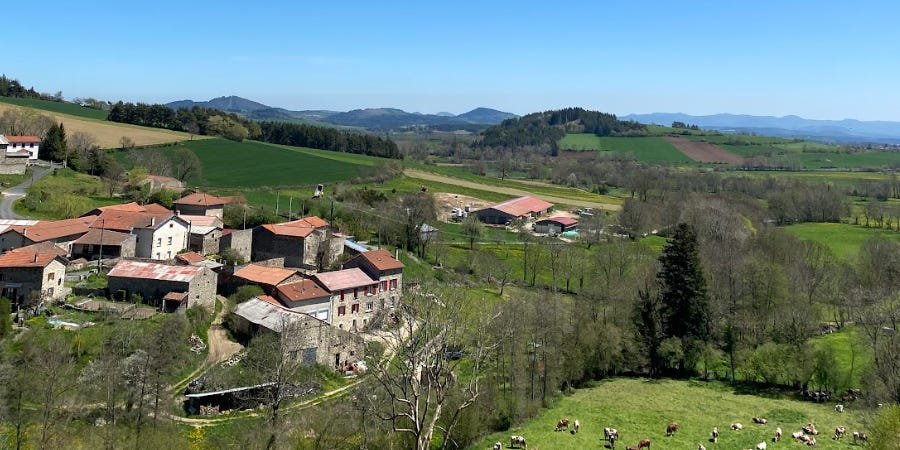
So, when my husband proposed that we move to a little village near his family in France, I surprised myself by agreeing to give it a try.
This was in 2021, when COVID-19 restrictions were making it challenging to live in Berlin, and we were both desperate for the benefits that such a relocation could offer — like more square footage, a yard, and, most importantly, proximity to our loved ones and their support.
The reservations I had about residing in the country were still nagging me, but I figured things would be different this time. I was older, wiser, and doing it in beautiful France, of all places.
I wish I had listened to my gut, though, because all my old qualms with country living ended up rearing their ugly heads — and we ended up leaving after two years.
Without a driver’s license, I felt isolated by the lack of public transit
I’d hoped my new home would be a bit more walkable.
Audrey Bruno
I never needed a driver’s license when I lived in cities, but that all changed when we moved to the French village. There, we simply couldn’t get around without a car — but we sure tried.
I knew going in that my public transportation options would be more limited than they were in a city, but I didn’t expect to be as isolated as we were.
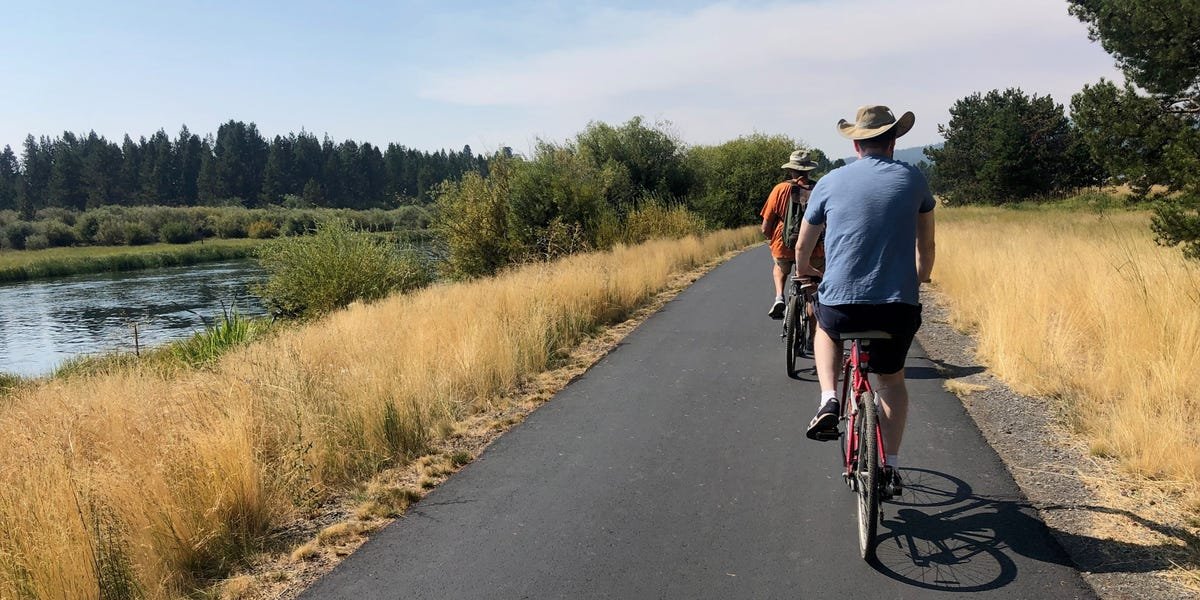
When we first arrived, it took us over a month to work up the funds to buy a car. In the meantime, we attempted one very hilly bike ride, but had to call it quits before we’d even made it halfway to our destination.
Walking was no better — it took hours to get to the nearest shops, and sometimes they wouldn’t even be open when we finally arrived.
Even after we obtained a vehicle, I couldn’t navigate on my own without my husband, since he was the only one with a license.
He was always willing to drive me around, but I was frustrated by my newfound lack of independence. I considered getting a license of my own, but the cost of driving school was out of our budget at the time, so it really seemed like there was no way out of the situation I’d gotten myself into.
I wasn’t prepared for the demands of caring for a house after years of apartment dwelling
Years of living in apartments didn’t prepare me for the hard work of cleaning and maintaining a house.
Audrey Bruno
Apartment life certainly has its drawbacks, but extra square footage comes with pitfalls, too.
We loved that our rental home gave us the newfound ability to stretch out and make noise without bothering each other. The downside, though, was that it was up to us to care for and maintain all that extra space.
It wasn’t just the house, either — it was also our responsibility to tend to the adjoining garden, barn, and the attached horse stables. It was a full-time job’s worth of work, and I started to miss the days when I could clean my whole apartment in just an afternoon.
Living without any takeout options was harder than I expected
Normally, I’m a proponent of cooking as much of my own food as possible, but I at least like to have the option of ordering in or eating out — especially on days full of chores and work.
Unfortunately, getting to the closest takeout restaurant took an hour round-trip, and delivery applications like Uber Eats didn’t service our small village.
What’s more, our dining options were severely limited compared to what we’d had in Berlin. I realized that I missed trying different cuisines and checking out new restaurants, and even when cooking,
I didn’t have access to the same wide variety of ingredients that I’d had in the city. One example was sesame oil — if I wanted to use this pantry staple in a recipe, I’d have to go to a big city to find it.
Connecting with neighbors wasn’t easy
Our village was extremely small — as of 2020, the population was under 400 — and many of the people I met were much older.
Needless to say, our rhythms and beliefs didn’t always match up. We often had debates over everything from politics to local initiatives — like what to do with all the feral cats — and it wasn’t always easy to argue my point in my then-limited French.
Since most folks in Berlin are fluent in English, I’d never been up against such a language barrier before. All that and more made it challenging to form true connections and further contributed to my feelings of isolation.
That said, there were things I missed about country life once I left
When I lived in the countryside, I got to grow my own fruits and vegetables.
Audrey Bruno
Despite all my frustrations, there were a few great things about living in the French countryside.
For starters, it really is beautiful, and being there allowed me to grow my own fruit and vegetables, forage wild blackberries in the forest, and perfect my French with the folks in town who were willing and patient enough to help me out.
After two years, we ended up moving to Lyon, the nearest city, because it offered the best of both worlds. At only 84 miles away, we’d have proximity to my husband’s family and access to nature, plus all the advantages of living in a major city.
I’ll always remember the beautiful memories from my time in the village — but I’ll also always prefer to reminisce about them from an apartment in a city.
In 2017, I moved from Los Angeles to Panama to teach English.
My first year in the country was filled with excitement. I was based in Panama City, and I found it easy to make friends through the many dance classes and meet-ups.
My social life felt full, and most weekends were spent wandering through Casco Viejo (the downtown area), trying to find the best rooftop bars and underground nightclubs playing a mix of Reggaeton and pop music.
Soon, though, the fast-paced lifestyle, combined with the constant traffic and sweltering heat, became overwhelming. I grew tired of living in a city of millions and craved a slower pace.
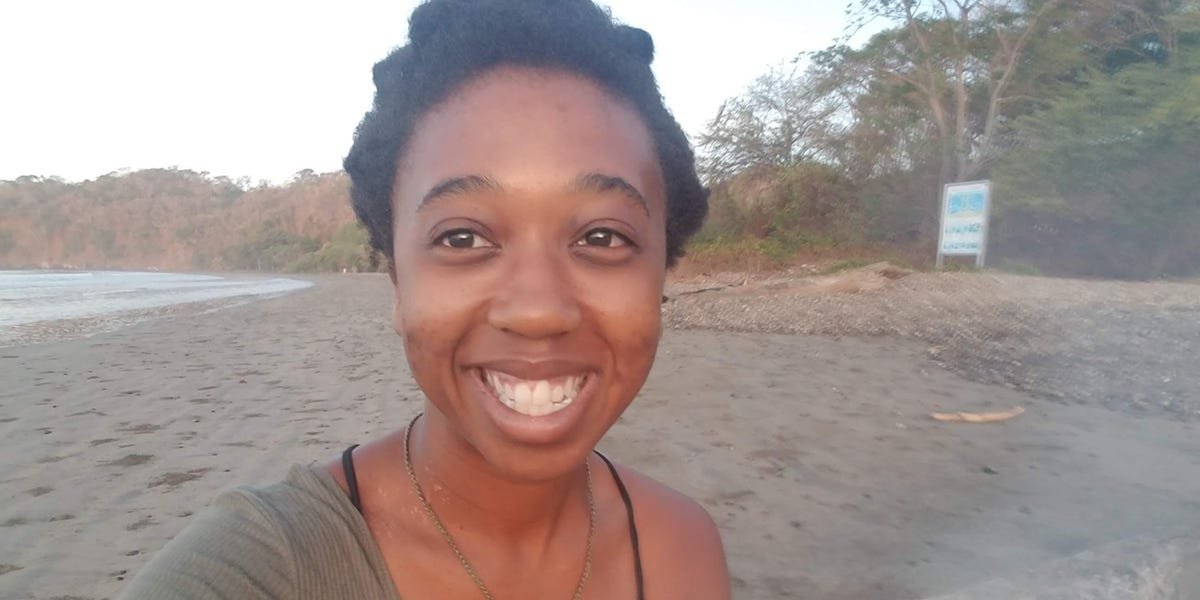
So, I relocated to a small coastal town called Playa Venao, which is about 200 miles and a five-hour drive from Panama City.
I hoped I could quickly build a community there as I did in the capital, but it didn’t come nearly as easily to me.
At first, my quieter town felt like paradise
Many parts of Panama have a rich surfing culture.
Kiersten Brown
Although Playa Venao is now more developed, at the time I lived there, it was primarily a handful of hotels, hostels, and homes scattered along the shoreline.
A single road split the town: real estate on one side, jungle and cow pastures on the other. Only a few hundred people called Playa Venao their full-time home.
I was living in a place where there were more trees than buildings. In fact, I could pick and eat papayas, coconuts, and mangos straight from the trees on the property of my rental.
The school I worked at was quite small and, because of our remote location, nature often became our third instructor. Children shared their outdoor play area with centipedes and howler monkeys, and splashed in the nearby stream and waterfall.
Between teaching, I spent my days peacefully walking along the beach and hiking near the river. I was no longer overwhelmed by the sounds of honking horns and revving engines. Instead, I was soothed by the songs of exotic birds.
My social life wasn’t bustling like it was before, though at first, I enjoyed meeting people from all over the world who were in the area on vacation.
But once the novelty of being somewhere new wore off, I started to see the downside of living in a place that felt like paradise.
Unfortunately, I didn’t feel like I fit in with most of the visitors or locals
I didn’t have much to say about surfing — a popular topic among tourists.
helivideo/Getty Images
I struggled to find my place in a community that felt largely split between locals and tourists.
I was a bit of an in-between: I’d only been in the country for a year, so I wasn’t a local … but I’d been living in this beach town for a few months, so I wasn’t a tourist, either.
Building community with transient tourists seemed impossible.
Many tourists I met spent their time surfing or talking about surfing, not surprising given Playa Venao’s reputation as one of the best surf spots in the world.
Unfortunately, as a beginner, I couldn’t keep up with the experienced surfers during conversations or out on the water.
Whenever I’d meet someone who had more to talk about than waves, we only had a week or two to get to know each other because they were vacationing where I was living.
I felt I never had time to share more about myself beyond surface-level topics, like work, hobbies, and where I was from. These limited interactions made my relationships feel shallow and made me feel like I didn’t have any real friends.
Over time, the loneliness ate away at me, and I grew tired of reintroducing myself to a new tourist every other week. So, I tried connecting with the locals. This wasn’t an easy task.
The director of the school I was working at had warned me that locals were often closed off to newcomers. I felt it.
One night, I managed to play a game of pool with some locals at a nearby bar. I thought I’d made a breakthrough, but the next morning, the same people who had been friendly the night before wouldn’t give me the time of day — it hurt.
I could understand why a tight-knit community of people who grew up together might be wary of trusting outsiders. However, it was hard being treated like just another visitor in the place I lived.
After weeks of failing to make lasting connections, part of me wanted to call it quits and return to the city. I missed feeling like I belonged and having a calendar filled with dance classes and happy hours with friends.
However, I’d committed to working through the whole school year, and I didn’t want to walk away from the children — some of the only people I had created bonds with.
Finally, one conversation with my mom helped me reevaluate and give my new home another shot.
Focusing on gratitude and living in the moment helped me feel more at home
Panama has several famous beaches.
Piero Zanetti/Getty Images
After listening to my sorrows, my mom reminded me that life wasn’t happening to me, it was happening for me.
I needed to embrace each moment, even the not-so-great ones, and treat my situation as an opportunity. So, instead of ruminating on what I lacked, I focused on appreciating more of what I had.
To ease my frustration of not being able to pop over to a movie theater or hop into a nightclub like in the city, I found entertainment within nature.
I’d wake up early to enjoy the colorful sunrises and collect different rocks and shells along the shore. I’d pass the time by going for a swim or setting up my speaker and dancing barefoot in the sand.
Focusing on my internal peace helped me to stop forcing connections, and I allowed them to form naturally.
I stopped viewing relationships as temporary experiences. It didn’t matter if a friendship lasted five days or four months — I cherished every connection made.
Soon, routine visits to the local coffee shop led to casual chats with the barista. I ordered the same dish so often that one day, they wrote out the recipe for it and gave it to me — it kick-started our friendship.
More connections began to blossom as I prioritized attending community events, from kayak races to surfing competitions. As time passed, locals could see that I was consistently making an effort, and perhaps they started to view me as less of a tourist.
Meanwhile, I was forming stronger relationships with the parents of the children I worked with, and they helped advocate for me to the other locals. I’d also started to build a strong connection with my coworker, who became one of my first real friends in the area.
With a little bit of patience and a mindset shift, I eventually found the community I craved and ended up staying in Playa Venao for about a year.
In that time, I learned that sticking through uncomfortable situations — and staying present for both the good and the bad — can lead to unexpected peace and happiness.