
Im-an-American-who-moved-to-a-small-French-village.jpeg

I’m an American who moved to a small French village. I tried to adjust, but learned I wasn’t built for country living.

Growing up in a remote California suburb, I spent most of my childhood counting down the days until I could leave for a big city.

When the time came to move to New York for college, I was prepared to say goodbye to country living for good. I spent six years in New York, and then another four in Berlin.

Although I loved my experiences in both cities, I was exhausted. Years of apartment hopping, navigating dirty subways, and dealing with nonstop hustle left me craving a reprieve — and wondering why I’d been so quick to swear off a quainter life in the country.

So, when my husband proposed that we move to a little village near his family in France, I surprised myself by agreeing to give it a try.

This was in 2021, when COVID-19 restrictions were making it challenging to live in Berlin, and we were both desperate for the benefits that such a relocation could offer — like more square footage, a yard, and, most importantly, proximity to our loved ones and their support.

The reservations I had about residing in the country were still nagging me, but I figured things would be different this time. I was older, wiser, and doing it in beautiful France, of all places.

I wish I had listened to my gut, though, because all my old qualms with country living ended up rearing their ugly heads — and we ended up leaving after two years.

Without a driver’s license, I felt isolated by the lack of public transit


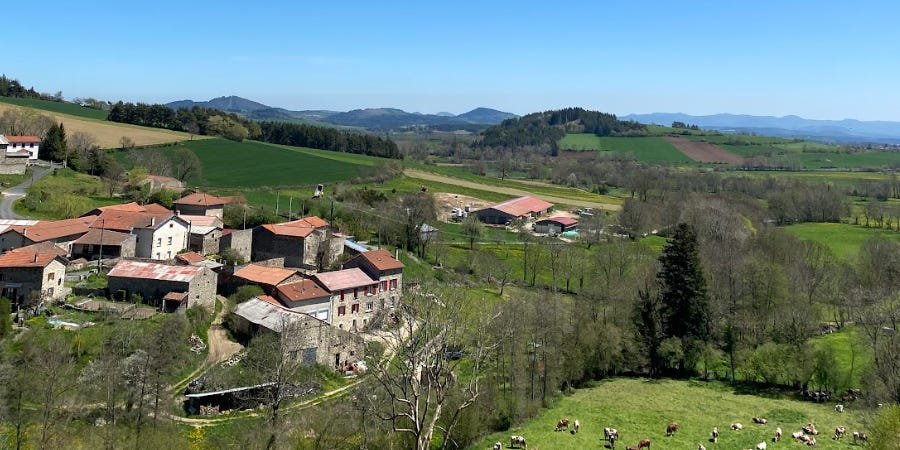
A shot of the French village where the author lived, featuring houses, fields, and a skyline.

I’d hoped my new home would be a bit more walkable.

Audrey Bruno


I never needed a driver’s license when I lived in cities, but that all changed when we moved to the French village. There, we simply couldn’t get around without a car — but we sure tried.

I knew going in that my public transportation options would be more limited than they were in a city, but I didn’t expect to be as isolated as we were.

When we first arrived, it took us over a month to work up the funds to buy a car. In the meantime, we attempted one very hilly bike ride, but had to call it quits before we’d even made it halfway to our destination.

Walking was no better — it took hours to get to the nearest shops, and sometimes they wouldn’t even be open when we finally arrived.

Even after we obtained a vehicle, I couldn’t navigate on my own without my husband, since he was the only one with a license.

He was always willing to drive me around, but I was frustrated by my newfound lack of independence. I considered getting a license of my own, but the cost of driving school was out of our budget at the time, so it really seemed like there was no way out of the situation I’d gotten myself into.

I wasn’t prepared for the demands of caring for a house after years of apartment dwelling


A snow-covered house in a French village.

Years of living in apartments didn’t prepare me for the hard work of cleaning and maintaining a house.

Audrey Bruno


Apartment life certainly has its drawbacks, but extra square footage comes with pitfalls, too.

We loved that our rental home gave us the newfound ability to stretch out and make noise without bothering each other. The downside, though, was that it was up to us to care for and maintain all that extra space.

It wasn’t just the house, either — it was also our responsibility to tend to the adjoining garden, barn, and the attached horse stables. It was a full-time job’s worth of work, and I started to miss the days when I could clean my whole apartment in just an afternoon.

Living without any takeout options was harder than I expected

Normally, I’m a proponent of cooking as much of my own food as possible, but I at least like to have the option of ordering in or eating out — especially on days full of chores and work.

Unfortunately, getting to the closest takeout restaurant took an hour round-trip, and delivery applications like Uber Eats didn’t service our small village.

What’s more, our dining options were severely limited compared to what we’d had in Berlin. I realized that I missed trying different cuisines and checking out new restaurants, and even when cooking,

I didn’t have access to the same wide variety of ingredients that I’d had in the city. One example was sesame oil — if I wanted to use this pantry staple in a recipe, I’d have to go to a big city to find it.

Connecting with neighbors wasn’t easy

Our village was extremely small — as of 2020, the population was under 400 — and many of the people I met were much older.

Needless to say, our rhythms and beliefs didn’t always match up. We often had debates over everything from politics to local initiatives — like what to do with all the feral cats — and it wasn’t always easy to argue my point in my then-limited French.

Since most folks in Berlin are fluent in English, I’d never been up against such a language barrier before. All that and more made it challenging to form true connections and further contributed to my feelings of isolation.

That said, there were things I missed about country life once I left


The writer standing outside, holding up lettuce she grew.

When I lived in the countryside, I got to grow my own fruits and vegetables.

Audrey Bruno


Despite all my frustrations, there were a few great things about living in the French countryside.

For starters, it really is beautiful, and being there allowed me to grow my own fruit and vegetables, forage wild blackberries in the forest, and perfect my French with the folks in town who were willing and patient enough to help me out.

After two years, we ended up moving to Lyon, the nearest city, because it offered the best of both worlds. At only 84 miles away, we’d have proximity to my husband’s family and access to nature, plus all the advantages of living in a major city.

I’ll always remember the beautiful memories from my time in the village — but I’ll also always prefer to reminisce about them from an apartment in a city.


Source link

I-moved-to-a-small-beach-town-in-another-country.jpeg

I moved to a small beach town in another country. My new home felt like paradise, but I struggled to belong.

In 2017, I moved from Los Angeles to Panama to teach English.

My first year in the country was filled with excitement. I was based in Panama City, and I found it easy to make friends through the many dance classes and meet-ups.

My social life felt full, and most weekends were spent wandering through Casco Viejo (the downtown area), trying to find the best rooftop bars and underground nightclubs playing a mix of Reggaeton and pop music.

Soon, though, the fast-paced lifestyle, combined with the constant traffic and sweltering heat, became overwhelming. I grew tired of living in a city of millions and craved a slower pace.

So, I relocated to a small coastal town called Playa Venao, which is about 200 miles and a five-hour drive from Panama City.

I hoped I could quickly build a community there as I did in the capital, but it didn’t come nearly as easily to me.

At first, my quieter town felt like paradise


Surfers on beach at sunset

Many parts of Panama have a rich surfing culture.

Kiersten Brown


Although Playa Venao is now more developed, at the time I lived there, it was primarily a handful of hotels, hostels, and homes scattered along the shoreline.

A single road split the town: real estate on one side, jungle and cow pastures on the other. Only a few hundred people called Playa Venao their full-time home.

I was living in a place where there were more trees than buildings. In fact, I could pick and eat papayas, coconuts, and mangos straight from the trees on the property of my rental.

The school I worked at was quite small and, because of our remote location, nature often became our third instructor. Children shared their outdoor play area with centipedes and howler monkeys, and splashed in the nearby stream and waterfall.

Between teaching, I spent my days peacefully walking along the beach and hiking near the river. I was no longer overwhelmed by the sounds of honking horns and revving engines. Instead, I was soothed by the songs of exotic birds.

My social life wasn’t bustling like it was before, though at first, I enjoyed meeting people from all over the world who were in the area on vacation.

But once the novelty of being somewhere new wore off, I started to see the downside of living in a place that felt like paradise.

Unfortunately, I didn’t feel like I fit in with most of the visitors or locals


Waves at Playa Venao

I didn’t have much to say about surfing — a popular topic among tourists.

helivideo/Getty Images


I struggled to find my place in a community that felt largely split between locals and tourists.

I was a bit of an in-between: I’d only been in the country for a year, so I wasn’t a local … but I’d been living in this beach town for a few months, so I wasn’t a tourist, either.

Building community with transient tourists seemed impossible.

Many tourists I met spent their time surfing or talking about surfing, not surprising given Playa Venao’s reputation as one of the best surf spots in the world.

Unfortunately, as a beginner, I couldn’t keep up with the experienced surfers during conversations or out on the water.

Whenever I’d meet someone who had more to talk about than waves, we only had a week or two to get to know each other because they were vacationing where I was living.

I felt I never had time to share more about myself beyond surface-level topics, like work, hobbies, and where I was from. These limited interactions made my relationships feel shallow and made me feel like I didn’t have any real friends.

Over time, the loneliness ate away at me, and I grew tired of reintroducing myself to a new tourist every other week. So, I tried connecting with the locals. This wasn’t an easy task.

The director of the school I was working at had warned me that locals were often closed off to newcomers. I felt it.

One night, I managed to play a game of pool with some locals at a nearby bar. I thought I’d made a breakthrough, but the next morning, the same people who had been friendly the night before wouldn’t give me the time of day — it hurt.

I could understand why a tight-knit community of people who grew up together might be wary of trusting outsiders. However, it was hard being treated like just another visitor in the place I lived.

After weeks of failing to make lasting connections, part of me wanted to call it quits and return to the city. I missed feeling like I belonged and having a calendar filled with dance classes and happy hours with friends.

However, I’d committed to working through the whole school year, and I didn’t want to walk away from the children — some of the only people I had created bonds with.

Finally, one conversation with my mom helped me reevaluate and give my new home another shot.

Focusing on gratitude and living in the moment helped me feel more at home


Cloudy day shot of beautiful Playa Venao

Panama has several famous beaches.

Piero Zanetti/Getty Images


After listening to my sorrows, my mom reminded me that life wasn’t happening to me, it was happening for me.

I needed to embrace each moment, even the not-so-great ones, and treat my situation as an opportunity. So, instead of ruminating on what I lacked, I focused on appreciating more of what I had.

To ease my frustration of not being able to pop over to a movie theater or hop into a nightclub like in the city, I found entertainment within nature.

I’d wake up early to enjoy the colorful sunrises and collect different rocks and shells along the shore. I’d pass the time by going for a swim or setting up my speaker and dancing barefoot in the sand.

Focusing on my internal peace helped me to stop forcing connections, and I allowed them to form naturally.

I stopped viewing relationships as temporary experiences. It didn’t matter if a friendship lasted five days or four months — I cherished every connection made.

Soon, routine visits to the local coffee shop led to casual chats with the barista. I ordered the same dish so often that one day, they wrote out the recipe for it and gave it to me — it kick-started our friendship.

More connections began to blossom as I prioritized attending community events, from kayak races to surfing competitions. As time passed, locals could see that I was consistently making an effort, and perhaps they started to view me as less of a tourist.

Meanwhile, I was forming stronger relationships with the parents of the children I worked with, and they helped advocate for me to the other locals. I’d also started to build a strong connection with my coworker, who became one of my first real friends in the area.

With a little bit of patience and a mindset shift, I eventually found the community I craved and ended up staying in Playa Venao for about a year.

In that time, I learned that sticking through uncomfortable situations — and staying present for both the good and the bad — can lead to unexpected peace and happiness.


Source link