A-700M-Nvidia-backed-AI-search-startup-is-hiring-rebellious-engineers.jpeg

A $700M Nvidia-backed AI search startup is hiring ‘rebellious’ engineers, its CEO told us

An Nvidia-backed startup is looking for “rebellious” engineers to help rebuild search for the AI era.

Exa, which builds search infrastructure for AI applications, said it is opening a Singapore office on Monday as part of its push into Asia-Pacific. Exa has only a handful of staff in Asia-Pacific, and plans to hire up to 10 engineers across backend, infrastructure, and product roles in the coming months.

In an exclusive interview with Business Insider, CEO Will Byrk said he is hiring “rebellious” engineers.

“Someone who doesn’t care about the status quo, how things were done in the past, can think from first principles about everything — that’s really important,” he said.

Search systems built for AI are still new, and they require rethinking how search works because humans and AI behave differently, he added.

“I don’t believe it when people say you can’t do something. So I think we want engineers who feel the same way,” Byrk said.

Byrk also said Exa prioritizes candidates’ values above all else, and the company is open to hiring junior and senior engineers.

“Do they really have passion for building search or building large-scale systems?” he said, adding that experience is “not as important.”

To assess candidates for their character, Exa flies them to San Francisco to work with the team for one to two days. Exa has about 80 employees globally and is actively hiring in San Francisco, Zurich, and Singapore.

“That allows us to really see what a person’s like, because you don’t just get to see their output on a real project, but you also, you know, eat with them at lunch and dinner,” he said. “You really get to know a person.”

Byrk added that the best engineers should move fast and use AI tools effectively. Most of the company’s code is written by AI, he said.

Expansion into Singapore

Exa raised $85 million in a Series B round led by Benchmark in September at a $700 million valuation. Investors include Lightspeed, YCombinator, and NVentures, Nvidia’s venture capital arm.

The company, founded in 2021, said it serves web search to thousands of customers, including AI startups such as Cursor, as well as private equity and consulting firms.

“The number of searches from AIs are going to exceed the number of humans,” Byrk told Business Insider. “The whole world of search is shifting.”

Byrk said the Singapore office will serve as a “massive scale infrastructure,” including data pipelines and crawling infrastructure to gather and process information across the internet.

“Singapore has some of the best engineering talent in the world,” Byrk said. “People are really smart, and they have a lot of hustle.”

Do you have a story to share about AI startups in Asia? Contact this reporter at cmlee@businessinsider.com.


Source link

Startup-founders-25-years-old-and-younger-are-raising-millions.jpeg

Startup founders 25 years old and younger are raising millions. Read the pitch decks 12 of them used.

Tech is no stranger to young founders.

Steve Jobs was 21 when he cofounded Apple in 1976. Mark Zuckerberg was 19 when Facebook launched. Whitney Wolfe Herd was 25 when she unveiled Bumble.

Many of today’s startup founders are still young and scrappy. And in the age of AI, they’re even more empowered to barrel ahead.

Some are following the footsteps of tech titans before them and dropping out of college. Others are opting out of the undergraduate experience altogether, with a few ditching high school to pursue careers in tech.

Arlan Rakhmetzhanov, founder of AI coding startup Nozomio, told Business Insider that he dropped out of high school in Kazakhstan after getting accepted into the competitive startup accelerator program, Y Combinator (YC). At the age of 18, he raised $6.2 million for Nozomio.

Rakhmetzhanov isn’t the only teenager finding success in AI. There’s also Toby Brown, a UK teen who raised $1 million for his AI project. There’s also Zach Yadegari, the teenage cofounder of Cal AI, a nutrition app.

College-aged founders are also building companies and raising capital, such as the Yale students behind Series AI, a new social networking startup.


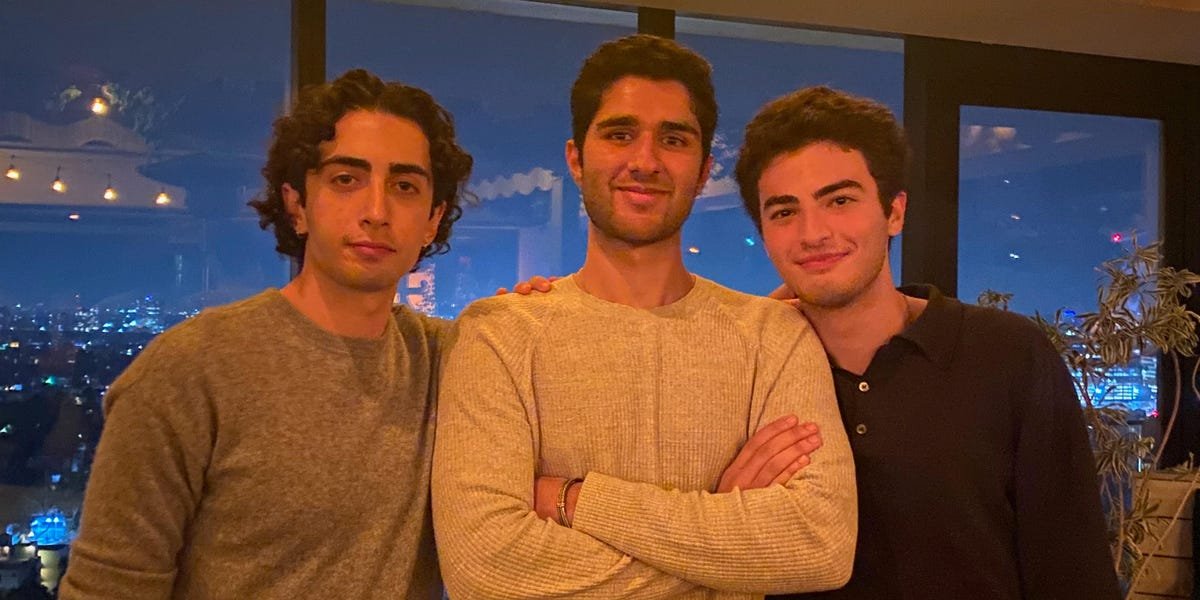
Alyx van der Vorm (25) and Faraz Siddiqi (23) both raised capital for their startups this year.

Alyx van der Vorm (25) and Faraz Siddiqi (23) both raised capital for their startups this year.

Kevin Farley; Muhammad Anjum


The median age for YC participants is now 24 years old, compared to 30 in 2022, YC’s Pete Koomen told The New York Times in August.

Business Insider has interviewed the founders of 12 startups who are 25 years old or younger and have raised millions in funding since 2024 about the pitch decks they used to impress investors.

Read 12 pitch decks founders who are 25 years old or younger used to raise millions:

Note: Founders were 25 or younger when Business Insider published the following articles.

Series A

Seed

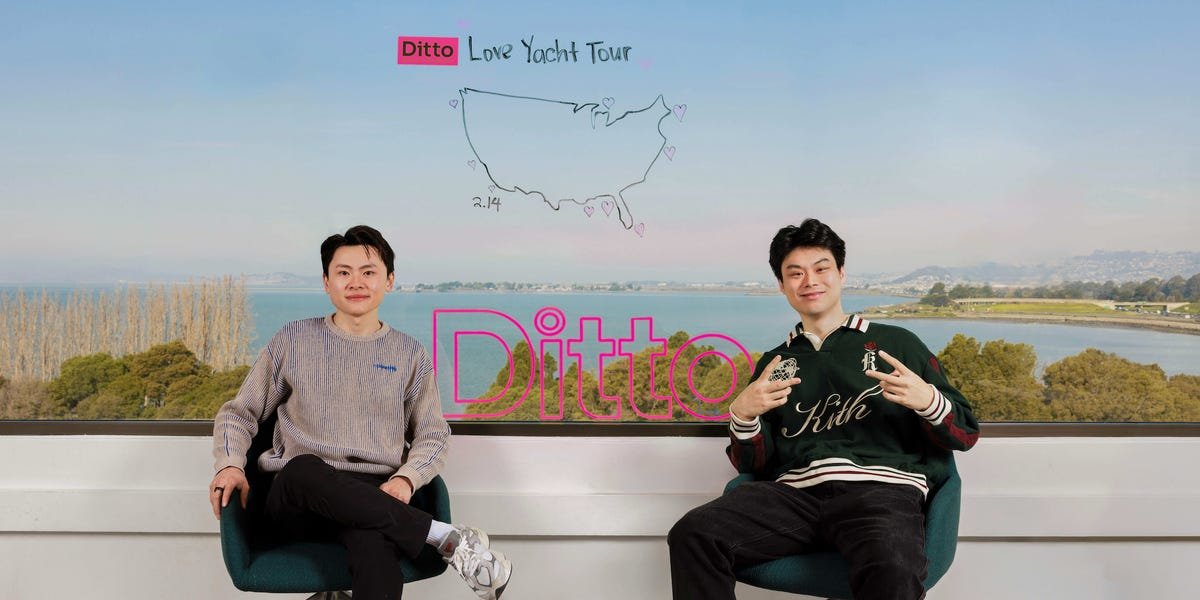
  • Ditto, an AI dating startup founded by UC Berkeley dropouts, raised $9.2 million when the founders were 23 and 24. Read its 12-page pitch deck.
  • Lyra, an AI video call startup, raised a $6 million seed out of YC when its founder was 23. Read the 8-slide pitch deck it used.
  • Nexad, an AI adtech startup, raised a $6 million seed after wrapping up A16z’s Speedrun accelerator. Nexad’s CEO was 25. Read the 10-page pitch deck.
  • Orange Slice, a YC-backed sales tech platform, raised $5.3 million when its founders were 23. Read the 7-page pitch deck.
  • Golpo, a generative AI video startup, raised a $4.1 million seed out of YC when its founders — who are also brothers — were 19 and 20. Read its 7-page pitch deck.
  • Bluejay, an AI agent startup, raised a $4 million seed coming out of YC when its founders were 23. Read its 9-page pitch deck.
  • Novoflow, an agentic AI startup building tools for medical clinics, raised $3.1 million when its founders were 18 and 19. Read its pitch deck.
  • CodeFour, an AI police tech startup, was founded by two 19-year-old MIT dropouts and raised $2.7 million coming out of YC. Read the pitch deck.
  • Cerca, a dating app that connects people with mutual friends, raised a $1.6 million seed when its CEO was 23. Read the 10-slide deck.

Pre-seed

  • Series, an AI social networking startup, raised a $3.1 million pre-seed when its founders were 21.

This story has been updated with additional examples.


Source link

Lloyd Lee

Anthropic’s lawyer says government is ‘pressuring’ companies to ditch the AI startup, go to competitors

Anthropic’s lawyer said the US government is “pressuring” the startup’s customers to go to rival AI providers amid an escalating fight between the Claude developer and the Department of Defense.

During a status conference on Tuesday, Michael Mongan, an attorney for Anthropic, said the Defense Department’s decision to effectively blacklist the startup from working with the US military is bringing “real and irreparable harm” to the company each day.

Mongan said customers have begun “expressing doubt” about working with Anthropic and that the government has been on a pressure campaign to get Anthropic’s customers to drop the provider and go to competing AI companies.

“We’ve had university systems and business-to-business companies that have switched to competing AI companies,” Mongan said. “And this is all the predictable result of the defendant’s actions and the uncertainty they’ve created, as well as the fact that defendants have been affirmatively reaching out to our customers and pressuring them to stop working with Anthropic and switch to other AI companies.”

Last month, after contract negotiations with the AI startup fell apart, Defense Secretary Pete Hegseth announced that Anthropic was a “supply chain risk” and framed the move as extending beyond direct military work.

“Effective immediately, no contractor, supplier, or partner that does business with the United States military may conduct any commercial activity with Anthropic,” Hegseth said in an X post on February 27.

The scope of the supply chain risk label is in dispute. Microsoft previously told Business Insider that its lawyers concluded the company can still use Anthropic for non-military-related work. The company also filed an amicus brief, urging the federal court to temporarily block the government’s supply chain risk designation.

The issue centers on Anthropic’s stance that its frontier model, Claude, cannot be deployed for autonomous weapons and mass surveillance of US citizens. Defense officials have said in response that a private company cannot dictate what the military can and cannot do.

Anthropic CEO Dario Amodei said in a blog post on February 26 that the company could not accede to the government’s demand for unrestricted, lawful use of its model. A day later, Hegseth formally designated Anthropic a supply chain risk.

Anthropic sued the government on Monday, seeking a temporary restraining order to continue doing business with the government as the case proceeds. The company said in the suit that the Defense Department did not provide adequate grounds to label it a national security risk.

In addition, the company said the designation has never been applied to an American company and that the move was retaliatory, violating the company’s First Amendment rights to express its views on AI safety and limitations.

The fallout from Anthropic’s blacklisting has been swift, according to legal filings.

Krishna Rao, Anthropic’s chief financial officer, said in a declaration filed on Monday that the DoD had contacted several “portfolio companies about their use of Claude” and that those clients have “grown worried and uncertain” about their ability to use the model.

The CFO said the government’s action could reduce Anthropic’s 2026 revenue by “multiple billions of dollars.”

Spokespeople for Anthropic and the Pentagon, as well as Anthropic’s lawyer, did not respond to a request for comment.


Source link

Yann-LeCuns-startup-has-a-new-CEO-—-and-1.jpeg

Yann LeCun’s startup has a new CEO — and $1 billion

Yann LeCun’s AI startup has raised more than $1 billion in seed funding and appointed a new CEO.

In a post on X on Tuesday, entrepreneur and former Facebook researcher Alex LeBrun said he is joining LeCun and the founding team of Advanced Machine Intelligence (AMI) Labs, also known as AMI Labs, as CEO.

“We have secured a $1.03 billion USD seed round to fuel our mission to build intelligent systems capable of truly understanding the real world—a long-term scientific endeavor,” LeBrun said.

AMI Labs said in an X post on Tuesday the round was co-led by Cathay Innovation, Greycroft, Hiro Capital, HV Capital, and Bezos Expeditions, alongside other investors.

The startup added it is building a team of researchers and engineers across Paris, New York, Montreal, and Singapore.

AI researcher and New York University computer science professor Saining Xie also said in a post on X on Tuesday that he has joined the founding team. Xie, who serves as cofounder and chief science officer, wrote that “AMI isn’t a conventional lab.”

“We don’t intend to become one,” he added.

AMI Labs is recruiting engineers, scientists, and researchers across its four global hubs, according to the company’s job postings.

LeCun revealed plans to launch the startup in November after departing Meta, where he spent 12 years leading its AI research efforts.

AMI Labs will focus on building world models, a type of AI system designed to better understand and reflect how the real world works. LeCun had said that the startup will be among the few frontier AI labs that are “neither Chinese nor American.”

Speaking at an event in Paris in December, LeCun said Meta would partner with the new venture, though it would not invest in the company.

“This new architecture is a project that Mark Zuckerberg really likes. He thinks maybe that’s the future,” LeCun said.

In an interview with MIT Technology Review published in January, the AI pioneer said he disagreed with some of the decisions made by Zuckerberg, including the shutdown of the robotics team inside FAIR.

LeCun also took aim at Alexandr Wang, the former CEO of Scale AI, after Wang briefly became his boss following Meta’s AI reorganization.

“There’s no experience with research or how you practice research, how you do it. Or what would be attractive or repulsive to a researcher,” LeCun said in an interview with the Financial Times in January.

“You don’t tell a researcher what to do,” LeCun said. “You certainly don’t tell a researcher like me what to do.”


Source link

The-AI-boom-is-minting-startup-multimillionaires-at-an-unprecedented.jpeg

The AI boom is minting startup multimillionaires at an unprecedented speed

One of the wildest stories in tech right now is what’s happening at Anthropic. New data from Levels.fyi shows how some employees at this AI startup have effectively become multimillionaires about a year after joining.

One engineer who started in late 2024 got 60,000 stock options at a $13 strike price, when Anthropic was valued around $18 billion. At the time, the equity penciled out to roughly $200,000 a year on paper.

Fast forward to a recent share sale valuing Anthropic near $350 billion. Even after estimated dilution and other factors, this employee probably owns about $4 million to $5 million in vested stock now. The full equity grant, which typically vests in quarters over four years, is likely worth about $18 million to $20 million, according to Levels.fyi estimates.

Other examples, based on real compensation packages submitted to Levels.fyi by Anthropic employees: A senior software engineer with about $1.6 million in vested stock after a year; a more senior staffer with roughly $8 million after 18 months; and a business operations leader with at least $9 million after two years.

Tax can take a big chunk of this value, especially if you live in California. Still, outcomes like this used to take five to 10 years and an IPO. In frontier AI, it’s happening a lot faster now — as long as you get hired by the right startup.

“The biggest variable in maximizing your compensation will almost always be the company you work at, even beating out things like your job title,” said Hakeem Shibly, a data guru from Levels.fyi.

Sign up for BI’s Tech Memo newsletter here. Reach out to me via email at abarr@businessinsider.com.


Source link

A-57-billion-AI-startup-wants-to-help-cut-government.jpeg

A $5.7 billion AI startup wants to help cut government benefit fraud. Experts aren’t so sure.

An AI startup in SF focused on identity verification has set a lofty goal: securing government contracts.

Daniel Yanisse, the CEO of Checkr, told Business Insider that the company wants to help the government reduce “fraud and waste” by not only screening new employees but also verifying people’s eligibility for benefits such as Medicare and Social Security.

Though Yanisse said the company isn’t ready to make any product announcement yet, he said a frictionless government assistance system may be just years away.

AI and safety experts, however, told Business Insider that there are legal and technical hurdles for any company to undertake the task of automating benefit and welfare systems with AI.

Checkr primarily uses AI to run background checks and surface information such as criminal records and motor vehicle reports. The company has major contracts with Uber and Lyft to screen new drivers, and is valued at more than $5.7 billion after raising $120 million in funding in 2022. In 2025, Checkr reported over $800 million in revenue and surpassed 120,000 customers.

When asked what Checkr wants to do for the government, Yanisse said that for Medicare and other programs, “there’s a lot of fraud happening and just bad actors getting the government dollars instead of the right people who need help,” adding that it’s very hard for the government to actually verify people’s employment status and income.

The Medicare Fee-for-Service program estimated that there were $28.83 billion in “improper payment” in 2025 at a rate of 6.55%, though not all such cases are the result of intentional fraud. Payments made to individuals who did not submit sufficient documentation and have unverified income levels are also considered improper by Medicaid.

“With AI, unfortunately, there’s going to be even more fraud, identity theft, and scams,” said Yanisse. “It’s a lot of friction, it’s a lot of repetition, and now there are also deepfakes.”

Checkr’s spokesperson told Business Insider that the company’s potential involvement in government is “still conceptual at this point.”

The company also pointed toward a study by Middesk, a business identity verification platform, that out of $1.09 trillion in Medicaid payments that went to around 1.6 million providers between 2018 and 2024, $563 million in payouts went to providers that are blacklisted from federal healthcare programs for criminal activity or misconduct.

Automating identity verification can be challenging

Stuart Russell, professor of computer science at UC Berkeley and an AI pioneer, told Business Insider that he is “not optimistic” that the plan to use AI to determine benefits eligibility will work as advertised.

“An AI system of this kind, some version of an LLM, is incapable of producing veridical explanations of its decisions, making it impossible to challenge false decisions,” Russell said.

Russell also cited the General Data Protection Regulation in the European Union, which bars decisions with significant legal effects on individuals from being made entirely by automated systems.

Baobao Zhang, the Maxwell Dean associate professor of the politics of AI at Syracuse University, told Business Insider that though she cannot assess exactly how good Checkr’s verification system is right now, past government attempts to mix people’s benefits with an automated system are cautionary tales.

“If the federal government or other state governments are trying to contract with a vendor to automate welfare fraud detection, they need to have a serious evaluation in the real world before they deploy it, because the stakes are high, as history has proven,” said Zhang.

In Indiana, an attempt to streamline and automate its welfare eligibility system by outsourcing a contract to IBM ended in a legal battle in which the state sued the company for $1.3 billion for the scrapped project in 2010. Based on court records, the Indiana Family and Social Services Administration said that processing errors from IBM led to faulty benefits denials that brought harm to the needy.

In Australia, an automated government plan called Robodebt, designed to detect fraud, told welfare recipients to repay benefits and sent letters claiming they owed thousands of dollars in debt, based on an incorrect algorithm. A royal commission, which is Australia’s highest form of public inquiry, found that at least three people died by suicide after being falsely told to pay back debt they don’t owe by Robodebt. The system was ruled illegal by a court in 2019.

Ifeoma Ajunwa, the founding director of the AI and the Future of Work Program at Emory University, told Business Insider that if any government agency is to adopt AI, there should be an advisory council made up of technologists and social scientists, and affected constituencies should be given a say.

“I think we need to move cautiously when delegating governmental functions to AI technologies,” said Ajunwa. “While these tools are touted to increase efficiency and lower costs, we also need to establish guardrails for their use to protect citizens.”


Source link

From-strangers-to-lovers-How-this-startup-is-simulating-the.jpeg

From strangers to lovers: How this startup is simulating the ‘meet-cute’ with AI

It’d be nice to meet someone the old-fashioned way: Passing by them on the street, meeting at a restaurant, or sharing an exchange at a party.

However, apps dominate the modern dating experience, replacing kismet meet-cutes with scrolling and DMs.

222, a startup focused on relationship building with the help of AI, thinks it can bring back the spontaneity of making a new friend — or falling in love.

“We’re trying to get as close as possible to you walking into someplace with other people there, and connection just naturally happens,” CEO Keyan Kazemian told Business Insider.

At a high level, 222 matches people with strangers for experiences like dinner or a night out after they take a robust personality quiz, using machine learning models trained by its team and open-source AI models.

“When you walk in, all of those people are people we predict you’re going to be able to have a good conversation with, and you’ll like,” COO Danial Hashemi said.


222 app description

222 launched its app in 2024 and has since added more features.

222/Screenshot/Apple


When 222 launched in 2021, it began as a dinner series in Los Angeles for young adults emerging from the COVID-19 pandemic, helping them meet new people. Then the project grew into a company. It was accepted into Y Combinator, raised capital, moved to New York City, and launched a mobile app to spur in-real-life (IRL) socializing.

While people who join 222 are often new to a city, Kazemian said, today they’re pretty evenly split along why they’re using the platform: they’re either looking for new friends or potential romantic connections.

Since putting out its app in 2024, the 222 experience has evolved. It’s no longer just about meeting strangers, having a fun night, and forming new relationships.

“We’re very focused on going beyond that,” Kazemian said.

The platform is now digging deeper into connecting people after the first encounter that 222 initiates. It’s helping plan follow-up hangs with friends and kindling a romantic connection by setting people up on a date if the feeling is mutual.

Simulating the meet-cute

After a 222 experience, the platform follows up to ask attendees whether they want to hang out or go on a date with anyone they met.

Once two people say they’d like to go on a date, “we fully set up the next date for them,” Hashemi said — reservation and all.

“If you think about just before dating apps, before all this stuff, how would people meet each other?” Hashemi said. “It would be you’re in the same physical space with no preconceived notions of who this person is going to be.”

Hashemi said that some of the “joy” of navigating how you feel about someone new in your life has “gone away because of dating apps.”

Meeting in a way that feels more organic, such as a social gathering or through friends, has staying power. A 2025 survey of 7,000 US adults by health company Hims found that 77% of Gen Z met their partners IRL. Even Partiful, the Gen Z replacement for Facebook Events, is getting in on the IRL event-to-dating pipeline.


222 ofice

At 222’s New York City office, they have a prop newspaper called “The Serendipity Times” on display.

Sydney Bradley/Business Insider


222 thinks AI can make the meet-cute more accessible.

What 222’s founding team has zeroed in on is “labeled data,” Kazemian said, which comes from its users’ feedback after they meet people.

The startup knows its first pairings may not be the ultimate match, which is why it encourages its subscribers — who pay $22 a month — to try multiple experiences. Its AI, in return, can curate better matches from 222’s network.

There are layers of factors that contribute to that, 222’s CTO Arman Roshannai said, such as similar music tastes or hometowns.

“The signal that we’re training on is after you meet this person, you spend two hours getting dinner with them, and then you hang out for a few hours afterwards, were you guys actually a good match for each other?” Roshannai added.

Kazemian added that training on this proprietary data from user feedback is a “painstakingly difficult and long process,” but gives the startup a “technical moat” to stand out from some competitors.

AI’s new role in relationships

222 isn’t the only startup — or public company — betting that AI can improve how we connect.

Several startups have launched with this premise and are raising millions, pitching matchmaking solutions that use AI to set people up. Meanwhile, Bumble, Tinder, and Facebook Dating are testing the AI waters and reimagining the swipe. Hinge’s founder recently left the Match Group-owned dating app to build an AI dating alternative.


222 office

The startup’s new office is in the buzzy NYC SoHo neighborhood.

Sydney Bradley/Business Insider


After raising another $10.1 million from venture capital investors in 2025 — bringing the startup’s total raised to $13.7 million — 222 is doubling down on hiring and expanding its product with tools that keep relationships going.

222’s next undertaking is to provide avenues for its users to reach their “next offline moment” together, so they can deepen those relationships.

The startup wants to be in the business of both creating relationships and maintaining them.

“They need to show up at the same place together,” Kazemian said, be it a hangout, a date, or a restaurant reservation. “We can help them figure out what that place is.”


Source link