
Tech-leaders-are-raising-tough-questions-over-Matt-Shumers-viral.jpeg

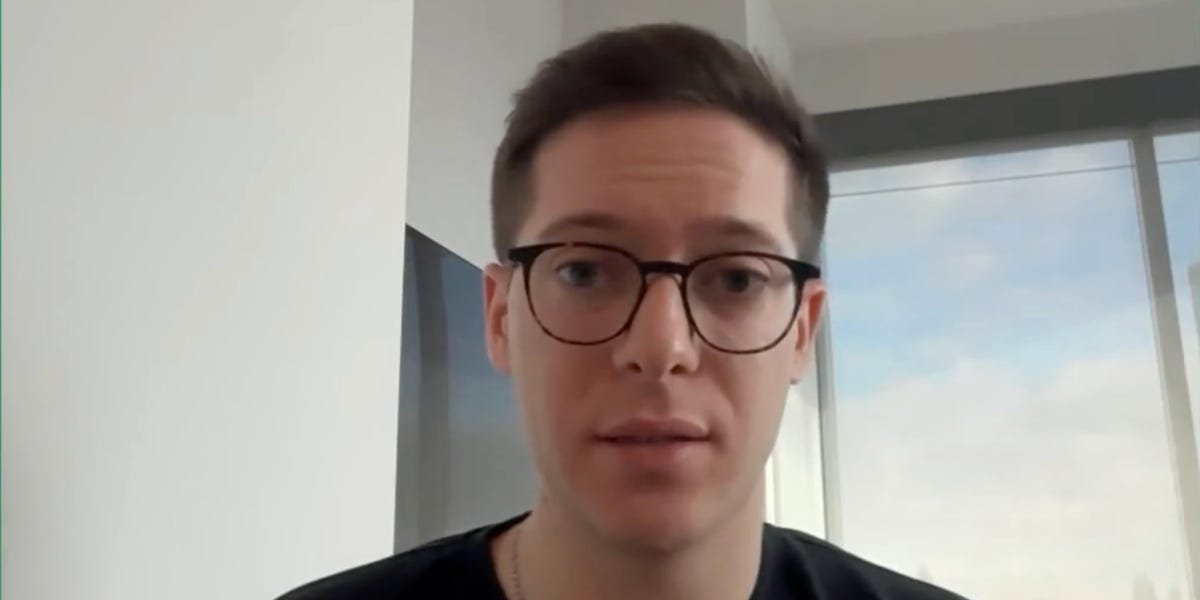
Tech leaders are raising tough questions over Matt Shumer’s viral essay on how AI will impact jobs.

Scientists and business leaders are responding to a viral essay warning of AI’s impact on jobs with a mix of agreement and skepticism.

The essay, titled “Something Big is Coming,” written by cofounder and CEO of OthersideAI, Matt Shumer, has racked up more than 60 million views on X as of Thursday.

In the 5,000-word post, Shumer said that AI could upend daily life on a scale “much bigger” than COVID, a comparison which drew pushback online. He wrote that the changes already unfolding in the tech sector are likely a preview of disruptions that could soon reach other industries as well.

“Even if there is a 20% chance of this happening, people deserve to know and have time to prepare,” Shumer told Business Insider’s Brent Griffiths in an interview.

Here’s what some of the sharpest minds in AI are saying about Shumer’s essay.

David Haber

Haber, a general partner at venture capital firm Andreessen Horowitz specializing in technology investments, posted on X that Shumer’s essay contains “great advice for how to get ahead in your job at any large company right now.”

“‘I used AI to do this analysis in an hour instead of three days is going to be the most valuable person in the room.’ Not eventually. Right now,” Haber quotes from the essay. “Learn these tools. Get proficient. Demonstrate what’s possible.”

Alexis Ohanian

The Reddit founder responded to Shumer’s initial post on X with a simple comment: “Great writeup. Strongly agree.”

Since 2023, Reddit has introduced a range of AI-driven tools, from search features that summarize user discussions to AI that sharpens its content recommendations and targets ads, but Ohanian recently emphasized that the platform must retain its humanity to stay competitive.

Eric Markowitz

Markowitz, the author and managing partner and director of research at Nightview Capital, a long-term-oriented investment firm, responded to Schumer with an essay almost as long, which criticized the practice of chasing speed and replacing the value of humanity simply because it could be done.

“These two worlds — Wall Street and Silicon Valley — have formed a feedback loop of short-termism so tight, so self-reinforcing, that they’ve confused efficiency with purpose, growth with meaning, and the elimination of people with progress,” wrote Markowitz.

“I have two research assistants. Could I replace them with AI? Of course. But their value extends their weekly output,” Markowitz added. “They give meaning to my work and I love seeing the excitement in their faces when they make a new discovery that I, alone, could not have found.”

“Let me say it again: we are not our tools. We never have been,” Markowitz wrote in conclusion.

Todd McLees

McLees, the founder of HumanSkills.AI, wrote on X that Shumer is not wrong, but he said that the advice Shumer provided is akin to “telling someone the floodwaters are rising and handing them a better bucket.”

“As AI grows in ability, our role in defining direction, values, and purpose only becomes more essential,” McLees said.

“What do you bring when the machine can do the work? That’s the only question that matters when intelligence is abundant,” McLees added. “Shumer wrote the alarm. It’s a good one. But alarms don’t tell you where to go. You have to find that within yourself.”

Gary Marcus

Marcus, Emeritus Professor of Psychology and Neural Science at NYU and founder of AI companies Robust.AI, has some harsh words for Schumer in his newsletter.

Marcuz called Shumer’s blog post “weaponized hype, filled with vivid narrative and marketing speech,” and said he did not provide real data to support the claim that the latest AI can write complicated apps without mistakes.

“Shumer’s presentation is completely one-sided, omitting lots of concerns that have been widely expressed here and elsewhere,” Marcus added, after discussing various studies that question the accuracy and productivity gain AI tools actually provide.

Vishal Misra

Misra, Vice Dean of Computing and Artificial Intelligence at Columbia University, responded in a lengthy Substack article that detailed why he doesn’t think AI is as scary as it sounds, at least not right now.

Misra wrote that many strange AI behaviors that make them seem sentient, such as perceived resistance and self-preservation, are simply a result of training data.

As for the possible elimination of jobs, Misra said he understands the anxiety, but history says we may not need to panic.

“When the camera was invented, portrait painters had every reason to panic. Their livelihood depended on a skill that a machine could now approximate,” Misra wrote.

“What happened? Painters didn’t disappear. They were freed from the obligation to faithfully reproduce reality and ventured into impressionism, cubism, abstract expressionism,” Misra added. “The camera didn’t kill painting. It liberated it.”



Source link

Author-of-viral-Something-Big-is-Coming-essay-says-AI.jpeg

Author of viral ‘Something Big is Coming’ essay says AI helped him write it — and that proves his point

The author of the viral essay warning about impending AI disruption says he couldn’t wait any longer to get the word out.

“Let’s say there is just a 20% chance of it happening, which is maybe realistic, maybe underselling it,” Matt Shumer, GP of Shumer Capital, said during an interview with Business Insider. “Even if there is a 20% chance of this happening, people deserve to know and have time to prepare.”

The people in tech who previously warned about AI’s impact were mostly speaking to others in the industry, he said. Shumer said he wanted something that spoke to his dad, a lawyer who is just a few years from retirement and is hopeful he can run out the clock on the potential massive change on the horizon.

He’s certainly found an audience.

His essay, titled “Something Big is Coming,” has been viewed over 60 million times on X alone, as of Wednesday evening. In the nearly 5,000-word post, Shumer wrote that AI’s disruption to people’s lives could be “much bigger” than COVID — a comparison that has drawn some pushback online. Shumer’s past controversy over an open-source model he promoted in 2024 has also come under scrutiny, after AI researchers discovered the model didn’t live up to his performance claims. He previously apologized, saying “I got ahead of myself when I announced this project.”

In his essay, Shumer also wrote that what he’s seeing in tech is likely what awaits other industries.

“I don’t know that this is coming for sure, but I think a lot of us in tech really see this progress, and it’s frankly dizzying, and there’s a good chance of this,” he said. “And the more people know, the better.”

Shumer is not alone in his fears about the future.

Anthropic CEO Dario Amodei, who is known for writing eyebrow-raising essays of his own, has said that up to half of all entry-level, white-collar jobs may be wiped out in the next one to five years. xAI CEO Elon Musk has called AI a “supersonic tsunami” that will quickly eliminate jobs that don’t involve physical labor.

Shumer said even he is unsettled about the prospects of AI. After all, he’s 26 and still near the beginning years of his career. In 2020, he cofounded OthersideAI, which later spawned HyperWrite, an AI-assisted writing tool.

“I don’t know how many more years of my career there will be if this all actually comes to pass,” he told Business Insider. “So, it’s frankly a little confusing and terrifying for someone like me.”

Part of the issue is that AI is unlikely to affect all industries in the same way or at the same time, making career advice highly dependent on a person’s specific situation.

“If you’re a nurse, you’re probably going to be fine for quite some time,” he told Business Insider, adding that junior associates at law school face significantly more risk because many of the introductory-type tasks they do are already being targeted by AI companies.

In his essay, Shumer wrote that his realization of what’s in store came after his experience with OpenAI’s GPT-5.3-Codex, which was released last week. In its release notes, OpenAI said GPT-5.3-Codex was its “first model that was instrumental in creating itself.” Shumer wrote that AI is now capable of doing his technical work.

As for the other tasks, Shumer has been quite open about how AI helped him write his viral essay about AI. He said he spent hours working with Claude to craft his message.

“It did help a lot,” he told TBPN on Wednesday, “and I think that’s kind of the point.”

It’s why Shumer’s message to everyone who turned away from AI, perhaps after a clunky experience with an early version of ChatGPT years ago, is that they should seize the opportunity to see the breadth of what the technology can do now.

“If you look back 10 years from now and this did come to pass, you’ll be very glad you did,” he told Business Insider.


Source link

Im-a-14-year-old-founder-whose-YC-application-went-viral-There.jpeg

I’m a 14-year-old founder whose YC application went viral. There are pros and cons to starting a company young.

This as-told-to essay is based on a conversation with Alby Churven, the 14-year-old founder of Clovr, who lives in Wollongong, Australia. It’s been edited for length and clarity.

When I was younger, I started an e-commerce grip socks brand called Alpha Grips. It failed, but that’s what got me interested in business. I was 12.

A lot of kids’ first businesses is always something to do with e-commerce, like drop-shipping or clothing brands. Social media does saturate you with that “get rich quick” idea with drop-shipping or crypto. Although 90% of the time it’s a scam, it still ignites an interest.

Then I came up with the idea of Finkel, the startup I applied to Y Combinator with. I sent a cold email to Frank Greeff who’s a pretty big founder here. He recommended I started building in public on social media, so I started doing that. X is full of startups.

Social media played a big role, seeing other people building brands and businesses. That’s what got me into it. I used to do code camps when I was younger, so I’ve always been interested in tech and entrepreneurship.

I applied to YC. Apparently I wasn’t supposed to do this big video with all the editing. It’s supposed to be, you sit down and turn on the webcam and talk. I didn’t actually read the instructions when I did it, but I guess that’s what made it pretty viral.

There’s a new social media ban in Australia for people under 16. All these great things have happened for me with it, but the social media ban is taking that away. I don’t agree with it, but it is what it is.

I’m young. I think my advantage being a teenage entrepreneur is I’ve got time. My goal right now is to build as many things as possible, learn as much as possible, and see where it goes.

You decide you want to do maybe when you’re 18 or 16. But I know what I want to do. I want to be in startups and tech.

The benefits of starting young is that you don’t have as much pressure on you financially, so you can just build things.

In the future, I’ll have had experience. It’s about learning. I have time on my hands, and I enjoy it.

The younger generation thinks a bit differently. Some older people may not even know how to use AI.

I’m in the US right now, and I’ve been meeting with a lot of really cool people. When you’re young, you can utilize your age to make a lot of connections. It’s more rare. It’s crazy you’re doing it this young.

My age is a wow factor, but it also limits legitimacy.

It also can be a negative. People might not take you seriously if you’re really trying to pursue something. All the things I’m building are bootstrapped, because it’s impossible to raise funding when you’re young.

I’m getting to stages in my projects where I do need some money. I’ve applied to these accelerators. I had a very low expectation for Y Combinator. I got an interview about my other startup, Clovr, but then I got rejected.

I’ve heard you have to get in the system early, so when I’m older and I apply, I’ll already be in the system and have experience with how the process works.

I do think grants are a really good opportunity. You won’t raise nearly as much, but you’re not giving away any equity. I think giving away equity young is not a good decision. It gives pressure to perform and deliver, and when you’re young, you want to build stuff.


Source link

ATT-CEO-says-he-made-a-mistake-in-how-he.jpeg

AT&T CEO says he made a mistake in how he went about fixing company culture — but the viral memo wasn’t it

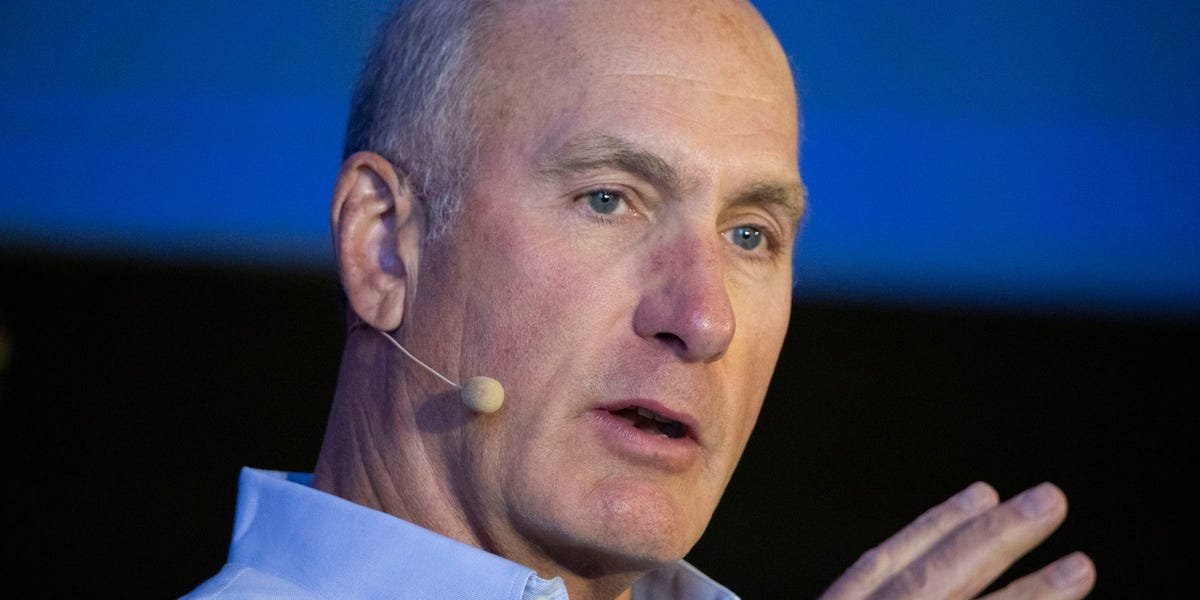
CEO John Stankey said he made some missteps in addressing company culture at AT&T — and shed some new light on his internal memo that went viral.

The lengthy memo, which was first reported by Business Insider in August, described how the company was moving to a “more market-based culture,” setting off discourse about the state of workplace loyalty.

Stankey gave some insight into the goal behind the memo during a conversation at the Wall Street Journal CEO Council Summit on Tuesday.

When asked to name a mistake he’s made, Stankey said he was too slow to tackle the “culture evolution” that was needed. He said he put it among several areas of focus for the company and that instead he should’ve put it at the forefront and forced specific actions to make it happen.

Alan Murray, president of the WSJ Leadership Institute, suggested that was why Stanley sent that memo this year, rather than sooner.

“The memo shouldn’t be over-rotated on. It’s one of a series of steps in trying to put a framework out there and remove excuses for leaders to lead,” Stankey said, adding the memo gave context on the framework he was building for the business.

“That memo outlined my point of view on it, and it gives leaders that want to lead all the air cover in the world they need to go and execute around that framework,” he said.

AT&T has undergone a number of changes as a company in the past year, including a return-to-office mandate of five days a week.

In the memo to employees, Stankey effectively said they should get on board with changes to the company culture, or get out.

“We run a dynamic, customer-facing business, tackling large-scale, challenging initiatives,” Stankey said in the memo. “If the requirements dictated by this dynamic do not align to your personal desires, you have every right to find a career opportunity that is suitable to your aspirations and needs.”

At the event on Tuesday, Stankey also outlined how AT&T is pushing employees to adopt AI. He said the company has tutorials and other educational tools for employees to upskill with AI, and that he’s paying attention to who is using them.

“I want to see who’s building their skill set, where they’re building, and this is just the next set of skills that people are going to have to have,” he said.


Source link