
Im-an-American-who-moved-to-a-small-French-village.jpeg

I’m an American who moved to a small French village. I tried to adjust, but learned I wasn’t built for country living.

Growing up in a remote California suburb, I spent most of my childhood counting down the days until I could leave for a big city.

When the time came to move to New York for college, I was prepared to say goodbye to country living for good. I spent six years in New York, and then another four in Berlin.

Although I loved my experiences in both cities, I was exhausted. Years of apartment hopping, navigating dirty subways, and dealing with nonstop hustle left me craving a reprieve — and wondering why I’d been so quick to swear off a quainter life in the country.

So, when my husband proposed that we move to a little village near his family in France, I surprised myself by agreeing to give it a try.

This was in 2021, when COVID-19 restrictions were making it challenging to live in Berlin, and we were both desperate for the benefits that such a relocation could offer — like more square footage, a yard, and, most importantly, proximity to our loved ones and their support.

The reservations I had about residing in the country were still nagging me, but I figured things would be different this time. I was older, wiser, and doing it in beautiful France, of all places.

I wish I had listened to my gut, though, because all my old qualms with country living ended up rearing their ugly heads — and we ended up leaving after two years.

Without a driver’s license, I felt isolated by the lack of public transit


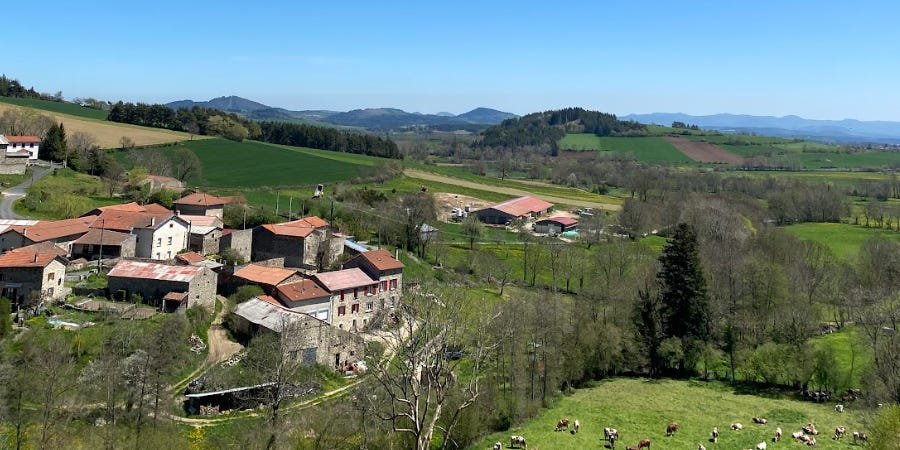
A shot of the French village where the author lived, featuring houses, fields, and a skyline.

I’d hoped my new home would be a bit more walkable.

Audrey Bruno


I never needed a driver’s license when I lived in cities, but that all changed when we moved to the French village. There, we simply couldn’t get around without a car — but we sure tried.

I knew going in that my public transportation options would be more limited than they were in a city, but I didn’t expect to be as isolated as we were.

When we first arrived, it took us over a month to work up the funds to buy a car. In the meantime, we attempted one very hilly bike ride, but had to call it quits before we’d even made it halfway to our destination.

Walking was no better — it took hours to get to the nearest shops, and sometimes they wouldn’t even be open when we finally arrived.

Even after we obtained a vehicle, I couldn’t navigate on my own without my husband, since he was the only one with a license.

He was always willing to drive me around, but I was frustrated by my newfound lack of independence. I considered getting a license of my own, but the cost of driving school was out of our budget at the time, so it really seemed like there was no way out of the situation I’d gotten myself into.

I wasn’t prepared for the demands of caring for a house after years of apartment dwelling


A snow-covered house in a French village.

Years of living in apartments didn’t prepare me for the hard work of cleaning and maintaining a house.

Audrey Bruno


Apartment life certainly has its drawbacks, but extra square footage comes with pitfalls, too.

We loved that our rental home gave us the newfound ability to stretch out and make noise without bothering each other. The downside, though, was that it was up to us to care for and maintain all that extra space.

It wasn’t just the house, either — it was also our responsibility to tend to the adjoining garden, barn, and the attached horse stables. It was a full-time job’s worth of work, and I started to miss the days when I could clean my whole apartment in just an afternoon.

Living without any takeout options was harder than I expected

Normally, I’m a proponent of cooking as much of my own food as possible, but I at least like to have the option of ordering in or eating out — especially on days full of chores and work.

Unfortunately, getting to the closest takeout restaurant took an hour round-trip, and delivery applications like Uber Eats didn’t service our small village.

What’s more, our dining options were severely limited compared to what we’d had in Berlin. I realized that I missed trying different cuisines and checking out new restaurants, and even when cooking,

I didn’t have access to the same wide variety of ingredients that I’d had in the city. One example was sesame oil — if I wanted to use this pantry staple in a recipe, I’d have to go to a big city to find it.

Connecting with neighbors wasn’t easy

Our village was extremely small — as of 2020, the population was under 400 — and many of the people I met were much older.

Needless to say, our rhythms and beliefs didn’t always match up. We often had debates over everything from politics to local initiatives — like what to do with all the feral cats — and it wasn’t always easy to argue my point in my then-limited French.

Since most folks in Berlin are fluent in English, I’d never been up against such a language barrier before. All that and more made it challenging to form true connections and further contributed to my feelings of isolation.

That said, there were things I missed about country life once I left


The writer standing outside, holding up lettuce she grew.

When I lived in the countryside, I got to grow my own fruits and vegetables.

Audrey Bruno


Despite all my frustrations, there were a few great things about living in the French countryside.

For starters, it really is beautiful, and being there allowed me to grow my own fruit and vegetables, forage wild blackberries in the forest, and perfect my French with the folks in town who were willing and patient enough to help me out.

After two years, we ended up moving to Lyon, the nearest city, because it offered the best of both worlds. At only 84 miles away, we’d have proximity to my husband’s family and access to nature, plus all the advantages of living in a major city.

I’ll always remember the beautiful memories from my time in the village — but I’ll also always prefer to reminisce about them from an apartment in a city.


Source link

I-booked-a-business-class-ticket-on-the-new-Amtrak-Acela.jpeg

I booked a business-class ticket on the new Amtrak Acela train. It wasn’t worth the $180 price tag.

  • I paid $180 to ride in business class from NYC to Washington, DC, on the new Amtrak Acela train.
  • The train had modern amenities, like 5G WiFi, high-tech bathrooms, and ergonomic seating.
  • Despite upgrades, the high price outweighed the benefits of traveling in business class.

I’ve spent 26 hours riding the rails in business class around the world. My most recent Amtrak trip was the best business-class experience I’ve ever had in the US — but it still wasn’t worth the price tag.

In September 2025, I booked a business-class ticket from New York City to Washington, DC, on the Amtrak NextGen Acela train for $180.

The three-hour ride felt extremely comfortable and a tad luxurious. In the end, though, I couldn’t see myself splurging for it again.

I rode from New York City to Washington, DC, on the Amtrak NextGen Acela train.

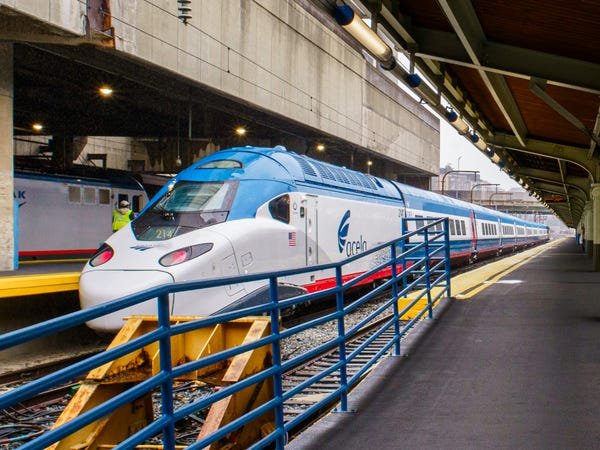
The exterior of the Amtrak NextGen Acela train.

Joey Hadden/Business Insider

The Amtrak Acela is an express service between Boston and Washington, DC. The train line introduced a new fleet on the route in August 2025, known as NextGen Acela.

In addition to being the fastest Amtrak train with a top speed of 160 miles per hour, the NextGen Acela has modern interiors and high-tech amenities.

I booked a business-class ticket for $180.


An aerial view of an Amtrak NextGen Acela pamphlet opened on a tray table

A brochure on the train.

Joey Hadden/Business Insider

The Amtrak Acela trains only have two classes — business and first. I booked my business-class ticket for $180.

Out of curiosity, I looked at the pricing for coach seating on the regional Amtrak train, which is 30 minutes slower than the Acela. It was $40.

When I arrived at Penn Station in NYC, I sat on the floor to wait for my train.


Passengers stand in line to board trains inside Penn Station in NYC.

The line to board the author’s train.

Joey Hadden/Business Insider

My train was scheduled to leave at 10 a.m., but there was a 90-minute delay. Since I was stuck at the station for longer than anticipated, I briefly considered going to the Metropolitan Lounge, an elevated space overlooking the train hall with cozy seating and complimentary refreshments.

First-class passengers and those traveling in sleeper accommodations can get into the lounge for free, but other Amtrak riders have to pay $50 to access it.

Since I’d already splurged on the business-class ticket, I decided to skip the lounge and head to the standard waiting room instead, but it was full. I finally settled for a seat on the floor against the wall until it was time to board.

Since I wasn’t in first class, I didn’t get priority boarding.


A composite image of people going down an escalator and boarding a train on an underground platform

Passengers board the train.

Joey Hadden/Business Insider

When I got in line to board, I was reminded that business class is just a standard ticket on the Amtrak Acela. Unlike business-class rides I’ve taken that also had coach seating, this trip didn’t include the perk of priority boarding.

The business-class car had a sleek, modern look.


Inside a business class Amtrak car with two passengers on the right

Inside the business-class car.

Joey Hadden/Business Insider

Retractable window shades, exposed overhead bin space, informative screens, and ergonomic seats made the car feel like a step up compared to business-class Amtrak trains I’ve booked in the past.

The seat was much more comfortable than most I’ve booked on Amtrak trains.


A composite image of an empty window seat on a train and the back of the seat in front of it

The author’s business-class seat.

Joey Hadden/Business Insider

Soft, cushy, spacious, supportive — these are the words that popped into my head when I settled into my business-class seat. A reclining function and footrest made the ride even more comfortable.

Power outlets, USB ports, and a reading light were all conveniently located on the side of the seat. In front of me was a tray table and a fold-out cupholder.

I spent most of the ride streaming YouTube videos.


A hand holds a phone playing a music video in front of a train seat back

The author watches music videos.

Joey Hadden/Business Insider

Most Amtrak trains I’ve been on have had WiFi, but in my experience, the connection has typically been too weak for much more than a Google search.

I was stoked when the NextGen Acela’s 5G WiFi was fast enough to stream YouTube videos without any issues. I passed the time by watching live sessions of my favorite bands.

The bathroom was spacious and clean with modern touches.


A composite image of a blue door leading to a business-class train bathroom and inside the bathroom with red accents, the author takes a mirror selfie

Inside the business-class bathroom.

Joey Hadden/Business Insider

I’ve learned to set the bar low for train bathrooms. Stocked toilet paper, soap, and paper towels are not a given. Cleanliness and extra space aren’t either. In my experience, some business-class bathrooms are no different from those in coach.

So I was ecstatic when I stepped inside the lavatory on the NextGen Acela. The automatic door opened into a spotless space that felt big enough for two people to do jumping jacks simultaneously.

I found it aesthetically pleasing too, with bold red accents and trendy touches, from the shelf to the mirror.

I also appreciated the touchless water, soap, and dryer functions on the sink.

Although it was much more comfortable than sitting in coach, I didn’t think a business-class ticket was worth the high price point.


Inside an empty coach cabin on an Amtrak train

A coach car on another Amtrak train.

Joey Hadden/Business Insider

“Amtrak travelers always have their preference,” an Amtrak representative wrote in an email to Business Insider. “If they want to experience these premium trains with enhanced amenities, they can. Or, if they prefer convenient and affordable downtown-to-downtown service up and down the Northeast Corridor, Northeast Regional trains offer a comfortable and enjoyable way to travel throughout the Northeast Corridor and points beyond.”

The next time I take an Amtrak train, I’ll miss the cozy seat, elevated bathroom, high-speed WiFi, and shorter travel time. Still, these perks weren’t enough for me to consider Acela’s business class to be worth more than quadruple the price of a coach ticket.


Source link

ATT-CEO-says-he-made-a-mistake-in-how-he.jpeg

AT&T CEO says he made a mistake in how he went about fixing company culture — but the viral memo wasn’t it

CEO John Stankey said he made some missteps in addressing company culture at AT&T — and shed some new light on his internal memo that went viral.

The lengthy memo, which was first reported by Business Insider in August, described how the company was moving to a “more market-based culture,” setting off discourse about the state of workplace loyalty.

Stankey gave some insight into the goal behind the memo during a conversation at the Wall Street Journal CEO Council Summit on Tuesday.

When asked to name a mistake he’s made, Stankey said he was too slow to tackle the “culture evolution” that was needed. He said he put it among several areas of focus for the company and that instead he should’ve put it at the forefront and forced specific actions to make it happen.

Alan Murray, president of the WSJ Leadership Institute, suggested that was why Stanley sent that memo this year, rather than sooner.

“The memo shouldn’t be over-rotated on. It’s one of a series of steps in trying to put a framework out there and remove excuses for leaders to lead,” Stankey said, adding the memo gave context on the framework he was building for the business.

“That memo outlined my point of view on it, and it gives leaders that want to lead all the air cover in the world they need to go and execute around that framework,” he said.

AT&T has undergone a number of changes as a company in the past year, including a return-to-office mandate of five days a week.

In the memo to employees, Stankey effectively said they should get on board with changes to the company culture, or get out.

“We run a dynamic, customer-facing business, tackling large-scale, challenging initiatives,” Stankey said in the memo. “If the requirements dictated by this dynamic do not align to your personal desires, you have every right to find a career opportunity that is suitable to your aspirations and needs.”

At the event on Tuesday, Stankey also outlined how AT&T is pushing employees to adopt AI. He said the company has tutorials and other educational tools for employees to upskill with AI, and that he’s paying attention to who is using them.

“I want to see who’s building their skill set, where they’re building, and this is just the next set of skills that people are going to have to have,” he said.


Source link