I-was-sick-of-never-seeing-my-6-kids-So.jpeg

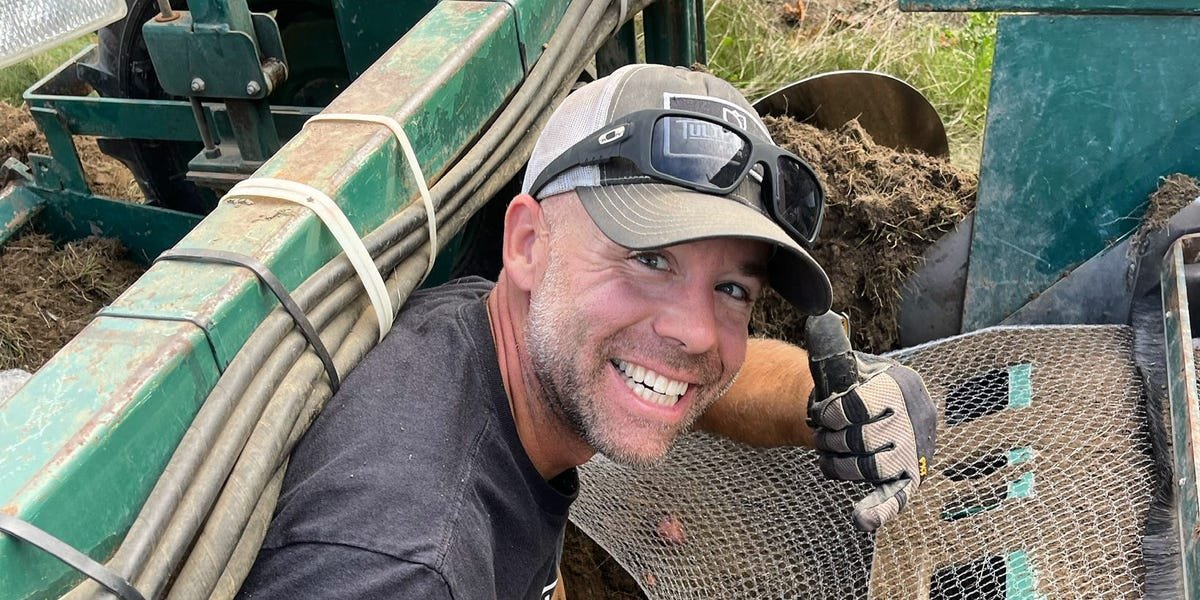
I was sick of never seeing my 6 kids. So I quit my Amazon job to become a tulip farmer.

This as-told-to essay is based on a conversation with Andrew Miller, 50, in Mount Vernon, Washington, the owner of Tulip Valley Farms. It has been edited for length and clarity.

I remember the moment I looked around my office and saw only performative culture staring back at me.

Between 70-hour workweeks that started at 4 a.m. and growing disagreements with how the company was being run, I knew something had to give.

It wasn’t hard work that scared me. Before corporate life, I spent 14 years in the Air Force and National Guard.

But as my family grew, I started questioning the path I was on. I’d never been deployed, but I knew it was likely. With two autistic children at home, my family needed me present. After leaving the military, I landed a corporate role at Amazon.

It went well for a while, but I was rarely seeing my family, and it wasn’t the life I’d envisioned. I realized that while some people live for their role, my most important job was being a dad — I have six kids.

So, in 2015, I quit my job at Amazon. My wife, Holly, supported my decision, knowing that I was completely drained and losing my sense of purpose.


Andrew Miller and his wife Holly on Tulip Farms in Washington.

Miller’s wife, Holly, supported his decision to leave his job.

Provided by Andrew Miller


We also decided it was time to move back to Washington, where we both grew up.

Skagit County is a place where your kids can run down the trail to a relative’s house if they don’t like what you’re serving for dinner.

It’s also home to an annual tulip festival that’s been held for over 40 years.

Finding my calling back home

I took a strategy role with the county’s economic development team, working on growth and equity.

Skagit sits at the intersection of outdoor recreation, tourism, and agriculture — yet while the county once had about 4,000 acres of tulips, that number had dropped to roughly 500. I knew we needed a new model, or this county wouldn’t be the home of tulips anymore.

I came up with an idea and went for it. I decided to buy a tulip farm and reimagine what it could be — not just a working farm, but a place people wanted to hang out.


Andrew Miller is holding a sheep on Tulip Farms.

Miller’s focus wasn’t just on growing tulips; it was about the farm experience.

Provided by Andrew Miller


Lessons on buying a farm

In 2018, I bought my first farm. In the months leading up to the purchase, I quickly learned that many agricultural problems are really business problems.

The questions weren’t just about growing tulips; they were about the experience: How many tulips could we grow? What kind of customer experience could we create? And how should we design the layout of the fields for tourists?

To prepare, I raised capital with friends and spent six weeks shadowing an 85-year-old Dutch farmer who had been growing tulips since 1984. He and his wife told me they had turned down 16 other buyers before choosing me. He died shortly afterward, and after his death, I moved forward with taking over the farm.

My former business partner and I bought the 30-acre property for $1.6 million, including both the land and the business.

In those first months of farm life, my approach was pure curiosity.


Andrew Miller is pointing at tulip bulbs.

Miller raised capital with friends and spent six weeks shadowing a farmer.

Provided by Andrew Miller


Bumps in the road

Then the pandemic hit, just 10 days before opening.

We pivoted to flower shipping, and eventually added you-pick experiences once restrictions eased. From what I could see, no one in Skagit County was doing that.

I’ve learned that I tend to learn things the hard way. My daughter even bought me a pen that reads: “Maybe I like doing it the hard way.”

The fresh approach worked, but my business partnership didn’t. After differences in vision, we split, and I went on to buy a second farm: Tulip Valley Farm, which I still run today. I bought it from a 70-year-old potato farmer with hazelnut trees.

He believed in my vision.


Andrew Miller and his family on Tulip Farm.

Miller and his family on Tulip Farm.

Provided by Andrew Miller


Building a new career and a legacy

Today, my 23-year-old son can operate a forklift, which he learned when he was 15. My sister runs business management and communications.

I still work from 5 a.m. until bedtime, but now I’m home. I’m serving my community.

I’ll walk into Costco, and my kids will scatter when someone recognizes me from the farm. My family is happy to know we can take three weeks off in the summer because of how hard we work the rest of the year.

They’ve seen the strain, the kitchen-table meetings, the risk of starting from scratch. I want them to see that.

Healing in the soil — for us, and for guests

Today, the farm is flourishing. Visitor numbers have doubled year over year for the past three years. We design the fields not just for farming, but for connection — proposals, photos, moments people want to share.

In a world where we are gagging for meaningful in-person experiences, people are drawn to farms. I get it. As someone with PTSD from my former career, I can also affirm that dirt therapy is the best therapy.

Being able to shape your own environment and build your own future is essential.


Source link

Chipotle-is-targeting-the-top-of-the-K-shaped-economy.jpeg

Chipotle is targeting the top of the K-shaped economy

Chipotle Mexican Grill plans to raise menu prices by 1-2% this year — and leadership is betting that its core consumer segment, digital natives who earn over $100k, won’t mind.

Speaking during Tuesday’s fourth-quarter earnings call, interim CEO Scott Boatwright said Chipotle is focusing on boosting foot traffic and revenue amid weak comparable sales. To do that, they’re targeting their core customer, who sits firmly at the top end of the K-shaped economy.

Chipotle recently conducted a “deep dive” of consumer research to identify the demographics and desires of its core audience and refine its strategy accordingly, Boatwright said.

“What we’ve learned is the guest skews younger, a little higher income, is typically a digital native, and that their grounded purpose aligns with our North Star as a brand, around clean food, clean ingredients, high protein,” Boatwright said. “We are the way they want to eat, and we’re going to lean into that in the most meaningful way.”

“After looking at the data last week, we learned that 60% of our core users are over $100,000 a year in average household income,” he added. “That gives us confidence that we can lean into that group in a more meaningful way, whether it’s the solo occasion and/or group occasions to really drive meaningful transaction performance in the year.”

Chipotle beat revenue estimates in 2025, its earnings report released on Tuesday showed, despite comparable restaurant sales decreasing 1.7%. The company projected its comparable sales in 2026 would be “about flat,” accounting for the openings of between 350 and 370 new restaurants.

In 2026, Chipotle’s margins will remain “under pressure,” Chief Financial Officer Adam Rymer said during the call, so consumers can expect pricing to increase 1-2% to narrow the gap between rising expenses and menu prices.

The broader restaurant segment is struggling with slumping sales as the K-shaped economy has upended the typical playbook for value deals and marketing campaigns. Lower-income consumers have been cutting back on spending, especially dining out, as they face rising costs across the board, while higher-income households show no signs of slowing their spending.

To draw in traffic, Chipotle recently launched its new protein snack menu, allowing customers to purchase a single taco or a side of meat (either chicken or steak) in a cup. It has also sped up the cadence of its limited-time offer releases, such as the recent promotions for chicken al pastor and red chimichurri sauce.

Those promotions seem to be working, and are proof that Chipotle’s core customer isn’t particularly price-sensitive, Boatwright said during Tuesday’s call.

Prior to the protein snack menu debut, Boatwright said leadership considered whether the launch would result in a “consumer trade-down” effect, a common phenomenon in which price-sensitive consumers opt for a discount deal or a lower-cost menu item than they’d usually order to find better value — but “frankly, we just didn’t see it.”

Instead of becoming a cheaper alternative to their usual favorite, customers are frequently purchasing the protein side as an add-on to their typical order, which Boatwright said “gives us confidence that the core consumer is not necessarily looking for a smaller, lower price-pointed component to the menu.”

Boatwright added that Chipotle will continue to test ideas to keep consumers coming back, including more limited-time offers and drink innovations. He also teased a “Happier Hour” deal specifically to re-engage younger and lower-income customers, but he added, “I don’t know if it’ll be a meaningful unlock for Chipotle.”

Chipotle’s stock sank by more than 6% in after-hours trading.


Source link

Kaja Whitehouse headshot

A recurring character in the Epstein files: Snow White

Snow White has made another appearance in the Epstein files.

A June 2010 email contained in the latest tranche of documents released by the Justice Department shows the late financier and convicted sex offender Jeffrey Epstein asking an unidentified person to get a costume of the beloved Disney character.

“i would love to take photos of you in a snow white costume,” Epstein wrote. “you can get it from the costume store.”

“Will get it!” the person responded.

The email — which was first reported by The Financial Times — isn’t the only time that the guest of the Seven Dwarfs has been mentioned in the files.

A few weeks later, ex-Barclays CEO Jes Staley sent an email to Epstein, whom he had known for years, that said: “That was fun. Say hi to Snow White.”

Epstein responded: “[W]hat character would you like next?” When Staley said “Beauty and the Beast,” Epstein replied: “Well one side is available.”

Also in July 2010, an unknown person emailed Epstein with the cryptic comment: “the snow white was f..ed twice as soon as she put her costume))”.

It’s not known if there is any connection between the various references to Snow White.

The Staley email exchange was initially released after the government of the Virgin Islands sued JPMorgan Chase, alleging it facilitated Epstein’s sex-trafficking activities in the Caribbean, where he owned two islands.

The VI lawyers claimed in court papers that the Disney princess references were code for young women. Staley, who was a private banker at JPMorgan before he went to Barclays, testified in a different case that he did not remember the emails.

Epstein — who had dealings with the rich, famous, and powerful even after he pleaded guilty to soliciting prostitution from a minor in 2008 — killed himself in a Manhattan prison in 2019 while awaiting trial on sweeping sex-trafficking charges.

Scrutiny of Staley’s ties to Epstein led to his departure from Barclays in 2021. Two years later, Britain’s Financial Conduct Authority banned him from management positions in financial services.

Staley appealed, which resulted in him taking the stand, where he testified that his relationship with Epstein was largely professional. He also testified that he had sex with one of Epstein’s staff members at the apartment of Epstein’s brother. The ban was upheld.

Lawyers for Staley didn’t immediately return a request for comment.


Source link

A-new-report-found-nearly-4-in-10-cancers-are.jpeg

A new report found nearly 4 in 10 cancers are linked to preventable causes. Here are the best ways to lower your risk.

A new report from the World Health Organization found that nearly 7 million cases of cancer worldwide were preventable.

Analyzing 18.7 million new cancer cases in 2022 (the most recent data available to them), researchers found that nearly 4 out of 10 cases were linked to 30 modifiable risk factors, including smoking tobacco, infections like HPV and hepatitis B, and consuming alcohol. Stomach, lung, and cervical cancer accounted for almost half of all preventable cancers in the report.

The findings are a comprehensive assessment of cancer cases globally, which vary greatly by region, so while promising, they come with limitations.

The news comes less than two weeks after it was revealed that colon cancer is now the leading cause of cancer death in people under 50.

Cancer can be caused by a variety of factors, including family history, genetic mutations, and environmental pollutants — all things out of our control — but some risk can be mitigated with lifestyle modifications.

Follow a diverse, Mediterranean-ish diet


Salad

Eating whole, fiber-rich foods can lower cancer risk.

Organic Media/Getty Images


Research shows that diets involving lots of ultra-processed foods (UPFs) are linked to higher cancer risk. They can increase inflammation and disrupt the gut microbiome, increasing the risk of colon and ovarian cancer.

A diet rich in whole foods is the best way to go. Dr. Daniel Landau, an oncologist specializing in genitourinary cancers, previously told Business Insider that he mostly follows the Mediterranean diet, focusing on lean protein, fruits, vegetables, whole grains, nuts, and legumes while limiting red meat (which might be carcinogenic), dairy, alcohol, sugar, and UPFs.

Gut-healthy foods are also important. Dr. Susan Bullman, an associate professor at MD Anderson Cancer Center who specializes in gut health and cancer research, previously told Business Insider that she eats fiber-rich foods like pears and probiotics like kefir to feed beneficial gut microbes. Eating a wide variety of plants, such as swapping out vegetable sides or sprinkling seeds on top of salads, can also improve gut health.

Work out at least 30 minutes a day


Person walking

Even a quick walk counts as exercise, which reduces cancer risk.

Carlos G. Lopez/Getty Images


Exercise has long been associated with a reduced risk of cancer. One 2025 trial found that a strict workout regimen for preventing colon cancer resurgence than expensive treatments like chemotherapy. While scientists are still exploring the reasons why exercise is so effective at cancer prevention, they have their theories. Dr. Paul Oberstein, a medical oncologist at NYU Langone, previously told Business Insider that exercise is probably reducing inflammation, which may help slow tumor growth.

Dr. Sue Hwang, an oncologist who was diagnosed with breast cancer, said you should aim for 30 minutes of exercise a day, whether it’s strength training or cardio.

If you can’t make it to a gym every day, she said, even taking a walk or playing with your kids in a playground helps. Even vigorous daily movements, like climbing up stairs or carrying heavy groceries, can cut down cancer risk. Still, the best thing you can do is pencil in real workouts.

Be proactive about screenings


Mammogram

Getting screened can catch cancer earlier.

ruizluquepaz/Getty Images


Being aware of early cancer symptoms, like blood in your stool for colon cancer, can help you seek screenings earlier than the recommended starting age.

It’s also important to be aware of your family history, any genetic mutations like Lynch syndrome that increase risks of several cancers, or other factors like PCOS for endometrial cancer.

Dr. Thaïs Aliabadi, an OB-GYN who helped Olivia Munn get diagnosed with stage 1 breast cancer, said collecting data on your body, such as previous biopsies or breast density, can help you better assess your risk.


Source link

Bradley Saacks

Here’s how hedge funds like Citadel, Point72, and Balyasny performed in January

The biggest hedge funds in the $5 trillion industry started 2026 in the black, for the most part.

Steve Cohen’s $45.7 billion Point72 started the year strong with a 2.9% gain, a person close to the firm said.

Ken Griffin’s $65 billion Citadel returned 1% in its flagship Wellington fund in January, a person close to the Miami-based firm told Business Insider. Schonfeld also returned 1% in its flagship Partners fund last month, a person close to the firm said. Michael Gelband’s ExodusPoint, which had its best year in 2025, was up 1.8% in January, a person close to the manager said.

Multistrategy funds place bets across a diversified set of strategies to generate strong returns for investors. However, a trend started in 2025 seems to be continuing for some big names: Citadel and Schonfeld’s smaller funds outperformed their broader flagship offerings.

Citadel’s Tactical Trading fund, which blends its fundamental stockpicking strategies with its computer-run ones, was up 2% in January, a strong showing given the choppy start to the year quant funds have faced. The firm’s fixed-income-only fund was up 1.3%, the person close to the manager said.

Schonfeld’s Fundamental Equity fund was up 2.4% in January, and LMR’s convertibles-focused fund posted a 2.5% gain last month, people close to the two managers told Business Insider. Boothbay’s high-octane offering made 1.5% in January, while its flagship returned 1.3%, a person close to the New York-based firm said.

The S&P 500 index was up 1.4% last month, hitting all-time highs in the middle of January, before dipping slightly before the month’s end.

A bright spot in the industry was strategies focused on Asian markets. Two Asia-based multistrategy managers, $5 billion Dymon Asia and $3 billion Pinpoint Asset Management, had banner months, returning 5% and 4.8%, respectively.

For Pinpoint, it was the best monthly return since July 2020, a person close to the manager told Business Insider. Dymon Asia’s returns were driven by Asian equities and FX strategies, a senior executive at the firm told Business Insider.

Bobby Jain’s firm, meanwhile, continues to trail peers. At the start of the firm’s second full year of trading, Jain Global lost 0.9% in January, a person close to the manager said.

The firms mentioned declined to comment.

(Editor’s note: This story was originally published on February 2 at 12:33 p.m. New figures have been added to the table below as they have been learned.)


Source link

The-rise-and-fall-of-American-vinyl-manufacturers.jpeg

The rise and fall of American vinyl manufacturers

Vinyl has made a record-breaking comeback, with sales now outpacing those of CDs and mp3 downloads. It is now the music industry’s highest-grossing physical format.

We visited the world’s biggest vinyl factory, GZ Media, in the Czech Republic to find out how it became the largest manufacturer in the industry, as well as a smaller pressing plant in New Jersey to see how US factories are staying afloat despite cutthroat competition.


Source link

How-conversion-therapy-actually-works-according-to-a-former-program.jpeg

How conversion therapy actually works, according to a former program attendee

Garrard Conley was enrolled in the now defunct Love in Action conversion therapy program in Memphis, Tennessee, at age 19. He was sent there by his parents after a classmate disclosed his sexual orientation to them following an assault. Conley grew up in a deeply religious family in rural Arkansas. He says he had to attend the program or face rejection from his family, and he ultimately agreed to enter the program.

Conley talks to Business Insider about the long-term harms of the practice, how it remains legal in much of the US, and how a new Supreme Court case threatens to strip away the few protections that currently exist.

In 2016, years after leaving the program, Conley published a memoir titled “Boy Erased,” which was later adapted into a film. He’s since reconciled with his parents and has dedicated much of his work to educating the public on the dangers of conversion therapy. His educational podcast, “Unerased,” traces the history of the conversion therapy movement. The final episode features John Smid, the former director of Love in Action, who has since disavowed the practice and come out as gay.

For more:

https://garrardconley.com/

https://www.instagram.com/gayrodcon/?hl=en

If you are a survivor of sexual assault, you can call the National Sexual Assault Hotline (1-800-656-4673) or visit its website to receive confidential support.


Source link

Today-show-host-Savannah-Guthries-mother-Nancy-has-gone-missing.jpeg

‘Today’ show host Savannah Guthrie’s mother Nancy has gone missing. Here’s what we know.

Nancy Guthrie, 84, the mother of beloved “Today” show host Savannah Guthrie, has been missing since Sunday, and authorities are investigating her disappearance as a crime.

Pima County Sheriff Chris Nanos said that based on the scene at her Tucson, Arizona, home, he believes Nancy was “taken from her home against her will” and is treating this as a “possible kidnapping or abduction” case.

“Just call us. Let her go. Just call us. The family will tell you, there’s no questions asked here,” Nanos told NBC News.

Here’s what to know.

Who is Nancy Guthrie?

Nancy Guthrie is the mother of “Today” show host Savannah Guthrie.

She has appeared on “Today” numerous times, including when Savannah called her on air in 2012 to wish her a happy 70th birthday. In 2022, for her 80th birthday, Savannah paid tribute to her mom on the show, calling her “a truth teller, whether you really want to hear the truth or not. She’s quick and she’s smart, she’s well-read, she’s curious about everything.”

Last November, Nancy was featured in a segment where Savannah took a tour of her hometown of Tucson.

Nancy was last seen at her home outside of Tucson, Arizona, on the evening of January 31 after her family dropped her off there. She lives alone but has house staff.

The next day, Sunday, February 1, a friend called the family concerned when Nancy wasn’t present for Sunday service at her church.

After an hour of searching the home and property, the family called 911. Authorities say her cell phone and car were left behind. She has limited mobility and requires daily medication that can be fatal if not received within 24 hours.

What do police think happened to her?

Authorities said they don’t know if Nancy Guthrie was targeted because of her famous daughter and are not aware of any threats to Savannah Guthrie.

Along with investigating what Nanos described as “hundreds of leads,” authorities have been searching for Nancy using drones, a helicopter, an airplane, search-and-rescue dogs, and volunteers. Nanos said on February 3 that possible DNA evidence had been found at the scene, though it could take several days to learn anything conclusive.

ABC News reported that investigators are focusing on Nancy’s electronic devices to see if there is data that could point to an assailant or a specific time when the abduction occurred.

What has Savannah Guthrie said?

Savannah Guthrie has been an anchor on NBC’s morning show “Today” since 2012.

Born in Australia, she and her family moved to Tucson when she was young. She joined NBC in 2007, and in her time there before “Today,” she was a White House correspondent and anchored “NBC Nightly News.”

Savannah has not appeared on “Today” since her mother’s disappearance.

On Tuesday, she posted an image on her Instagram that read “Please Pray” with the following caption:

we believe in prayer. we believe in voices raised in unison, in love, in hope. we believe in goodness. we believe in humanity. above all, we believe in Him.

thank you for lifting your prayers with ours for our beloved mom, our dearest Nancy, a woman of deep conviction, a good and faithful servant. raise your prayers with us and believe with us that she will be lifted by them in this very moment.

we need you.

“He will keep in perfect peace those whose hearts are steadfast, trusting in the Lord.” a verse of Isaiah for all time for all of us.

Bring her home.

Guthrie is part of NBC’s lineup to cover the upcoming Winter Olympics in Italy; it’s so far unclear if she will still attend.


Source link

I-started-a-list-of-Black-owned-businesses-in-Maine-6.jpeg

I started a list of Black-owned businesses in Maine 6 years ago. I took it down when ICE showed up.

This as-told-to essay is based on a conversation with Rose Barboza, founder of Black Owned Maine. It has been edited for length and clarity.

In the summer of 2020, I started a directory of Black-owned businesses in Maine. I was looking for a way to support the Black community for people who couldn’t attend protests. I also wanted to make a longer-term economic impact.

It immediately took off. These were my neighbors and local businesses that I just hadn’t heard about. That’s the thing: People joke about Maine being the whitest state, but there are actually plenty of Black-owned businesses here. They’re just not in Maine’s heritage industries, so they don’t necessarily get a lot of attention.

The directory took off like a rocket ship. Black Owned Maine now has four employees, including me, and an annual operating budget of about $250,000. In addition to the directory, we host events and business advising to support Black Business owners. As of late 2025, we had 423 businesses on the list, including a gym, beauty salons, restaurants, translation services, and more. About half of them were owned by immigrants.

I felt the directory became too dangerous when ICE arrived in Maine

I’ve always worried about what could happen if the list got into the wrong hands. My concern grew as there were rumors of ICE coming to Maine to do a large-scale raid. I was worried about agents being able to scrape our website and target the businesses that were listed.

My community was hesitant to bring the list down. Many businesses rely on us for free advertising. One beauty salon owner recently told me she got four new clients in one week after we featured her on our social media. I didn’t want to take that away if I didn’t need to.

When ICE arrived in Maine in January, I decided it was too unsafe to have a public-facing list of Black businesses. We took down the directory in late January.

We’re considering putting the list behind a paywall

Creating Black Owned Maine is the biggest thing I’ve ever done, aside from having children. Taking it down felt like a defeat of my life’s work.

When I feel discouraged — which is often these days — I have to remind myself we’re not at the end. There’s a path forward from here, and we just have to see what it is.

One option we’re looking at is putting the directory behind a paywall. It’s expensive to run this nonprofit, and in recent years, grants for this type of work have been hard to come by. We believe people should be compensated for doing social justice work, and charging to access the directory feels like a way to practice what we preach about economic empowerment.

It would take about $100,000 to rebuild the website in a way that can keep information secure. That includes the cost of staff needed to operate it for about two to three years. Still, it’s a lot of money to ask for. Right now, we’re encouraging people who have used our list to donate.

Despite everything, I’m still hopeful

Maine is such an accepting place. And yet, I’ve had business owners reach out to ask me to take down social media posts featuring them. People are scared. It feels like they’re being forced into hiding.

I’m hoping people will continue to support Black and immigrant communities in Maine. Recently, I booked an appointment with a new dentist, an immigrant from Southeast Asia. Her clinic is a little further away, but I want to support her. If we’re all more intentional about where we spend our money, we can make a difference.

Sometimes I think, “Why are we even doing this?” But underneath the difficulties, I’m still hopeful.

Editor’s note: Business Insider reached out to ICE for comment.


Source link

Bob-Igers-longtime-billionaire-nemesis-Nelson-Peltz-is-unimpressed-with.jpeg

Bob Iger’s longtime billionaire nemesis, Nelson Peltz, is unimpressed with Disney’s new CEO

Close to two years after losing a proxy fight to longtime Disney boss Bob Iger, billionaire investor Nelson Peltz is still a skeptic.

Activist investor and Trian Partners founder Nelson Peltz said at a Florida event on Tuesday that Disney picked Josh D’Amaro as its new CEO because “Iger needs a reason to stay on.”

By Peltz’s telling, D’Amaro’s lack of entertainment experience — he has run the parks and experiences side of the Mouse House since 2020 — will give Iger an excuse to stick around.

Peltz said to expect an announcement from Iger saying, “Josh doesn’t know anything about the movie business, the entertainment business; therefore, I’m going to stay on and guide him.”

“Poor Josh,” Peltz said, with a laugh.

D’Amaro’s appointment as CEO was approved by Disney’s board in a unanimous vote led by former Morgan Stanley CEO James Gorman, who managed his own succession at the bank.

D’Amaro “demonstrated a strong vision for the company’s future and a deep understanding of what makes Disney unique in an ever-changing marketplace,” Gorman said in a statement, and the division he leads was more than 70% of the company’s operating income last quarter. Iger, meanwhile, called D’Amaro the “right person to become our next CEO.”

Iger will remain at the company in a senior advisor role until the end of the year. This is Iger’s second retirement from Disney. He previously tapped Bob Chapek, who’d also run Disney’s experiences business before becoming CEO in early 2020. Iger returned from retirement in 2022 after Chapek’s bumpy, tumultuous tenure.

Peltz waged a proxy battle with Disney to gain board seats in early 2024, while criticizing its streaming division’s losses, unstable stock, and uncertain succession plans. He sold his Disney shares after shareholders voted to support Iger.

Peltz said D’Amaro has his work cut out for him when he takes over on March 18.

“I hope he’s given the opportunity to do it,” Peltz said.


Source link