The-CEO-of-Ryanair-Europes-biggest-airline-warned-that-a.jpeg

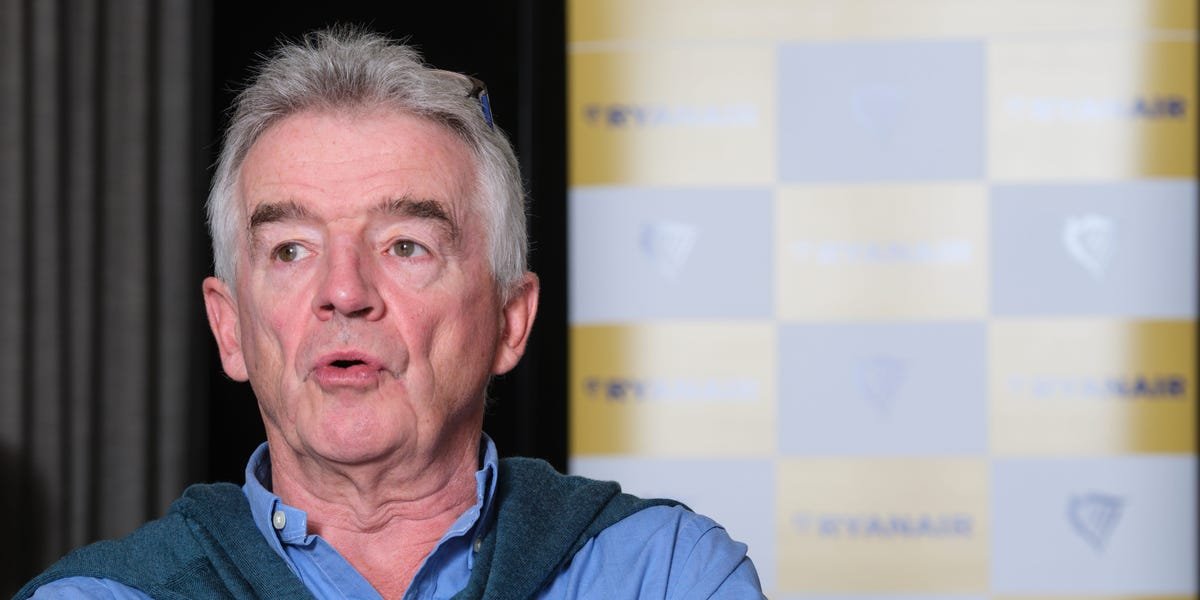
The CEO of Ryanair, Europe’s biggest airline, warned that a quarter of its fuel supply is under threat

The boss of Europe’s biggest airline has warned that jet fuel supplies could be at risk if the Iran war continues for another month.

“We don’t expect any disruption until early May, but if the war continues, we do run the risk of supply disruptions in Europe in May and June,” Ryanair CEO Michael O’Leary told Sky News on Wednesday.

He added that 10% to 25% of Ryanair’s supplies could be at risk through May and June. “So like everyone else in this industry, we hope the war ends sooner rather than later.”

Jet fuel prices have been more volatile than oil since the war started in late February. While Brent crude is up about 50% over the past month, jet fuel has doubled, according to statistics shared by the International Air Transport Association.

Ryanair and its subsidiaries make up Europe’s biggest airline group by passenger numbers, carrying over 200 million last year.

It has suspended its 12 flights to Jordan due to the conflict, O’Leary said, but jet fuel is the more immediate concern.

While the budget airline has hedged about 80% of its fuel costs until next March, that leaves about 20% exposed to price rises, the CEO told Sky News.

However, O’Leary was not concerned about canceling many flights.

“Most of Europe takes most of its jet fuel supplies from America, western Africa, and Norway,” he told Sky News.

Although he added that some suppliers are more dependent on the Middle East, too.

“We think our supplies are secure and we intend to continue to grow through this crisis,” O’Leary said.

Ryanair has also benefited from more Europeans looking to travel closer to home over the Easter break.

“Lots of families who would have been going either to the Middle East or flying over the Middle East to go to Asia have all rebooked, and they’re going to Italy, Portugal, Spain, Greece,” O’Leary told Virgin Media News on Wednesday.

“They’re all certainly staying much closer to home over the Easter school holiday,” he added. “People are not yet changing their summer holiday plans, but that’s likely to happen if this war continues.”

O’Leary also recommended that people book their flights as soon as possible, due to the risk that airfares continue to rise.


Source link

Chong Ming Lee, Junior News Reporter at Business Insider's Singapore bureau.

Emergent’s CEO told us these are the 2 biggest threats to vibe coding

Emergent CEO Mukund Jha told Business Insider the fast-growing vibe coding movement faces two major risks.

The “biggest threat to vibe coding” is the quality of the software it produces, Jha said.

Many AI coding tools can generate apps quickly, but the output can still be buggy, fragile, or difficult to scale. The vibe coding industry depends on those systems getting better.

“There’s a big bet that the quality of software that gets produced is going to improve exponentially,” he said. “If that doesn’t happen, that’s a big threat,” he added.

Another risk could come from AI itself. Jha said it is possible the industry could eventually “skip the whole software building aspect” if autonomous AI systems become powerful enough to replace software.

“We went from like Nokia phones to BlackBerry, and then everybody went to iPhone,” he said. “It could be that the software was the BlackBerry.”

People might eventually rely on AI agents or large language models that perform tasks without needing apps, he added.

Emergent announced in February that it reached $100 million in annual recurring revenue, or ARR, in just eight months after launching. ARR is the revenue a company expects to generate in a year from subscriptions or other recurring payments.

The company said it doubled its ARR from $50 million to $100 million in a single month, underscoring the rapid growth of AI coding startups.

In January, Business Insider reported that the vibe coding startup raised a $70 million Series B round, bringing its total funding to about $100 million. Investors include Khosla Ventures, SoftBank Vision Fund 2, Lightspeed, Prosus, Together, Y Combinator, and Google’s AI Futures Fund.

Just six months earlier, the startup raised $23 million in a Series A round, highlighting how quickly top AI startups are attracting capital during the boom.

Read more about vibe coding

The rise of AI coding startups

It’s not just Emergent. Ryan Meadows, the chief revenue officer at Lovable, a Swedish vibe-coding startup, told Business Insider in an exclusive interview that its annual recurring revenue jumped more than 30% in one month, rising from $300 million to $400 million.

Meadows, said that the recent growth surge came after the launch of Claude Code, Anthropics’ AI coding tool. Rather than hurting Lovable’s business, Meadows said many developers are using both products.

“It’s a rising tide,” he told Business Insider. “We’ve been super happy with what we’re seeing.”

Other players are also seeing explosive growth. In late 2025, Cursor, another breakout company in the vibe coding space, said it had reached $1 billion in annualized revenue and was valued at nearly $30 billion, according to a company announcement in November.

But some industry leaders have warned about the rising costs associated with AI coding tools.

Billionaire investor Chamath Palihapitiya said his software company is reconsidering its use of Cursor amid rising expenses tied to AI development.

“Our costs have more than tripled since November,” Palihapitiya said on an episode of the “All-In Podcast” published Friday. “Between the inference cost that we pay AWS, which is ginormous, between our cost with Cursor, between Anthropic, we are just spending millions.”

AI companies themselves have acknowledged that more advanced features can drive up costs. Earlier this week, Anthropic introduced Code Review, a tool designed to detect complex coding issues and identify bugs. The company said the feature “optimizes for depth,” which makes it “more expensive than lighter-weight solutions like the Claude Code GitHub Action.”


Source link

Chong Ming Lee, Junior News Reporter at Business Insider's Singapore bureau.

The CEO of a $15 billion AI company says the biggest AI winners won’t be software — they’ll be mines, farms, and trucks

AI’s biggest impact will likely happen far from laptops, says the CEO of a $15 billion AI company.

Qasar Younis, the cofounder and CEO of Applied Intuition, said on an episode of “Lenny’s Podcast” published Sunday that “the real impact of AI in the next 5 to 10 years” would show up in physical industries, like “in farming, in mining, in construction, in self-driving trucks.”

Applied Intuition develops software to test and power autonomous vehicles and other machines. The company said in June that it raised $600 million in a funding round, valuing it at $15 billion.

Software tools like Moltbook and OpenClaw may excite developers, but Younis said they touch only a small slice of society.

“I love the stuff that’s happening on these platforms, but it’s still segregated to, like, frankly, developers,” he added.

Instead, he said the biggest shift will come from adding intelligence to machines already embedded in the physical economy.

“More pragmatically, it’s actually just putting intelligence into things that already exist all around us.”

Industries like trucking and farming urgently need that kind of autonomy, he said.

“People are not fighting for those trucking jobs,” Younis said. The average farmer is already in their late 50s, meaning many will retire in the coming decade, potentially worsening labor shortages.

AI is more likely to help fill labor shortages in these industries than replace them entirely, he added.

The company has tested autonomous trucks in Japan, where an aging workforce means a driver shortage, and it’s working on AI in mining safety and efficiency.

AI’s impact on blue-collar industries

Earlier this year, Wall Street grew worried that new AI tools and agents could replace some software products entirely.

A research paper by Citrini, an investment firm focused on thematic equity investing, triggered a global stock sell-off last month after researchers outlined a scenario in which the AI boom wipes out white-collar jobs and ultimately slows economic growth.

Against that backdrop, some industry leaders say physical industries could end up benefiting from the technology.

For instance, robots could help address labor shortages in manufacturing. Daniel Diez, the chief business officer of Agility Robotics, told Business Insider in a report published on Sunday that manufacturers globally “simply can’t find the people to do this work.”

Ford CEO Jim Farley said last year that AI-powered augmented-reality tools are helping technicians repair trucks more efficiently, though he warned that automation could still reshape jobs across the broader economy.

Business Insider reported last year that some Gen Z workers are increasingly considering trade and blue-collar careers as automation and AI create uncertainty around traditional white-collar professions.


Source link

Kristi-Noems-220-million-DHS-ad-campaigns-cost-more-than.jpeg

Kristi Noem’s $220 million DHS ad campaigns cost more than some of Hollywood’s biggest hits

Kristi Noem might not be a Hollywood star, but her department spent like the big studios.

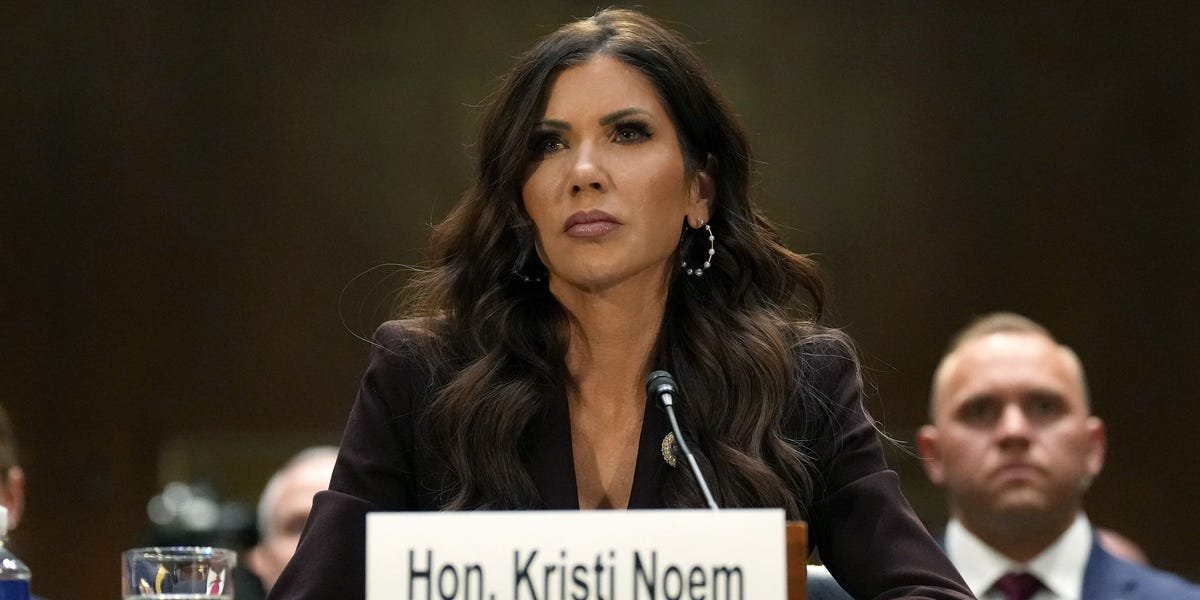
The former secretary of the Department of Homeland Security was ousted from her post on Thursday, following months of controversy over her handling of immigration enforcement in Trump’s mass deportation campaign.

During Noem’s appearance before Congress on Tuesday, Senator John Kennedy, among other lawmakers from both sides of the political aisle, pressed Noem about the department’s spending of taxpayer dollars, including a $220 million ad contract.

The ads, which Noem said were intended to encourage undocumented immigrants to leave the US, included footage of the now-former secretary riding a horse in front of Mount Rushmore while delivering stern messages about border enforcement.

Lawmakers scrutinized the bidding process for the contracts behind the ad campaign, as well as the firms selected, raising questions about how taxpayer dollars were awarded and spent.

In her testimony, Noem defended the ads as “effective” and said President Donald Trump had approved the $220 million in spending. “We went through the legal processes, went through it correctly,” she said.

Trump later disputed that account, telling Reuters on Thursday, “I never knew anything about it.”

On social media, “The View” host Meghan McCain compared the DHS ad costs to the production budget for “Sinners.” The Ryan Coogler-directed movie, which recently set an Oscars record with 16 Academy Award nominations, had an estimated budget of $90 million, as reported by The Hollywood Reporter.

“Kristi Noem’s DHS vanity videos cost $130 million more than Sinners,” McCain wrote in an X post.

“Sinners” isn’t the only movie with a smaller budget than the department’s ad spending.

The $220 million price tag — which also accounted for media buying and placement, consulting fees, and related administrative expenses — surpasses the budgets for a list of blockbuster movies.

Here are 15 of them, as well as their reported budgets, which have been adjusted for inflation to reflect what those costs would be today.

And spoiler: some of your favorite movies might be included.


Source link

The-rise-fall-and-revival-of-Victorias-Secret-Americas-biggest.jpeg

The rise, fall, and revival of Victoria’s Secret: America’s biggest lingerie brand brings sexy back

Updated

  • Victoria’s Secret is the largest lingerie retailer in the US, and has been for several decades.
  • After explosive success, it had several stumbles but has since overhauled its brand image.
  • In 2025, the company reported its strongest year in sales growth since it split from L Brands.

Victoria’s Secret is back.

The lingerie retailer has been an industry leader in the US for several decades. But in recent years, it has faced sluggish sales, criticism for its lack of model diversity and size inclusivity, scandal over its former CEO’s ties to Jeffrey Epstein, and an overhaul of its brand image.

Things have been looking up for Victoria’s Secret since it hired a CEO, Hillary Super, who previously led Savage x Fenty, in 2024.

On March 5, the company reported that comparable-store sales rose 5% in fiscal 2025. This marked the company’s strongest sales growth since its split from L Brands in 2021.

CEO Super has brought back the Victoria’s Secret fashion show that was once broadcast annually, and said she isn’t shying away from sex appeal. She told The Wall Street Journal that the brand became “watered down” by trying not to offend anyone.

Here’s a look at Victoria’s Secret’s rise and fall and the brand’s plan for redemption. 

Victoria’s Secret was founded in 1977 by American businessman Roy Raymond.

Roy Raymond (left).

Wikimedia Commons

Inspired by an uncomfortable trip to a department store to buy underwear for his wife, Raymond set out to create a place where men would feel comfortable shopping for lingerie. He wanted to create a women’s underwear shop that was targeted at men.  

He named the brand after the Victorian era in England, wanting to evoke the refinement of this period in his lingerie.


Victoria Secret vintage catalog 1982

Victoria’s Secret vintage catalog 1982.

Victoria’s Secret

Raymond’s vision was summed up by Slate’s Naomi Barr in 2013: “Raymond imagined a Victorian boudoir, replete with dark wood, oriental rugs, and silk drapery. He chose the name ‘Victoria’ to evoke the propriety and respectability associated with the Victorian era; outwardly refined, Victoria’s ‘secrets’ were hidden beneath.”

He went on to open a handful of Victoria’s Secret stores and launched its famous catalog. 

By 1982, the company was making more than $4 million in annual sales, but according to reports, it was nearing bankruptcy at the time.


Les Wexner

Les Wexner (center).

Getty/Astrid Stawiarz / Stringer

At this point, Les Wexner swooped in. Wexner, who founded L Brands (formerly Limited Brands), was already making a name for himself in the retail world as he gradually built up an impressive empire.

By June 1982, Limited — which had previously acquired Express and Lane Bryant — was listed on the New York Stock Exchange. One month later, under Wexner’s leadership, the company acquired Victoria’s Secret’s six stores and its catalog for $1 million. 

Wexner turned Raymond’s vision on its head, creating a store that was focused on women rather than men.


Les Wexner

Wexner wanted to create affordable lingerie that looked luxurious.

Nicholas Hunt/Getty

He was closely following the European lingerie market of that time and wanted to bring this aesthetic to the US. So, he set out to create a more affordable version of the European upscale brand “La Perla” — lingerie that looked luxurious and expensive but was affordable.  

And it worked. By the early 1990s, Victoria’s Secret had become the largest lingerie retailer in the US.


Victoria's Secret runway show

Victoria’s Secret spring lingerie collection in New York, February 6, 1996.

AP Photo/Adam Nadel

It had 350 stores nationally and sales topping $1 billion, The Telegraph reported.

The brand began to cement its image over the next few years. In 1995, its famous annual fashion show was born.


Ed Razek

Ed Razek.

AP Photo/Terry Gilliam

The show, which was run by Ed Razek (longtime chief marketing officer of L Brands), became an iconic part of the brand’s image. 

Razek and his team were responsible for hand-picking the models to walk the show. Because of this, he became one of the most important people in the modeling world, helping to launch the careers of Gisele Bündchen, Tyra Banks, and Heidi Klum. 

In 1999, the show aired for the first time online.


Victoria's Secret

Model Tyra Banks at Victoria’s Secret fashion show on Wednesday, February 3, 1999, in New York.

AP Photo/Mark Lennihan

Time described it as the “internet-breaking moment” of this era after 1.5 million viewers tried to tune in and crashed the site.

Meanwhile, the brand was also launching some of its best-known and most successful products, including its heavily padded Miracle Bra and Body by Victoria.


Claudia Schiffer shown in a photo display wearing a million dollar diamond miracle bra.

Claudia Schiffer wearing a million-dollar diamond Miracle Bra in a five-story display in New York City, 1996.

Evan Agostini/Getty Images

Body by Victoria was a “blockbuster success” and more than doubled the sales volume of any other bra that Victoria’s Secret had previously launched, Michael Silverstein wrote in his book, “Trading Up.”

Around 1997, the idea of the Victoria’s Secret “Angel” came into play.


Victoria's Secret old

Victoria’s Secret Angels.

Victoria’s Secret

It was after a commercial featuring Helena Christensen, Karen Mulder, Daniela Peštová, Stephanie Seymour, and Tyra Banks ran to promote its “Angels” underwear collection. It was tradition for an Angel to wear a Fantasy Bra at every runway show starting in 1996. They changed each year.

Throughout the ’90s and early 2000s, its commercials featured heavily made-up and scantily dressed Angels.


Victoria's Secret ad 1997

A Victoria’s Secret ad from 1997.

YouTube/Derek Dahlsad

Razek hired the best photographers and television directors in the world to make commercials for the brand. 

The runway shows became more lavish.


Gisele

Gisele Bündchen.

AP Photo/Stephen Chernin

In 2000, model Gisele Bündchen walked the runway in what was then the most expensive item of lingerie ever created, a $15 million diamond-and-ruby-encrusted ‘Fantasy Bra.’

In 2000, Sharen Jester Turney became CEO of Victoria’s Secret Direct and headed up its catalog business.


Sharen Jester Turney

Sharen Jester Turney is in the center.

AP Photo/Richard Drew

According to reports at the time, Turney wanted to remove the “hooker looks” in the catalog and make the aesthetic more like Vogue than Playboy.

She became CEO of the whole brand in 2006.


Sharen Jester Turney and VIctoria's Secret models

Turney with a group of Victoria’s Secret models.

Dimitrios Kambouris/Getty Images

Under her nine-year tenure, the company thrived; sales increased by 70% to $7.7 billion.

Turney abruptly stepped down in 2016 and was succeeded by Wexner as interim CEO.


Les Wexner

Les Wexner took over after Turney abruptly left.

Jay LaPrete/AP

Wexner made a series of quick and fast changes: killing the catalog, swimwear, and apparel to focus solely on lingerie, the core part of its business.

He also split the brand into three — Victoria’s Secret Lingerie, Victoria’s Secret Beauty, and Pink — and recruited a CEO for each division.

Jan Singer became CEO of Victoria’s Secret Lingerie in September 2016.


Jan Singer

Jan Singer took the job in 2016.

Courtesy of Spanx

Singer spent over a decade at Nike and was CEO of Spanx before she joined Victoria’s Secret. 

Between 2015 and 2018, sales began to falter.


Victoria's Secret

A Victoria’s Secret store in New York.

AP Photo/Mary Altaffer

Victoria’s Secret was slow to adjust to a shift from padded and push-up bras toward bralettes and sports bras, missing out on a major fashion trend. 

More body-positive underwear brands such as Aerie, ThirdLove, and Lively cropped up, taking market share.


Aerie

Brands like Aerie began to threaten Victoria’s Secret.

Facebook/Aerie

Victoria’s Secret was accused of failing to adapt to the times. Between 2016 and 2018, its market share in the US dropped from 33% to 24%. Some shoppers complained that the quality of its underwear had slipped.

One of its biggest assets, the teen-centric brand Pink, also began to struggle. Sales slipped, and it resorted to heavy discounting to woo shoppers.


PINK

Pink, a more teen-focused brand, also suffered.

Business Insider/Mary Hanbury

“We believe Pink is on the precipice of collapse,” Jefferies analyst Randal Konik wrote in a note to investors in March 2018, commenting on the level of promotions in store.

Some parents complained that Pink was being brought down by Victoria’s Secret’s over-sexualized ads.

Its annual fashion show drew criticism for being outdated, and viewership slipped.


Victoria's Secret

Its 2018 fashion show didn’t get quite the fanfare it had gotten in the past.

AP Images

In November 2018, Ed Razek, then-chief marketing officer of L Brands, made controversial comments about transgender and plus-size models.

Razek said in an interview with Vogue that he didn’t think the show should feature “transsexuals” because the show is a “fantasy.”


victoria's secret ed razek

Ed Razek spoke to the 2018 Victoria’s Secret runway models backstage during the 2018 Victoria’s Secret Fashion Show.

Getty Images/Dia Dipasupil

“It’s a 42-minute entertainment special. That’s what it is,” he said in the interview.

Razek made a formal apology online, but some of his critics called for him to step down. 

Barington also called out the lack of diversity in its board of directors as an issue for the brand. At the time, of the 11 board members, nine were men.


Les Wexner

Wexner and his wife, Abigail, both sat on the board of directors.

AP Photo/Jay LaPrete

The company appointed two new female board directors — Sarah E. Nash and Anne Sheehan — and made steps to address the comments about the brand image being outdated. 

It hired a more body-inclusive model.


Barbara Palvin

Hungarian model Barbara Palvin.

Charles Sykes/Invision/AP

While she is not a plus-size model, fans praised the company for choosing Hungarian model Barbara Palvin as one of its newest Angels.

Instagrammers celebrated a post starring Palvin for being more body-inclusive, as they perceived her to be curvier than some of the brand’s other models.

“This model actually looks healthy..& I’m loving it!” one Instagram user wrote.

It also hired its first openly transgender model.


Model Valentina Sampaio

Sampaio signed with Victoria’s Secret in 2019.

Arturo Holmes/Getty Images for Victoria’s Secret

Brazilian transgender model Valentina Sampaio, shared a photograph of herself on Instagram in August 2019, tagging the Victoria’s Secret Pink brand along with the hashtags: “campaign,” “vspink,” and “diversity.”A day later, she shared a video of herself with the caption “Never stop dreaming.”

Her agent later confirmed that she had signed a contract with Victoria’s Secret. Sampaio is expected to hit the runway for the 2024 show.

“Today Is the day!!! Finally after 6 years since my first VS casting, today the dream will come true,” she wrote in an Instagram post ahead of the show.

The same day, Wexner announced that Razek would be resigning in the middle of August in a memo sent out to employees.


leslie wexner ed razek

Razek resigned the same day Victoria’s Secret signed a transgender model.


Astrid Stawiarz/Getty Images for Fragrance Foundation


Razek ran the fashion show, so its future seemed unclear at the time of his departure. 

On November 21, 2019, the company confirmed that it had officially canceled its runway fashion show for that year.


VS fashion show

Wexner previously told employees in May that Victoria’s Secret was “rethinking” the show.

Dimitrios Kambouris/Getty Images

At the time, L Brands CFO Stuart Burgdoerfer told analysts that the fashion show had little impact on boosting sales at the brand. 

While these were potentially positive changes, the brand found itself caught up in a new challenge in the summer of 2019: its CEO and the company being linked to convicted sex offender Jeffrey Epstein.


Epstein/Wexner

Les Wexner (L) and Jeffrey Epstein (R).

Astrid Stawiarz and Patrick McMullan/Getty Images

Epstein managed Wexner’s money for several years, and former company executives told The Wall Street Journal that he tried to meddle in Victoria’s Secret’s business, offering input on which women should be models.

Some of Epstein’s victims came forward saying that he used his connection to Victoria’s Secret to coerce them into sexual acts.

L Brands’ board of directors announced that it had hired an outside law firm to review its relationship with Epstein, who died by suicide in jail in August 2019.

In September, Wexner addressed his ties to Epstein at L Brands’ investor meeting. “At some point in your life we are all betrayed by friends,” Wexner said. “Being taken advantage of by someone who was so sick, so cunning, so depraved, is something that I’m embarrassed I was even close to. But that is in the past.”

In February 2020, the company announced that Wexner would be stepping down as chairman and CEO of L Brands.


Les Wexner painting

Wexner stepped down in 2020.

Jay LaPrete/AP Images

Still, he’d stay on as chairman emeritus and sit on the board of directors. At the same time, it announced that it was selling a 55% stake in Victoria’s Secret to private equity firm Sycamore Partners.

In a statement to the press announcing the news, Wexner said that Sycamore has “deep experience in the retail industry and a superior track record of success,” and that it “will bring a fresh perspective and greater focus to the business.”

In March 2020, the coronavirus pandemic swept across the US, and Victoria’s Secret was forced to shutter its stores.


Victoria's Secret

Stores close during the COVID-19 pandemic.

Victoria’s Secret

In April 2020, Sycamore filed a lawsuit to back out of the deal, alleging that Victoria’s Secret’s actions taken during the pandemic to close stores, cut back on new inventory, and not pay rent for the month of April were in violation of the agreement that the two parties had made in February.

L Brands immediately issued a statement saying that a termination of the agreement is “invalid,” and that it would “vigorously defend” the lawsuit and “pursue all legal remedies to enforce its contractual rights.”

On May 4, 2020, L Brands announced that the deal with Sycamore had officially fallen apart.


Victoria's Secret

The Sycamore deal falls through.

REUTERS/Brendan McDermid

L Brands said that it had come to a “mutual agreement” with Sycamore to “terminate” the deal.

The company also said that it had reshuffled its management team and would focus on “implementing significant cost reduction actions and performance improvements at Victoria’s Secret.”

This included permanently closing as many as 250 Victoria’s Secret and Pink stores in the US and Canada in 2020.

In the second half of 2020, the brand started to recover, boosted by more sales online.


Victoria's Secret

Victoria’s Secret becomes a standalone company.

Mike Kemp/In Pictures via Getty Images

Jefferies analysts described Victoria’s Secret’s progress as “admirable” after it reported strong fourth-quarter earnings in early 2021. 

Bloomberg later reported that L Brands had resumed discussions to sell the brand once more and was seeking a much higher valuation in the region of $3 billion.

But in May of that year, L Brands put an end to speculation and said that it was no longer looking for a buyer. Instead, it would split the company into two and spin off Victoria’s Secret to become a stand-alone business.

It then worked hard to execute a turnaround under new leadership.


Priyanka Chopra Jonas

Priyanka Chopra Jonas.

Courtesy Dan Schawbel

It overhauled its brand image — swapping its Angels for a new group of activists and entrepreneurial women to be the face of the brand.

In 2022, a three-part documentary series on Hulu titled “Victoria’s Secret: Angels and Demons” shook up the brand in the public’s eyes.


Jeffrey Epstein.

Jeffrey Epstein had connections to Les Wexner.


Kypros/Getty Images


The series delved into Wexner’s ties with Jeffrey Epstein and said that questions remained about the nature of their relationship.

In the background, the company was continuing with its turnaround effort by launching new ventures such as Happy Nation, a brand that sold first bras and apparel to pre-teen shoppers.


Happy Nation

Happy Nation.

Happy Nation

It also began selling Victoria’s Secret beauty products and underwear on Amazon. 

In March 2023, the company said its annual fashion show would return after a four-year hiatus.


Kate Grigorieva

Victoria’s Secret model Kate Grigorieva.

Getty Images

The company is constantly innovating “in all spheres of the business,” a spokesperson for Victoria’s Secret previously told Business Insider, adding: “This will lead us into new spaces like reclaiming one of our best marketing and entertainment properties to date and turning it on its head to reflect who we are today.”

Its “reimagined” fashion show premiered in September 2023.


Lila Moss attends the Victoria's Secret red carpet on September 6, 2023.

Lila Moss attended the Victoria’s Secret red carpet on September 6, 2023, in an Angel-inspired look.

Taylor Hill/Getty Images

The show received mixed reactions. Although Victoria’s Secret was praised for its attempt to appeal to a wider audience, it lacked one important aspect for a fashion show: a runway.

Instead, the live fashion event was a premiere, of sorts, for the film, which was released on Prime Video days later. 

Victoria’s Secret took a similar approach to the old ways for the 2024 fashion show.


Gigi Hadid for Victoria's Secret

Prominent models in the industry donned wings and walked the runway.

Mike Coppola/Getty Images for Victoria’s Secret

The fashion show featured musical guests, including Cher and K-pop star Lisa, as well as a runway presentation — similar to how it was done before the 2019 cancellation.

It closed out the brand’s third quarter of 2024, during which it reported a 7% year-over-year increase in net sales. Victoria’s Secret told investors that the show also earned it more than 4 million new TikTok followers.

“In addition to driving brand awareness leading into holiday, the show drove brand relevance, putting VS at the center of culture and fashion conversations,” CEO Hillary Super said at the time. Super took on the role in September 2024.

Super’s first holiday season showed promise, but 2025 also brought the threat of tariffs.


Iris Law for Victorias Secret

Models, influencers, and athletes will grace the runway in 2025.

Dimitrios Kambouris/Getty Images for Victoria’s Secret

Victoria’s Secret appeared to have a happy holiday in 2024 under the leadership of its new CEO, with its operating income exceeding expectations and comparable sales bumping 5%.

“After my first holiday season with the business, I continue to be optimistic about our future, our opportunity to further differentiate the brands with compelling storytelling and make even deeper emotional connections with our customers,” Super said on an earnings call.

However, in 2025, Victoria’s Secret also faced the financial challenges posed by tariffs on countries like China. The company said in June 2025 that it would cut back on promotional sales as tariffs affected business.

In the end, 2025 beat expectations.


Hillary Super at the 2025 Victoria's Secret Fashion Show held at Steiner Studios on October 15, 2025 in New York, New York. (Photo by Kristina Bumphrey/Variety via Getty Images)

Hillary Super oversaw Victoria’s Secret’s best year in half a decade in 2025.

Kristina Bumphrey/Variety via Getty Images

On March 5, the company reported a 5% increase in sales for fiscal 2025, marking its strongest year since splitting from L Brands in 2021 and beating analyst expectations.

“We delivered an exceptional fourth quarter and a standout year,” CEO Super said in a statement.

“We enter fiscal 2026 from a position of strength. With a clear brand vision, a faster and more agile operating model, and a strong pipeline of product and brand moments ahead,” she added.

Super has been credited with revitalizing the company by re-embracing its “sexy” image in our more inclusive way. Her turnaround effort has also focused on owning the bra category and growing its teen brand, Pink, and beauty division.


Source link

Ive-lived-in-and-visited-so-many-of-Americas-biggest.jpeg

I’ve lived in and visited so many of America’s biggest cities, but these 6 small towns have really won me over

I remember arriving in Leavenworth, a town of about 3,000 people, and immediately feeling like we had stepped into an entirely new country, despite being just a short three-hour day trip from Seattle.

The drive itself revealed just how varied Washington’s landscape can be, moving from familiar surroundings into farmland and alpine scenery.

Despite visiting in early April, right before wildflower season, the setting still felt storybook-like, with open fields nearby and snow-capped peaks in the distance.

Downtown Leavenworth leaned fully into its Bavarian theme, from German restaurants and beer gardens to a quirky nutcracker museum. Even the exteriors of everyday places, such as grocery stores and coffee shops, matched the town’s aesthetic, completing the immersion.

We stayed at Abendblume Inn, a small bed-and-breakfast with a distinctly European feel that overlooks the Cascade Mountains. It famously serves up breakfast aebleskiver, Danish pancake puffs often dusted with powdered sugar or served with jam, to make the Euro experience feel complete.

Perhaps my favorite find was the local reindeer farm, where we could pet and feed the animals. Although Leavenworth is known for its Christmas festivities, visiting out of season revealed a quieter version of the town that felt just as intentional.


Source link

5-biggest-takeaways-from-Nvidias-Q4-earnings-—-from-the.jpeg

5 biggest takeaways from Nvidia’s Q4 earnings — from the new Vera Rubin chips to an emerging risk

Nvidia moved quickly to calm investor nerves during its earnings call on Wednesday.

The chipmaker delivered another blowout earnings report that underscored how little momentum the AI boom has lost. As the world’s most valuable company by market capitalization, Nvidia topped Wall Street expectations across the board in its fiscal fourth quarter and issued a forecast that sailed past analyst estimates.

The upbeat results arrive at a delicate moment for AI-linked stocks, which have recently shown signs of fatigue.

From incorporating Groq into Nvidia systems to an update on the new Vera Rubin chips, here are the biggest takeaways from Nvidia’s fourth-quarter earnings call.

1. Nvidia is becoming the backbone of Big AI

Over the course of the call, CEO Jensen Huang repeatedly positioned Nvidia at the center of the AI industry’s biggest players.

OpenAI’s latest Codex model is trained and runs on Nvidia’s Blackwell systems, and the companies are close to reaching a multibillion-dollar partnership, he said.

Meta is deploying Nvidia GPUs in its push toward superintelligence, and Nvidia also announced an up to $10 billion investment in Anthropic.

Huang said his goal is to ensure that every form of AI — from large language models to robotics — is built on its platform.

“We want to take the great opportunity that we have as we’re in the beginning of this new computing era, this new computing platform shift, to put everybody on Nvidia,” he said.

2. Huang teases Groq integration as AI shifts to inference

When asked about Nvidia’s future road map and whether it plans to build customized chips for specific workloads, Huang said the company prefers to keep as much as possible within a single design.

That said, he teased a potentially significant move involving Groq, saying more details would come at Nvidia’s GTC conference in March.

Late last year, Nvidia struck a non-exclusive licensing agreement with Groq for its low-latency AI inference technology — a deal that also brought Groq’s founder and other top engineers on board.

“What we’ll do is we’ll extend our architecture with Groq as an accelerator in very much the ways that we extended Nvidia’s architecture with Mellanox,” Huang said, referring to the networking company Nvidia acquired in 2020.

As AI workloads shift from training large models to running them, the move suggests Nvidia isn’t going to abandon its core platform but rather fold specialized inference capabilities in.

3. Samples of the Vera Rubin chips have been shipped

Nvidia has begun shipping early samples of its next-generation Vera Rubin chips to customers.

Chief Financial Officer Colette Kress said during the earnings call that the company delivered “our first Vera Rubin samples” earlier this week and expects broader shipments of the new chips to begin in the second half of 2026.

“We expect every cloud model builder to deploy Vera Rubin,” Kress said.

Huang previously said at the Consumer Electronics Show in January that compared to the Blackwell model, Rubin has more than triple the speed, could run inference five times faster, and can deliver significantly more inference compute per watt of energy.

4. Addressing future risks

Nvidia appears concerned about whether there will be enough resources to sustain the demand for data centers.

In its latest 10-K report filed with the Securities and Exchange Commission, Nvidia listed the availability of data centers, energy, and capital to support the data center buildout as a risk factor, writing that “any shortage of these and other necessary resources could impact our future revenue and financial performance.”

“Expanding energy capacity to meet demand is a complex, multi-year process involving significant regulatory, technical, and construction challenges,” wrote Nvidia.

“In addition, access to capital can be particularly constrained for less-capitalized companies, which may face difficulties securing financing for large-scale infrastructure projects,” Nvidia added.

5. An OpenAI deal may finally be ‘close’

Huang addressed the company’s growing slate of strategic investments, including a deal with OpenAI, as questions mount over whether Nvidia’s strategy creates circular relationships with its own customers.

Speaking about Nvidia’s investments in AI companies such as Anthropic and OpenAI, Huang said the strategy is centered on strengthening the broader AI ecosystem and ensuring the next generation of software and hardware is built on Nvidia’s platform, from large language models to robotics.

“We want to take the great opportunity that we have, as we’re in the beginning of this new computing era,” Huang said.

Huang confirmed that Nvidia is “close” to finalizing a deal with OpenAI. The partnership was first outlined in 2025 as part of a massive AI infrastructure initiative that could reach $100 billion.



Source link