Patreons-CEO-says-AI-will-be-a-bloodbath-for-the.jpeg

Patreon’s CEO says AI will be a ‘bloodbath for the world’s creative people’ unless tech companies pay up

Jack Conte, the CEO of creator subscriptions platform Patreon, has a bone to pick with the Big Tech AI models.

It’s about compensation.

“The creator economy is being left out, loudly and notably,” Conte told Business Insider in an interview. “And by the creator economy, I don’t mean companies, I don’t mean Patreon. I mean creators.”

While AI companies like OpenAI and Meta are striking deals to license content from traditional media companies, “none of that infrastructure exists for independent creators,” Conte said.

In a roughly 45-minute video posted to Patreon on Tuesday, Conte further explained his personal stance on AI and the creator economy.

Conte said the key problem is that Big Tech companies don’t have much of an incentive to pay individual creators right now.

“I’m heavily in favor of some type of regulation that protects the rights holders and creators who are unable to protect themselves and go to the table with a bunch of leverage in moments like this,” he said.

AI’s standing under existing copyright law is still being assessed in real time. For example, in 2025, a federal court in California ruled that Anthropic’s training of its models on copyrighted books could be considered “fair use” if the material was lawfully obtained. Still, the AI company agreed to pay a $1.5 billion settlement to the author plaintiffs in the case after the judge ruled that copying and storing pirated books without consent did not meet the criteria for fair use. In January, a bipartisan bill was introduced in Congress to address transparency around how AI companies train on copyrighted material.

Conte wants to see AI companies start taking creators — and the rights to their content — seriously.

“I’m not anti-AI,” he said.

Patreon, a creator economy unicorn startup, has been internally using AI tools like Anthropic’s Claude and Cursor.

“I think it’s going to help humans make really beautiful things and be really self-expressive in an amazing way, just like synthesizers, just like sound and picture with movies,” Conte said. “But that doesn’t give people carte blanche to roll it out in a way that just creates a bloodbath for the world’s creative people.”

Conte doesn’t have a solution in mind yet for how creators should be compensated by companies training AI models.

“What we need to solve for is what the spirit of IP is solving for, which is how do you incentivize novelty creation?” he said.

He pointed to YouTube’s rights management system, Content ID, as a potential model. Content ID lets rights holders detect, remove, and monetize YouTube videos that feature their copyrighted work.

“Either I can remove my work from the training data, or I get paid when it’s used as training data and when it’s replicated, and I get credit for that,” Conte said. “I don’t know how to build that, but humans have done harder things.”

AI companies could start — and potentially already are — ripping a page out of social media’s playbook for paying or courting creators. Last year, Bloomberg reported that several AI companies were paying creators to license their unpublished content, including startup Moonvalley. OpenAI also recently hired Meta’s former head of partnerships, who oversaw Instagram’s relationships with celebrities and creators.

“We’re going to see some type of model emerge that compensates artists for their work,” Conte said.




Source link

Layoffs-are-feeling-awfully-tempting-for-companies-right-now.jpeg

Layoffs are feeling awfully tempting for companies right now

When the economy is uncertain, CEOs often reach for a familiar lever: job cuts.

And things are feeling far from certain these days.

January layoffs were the biggest for the start of a year since 2009, during the Great Recession, the outplacement firm Challenger, Gray & Christmas reported last week. The Labor Department on Friday also announced a surprise drop in employment in February.

Everywhere business leaders look, they see question marks: about the economy, tariff policy, congressional elections, the impact of AI, and global conflict.

A lack of clarity in business is nothing new, yet sometimes the fog grows thicker. When it does, holding onto cash starts to look like the smart call to some CEOs, said Sunil Setlur, founder of Cognisen.co, a leadership and organizational strategy advisory firm.

That can mean cutting people, he said, because payroll often represents the biggest line item on a company’s balance sheet.

What investors like

While cuts are unpleasant for all but the most hard-nosed CEOs — and, of course, the affected workers — they’re often a hit with investors.

From Meta to Spotify, Wall Street has rewarded companies that announce layoffs in recent years.

When markets applaud job cuts, and compensation is tied to a company’s stock performance, that incentive structure can make such decisions “easier than they might otherwise be,” Setlur said.

In some industries, like tech, where many companies bulked up during a pandemic-era boom, layoffs can also bring payroll back in line with demand, he said.

For years, some firms have been trying to thin layers of both middle management and rank-and-file workers to create smaller, more nimble teams.

Amazon, for example, said in January that it would cut 16,000 corporate workers as part of an effort to become the “world’s largest startup.” Since late 2022, it has cut more than 57,000 corporate roles.

A number of companies, exercising the leverage they hold in a softer job market, are tightening performance standards — another way to reduce head count without announcing it outright.

The AI factor

Much of the chatter around recent layoffs centers on fears that this is just the start of AI decimating white-collar jobs.

In late February, the tech company Block laid off more than 40% of its workforce, citing AI-generated efficiencies allowing smaller teams to get more done. The company’s cofounder and CEO, Jack Dorsey, predicted that more companies would eventually embrace a similar slim down because of AI.

By some measures, it’s already happening. At companies in five industries likely to feel “significant near-term impacts” from AI adoption, employment fell by 4%, on average, over the prior year, while net productivity rose, Morgan Stanley reported in February. The financial firm surveyed more than 900 executives in several countries, including the US.

“Despite the perception that adoption is still in early stages, new data show AI’s impact is both measurable and accelerating faster than expected,” the report said.

Friday’s employment report, which showed a loss of 92,000 jobs rather than a gain of 55,000 as economists forecast, also revealed weakness in tech. One economist wrote that the industry is losing jobs at one of the fastest rates of the last two decades.

Job cuts often don’t have as much to do with AI as with pragmatic decisions to reduce costs, said Alibek Dostiyarov, cofounder of Perceptis, which develops AI-powered software for professional services firms.

That’s particularly true for firms that grew rapidly during the pandemic, only to see demand soften subsequently.

“AI is just a convenient scapegoat,” Dostiyarov told Business Insider.

Instead, while he estimated that the technology could deliver long-term efficiency gains of 20% to 30%, Dostiyarov said it’s more likely to lead to task elimination rather than one-for-one job losses.

In general, Tim Walsh, CEO of KPMG US, doesn’t see AI behind many corporate cutbacks. Instead, he told Business Insider, many businesses are reviewing their overall workforce to reassess where they need people.

“Deploying AI does not automatically lead to workforce reduction,” Walsh said. KPMG, he said, will likely need to hire more people as it continues to develop and incorporate AI tools into its business.

Understandably, AI anxiety remains pervasive, however.

“A lot of people have been just waiting for the AI shoe to drop,” said Jeff Fettes, CEO of Laivly, which uses AI agents to support customer service work for Fortune 500 companies. Yet because it often takes companies a while to adopt new technology, not all of the reductions are likely to show up right away.

Do you have a story to share about your career or a layoff? Contact this reporter at tparadis@businessinsider.com.


Source link

What-US-companies-are-telling-their-Middle-East-based-employees-during.jpeg

What US companies are telling their Middle East-based employees during the war in Iran

  • Several Gulf nations were hit by retaliatory Iranian strikes over the weekend.
  • US companies with employees and clients in the region told Business Insider that safety was the priority.
  • JPMorgan, Goldman Sachs, and Citigroup have told employees in the region to work from home.

Global US companies with Middle East operations are advising their employees to work from home following a weekend of regional escalation, as US and Israeli military strikes on Iran triggered retaliatory attacks across several Gulf states.

Photos and videos showed missiles streaking across the sky in Dubai on Saturday and Sunday.

Fallout from intercepted missiles caused fires and other problems across the region. Amazon Web Services said Sunday that connectivity from one of its data centers in the United Arab Emirates was down after the facility was “impacted by objects” that created “sparks and fire.”

Abu Dhabi and Dubai in the United Arab Emirates have become increasingly popular destinations for some Western professionals attracted by the lifestyle, the lack of income tax, and business opportunities in the region.

This is what major US companies in the region are telling their employees during the Iran conflict.

Goldman Sachs

Goldman Sachs has implemented a number of measures to support the safety of its people and resilience of its business, a company spokesperson told Business Insider.

The US bank has told its employees across the region to work from home and to follow the advice of local officials, the spokesperson said.

Goldman is also staying close to clients in the region as the situation unfolds and has made safety a top priority, they added.

Citigroup

Citigroup has told its employees to work from home until further notice, a Citi spokesperson told Business Insider.

“The safety of our employees is our number one priority, and we are continuing to take measures to help keep our employees and their families safe,” the spokesperson said.

“We are continuing to serve our clients and we have robust contingency and resilience plans in place for that purpose,” they added.

JPMorgan

JPMorgan has also advised its employees in parts of the region to work from home, a person familiar with the matter told Business Insider. The US’s largest bank has offices in Abu Dhabi and Dubai, and, across the wider region, in Beirut, Cairo, Doha, Manama, and Riyadh.

JPMorgan is assessing the situation regularly to adjust guidance as needed, the person added.

FedEx

FedEx established its first operations in the Middle East in 1989.

credit should read KARIM SAHIB/AFP via Getty Images

FedEx’s central operations hub for the Middle East, Indian subcontinent, and Africa is based in Dubai World Central Airport.

The global freight and transport company told Business Insider it was focused on minimizing disruption to its services.

“The safety and security of our team members is our top priority. We are closely monitoring the situation in the Middle East and have implemented contingency measures to ensure business continuity,” FedEx told Business Insider.

Customers with questions about their shipments can visit fedex.com or check the FedEx Service Alerts page for the latest updates, FedEx said.

Airbnb

Airbnb has no offices and just a handful of employees in the region, but their safety is paramount, a company spokesperson told Business Insider.

The vacation rental company’s global corporate security team is checking in with those employees and assessing their needs, the person added.

Hosts and guests in affected areas qualify for the major disruptive events policy, which allows them to cancel or receive refunds, the spokesperson said.

BlackRock

BlackRock, the world’s largest asset manager, said that it is focused on employee and client safety following Iran’s retaliatory strikes. The Larry Fink-led company opened its first office in the Middle East in 2009 and today has offices in Dubai, Riyadh, Abu Dhabi, Doha, and Kuwait.

“We’re currently focusing on making sure our staff and clients are safe and have the assistance they need,” a BlackRock spokesperson told Business Insider.

Google


Google Middle East

Google launched a cloud region in Doha, Qatar, in 2023.

Noushad Thekkayil/NurPhoto via Getty Images

A Google spokesperson told Business Insider that the company had safety measures in place for employees in the region. The company was advising staff to follow guidance from local authorities, the spokesperson said.

“The situation in the Middle East is evolving rapidly and we are monitoring it carefully,” Google said in a statement to Business Insider. “Our focus is on the safety and well-being of our employees in the region.”

Google has several offices across the region, including Dubai and Tel Aviv. It opened a new Google Cloud office in Riyadh in 2024. While the exact number of employees in the region could not be learned, LinkedIn suggests Google has several hundred staff in the UAE.

Amazon


amazon logo

Amazon employees in the Middle East have been asked to work remotely.

Matthias Balk/picture alliance via Getty Images

Amazon runs a variety of facilities across the region, including corporate offices, fulfilment centers, delivery stations, and quick-commerce outlets.

Corporate employees in the Middle East have been asked to work remotely and follow guidance from local authorities, Business Insider has learned.

“We are adjusting operations in response to the evolving situation, including temporary pauses where necessary,” an Amazon spokesperson told Business Insider.

“The safety of our employees and partners remains our top priority, and we are working closely with local teams and local authorities to ensure they are supported,” the spokesperson added.


Source link

Pittsburghs-mayor-has-cold-called-dozens-of-tech-CEOs-to-get.jpeg

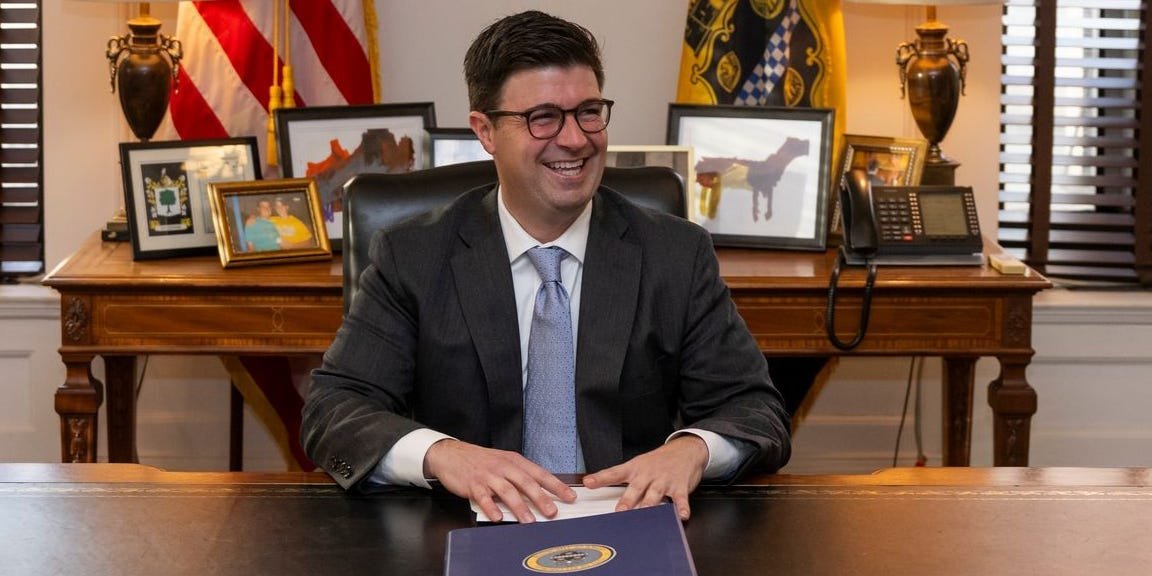
Pittsburgh’s mayor has cold-called dozens of tech CEOs to get them to relocate their companies to his city.

Pittsburgh’s new mayor is personally cold-calling upwards of 20 founders and CEOs across the country every week to check in on them, or to convince them to move to his city.

“Some people think it’s a prank call, but for others, it’s like, ‘wow, the mayor of Pittsburgh just called,'” said Corey O’Connor, who estimates he has called around 150 people since taking office in January. “If you’re already here, I ask, ‘How can we help you expand?’ If you’re not here, I ask ‘How do we get you to come to Pittsburgh?”

Pittsburgh has historically been known as “the Steel City” and is home to the Pittsburgh Steelers. O’Connor’s father worked as a steelworker before a long career in city politics. However, as O’Connor is quick to point out, there are no longer any steel mills within city limits, while the area is home to some of the most important startups in the U.S.

After predictions of its waning influence during the Covid era turned out to be wildly off, the Bay Area’s tech scene is now hotter than ever, largely thanks to AI. That has not stopped smaller cities like Miami and Austin from trying to grab VC dollars, especially as the cost of living in California skyrockets. Now, Pittsburgh would like to be the next Miami.

Its startups raised $1.48 billion in 2025, still a fraction of major tech hubs, but the region’s strongest venture capital year since 2019, according to PitchBook.

Standouts include Gecko Robotics, valued at $1.7 billion, which builds wall-climbing robots that inspect critical infrastructure, including power plants and industrial facilities. Abridge, valued at $5.3 billion, uses artificial intelligence to automatically generate medical documentation from doctor-patient conversations. It has emerged as one of the most closely watched AI companies in healthcare.

The most high-profile is Skild AI, which is developing foundation models for robotics, training AI systems that allow machines to operate more autonomously in real-world environments. The company raised $1.4 billion in a deal led by SoftBank Group and Nvidia in January, pushing its valuation to $15 billion, according to PitchBook.

“Our goal is to change the narrative,” O’Connor said, adding he will use every opportunity he can get to tout the city’s tech potential, especially as the spotlight will be on Pittsburgh as it prepares to host the NFL Draft in April.

Deep-seated roots in AI and robotics

The city’s AI and robotics credentials stretch back decades. In the 1960s, Carnegie Mellon professors began groundbreaking research in AI. In 1979, the first robotics institute at a U.S. university was started at CMU.

The challenge is keeping the most talented graduates from bolting to Silicon Valley.

“I’m constantly going to meet kids on campus,” O’Connor said.

Affordability is a key selling point. The median price for a single-family home in Pittsburgh and surrounding Allegheny County is 42.3 percent below the national average.

O’Connor is also trying to streamline the city’s permitting process to make it easier for tech companies to expand.

“We can get you a permit in four to five weeks, so you don’t have to wait through the government bureaucracy,” he said.

In January, Factify, a Tel Aviv-based digital document startup, said it plans to expand its presence in Pittsburgh and use the city as a major hub for customer engagement and operations.

Asked if he has successfully convinced any companies to move to Pittsburgh, O’Connor said not yet, but he is focused on the long game.

“They’re going to at least tell 10 friends that the mayor of Pittsburgh called,” he said. “That creates a buzz about the city.”


Source link

12-companies-that-are-embracing-remote-work-amid-the-RTO.jpeg

12 companies that are embracing remote work amid the RTO push

Updated

  • Some companies are keeping remote work policies even as other firms call people back to the office.
  • Companies like Atlassian, Dropbox, and Deel report increased job applicants and retention rates.
  • Some firms also credit work flexibility with boosting employee satisfaction.

You might not be destined for a cubicle after all.

As a number of big-name companies increase their requirements for how often workers spend time in the office, some firms are sticking with remote work arrangements.

Those leading the RTO charge have argued that face-to-face collaboration breeds a stronger culture of teamwork and creative problem-solving. However, remote companies say they are reaping their own set of distinct benefits.

The doubling down on flexibility has been a boon to recruiting at some companies, allowing firms like Dropbox and Crowstrike to tap into a wider pool of talent.

“A lot of the companies going back to the office are leaking talent to us, whether or not they want to admit it,” Alex Bouaziz, cofounder and CEO of the HR and payroll platform Deel, previously told Business Insider.

Here are 12 companies that still offer remote work — and why:

Atlassian

Mike Cannon-Brookes is the cofounder and CEO of Atlassian.

Renee Nowytarger/The Sydney Morning Herald via Getty Images

The software maker Atlassian has 13,000 employees in more than a dozen countries. Nine in 10 of its workers report that flexibility is both an important reason they stay and that it allows them to do their best work, Avani Prabhakar, the company’s chief people officer, previously told Business Insider.

Since the company introduced its work-from-anywhere policy in 2020, it has seen the number of applicants per job opening double, Prabhakar said.

Coinbase


Brian Armstrong, cofounder and CEO of Coinbase speaks onstage during 'Tales from the Crypto: What the Currency of the Future Means for You' at Vanity Fair's 6th Annual New Establishment Summit at Wallis Annenberg Center for the Performing Arts on October 23, 2019 in Beverly Hills, California.

Brian Armstrong is the cofounder and CEO of Coinbase.

Matt Winkelmeyer/Getty Images for Vanity Fair

Cryptocurrency exchange Coinbase has been remote-first since May 2020. L.J. Brock, chief people officer at Coinbase, told Business Insider via email that the company is not “remote-only,” but instead has hubs all over the world and no central headquarters.

Teams also gather in-person once a quarter for what Coinbase calls “Surges,” Brock said. Brock added that the firm is constantly iterating on its in-person meetings to make sure that the company’s remote structure evolves.

The company has taken a remote-first approach for a couple of reasons, Brock said, including the fact that Coinbase operates in a decentralized industry and that remote work allows the company to tap into a global network of talent.

“We’ve unlocked a caliber of talent that simply cannot be reached without the flexibility of remote work,” Brock wrote. “Our teams don’t have to choose between their personal lifestyle and the opportunity to build the future of global finance.”

CrowdStrike


CrowdStrike founder and CEO George Kurtz sits in dark lighting, wearing a suit and with a microphone attached to his shirt.

George Kurtz is the founder and CEO of CrowdStrike.

Bloomberg/Getty Images

Cybersecurity company CrowdStrike has a remote-first work culture. From its inception over a decade ago, the company has placed an emphasis on hiring talent from a diverse pool.

“Being a remote-first company ensures CrowdStrike can hire the best people — regardless of their geographic location,” the company wrote in 2022.

The company added that its remote structure enables employees with family or caregiving obligations to contribute to its mission.

Deel


Alex Bouaziz

Alex Bouaziz is the cofounder and CEO of Deel.

Vaughn Ridley/Sportsfile for Collision via Getty Images

Deel’s Bouaziz said the most in-demand workers are often most willing to push back — or leave — when employers introduce rigid RTO policies. He said that the strict approach by some companies has benefited Deel.

Deel has a global workforce and hired more than 2,000 employees in 2024 — out of a pool of 1.5 million applicants, the company said.

DoorDash


Tony Xu, co-founder and CEO of DoorDash speaks at the WSJTECH live conference in Laguna Beach, California, U.S. October 22, 2019.

Tony Xu is the cofounder and CEO of DoorDash.

Mike Blake/Reuters

In 2022, DoorDash committed to a “flexible workplace model” and continues to offer that structure to employees. The policy allows teams to decide how and where they want to work.

“Rather than requiring employees to work in an office for a set number of days, we recognize that elements of both in-person and remote work will differ depending on how distributed each team is, and the nature of each team’s work,” the company wrote in a blog post on the subject.

A company spokesperson told Business Insider it also offers “meaningful in-person collaboration where it makes sense.”

We’ve found that trust and clarity around outcomes matter more than rigid location policies,” the spokesperson said.

Dropbox


Drew Houston

Drew Houston is the cofounder and CEO of Dropbox.

Rodin Eckenroth/Getty Images

Dropbox implemented a “virtual-first” policy in 2021. The cloud storage company has redesigned its workforce to focus on flexibility, and this approach has paid off in both hiring and retention, Melanie Rosenwasser, the company’s chief people officer, previously told Business Insider in an email.

The average number of applicants per job is nearly sevenfold higher than it was prior to the company adopting its virtual-first model, Rosenwasser said. She added that more than eight in 10 applicants accepted Dropbox’s employment offers, and attrition is the lowest in the company’s history.

HubSpot


Yamini Rangan of Hubspot

Yamini Rangan is HubSpot’s CEO.

Courtesy of HubSpot

The software company says more than 70% of its employees work remotely. HubSpot requires its employees to work from the location where they were hired, but allows them to log on from elsewhere for up to 90 days.

Remote workers can visit an office twice a quarter. The company also offers a stipend each month to go toward expenses related to working remotely.

HubSpot also provides funds so that workers in a geographic area can meet up with their colleagues. There are also monthly virtual chats, where the company pairs someone with another employee elsewhere in the company to facilitate a sense of belonging.

Mozilla


Anthony Enzor-DeMeo

Anthony Enzor-DeMeo is the CEO of Mozilla.

Eugene Gologursky/Getty Images for Fast Company

Mozilla embraces a remote-first approach while offering in-person options.

“Employees have the flexibility to choose the type of workspace that best supports their productivity and wellbeing — whether that’s a home office, a Mozilla office, or a co-working space,” a spokesperson told Business Insider in an email.

The open-source software company has offices or coworking spaces in several locations, including San Francisco, New York, Berlin, Toronto, Paris, and London. For those who prefer an office setting but are based elsewhere, the company may cover the cost of a coworking space, Mozilla said.

“By accepting the imperfect reality of a hybrid environment, we enable ourselves to take full advantage of the opportunity of this moment,” the company wrote in a 2022 blog post.

Olipop


Ben Goodwin sitting on couch withn Olipop wall behind him

Ben Goodwin is the CEO of Olipop.

Ben Goodwin

Olipop has been remote since its founding, but the prebiotic soda brand, which has roughly 220 staff members, hosts cohorts of new hires for off-sites throughout the year and also holds regular leadership and individual team off-sites.

In a previous interview with Business Insider, CEO Ben Goodwin said that instead of investing in office facilities, Olipop pays significant costs in employee benefits and perks. The company pays for employees to have a gold PPO plan and covers 95% of insurance costs, Goodwin said.

Olipop also offers department off-sites, a party at the end of the year with a DJ and a hotel stay, new hire orientations, and a program for leadership called Olipop Leadership University.

Spotify


Daniel Ek

Daniel Ek is the CEO of Spotify.

Kevin Dietsch/Getty Images

Since early 2021, when the music streaming service introduced a policy allowing employees to work from anywhere, Spotify has seen about half of its employees working remotely — from home or elsewhere — and the remainder going into an office.

Spotify states that roles are often associated with specific regions or time zones; most employees have the option to work from a country where the company has an established entity.

The annual attrition rate at Spotify has fallen to 3%, about half of what it was before it began the policy, according to the company. At the same time, the average time to hire workers has dropped to 37 days from 48, Spotify said.

Toptal


Taso Du Val

Taso Du Val is the CEO of Toptal.

Shauna Clinton/Sportsfile for Web Summit via Getty Images

Toptal, a company with about 700 employees, has operated remotely since its inception. Taso Du Val, CEO of the talent sourcing company, previously told Business Insider that he thinks of the structure as hybrid, because teams meet typically for three-day off-sites once a quarter.

He said the ideal work structure is an “80/20 mix,” which he describes as working remotely 80% of the time and meeting in person the other 20%.

Zapier


Zapier cofounders

Zapier cofounders are Wade Foster, Bryan Helmig, and Mike Knoop.

Zapier

For a week each year, the software company Zapier brings together its workers and customers to focus on various projects, Brandon Sammut, the company’s chief people officer, previously told Business Insider.

By working with customers and problem-solving with teammates, he said, “you naturally build connection and belonging.”

Some of Zapier’s 800 workers, who are spread across 42 countries, also gather periodically to focus on a particular topic or challenge.

An earlier version of this story appeared on November 14, 2025.

Have a tip? We want to hear from you. Reach out to the reporters via email at aaltchek@insider.com and tparadis@insider.com, or via the secure messaging app Signal at aalt.19 or tparadis.70.


Source link

7-companies-that-have-signaled-they-are-replacing-human-employees.jpeg

7 companies that have signaled they are replacing human employees with AI

  • Companies like HP and IBM have signaled they’re replacing jobs with AI.
  • HP plans to cut up to 6,000 jobs by 2028, citing AI-driven productivity measures.
  • Klarna’s workforce has halved in the last four years, and its CEO says it will shrink more.

Worries about AI one day replacing human workers have intensified in recent years — and as it turns out, that future has already arrived.

MIT released a study last year that found that AI can already replace 11.7% of the US labor market. The study utilized a labor simulation tool called the Iceberg Index, which models 151 million US workers and measures how AI overlaps with skills in each occupation.

As AI starts to replace human workers, companies have been increasingly open about the role AI adoption is playing in recent layoffs. However, while some companies have directly cited AI as a reason for workforce reductions, others have vacillated with their messaging, leaving ambiguity around the exact reasoning and whether AI is directly replacing workers.

Even as some companies replace human workers with AI, they might end up hiring more people in other roles because of it. A World Economic Forum survey found that 41% of companies globally are expected to reduce their workforces over the next five years because of AI. Meanwhile, tech jobs in big data, fintech, and AI are expected to double by 2030, the WEF said.

Here’s a list of companies that are replacing — or signaling they may replace — humans with AI.

HP

HP CEO Enrique Lores.

HP Inc.

HP said it’s reducing the size of its corporate workforce as a result of AI initiatives. In an earnings report last November, the company said it plans to cut between 4,000 and 6,000 jobs by the end of 2028, estimating the changes would save around $1 billion.

HP’s earnings presentation at the time said part of its strategy was to cut costs through “workforce reductions, platform simplification, programs consolidation, and productivity measures” and to increase customer satisfaction, innovation, and productivity with “artificial intelligence adoption and enablement.”

IBM


Arvind Krishna, Chairman and Chief Executive Officer of IBM addresses the gathering on the first day of the three-day B20 Summit in New Delhi on August 25, 2023

IBM’s CEO has said the company has replaced hundreds of employees with AI.

Sajjad Hussain/Getty Images

Arvind Krishna, CEO of IBM, told The Wall Street Journal last year that it had replaced hundreds of human resources employees with AI.

More recently, the company announced last November that it would cut thousands of workers in the fourth quarter of 2025, affecting a “single-digit percentage of its global workforce.” Its CEO, Arvind Krishna, said the company is shifting priorities to hire more people around AI and quantum. He also said the company plans to increase hiring among recent college graduates over the next year.

Krishna has also said AI adoption has led to the company hiring more employees in programming and sales.

In 2023, Krishna told Bloomberg that IBM had halted or slowed hiring for back-office roles, like in human resources, that could be replaced by AI.

“I could easily see 30% of that getting replaced by AI and automation over a five-year period,” he told the outlet at the time.

Amazon


Amazon CEO Andy Jassy

Amazon CEO Andy Jassy.

Noah Berger/Noah Berger

Amazon CEO Andy Jassy said that AI-driven efficiency gains would shrink the retail giant’s workforce in the coming years — but in the company’s two recent mass layoffs, Jassy said the cuts were about culture, not AI.

“Our ambition is to be the world’s largest startup,” Amazon executives wrote in two memos viewed by Business Insider in January. “That means doubling down on a culture of ownership, speed, and experimentation — which requires us to continue evolving how we’re structured.”

An Amazon spokesperson also previously reiterated to Business Insider that the cuts last October were not driven by AI.

When the October layoffs were announced, Amazon’s senior vice president of people experience and technology wrote in a blog post that the move reflected a continued effort to run the company “like the world’s largest startup.” The SVP, Beth Galetti, also referenced a need to be leaner in the age of AI.

“This generation of AI is the most transformative technology we’ve seen since the internet, and it’s enabling companies to innovate much faster than ever before,” Galetti wrote in the post.

Salesforce


Salesforce CEO Marc Benioff at the Annual Meeting of the World Economic Forum in Davos, Switzerland, in January 2025.

Salesforce CEO Marc Benioff said he reduced head count from 9,000 to 5,000 in customer support.

AP Photo/Markus Schreiber

In an episode of “The Logan Bartlett Show” released last August, Salesforce CEO Marc Benioff said the company was using AI agents in its customer support division to replace humans and help the company work through more sales leads.

“I was able to rebalance my head count on my support,” he said in the interview. “I’ve reduced it from 9,000 heads to about 5,000 because I need less heads.”

A Salesforce spokesperson told Business Insider that Benioff was referencing an organizational transformation that took place over several months to reshape its customer support function.

After deploying Agentforce, the company no longer needed to “actively backfill support engineer roles,” the spokesperson said, adding that it successfully redeployed hundreds of employees into other areas of the company, like professional services, sales, and customer success.

Klarna


Klarna CEO Sebastian Siemiatkowski

Klarna CEO Sebastian Siemiatkowski.

David M. Benett/Getty Images for Klarna

Klarna’s CEO says its workforce has halved over the last four years and will shrink further in the coming years.

In an interview with Harry Stebbings on the “20 VC” podcast on Monday, Sebastian Siemiatkowski said there are about 3,000 employees at Klarna, and he expects the company’s workforce to drop below 2,000 by 2030. The company had 7,000 employees in 2022, he said.

The CEO said the reduction is a result of layoffs and “natural attrition,” which is when the company doesn’t replace workers who leave.

Siemiatkowski said on Monday that “human connection” will be vital for the company, and jobs involved in that will not be replaced by AI.

“Those jobs will remain, but for the rest it’s going to be definitely smaller,” he said.

Klarna declined to comment further when contacted by Business Insider. A spokesperson previously said that its AI assistant handles the equivalent workload of 853 full-time agents, up from 700 at launch. The spokesperson said it was saving the company an estimated $58 million annually.

Fiverr


Micha Kaufman

Micha Kaufman, CEO and founder of Fiverr.

Micha Kaufman

Micha Kaufman, the CEO and founder of Fiverr, said last September that the company was slashing roughly 30% of its workforce. The cut would affect about 250 team members, and the freelancing platform had 762 full-time employees as of 2024, according to an SEC filing.

The CEO said that the cuts were needed to help turn Fiverr into a leaner and faster “AI-first company.”

Kaufman said in a staff memo last April that AI was “coming for your jobs,” and in May, he told Business Insider that Fiverr would only hire people who know how to use AI.

“If you don’t ensure that you sharpen your knives, you’re going to be left behind. It’s that simple,” Kaufman said.

Wisetech


Wisetech logo on smartphone screen

Wisetech is cutting 2,000 jobs.

Illustration by Thomas Fuller/SOPA Images/LightRocket via Getty Images

Zubin Appoo, the CEO of Wisetech, said the logistics software maker is cutting 2,000 jobs, or 30% of its staff, because of AI-led efficiency.

In a conference call on February 25, Appoo said that AI enables greater productivity in less time and with fewer employees. The Sydney-based company employed about 7,000 people, according to an annual report released in October.

“I am prepared to say this clearly: the era of manually writing code as the core act of engineering is over,” Appoo said. The technology is “unlocking levels of efficiency gains across WiseTech that were previously out of reach.”

In some parts of the workforce, such as customer service, one in two workers will disappear, he added.

Correction: December 1, 2025 — The bullet points of this article have been updated to clarify Amazon’s statements about how AI may affect its workforce.


Source link

These-companies-want-their-tariff-money-back-from-the-Trump.jpeg

These companies want their tariff money back from the Trump administration, and they’re suing

BYD’s lawsuit marks the first from a Chinese carmaker against Trump’s tariffs.

The EV giant filed the suit on February 9 and detailed nine executive orders related to trade that affected the company, including tariffs on cars, auto parts, aluminum, steel, and exports from China.

In the complaint, BYD wrote that it is seeking a refund of “all IEEPA tariffs paid to date” and “all IEEPA tariffs that may be paid in the future.”

The company also said that aside from China, its imports into the US from Canada, Germany, Mexico, and Poland were also affected.

The Chinese carmaker does not sell passenger cars in the US, but its business here includes buses, commercial vehicles, batteries, energy storage systems, and solar panels. According to its website, the company’s truck plant in Lancaster, California, employs 750 workers.


Source link

How-Reco-raised-30-million-and-grew-an-additional-400.jpeg

How Reco raised $30 million and grew an additional 400% last year as companies sprint into AI

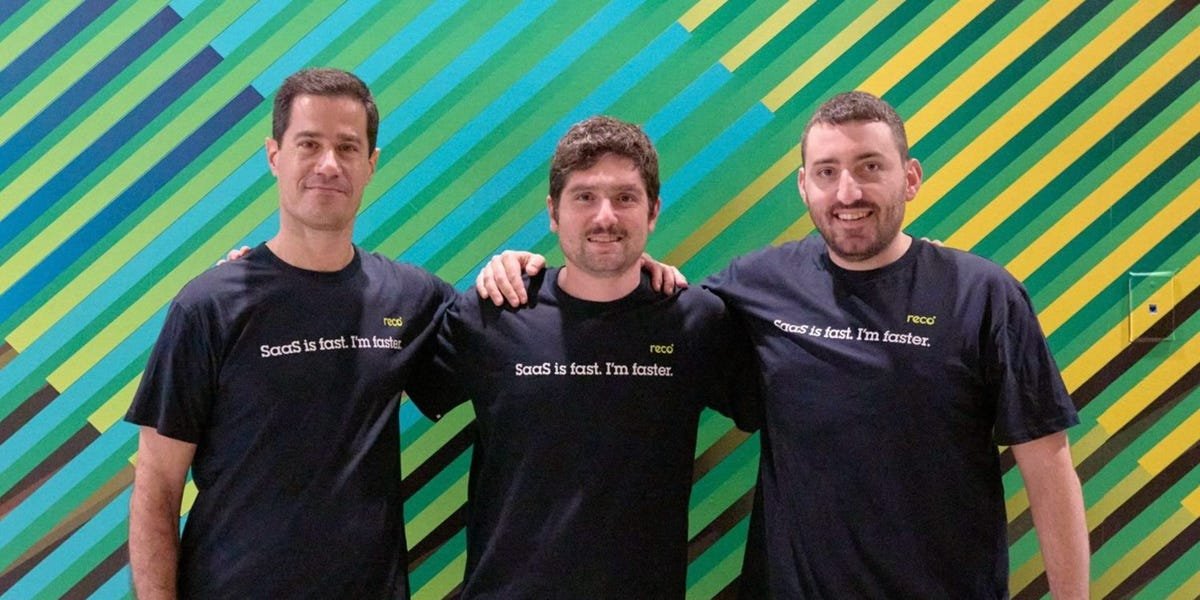
New York-based cybersecurity startup Reco has raised $30 million in Series B funding as companies rapidly expand their AI use.

Ofer Klein, Gal Nakash, and Tal Shapira founded Reco in 2020 to fill the gap between a company’s existing cybersecurity protections and the other tech tools employees use, which is often AI.

“AI adoption has accelerated exponentially, and companies that blocked AI access a year ago cannot block it anymore,” Klein told Business Insider. “And I’m not talking about small mom-and-pop shops; I’m talking about the biggest banks, insurance, healthcare, pharma, and hospitals.”

Zeev Ventures led its latest round, with participation from all existing investors, which includes Insight Partners and Boldstart Ventures. New corporate investors for this round include Workday Ventures, TIAA Ventures, S Ventures, and Quadrille Capital.

“My investment strategy has always been to double down on what’s working,” Oren Zeev, the famed seed investor behind Zeev Ventures, said in a statement. “I’ve seen this pattern with successful companies like Navan and Tipalti, and I’m seeing it again with Reco. The signals we see show rapidly growing market demand for AI SaaS security, and we are experiencing exceptional growth.”

While software-as-a-service (SaaS) stocks have recently plunged amid concerns about AI disruption, Zeev sees a “massive” opportunity in AI for security.

After growing 500% year-over-year in 2024, Reco said it grew an additional 400% in 2025, driven by a sharp increase in business AI adoption.

Cybersecurity startups also raised nearly $14 billion in 2025, according to Pinpoint Search Group. That represented a 47% increase from 2024 and the most funding since 2021.

Klein said Reco began pulling in far larger companies than expected, repeatedly beating internal plans as AI went from blocked to mandatory.

“We built a plan, and we overachieved, and we updated the plan, and we overachieved again,” said Klein. “We said, ‘OK, enough is enough, let’s take more money and double down on AI SaaS.”‘

Klein said the biggest challenge for Reco now is keeping up with demand.

“The business is driving this huge traction into AI enablement,” he said. “Our biggest challenge right now: how we grow fast enough to meet this market need.”

Klein’s cofounders also bring in experience from working with the government. Nakash previously headed research at the Office of the Prime Minister of Israel, while Shapira holds a machine learning Ph.D. and also worked at Israel’s Office of the Prime Minister.

Reco faces competition from Torq, backed by Insight Partners and now valued at $1.2 billion, according to PitchBook. It also competes with Blackstone-backed Cyera, recently valued at $9 billion.


Source link

Russia-says-the-US-is-pushing-its-companies-out-of.jpeg

Russia says the US is pushing its companies out of Venezuela’s energy sector

Russia said the United States is pushing Russian companies out of Venezuela’s energy sector.

“Right now, following Venezuela and what is happening there, our companies are quite openly being pushed out of Venezuela,” Russian Foreign Minister Sergei Lavrov said in an interview with RT, a state-linked media network.

The US launched a military operation in early January that resulted in the capture of then-Venezuelan President Nicolás Maduro.

In the interview published on Thursday, Lavrov linked the US’s pressure on Russian companies to broader efforts to curb Moscow’s role in global oil markets.

Lavrov cited recent sanctions against Rosneft and Lukoil, as well as tariffs and restrictions on countries purchasing Russian oil, including India.

“Everywhere it is being said that Russian oil and Russian gas will be replaced by American oil and American liquefied natural gas,” Lavrov said.

Russia’s investments in Venezuela at risk

Russia now faces the prospect of significant financial losses in Venezuela following the US operation, which has upended decades of strategic cooperation between Moscow and Caracas spanning energy, defense, and diplomacy.

Energy ties played a central role, reflecting the importance of the oil sector to Russia’s economy.

A former US ambassador-at-large for the former Soviet Union warned last month that Russia’s exposure in Venezuela could translate into concrete losses.

“Russian investments in Venezuela’s oil industry over the last twenty years will now have to be, formally or informally, written off,” wrote Stephen Sestanovich, the George F. Kennan senior fellow for Russian and Eurasian studies at the Council on Foreign Relations.

Loans for Venezuela’s purchase of Russian weapons could meet the same fate, while trade between the two countries could also come to a halt, Sestanovich added.

That would come at a sensitive moment for Russia’s economy.

As the war in Ukraine approaches its fifth year, sweeping Western sanctions and lower oil prices are weighing on budget revenues that fund President Vladimir Putin’s war chest. In January, Russia’s oil revenue plunged to its lowest level in over five years.

At least one Russian state-owned oil company has moved to ringfence its exposure. Last month, Roszarubezhneft said that all of its Venezuelan assets are owned by the Russian state.


Source link

Headshot of Ben Shimkus

All the ways Elon Musk’s companies are already intertwined, from a Tesla ‘collab’ with SpaceX to Grok in vehicles

Elon Musk has for years blurred the lines between the companies he leads.

The intermingling of Elon Inc. businesses — a number which shrank from six entities to five when xAI acquired X last year, and from five to four when SpaceX acquired xAI on Monday — is something of signature for the CEO.

Over the past three years, his companies have stepped up their internal dealings, investing billions in one another, agreeing to buy up each other’s products, and exchanging software and materials.

The result is a tightly knit corporate ecosystem centered on Musk, where work — and even employees — can flow between the various entities in the name of vertical integration.

Here are some of the recent sharing agreements, purchases, and investments between Musk’s companies.

Musk’s employees often work between companies


Elon Musk took over Twitter about a year ago.

Shortly after acquiring Twitter, Elon Musk brought Tesla engineers into the offices to work on its code base.

Photo by -/Twitter account of Elon Musk/AFP via Getty Images


Musk has repeatedly drawn on employees from one company to support others in his portfolio.

In 2022, about a month after Musk bought Twitter — now known as X — he sent roughly 50 Tesla employees to the social-media company’s headquarters to help overhaul its code-review systems, according to court filings.

Musk later argued in court that the Tesla employees had “volunteered” to do the work and that their temporary reassignment should not concern Tesla’s board.

Executives share overlapping functions on several of Musk’s companies, too, according to insider org charts obtained by Business Insider.

For example, Charlie Kuehmann, the vice president of materials and engineering at Tesla, also holds the same title at SpaceX.

SpaceX contributes to Roadster, Tesla provides SpaceX with energy-storage systems


A Falcon Heavy rocket from SpaceX takes off from a launch pad in Florida during a clear day.

SpaceX is lending rocket-boosting tech to Tesla’s upcoming hyper-powered sports car, Musk said.

Joe Raedle/Getty Images


SpaceX is a major customer of Tesla’s energy business, purchasing batteries for robotics power and Megapack energy-storage systems.

It also reportedly invested $2 billion into xAI as a part of a previous funding round.

Musk has also said that Tesla’s long-awaited next-generation Roadster will be a “Tesla/SpaceX collab” and feature SpaceX-built cold-gas thrusters. The hyper-powered sports car’s launch event is penciled in for April 1.

“It’s gonna be really cool, and it’s gonna have some rocket technology in it,” Musk also said during a 2024 sit-down with Don Lemon.

SpaceX and Boring Company buy Tesla cars


Boring Company Tesla entering tunnel

A Tesla entering the Hawthorne Tunnel, made by Elon Musk’s Boring Co.

Robyn Beck/Pool via REUTERS


Aside from full-blown investments or acquisitions, the most publicly visible example of Musk’s companies coordinating might be Tesla’s vehicle sales to his tunnel-building start-up.

The Boring Company, which operates tunnels in Las Vegas and Texas, uses fleets of Tesla vehicles to transport passengers through its underground systems. The tunnel builder has also constructed tunnels around Tesla’s Gigafactory in Austin, Texas.

It isn’t alone. SpaceX also purchased an unspecified number of Musk’s Cybertrucks.

Tesla and xAI’s ‘framework agreement’ follows Grok integration into cars, Optimus demo bots.


A person in light blue jeans sits in the front passenger seat inside a self-driving Tesla.

Tesla wants to build out its AI software, including its self-driving ambitions. CEO Elon Musk said a $2 billion investment in his software company would help.

Jay Janner/The Austin American-Statesman via Getty Images


Tesla’s earnings on Wednesday disclosed that it had agree to invest $2 billion in xAI, Musk’s artificial intelligence startup, with a related “framework agreement” to explore additional collaboration opportunities.

Tesla has already integrated xAI’s Grok into its vehicles, allowing drivers to chat with the AI and use it to add and edit navigation destinations.

Videos have shown early versions of Tesla’s in-development Optimus robot using xAI’s Grok AI chatbot for its voice.

xAI has also reportedly told investors that it’s working on AI that could power Tesla’s forthcoming Optimus humanoid robots.

Tesla executives said the $2 billion investment supports the automaker’s push into self-driving technology. For example, the earnings deck explained that xAI-developed software will analyze vehicle interiors and assist with route planning, including adding high-occupancy-vehicle lanes when the car is full.

For xAI, the investment adds capital to the cash-hungry buildout of data centers and their energy needs.

The deal marked one of the clearest examples of capital flowing from Musk’s public company into a privately held firm he controls.

It’s all par for the course for ‘Elon Inc.’

The growing web of internal deals has fueled discussion among investors and analysts about whether Musk’s companies are evolving into something closer to a single, vertically integrated enterprise.

And it’s not clear if it’ll stop at SpaceX combining with xAI.

There’s also been recent reports that Tesla could combine with SpaceX.

“In Tesla’s case, an important factor to consider is that investors are buying into Elon Musk’s vision for the future as much as they are buying into an automaker or clean energy company,” Lou Whiteman, a contributing analyst at The Motley Fool, told Business Insider.

“Since this group of companies, public and private, combine to represent Elon Musk’s full vision of the future, I’d bet that many investors are happy to see Tesla involved in all aspects of ‘Elon Inc.'”


Source link