I-felt-unprepared-when-I-moved-into-my-first-apartment.jpeg

I felt unprepared when I moved into my first apartment. Living alone has been challenging, but also incredibly rewarding.

I’ll be honest — when I moved into my first apartment after graduating from college, I didn’t know the difference between Tide and Cascade pods, or how to use a plunger.

But to be fair, I didn’t have the “typical” college experience.

The COVID-19 pandemic prevented me from staying in the dorms in 2020, and even after campus reopened, the cost and comfort of living with my parents kept me home through the end of junior year.

Instead of fostering independence as I’d planned, I continued residing at home, with my family taking care of me, cooking meals, running the washing machine, and restocking my favorite cereal.

By senior year, I felt pressure to move out and grow up

I was raised in Manhattan, and when I decided to go to school just one subway stop away from home, I felt behind in some metaphorical “race” to grow up.

Everyone I knew was out of town, joining sororities and exploring new territory, while I was stuck in the past.

By senior year of college, all my friends were either living in the dorms or in their own places, but I was still at home.

So, as I entered my final year of school, I decided to start looking for a place of my own, without my parents’ assistance. I felt like I would never truly consider myself a real “adult” unless I took on the process by myself.

After a few touring mishaps, the third apartment building I visited seemed like the perfect fit. It wasn’t furnished yet, but it already felt like home. It even had wooden floors that reminded me of the room I grew up in. I signed my lease one week later.


An empty apartment with white walls and wooden floors.

The apartment felt like home before I even furnished it.

Carrie Berk


However, I quickly became overwhelmed by the moving process. As I stared at boxes piled to the ceiling, I didn’t know where to start.

I started tackling the space, excited to see my NYC-style Barbie Dream House vision come to life. But the more I unpacked, the more things began to fall apart.

My mattress delivery was delayed, the trendy LED-adorned bed frame I picked out didn’t fit through the doorway, and my WiFi didn’t work. Oh, and instead of pink kitchen tools, I’d accidentally ordered green.

It felt like no matter how hard I tried, I couldn’t get anything right. I started to wonder if moving out was a mistake. Maybe I just wasn’t ready for the responsibility.

The first evening I spent alone in the apartment, I broke down. As I stared at half-open boxes, a TV that wasn’t operating properly, and an empty bedroom, my life felt out of place.

I was in the eye of the hurricane when it came to adulting, and it felt like I would never be able to figure things out on my own. But then I realized — maybe I didn’t have to.

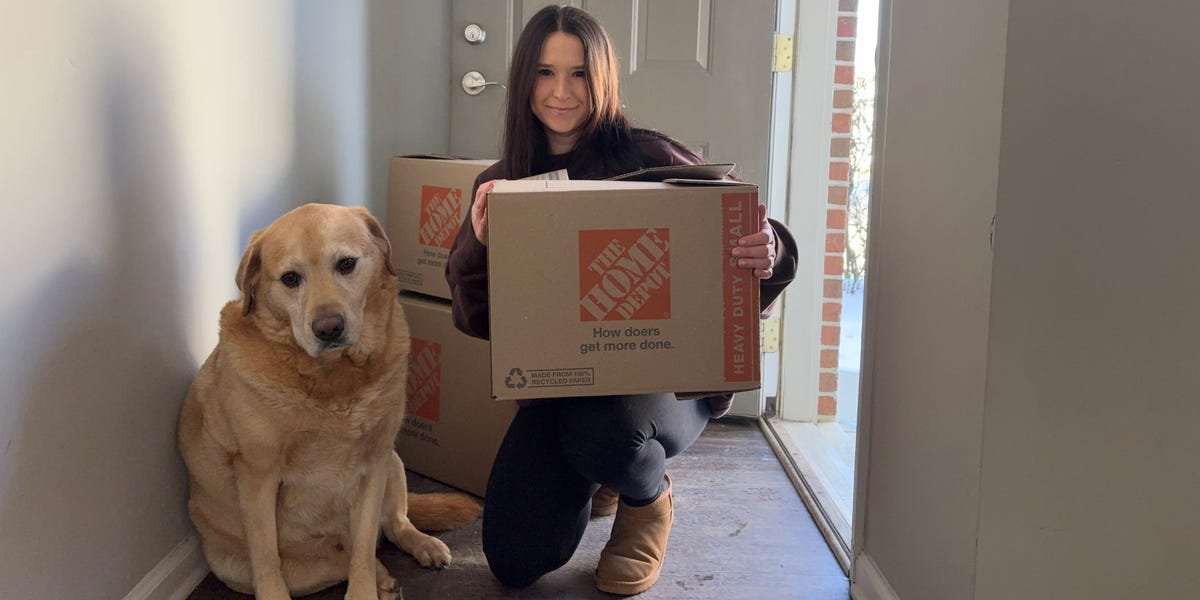
I thought pushing my parents away would make me feel more grown up, but I learned asking for help is healthy and normal. I delegated tasks: my dad helped me fix my router, my mom accompanied me to Home Depot to purchase new utensils, and my friends even pitched in to help me find a new bed frame.

Once they set me up for success, I felt much less overwhelmed. My home began to come together, and instead of feeling scared, I was excited to embark on this new adventure.

Living alone has still presented its challenges, but I’ve learned to embrace the chaos


A bedroom with gray and pink bedding and white furniture.

It took some time to adjust to living alone.

Carrie Berk


I’ll be honest — when my parents, friends, and the movers were all gone, it was pretty disheartening. As I sat in the quiet of my apartment, merely hours after I had officially moved in, I missed the buzz.

I never thought I would say it, but I craved the noise of my dad blasting football on the television or my mom squeezing my dog’s toy. The silence felt deafening. But as days passed, I began to find peace in the quiet.

Now, I savor solo moments that I might not have had the chance to enjoy while living with my family.

I can play my Peloton class at full volume without disturbing anyone and experiment in the kitchen without my mom roasting my cooking skills. To be honest, though, curating a menu beyond scrambled eggs or a toasted bagel is still a work in progress.


A small kitchen with a heart-shaped sign on the wall that reads

Learning to cook is still a work in progress.

Carrie Berk


Now, I’ve found that solo living has become less scary and more of a superpower. As I take care of my home, I’m instilled with a new sense of empowerment that fuels other areas of my life.

If I can budget to pay my rent, then surely, I can learn how to save money for international travel. If I can practice patience in communicating with my landlord about maintenance issues, I can also extend those lessons toward work.

Plus, learning how to clean spills on the rug was a major help when I eventually started a side hustle as a dog sitter.

I’ve learned to embrace the chaos and celebrate the small wins rather than put myself down for my failures.

Now, as I stare out at my fully-furnished space, I’m proud of what I’ve accomplished, and I’m looking forward to continuing to grow in the comfort of my very own home.


Source link

I-quit-my-job-because-I-couldnt-afford-to-rent.jpeg

I quit my job because I couldn’t afford to rent or buy a house. I then moved to Thailand, where the cost of living is cheaper.

My stable job in the UK allowed me to save, but rental prices in my area would have taken up a huge portion of my income. Each month, I withdrew from my savings as everyday expenses became luxuries. I still had bills to pay, such as car finance, insurance, gas, phone, and a contribution to my parents’ mortgage.

I couldn’t move out of my parents’ house at 28. My goal was to buy my own place, but this was unrealistic. Renting was just as high as a monthly mortgage payment. Saving for a down payment while renting in the UK was impossible on a single average salary.

Even though I was employed, I couldn’t afford the life I wanted. I felt like I was surviving, not living. I was craving financial freedom and independence, but the UK couldn’t offer them.

Two years prior, I had traveled around Thailand and fallen in love with the food, the pace of life, and the value for money. It was a country that had always been on my mind, and eventually I reached a point where I couldn’t live comfortably in the UK anymore. I felt financially stuck and embarrassed that I was still living with my parents.

The only way out was to quit my job, become a freelancer, and relocate to Bangkok — a city filled with opportunity where housing costs half as much as in the UK.

Staying in the UK no longer felt sustainable

For months, I was figuring out what to do. I could spend years trying to catch up, or I could change my environment and live a more affordable lifestyle.

After researching Thailand and reminiscing about my travels there, I realized it was the perfect country to start my own business as a freelance writer.

While I was backpacking there previously, I ate freshly cooked meals for as little as $1. I looked into rental listings in Bangkok, and I was shocked. A modern one-bedroom condominium with a gym and swimming pool costs as little as $400 a month.


Sally seaton sitting at a table in a restaurant with bangkok skyline in the background

The author in Thailand.


In comparison, the average rent in my area of the UK was around $1,200 — more than a third of my monthly salary before bills. In Bangkok, I could pay half that and have more space and amenities.

I had been building a freelance writing business alongside my 9 to 5 job to create freedom to live in Thailand. By the time I decided to leave, I had one client secured. It didn’t guarantee stability, but there was no positive future for me in the UK.

Last June, I handed in my notice and booked a one-way flight to Bangkok. Within a month, I said my goodbyes, packed up my life, and left the UK behind.

My life in Thailand costs less, I get more, and I’m happier

Moving to a new country alone and starting my own business was terrifying, but I knew it would eventually give me the financial independence I couldn’t find in the UK.

Now that I’m my own boss, I still work hard. But the difference is that I’m building something for myself. In the eight months I’ve lived in Bangkok, my client base has grown. I earn slightly less, but my money stretches further.

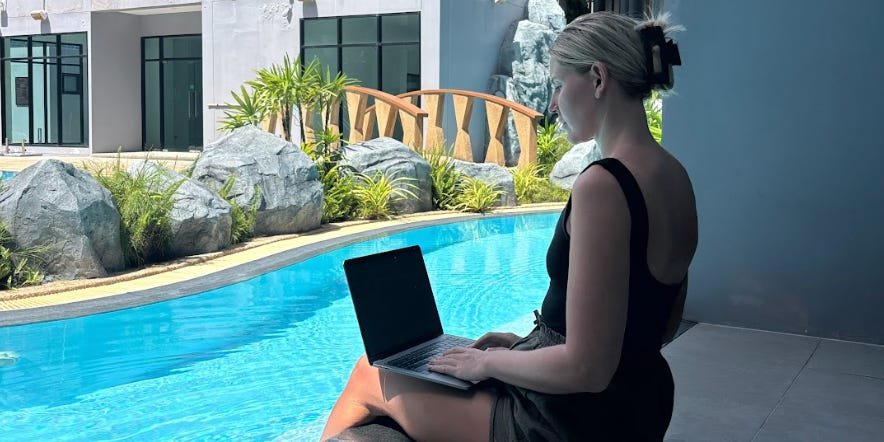
I rent my own condominium for $500 a month, which includes a swimming pool, a gym, and a coworking space. My electricity bill is $40 a month, and water costs just $2.

Things that once felt like luxury in the UK are now part of my everyday life. I buy fresh fruit from local markets. I pay $6 an hour for a weekly cleaner. I don’t cook; I eat out every day without calculating whether I should skip it to save money.

Getting around is affordable, too. I no longer own a car. A train journey costs around $1, and bike rental rides start at $1.

Since moving to Thailand, I’ve embraced what the Thais call “sabai sabai” — a stress-free way of life. For the first time in years, I feel fulfilled, financially free, and happy.


Source link

We-moved-our-family-of-4-from-the-US-to.jpeg

We moved our family of 4 from the US to Spain. Looking back, there are 5 things I really wish we’d done before we left.

When my husband and I decided to move our four-person family from the US to Spain, we had roughly two semesters of college Spanish between us and zero experience living abroad.

We didn’t let that stop us, though. Beginning in March 2025, we researched obsessively, read books, made spreadsheets, and put together lists of pros and cons. The more research we did, the more confident we became that Spain was the correct place for our family.

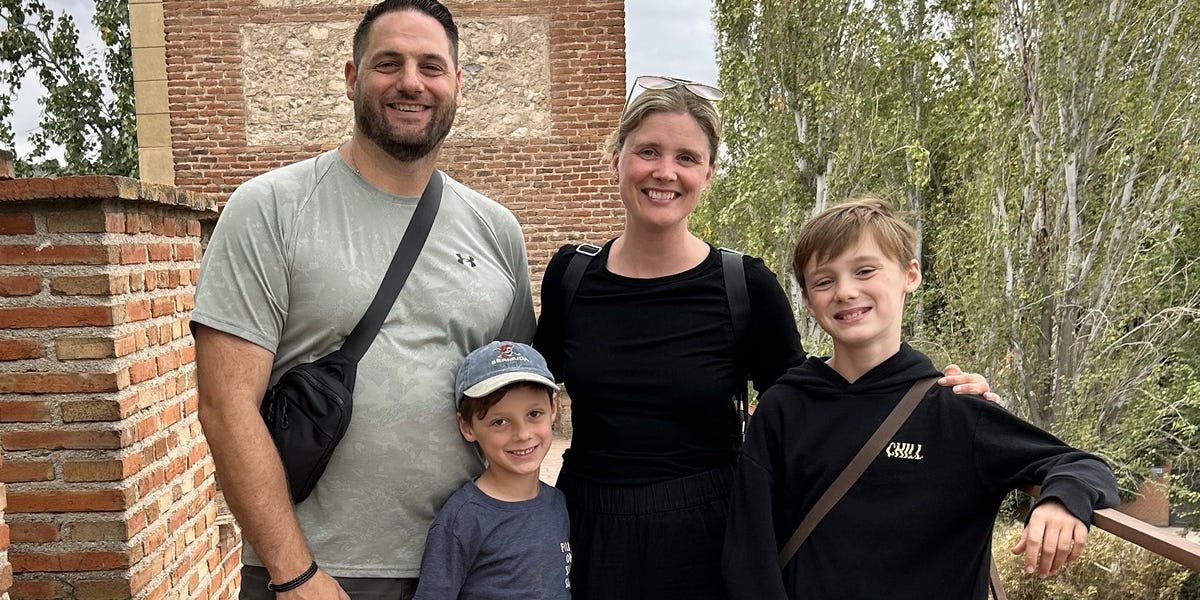
Five months later, we packed up our lives and moved our 6- and 9-year-old sons from Northford, Connecticut, to Las Rozas de Madrid, a suburb northwest of the Spanish capital.

Despite our extensive preparation, lessons awaited us. After all, there’s so much to consider while moving abroad (especially with kids), and slipups are unavoidable.

That said, here are five mistakes I wish I’d avoided when my family moved.

I wish I’d started building my community abroad before we left

Between selling our home in Connecticut, finding a place to live in Spain, and figuring out where our sons would enroll in school, I deprioritized my new social life.

I assumed we’d naturally meet people once we got here, and we eventually did. But those first few months were lonely.

We arrived in August, a month before my sons’ school year started, and many locals were still away on summer trips. Once school started, it became easier to connect with other families. I also joined a few WhatsApp groups recommended to me by other expats.

I’m still very much in the early stages of building a network here. If I were doing the move over, I’d join related regional and professional groups, connect with families in our area, and start building relationships before I even left the US.

Having even one friend waiting for me in Spain would’ve made a huge difference.

My husband and I didn’t ask the right questions about our sons’ school curricula


Rebecca Cretella and her family in Spain

Both of my sons are enrolled in an international school in Spain.

Rebecca Cretella


My husband and I planned to start our boys in an international school to ease their transition into a new country and language, with the goal of eventually moving them into a local Spanish school once they were fluent.

We selected an international private school that follows an International Baccalaureate (IB) curriculum with Spanish language support. It seemed like the perfect fit — until we realized we hadn’t asked the right questions.

We failed to realize that our boys, who didn’t arrive speaking Spanish, would be learning alongside native speakers rather than building introductory skills.

They’re getting an incredible education in Spain, but it’s not the foundational language curriculum we expected. We now supplement school with online Spanish tutoring twice a week to fill the gap.

To other parents moving their school-age kids abroad to Spain, I’d recommend asking specifically about language use and requesting sample lesson plans before enrolling to see what language support looks like in practice.

Translating important documents into the local language would’ve been extremely helpful

Four months after moving, I had to undergo emergency surgery. I felt completely unprepared as I relied on Google Translate and my husband’s elementary Spanish language skills to communicate with staff.

We got through it, but “getting through it” isn’t the same as feeling safe, understood, and informed.

The scariest moment in the ER was right before I went under anesthesia. I was crying because I couldn’t understand what the professionals were saying, couldn’t communicate my allergies or medical history, and didn’t know what was about to happen.

Luckily, the staff took good care of me, but the experience was harder and more frightening than it needed to be.

Before I left the US, I should have saved a translated medical profile with my allergies, medications, and past surgeries on my phone.

I also should’ve researched how to access medical translation services, so that if something unexpected happens, I wouldn’t have to figure it out in the middle of a crisis.

We didn’t know that we couldn’t rent a car without a special driving permit


Rebecca Cretella and her husband in Spain

Before moving to Spain, my husband and I had never lived abroad.

Rebecca Cretella


Las Rozas de Madrid is well-connected, so my family doesn’t own a car here. When we went to rent one for a holiday trip to Cádiz, we assumed we could do so using our US driver’s licenses, but we were wrong.

Without an International Driving Permit, renting a car was off the table. We made the best of the situation, but we were restricted in what we could see and do in Cádiz.

I regret not getting an International Driving Permit before leaving the US. It’s easy and costs $20.

Canceling our US numbers created a logistical nightmare

My husband and I both canceled our US phone numbers when we left the country, thinking we’d just use Spanish numbers instead. It was a big mistake.

Accessing our US banks and some key services required us to complete text verifications with our US numbers. So, we’ve gotten locked out of accounts, struggled with two-factor authentication, and spent hours on international calls trying to fix it.

Rather than canceling my number, I wish I’d ported it, which would’ve let me move it to an online service while keeping my number, to save us endless headaches.

Even with all the mistakes we’ve made, I’m glad my family made the move

Six months into our new life in Spain, one thing is certain: I’m so grateful for this journey.

Seeing my kids build new friendships, learn a new language, explore new places, try new foods, and gain confidence as their world expands has made every misstep worth it.

Now, we look back on them as part of our story.


Source link

Im-an-American-who-moved-to-the-UK-5-years.jpeg

I’m an American who moved to the UK 5 years ago. Here are 9 things I wish I’d known before living abroad.

  • After spending most of my life in the US, I moved to the English countryside five years ago.
  • I expected a culture shift, but I didn’t realize that even small talk would look different here.
  • I wish I’d known that many groceries here tend to expire faster and that I’d be walking much more.

Having grown up watching the “Harry Potter” movies and “The Parent Trap” on repeat, part of me always dreamed of moving to England — but the reality of living here has been full of ups and downs.

I was born and raised in Portland, Oregon, and went to college in Orange County, California. I lived abroad for a couple of years before meeting my British husband and settling down in the UK countryside.

Even though the lack of a language barrier made this an easier adjustment than some of my other moves, there have still been more moments of culture shock than I expected.

Groceries seem to expire faster, but they taste fresher.

In my experience, groceries in the UK taste much fresher.

Wirestock Creators/Shutterstock

I’ve found that some perishables can go stale very quickly here. Part of the reason is that a lot of the preservatives we add to produce in the US aren’t allowed in the UK.

Though a chicken breast or parsley would have lasted me at least a week in the US, these same goods expire within three to four days in the UK.

This has made grocery shopping a new kind of challenge, but my meals taste a lot fresher.

Non-gel, roll-on deodorant feels practically nonexistent.


A drugstore aisle in the UK.

Since moving to the UK, I’ve had a difficult time finding my favorite type of deodorant.

1000 Words/Shutterstock

One thing that was nearly impossible to find for my first three years living in the UK? A non-aerosol deodorant.

I came across a couple of sticks (also called roll-ons) in stores here, but the formulas were all gel-based. Now, whenever I’m back in the US, I stock up on my favorite non-gel, roll-on deodorants.

Conversational language is very different.


The writer poses in front of the doorway to a garden in the UK.

I was surprised to learn that casual communication is pretty different in the UK.

Nishaa Sharma

I came to the UK knowing that some words would take on new meanings: Underwear would become “pants,” for instance, and pants would become “trousers.”

Still, I didn’t expect casual small talk to look so different. It’s not uncommon to hear “You all right?” or “You OK?” while patronizing a supermarket or café.

As I quickly learned, people asking these questions usually aren’t worried about me having a bad day. They’re basically asking, “What’s up?”

The humor is much drier.


A close-up of people's hands holding pints of beer and cheersing.

I’ve had a few uncomfortable moments adjusting to British humor.

Tint Media/Shutterstock

I don’t have the strongest sarcasm detector, which made adjusting to the British sense of humor a challenge.

It took me a solid two years to get used to the self-deprecating, dry jokes here. As a sensitive soul used to America’s brand of straightforward humor, I even had to ask those around me to dial down the jabs.

Almost everything closes early — especially on Sundays.


A town center in the UK.

Even fast-food restaurants tend to close at about 10 or 11 p.m. in my UK town.

Pete Stuart/Shutterstock

Outside major cities such as London, Birmingham, and Manchester, it’s unusual to find shops open after 5 p.m. — or 6 p.m., if you’re lucky. Even grocery stores typically close by 8 p.m. on weekdays.

On Sundays, most local shops and eateries shut down even earlier. Pubs typically serve Sunday roast dinner between 12 and 4 p.m., and the average town center is fully quiet by 4 p.m.

This was an adjustment for me. Growing up in Oregon, grocery stores were typically open until 9 p.m., and some near my college in Southern California didn’t even close until 1 a.m.

I find myself walking much more often.


A nature trail in the UK.

There’s no shortage of nature trails throughout the UK.

edhphotography/Shutterstock

In most of the US, having a car is a necessity.

In the UK, meanwhile, many of the town centers I’ve lived around — and explored — are designed to be more walkable, with roads limited to pedestrian, bus, and cyclist access only.

The UK’s walking culture has also affected my social life and leisure activities. Though I lived near some beautiful greenery in the US, I often had to drive to visit a walkable nature trail.

Here in Southwest England, though, I’ve found many nature pathways in both bigger cities and smaller towns. Now, walks are a major part of our weekends and social lives.

The average salary is lower here — but the PTO allowances are higher.


A town street in Somerset, UK.

I was surprised and disappointed by UK salaries.

Helen Hotson/Shutterstock

One of the biggest drawbacks of living and working in the UK is that the pay is generally lower.

For example, according to data from the Office for National Statistics, the median household income in the UK in 2024 was £36,700.

The same year, census data showed that the median household income in the US was just over $83,000 — a salary that would’ve been worth at least £60,000 at the time.

On the plus side, full-time employees receive a minimum of 28 paid days off a year here in the UK, whereas US workers aren’t guaranteed any.

We also have a universal healthcare system in the UK, which helps bridge the pay gap in some ways.

The country feels pretty well-connected by public transportation.


Tower Bridge in London on a cloudy day.

Whenever I travel to London, I have an easy time getting around.

Nishaa Sharma

Even though I live in a remote town in the countryside, accessing the major cities is still easy. Many of the UK’s buses and trains run almost every hour.

Whenever I’m in London, I find the nation’s capital easier to navigate than many US cities. The city’s tube system is intuitive and fast, with tubes departing roughly every five minutes.

On the other hand, many trains I’d used to travel between US cities felt slower and more outdated. When I was in college, even getting around a major city such as Los Angeles felt next to impossible without a car.

Still, trains within the UK cost more than flights to mainland Europe.


A train on an autumn day in the UK.

Train prices in the UK can vary.

David Hughes/Shutterstock

Though trains to London are frequent and fast, they can also be really expensive.

A weekday round-trip ticket can cost up to £150 from where I live, nearly triple the price of a budget flight to Spain, Croatia, or Greece.

On the flip side, though, the accessibility of mainland Europe is one of the best parts of living here — and makes planning those extra PTO days I’ve banked much more fun.

This story was originally published on June 2, 2025, and most recently updated on March 9, 2026.


Source link

We-moved-to-Japan-after-nearly-a-decade-of-careful.jpeg

We moved to Japan after nearly a decade of careful planning. Living here is still nothing like we expected.

After a two-week trip in 2015, my husband and I came home completely hooked on Japan.

Reliability was the baseline; trains ran with a clockwork precision that transformed the daily commute into an exercise in discovery. We fell for the profound sense of safety that allowed small children to navigate the streets alone, the atmosphere of the neighborhood shrines, and the level of public order that made everything back home feel chaotic by comparison.

What began as a simple holiday evolved into a total life reset that would take over the next eight years of our lives. We decided Japan wasn’t just a spot to visit but the place we would raise our family.

We stopped saving for the “someday” dream of homeownership in New Zealand and instead invested in the present, putting our money toward several return trips to Japan to scout our new life.

In preparation for our move abroad, we researched local customs and dedicated ourselves to intensive language study. My husband and I enrolled in university-level courses, while we arranged private tutoring for our daughter to give her the best possible start.

We convinced ourselves that if we planned carefully enough, nothing would catch us off guard. By the time the move finally happened in 2023, my husband and I, along with my daughter, felt ready for anything.

We assumed the hardest part would be the logistics of moving and that first wave of culture shock. After two and a half years of actually living here, I’ve learned we weren’t even close.

You cannot plan for a change in identity


New Zealand passports

My husband and I spent almost a whole decade preparing to move to Japan.

Kerri King


I’ve always liked to feel prepared and in control, which is probably why it took me eight years to feel ready to leave New Zealand.

Before we moved, I researched everything I could think of, from how Japan’s specialized health clinics differed from our general practices in New Zealand to the specific paperwork required for city office registrations.

I watched vlogs of people sharing their grocery hauls in Tokyo, noting the prices of staples like milk and eggs, and read blog posts detailing a day in the life of expats in Japan.

Talk of culture shock and language barriers didn’t scare me, as practical problems often have practical solutions. What I couldn’t have anticipated was how living abroad would make me feel like an imposter.

On the surface, I looked confident and capable, sharing photos of our newest adventures with friends and family on social media. In reality, even small, daily interactions left me panicked and second-guessing myself.

My heart would race whenever someone asked me a question, and I couldn’t find the words to respond.

I felt embarrassed every time I had to rely on Google Translate at the supermarket or to make sense of yet another form. A parcel even sat on my bedroom floor, undelivered, for six months because I was too intimidated to figure out the local post-office process.

For someone who built her identity around independence, constantly needing help from others felt frustrating and humiliating.

Being the parent at school who needed things repeated, the customer holding up the line, or the one relying on her husband to translate slowly chipped away at my confidence.

Living without a support system is harder than I thought


Kerri and Dylan King at Kobe Steelers Rugby Game

As much as we love Japan, it’s tough to be far from home.

Kerri King


That same fierce independence I’d always been proud of also meant I didn’t prioritize building a support network when we arrived in Japan.

I assumed friendships would happen the way they always had — through school events, casual chats, and repeated proximity. I figured I’d naturally end up grabbing coffee with a few people, even if the coffee wasn’t quite as good as New Zealand’s.

It turns out friendships are harder to build when language and cultural barriers sit between every conversation.

So instead, I buried myself in work and told myself I was too busy to socialize. Our family travelled most weekends, which made it easy to stay occupied and harder to admit I felt lonely.

The few friends I have made, I love dearly. However, deep friendships take time, and life feels heavier when you don’t have someone nearby to lean on.

That absence felt sharpest when my grandmother passed away in 2024, and I couldn’t show up for my family. I wasn’t able to cook meals for my mum, sit with my grandfather, or say goodbye properly.

Grieving from afar isn’t something you can really plan for; you realize too late that a final goodbye is gated behind a 14-hour flight and a four-figure plane ticket.

Despite the small four-hour time difference, the geography of our new life meant I was out of reach when it mattered most.

Japan has made our lives easier in many practical ways. We save money, travel more, and have access to high-quality medical care whenever we need it.

However, all the convenience and travel in the world can’t replace community.

Even our best expectations didn’t survive real life


Man and woman smiling in front of temple in Japan

Japan gave us the frictionless life we dreamed of, but I’ve learned that convenience is a poor substitute for a sense of community.

Kerri King


Before we moved, we thought we’d covered the language gap: My husband completed a four-year Japanese degree, our daughter grew up exposed to the language, and I studied as much as I could.

We assumed that would be enough to get by, and from a practical point of view, it is. I can grocery shop, book appointments, and navigate daily life without much trouble.

However, existing within a community is not the same as belonging in one. At parent meetings and school events, conversations move too quickly for me to follow, and I rarely feel able to contribute anything meaningful.

Over time, I realized language wasn’t the only barrier to belonging.

Understanding the system’s gears didn’t mean I knew how to be one of them. I understood that Japan prioritizes the group over the individual, but adapting to this is a lot harder in practice.

Every time I asked school staff for an exception for my daughter — a quiet corner during assembly or permission for her to wear her noise-cancelling headphones during music classes — the smiles across the table turned thin and rigid. There was no argument, just a heavy, polite wall of silence that told me I’d stepped out of bounds.

It left me in an impossible spot: I was fighting to get her the support she needed, but by speaking up, I was highlighting the very differences I was trying to help her navigate.

Japan has still given us the life we planned for, just not in the ways we expected. Now, we have to decide if the life we worked eight years to build is worth the community we’re living without.

Read more stories about moving abroad


Source link

My-78-year-old-grandfather-visits-me-regularly-since-I-moved-to.jpeg

My 78-year-old grandfather visits me regularly since I moved to Portugal. I cherish our relationship.

I cannot recall my first memory of my grandfather, Geraldo. Maybe because he was always there.

When I was born, he split his time between Paris, where I lived, so he could watch me grow, and Rio de Janeiro, where he now lives full-time. Picking me up from school, dealing with my tantrums, and taking me to the movies. After I moved to New York when I was 6, he came to visit frequently, and I spent a month in Rio with him every summer.

When I moved to Portugal at 23, I hoped my grandfather would visit me, but I couldn’t have dreamt of what our relationship would become. It’s only been two and a half years, and he’s already visited five times. I should get him a frequent visitor card.

I love caring for him

There is something truly marvelous about caring for those who cared for you. Driving him around, making him tartar and banana pancakes, even just pouring him coffee; these simple things fill me with joy.


Man sitting for lunch

The author’s 78-year-old grandfather visits her in Portugal often.

Courtesy of the author


He is one of my favorite family members. He makes me laugh an exorbitant amount with his funny facial expressions, ridiculous reactions, and cynical jokes. One time he visited, I made iced coffee, and he eyed me like I was insane.

I cherish our time together

He finds joy in everything. He’s said things to me like “This coffee is terrific,” or “The octopus salad is even better than the one yesterday,” and “It’s so beautiful to see you like this.”

Not only does his attitude make him the best guest — so easy to please — but it also fills me with hope that I, too, will age like him, able to see the beauty in all that lies around.


Grandfather at airport

Courtesy of the author


That’s not to say that he doesn’t love to complain about just about everything; he is an old man who spent decades living in France, after all, but it’s always with a cheeky tinge. The weather was particularly gruesome on his last visit. When in Rio, he complains because it’s dangerous, loud, and unbearably hot. He jokes that he’s going to move here, or we could swap houses, and honestly, I’m considering it.

He was diagnosed with early-stage Alzheimer’s

My grandfather was 62 when I was born, which means I got to know him as an adult. I get to take him to lunch, introduce him to my friends — they all love him — and hear his stories. I realize it isn’t something everyone gets. For that, I am eternally grateful. It’s easy to think that intergenerational relationships are most valuable in childhood, but they can flourish most in adulthood.


Woman and grandfather at the beach

Courtesy of the author


Since his first visit to Portugal, my grandfather has been diagnosed with early-stage Alzheimer’s. I witnessed him constantly searching for his wallet and phone, how he accidentally left my apartment door open, sending me into a “where’s-my-cat-frenzy,” and how he asked over and over which day we were flying to France. At first, I was unable to comprehend how memory can fail my PhD professor’s grandfather. Then I thought of all the people who would dream of having this much time with theirs.

We probably only have a few good years left. Sometimes I catch myself crying about what’s to come. I know grief well, so I know the devastation I will feel, but instead of letting it consume me, I choose to turn it into a “yes” to every opportunity to see him, host him, show him more of my life, and learn all I can from his.

So I take many photos, hug him as much as I can, hope for more visits, and share this advice: if your grandparents can still travel, have them come visit. In the future, you will thank yourself.


Source link

I-moved-13-times-over-15-years-to-advance-my.jpeg

I moved 13 times over 15 years to advance my career. I would never wish this on anyone.

Figure skating has long been a big part of my life. At 15, I convinced my school district to override attendance so I could pursue my then-competitive figure skating career. I then scheduled college classes around training.

Three undergraduate apartments and two graduate dorms later, I found a great place to live in New York City on Bleecker and Thompson for three years. I worked as a private figure skating coach at the Wollman and Chelsea Piers ice rinks. At 25, I enrolled at UCLA as a postdoctoral fellow and snagged a place in the Venice Canals. I loved it for two years. I then completed another postdoc for 1 year in San Diegothen returned to the East Coast for my first faculty position. Philadelphia turned me into a professor in developmental psychology.

I moved back to New York City for my 10th move to the West Village, but I wasn’t there long. I moved again to be closer to the train hall, and by then, entering my 30s and my third year of tenure-track, I just wanted to be home.

Happy but out of fuel, my 12th move was back to Southern California, and it was also my fourth across the coast.

With every move, packing felt heavier, and hiring movers didn’t lighten the load. The sight of boxes became demoralizing.

Moving so frequently lost its excitement

Every new city, I’d think: new cafés, new restaurants, and new yoga studios! But once I actually settled in, I only started to miss the spots and familiar faces I’d left behind.

Every time I’d, again, go out frolicking, eating, meeting, and socializing, a cloud of impermanence would steam from the back of my head.

I became confused about how much to invest in new relationships. I wondered if I should connect deeply with new people, if it was likely I’d be moving again sometime soon.

Sometimes, my location kept me far from my family

In the middle of grad school, I remember standing on a street corner and receiving an unexpected phone call: My father had died. I was far from home at that moment.

Even though I was often on the East Coast, my family frequently visited, especially my uncle and auntie.


Anahid S. Modrek's moving truck filled with boxes

The author had to pack up her life several times.

Courtesy of Anahid S. Modrek


When I moved back to California this most recent round, my uncle started to battle ALS and stopped visiting because of the staircase up to my space. After about a year, I received a phone call that my uncle was headed to the ICU; his fight with ALS was over. I’ll never live somewhere that isn’t wheelchair accessible again.

My final, most recent move (No. 13) was deliberate: downtown Culver City, behind the Museum of Jurassic Technology, where my grandfather Hagop Sandaldjian’s standing exhibition is. He died after I was born, and it was a way of connecting with him.

Moving was worth it for my career

This all started with decisions made when I was 15. I’m 35 now.

I did what I had to do in academia to maintain momentum. I don’t have regrets, per se. I wanted to experience it all.

Academia was an intellectual pursuit and an adventure that came with losses I didn’t expect. Ice eventually melts, and soil soaks up the water. That’s how roots grow.

Academia brought me back home, but it was a drive to maintain momentum developed as an athlete that kept me moving until my feet landed right where I wanted. Now up for early tenure, I feel like I’m just getting started.


Source link

I-got-the-perfect-job-in-my-field-after-graduating.jpeg

I got the ‘perfect job’ in my field after graduating. Two years later, I left it all behind and moved to Tokyo.

After four years of coursework, practicums, and part-time jobs, graduating felt like a huge accomplishment. I finally had room to breathe. Then fall approached, and it was time to get a “real job”.

I earned my bachelor’s degree in social work, picked up ESL teaching certifications along the way, and assumed I would either go straight into the field or head to teacher’s college.

It felt like the responsible choice — one that made sense to my family, to my need for stability, and to the unspoken expectation that, after graduation, you pick a path and stay on it.

That summer, I came across a college instructor position I was technically qualified for, so I applied, interviewed, and overcame some serious impostor syndrome. By September, I was teaching my first college-level courses from home.

At first, I felt great. The hours were good, my students were kind, and my family was proud of me. I was even teaching future community-service workers.

On paper, it was a dream job. It felt grown-up, fit my background, and seemed like the right thing to do. Over time, though, that feeling faded.

I wasn’t ready to settle down, and I could feel it


Womam smiling with flowers, diploma

After graduating, I got a job in my field as I felt I was supposed to.

Alessa Hickman


Between life changes, teaching burnout, and a growing disconnect from my passions, I felt stuck.

I’ve always been creatively inclined, whether that meant writing, making videos, cooking, or creating digital resources in my free time.

Instead, many of my nights were spent prepping lessons, grading assignments, and reading essays, leaving little room for the hobbies that filled me up.

Gradually, the work took a toll on me, but the expectation that a “good” job is one you stick with for years made leaving seem like breaking the rules.

In my early 20s, I felt boxed into this pipeline that didn’t suit me, and I didn’t want to follow a version of success that didn’t feel sustainable.

I’m entrepreneurial by nature, constantly chasing new ideas, certifications, and ways to apply them. So when I started exploring what else I could do with my skill set, freelance writing made the most sense.

With my husband’s support, I decided to leave teaching and pursue freelancing full-time — a move that raised quite a few eyebrows.

My craving for something radically different pushed me to leave my job and my country


Woman smiling with drum arcade games

I fell in love with Japan when I first visited.

Alessa Hickman


Around the time my teaching chapter closed, I learned about Japan’s Working Holiday Visa program. My husband and I first visited Japan in early 2024 and instantly fell in love with the country.

Back in Ontario, that feeling was hard to ignore. We were renting an apartment with a lease ending in October, and after spending my entire life in my hometown, staying felt more limiting than comfortable.

Between the rising cost of living and a sense that I had outgrown my routines, I wanted to explore something new.


Aerial view of city in Japan during daytime

I’ve enjoyed building a life in Tokyo.

Alessa Hickman


We applied for the visa, were approved, and sold most of our belongings as our move-out date approached. In December 2025, we flew to Tokyo and rang in the new year halfway across the world.

Living here has been incredible. Learning Japanese, navigating a new culture, and building a life in Tokyo have been exactly what I needed. And yes — the food’s been amazing, too.

Moving abroad and changing paths didn’t mean abandoning my education or values. Instead, it meant reframing them.

Read more stories about moving somewhere new

My definition of success looks different now


Woman smiling near koi pond

I’ve learned that life after college doesn’t have to be linear.

Alessa Hickman


I’m no longer in a classroom, but my background in social work and teaching continues to shape the work I do.

I create and edit content that’s rooted in helping others, and I’m lucky enough to write about my life and experiences abroad.

When I told people I was quitting teaching, and later that I was moving to Japan, it was seen as somewhat unconventional. My husband even left his stable job to come here.

However, the move opened many more doors than it closed. Living in Tokyo has brought new experiences, stories, and opportunities I would’ve never had otherwise.

I’ve learned that postgrad life doesn’t have to be linear — and maybe it shouldn’t be. For some people, stability is the right choice. But for others, taking a detour can lead to growth you’d never find by staying put.

For me, choosing uncertainty meant choosing myself.

I don’t know what my life will look like in two or five years from now, but I do know that I’m building it on my own terms. That feels like a pretty good place to start.


Source link

I-graduated-from-college-6-years-ago-and-have-already.jpeg

I graduated from college 6 years ago and have already moved 10 times. I never thought my post-grad life would be this unstable.

Growing up with limited money, I always viewed college as a safety net, an investment that would set me up for immediate success. I started saving for tuition in high school, worked full-time in college to avoid student loans, earned straight A’s, and did all I could think of to guarantee financial success.

I felt financially secure for a short time, but everything changed when I graduated. The stability I once felt walking around my safe college town vanished almost overnight, and I was completely unprepared.

Since graduating over six years ago, I’ve moved 10 times while navigating rent increases, job changes, and the financial realities of being a young adult.

I thought life after college would be stable, but I was wrong

It took 10 months to find a job after graduating. When I finally did, I moved out of my childhood bedroom only to live temporarily with friends, and then back with my parents, recovering from the embarrassment of not being able to afford housing on my entry-level salary.

After a few months and a decent raise, I tried again. I moved into an apartment with my boyfriend (now husband) and got a dog. Since then, we’ve lived in four different apartments, moving back in with family between each one.

I’ve changed addresses so many times that my GPS has given up on me. Rising rent, post-pandemic inflation, pay cuts, unexpected debt, and even a lost tax payment forced us back home multiple times. We were fortunate to have family to fall back on, but the repeated setbacks never felt easy.


Erin Wetten and her dog unpacking moving boxes

The author has faced many financial struggles since college.

Courtesy of Erin Wetten


Over six years later, I’m still not “settled” in the way I imagined. Each move taught me to handle setbacks with a little more confidence, yet, as someone who was so used to being prepared, I still felt like I was losing my sense of self.

I began to understand the emotional toll of feeling like a failure

I’ve spent my whole life measuring my self-worth in numbers — my SAT score, GPA, and items on my résumé. I planned my entire future in spreadsheets, bit my nails until they bled, and spent nights before big tests throwing up, even after weeks of studying.

That was me: an anxious, overachieving mess who crumbled at the thought of even a small failure.

Postgrad life quickly humbled me, teaching me that no amount of spreadsheets or A’s could protect me from the real world.

Every time I moved into a new apartment, I told myself, “This is it. I’ll save up, and the next move will be into a house of my own.” But it still hasn’t worked out that way. I’ve been forced to decide: Do I let that feeling drag me down, or accept that instability is a part of life and choose to enjoy the journey?

I had to find a ‘home’ within myself.

In my 20s, I’ve learned that life rarely unfolds the way we imagine, no matter how meticulously we plan. When I crossed the stage in cap and gown six years ago, I pictured a steady job, a white picket fence, and a stress-free existence waiting for me on the other side. I thought fulfillment would come from checking the right boxes in the right order, as I had always done.

Instead, I’ve never felt more fulfilled than I do now that I’ve thrown out the checklist altogether and stopped viewing life like a syllabus.

Over time, the weight of starting over lightened, and I learned to feel at home within myself, even as my physical space kept changing. Rather than feeling sorry for myself, I sought opportunity in each new set of blank walls, finding comfort and purpose from within.

My life hasn’t followed the simple, straightforward path I once expected, and I’ve come to believe that is for a reason. As someone with a Type A personality who was once consumed by anxiety over the smallest things, more rules and timelines weren’t what I needed. I needed freedom from my own expectations, and in my case, that meant getting knocked down enough times to finally loosen my grip on perfection.

No matter how many times I have to move or start over, I know I’ll be OK. I’m no longer chasing a timeline or striving for a perfect grade in life. I’m building a life that feels like mine, and letting its ups and downs shape me for the better.


Source link

25-celebrities-who-have-left-Los-Angeles-on-where-they.jpeg

25 celebrities who have left Los Angeles on where they moved and why they did it

California is the US state with the most people moving out, with about 817,000 leavers between 2021 and 2022, according to the most recent census data.

A higher cost of living plus the increased threat of wildfires have people choosing other places across the country.

And while regular people ditch the Golden State, several celebrities, who can typically afford to live wherever they want, have also decided California is no longer the place for them.

Singer turned talk show host Kelly Clarkson traded Los Angeles for New York City post-divorce for in 2022, while actor Sylvester Stallone said in 2024 that he and his family are “permanently” vacating California for South Florida.

Popular moving destinations for Californians include Arizona, Florida, and Texas. And some have chosen different countries completely.

People have told Business Insider that their reasons for leaving LA and California include high taxes, expensive home prices, and challenging social and political conditions. Some celebrities remain tight-lipped when sharing details of their moves, simply saying they’re looking for a fresh start. Other high-profile actors, however, admit that the fast-paced, stressful scene in Hollywood can be another motivation.

Los Angeles, in particular, is experiencing an exodus of wealthier people in search of places where their money goes further.

Take Gus Lira, a managing partner at a private jet charter company, who had a condo in Malibu overlooking the ocean. California taxes were wearing him down, so he decided to move to Nevada.

“For me, really the main reason, and for many of the people that I know, is just taxes,” Lira told Business Insider in January. “You can’t get ahead when you get $100 and they take $60.”

Business Insider compiled a list of 26 celebrities — some in celebrity couples — who left California for greener pastures, presented in alphabetical order by last name. We tried to include both where they moved to and why they left LA.

Jessica Biel and Justin Timberlake left LA to shield their kids from the glare of the paparazzi.

Jessica Biel and Justin Timberlake.

Matt Winkelmeyer/Getty Images

The power couple has dealt with the paparazzi for most of their professional careers. But they had enough of their kids also having to endure it.

Since 2018, Biel, Timberlake, and their two kids have lived predominantly at their properties in Tennessee and Montana.

“You get hammered on the East Coast. You kind of get hammered on the West Coast. That’s why we don’t really live there anymore,” said Biel in a May 2024 episode of SiriusXM’s “Let’s Talk Off Camera With Kelly Ripa,” seemingly referring to her former home of LA. “We’re just trying to create some normalcy for these kids.”

Dean Cain left LA for Las Vegas because of the “incredible taxation” and “horrible regulations for business” in California.


Dean Cain

Dean Cain.

Jamie McCarthy/ Getty Images

Dean Cain, best known for playing Clark Kent/Superman in “Lois & Clark: The New Adventures of Superman,” was fed up with how things were run in California.

The actor split for Vegas in 2023.

“It’s the most ridiculous large government, incredible taxation, horrible regulations for business,” he told Fox News Digital in 2023. “Very anti-business.”

Cain said California’s personal income tax felt especially high.

“I moved to Las Vegas. I live in Nevada now,” he added. “I have 10 times as nice a house. I’m not kidding. Ten times as nice a house as I had in Malibu. The house is absolutely stunningly built. Gorgeous, beautiful. Everything is brand new.”

Kelly Clarkson didn’t just move from LA to New York — she took her daytime talk show with her.


Kelly Clarkson

Kelly Clarkson.

Weiss Eubanks/NBCUniversal via Getty Image

Kelly Clarkson felt she had a new lease on life when she moved to New York City last year.

After finalizing her divorce from ex-husband Brandon Blackstock in 2022, she didn’t just take her kids east. She also brought “The Kelly Clarkson Show” — it started taping in New York in season 5.

“I was very depressed for the last three years — and maybe a little before that, if I’m being honest. I think I really needed the change,” the Grammy winner told People. “I needed it for me and my family as well. My kids are thriving here. We’re just doing so much better, and we needed a fresh start.”

George and Amal Clooney left LA so their kids could “get a fair shake at life” — they are now French citizens.


George Clooney and Amal Clooney.

George Clooney and Amal Clooney.


Dave Benett/WireImage


The Clooneys have lived the quieter life in Italy and France for years, but always had a home in LA, an English-style estate that George bought from Stevie Nicks back in 1995.

They finally sold that house in 2024 and now spend most of their time at their farmhouse in France with their twins, Ella and Alexander.

George told Esquire in 2025 why they left. “I was worried about raising our kids in L.A., in the culture of Hollywood,” he said. “I felt like they were never going to get a fair shake at life.”

“I don’t want them to be walking around worried about paparazzi,” he added. “I don’t want them being compared to somebody else’s famous kids.”

In late December 2025, George and Amal became French citizens.

Jesse Eisenberg moved to his wife’s hometown of Bloomington, Indiana.


Jesse Eisenberg

Jesse Eisenberg.

Getty Images

Actor and director Jesse Eisenberg took the pandemic as an opportunity to leave Los Angeles. Eisenberg, his wife, and their son packed up an RV and drove to his wife’s hometown of Bloomington, Indiana.

“We have driven cross-country a lot, but we thought it would be prudent to isolate in an RV instead of stopping at hotels,” Eisenberg told The Hollywood Reporter in 2020.

Initially, Eisenberg moved to Indiana to help take care of his late mother-in-law after she got sick and also help out at a domestic violence shelter where she worked.

But Eisenberg was happy to be in Indiana.

“I’ve lived in Indiana for a decade on-and-off and that’s where I feel the most comfortable,” Eisenberg told CBS News in February. “I’m not somebody who wants to surround myself in an industry that just feels kind of unstable.”

Chris Evans wanted to be closer to family in Massachusetts.


Chris Evans posing.

Chris Evans.

Arturo Holmes/Getty Images

Silverscreen superhero and Massachusetts native Chris Evans listed his Los Angeles home in May for $6.99 million, The Wall Street Journal reported, cementing his abandonment of California.

“After over a decade of amazing memories in his LA home, Chris is planning to move to the East Coast to be closer to family,” Evans’ listing agent Scott Moore said in a statement to People.

Evans married his wife, Alba Baptista, in Cape Cod, and now they both spend most of their time in Massachusetts.

Walton Goggins moved to New York after the pandemic.


A man and a woman at an event. On the left, the man has long swept-back black hair. He's wearing a white blazer over an open-collared black shirt and black trousers. On the right, the woman also has her black hair swept back, and is wearing a glittery green dress. They're standing against a purple backdrop with gold logos for Hulu, ABC, and the Emmys on it.

Walton Goggins and Nadia Conners.

Kevin Mazur/Getty Images

“The White Lotus” star Walton Goggins and his wife, Nadia Conners, moved to New York’s Hudson Valley during the pandemic in 2021. But, he told Architectural Digest in February, the move was less about California, and more about New York.

“We weren’t running away from Los Angeles,” he said. “We were running toward something.”

“The pandemic opened windows of self-perception and possibility,” he added. “It was an opportunity to do something different, not to start over from scratch but to change, to evolve.”

Goggins, who was raised in Georgia, chose to live in a 1920s home upstate that resembles a hunting lodge — with an abundance of wood paneling and wood flooring — instead of the glitzy surroundings of Los Angeles.

John Goodman left LA in the late ’80s.


John Goodman in a suit

John Goodman.

Stephane Cardinale/Corbis/Getty

John Goodman figured out a long time ago that Los Angeles wasn’t for him and has been living in New Orleans since the late 1980s.

Like many, the Emmy winner first visited Crescent City to party. In the late 1970s, he showed up with his fraternity pals. A few years later, as an actor, he was shooting the movie “Everybody’s All-American” alongside Dennis Quaid, Jessica Lange, and Timothy Hutton when he met his future wife, Anna Beth. He’s been attached to the city ever since.

“I used to come down here every time I’d get a few dimes to rub together, and it felt like I was missing something unless I was here,” he told “Today” in 2023. “I consider myself very lucky to be here.”

Adrian Grenier left California to work on a farm in Texas.


Adrian Grenier posing.

Adrian Grenier.

Vittorio Zunino Celotto/Getty Images

Adrian Grenier, known mostly from his “Entourage” fame, left California for Texas in 2020.

Grenier traded the glitzy life of Hollywood for a farm 45 minutes outside Austin, Texas, where he prefers a quieter lifestyle outside the spotlight.

“I don’t miss anything about that world. Listen, if you go on Instagram long enough, you’re going to find some FOMO somewhere, but everyone is just pretending they’re living their best life,” he told Life Magazine in 2021. “Ultimately, I know that I am, so I don’t even tell anybody about it.”

Josh Hartnett has been living in the English countryside since the pandemic. He left Hollywood after dealing with a stalker.


Josh Harnett in a black jacket

Josh Hartnett.

Cindy Ord/WireImage/Getty

The actor recently gained renewed attention thanks to movies like “Oppenheimer” and “Trap,” but don’t expect to find him hanging out on the Sunset Strip. Since the pandemic, he’s ditched LA for the English countryside.

Hartnett and his wife, British actor Tamsin Egerton, have lived in Hampshire since COVID hit, bringing up their four kids. He’s living in the UK on a marriage visa, so he can only leave the country for work for around 180 days a year.

After spending his early career in the Hollywood spotlight, Hartnett told The Guardian he loves the village country life where “nobody cares” who you are.

“This is all brand new to me,” he said. “I never would have expected it. And time passes quickly. With four children, you have so much to do. In a way, less is happening. But more of the important stuff is happening.”

Being outside Hollywood is also safer for Hartnett. He told The Guardian that when he lived in LA, he had experiences with stalkers.

“People showed up at my house. People that were stalking me,” he said. “A guy showed up at one of my premieres with a gun, claiming to be my father. He ended up in prison. There were lots of things. It was a weird time. And I wasn’t going to be grist for the mill.”

Chris Hemsworth moved his family back to his homeland of Australia right when his Marvel fame hit.


Chris Hemsworth with his hand in the hair waiving

Chris Hemsworth.

JB Lacroix/WireImage/Getty

Hemsworth figured out LA wasn’t for him right around the time the first “Thor” movie came out in 2011.

“We kind of were set up in LA and not enjoying it, you know?” Hemsworth said on the “SmartLess” podcast in February 2026, referring to him and his wife, fellow actor Elsa Pataky. “Like nothing was shooting there. We were filming kind of everywhere else and then you’d come home, and then paparazzi and all the sort of the trappings of, you know, living in that space.”

Hemsworth and Pataky moved with their two young children to Hemsworth’s native Australia and have been there ever since.

“You know, when you come back from work, you wanna go on a holiday? Like coming home for me is — it feels like a holiday,” Hemsworth said. “We have a big farm and horses and motorbikes and surf.”

Nicole Kidman and Keith Urban moved to Tennessee to be closer to the country music scene.


nicole kidman keith urban

Nicole Kidman and Keith Urban.

Getty/David Becker

A year after Nicole Kidman tied the knot with country-music star Keith Urban, the two got the heck out of LA.

In 2007, they moved to Nashville, where the Australian Oscar winner dove headfirst into Urban’s world.

“That country-music community is a very warm community,” she told People in 2016. “It’s very protective. Keith’s been a part of it for decades now. It’s his home, it’s our home.”

In September, Kidman filed for divorce from Urban.

Lindsay Lohan left LA for Dubai and now has privacy, peace, and space.


Lindsay Lohan in a gree dress

Lindsay Lohan.

Leon Bennett/Getty

Lohan has lived on both coasts, but she currently prefers to be in the United Arab Emirates, where she lives with her husband, financier Bader Shammas, and their two-year-old son.

In a May 2025 profile in Elle, Lohan said that when she was living in Los Angeles, she would be “stressed” about the paparazzi taking photos of her while at the park with her son. Living in New York, there’s a “different kind of energy” but not as much space. Living in Dubai, she gets it all.

“I get the privacy, I get the peace, I get the space,” she said. “I don’t have to worry there; I feel safe.”

Eva Longoria and her family split time between Mexico and Spain.


Eva Longoria in a white blouse on a street

Eva Longoria.

James Devaney/GC Images/Getty

The star and producer made the decision a few years ago to move out of Los Angeles.

She now splits her time between Mexico and Spain. She told Marie Claire in 2024 that she left Hollywood behind because it felt like that “chapter in my life is done now.”

While on “Live with Kelly and Mark” in April, Longoria said she loves traveling to the Andalucía region of Spain to enjoy the small beach bars and restaurants.

Matthew McConaughey headed to Texas to help his family.


Matthew McConaughey leaning against a viewfinder

Matthew McConaughey.

John Nacion/Getty

A few years before the McConaissance led to Matthew McConaughey’s best actor Oscar win, he and his wife, Camila Alves, fled Hollywood for his home state of Texas.

The two settled in Austin in 2012 after buying a 10,800-square-foot mansion. According to a profile in Southern Living, it was initially because of a “family crisis,” as he needed to help his mother and two brothers. That led to the couple deciding to stay put to raise their three children there.

“Ritual came back,” McConaughey said of being back in Texas. “Whether that was Sunday church, sports, dinner together as a family every night, or staying up after that telling stories in the kitchen, sitting at the island pouring drinks and nibbling while retelling them all in different ways than we told them before.”

“This is Us” star Chrissy Metz packed up for the Southern hospitality of Nashville.


Chrissy Metz in a colorful dress

Chrissy Metz.

Tommaso Boddi/Getty Images

After 21 years on the grind in LA, Metz packed up and left town when the pandemic hit. She now resides in Nashville.

“There’s a lot going on,” “The Hunting Wives” star told People in April 2025. “There’s obviously great music, great food. I grew up in the South, so I’m used to sort of that hospitality — it feels more communal here. In LA it was always like, ‘Oh, you have an audition? What’s it for? Oh, you have an audition? What for?’ It was all very dog eat dog!”

Glen Powell moved to Texas after making it big in LA.


Glen Powell in a blue jacket

Glen Powell.

Dia Dipasupil/Getty

Glen Powell left Los Angeles and returned to his home state of Texas in 2024.

Powell, who had a breakout role in “Top Gun: Maverick,” has lived in Los Angeles for more than 15 years, but told The Hollywood Reporter in 2024 that he’s done enough in Hollywood and he feels he can now live elsewhere. “It’s like I’ve earned the ability to go back to my family,” he said.

Not only does living in Texas allow Powell to be closer to family, but he’s also finishing his degree at the University of Texas.

“I think this is going to be good for my head, heart, and soul,” he said.

Ryan Reynolds and Blake Lively left LA after just six months of dating.


Blake Lively and Ryan Reynolds attend

Blake Lively and Ryan Reynolds.


Dia Dipasupil/FilmMagic


When you know, you know. After less than a year of dating, Ryan Reynolds and Blake Lively packed up their stuff and left Hollywood for the suburbs of New York City.

In 2012, after six months of dating, the couple bought a $2.3 million home in Pound Ridge, New York.

“We don’t live in LA. We live on a farm in New York,” said the “Deadpool” star in a 2015 interview. “And we don’t lead a wild and crazy life. It’s not that hard. It’s not a big deal.”

Julia Roberts hasn’t lived in LA for decades.


Julia Roberts with her hands up while being photographed at the 2022 Cannes Film Festival

Julia Roberts.

Stephane Cardinale/Corbis/Getty

The Oscar winner realized many years ago that Los Angeles wasn’t for her.

Roberts moved to a 32-acre ranch in Taos, New Mexico, in 1995.

The “Pretty Woman” star told Oprah back in 2003 that in New Mexico, everything is “clear.”

“Around here, I come and go like it’s nothing,” she said. “Los Angeles is such a town of show business, and I’m a terrible celebrity. I find it difficult — it’s the beast that must be fed.”

Amanda Seyfried headed to Upstate New York for a taste of the simple life.


Amanda Seyfried attends the 28th Annual Critics Choice Awards at Fairmont Century Plaza on January 15, 2023, in Los Angeles, California.

Amanda Seyfried.

Axelle/Bauer-Griffin/Getty Images

With movies like “Mean Girls” and “Mamma Mia!” in her filmography, you would think Amanda Seyfried would want to lay her head down somewhere glamorous.

But she actually prefers life on a farm.

Seyfried spends most of her time on a farm in the Catskills, a mountain range north of New York City, that she purchased in 2014, Architectural Digest reported in 2023.

“It’s insane how much I can feel so accomplished and successful here without having to be in a successful movie,” she told The New York Times in 2020.

Sylvester Stallone wanted a new start in Florida.


Sylvester Stallone

Sylvester Stallone.

Rachel Luna/WireImage/Getty Images

After decades of living in Los Angeles — including in his first dingy apartment on Balboa Boulevard, which would become the inspiration for his iconic character Rocky Balboa — Sylvester Stallone packed up and left town in 2023.

This was first revealed in early 2024, during season two of his reality series “The Family Stallone”.

“After a long, hard consideration, your mother and I have decided, time to move on and leave the state of California permanently, and we’re going to go to Florida,” Stallone said. “We’re going to sell this house.”

Stallone and his wife, Jennifer Flavin, gave multiple reasons for the relocation, including the desire for a fresh start after their children moved out of the family home.

Rod Stewart went back to his roots in England.


Rod Stewart

Rod Stewart.

Mike Marsland / Getty Images

The legendary rocker decided that at 79 years old, it was time to stop traveling across the pond.

In 2023, he put his sprawling 38,500-square-foot Beverly Hills property, which he has lived in since 1975, on the market.

Selling the home is bittersweet for Stewart: “I don’t want to sell it, and the kids don’t want me to sell it either,” he told People in 2023. “There’s too many fond memories. I’ve lived [in LA] since 1975, and I adore the place.”

But he said he’s making England a more permanent home since wrapping up his latest world tour and Las Vegas residency.

Eric Stonestreet left Hollywood for Kansas City to get away from the “douchebaggery” of the business.


Eric Stonestreet holding a Mahomes jersey

Eric Stonestreet.

Kyle Rivas/Getty

“Modern Family” star Eric Stonestreet did not mince words when he explained why he’s been living in Kansas City since the acclaimed show ended after 11 seasons in 2020.

In a September 2024 interview with long-form interview journalist Graham Bensinger, he said a big reason he left LA was to get away from all the fake people in Hollywood.

“What I realized it does is it highlights everything great about our business, the entertainment business,” the actor said on what it’s like to no longer live in LA. “And it highlights all the douchebaggery of our business. It amplifies it. Because I’m here, I’m dealing with people from here, and I’m going into the store and having all these authentic, real moments, and then I go to Hollywood, and you’re reminded of some of the types of people that you deal with.”

Hilary Swank moved to a Colorado ski town.


hilary swank


Jonathan Leibson/Getty Images

The Oscar winner is loving her new life in the mountains of Telluride, Colorado, on 168 acres with five rescue dogs.

She and her husband, Philip Schneider, bought the land in 2016, broke ground in 2018, and finally completed the home in 2020.

A year later, she put her LA home on the market and has been living it up in the great outdoors.

“I have been looking for land since I was in my mid-20s,” Swank told Architectural Digest in 2022. “I find nature to be my happiest place, and animals are my other happiest place. And to be with both of them is everything to me.”

Mark Wahlberg moved his family to Las Vegas for a “fresh start.”


Mark Wahlberg looking at camera

Mark Wahlberg.

Mat Hayward/Getty

Boston-born Mark Wahlberg set out to LA years ago to make it as an actor. Over his career, he realized he rarely stayed there to make any of his movies. So, in 2022, he packed up and moved his family to Las Vegas.

He told The Talk in October 2022 that in Nevada his four kids can more easily pursue their hobbies, including golfing, riding horses, and playing basketball.

“We came here to just kind of give ourselves a new look, a fresh start for the kids, and there’s a lot of opportunity here,” Wahlberg told The Talk. “I’m really excited about the future.”


Source link