This as-told-to essay is based on a conversation with Ruth Davis, a Creative Director in LA. It has been edited for length and clarity.
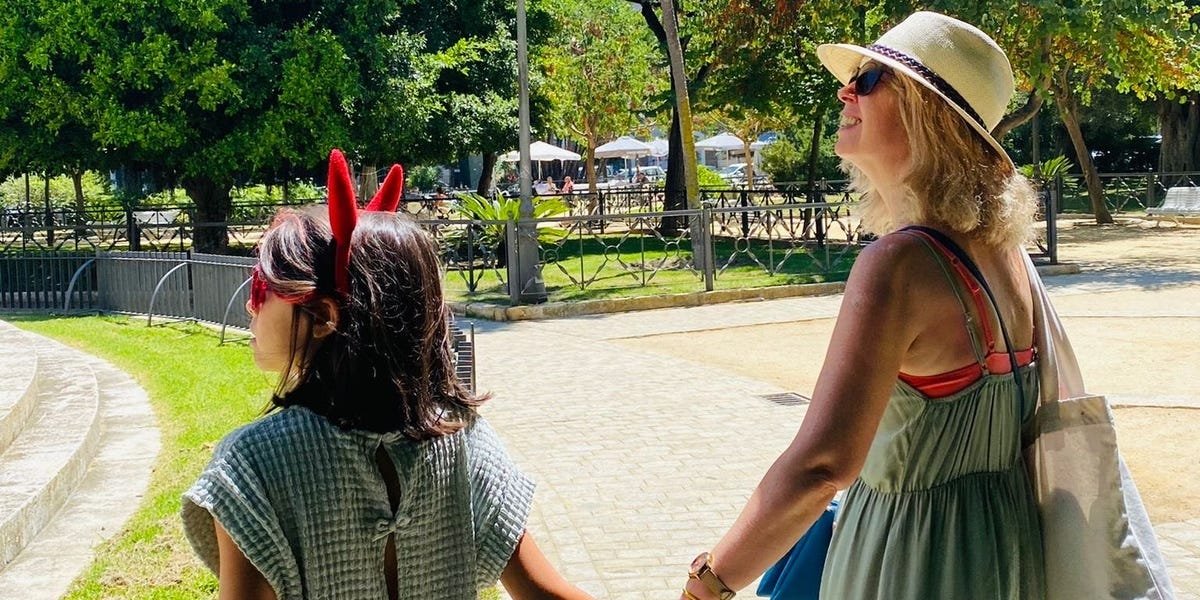
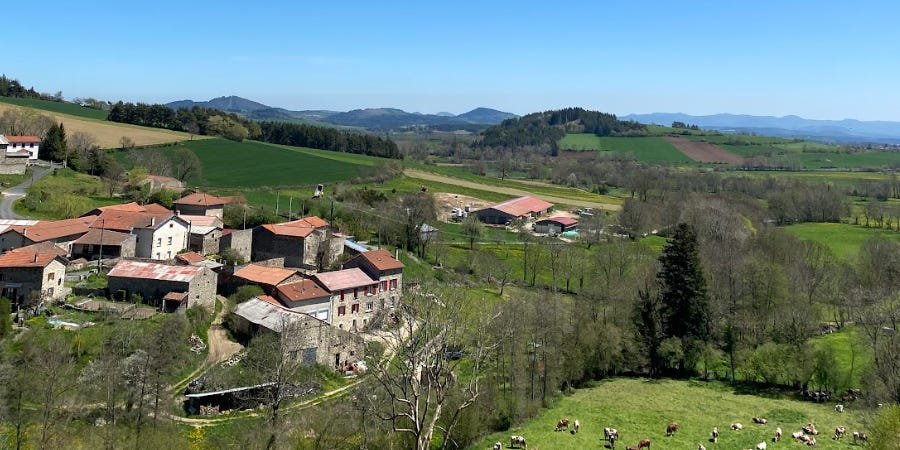
In 2019, I relocated with my 12-year-old daughter and fiancé to Los Angeles, which is two hours away from the “family village” where I had grown up.
All my family — siblings, cousins, aunts, uncles, and grandparents — all lived within 15 minutes of each other. I knew it was going to be a hard move for our nuclear family unit, but I was convinced LA was the right place for us to be.
I didn’t fully understand the impact it would have on me.
My dad is my everything
It was my dad whom I immediately felt I had lost.
Every time Lauren Crosby Medlicott publishes a story, you’ll get an alert straight to your inbox!
Stay connected to Lauren Crosby Medlicott and get more of their work as it publishes.
Before we moved, my dad was everything to me. He and my mom had split when I was young, so my dad had full custody. It was just the two of us all the time.
When I had my daughter, my dad moved in with us and was there to help with all the practical aspects of raising a child. But he was also just there as emotional support for me. He made me complete.
After we moved, we only saw him once a month, when he’d take the train to visit us. I missed him and felt overwhelmed without him.
In August 2025, I was grieving the loss of two family members, feeling overwhelmed with sadness, but also with life in general. I remember sitting on my bed, losing it, crying.
I called him, crying
My daughter was knocking on the door, asking me when we were leaving the house — we were going out for the day. I snapped at her. I couldn’t leave the bed. I wanted to show up for her in that moment, but couldn’t.
In that moment, I felt like a failure compared to my dad. He had lived through so much grief and so many hard times, and yet I never knew because he managed to hold everything together.
All I could think to do was to call my dad, crying as he answered. He listened to me and then told me he would call me right back.
“Everything is going to be OK,” he said before hanging up. Dad has never been a “words” person.
Not too long after, he called back and told me he had been to the train station to buy a train ticket to come visit the next day.
Knowing he was coming felt like a double-edged sword. I felt incredibly lucky to have a dad who would come and see me at the drop of a hat, but I also felt self-doubt because my elderly dad could get it together, but I couldn’t.
The next morning, when I knew my dad was on the train, bound for my house, I was certain everything would be OK. My dad was coming. With him, life feels normal and complete.
I won’t advise my daughter to move away
I don’t regret the wonderful changes the move afforded me and the position in life it put my nuclear family and me in. But had I known not seeing my dad every day would wreck me as it has, I don’t know if I would have done it the same way.
I had bought into the modern idea that decisions should always be made with the nuclear family in mind, but the distance from him made me realize how much I emotionally value my dad in ways I didn’t think imaginable.
Knowing what I know now, I would never advise my daughter to move away from her village, even if it means she’ll move closer to a partner’s village, as I did. I think as a mother, I did her a disservice by moving her away from my family, her tight-knit community.
This as-told-to essay is based on a conversation with Zina Malas, 24, who lives in Beirut. The following has been edited for length and clarity.
When I visited Canada as a 5-year-old, it was the dream.
I was born and raised in Lebanon, and grew up fearing I’d get kidnapped in the streets or a random bomb would fall on me. After war broke out in 2006, our family moved to Canada to escape.
I loved it. There were nice parks, and “exotic” activities like ice skating.
After a few months, my family went back to Lebanon, where I did my undergrad.
Every time Charissa publishes a story, you’ll get an alert straight to your inbox!
Stay connected to Charissa and get more of their work as it publishes.
Malas loved living in Canada as a child.
Courtesy of Zina Malas
In 2022, at 21, I moved to Canada alone.
Three years in, I had struggled to find a job or save money, and began feeling very depressed, so I moved back to Lebanon.
I’d still advise others to try relocating abroad, but living in Canada just didn’t work for me.
I grew desperate to leave Lebanon
Living in Lebanon was a struggle. I felt like I’d lost my youth and was desperate to leave, even if I had to work a minimum wage job.
My time spent studying media and communication at the American University of Beirut was disrupted by a national revolution that started in fall 2019, COVID, and the Beirut explosion in August 2020.
I already had friends in Montreal and Canadian citizenship through one of my parents, so I headed to Canada and gave myself three months to find a job.
I didn’t realize how difficult it would be to find a job in Canada
Even though my Montreal friends warned me that finding a job wouldn’t be easy, I didn’t think it would be that hard.
They were right. It was absolutely horrendous.
In Lebanon, where I had some jobs during my studies, I experienced less competition for work. I was used to sending my application to a potential employer, DM’ing the company on Instagram, and having an interview the next day. But in Canada, I applied for roles across marketing, social media, and business development, which I felt I had the skills for, but didn’t land any.
Some recruiters told me I didn’t have the right experience. I’m not sure if it was because my experience was Lebanese or not Canadian, but it felt like people were treating me like I had no professional history.
Job hunting was difficult for Malas.
Courtesy of Zina Malas
I also struggled to understand interviewers who spoke Québécois French, a dialect used in Montreal. I went to a French school in Lebanon, so I’m fluent, but I couldn’t for the life of me understand this particular accent, which lost me opportunities.
After applying for what I’d estimate were at least 200 jobs, I connected with a Lebanese HR rep who saw my résumé and gave me the chance to interview for a content manager role. After roughly three months of searching,it became my first job in Canada.
I stayed at the company for 1.5 years, and then moved into tech sales at a different company for a few months.
The cost of living and isolation in Canada drove me to leave
In Lebanon, the work culture was generally less formal. I could show up late to work in a random outfit and no one would say anything. We could have disorganized files and communicate with team members over Whatsapp. It was friendly and laid-back.
In Canada, things were more organized. I knew exactly what my tasks were, and was given proper equipment. I remember being shocked when I was given a MacBook and phone number for work.
My compensation in Canada was good compared with what I could make in Lebanon. I had a nice life, a nice apartment, and ate well. But with the cost of rent, bills, and groceries, I feel like I wasn’t saving much, and was basically living paycheck to paycheck. It’s one of the reasons I left.
Malas struggled to make new friends in Canada.
Courtesy of Zina Malas
Another reason was how hard it was to meet new people, and my mental health suffered as a result. Canadian culture is highly individualistic, which is hugely different to the Middle East. In Lebanon, if I go out with one friend to a restaurant, I’ll end up meeting 10 new people. If I tried to talk to people in Canada while I was out, conversations would end abruptly. If my roommate didn’t have friends, with whom I was thankfully able to have a lot of fun, I probably would have been completely alone.
I imagined I’d meet so many new people and have the time of my life, but my expectations weren’t met. Plus, I couldn’t deal with the cold weather.
In September 2025, I went home.
I’m running my own business in Lebanon now, and I’m happier
I’m currently running my own company, Tawlé Consultancy, which helps businesses in the MENA region who are declining or feel stuck. I started it in Canada, but working on it from the West felt weird, as though I was righteously telling people what to do from a distance. Now, I can sit with people, help them come up with new ideas, and feel like I’m making a valuable impact.
Malas runs her own company in Lebanon
Courtesy of Zina Malas
I’ve noticed many people my age in Lebanon are also trying to build their own thing. Our generation has been through a lot, and we’re trying to figure things out and establish ourselves. When I go to coffee shops, I see so many founders around me. It’s very inspiring.
Being in a stable country like Canada eased my mind, as I wasn’t worried about my physical safety, and it helped me deal with the trauma I experienced in Lebanon.
But I’m happier living in Lebanon. I’ve realized I’m too Lebanese to live anywhere else.
Do you have a story to share about moving abroad and deciding to come home again? Contact this reporter at ccheong@businessinsider.com
After 12 years living abroad in Berlin and then Madrid, I never imagined returning home to Ireland. However, a breakup, becoming a single parent to a young teen, and growing concerns about my father’s health made moving back home something I had to consider.
The decision wasn’t easy. I worried about uprooting my daughter from the life we’d built in Madrid and returning to a country I’d once been so desperate to leave. Growing up in Dublin in the 1980s, a time marked by unemployment, diminishing women’s rights, and a deeply conservative church and state, greatly prompted my desire to live elsewhere. The following decades of living on and off in London, France, Germany, and Spain only reinforced that there was a greater world outside my home country.
Sure, there was no denying that Ireland had changed a lot since the ’80s. But there were still elements of the small-town mindset I despised.
Would my daughter resent me later for taking her away from a life in a more progressive and larger European city?
Moving back home was a difficult decision to make
Like many Western countries, Ireland’s housing crisis was at its peak. Moving back would likely mean temporarily living in my childhood home with my older parents — and that certainly felt like a step backward.
Still, in other ways, it felt right. My daughter, an only child, saw her extended family only a few times a year, and I believed being closer to them would help her through her parents’ breakup and those often-difficult teenage years.
The author loved living abroad.
Courtesy of Siobhan Colgan
Plus, my father, now in his late 80s, had spent much of the year in and out of the hospital. After months of flying back and forth from Madrid to support him and my mother, staying abroad no longer felt realistic.
So I made the decision I never thought I’d make, and we moved back.
The move home surprisingly benefited all of us
Within a month of our return, my father was discharged from the nursing home he had been sent to after a six-month hospital stay. Being there to deal with doctors and carers, support my mother, and share the load with nearby relatives made me feel really grateful. I had always been close to my dad, but now that I was physically around, our bond deepened even more.
My daughter, too, began to thrive. She began building real relationships with aunts, uncles, cousins, and her grandparents. After becoming withdrawn during our final year in Madrid, I now saw her going out shopping with my mom or sitting laughing with my dad; she was slowly opening up again.
Then, four months after coming back, my father died suddenly after a short infection. It was devastating for everyone. But among the grief and tough emotions, I couldn’t deny feeling so thankful that my daughter and I spent those last few months with him.
Additionally, for all my misgivings about “small-town Ireland,” I got to see another side of living in a small community: friends, neighbours, and even locals who just knew them in passing rallied round my mother.
It was the best decision I never wanted to make
It’s still hard to accept my dad is gone, but, of course, life has continued. We now have our own home, a short walk from my mom, and my daughter loves her local school and the friends she’s made.
I still miss parts of our life abroad — my friends, the relaxing outdoor café culture, and reliable public transport. However, I’m building a stable life for my daughter, with deeper ties to family and community.
I will say that when it comes to big life choices, such as moving abroad or moving home, you can only make the decision that feels right to you in the moment. It’s rarely easy, but I’m relieved and glad that I made the choice I did.
Growing up in a remote California suburb, I spent most of my childhood counting down the days until I could leave for a big city.
When the time came to move to New York for college, I was prepared to say goodbye to country living for good. I spent six years in New York, and then another four in Berlin.
Although I loved my experiences in both cities, I was exhausted. Years of apartment hopping, navigating dirty subways, and dealing with nonstop hustle left me craving a reprieve — and wondering why I’d been so quick to swear off a quainter life in the country.
So, when my husband proposed that we move to a little village near his family in France, I surprised myself by agreeing to give it a try.
This was in 2021, when COVID-19 restrictions were making it challenging to live in Berlin, and we were both desperate for the benefits that such a relocation could offer — like more square footage, a yard, and, most importantly, proximity to our loved ones and their support.
The reservations I had about residing in the country were still nagging me, but I figured things would be different this time. I was older, wiser, and doing it in beautiful France, of all places.
I wish I had listened to my gut, though, because all my old qualms with country living ended up rearing their ugly heads — and we ended up leaving after two years.
Without a driver’s license, I felt isolated by the lack of public transit
I’d hoped my new home would be a bit more walkable.
Audrey Bruno
I never needed a driver’s license when I lived in cities, but that all changed when we moved to the French village. There, we simply couldn’t get around without a car — but we sure tried.
I knew going in that my public transportation options would be more limited than they were in a city, but I didn’t expect to be as isolated as we were.
When we first arrived, it took us over a month to work up the funds to buy a car. In the meantime, we attempted one very hilly bike ride, but had to call it quits before we’d even made it halfway to our destination.
Walking was no better — it took hours to get to the nearest shops, and sometimes they wouldn’t even be open when we finally arrived.
Even after we obtained a vehicle, I couldn’t navigate on my own without my husband, since he was the only one with a license.
He was always willing to drive me around, but I was frustrated by my newfound lack of independence. I considered getting a license of my own, but the cost of driving school was out of our budget at the time, so it really seemed like there was no way out of the situation I’d gotten myself into.
I wasn’t prepared for the demands of caring for a house after years of apartment dwelling
Years of living in apartments didn’t prepare me for the hard work of cleaning and maintaining a house.
Audrey Bruno
Apartment life certainly has its drawbacks, but extra square footage comes with pitfalls, too.
We loved that our rental home gave us the newfound ability to stretch out and make noise without bothering each other. The downside, though, was that it was up to us to care for and maintain all that extra space.
It wasn’t just the house, either — it was also our responsibility to tend to the adjoining garden, barn, and the attached horse stables. It was a full-time job’s worth of work, and I started to miss the days when I could clean my whole apartment in just an afternoon.
Living without any takeout options was harder than I expected
Normally, I’m a proponent of cooking as much of my own food as possible, but I at least like to have the option of ordering in or eating out — especially on days full of chores and work.
Unfortunately, getting to the closest takeout restaurant took an hour round-trip, and delivery applications like Uber Eats didn’t service our small village.
What’s more, our dining options were severely limited compared to what we’d had in Berlin. I realized that I missed trying different cuisines and checking out new restaurants, and even when cooking,
I didn’t have access to the same wide variety of ingredients that I’d had in the city. One example was sesame oil — if I wanted to use this pantry staple in a recipe, I’d have to go to a big city to find it.
Connecting with neighbors wasn’t easy
Our village was extremely small — as of 2020, the population was under 400 — and many of the people I met were much older.
Needless to say, our rhythms and beliefs didn’t always match up. We often had debates over everything from politics to local initiatives — like what to do with all the feral cats — and it wasn’t always easy to argue my point in my then-limited French.
Since most folks in Berlin are fluent in English, I’d never been up against such a language barrier before. All that and more made it challenging to form true connections and further contributed to my feelings of isolation.
That said, there were things I missed about country life once I left
When I lived in the countryside, I got to grow my own fruits and vegetables.
Audrey Bruno
Despite all my frustrations, there were a few great things about living in the French countryside.
For starters, it really is beautiful, and being there allowed me to grow my own fruit and vegetables, forage wild blackberries in the forest, and perfect my French with the folks in town who were willing and patient enough to help me out.
After two years, we ended up moving to Lyon, the nearest city, because it offered the best of both worlds. At only 84 miles away, we’d have proximity to my husband’s family and access to nature, plus all the advantages of living in a major city.
I’ll always remember the beautiful memories from my time in the village — but I’ll also always prefer to reminisce about them from an apartment in a city.
I met an incredible woman on a random outing to London while I was living life in slow motion, alone in a quiet English seaside town.
I fell in love in a way that surprised me, both in its speed and its certainty. I knew it was her. The relationship unfolded across train rides, weekends, and the growing realization that what I thought was a temporary chapter in my life was quietly becoming its center.
After a few months together, a practical question emerged. Our rent contracts were ending. Suddenly, there was an opportunity to do something that felt both thrilling and reckless: move in together and move back to London after years in a small town.
It felt risky, especially after years of living alone and so soon after meeting. But it also felt like an invitation to fully embrace a new chapter abroad, without half-measures.
I wasn’t sure I knew how to share my space with a partner
My fear wasn’t about commitment in the abstract. It was far more mundane and, in some ways, more unsettling: I didn’t know if I actually knew how to live with someone.
I had lived with my parents and sisters in Mexico, and I also had roommates during my student exchange in Spain, but that was a long time ago. Ever since leaving my country to see what life had to offer, I had lived entirely on my own.
Living alone abroad had sharpened my sense of independence. I had my routines, my rhythms, and my silence. Sharing a space meant renegotiating all of that in a city as intense as London — while also being a foreigner still figuring out where I belonged, and doing it with someone I was still getting to know.
I worried about losing the version of myself I had worked hard to build over the past two years. I worried about friction, mismatched habits, and what happens when two people bring different expectations into the same kitchen, the same mornings, and the same tired evenings.
Staying separate felt equally wrong, though. At some point, I had to give it a real chance.
I was also afraid we’d lose the magic
Once we made the decision, another fear surfaced, one I hadn’t said out loud at first. I worried that moving in together would flatten the magic of the relationship.
Dating, especially in the early stages, allows for a certain level of curation. You see each other rested, excited, and intentional. Living together removes that buffer almost immediately. There are no intermissions, no reset between interactions.
I worried the romance would dissolve into logistics. That excitement would be replaced by grocery lists, chores, and bad habits. What if the softness of the early months would harden under the weight of constant proximity?
It felt like skipping too far ahead in the story. I wondered if we were rushing something that deserved more time to breathe. What if she realized I wasn’t what she hoped for? What if our energies didn’t align? What if it was simply too much?
But I learned that the honeymoon phase doesn’t end because of shared space. It ends when curiosity stops. Living together, as it turned out, demanded more curiosity, not less.
Moving transformed the relationship
The shift was immediate, but not in the way I expected. Living together didn’t make things smaller. It made them deeper.
We learned from each other in unglamorous but essential ways: how we start our mornings, how we decompress after long days, and how we navigate stress without turning it into conflict. The relationship became less performative and more real.
Living with my girlfriend allowed me to truly know her, not just the version of her that appears on dates. I saw her patience, her habits, her quiet moments, and her resilience. I learned how she shows care when no one is watching.
In that process, I also learned more about myself. I realized that independence doesn’t disappear when you share a life with someone. It evolves. Living together abroad didn’t shrink my world; it expanded it.
I’ve lived in many places and many houses, but this is the first time I can say that, with her, it feels like home.
In 2017, I quit my job as a paralegal, packed up my life in England, and bought a one-way ticket to Paris.
The new chapter was full of surprises, and though most of them were positive, I was in for some unexpected challenges in those early months — from navigating the notoriously tricky French bureaucracies (and supremely unhelpful bureaucrats operating them), to the weird and wonderful world of the Parisian soirée.
However, the strongest culture shocks came in the workplace, and even now, after eight years in France, I still find aspects of French office culture surprising.
Adjusting to French social norms was harder than expected
Many traditions in France differ from what I’m accustomed to back in England.
Jodie Hughes
Getting to grips with office etiquette was my first major challenge — and the most urgent to overcome. I was starting a completely new role, in a completely new company, barely three days after arriving in France.
My title was still paralegal, but even there, my remit couldn’t have been more different. To say I had a steep learning curve ahead of me would be an almighty understatement.
I had, at least, anticipated some difficulty addressing people correctly, but that didn’t make my (frequent) blunders any less embarrassing.
In French, there are certain words for “you” and different versions of verbsdependingon the level of politeness/deference needed. The rules around who you “tu” and who you “vous” feel nebulous at best — and a total minefield for a (foreign) new recruit.
Meanwhile, social norms I wasn’t expecting included greeting everyone who joins you in an elevator, and then wishing them a good day/evening when they/you leave. (People do this in medical waiting rooms here, too. I still haven’t gotten used to it.)
In England, people mostly awkwardly avoid eye contact at all costs in these situations. And if you do accidentally acknowledge someone else’s existence, at the very most, you offer them a tight (also awkward) smile.
You absolutely do not, under any circumstances, talk to them.
Mealtimes are sacred here, and I couldn’t believe the food — or bubbly — on offer in my office
In France, I’ve found that it’s not uncommon to pop open some bubbly at work.
Jodie Hughes
It didn’t take me long to realize just how seriously the French take enjoying the enjoyment of mealtimes.
Even my office cafeteria felt like a foodie’s dream with a rotating menu of things like duck, salmon, and paella; desserts hand-crafted by a professional pastry chef; fresh bread from the local boulangerie; and literal mounds of cheese
My lunches were so heavily subsidised by my employer that, unless I wanted a three-course meal or a glass of wine (a girl’s got to treat herself occasionally), they were almost always free.
And, yes, it’s apparently perfectly acceptable to have an alcoholic drink in the middle of the workday in France.
I also quickly learned that mealtimes, like baguettes, are sacred in this country, both for socializing and for savoring.
It’s frowned on to eat at your desk, scarfing down a sandwich while you work (I’m looking at you, England). Here, you sit down around a table, and you enjoy your food.
Accordingly, a two-hour lunch break is also customary; The French are often baffled as to what you’re supposed to do with “only” an hour.
My colleagues use their breaks to take or teach classes, exercise, or enjoy a leisurely meal in a restaurant — none of which had ever been possible with the 30 to 60 minutes I’d grown used to back home.
Remember how I said it was acceptable to have a drink with lunch?
Apparently, it’s also acceptable to have a drink before lunch, after lunch, and at essentially any time of the day, if there’s even the smallest occasion to celebrate.
I was served more champagne in my first two months in the office than I had been, cumulatively, in my entire life until that point.
One time, several bottles were opened for a colleague’s going-away breakfast at 11:30 a.m. It was tough going, but I adapted to this particular culture shock as uncomplainingly as I could …
My new vacation allowance changed my life
In France, I’ve had more paid vacation time than ever.
Jodie Hughes
Another early discovery was that work-life balance is everything in France.
The culture of competition I’d experienced in England — the peculiar bragging over who was arriving at the office earliest and leaving latest (read: burning out fastest) — was completely absent.
Leisure time feels ferociously protected here, to the extent that employees legally have the “right to disconnect” (ignore job-related calls and emails outside work hours) and the French are not shy about enforcing their rights.
Additionally, when I was informed of my vacation allowance, I was sure I must have mistranslated something: I had over five weeks of annual leave in my first year, and that’s not including the 11 public holidays.
In France, workers are generally required to take at least two consecutive weeks’ vacation. These breaks often falls between July and August, and swaths of employees disappear for an entire month.
It’s quite a contrast to the situation I’d left behind in England, where taking two weeks’ vacation in a row was considered a real extravagance. This is perhaps unsurprising, given I was never entitled to more than four weeks total annual leave.
That means everything pretty much grinds to a halt in the summer — pretty inconvenient when you’re in the middle of a project and all your colleagues are OOO until September.
But it also opened my eyes to just how life-changing that kind of balance can be, and has been one of the most incredible parts of relocating to France.
Adapting to such starkly different workplace norms from the ones I’d known in England has been a real roller-coaster ride — but there have definitely been plenty more ups than downs.
Ultimately, the experience has been as enjoyable as it has been surprising. Champagne, anyone?
Twenty-one years ago, I faced the difficult decision to move from Spain to the United States with my 3-year-old daughter and 4-month-old baby to follow my then-husband, who had lost his job, in pursuit of a new position in Florida.
I was being asked to leave behind my family, friends, and an established writing career. I was to start over at 41, with no connections, no guarantees, and an already shaky marriage.
My family thought it was a terrible idea, yet my husband’s family felt it was a great opportunity. So, after some soul-searching and many promises of a better life in Florida, I decided to uproot my kids and take the chance.
As I boarded the plane to meet my children’s father (he had come to the US ahead of us), I had mixed feelings: I could feel the excitement of my eldest to see her dad again, but I also feared the unknown. I kept asking myself whether it was really possible that we could fix our marriage and thrive in a different country.
My worst fear came true
Going from living in a penthouse in the old part of Sevilla, where I could walk to just about everywhere, to being cooped up in a tiny apartment in a gated community in suburban Florida, where I needed a car to go anywhere, was brutal to my nervous system.
Every time Lorraine C. Ladish publishes a story, you’ll get an alert straight to your inbox!
Stay connected to Lorraine C. Ladish and get more of their work as it publishes.
I felt trapped in suburbia without my own car. And with a history of major depressive disorder, I started having panic attacks and depressive episodes. One day, while driving my children to find a preschool for my eldest, I had to pull over to sob.
A few months later, my husband lost the job we had moved to Florida for. And so began one of the most difficult periods of our lives.
In four years, we moved several times within Florida, always because of his new jobs. I found work freelancing for newspapers and magazines and wrote more books for publishers in Spain. But our relationship was always floundering.
As our marriage crumbled, we took a time-out under the same roof. We went to marriage counseling, enrolled in self-improvement seminars, and so on. Trust, respect, and admiration had been completely lost, and in 2008, when the Great Recession hit, we had no money, no savings, and no jobs.
I walked away from my husband with my laptop, my books, joint custody of our children, and the huge regret of having moved so far away from my family and friends. But I stayed in Florida, because I didn’t want my children to be far from their father. From one day to the next, I found myself a single mother on food stamps.
I met the love of my life
Nearly a year after separating, 16 years ago, I met the love of my life. We had many similarities: we were both newly single, bilingual and bicultural, and had children of a similar age. We were writers focused on creating a better life for our kids and ourselves. The best part was that neither of us had given up on love despite the tough times we’d lived through.
The author fell in love again in Florida.
Courtesy of the author
For nearly two years, we dated long-distance, spending only weekends and holidays together. One of us would drive two hours to meet the other, sometimes with the children, and when the kids were with our respective former spouses, we met alone.
We were both trying to rebuild ourselves personally and professionally, and together we made a great team. I once again moved for love, but this time with no regrets. Four years later, we married at sunset on the beach, surrounded by our children and close family.
Our kids are all in their 20s now, and we’ve been through the highest highs as well as some pretty rough times. But our relationship was never in question. We’ve cheered each other on and thrived together.
Whenever I think of past regrets and how I shouldn’t have moved to the US 21 years ago with my ex, I realize I would have missed out on finding true love. And I would never have built the stable and dependable family I always wanted.
In 2017, I moved from Los Angeles to Panama to teach English.
My first year in the country was filled with excitement. I was based in Panama City, and I found it easy to make friends through the many dance classes and meet-ups.
My social life felt full, and most weekends were spent wandering through Casco Viejo (the downtown area), trying to find the best rooftop bars and underground nightclubs playing a mix of Reggaeton and pop music.
Soon, though, the fast-paced lifestyle, combined with the constant traffic and sweltering heat, became overwhelming. I grew tired of living in a city of millions and craved a slower pace.
So, I relocated to a small coastal town called Playa Venao, which is about 200 miles and a five-hour drive from Panama City.
I hoped I could quickly build a community there as I did in the capital, but it didn’t come nearly as easily to me.
At first, my quieter town felt like paradise
Many parts of Panama have a rich surfing culture.
Kiersten Brown
Although Playa Venao is now more developed, at the time I lived there, it was primarily a handful of hotels, hostels, and homes scattered along the shoreline.
A single road split the town: real estate on one side, jungle and cow pastures on the other. Only a few hundred people called Playa Venao their full-time home.
I was living in a place where there were more trees than buildings. In fact, I could pick and eat papayas, coconuts, and mangos straight from the trees on the property of my rental.
The school I worked at was quite small and, because of our remote location, nature often became our third instructor. Children shared their outdoor play area with centipedes and howler monkeys, and splashed in the nearby stream and waterfall.
Between teaching, I spent my days peacefully walking along the beach and hiking near the river. I was no longer overwhelmed by the sounds of honking horns and revving engines. Instead, I was soothed by the songs of exotic birds.
My social life wasn’t bustling like it was before, though at first, I enjoyed meeting people from all over the world who were in the area on vacation.
But once the novelty of being somewhere new wore off, I started to see the downside of living in a place that felt like paradise.
Unfortunately, I didn’t feel like I fit in with most of the visitors or locals
I didn’t have much to say about surfing — a popular topic among tourists.
helivideo/Getty Images
I struggled to find my place in a community that felt largely split between locals and tourists.
I was a bit of an in-between: I’d only been in the country for a year, so I wasn’t a local … but I’d been living in this beach town for a few months, so I wasn’t a tourist, either.
Building community with transient tourists seemed impossible.
Many tourists I met spent their time surfing or talking about surfing, not surprising given Playa Venao’s reputation as one of the best surf spots in the world.
Unfortunately, as a beginner, I couldn’t keep up with the experienced surfers during conversations or out on the water.
Whenever I’d meet someone who had more to talk about than waves, we only had a week or two to get to know each other because they were vacationing where I was living.
I felt I never had time to share more about myself beyond surface-level topics, like work, hobbies, and where I was from. These limited interactions made my relationships feel shallow and made me feel like I didn’t have any real friends.
Over time, the loneliness ate away at me, and I grew tired of reintroducing myself to a new tourist every other week. So, I tried connecting with the locals. This wasn’t an easy task.
The director of the school I was working at had warned me that locals were often closed off to newcomers. I felt it.
One night, I managed to play a game of pool with some locals at a nearby bar. I thought I’d made a breakthrough, but the next morning, the same people who had been friendly the night before wouldn’t give me the time of day — it hurt.
I could understand why a tight-knit community of people who grew up together might be wary of trusting outsiders. However, it was hard being treated like just another visitor in the place I lived.
After weeks of failing to make lasting connections, part of me wanted to call it quits and return to the city. I missed feeling like I belonged and having a calendar filled with dance classes and happy hours with friends.
However, I’d committed to working through the whole school year, and I didn’t want to walk away from the children — some of the only people I had created bonds with.
Finally, one conversation with my mom helped me reevaluate and give my new home another shot.
Focusing on gratitude and living in the moment helped me feel more at home
Panama has several famous beaches.
Piero Zanetti/Getty Images
After listening to my sorrows, my mom reminded me that life wasn’t happening to me, it was happening for me.
I needed to embrace each moment, even the not-so-great ones, and treat my situation as an opportunity. So, instead of ruminating on what I lacked, I focused on appreciating more of what I had.
To ease my frustration of not being able to pop over to a movie theater or hop into a nightclub like in the city, I found entertainment within nature.
I’d wake up early to enjoy the colorful sunrises and collect different rocks and shells along the shore. I’d pass the time by going for a swim or setting up my speaker and dancing barefoot in the sand.
Focusing on my internal peace helped me to stop forcing connections, and I allowed them to form naturally.
I stopped viewing relationships as temporary experiences. It didn’t matter if a friendship lasted five days or four months — I cherished every connection made.
Soon, routine visits to the local coffee shop led to casual chats with the barista. I ordered the same dish so often that one day, they wrote out the recipe for it and gave it to me — it kick-started our friendship.
More connections began to blossom as I prioritized attending community events, from kayak races to surfing competitions. As time passed, locals could see that I was consistently making an effort, and perhaps they started to view me as less of a tourist.
Meanwhile, I was forming stronger relationships with the parents of the children I worked with, and they helped advocate for me to the other locals. I’d also started to build a strong connection with my coworker, who became one of my first real friends in the area.
With a little bit of patience and a mindset shift, I eventually found the community I craved and ended up staying in Playa Venao for about a year.
In that time, I learned that sticking through uncomfortable situations — and staying present for both the good and the bad — can lead to unexpected peace and happiness.