I-moved-to-the-US-when-I-was-14-and.jpeg

I moved to the US when I was 14 and launched my own business in 2020. Now, Kim Kardashian is one of my clients.

This as-told-to essay is based on a conversation with Senada Greca, founder of WeRise and cofounder of Aonic. It has been edited for length and clarity.

At least four times a week, I meet with Kim Kardashian for a personal training session. Today, we’re focused on the upper body and core. Over our hour-and-a-half session, we’ll do assisted pull-ups, hollow-body chest presses, face-pulls, and more. Kim likes to end most training sessions with a dead hang on the bar.

I’ve been training Kim for three years now. I also help millions of other people (mostly women) through my training platform WeRise, and the fitness and nutrition videos I post on social media.

Strength training is powerful, especially for women. Once you know the strength your body possesses, you’ll understand how to feel good in your body, rather than feeling like you need to shrink or punish it. I know, because that’s a change I’ve made myself.

Immigrating to the US from Albania at 14 was difficult

I’m the oldest of three girls, born in Albania. After the communist government was overthrown in the early 1990s, there was a lot of civil unrest. I remember the first time we heard gunshots. We hid under the bed, staying down for a long time.

Luckily, my family won the green card lottery (editor’s note: the green card lottery is formally called the Diversity Visa Program), and we were able to immigrate to America in 1997 when I was 14. That helped set up a safer, more prosperous future for my sisters and me.

At the time, it was very challenging. I spoke with a heavy accent and dressed differently from my classmates in upstate New York, which led to a lot of bullying. Since I was the only one in the family who spoke English, I had to help my parents with legal documents, doctors’ appointments, and getting my sisters into school. It was a lot.

I developed an eating disorder that took years to recover from

Everything in my life felt out of control. The one thing I could control was my eating, and not long after immigrating, I developed anorexia. Within a few years, I was also struggling with depression and anxiety. I was exercising, but only to punish my body.

In college, I connected with counseling and medication that helped me start getting healthy. The real turning point came when I was in my mid-20s and met a new primary care doctor. She was in her 50s, but running marathons every quarter. She taught me to think about exercise as a way to support mental health. I started running and became more physically and mentally stable.


personal trainer Senada Greca in a sports bra and shorts holds dumbbell weights in a gym

Courtesy of Senada Greca


About 10 years ago, in my mid-30s, I started strength training. It changed my life, as I started using exercise to nourish myself.

I left my corporate job when I realized I had stability in fitness

In my immigrant family, financial security was always very important. I had a corporate job, and had never considered building something on my own — it just wasn’t done.

I started teaching yoga at night, and loved how my classes made people feel. In 2019, I began posting videos of my workouts, at first for myself. I was extremely consistent, which helped me grow a big following. When the pandemic happened, my following grew exponentially as people looked for workouts they could do at home.


personal trainer Senada Greca in a white sports bra, black suit jacket and black pants

Greca built up her business by getting fitness certifications and training clients, then sharing her own workouts on Instagram.

Courtesy of Senada Greca


In 2020, I launched my website and began charging for memberships. I quickly saw that my fitness business could be stable and successful. That gave me the courage to quit my corporate job to follow my passion. In the years since, my audience has only grown, and I’ve had amazing opportunities, like training Kim.

Today, I’m in the best shape of my life — physically and mentally — at 43. I don’t often talk about my age, because I feel ageless and don’t want to define myself by a number. At the same time, I want to show that getting older doesn’t have to mean winding down.



Source link

I-moved-to-France-after-falling-in-love-with-it.jpeg

I moved to France after falling in love with it during summer visits. Nothing could’ve prepared me for living here full-time.

I’m originally from the Bahamas, but my love for France began while working there as an English language camp counselor every summer from 2011 to 2014.

Year after year, I fell more in love with the country — and, soon, the seed of a plan to live here began to sprout its roots. In August 2015, I finally packed my bags and made my dream of living in France a reality.

However, no amount of prior experience coming here for short spurts could’ve prepared me for moving to France and actually living there.

I underestimated how tough navigating the language barrier would be


Woman with hands in air smiling on stone path with flowers, building behid her

I wish I’d learned more French before I moved.

Nicole Bedford


Living in a foreign country can be a daunting shock to the system when you don’t speak the native language.

I knew my French being limited to phrases like “hello” and “thank you” would put me at a disadvantage — but I still wasn’t prepared for the frustration I’d feel and the judgment I’d get for being no better than a toddler trying to communicate.

Once I arrived in Rennes, where I’d chosen to move, it became clear to me English was not prevalent, and that I would need to navigate all my administrative procedures with limited French.

To navigate day-to-day transactions, such as opening a bank account, I used Google Translate to create a script. It was challenging, but I managed to get things done.

This experience taught me to never underestimate a language barrier or assume you can rely on English abroad — not even in big cities.

As a word of advice, if you plan to move to France or any country where you do not speak the native tongue, be sure to take classes in that language for six months to a year before you go.

Doing so will help you navigate day-to-day life and ensure a more seamless integration — especially when navigating the paperwork and administrative tasks that come with moving.

The slower pace of life has been nice, but it took me a bit to adjust to shops’ limited hours


Woman smiling at vineyard

It’s been nice getting to relax more often.

Nicole Bedford


Europe is known for having a slower-paced lifestyle than much of North America. However, I still couldn’t believe how relaxed my day-to-day life became after I moved — or how quickly I was able to get used to it.

My first summer living in France without having to work the whole time was the most surprising. During August, entire businesses close for summer holidays and cities feel emptier as locals go on vacation for two or three weeks at a time. It was refreshing.

I’ve grown to really appreciate how the French know how to relax and enjoy life. However, it did take me a little longer to get used to shops here having limited hours.

Businesses like pharmacies, grocery stores, clothing shops, and even private clinics often close before or just after sunset throughout France — even in many major cities.


Woman sipping from mug in front of Le Scoop

I’ve learned to check the hours on a business before I check it out.

Nicole Bedford


A lot of businesses are also closed on Sundays, as it’s meant to be a countrywide day of rest.

This was a bit jarring since I come from a country where many stores are open late for convenience — some are open 24/7, seven days a week.

However, I’ve since learned how to plan accordingly and mark which errands are time-sensitive on my to-do list.

Ultimately, though, this experience reminded me that no amount of research can prepare you for moving to a new country. There will always be surprises around the corner — but, for me, moving here has been worth it.


Source link

When-I-moved-my-family-from-the-US-to-the.jpeg

When I moved my family from the US to the Netherlands over a year ago, I wish I’d avoided these 5 mistakes

The day my son burst into tears at our kitchen table in Utrecht, I realized my meticulous spreadsheets and research hadn’t prepared us for everything.

“Mom, I’m the only one who doesn’t understand anything,” he said, pushing away his untouched dinner. “Everyone else is so far ahead, and I can’t follow anything.”

That moment, hearing him talk about feeling behind in school, crystallized my first major mistake in our move from Atlanta to the Netherlands in May 2024.

Although our relocation has transformed our lives in incredible ways — offering everything from better healthcare to true work-life balance — there were several costly missteps I wish someone had warned me about.

For one, I hadn’t anticipated how challenging it would be for my kids in the first six months as they adjusted to everything in their lives being new.

Here’s what I learned the hard way, hoping to save other American families from the same expensive and stressful situations.

Assuming we didn’t need to rush learning Dutch was a mistake


Houses along water in the netherlands

Learning Dutch has helped us feel more at home in the Netherlands.

Alexander Spatari/Getty Images


“Je spreekt Nederlands?” (“Do you speak Dutch?”) became a daily reminder of my biggest oversight.

Yes, more than 90% of the Dutch people speak English, but that comfort led me to postpone our family’s learning Dutch. Big mistake.

Those casual chats at early honkbal (baseball) games or neighborhood parties just weren’t the same when we couldn’t participate in Dutch conversations.

My teenager also spent extra months in taalschool (immersive language school), missing out on crucial social connections. Had we started learning before our move, he could’ve completed language school in one year instead of the extended period he needed.

I learned an expensive lesson about taxes and timing

In the Netherlands, the 30% ruling is a tax advantage that allows eligible highly skilled immigrants to receive up to 30% of their salary tax-free for five years.

The catch? You must apply within four months of starting work. Now picture my face when I realized I’d missed the deadline, thus leaving over 30,000 euros on the table.

Though I eventually secured this retroactively, those six months without the full benefits taught me an expensive lesson about Dutch bureaucracy timing.

Not fully understanding the Dutch healthcare system also cost me

Back home in the US, I was used to navigating complex insurance systems and retroactive claims. The Dutch healthcare system operates with different rules, though, and my failure to understand them has cost us unnecessarily.

My American insurance mindset hit a wall when my son needed to have a cavity filled.

In the Netherlands, basic healthcare is universally accessible. I pay 156 euros a month for my policy, which includes my kids at no extra cost and a 385-euro yearly deductible.

However, you have to connect your child’s BSN (Dutch Social Security number) to your insurance for them to be covered, which I didn’t know I had to do at the time.

This meant I paid out of pocket for my son’s procedure — I couldn’t get reimbursed, even after calling my insurance company.

It took too long to ditch my American work mentality


Boats in the netherland in canals at night

It took me a bit to embrace the local attitude toward work-life balance.

Amith Nag Photography/Getty Images


While my Dutch neighbors enjoyed long family dinners and evening bike rides along the canals, I was still chained to my laptop at 10 p.m., taking calls with US colleagues.

My American work habits followed me across the Atlantic like an unwanted houseguest. The stress and burnout I’d hoped to escape caught up with me within months.

It took retiring from corporate America and starting my own business to finally embrace the Dutch approach to work-life balance — and my health has thanked me for it.

Not properly planning when to exchange currency got expensive

Watching the dollar-euro exchange rate swing from about 0.98 euros per dollar highs to 0.83 euros per dollar lows over the past year and a half taught me an expensive lesson about timing.

Each major transfer — housing deposits, US credit-card payments, moving expenses — became a gamble because I hadn’t developed a proper currency strategy.

Instead of planning strategic exchanges when rates were favorable, I made last-minute transfers whenever bills came due, often at the worst possible rates and with hefty fees tacked on.

Our missteps have become valuable lessons that shaped our successful integration into Dutch life


Lauren McDonnell smiling

I’m glad I moved my family to the Netherlands.

Lauren McDonnell


Despite our early mistakes, the Netherlands has given us exactly what we hoped for: a better quality of life, true work-life balance, and a fresh perspective on what’s possible for an American family abroad.

Now, a year and a half later, my sons can easily switch between Dutch and English, and those tearful kitchen moments are just memories that remind us how far we’ve come.

Moving abroad is complex, but having the right guidance can help you avoid these common pitfalls and create a smoother transition for your family.

So, if you’re considering a move to the Netherlands, learn from my mistakes.

Start preparing early (especially with language learning), understand the tax benefits available to you, research the healthcare system thoroughly, be ready to adapt your work mindset, and plan your currency exchanges strategically.

Your future self — and your bank account — will thank you.


Source link

I-moved-back-to-Australia-after-decades-in-the-US.jpeg

I moved back to Australia after decades in the US. The culture shock stunned me

When I was in my early 30s, I went for a three-week holiday to my home in Sydney and never left.

For years, I had toyed with the idea of moving back home, a place I had not lived since I was 7 years old. I’d even made a couple of attempts at it, but the comfortable pull of family and more than 25 years of life in the US always lured me back.

When extending my trip week by week turned into deciding to stay, I assumed slotting back into life in Australia would be the easiest move of my life. After all, I was used to adjusting to a new environment. My father’s job in the film industry meant I spent my childhood moving frequently (13 different schools in multiple cities and countries).

Surely moving back home would feel as comforting as slipping on a well-worn, much-loved cardigan. I was wrong.

The unexpected culture shock of coming home

I never thought I would experience culture shock moving back to Australia, but that was exactly what happened. All my years overseas meant I had missed large parts of general knowledge, I didn’t understand cultural references or sayings, and I found Australian politics completely befuddling.

Although I still sounded Australian, a quick conversation, which inexplicably always started with “where did you go to high school?” quickly established I was not from here. After being viewed as a foreigner my whole life in the US, I was now viewed as a foreigner in Australia, too.

What’s more, I realized with surprise that I was culturally very American. All the things I had taken for granted in the US (convenience, customer service, and affordability) just didn’t exist in Australia.

I had to do some life adjustments

There were the daily frustrations of not being able to get a coffee past 3 p.m. (or before 7 a.m.), no salad bars or real Mexican food, and the expense of absolutely everything (Sydney is Australia’s most expensive city).

Cultural norms were an even bigger adjustment. Handshakes for acquaintances and bear hugs for friends (standard etiquette in the US) were replaced with one or two kisses to the side of (not on) the cheek.

Making friends with Sydney-siders felt hard, so I initially gravitated toward foreigners who were generally open and friendly. When I’d meet Americans, I felt an innate level of comfort and familiarity unlike anything else.

I had expected it to be easy to move back

In my first year back home, I thought a lot about the phrase “you can never go home again.” I’d always been pretty dismissive of it, believing I could return to Australia at any time and it would feel like home. Finally, I came to understand the truth in the phrase. We just can’t return to a previous place or point in life and recapture our original experience.

Just like I adjusted to the culture shock of moving to the US as a little girl (hello, mayo on sandwiches, ice in water, and excessive air conditioning), I needed to acclimatize to Australia. I had been making the move so much harder than it needed to be because I expected it to be easy and familiar.

As I started to let go of the expectation that I’d fit right in, I started to feel more at home, back home. I built up experiences and connections that grounded me, and as I got older, my American background became less noticeable and less relevant. It’s taken a long time, but I now feel entirely at home here. In the end, the key was to start from scratch and get to know my hometown as an adult, rediscovering my Australian identity along the way.


Source link

I-moved-to-Thailand-to-recover-from-burnout-Living-here.jpeg

I moved to Thailand to recover from burnout. Living here has been harder — and better — than I expected.

As a frequent traveler, I fell in love with Thailand’s diverse landscapes, rich culture, and — best of all — the food. So when I experienced career burnout in 2024 after five years in Hong Kong and needed a soft landing, Thailand felt like an instant safe haven.

I knew it like the back of my hand (or so I thought), and with the introduction of the digital nomad DTV visa that same year, the leap felt like a no-brainer.

Living here has largely lived up to my expectations. Still, the shift from enthusiastic visitor to long-term resident came with challenges I hadn’t anticipated.


A tuk tuk in Bangkok near Sala Deeng station.

Finding silence in Bangkok proved difficult, so he relocated to Phuket.

Provided by Andre Neveling


City buzz versus island serenity

I began my new life with a three-month immersion in Bangkok, my favorite city in the world. I wanted a familiar landing pad and the festive energy. I learned that even favorites have their downsides.

The city’s relentless buzz — thrilling at first — slowly became overwhelming. The constant motion, traffic, and density fueled my anxiety. In a metropolis so vast, finding genuine silence or peace felt nearly impossible. I often wanted to switch it all off, but Bangkok doesn’t come with an off switch.

As a remote freelancer, I had the freedom to chase a different dream by moving to Phuket. For anyone who’s ever wondered what it’s like to live there, it really does feel like paradise with a permanent holiday vibe. Even so, I realized how little I’d truly known it as a tourist. I keep discovering corners I’d never seen before.


A beach with sunbathers in Phuket, Thailand.

Despite Phuket always being packed with people, he found it difficult to make friends.

Provided by Andre Neveling


High season nightmare

Then high season arrived. My peaceful paradise transformed into an overtourism nightmare, especially in December and January. Secret beaches swarmed with festival-like crowds, and daily routines fell apart. Food deliveries took hours, shops ran out of staples, and transport apps like Grab and Bolt were overwhelmed.

On one recent beach day, I couldn’t book a ride home for nearly three hours, leaving me stranded in a roadside meltdown. My Zen mood quickly gave way to frustration.

Ironically, on an island packed with people, making real connections has felt harder than in Bangkok. With tourists constantly coming and going, most interactions are fleeting. Expat communities exist, but they’re scattered and often divided by nationality. Even amid the crowds, island life can feel surprisingly lonely.

Navigating the nuances

Then there’s the bureaucracy. Thailand operates with a certain fluidity that can be confusing. Laws around visas, business, and property don’t change often, but their interpretation can vary wildly between offices, officers, and provinces.

Take the 90-day reporting rule. It requires expats to report to immigration every 90 days, an outdated system that often pushes people to do quick “visa runs” instead of spending a full day in line. Many newcomers don’t learn about it until they’re hit with a hefty fine.

I’ve since joined expat groups just to keep up with the ever-shifting rules.

The constant tourist bubble

Thailand’s sex industry is impossible to ignore in heavy tourist zones. Living here, I’ve had to build a certain emotional distance from it. When I first arrived in Phuket, I stayed in a room next to a tourist who was clearly there for that purpose. For a week straight, I was an unwilling audience to noisy transactions — until I finally complained to management.

And as a foreigner, you’re often placed in the “tourist” box by default. I thought Tinder might be a way to meet people. Instead, half my matches offered a “massage” rather than a conversation.


Woman sending coconuts and drinks in Thailand.

Now that he’s become a regular at local markets, he receives the occasional “special price.”

Provided by Andre Neveling


Finding my footing

Thailand is known for its affordability, but a clear divide still exists between local and foreign pricing. You have to stay vigilant to avoid overpaying. The reward comes with time. As I’ve settled in and become a regular at local markets and shops, I’m now greeted with smiles — and the occasional “special price.”

That, in the end, is what makes all the headaches fade.

For every moment of frustration, there are many more filled with beauty, incredible food, and genuine kindness. The trade-offs are real, and the challenges come with the territory.

But most days, when I look around at the place I now call home, the struggles feel like a small price to pay for living in a real-life paradise.

Do you have a story to share about living abroad? Contact the editor at akarplus@businessinsider.com.


Source link

Lauren Crosby

I moved away from my family in my 30s. When I called crying, my dad dropped everything and came to see me.

This as-told-to essay is based on a conversation with Ruth Davis, a Creative Director in LA. It has been edited for length and clarity.

In 2019, I relocated with my 12-year-old daughter and fiancé to Los Angeles, which is two hours away from the “family village” where I had grown up.

All my family — siblings, cousins, aunts, uncles, and grandparents — all lived within 15 minutes of each other. I knew it was going to be a hard move for our nuclear family unit, but I was convinced LA was the right place for us to be.

I didn’t fully understand the impact it would have on me.

My dad is my everything

It was my dad whom I immediately felt I had lost.

Before we moved, my dad was everything to me. He and my mom had split when I was young, so my dad had full custody. It was just the two of us all the time.

When I had my daughter, my dad moved in with us and was there to help with all the practical aspects of raising a child. But he was also just there as emotional support for me. He made me complete.

After we moved, we only saw him once a month, when he’d take the train to visit us. I missed him and felt overwhelmed without him.

In August 2025, I was grieving the loss of two family members, feeling overwhelmed with sadness, but also with life in general. I remember sitting on my bed, losing it, crying.

I called him, crying

My daughter was knocking on the door, asking me when we were leaving the house — we were going out for the day. I snapped at her. I couldn’t leave the bed. I wanted to show up for her in that moment, but couldn’t.

In that moment, I felt like a failure compared to my dad. He had lived through so much grief and so many hard times, and yet I never knew because he managed to hold everything together.

All I could think to do was to call my dad, crying as he answered. He listened to me and then told me he would call me right back.

“Everything is going to be OK,” he said before hanging up. Dad has never been a “words” person.

Not too long after, he called back and told me he had been to the train station to buy a train ticket to come visit the next day.

Knowing he was coming felt like a double-edged sword. I felt incredibly lucky to have a dad who would come and see me at the drop of a hat, but I also felt self-doubt because my elderly dad could get it together, but I couldn’t.

The next morning, when I knew my dad was on the train, bound for my house, I was certain everything would be OK. My dad was coming. With him, life feels normal and complete.

I won’t advise my daughter to move away

I don’t regret the wonderful changes the move afforded me and the position in life it put my nuclear family and me in. But had I known not seeing my dad every day would wreck me as it has, I don’t know if I would have done it the same way.

I had bought into the modern idea that decisions should always be made with the nuclear family in mind, but the distance from him made me realize how much I emotionally value my dad in ways I didn’t think imaginable.

Knowing what I know now, I would never advise my daughter to move away from her village, even if it means she’ll move closer to a partner’s village, as I did. I think as a mother, I did her a disservice by moving her away from my family, her tight-knit community.


Source link

Charissa Cheong

I moved to Canada, but it wasn’t for me. I was cold, isolated, and finding a job was absolutely horrendous.

This as-told-to essay is based on a conversation with Zina Malas, 24, who lives in Beirut. The following has been edited for length and clarity.

When I visited Canada as a 5-year-old, it was the dream.

I was born and raised in Lebanon, and grew up fearing I’d get kidnapped in the streets or a random bomb would fall on me. After war broke out in 2006, our family moved to Canada to escape.

I loved it. There were nice parks, and exotic” activities like ice skating.

After a few months, my family went back to Lebanon, where I did my undergrad.


Zina Malas as a child, wearing a big coat and gloves outside in the snow in Canada.

Malas loved living in Canada as a child.

Courtesy of Zina Malas


In 2022, at 21, I moved to Canada alone.

Three years in, I had struggled to find a job or save money, and began feeling very depressed, so I moved back to Lebanon.

I’d still advise others to try relocating abroad, but living in Canada just didn’t work for me.

I grew desperate to leave Lebanon

Living in Lebanon was a struggle. I felt like I’d lost my youth and was desperate to leave, even if I had to work a minimum wage job.

My time spent studying media and communication at the American University of Beirut was disrupted by a national revolution that started in fall 2019, COVID, and the Beirut explosion in August 2020.

I already had friends in Montreal and Canadian citizenship through one of my parents, so I headed to Canada and gave myself three months to find a job.

I didn’t realize how difficult it would be to find a job in Canada

Even though my Montreal friends warned me that finding a job wouldn’t be easy, I didn’t think it would be that hard.

They were right. It was absolutely horrendous.

In Lebanon, where I had some jobs during my studies, I experienced less competition for work. I was used to sending my application to a potential employer, DM’ing the company on Instagram, and having an interview the next day. But in Canada, I applied for roles across marketing, social media, and business development, which I felt I had the skills for, but didn’t land any.

Some recruiters told me I didn’t have the right experience. I’m not sure if it was because my experience was Lebanese or not Canadian, but it felt like people were treating me like I had no professional history.


Malas taking a mirror selfie

Job hunting was difficult for Malas.

Courtesy of Zina Malas


I also struggled to understand interviewers who spoke Québécois French, a dialect used in Montreal. I went to a French school in Lebanon, so I’m fluent, but I couldn’t for the life of me understand this particular accent, which lost me opportunities.

After applying for what I’d estimate were at least 200 jobs, I connected with a Lebanese HR rep who saw my résumé and gave me the chance to interview for a content manager role. After roughly three months of searching, it became my first job in Canada.

I stayed at the company for 1.5 years, and then moved into tech sales at a different company for a few months.

The cost of living and isolation in Canada drove me to leave

In Lebanon, the work culture was generally less formal. I could show up late to work in a random outfit and no one would say anything. We could have disorganized files and communicate with team members over Whatsapp. It was friendly and laid-back.

In Canada, things were more organized. I knew exactly what my tasks were, and was given proper equipment. I remember being shocked when I was given a MacBook and phone number for work.

My compensation in Canada was good compared with what I could make in Lebanon. I had a nice life, a nice apartment, and ate well. But with the cost of rent, bills, and groceries, I feel like I wasn’t saving much, and was basically living paycheck to paycheck. It’s one of the reasons I left.


Malas walking in throuhg a field on a sunny day, wearing a blue hat.

Malas struggled to make new friends in Canada.

Courtesy of Zina Malas


Another reason was how hard it was to meet new people, and my mental health suffered as a result. Canadian culture is highly individualistic, which is hugely different to the Middle East. In Lebanon, if I go out with one friend to a restaurant, I’ll end up meeting 10 new people. If I tried to talk to people in Canada while I was out, conversations would end abruptly. If my roommate didn’t have friends, with whom I was thankfully able to have a lot of fun, I probably would have been completely alone.

I imagined I’d meet so many new people and have the time of my life, but my expectations weren’t met. Plus, I couldn’t deal with the cold weather.

In September 2025, I went home.

I’m running my own business in Lebanon now, and I’m happier

I’m currently running my own company, Tawlé Consultancy, which helps businesses in the MENA region who are declining or feel stuck. I started it in Canada, but working on it from the West felt weird, as though I was righteously telling people what to do from a distance. Now, I can sit with people, help them come up with new ideas, and feel like I’m making a valuable impact.


Zina Malas

Malas runs her own company in Lebanon

Courtesy of Zina Malas


I’ve noticed many people my age in Lebanon are also trying to build their own thing. Our generation has been through a lot, and we’re trying to figure things out and establish ourselves. When I go to coffee shops, I see so many founders around me. It’s very inspiring.

Being in a stable country like Canada eased my mind, as I wasn’t worried about my physical safety, and it helped me deal with the trauma I experienced in Lebanon.

But I’m happier living in Lebanon. I’ve realized I’m too Lebanese to live anywhere else.

Do you have a story to share about moving abroad and deciding to come home again? Contact this reporter at ccheong@businessinsider.com


Source link

I-moved-back-home-after-living-abroad-for-12-years.jpeg

I moved back home after living abroad for 12 years. I worried it would be a step backward for my daughter and me.

After 12 years living abroad in Berlin and then Madrid, I never imagined returning home to Ireland. However, a breakup, becoming a single parent to a young teen, and growing concerns about my father’s health made moving back home something I had to consider.

The decision wasn’t easy. I worried about uprooting my daughter from the life we’d built in Madrid and returning to a country I’d once been so desperate to leave. Growing up in Dublin in the 1980s, a time marked by unemployment, diminishing women’s rights, and a deeply conservative church and state, greatly prompted my desire to live elsewhere. The following decades of living on and off in London, France, Germany, and Spain only reinforced that there was a greater world outside my home country.

Sure, there was no denying that Ireland had changed a lot since the ’80s. But there were still elements of the small-town mindset I despised.

Would my daughter resent me later for taking her away from a life in a more progressive and larger European city?

Moving back home was a difficult decision to make

Like many Western countries, Ireland’s housing crisis was at its peak. Moving back would likely mean temporarily living in my childhood home with my older parents — and that certainly felt like a step backward.

Still, in other ways, it felt right. My daughter, an only child, saw her extended family only a few times a year, and I believed being closer to them would help her through her parents’ breakup and those often-difficult teenage years.


Siobhan Colgan drinking outside in madrid

The author loved living abroad.

Courtesy of Siobhan Colgan


Plus, my father, now in his late 80s, had spent much of the year in and out of the hospital. After months of flying back and forth from Madrid to support him and my mother, staying abroad no longer felt realistic.

So I made the decision I never thought I’d make, and we moved back.

The move home surprisingly benefited all of us

Within a month of our return, my father was discharged from the nursing home he had been sent to after a six-month hospital stay. Being there to deal with doctors and carers, support my mother, and share the load with nearby relatives made me feel really grateful. I had always been close to my dad, but now that I was physically around, our bond deepened even more.

My daughter, too, began to thrive. She began building real relationships with aunts, uncles, cousins, and her grandparents. After becoming withdrawn during our final year in Madrid, I now saw her going out shopping with my mom or sitting laughing with my dad; she was slowly opening up again.

Then, four months after coming back, my father died suddenly after a short infection. It was devastating for everyone. But among the grief and tough emotions, I couldn’t deny feeling so thankful that my daughter and I spent those last few months with him.

Additionally, for all my misgivings about “small-town Ireland,” I got to see another side of living in a small community: friends, neighbours, and even locals who just knew them in passing rallied round my mother.

It was the best decision I never wanted to make

It’s still hard to accept my dad is gone, but, of course, life has continued. We now have our own home, a short walk from my mom, and my daughter loves her local school and the friends she’s made.

I still miss parts of our life abroad — my friends, the relaxing outdoor café culture, and reliable public transport. However, I’m building a stable life for my daughter, with deeper ties to family and community.

I will say that when it comes to big life choices, such as moving abroad or moving home, you can only make the decision that feels right to you in the moment. It’s rarely easy, but I’m relieved and glad that I made the choice I did.


Source link

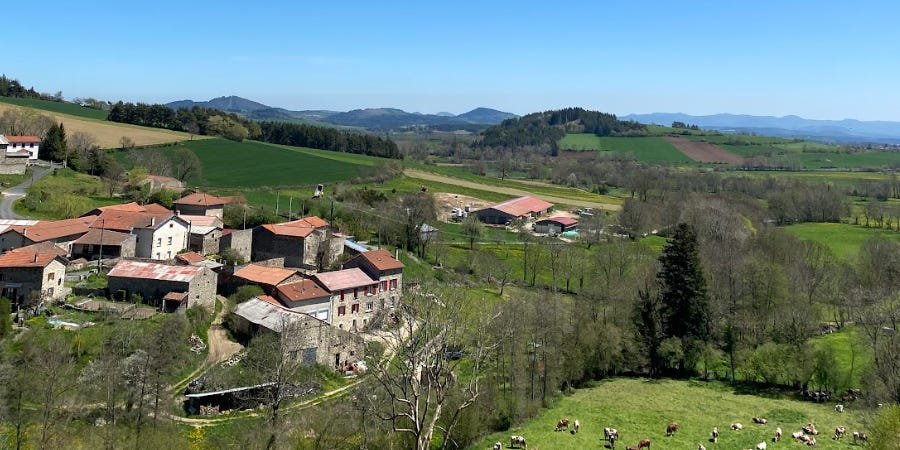
Im-an-American-who-moved-to-a-small-French-village.jpeg

I’m an American who moved to a small French village. I tried to adjust, but learned I wasn’t built for country living.

Growing up in a remote California suburb, I spent most of my childhood counting down the days until I could leave for a big city.

When the time came to move to New York for college, I was prepared to say goodbye to country living for good. I spent six years in New York, and then another four in Berlin.

Although I loved my experiences in both cities, I was exhausted. Years of apartment hopping, navigating dirty subways, and dealing with nonstop hustle left me craving a reprieve — and wondering why I’d been so quick to swear off a quainter life in the country.

So, when my husband proposed that we move to a little village near his family in France, I surprised myself by agreeing to give it a try.

This was in 2021, when COVID-19 restrictions were making it challenging to live in Berlin, and we were both desperate for the benefits that such a relocation could offer — like more square footage, a yard, and, most importantly, proximity to our loved ones and their support.

The reservations I had about residing in the country were still nagging me, but I figured things would be different this time. I was older, wiser, and doing it in beautiful France, of all places.

I wish I had listened to my gut, though, because all my old qualms with country living ended up rearing their ugly heads — and we ended up leaving after two years.

Without a driver’s license, I felt isolated by the lack of public transit


A shot of the French village where the author lived, featuring houses, fields, and a skyline.

I’d hoped my new home would be a bit more walkable.

Audrey Bruno


I never needed a driver’s license when I lived in cities, but that all changed when we moved to the French village. There, we simply couldn’t get around without a car — but we sure tried.

I knew going in that my public transportation options would be more limited than they were in a city, but I didn’t expect to be as isolated as we were.

When we first arrived, it took us over a month to work up the funds to buy a car. In the meantime, we attempted one very hilly bike ride, but had to call it quits before we’d even made it halfway to our destination.

Walking was no better — it took hours to get to the nearest shops, and sometimes they wouldn’t even be open when we finally arrived.

Even after we obtained a vehicle, I couldn’t navigate on my own without my husband, since he was the only one with a license.

He was always willing to drive me around, but I was frustrated by my newfound lack of independence. I considered getting a license of my own, but the cost of driving school was out of our budget at the time, so it really seemed like there was no way out of the situation I’d gotten myself into.

I wasn’t prepared for the demands of caring for a house after years of apartment dwelling


A snow-covered house in a French village.

Years of living in apartments didn’t prepare me for the hard work of cleaning and maintaining a house.

Audrey Bruno


Apartment life certainly has its drawbacks, but extra square footage comes with pitfalls, too.

We loved that our rental home gave us the newfound ability to stretch out and make noise without bothering each other. The downside, though, was that it was up to us to care for and maintain all that extra space.

It wasn’t just the house, either — it was also our responsibility to tend to the adjoining garden, barn, and the attached horse stables. It was a full-time job’s worth of work, and I started to miss the days when I could clean my whole apartment in just an afternoon.

Living without any takeout options was harder than I expected

Normally, I’m a proponent of cooking as much of my own food as possible, but I at least like to have the option of ordering in or eating out — especially on days full of chores and work.

Unfortunately, getting to the closest takeout restaurant took an hour round-trip, and delivery applications like Uber Eats didn’t service our small village.

What’s more, our dining options were severely limited compared to what we’d had in Berlin. I realized that I missed trying different cuisines and checking out new restaurants, and even when cooking,

I didn’t have access to the same wide variety of ingredients that I’d had in the city. One example was sesame oil — if I wanted to use this pantry staple in a recipe, I’d have to go to a big city to find it.

Connecting with neighbors wasn’t easy

Our village was extremely small — as of 2020, the population was under 400 — and many of the people I met were much older.

Needless to say, our rhythms and beliefs didn’t always match up. We often had debates over everything from politics to local initiatives — like what to do with all the feral cats — and it wasn’t always easy to argue my point in my then-limited French.

Since most folks in Berlin are fluent in English, I’d never been up against such a language barrier before. All that and more made it challenging to form true connections and further contributed to my feelings of isolation.

That said, there were things I missed about country life once I left


The writer standing outside, holding up lettuce she grew.

When I lived in the countryside, I got to grow my own fruits and vegetables.

Audrey Bruno


Despite all my frustrations, there were a few great things about living in the French countryside.

For starters, it really is beautiful, and being there allowed me to grow my own fruit and vegetables, forage wild blackberries in the forest, and perfect my French with the folks in town who were willing and patient enough to help me out.

After two years, we ended up moving to Lyon, the nearest city, because it offered the best of both worlds. At only 84 miles away, we’d have proximity to my husband’s family and access to nature, plus all the advantages of living in a major city.

I’ll always remember the beautiful memories from my time in the village — but I’ll also always prefer to reminisce about them from an apartment in a city.


Source link

I-moved-in-with-my-girlfriend-in-London-after-only.jpeg

I moved in with my girlfriend in London after only a few months of dating. I was terrified.

I met an incredible woman on a random outing to London while I was living life in slow motion, alone in a quiet English seaside town.

I fell in love in a way that surprised me, both in its speed and its certainty. I knew it was her. The relationship unfolded across train rides, weekends, and the growing realization that what I thought was a temporary chapter in my life was quietly becoming its center.

After a few months together, a practical question emerged. Our rent contracts were ending. Suddenly, there was an opportunity to do something that felt both thrilling and reckless: move in together and move back to London after years in a small town.

It felt risky, especially after years of living alone and so soon after meeting. But it also felt like an invitation to fully embrace a new chapter abroad, without half-measures.

I wasn’t sure I knew how to share my space with a partner

My fear wasn’t about commitment in the abstract. It was far more mundane and, in some ways, more unsettling: I didn’t know if I actually knew how to live with someone.

I had lived with my parents and sisters in Mexico, and I also had roommates during my student exchange in Spain, but that was a long time ago. Ever since leaving my country to see what life had to offer, I had lived entirely on my own.

Living alone abroad had sharpened my sense of independence. I had my routines, my rhythms, and my silence. Sharing a space meant renegotiating all of that in a city as intense as London — while also being a foreigner still figuring out where I belonged, and doing it with someone I was still getting to know.

I worried about losing the version of myself I had worked hard to build over the past two years. I worried about friction, mismatched habits, and what happens when two people bring different expectations into the same kitchen, the same mornings, and the same tired evenings.

Staying separate felt equally wrong, though. At some point, I had to give it a real chance.

I was also afraid we’d lose the magic

Once we made the decision, another fear surfaced, one I hadn’t said out loud at first. I worried that moving in together would flatten the magic of the relationship.

Dating, especially in the early stages, allows for a certain level of curation. You see each other rested, excited, and intentional. Living together removes that buffer almost immediately. There are no intermissions, no reset between interactions.

I worried the romance would dissolve into logistics. That excitement would be replaced by grocery lists, chores, and bad habits. What if the softness of the early months would harden under the weight of constant proximity?

It felt like skipping too far ahead in the story. I wondered if we were rushing something that deserved more time to breathe. What if she realized I wasn’t what she hoped for? What if our energies didn’t align? What if it was simply too much?

But I learned that the honeymoon phase doesn’t end because of shared space. It ends when curiosity stops. Living together, as it turned out, demanded more curiosity, not less.

Moving transformed the relationship

The shift was immediate, but not in the way I expected. Living together didn’t make things smaller. It made them deeper.

We learned from each other in unglamorous but essential ways: how we start our mornings, how we decompress after long days, and how we navigate stress without turning it into conflict. The relationship became less performative and more real.

Living with my girlfriend allowed me to truly know her, not just the version of her that appears on dates. I saw her patience, her habits, her quiet moments, and her resilience. I learned how she shows care when no one is watching.

In that process, I also learned more about myself. I realized that independence doesn’t disappear when you share a life with someone. It evolves. Living together abroad didn’t shrink my world; it expanded it.

I’ve lived in many places and many houses, but this is the first time I can say that, with her, it feels like home.


Source link